Patient Investors Win by Passing on Almost Everything
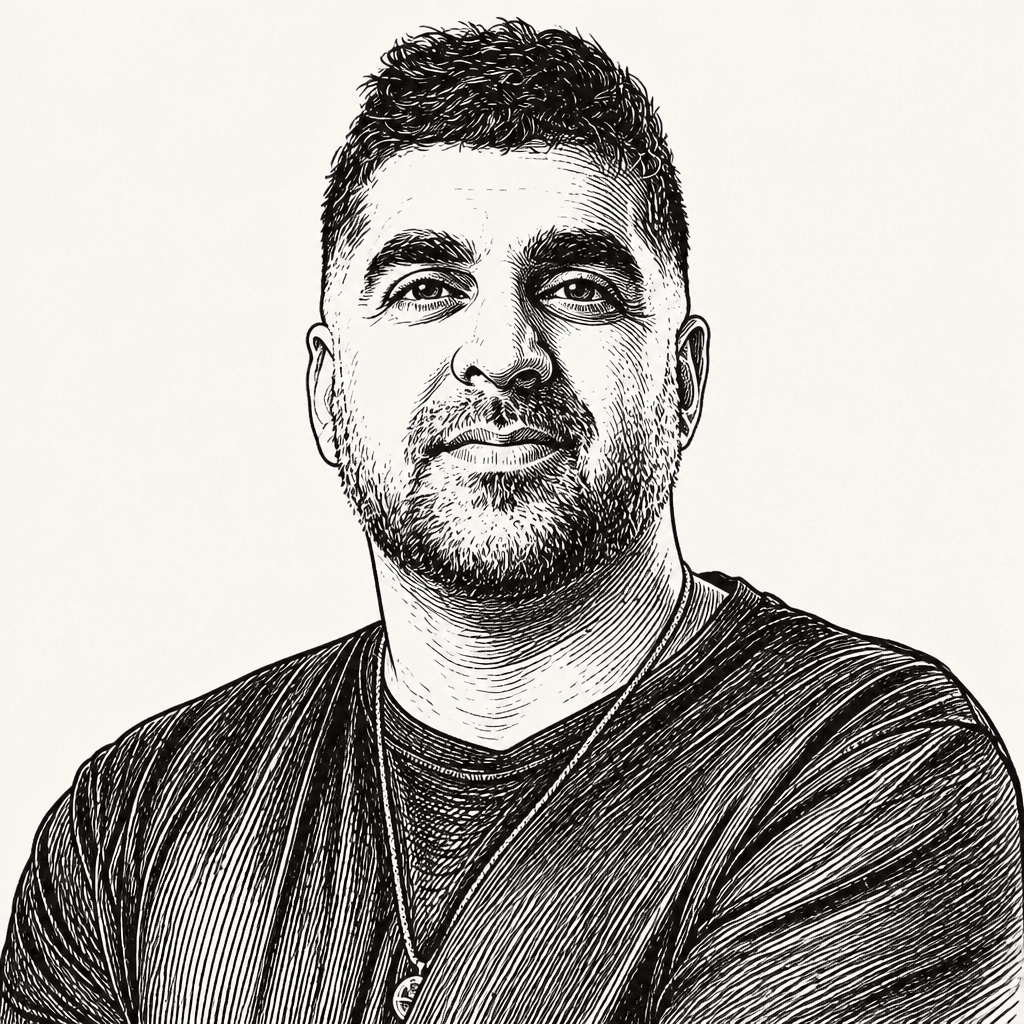
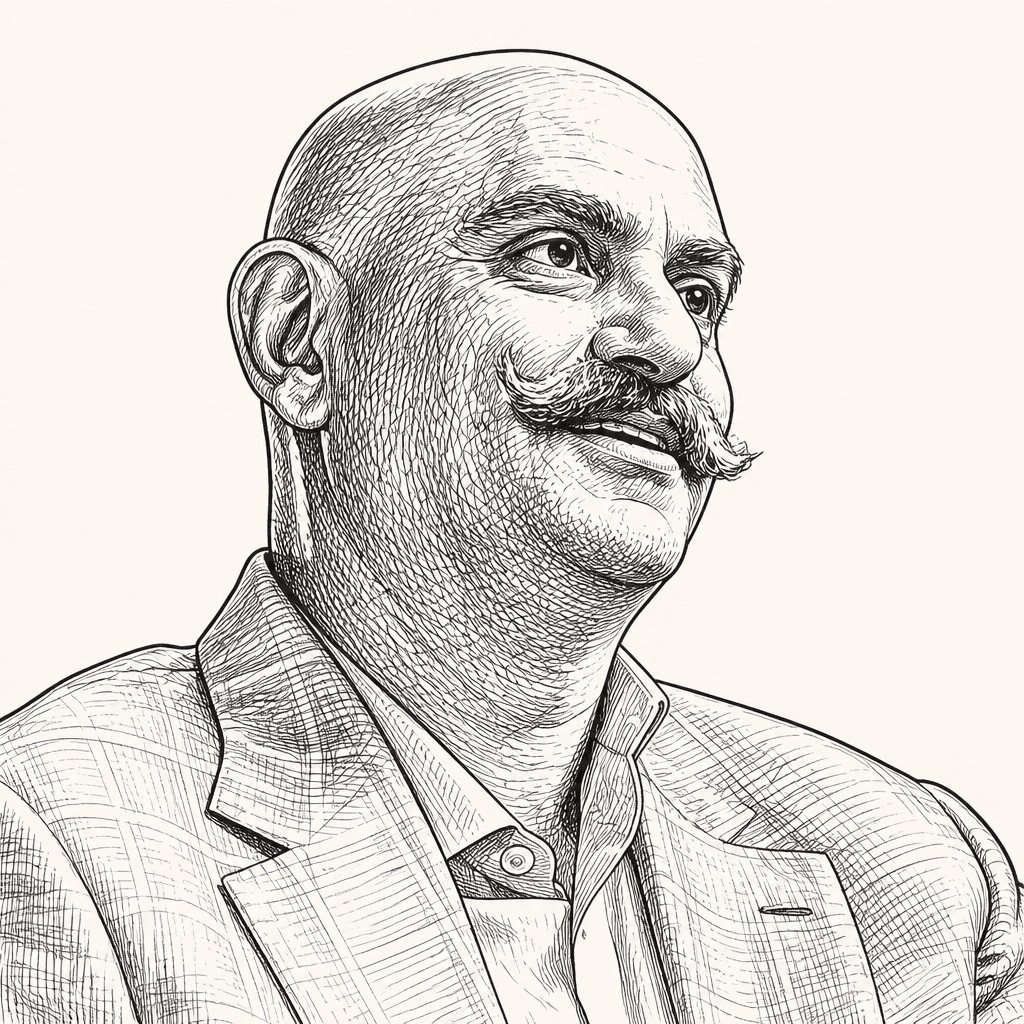
Billionaire value investor Mohnish Pabrai tells Shaan Puri that top-tier investing is less a stock-picking contest than a discipline of inactivity: study businesses deeply, reject almost everything, avoid leverage, and act only when a mispricing is obvious. Drawing on Buffett, Munger, Turkish equities, and Constellation Software, Pabrai argues that most investors lose because they trade too much, sell winners too soon, or chase what sits outside their competence. For those without the temperament to wait years for a “fat pitch,” he says indexing is likely the better game.

The game is inactivity, not stock picking
Mohnish Pabrai puts the share of stock pickers who are “good investors” at “well under 1%.” He is not talking about people who buy index funds. Index investors, in his view, can get “a great return without doing any work” and end up ahead of more than 90% of the crowd precisely because they do not play the hard version of the game.
The hard version is not buying stocks. It is studying businesses, waiting, and acting only when the odds are unusually clear. The failure mode among smart people is not lack of intelligence. It is lack of patience. Many investors cannot tolerate long stretches in which “nothing may happen for three years or five years.” Sometimes an investor does have to act, especially to reverse a mistake. But Pabrai’s rule of thumb is blunt: “the less the activity, the better the outcomes.”
His central frame comes from Warren Buffett: the stock market transfers wealth “from the active to the inactive.” Pabrai said he saw an extreme version of that in Turkey. In his account, the average public company’s float cycled every 17 days, with roughly 4% of shares trading each day. A market dominated by people trying to buy at 10 a.m., sell at 3 p.m., and make 10% created, in his interpretation, the conditions for long-term buyers to find serious mispricings.
The game we are playing is transfer wealth from the active to the inactive.
Patience, in this model, is not passivity. The activity happens below the surface. Pabrai uses Buffett’s childhood habit at the Ak-Sar-Ben racetrack as the template: Buffett would collect discarded horse-racing tickets, take them home, and inspect them one by one for winners someone else had thrown away. Because he was too young to collect, his Aunt Alice cashed the winning tickets for him.
Later, Buffett did a version of the same thing with Moody’s Manuals. The manuals were printed on thin paper with small text and several companies per page. Buffett turned page after page through thousands of public companies looking for anomalies that hit “like a two-by-four.” Pabrai’s example is Western Insurance: a stock at $15, with $25 in earnings the prior year and $40 of cash on the balance sheet. That was worth pulling out of the pile. The next thousand companies might offer nothing.
That is why Pabrai says a real investor has to enjoy the search itself. “If you really enjoy looking for needles in haystacks,” he said, “then the payoffs are huge.” The work is repetitive, mostly unrewarded, and punctuated by rare obviousness.
This also explains his hostility to spreadsheet-first investing. One of his investing “commandments” is “thou shall not use Excel.” The point is not that numbers do not matter. It is that a worthy investment should eventually become simple enough to explain “to a 10-year-old in about four sentences.” The work may begin complex. If it cannot resolve into a simple thesis, he wants it in the pass pile.
The pass pile is a central tool, not an afterthought. Pabrai repeatedly returns to Buffett’s “Too Hard” box. In his version, 90%, 95%, or even 98% of public companies belong there. Most businesses are either outside the investor’s circle of competence or simply too hard. The discipline is an exercise in honesty: admitting that one does not need a view on everything.
In baseball, a hitter gets called strikes. In investing, there are no called strikes. An investor can let 10,000 balls go by. The obligation to act arises only when the pitch is in the center of the sweet spot. Pabrai cites Ajit Jain’s instruction to Berkshire insurance underwriters as the same idea in another field: say no to every deal until one hits you in the head “like a two-by-four.” Then bring it forward.
The American Express salad oil crisis is Pabrai’s cleanest example of the difference between stock-price damage and business damage. American Express had financed inventory that turned out not to be salad oil but seawater. The loss damaged the balance sheet and the stock collapsed. Buffett’s question was whether confidence in the franchise had been impaired. If a restaurant accepted an Amex card, Amex owed the restaurant money; Buffett went to Omaha restaurants and watched cash registers to see whether merchants still accepted the card. Pabrai says Buffett saw “zero concern.”
Buffett concluded the moat was intact while the stock had collapsed, and put roughly 40% of his fund into American Express. To Shaan Puri, the method sounded less like finance than journalism: observation, field work, and direct inquiry. Pabrai’s answer was consistent with the rest of his model. Public markets offer roughly 50,000 stocks globally, but almost all should be discarded. The investor needs a basis for understanding the product, the customer, and the durability of the business.
Peter Lynch’s advice fits that frame: list what you use — shoes, clothes, restaurants, brands — and study those companies. If a company can get even one dollar from you, that choice contains information. Consumers are discerning. Being a consumer does not complete the analysis, but it can give the investor a starting point.
Buffett’s later Japanese trading-company investment was, for Pabrai, another case of waiting until the arithmetic became hard to ignore. Pabrai said Buffett had gone through the Japan Company Handbook for at least 20 years before making the bet. In Pabrai’s telling, the five trading companies paid 8% or 9% dividends. Buffett borrowed the full $5 billion in yen at about 0.5% and invested it, creating a leveraged spread in which the holdings paid 8% or 9% while the financing cost was minimal. Over the next several years, Pabrai said, the dividends doubled, the stocks doubled, the $5 billion became $10 billion, and the holdings produced about $800 million a year. He called it “almost fully risk-free.”
This is the temperament Pabrai admires: extreme patience paired with extreme decisiveness. Charlie Munger’s image was a person standing by a stream with a spear, waiting for salmon. The waiting may last five minutes, five hours, or twelve hours. But when the “juicy salmon” passes, there is no time to start contemplating your navel. You strike.
Turkey made the model concrete
Pabrai’s Turkey thesis began with cheap screens, but it became investable only after he took a simple idea seriously. He saw a market where turnover was extreme, where many investors behaved like gamblers, and where quality businesses could trade at valuations unavailable elsewhere.
Compared with India, where Mohnish Pabrai says perhaps 100 to 150 of 5,000 public companies had good governance and were investable, Turkey looked neglected. In India, those better companies had already been heavily researched and bid up by smart long-term investors. In Turkey, Pabrai said he found Coke bottlers, Pepsi bottlers, and airport operators at drastically lower valuations than comparable Indian businesses.
Shaan Puri described this as choosing the right poker table. Pabrai’s conclusion was blunt: “India zero. We’re not interested. Turkey, I’m going all in.”
Going all in did not mean buying everything. It meant becoming “an inch wide and a mile deep.” Pabrai wanted Turkey to become his Moody’s Manual: a constrained market he could study deeply. His claim is that in Turkey, both weak and great companies were cheap, so the rational response was to focus on the great ones. Hyperactive shareholders and a lack of long-term ownership created prices he did not see elsewhere.
His best recent investment, by his account, came from that work: Reysas, a Turkish warehouse operator. Pabrai said he began buying when the market cap was around $15 million or $16 million and liquidation value was about $800 million. The company was trading at roughly 3% of liquidation value. It is “just about hitting 100X now,” he said.
The misunderstanding was partly structural. Reysas’s owners were good operators who had gone public to raise growth capital, but they did not focus on the stock price, buybacks, or taking the company private. They measured their wealth by what they thought the business was worth, not by the market quote. Pabrai admired that operating mentality in one sense, but said public shareholders are better served when the stock trades near intrinsic value so that buyers and sellers transact fairly.
The broader market was stranger. Pabrai recalled visiting a large Turkish bank trading at a P/E of 0.1 — market cap equal to one month’s earnings — because of sanctions issues involving Iran, the Southern District of New York, and the CFO’s arrest at a New York airport while traveling to Disney World with his family. Pabrai judged that bank “too much hair even for me.” But it showed him the environment: Turkey had “crazily priced assets.”
The central risk was currency and inflation. Investors leaving Turkey because of unstable currency and rampant inflation were not irrational. Templeton Funds, for example, offered him 5% of Reysas for $1 million. His broker called; Pabrai’s response was, “Why are you calling me? Take it.” To him, the seller was exiting Turkey broadly. He was asking whether specific assets were naturally protected.
A thought experiment he discussed with Munger shaped that filter. Imagine a global thermonuclear event kills 99% of humans and destroys currencies. Someone will still produce Coke concentrate and someone will still rebuild a bottling plant, because the remaining humans will trade labor for Coke. The point is that some businesses provide a benefit independent of a particular currency.
Applied to warehouses, Pabrai reduced the asset to “land, paint, cement, and steel.” All four, in his view, were inflation-indexed. If the lira collapsed, replacement costs would rise. Prime warehouses in Istanbul would still be needed.
The lira did collapse. Pabrai said the exchange rate moved from 5 lira to the dollar when he was buying to 45 lira seven years later. Yet in dollars he was up about 90X. “In lira, I’m up infinity,” he said, but the dollar return is what he counts.
TAV Airports fit the same logic in a different form. Airport operators are natural monopolies, usually expensive and desirable. Pabrai said comparable Indian airport operators might trade at 50, 70, or 80 times trailing earnings, while TAV in Turkey traded at three or four times. Its revenues were in euros and costs in lira, which meant the local currency collapse could improve economics, even as employees became poorer in real terms.
A portfolio visual shown during the discussion listed several of Pabrai’s top holdings as of May 20, 2025, with Turkish, coal, offshore drilling, software, and related positions represented. The largest disclosed weights in that visual were Warrior Met Coal at 10.15%, Transocean at 9.68%, Edelweiss Financial Services at 8.99%, Gimat Magazacilik at 7.24%, TAV Havalimanlari at 6.20%, Valaris at 5.70%, Danaos at 5.01%, and Constellation Software at 4.93%; the same frame also named Kaspi.KZ and Topicus.com among the top ten, without visible percentages in the source record.
| Holding | Weight shown |
|---|---|
| Warrior Met Coal Inc | 10.15% |
| Transocean Ltd | 9.68% |
| Edelweiss Financial Services Ltd | 8.99% |
| Gimat Magazacilik Sanayi Ve Ticaret AS | 7.24% |
| TAV Havalimanlari Holding AS | 6.20% |
| Valaris Ltd | 5.70% |
| Danaos Corp | 5.01% |
| Constellation Software Inc/Canada | 4.93% |
| Kaspi.KZ JSC | shown; percentage not visible in source record |
| Topicus.com Inc | shown; percentage not visible in source record |
The investment required combining several models: take a simple idea seriously; recognize active versus inactive market participants; identify demand that is not dependent on a specific currency; and focus on assets where inflation and exchange rates were not the core risk. Pabrai’s conclusion was that no one else was applying those four models to that market at that time.
The S&P is hard to beat because it owns what matters
If most people, including smart people, fail to beat the market, the relevant question is how Mohnish Pabrai evaluates his own work against the index. He separated the answer by vehicle and time period, and the figures he gave were self-reported rather than presented as audited fund data in the discussion.
His oldest fund, more than 27 years old, has turned each dollar into about $30, he said, versus less than $7 for the S&P over the same rough period. His newer ETF, with about two and a half years of history, was behind the S&P over the full period because, in his account, the S&P had returned around 19% annually and the ETF around 15% or 16%. But he said the ETF was ahead over three months, six months, one year, and 18 months, and had beaten the S&P by more than 20 points over the prior year.
The early ETF lag, in his view, reflected the difficulty of getting invested. “I only can find like a couple of things in a year,” he said. Over five or ten years, he expects to be ahead. He also believes the S&P faces a valuation handicap because so much future growth has already been pulled into prices. When Shaan Puri cited Howard Marks’s argument that high current P/E ratios imply weak forward 10-year returns and asked for a quick view on the S&P, Pabrai’s answer was one word: “Bearish.” He said Marks is very smart and that he does not disagree with the reasoning.
Still, his explanation of why indices work is more nuanced than simply “the S&P is expensive.” The index is hard to beat because it reliably holds the rare long-term winners. Pabrai said that over the last 90 years, 4% of companies delivered the market return, while the other 96% “just treaded water.” Buffett has said, according to Pabrai, that roughly 12 investments over 60 years created Berkshire Hathaway, despite hundreds of investments. In Pabrai’s framing, the index owns the 4% and is too dumb to sell them.
That stupidity is an advantage. The index does not decide Nvidia is overvalued. It does not rotate out of TSMC because another idea looks more exciting. It captures the small set of companies responsible for the aggregate return and lets them keep compounding. Active managers often fail not because they cannot identify good businesses, but because they interrupt their ownership of the few that matter.
This is where Pabrai’s “mistress is always hotter than the wife” model becomes central. The “wife” is what one already owns and knows well. The “mistress” is the company one does not own: unfamiliar, exciting, and apparently full of promise. The investor knows the wife’s flaws but not the mistress’s. A swap may be justified, but the bar has to be extremely high.
Pabrai credits Guy Spier with being very reluctant to take portfolio actions, and says that unwillingness to act can itself be a major advantage. Puri sharpened the model: the lesson is not “never act,” but to raise the bar for action. Pabrai agreed. One must be “pretty unequivocally” convinced that the mistress is “truly hotter,” not merely more attractive from a distance.
The active investor’s danger, then, is not only buying bad companies. It is selling the winners. For Berkshire, Pabrai said, what mattered was not the 96% of investments that did not drive the outcome. It was not selling Coke, not selling Apple, having Greg Abel run MidAmerican Energy, and having Ajit Jain run insurance. “The important thing in investing is not the mistakes you make,” he said. “It’s not selling the winners.”
Puri connected this to Pabrai’s “Circle the Wagons” idea. Pabrai starts with a harsh premise: capitalism is brutal, and “almost every business will eventually go to zero” under competitive destruction. But a small subset develops durable moats, sometimes accidentally. McDonald’s began with no moat, he said, but later the highway sign itself became the moat: drivers see “McDonald’s 8 miles ahead” and decide that is where they are going, even if another burger shop is closer. FICO became entrenched as more institutions used the score. Investors have the advantage of being able to buy existing moats rather than create them from scratch.
His current examples follow the same logic: prime Istanbul warehouses, airport operators, Coke bottlers, and software aggregators. The question is not whether a business is fashionable. It is whether the moat can endure long enough for the compounding to matter.
Cloning works because most people will not do it
Mohnish Pabrai repeatedly argues that humans are bad at copying, even when the thing to copy is visible. His example from Elon Musk is the “idiot index.” If a part costs $5,000, Musk asks what the raw materials cost on the London Metals Exchange. If the materials cost $270, the conclusion may be to make the part internally for $500. Competitors understand the model, understand that Musk has beaten them, and can see what he is doing. But, as Pabrai puts it, “it’s not in their DNA.”
The issue is not access to information. It is the leap from admiration to action. Shaan Puri initially dismissed Chris Williamson’s high-production podcast set as excessive, then changed his mind after seeing the thumbnail and the finished product, and eventually copied the approach. Pabrai identified the important move: Puri acted after recognizing the mistake. “From admiring it to acting it is a huge leap,” he said. “It’s like 90% of humans will not do that.”
Sam Walton is Pabrai’s model of practical cloning. He describes Walton as hardworking, not especially original, and willing to learn from anyone. Walmart came from Kmart, Pabrai said; Sam’s Club came after Walton saw Sol Price’s Price Club, the predecessor to Costco. Walton claimed that no one before or after him would visit more competitors’ retail stores than he did. He stopped on family vacations to tour stores, took notes, and looked for one useful thing even in weak operations.
In one story, managers dismissed a competitor’s store as poorly run. Walton agreed, but asked whether they had noticed the candle display. The lesson was not that the store was good. It was that even a bad operator might have one transferable practice.
Walton also visited distribution centers early in the morning with donuts to talk with drivers. Drivers saw stores daily and could report operational details: garbage, waste, mistakes, local problems. Pabrai’s point is that Walmart’s system was built by observing and importing countless small practices. “Everything at Walmart came from somewhere else.”
Puri offered his own example from Milk Road. After selling his first company, he wanted more randomness in his life and went to FarmCon, a farmer’s conference in Kansas City. There he met Kevin Van Trump, who had built a farmer newsletter that mixed memes with market commentary. Puri and his colleague Ben copied the format for crypto, wrote the first edition while still at the conference, named it Milk Road, built what Puri described as the largest crypto newsletter in the world within a year, and sold it for millions with one employee.
Pabrai’s response was not that the idea was original. It was that two models combined: introduce randomness, then clone what works. He offered Burger King’s location strategy as another example of radical simplicity. McDonald’s maintained a department to determine new locations. Burger King could look where McDonald’s was going and open across the street. “All the work’s already done,” he said.
Randomness, though, does not eliminate the circle of competence. It expands it. Turkey was not obviously inside Pabrai’s circle before 2018, but he did not go from ignorance to indiscriminate betting. He used guardrails. He had studied Coke and Pepsi through Buffett. He understood the concentrate business as a high-margin, software-like business, and bottlers as less wonderful but still oligopolistic. When he looked at a Coke or Pepsi bottler in Turkey, he could rely partly on the fact that Coke and Pepsi are careful about whom they approve as bottlers. The Turkish Coke bottler’s management was multinational and high quality, which did not surprise him.
He applied the same method to airport operators. Start with simple businesses one can understand and compare across markets. Randomness brought him to Turkey. Existing competence helped him decide what within Turkey was investable. “The introduction of randomness is how you grow,” he said. It expands the circle naturally, but it does not abolish the need for one.
Constellation is the cloning thesis applied to software
Mohnish Pabrai’s investment in the “Mark Leonard universe” of businesses is where the cloning argument becomes an active stock thesis. Shaan Puri suggested that vertical SaaS may be the current “hated and unloved” category and noted Pabrai’s investment in Constellation Software. Pabrai said the area fell within his circle of competence.
He rejects the idea that AI makes incumbent software businesses obsolete because “software is not coding.” Coding may be automated and accelerated, but in his estimate it is “at most one fifth of the pie.” Betsy in HR is not going to fire up AI and replace Workday. Adobe is not going out of business simply because code generation improves.
In his view, incumbents may benefit. They can reduce costs as AI automates some work. They may reduce prices, depending on competitive pressure and moat strength, but he does not see their cash flows necessarily falling. If a stock price falls in half while cash flow remains intact, the opportunity becomes interesting.
His investment, however, is not a broad software bet. It is specifically in the Mark Leonard and Constellation ecosystem because he sees a distinct acquisition and operating moat. Pabrai described 70,000 to 100,000 private vertical market software companies in the U.S., and said Constellation’s business-development team touches them twice a year by phone and twice a year by email. He said it bought around 200 companies in one year and has bought more than 1,000 in total. It avoids bankers and does direct deals.
The acquisition math is central to Pabrai’s account. Constellation may pay five or six times cash flow, but after modest revenue increases, license-fee adjustments, and operating practices, the effective price can become three or four times cash flow within a year or two. On an organic basis, he said, the acquired companies are still growing around 3% a year. A business growing 3% might be worth 10 or 15 times cash flow in a normal environment; buying it effectively at three or four times lets Constellation reinvest at roughly a 25% rate.
He compares Constellation favorably to Berkshire in one respect: Berkshire buys many kinds of businesses, while Constellation buys one kind. The model has become delegated. People outside headquarters can do deals up to certain thresholds, such as $20 million, without approval, and limits rise as teams build track records. Pabrai sees a “mousetrap” growing cash flows at 20% to 25% a year. When its multiple fell into the teens, he said, even “a cheapskate like Mohnish” became interested.
He still presents it as a favorable bet, not a certainty. Cloners could emerge. Leonard’s eventual departure could weaken the company’s DNA. Some of Pabrai’s other holdings may fail for their own reasons. The portfolio does not require every thesis to work. If all of his bets worked, he said, returns would be impossibly high. If half work, or even 40%, “we have a home run.” That is why he calls investing “a very forgiving business” when the bets are asymmetric and the winners are allowed to run.
Leverage is the hurry that ruins compounding
Mohnish Pabrai paid $650,000 to have lunch with Buffett in 2007, when he said his net worth had reached $84 million, mostly due to Buffett’s intellectual property, for which he had paid nothing. He wanted to thank Buffett directly. Buffett, in Pabrai’s account, approaches those lunches with one goal: whoever paid should feel they got a bargain.
Before the lunch, Buffett’s assistant collected bios of the attendees, and Buffett studied them. When he arrived, he told the group his entire afternoon was free and that he would leave whenever they got tired of him. Pabrai had prepared many questions, including a casual one: what happened to Rick Guerin?
Buffett turned the question into a lesson. Guerin had once been part of the early circle with Buffett and Munger. Buffett explained the difference this way: “Charlie and I always knew we were going to be rich, but we were not in a hurry. And Rick was in a hurry.” Guerin used leverage and margin loans. In the 1973–74 downturn, when markets fell more than 50% over two years, he faced margin calls. Buffett bought Guerin’s Berkshire shares from him at $40 a share; Pabrai noted that those shares are now over $700,000.
The principle Buffett gave him was simple: if you are “even a slightly above average investor,” spend less than you earn, and do not use leverage, “you can’t help but get rich over a lifetime.” The problem is hurry. Leverage converts temporary market declines into forced selling. It interrupts the compounding process just when patience should be rewarded.
The same lunch gave Pabrai the inner scorecard model. Buffett said there are two ways to live: by the outer scorecard, reacting to what people think of you, or by the inner scorecard, measuring yourself internally. The test question was: would you rather be the greatest lover in the world and known as the worst, or the worst lover in the world and known as the greatest? “If you know how to answer that question,” Buffett said in Pabrai’s account, “you’ve got it made.”
Pabrai treats the inner scorecard as fundamental because external signals are noisy and often destructive. Critics will criticize anyone. He said people criticize Gandhi and Buffett, figures he regards as having lived remarkable lives. If Gandhi is fair game, so is everyone else. The practical lesson is not to be shocked by criticism, especially if one has any public presence. External reaction cannot be the governing metric.
Berkshire’s cash balance fits the same patience model. Shaan Puri said Berkshire had almost $400 billion in cash; Pabrai gave the figure as about $380 billion. He expects it may be half or less in five years, not because of a precise forecast but because dislocations eventually arrive. Berkshire is earning reasonable returns in Treasuries while waiting. During crises, the phone rings.
Buffett used to say that Saturday calls were best, because the caller often needed a deal before Tokyo opened Sunday night U.S. time. Berkshire’s future under Greg Abel changes the nature of management but not necessarily the opportunity set. Pabrai said Berkshire used to be run by a great capital allocator; now it is run by a great operator and “a pretty good capital allocator.” The firm is better known than it used to be, and in a crisis, it will still get calls.
The casino helps the disciplined and hurts almost everyone else
Mohnish Pabrai sees the modern casino-like market as beneficial to disciplined investors, even if socially negative. Buffett’s line, as Shaan Puri recalled it, is that the stock market is like a church with a casino attached. Prediction markets, Robinhood, short-dated options, leverage, and speculation have crowded the casino. Pabrai’s response was that all of it is “better for me.” More hyperactivity means more wealth transfer to those prepared to be inactive.
He separates the social function from the individual opportunity. Capital markets exist to route capital to gifted entrepreneurs and leaders — “the Teslas of the world,” “the SpaceXs of the world” — and thereby improve humanity. The casino activity is a side effect. He noted that after the South Sea Bubble, the British government banned public markets for 200 years, yet great businesses still formed and capital still found its way to them. Public auctions are not the only way to fund enterprise. But as long as casino behavior exists in public markets, he believes it helps disciplined investors.
Horse racing clarifies the point. A racetrack may take 21% of every dollar, while blackjack in Vegas may offer the house only a 0.2% to 0.4% edge. Yet some people make a living betting horses because they know the horses and races well enough to identify odds that make no sense. They are betting against other bettors. Pabrai sees prediction markets similarly: the sharp participant does not need every market to be attractive, only the occasional mispriced one.
The same selectivity shapes his view of newer themes. On AI, he prefers “pickaxe makers” in principle: AI companies must pass through toll bridges such as TSMC, ASML, and probably Micron. But he has no bets there because the area is either too hard, outside his circle, or too expensive. He is not going to sell Turkish warehouses to buy TSMC because that trade does not make sense to him. In his earlier language, “the mistress looks much uglier than the wife,” mainly because of valuation.
That stance does not require him to deny the importance of new categories. GLP-1 drugs, despite Pabrai calling them “the best thing since sliced bread,” go into the too-hard pile. Puri described them as already producing large revenues and still being early. Pabrai agreed the trajectory may continue and the science may improve, but rapid change is the problem. He cited Buffett’s view that industries with rapid change are the enemy of the investor. Wegovy was king, then Mounjaro, and tablets may come, though with complications. Pabrai did not deny the importance of the category. He said, simply, “Coal is simpler.”
Bitcoin is also outside his competence and in the too-hard pile. Puri asked whether time had changed Pabrai’s view, given that all money involves confidence. Pabrai said he prefers gold to Bitcoin and asked why Bitcoin is needed if gold already exists. Puri declined to debate the point, saying it would become a four-hour podcast. The disagreement remained where it belonged: Puri saw a broader monetary-confidence question; Pabrai saw no investable clarity for himself.
The life advice is the investing discipline applied to time
Some of Mohnish Pabrai’s investing models become explicit life models. He quotes Benjamin Franklin: “Many people die at 25 and are buried at 75.” For Pabrai, the phrase describes people who stop growing, stop acting, and coast through the rest of life.
Munger is his counterexample. In Pabrai’s last meeting with him, they discussed a stock, and Munger was buying it six days before he died, at 99.9 years old. He did not know he would die in six days, but at that age, Pabrai said, one cannot assume a 10- or 20-year life expectancy. Munger nevertheless made decisions “like he was 25.” Pabrai interprets that as living to the end.
“Getting your music out” is his phrase for the same idea. Everyone has something in them, though not necessarily literal music. The work is to understand who you are, what special talent or inclination you have, and what you can bring into the world that improves it and gives you a sense of accomplishment. A fulfilled life requires getting that out.
Shaan Puri tested another Pabrai prompt: “ask God Google when you are going to die and act accordingly.” He said he entered his health and demographic details and got September 28, 2075, as a likely death date. Pabrai’s response was not to plan backward rigidly. He said life is short and quoted Gandhi: “Live as if you were to die tomorrow, learn as if you were to live forever.” He also cited Steve Jobs’s practice of changing course if he spent several days doing work he did not love.
The point is not panic. It is not postponing life. Buffett’s line, as Pabrai recounted it, is that delaying what you want to do — graduate, spend years at McKinsey, get experience, and only then start — is “like saving sex for old age.” Pabrai’s prescription is to enjoy every day, work with people you like, admire, and trust, and pursue your passions continually rather than as a deferred reward.
His final advice was the broadest: “Lead an aligned life.” Pabrai believes much of who a person is gets hardcoded by age five, from genetics and early experience. People arrive without an owner’s manual, and their calling may be predetermined before they can name it. If the inner map and the outer life do not match, life is misaligned. A great life requires bringing them together.
He said he found his own alignment only around age 34 or 35, after work with industrial psychologists. Before then, he was “wandering the wilderness.” Without formal help, one has to feel the way forward: notice which activities energize or drain, which people feel right, and where “the glove fits.”
The obstacle is social instruction. “The world tells us what we are supposed to do,” he said, and people mistake that for what they are actually supposed to do. He argued that the human brain is ready to specialize after age 11, with ages 11 to 20 as the key specialization window, just when the education system pushes people to become generalists. Michelangelo sculpted and painted young; Buffett picked stocks young; Gates coded at 11 or 12 and accumulated enormous practice by his early 20s. For parents, Pabrai said, the job is to identify what a child is good at around 11 or 12 and increase the time available for it.
The closing gesture reinforced the same theme. Puri gave Pabrai a letter from Guy Spier titled “What I did not learn at HBS.” Spier wrote that after Harvard Business School he still knew next to nothing about business, and that his real education began at dinner with Pabrai in Greenwich. He remembered leaving with more ideas than in two years at Harvard: David Hawkins’s Power Versus Force, Gandhi’s autobiography, Cialdini’s Influence. What struck him was not that Pabrai had read the ideas, but that he had put them into practice. Spier wrote that he was misaligned at the time and that Pabrai’s friendship helped him untangle that.
Pabrai read the word “Alignment” and said: “You couldn’t give me a better gift.”