Shaan Puri’s 110 Narcissism Score Exposed His Need for Recognition

Shaan Puri says embarrassment can expose the habits behind a person’s choices—and offer a reason to change them. A personality test’s unusually high narcissism score made him examine his reliance on recognition; later, a restaurant founder’s blunt criticism showed him that planning could substitute for action. In a story about starting over at a new school, Puri describes a related lesson: he could begin acting like the person he wanted to become before he felt that he was.
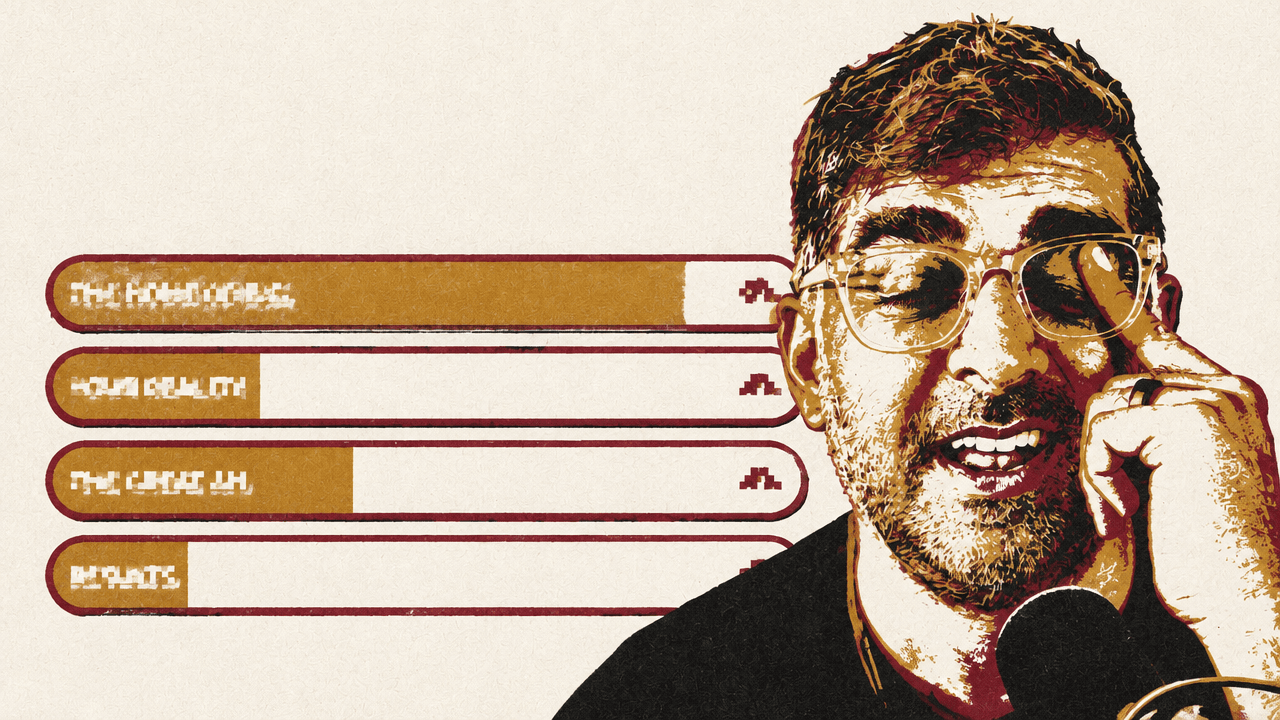
Confidence can open doors—and make you dependent on recognition
Shaan Puri says he spends much of his time in social situations trying to avoid embarrassment. He does not seek it out, even though he has learned that an embarrassing moment can leave something useful behind once its sting fades. One such moment came after he sold a company and found himself unsure what to do next. He hired a life-direction coach, who asked him to take an unusual personality test.

When the coach showed him the results, most categories were low. One score stood out: narcissism, at 110 on a scale that ran to 100. The chart made the result hard to miss: the bar extended beyond the scale’s limit. Puri joked that, as a narcissist, he had won. Then he began wondering whether the coach was calling him arrogant—and whether it was true. For the next few minutes, he says, he was so preoccupied with himself that he stopped listening, a response that seemed to confirm the point.
The coach described the trait not as an insult but as a belief that you are special, that your life will be exceptional, and that ordinary rules and averages do not quite apply to you. Puri recognized the belief. He had taken pride in not wanting an ordinary life and in thinking that general odds—such as the likelihood of a business failing—might not apply to him.
The coach’s explanation, as Puri recounts it, was more complicated than the label. A sense of being exceptional can help someone act despite the odds. But a vague conviction that something about you is special can also make you search for other people to confirm it. Puri recognized that pattern in his interest in social media and public speaking, and in wanting people he admired to see how impressive he was.
That desire for recognition can make a good situation feel bad. Puri recalled hosting an event attended by founders of some of the world’s largest companies. Even while the event was going well, he felt insecure and wanted the other people there to understand how special he was. “You can make hell out of heaven,” he says: attention to whether other people see you as exceptional can spoil an experience that otherwise looks like success.
The coach’s advice had two parts: notice the pattern before falling into it, then get specific about what is genuinely distinctive about you. Puri says that specificity matters because a vague sense of specialness leaves room for other people’s approval to become evidence that the feeling is true. If you understand what makes you great, he says, you need not wait for someone else to fill your cup with praise. He compares it to filling your own water cup rather than sitting around waiting for a waiter to return.
Puri connects that search for external validation to grades, money, praise, and awards: each can stand in for a clearer understanding of what you value about yourself. He says feeling comfortable in your own skin—without needing to be anything more than you are—is one of the greatest feelings, but also says he has not achieved it. The test, in his telling, held up a mirror, and he could try to adjust after seeing what was there.
A separate call showed him the value of receiving specific criticism from someone who was not trying to gain anything from giving it. Scott Harrison, the founder and CEO of Charity: Water, called after listening to Puri’s podcast. The two were acquaintances, not close friends, and Harrison had not called him in years. He told Puri that if he wanted to be great at podcasting, he needed to stop saying “like” so often. Puri remembers feeling embarrassed to be called out, but also grateful that Harrison had told him something useful and uncomfortable. He says he is still working on it.
Planning felt like work until it kept the restaurant from happening
Puri’s restaurant story shows how preparation can become a safe substitute for action. At 21, he and two friends wanted to build the next Chipotle or Subway in sushi. The ambition was not matched by experience: Puri says he was not a foodie or a sushi chef, had not grown up eating sushi, and had rarely tried sushi before they got the idea. What he did have was a beginner’s confidence—and the conviction that winning a business-plan competition meant he knew what he was doing.
The team won $25,000 in Duke’s Start-Up Challenge, then cold-emailed restaurant-company founders in search of advice. The founder of Noodles & Company agreed to meet them. For the three months before the meeting, the friends worked on what they considered preparation: forecasts, financial models, employee uniforms, management structures, and promotion plans. They brought a business plan hundreds of pages long.
Puri later saw that work as a comfortable substitute for the work itself. He believed hard work meant planning thoroughly and leaving no stone unturned. In practice, he says, planning was the version of work that felt safe. It let them feel productive without finding out whether anyone wanted the restaurant or learning how to serve customers.
At lunch, Puri dramatically put the binder on the table and invited the founder to look through it. The founder flipped the pages rather than reading them. Puri could tell the meeting was going badly, but he had prepared himself for rejection, not pity. The founder struggled to find a kind way to say that the plan was “nothing” and that this was not how to start a restaurant. His advice was to find a location, pay the lease and deposit, set a date to open, and start serving customers. That, he said, was how they would begin figuring out how to make customers happy.
The three friends left with little to say. They had spent months working on a plan and were no closer to opening a restaurant. They were living in a basement and had just been told by someone who had built a restaurant company that their approach was wrong.
Puri connected the moment to a Seinfeld episode in which George Costanza decides his usual choices have led him nowhere and resolves to do the opposite. For Puri, the point was not that every decision should be reversed. It was that their habit—planning to impress other people—had failed, and that they needed to replace it with action.
From then on, I decided to become a man of action.
Puri says he began choosing action over inaction and stopped treating approval as the goal. The change became visible in how the founders responded to advice. A year later, after meeting a mentor and receiving suggestions, they returned about 48 hours later to tell him what they had done, what they had learned, and what they were considering next. They repeated that process three times. The mentor was impressed enough to write publicly that he did not know whether their idea was good, but that they had the highest bias for action of any founders he had met.
Puri calls the change “chicken salad” to “tuna on toast,” borrowing the episode’s contrast between George’s usual choice and the opposite one. In his account, the embarrassment changed how the founders approached the work: they stopped relying on a polished plan to demonstrate preparedness and started returning with actions and results.
A new identity can begin with a decision, not a track record
Puri’s teenage embarrassment gives the same tension a more personal form. He says he was shy growing up. His older sister called him “the laugh track”: present at school, but not one of the characters driving the story. As a teenager, he liked a girl and wrote her a note that was, in his telling, essentially a love letter. He arranged for her to find it by their lockers, hoping she would understand it was meant for her.
Instead, she asked who it was for. Puri knew he could admit the truth and see what happened. Embarrassed, he invented a girl from another school and said the note was about her. He then had to maintain the story for months as the girl asked him for updates. He says he never corrected the lie; his family eventually moved from Houston to China, where he started at a new school.
On the plane, his sister offered a different way to think about the move. Nobody at the new school knew him. That meant, she said, he could be anybody. She asked who the coolest person at his old school was—the person Puri would want to be. He named a boy who was funny, athletic, and kind to everyone. His sister told him he could simply act like that boy at the new school.
Puri says the idea changed how he thought about identity. He did not have to wait until he felt like a different person. He could decide what he wanted to do and start doing it, even if it initially felt awkward. “The decision is upstream of all action,” he says. The new school gave him room to try a different way of behaving before he had a track record to support it.
He later applied the same approach to his career. Before hosting a podcast, he thought of himself as a tech entrepreneur and drew his sense of worth and social identity from that role. Then he decided he wanted to make a show that entertained people and offered enough insight that they would want to listen again. He was not yet that kind of host; he chose to act as though he could become one.
Puri says he asked what that version of himself would do, booked a studio, and got a friend to be the first guest. That became the first episode of My First Million. In his account, he did not wait until he already felt like a podcaster to begin. He made a decision, then took actions that gave the new identity somewhere to take shape.