Edge Comes From Childhood Obsession, Real Risk, and Adversity


Sam Parr and Shaan Puri use a discussion of Jim Ratcliffe, Palmer Luckey and other unconventional founders to argue that edge is usually formed indirectly: through childhood obsessions, adversity, risk and the confidence that comes from surviving unfamiliar situations. On My First Million, they extend that idea from parenting to company-building, saying the same odd specificity that produces billionaire side quests can also show up in scrappy consumer brands, TikTok affiliate machines and businesses that begin with janky tactics before becoming durable.
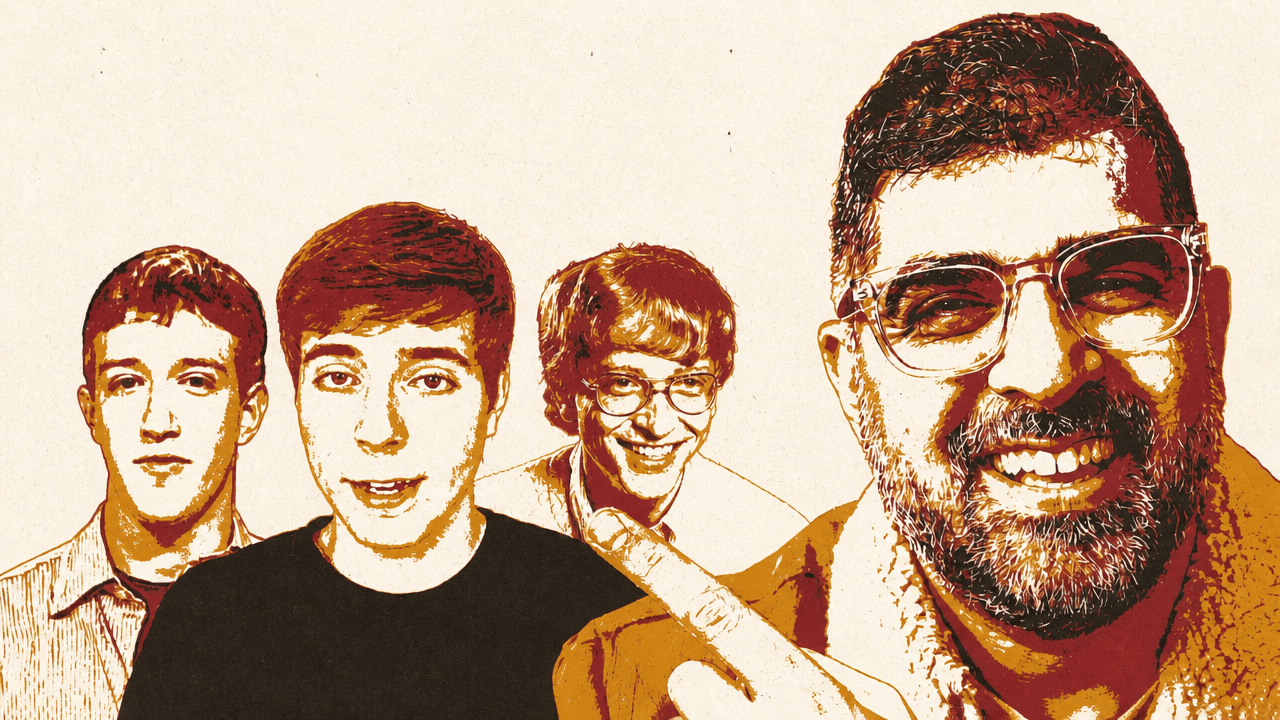
Edge is produced indirectly, then expressed through taste, risk, and obsession
The central question running through Sam Parr and Shaan Puri’s discussion is not simply how people get rich. It is how certain people develop an edge early enough, deeply enough, and oddly enough that it later shows up as confidence, taste, commercial instinct, or a willingness to pursue strange projects that make little sense to outsiders.



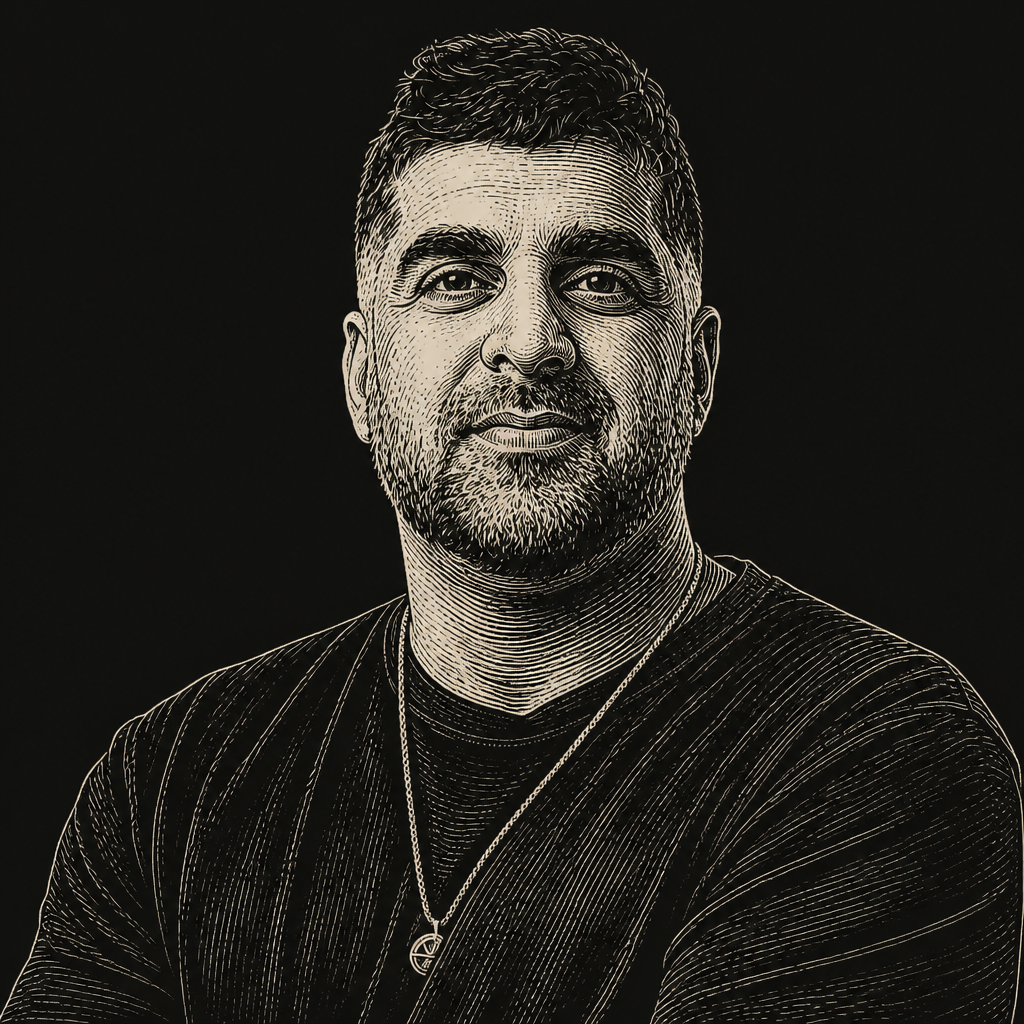
Parr’s first example is Jim Ratcliffe, who becomes interesting less as a conventional billionaire profile than as a study in what a person chooses to build and fund once he has both capital and conviction. Ratcliffe, as Parr tells it, did not become rich through a glamorous software company or a consumer brand. He was born in Manchester, studied chemical engineering and accounting, worked at an oil company, then joined a private equity firm at 35. Around 40, with a house, a wife, two kids, and roughly $100,000 to $150,000 to his name, he decided he had worked for someone else long enough.
The first decisive bet was a heavily leveraged acquisition. Ratcliffe and a partner persuaded former limited partners to back them, spent about a year looking for a company, and bought a BP chemical spinoff for roughly $80 million, using only about £3 million of equity and debt for the rest. Parr emphasizes the personal risk: Ratcliffe mortgaged his home and put essentially all his money into the deal after months of family discussion about whether it could ruin them.
By 1997, according to Parr, the $80 million business was worth about $1.5 billion. The company became Ineos, a chemical business that Parr says now does about $40 billion in revenue and employs tens of thousands of people. Ratcliffe’s pattern was a combination of chemical competence and private-equity mechanics: buy unwanted chemical assets from conglomerates, then try to double EBITDA in five years.
That industrial story matters in Parr’s telling because it funds the stranger part. Parr is less interested in Ineos as a roll-up than in Ratcliffe’s choices once he had enough money to underwrite expensive personal fascinations. Ratcliffe paid for Eliud Kipchoge’s INEOS-backed sub-two-hour marathon spectacle, which Parr describes as a deliberately idealized setup rather than a normal sanctioned race: a pace car, a flat course, and shoes and conditions selected for the attempt. Ratcliffe also appears throughout Parr’s account as a sports obsessive. Parr says he owns Team Sky cycling, the team that won the Tour de France eight times; owns one-third of the Mercedes Formula 1 team; owns one of the best America’s Cup sailing teams; owns 25% of Manchester United; and used to own Chelsea.
The most revealing example, for Parr, is the Ineos Grenadier. Ratcliffe loved the old Land Rover Defender: boxy, utilitarian, beloved by enthusiasts, and no longer manufactured in the form they wanted. Parr describes Ratcliffe meeting with Jaguar Land Rover executives at the Grenadier pub and trying to persuade them to restart parts or otherwise bring the old Defender spirit back. When they declined, Ratcliffe’s response was effectively: fine, I’ll make the car myself.
The result was an off-road SUV that, in Puri’s words, looks like “a G-Wagon or a Defender.” Parr describes the Grenadier as sparse, mechanical, and slightly inconvenient: switches that look like they came from a tank, an interior that preserves roughness rather than smoothing it away. He says the car sells for around $80,000 to $90,000 and has a cult following among car enthusiasts, including in America.
It is also, by Parr’s account, a bad business. Since 2018, he says, Ratcliffe has lost about $2 billion on the car company, and the company lost about $300 million last year. Parr’s admiration depends partly on that irrationality. He sees Ratcliffe as someone willing to spend heavily on a personal standard of what an off-road vehicle should be, even when the economics are ugly.
When Puri asks what Parr loves about Ratcliffe, Parr’s answer is not operational brilliance. It is the “f-you attitude.” Ratcliffe still appears, in Parr’s description, like a rougher adventurer type despite being among the richest people in England: Barbour wax jacket, sports obsessions, endurance expeditions, and projects undertaken “just ’cause.”
Puri connects that to what he calls the “side quest Hall of Fame”: the wealthy founder who uses money and talent on projects that are not simply another rational startup. His example is Palmer Luckey, who sold Oculus to Facebook, built Anduril, and then, on Joe Rogan, talked about wanting to privately fund something like the X-Files — an effort to hunt for aliens because he believed the government was not telling the full story. Puri also points to Luckey’s ModRetro Chromatic, a Game Boy-inspired handheld he had apparently worked on as a hobby for years.
The on-screen ModRetro page sharpened the point. Luckey’s post described the device as “the ultimate tribute” to the Nintendo Game Boy, with “hundreds of irrational decisions” including a sapphire screen cover, a custom sunlight-viewable LCD, a magnesium-aluminum shell, and compatibility with every known Game Boy title. The visible copy ended with a deliberately excessive claim: “Nobody will do better. And bizarrely, I am willing to sell you one!”
For Puri, the attraction is the combination of resources, specificity, and indifference to normal justification. Parr adds a distinction: he does not read Luckey as an insufferable “hardo.” He reads him as unusually confident, open to being challenged, and willing to make bold claims because he has studied the domain. When Parr interviewed Luckey in his early thirties, Luckey was already saying defense contractors were doing things wrong. Parr sees that as the kind of confidence he now wonders how to raise in children.
Confidence is not taught as an attitude; it is accumulated through adventure and adversity
The parenting question is the hinge: how do you raise someone with edge, conviction, and competence without producing an obnoxious child? Sam Parr frames it through Luckey, who grew up poor and still developed a sense that he could figure things out. Shaan Puri is skeptical that this is mostly a matter of parental encouragement.
Puri argues that confidence is less something parents “water” directly than something produced by the soil of a child’s environment. His formulation is blunt: confidence is a byproduct of adventure and adversity. Telling a child to “be confident” does not create confidence. Putting a child in unfamiliar situations, or allowing them to face difficulty and survive, does.
Puri points to patterns he believes recur among high performers: disproportionate dyslexia among successful people, athletes coming from poor families or single-mother homes, and backgrounds where people lacked the best equipment, training, or gear. What they had, in his framing, was “the one thing that can’t be bought”: hunger.
The confidence mechanism is survival. Each unfamiliar situation handled, each adverse situation endured, becomes evidence for the next one. Even if a person did not win, Puri says, surviving makes the next thing less frightening. The person can think: I have done hard and unfamiliar things before; I can probably enter this one and thrive too.
That turns the parenting problem into a more precise one. If confidence comes from adventure and adversity, then the relevant parental question is not how to tell children they are capable, but how to recognize and feed the environments where children encounter real stakes, real obsession, and real struggle.
Puri is careful not to claim full certainty. He repeatedly leaves room for ambiguity: he is “not sure” how much is watering versus soil, and later says he does not know how much of these childhood explanations are like horoscopes — narratives retrofitted after the fact. But he still takes the pattern seriously enough to look for signals in childhood behavior.
The Dan Brown example gives a constructive version of the same idea. Puri says he read that Brown’s father, a math teacher, did not put presents under the Christmas tree. He put a treasure map there. Brown had to follow clues around the house, and sometimes the neighborhood, to find the gift. Puri’s takeaway is that this nurtured a love of puzzles, codes, and treasure hunts, which later became the engine of books such as The Da Vinci Code and Angels & Demons.
Parr says Robert Greene made a similar point when he appeared on the show: to find the thing worth dedicating yourself to, you have to recover what you were like around age 12, before social pressure, embarrassment, and jadedness narrowed the field. Puri compresses the prompt into a useful question: “Where were you weird as a child?”
The useful childhood signal is often faint, weird, and only obvious later
Sam Parr’s own childhood signals were concrete. He skateboarded constantly. He took apart remote-control cars and rebuilt them. He spent six months trying to make a remote-control car with a mop attached because he hated sweeping the floor. He liked building model airplanes, especially assembling things with clear instructions. He also sold burned CDs, making roughly $30 at a time selling $3 discs.
Those fragments map imperfectly but recognizably onto his adult work: building things instead of working a conventional job, selling, media, and content. Parr says he originally imagined himself in entertainment and admired Ari Gold from Entourage. He went to Belmont University for a Music Business degree, then changed course before finishing that degree. The through-line, as he sees it, is that he wanted to work with entertainment people, discovered he disliked Hollywood, and built his own smaller world in media instead.
Shaan Puri brings in Mohnish Pabrai’s view, which he heard while recording in Austin. Pabrai’s theory, as Puri relays it, is that much of personality is hardwired by around age five, and a person should avoid spending life fighting their nature. For children, Pabrai believes there is a “golden window” from roughly age eight to 18 when specialization can compound dramatically. He argues that school does the opposite: it forces children to spend short intervals on many subjects, to go shallow across everything, and to become factory-model generalists.
Puri summarizes Pabrai’s parental advice in three parts: observe the child’s nature by around age five; from eight to 18, feed any genuine interest or obsession that appears; and get the child around the best peer group possible. Puri again qualifies that he does not know whether he fully agrees, but he finds it worth paying attention to.
His Warren Buffett example makes the idea concrete. As a child, Buffett did small hustles: buying and selling, Coke bottles, pinball machines in barbershops. But Puri focuses on the racetrack. Buffett would watch the horses and the bettors, then collect discarded betting slips at the end of the day. Most were worthless, but some had hidden payouts that their owners had missed — second- or third-place payouts, for instance. He would ask his aunt to cash them.
Puri sees that as a childhood version of value investing: look through a thousand discarded tickets, find the few with hidden value, and pounce. He notes that Buffett bought his first stock at seven and was operating inside that “golden window” early.
Parr adds a metaphor from a biblical story he remembers from Catholic school. In the story, there is loud natural catastrophe — an earthquake or something like it — but the divine signal is not in the loudness. It is faint, like a whisper. Parr says he is not focused on the religious message; he sees the relevance in vocation. The thing a person is compelled to do may not arrive as a shout. It may be a small nudge that is easy to miss amid louder signals.
That idea fits Puri’s own ambivalence. He did not grow up flipping lemonade, CDs, or sneakers. He says the business “lightbulb” did not come on until he was about 21, and he has sometimes felt insecure when comparing himself to founders who were hustling as children. But when he looks harder, he finds different signals.
One was improv. In sixth or seventh grade, he entered an improv class and competition and made it to Texas state finals in a duo format. He now sees a resemblance between that and what he and Parr do: “duo improv” around business ideas, twice a week. He liked making things up, thinking on his feet, and riffing with a partner. Nobody could have predicted podcasting from that, but the underlying pattern now seems legible.
The other was video games. Puri loved Madden and NBA 2K, but he rarely played the actual games. He played franchise mode: acting as general manager, drafting players, building teams, scouting, making bets, and simulating seasons. His sister would ask whether he was ever going to play the game. In hindsight, he sees the same preference in his adult work. He does not want to play every operational possession himself. He likes being the GM.
That has shaped his current business structure. Puri says the closest fit for his nature is a combination of rabbit-hole research, generative riffing, and investing or incubating companies with other CEOs as operators. In companies where he owns a meaningful chunk, he says there are roughly four CEOs running day-to-day work while he does not operate the businesses directly. He contrasts that with his earlier startup experience, where being all-in as the operator was a worse fit.
His image for misfit work is a screw driven into a wall at the wrong angle. Push harder, and the screw, wall, and wrist all suffer. Align it correctly, and a few turns make it click. Puri says much of his life felt like pushing screws at the wrong angle — pursuing projects that were not in his nature, trying to be someone else. Things became easier and more successful when he recognized what he was naturally inclined to do.
Life got a lot easier and it got a lot more successful when I sort of figured out like, oh, what am I actually naturally pretty inclined to doing?
Social commerce makes creative testing pay-for-performance and massively distributed
The economic mechanism in Shaan Puri’s account is simple: instead of paying a small internal team and then buying media upfront, brands can let thousands of creators test sales videos at their own risk, then pay them only when they sell. The result, as he describes it, is a higher-volume creative system where the market, not the brand department, discovers the angle.
Puri says people in Austin described ordinary creators making large sums by producing TikTok and Whatnot content for products they do not own, earning affiliate fees when they sell. These are not conventional influencers. They are not famous. They may not have an audience at all. They understand how to make videos that sell soap, teeth whitener, leggings, hoodies, or similar products. Some, he says, generate $40,000, $100,000, $200,000, or even $400,000 a month.
The core platform logic, in Puri’s telling, is TikTok’s distribution. A creator does not need a large following if any individual video can get exposure on the For You page. Puri compares it to America’s Funniest Home Videos: any video can have its day. The creators produce content that looks informal and personal — filmed in a bedroom, delivered in a casual “hey y’all” style, seemingly authentic even when everyone understands there is commerce behind it.
The model does not require a traditional brand deal. A creator can pick up a product, make content, and use affiliate tagging so they are paid if the product sells. If a creator proves they can move product, brands may start sending free products. If a video works, the brand can put paid media behind it.
Sam Parr connects this to Comfrt, the hoodie and loungewear brand he has seen repeatedly online. Parr says that, as far as he could tell, Comfrt looked like an outsider company that went from something like zero to $500 million a year in revenue in around five years, with a product that, at first glance, looked like a basic fleece hoodie. The visuals shown from Comfrt’s site were straightforward apparel-commerce pages: hoodies, blankets, loungewear, travel apparel, kids, pets, athleisure, and slogans such as “You deserve every good thing that happens to you” and “Love yourself on bad days too.”
Puri frames Comfrt as one example of a broader shift. The last decade’s e-commerce playbook relied on Facebook and Google ads. A brand’s internal creative team — maybe one person, maybe 15 — generated concepts, scripts, photoshoots, static images, edits, and ad variations. The company paid upfront for media and hoped the spend converted.
The newer playbook, as Puri explains it, crowdsources the creative. Brands seed product to large numbers of creators — not 10 or 100, but potentially 1,000. These creators are everyday people with time, platform fluency, and an intuition for what short-form content can work. A serious creator may make 30 to 40 videos a month, post from multiple accounts, and test variations rapidly.
That changes both volume and risk. Instead of an internal team producing perhaps 10 to 100 creative assets a month, a brand might see 3,000 to 5,000 pieces of user-generated content. Most get no traction. A few break out. The brand then points the whole creator network at the winners: this angle worked, this opening worked, this format worked. Creators remix the successful examples, and the “hive mind” gets better each month.
Puri says that is what people mean by UGC in this context: not merely customer testimonials, but a distributed performance-marketing machine where creators generate and test sales content at scale.
The incentive layer can become aggressive. Puri describes Goli, the gummy vitamin brand known originally for apple-cider-vinegar gummies, as having used this model heavily. He says Goli grew to “whatever 500 million or something in revenue” in short order, then “got slapped on the wrist” and tanked before coming back.
Beyond ordinary TikTok Shop commissions, which Puri frames as often around 15% to 20%, brands can offer escalating prizes for gross merchandise volume. The on-screen rewards sheet showed tiers starting at $1,500 GMV for an iPad, $4,000 for an iPhone 15, Apple Watch SE, and DJI Osmo Mobile 6, and $15,000 for a MacBook Pro plus other Apple and DJI products. At $250,000 GMV, the listed reward included a Porsche 718 Cayman and an Aruba all-inclusive trip. At $500,000 GMV, it included a Tesla Cybertruck and the same additional rewards.
| GMV target | Displayed rewards |
|---|---|
| $1,500 | iPad |
| $4,000 | iPhone 15, Apple Watch SE, DJI Osmo Mobile 6 |
| $15,000 | MacBook Pro, Apple Watch SE, DJI Osmo Mobile 6 |
| $250,000 | Porsche 718 Cayman, Aruba all-inclusive trip, MacBook Pro, iPad, Apple Watch SE, iPhone 15, DJI Osmo Mobile 6, 3 month retainer |
| $500,000 | Tesla Cybertruck, Aruba all-inclusive trip, MacBook Pro, iPad, Apple Watch SE, iPhone 15, DJI Osmo Mobile 6, 3 month retainer |
The prizes made visible what Puri compares to a Chuck E. Cheese prize wall: small rewards at the bottom, extravagant ones at the top, all designed to push creators to chase the next tier. He says the math can work because payment happens after sales, not before.
Parr’s immediate question is whether these companies are profitable and valuable. Puri separates the two. On profitability, the basic math can be attractive: if the affiliate commission is 20%, then marketing spend is 20% of revenue and is paid only when a sale occurs. Unlike Facebook ads, where a brand can spend $10,000 upfront with no guarantee, affiliate content shifts the risk of content creation to the creator. Puri says a normal e-commerce brand might spend 20% to 50% of revenue on marketing depending on stage and aggression, with early brands often spending heavily to acquire customers before repeat revenue lowers the blended cost.
So yes, Puri says, the model should be profitable, though execution can always make a business unprofitable. If an owner wants to pay themselves heavily, the answer depends on lifecycle and growth preference. In year one or two, maybe not; a founder may choose to reinvest to capture the opportunity. But slower growth could allow more cash extraction.
Valuation is different. Puri says these companies are “not really” valuable in the way more defensible businesses are, because buyers will question how long the channel or tactic lasts. If most growth depends on a single platform-driven arbitrage, the company likely trades at a lower multiple.
Parr pushes back with a more charitable path: a brand can start with “get rich” tactics and later become real. A company might begin with janky growth tricks, then improve the product, brand, and diversification over time. Puri agrees and moves to examples.
The best consumer brands often start uglier than their later selves admit
Shaan Puri’s first example is Athletic Greens, now AG1. The old landing page shown on screen looked like direct-response internet marketing: a man with a six-pack, a woman looking at him, claims about “All Your Vitamins & Vital Nutrition in 30 Seconds or Less,” “LIMITED OFFER! ACT NOW!,” “Boost Your Energy and Metabolism,” “Improve Digestion and Gastrointestinal function,” and a large purchase button reading “RUSH MY ORDER.” Puri compares it to Beachbody, MLMs, and infomercials.
The modern AG1 page shown immediately after was completely different: polished, celebrity-led, and institutionally framed. Hugh Jackman appeared drinking from a glass, with the headline “Better Mornings, No Matter Hugh You Are,” and language about NSF certification, industry-leading research, and scientists and athletes.
Puri’s point is not whether AG1 works. He explicitly says, “Who knows what if this shit works or not.” His point is that brands can start janky and later become more legitimate. They can improve the formula, packaging, sales methods, and channel mix. They can move off a hacky sales tactic and diversify into something more durable.
Native deodorant is his stronger founder story. Puri recounts Moiz Ali sitting near Sam Parr in a co-working space and noticing that a top-selling product on Etsy was a natural deodorant. Ali treated that as market validation. He contacted the woman making it and asked whether he could put his own label on it. According to Puri and Parr, the product was part of the aluminum-free, paraben-free natural deodorant wave; Ali commercialized what had been a mom-and-pop product.
The early operation was scrappy. Ali packed orders himself on a kitchen table. When the original maker could no longer produce enough deodorant, he bought or otherwise obtained the formula and moved production. Puri says Ali tested formulas by putting different deodorants under each armpit, running around the block, and asking his brother to smell which worked better. That was the “clinical trial.”
When someone asked whether he knew anything about deodorant, Ali’s answer, as Puri remembers it, was: today, no; in six months, he would know everything there was to know. Native eventually sold to Procter & Gamble for $100 million, according to Puri. Parr then adds that Native is now “probably a multi-billion dollar company,” while Puri describes it as “multi-billions in revenue.”
Parr adds a telling acquisition anecdote. When asked how Native would expand, Ali’s answer was essentially: can you print the Native logo on a shampoo bottle? Can you print it on toothpaste? Then it will be fine. The simplicity of the brand-extension logic is part of why the story appeals to them.
There were also messy details. Puri says Native did not own the trademark when it was trying to sell, and someone was squatting on it. He describes Ali’s negotiation to acquire the trademark as one of the better formation stories around the company.
Parr then brings up Ali’s previous company, Caskers, an e-commerce business for rare spirits. He describes it as an email-list/drop model during the Gilt era: limited-time offers for rare whiskeys and wines, brokered through an audience of alcohol buyers. Ali sold it after about a year and a half, changing his life around age 30.
The visible article about Caskers, originally by Ali and shown on The Hustle, opened with a line Parr admires for its voice: “The Hair of the Dog is a sports bar located in the Lower East Side of Manhattan. Like most sports bars in New York, it has an ungodly number of televisions, a beer pong table and 3.5 stars on Yelp. More importantly though, Hair of the Dog has a single dollar price rating (‘$’), which is really important when your goal is to be drunk by 3PM.” Parr reads the beginning aloud because it shows Ali’s storytelling ability, not just his operational ability.
Polished brands are often the end state, not the starting condition. Puri and Parr are not romanticizing incompetence; they are distinguishing between early tactical ugliness and long-term brand potential. A company can begin with direct-response pages, borrowed supply, crude testing, and opportunistic channels, then become a brand with better assets, broader distribution, and a more defensible position.
B2B companies leave consumer-tested demand generation on the table
Sam Parr’s last substantive question is whether the social-commerce and consumer-growth playbooks can work for B2B products. Shaan Puri’s answer is that one of the great arbitrages is precisely that B2B businesses do not use proven B2C tactics.
He does not claim every consumer tactic transfers. His claim is narrower and more practical: “not everything would work, but way more would work than doesn’t work.” B2C companies are out there fighting for attention, customers, and brand. They become aggressive and inventive in marketing because the market punishes weak demand generation quickly. B2B companies often do not import those lessons, partly because their teams did not grow up in consumer marketing.
Puri says consumer people tend to stay in consumer. When they do move to B2B, they may be so scarred by the intensity of consumer marketing that they bring over only a portion of the playbook. The result is underuse, not impossibility.
A B2B company does not need to copy TikTok Shop literally to learn from it. Puri’s argument points to higher-volume creative testing, less precious production, clearer incentives for distribution partners, and more willingness to borrow from channels where consumer companies have already been forced to learn. The underused advantage is not a single tactic; it is treating demand generation as something that can be tested with the same urgency and variety consumer operators use when they are fighting for every sale.