A 20-Second Trading Delay Became a $100 Million Arbitrage


Nick Kokonas argues that the opportunities he has pursued in trading, restaurants and software share a common source: delays that leave value on the table. In his account, an arbitrage is a mismatch in time—whether it takes too long for trading information to reach the person who can act on it, or reservation systems fail to reflect changing demand. Kokonas says finding the mismatch is only the start: turning it into a durable business requires navigating institutions, earning customers’ trust and building the capacity to operate.
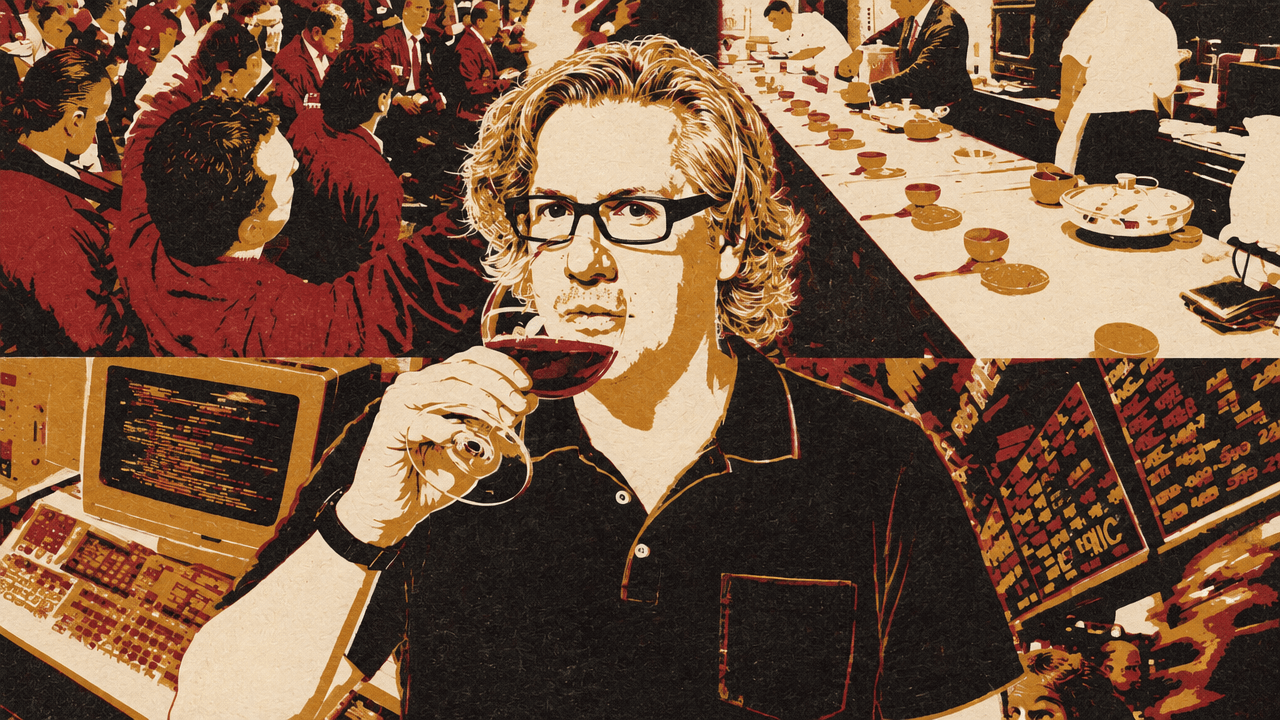
A delay between connected markets created the trading opportunity
Nick Kokonas describes arbitrage as a way to profit from a mismatch in time. On the Chicago trading floor, an order could take 30 or 40 seconds to pass through a phone call, a broker, a piece of paper, and a runner before it reached the trader who could act on it. Later, in restaurants, Kokonas saw a different delay: a Tuesday reservation and a Saturday reservation could be sold through the same system even though demand for the two tables differed. Tock grew out of his attempt to change how restaurants handled reservations and time-specific capacity.
I am now convinced that every arb is just about time scale.
The examples are not identical, but Kokonas connects them through a practical question: what is taking longer than it needs to, and what changes if that delay is removed? In trading, the opportunity was to connect two markets directly rather than wait for information to travel through paper and people. In restaurants, it was to recognize customers and respond to differences in demand. In the sale of Tock, it was to complete a diligence process that Kokonas and his colleagues believed they could answer in days rather than weeks.
Kokonas’s account also shows that noticing a mismatch does not, by itself, make it a durable business. A trading edge can draw a response if it is used too aggressively. Restaurant owners may not want the added work of changing prices. Strange House, his proposed immersive magic project, requires a costly full-scale build before its experience can be demonstrated as intended.
His route into unfamiliar fields began with finding access to the work, learning from someone who knew the mechanics, and taking on a specific problem. That approach helped him enter trading and later shaped his work in restaurants and software. He says he has started an entirely new career about every decade, but his account includes the costs of those changes as well as the appeal.
The trading edge was a communications delay—and a threat to its own survival
Kokonas entered trading with $60,000: $20,000 of his own money and $40,000 from a backer. He emphasized that this was little capital for a trading floor. He had studied philosophy and grown up programming, and he wanted to trade rather than take the more conventional finance jobs firms offered him. To get onto the floor, he removed his college education from his résumé and took a runner’s job for $5.25 an hour.
A runner carried orders between brokers and the trading pits. A customer’s order could pass through a phone call, a broker, a piece of paper, and the runner before it reached the person who could trade it. The process might take 30 or 40 seconds. Kokonas saw that delay as part of the market’s mechanics, not just an inconvenience. But seeing a bottleneck did not immediately make him a trader. He first had to understand how the floor worked.
He set himself a goal of trading within a year. As a runner, he learned the layout and watched the process. He moved on to working phones, a job he called soulless and repetitive, while taking open-outcry classes after the market closed. He learned the calls and hand signals used in the pits. He was also searching for a trader who could teach him how options worked in practice.
The books he found explained the formal definitions: an option gives its holder the right, but not the obligation, to buy or sell under specified conditions. That did not answer the questions Kokonas cared about: why to buy one option rather than another, how positions related to one another, or how a trader made a market. He wanted to understand the actual decisions, not just the vocabulary.
For months, he did not find a teacher who seemed right. He was looking for someone who could make use of his strengths in logic, language, and programming, and who could show him a difficult part of the market that other people were not eager to learn. He called these opportunities the “smallest highest hoops”: a small target that is hard to reach, with a meaningful prize on the other side. The difficulty matters because it can keep competitors away.
The person he eventually approached was a technically minded independent trader who had studied quantitative finance and been considered too geeky for a conventional trading-floor role. Kokonas told him he was the person he needed and offered to pay to work for him. The trader agreed to pay him $250 a week. After six months, Kokonas had a rudimentary grasp of market-making in options. He put up $20,000, his teacher put up $40,000, and they began trading Swiss franc options almost exactly a year after Kokonas had set his goal.
The transition was deliberately practical. Kokonas later taught dozens of people to trade, and his rule for their first day in the pits was that they had to make one trade. The environment was noisy, physical, and competitive; a beginner had to speak up in front of people who could see the mistake. The requirement was meant to break the seal before anxiety turned into a habit of waiting. He and Shaan Puri compared it with Puri’s first day making sushi, when he failed to clap enough water from his hands and served soggy rice. Both saw the first visible error as useful: it replaced an imagined catastrophe with a specific mistake that could be corrected.
The larger trading arbitrage came from a different, more consequential delay. New York traders were buying and selling exchange-traded funds such as the Triple Qs, which represented baskets of stocks. A related hedge could be made using Nasdaq futures in Chicago. If a trade in the ETF changed the position that needed hedging, a trader could make a corresponding futures trade. But the information moved through people and paper. Kokonas wanted to connect directly with the trader on the other side, bypassing the ordinary sequence.
He described a simple version of the relationship: if someone bought roughly a million dollars’ worth of Triple Qs, a trader might sell about eight futures in Chicago against it. The precise relationship involved the cash position and the composition of the fund, but Kokonas’s point was that the two markets were connected. If he could see the relevant price information in Chicago before it traveled through the normal chain, he believed he could act within a window of about 20 seconds.
The idea took roughly a year to put into operation. Kokonas said the first step was reading the rules. The regulations governing the exchanges and the Commodity Futures Trading Commission were extensive. In his view, the institutions involved often relied on lawyers, precedent, and customary practice without examining every rule themselves. He looked for a rule that would prevent people at the same firm, identified by the same tax number, from communicating directly between New York and Chicago. He said he could not find one.
That did not mean the system was easy to change. A direct connection required a dedicated line. Kokonas said the exchange would not allow the cabling to be run beneath the pits, and the exchange was owned by broker groups whose business depended on the existing arrangement. He eventually got union workers to do the work by giving them cases of Jameson. His account presents the regulatory reading, the physical connection, and the local opposition as parts of the same project: a rule might permit a new arrangement, but the existing institution still had to be navigated.
When the connection first went live, the result was startling. Kokonas compared the markets to two people separated by a pond: one willing to sell an apple for $3, another willing to pay $5. Instead of sending someone running across the pond with the information, the new line let the traders communicate directly. He recalled making a trade and earning a few hundred thousand dollars almost immediately.
Yet the first successful test frightened him. He believed that taking too much from the large investment banks at once would prompt them to close the opportunity. “If we picked the pockets of the big investment banks and we made $2 million a day,” he said, “that’d be the last $2 million we ever made.” The response was to shut the operation down, even though the firm had spent months getting it ready.
Kokonas then applied for a pilot program, describing the direct connection as a way to support a growing class of ETFs and their relationship to the futures traded in Chicago. Once the pilot was approved, his firm could operate openly and in multiple pits. His New York partner, Keith Goggin, helped build the system. Within six months, Kokonas said, the firm was doing a couple of percent of the American Stock Exchange’s daily volume. He estimated that it made more than $100 million in arbitrage profits in one year. He described the overhead as relatively small, while noting that the company hired many people and paid salaries.
The figure did not represent Kokonas’s personal take. He had a small percentage of the company because he needed capital, and the money he had accumulated remained at risk in the trading operation. When he was 31 and faced a multimillion-dollar tax bill, he drove to his father’s house with the check. His father’s first question was whether the work was legal. Then he told his son to save the money, avoid boats, women, and drugs, and pay the tax as a patriotic duty. The story conveys both the scale of the change in Kokonas’s circumstances and how little certainty he felt about keeping the money.
An arbitrage window closes as other people learn to exploit it, or as the surrounding market changes. Kokonas said competitors figured out the trade and the time scale shortened. His firm added computation, but it also expanded into other exchanges before its partners had built the management, accounting, and operating systems to support a larger company. Some partners who had made extraordinary sums in a strong year became frustrated when earnings fell. In a later year, Kokonas said, lower trading volumes meant the firm made less money even though it was not doing anything wrong.
The edge did not automatically make the company durable. It created a need for more capital, more employees, and management capacity that Kokonas and his partners did not yet have. Kokonas said he was a poor manager, and that the firm had grown to around 35 people. He also reached a point where he no longer wanted the life: his father had died, the September 11 attacks had changed his sense of priorities, and he felt he had not been a good husband, parent, or person while working at full intensity. He found the world outside the trading floor slow and had stopped enjoying the work.
He left abruptly. One morning, after a period of infighting among the group, he told colleagues that it was his last week. In hindsight, he said, he could have handled the departure better. The decision was not a tidy transition from one career to the next; he quit before knowing precisely what would replace trading. His stories about beginning again often emphasize the attraction of a new challenge, but they also include fatigue, damaged relationships, and the cost of sustaining a successful business after its original opening appears.
Tock aimed to make reservations respond to demand
Kokonas carried the question of delay into restaurants. At Alinea, a phone could ring while a guest stood at the host stand. The host would turn away from the person in front of them to answer the call, then return to ask the waiting guest who they were and whether they belonged there. Kokonas considered that a poor welcome. The phone line was taking priority over the guest already at the door.
He also saw a problem in reservation software. He compared the experience to entering a sweater shop, asking for a particular blue cashmere cardigan, and being told that it was unavailable without being given a useful way to choose among the other options. He said the booking software he encountered in 2005 was dismal and often interposed itself between the restaurant and its customer.
The first goal was to know who was coming in. Kokonas described that as a “know your customer” problem: a restaurant should be able to recognize the person arriving without forcing them to identify themselves at the door or repeat information by phone. The next problem was that a reservation did not have a fixed value. A table at 9 p.m. on a Tuesday in Chicago was not necessarily as valuable as a table at 7 p.m. on Saturday. Yet restaurants often sold both under systems that did not respond much to differences in demand.
That thinking helped lead to Tock, the reservation and ticketing software company Kokonas founded. He wanted the restaurant to maintain a better relationship with its customers and to treat time-specific capacity as something that could be priced in relation to demand. The premise was that a business could not manage revenue well if its booking system and prices remained fixed while the value of a seat changed.
Dynamic pricing is contentious, and Kokonas’s discussion did not treat customer objections as imaginary. A tweet shown during the conversation, attributed on screen to Elizabeth Warren, warned that real-time price changes could raise the cost of ice cream when it was hot or tea bags when it was cold, and described the practice as a way for large companies to squeeze consumers. Kokonas agreed with the concern about exploiting people when circumstances were bad. His argument was that prices change over time; the question is how quickly and visibly they change.
He used Uber’s “surge pricing” as an example of a mechanism poorly named. When demand rose, higher fares were meant to attract more drivers, increasing supply. Kokonas thought the phrase made the price change sound like a penalty and gave the company an avoidable communications problem. In his view, the concept would have been easier to explain as dynamic pricing: prices adjusting as conditions changed.
For restaurants, his pitch was that a full dining room should not have to send a potential customer to a competitor. A restaurant could change prices or otherwise alter the offer to reflect demand. But operators often printed menus once a quarter and did not want another complex management task. Kokonas recognized that a restaurant owner’s attention was already consumed by the daily operation. His proposed answer was not to ask every owner to become a pricing analyst. It was to create a simple control—what he called a “big dumb button” that an owner could hit to make more money—with the operational work handled in the background.
Kokonas said he still believed localized, dynamic pricing for businesses that sell time slots could become a business worth hundreds of billions of dollars. He also said he had grown tired of persuading restaurant owners to adopt the idea. An opportunity can be clear to the person who sees it and still be difficult to put into practice: the operator must trust the system, understand the benefit, and be able to use it without taking attention away from the core business.
The mismatch he described was between demand that changed over the week and menus that might be printed only once a quarter. He also thought that the software Alinea used mattered to its own operating results. For him, pricing and reservations were part of the work of running the restaurant, not separate concerns.
Alinea paired an ambitious experience with operating discipline
Kokonas did not enter the restaurant business as a chef or experienced operator. He met Grant Achatz, tasted his food, and believed he had found the person who could push Chicago dining beyond the standard set by the established restaurants there. He described Achatz as the “ass-kicker” the city needed. But finding the chef was only one part of the work. The restaurant also needed a clear ambition, a deliberate guest experience, and a business model that could support both.
The ambition was to build the best restaurant in America. Kokonas said he did not initially frame that as a Michelin-star goal, in part because Michelin had not yet come to America. The stated target was the best restaurant in the country. Before opening, he made the planning process public on eGullet, an online food forum. He had been reading restaurant books and felt they did not answer the questions he needed to solve. To make the operation more legible, he built a spreadsheet he called the Universal Restaurant Calculator, with around 80 inputs, including costs such as insurance.
The forum screenshots shown during the source identify the project as “The Alinea Project” and include a thread titled “Alinea - The Business Plan.” Kokonas then published the project: possible names and rejected names, menu development, and the way he and the team were thinking about the business. He said the project drew hundreds of thousands of views and brought attention from Food & Wine, Gourmet, The New York Times, and The Wall Street Journal.
He had two aims in sharing the work. He wanted feedback from people who might encounter it, and he wanted to reach future customers. People who followed the planning would arrive with some sense of the restaurant’s origins. Kokonas said the publicity was a significant marketing effort; he believed the restaurant would not have opened in the same way without publishing the project.
His principle was to be open about why a business is being built, as long as the openness is authentic. He qualified the idea rather than presenting it as a universal rule. A restaurant is a relatively benign undertaking; total openness may not make sense in a field with different risks. But Alinea could show people its reasoning, including some of the awkward or overlong thinking. Kokonas recalled writing thousands of words about why restaurants serve bread: it fills customers up, can allow smaller portions of other food, and is enjoyable in its own right. He later thought the post was excessive, but the impulse to explain the decisions was genuine.
Alinea’s operating results were part of the argument for treating a restaurant as both creative work and a business. Kokonas said the first year brought in about $5 million in sales and produced a margin of roughly 7 or 8 percent, which he considered good but a downgrade from the trading business and a great deal more work. At its peak, he said, the restaurant did more than $20 million in annual sales and achieved margins of around 18 to 20 percent.
He attributed the improvement to specific operating changes rather than to the idea that a restaurant could simply charge more. The group got rid of phone lines and built software. Its CFO, Steve Bernacki, developed Marimekko charts for food costing. Kokonas stressed that this work was not all his own; Bernacki developed the charts, and Kokonas learned from him. The group shared some of its methods with other restaurants, but, according to Kokonas, few adopted them.
He objected to a common account of restaurants as businesses that could make only two or three percent, pay one month’s bills with the next month’s revenue, and require broad financial rescue. He had heard a prominent television chef make that case during the pandemic and argued that success on television and success as a restaurant owner were different things. In his view, poor margins were not an unavoidable property of the restaurant industry. They could also reflect an operator’s choices and capabilities.
Kokonas said investors in the Alinea Group received quarterly distributions from its founding in 2005 through its sale in 2023. At the sale, he said, they received eight times their initial investment, in addition to prior distributions; he estimated the overall return at roughly 27 or 28 times the original investment. He took pride in that result because the restaurant world could treat business discipline as low-status or as a form of selling out. His counterargument was operational: a profitable restaurant can reinvest in the experience, and a stronger experience can support the business.
The restaurant’s creative work was itself built through repeated attempts. Kokonas recalled an early morning before the opening of Next, a restaurant designed to change its cuisine and menu every four months. The opening menu was “Paris 1906,” a time-and-place concept that gave customers an immediate frame for the experience. A lamb dish had a sauce that did not taste right. When Kokonas arrived early, Achatz had put roughly 20 small saucepans on the pass, each marked with blue tape. He was testing variations, adjusting sweetness, salt, and acidity. The historical recipe was not precise enough to settle the question; nobody could simply look up the definitive version.
Kokonas later used that scene to tell culinary students how to become a great chef: show up early and make 25 sauces. “Knowing what great is,” he said, “is making mostly shit 99% of the time.” The point was not that failure is inherently virtuous. It was that judgment is developed by producing enough alternatives to recognize the better one.
He applied the same idea to entrepreneurs who contacted him with a name or logo for a proposed business. His response was to go do the work and come back in five weeks. The logo was not the work. Puri described a pottery-class story in which students graded on the volume of pots they made ended up producing better pots than those graded on their single best pot. Kokonas agreed, while admitting that he still caught himself trying to make a great pot rather than making many.
He also described meeting Wilco’s Jeff Tweedy while Tweedy was writing a song that did not seem especially good. When Kokonas asked why he came in to write every day, Tweedy told him he needed to write two or three songs a week to have twelve good ones at the end of the year. The story disrupted Kokonas’s romantic image of songwriting as inspiration arriving fully formed. The same principle applied to the sauce trials: the audience sees the finished work, while the creator has to make and discard the drafts.
The guest experience was designed around attention and sequence
Alinea’s ambition extended beyond the dishes. Kokonas and Achatz treated a meal as an experience that began when the guest arrived and unfolded over time. Their references included theater, film, and magic—fields that think explicitly about sequence, attention, surprise, and what an audience notices.
Kokonas pointed to David Byrne’s Stop Making Sense. Byrne begins alone on an almost empty stage, carrying a boombox. The performance gradually builds as equipment and performers are added; the oversized suit eventually makes Byrne seem smaller against the expanding stage. Kokonas took from it the value of starting with very little and introducing elements deliberately.
At Alinea, Achatz questioned why fine-dining restaurants used tablecloths. His answer was that the table underneath might be poor. The team wanted a table worth seeing and touching. They also wanted to avoid overwhelming guests with cutlery and rules that made them worry about using the wrong fork. Instead of beginning with a fully furnished scene, the restaurant could add to it as the evening progressed.
Kokonas described the meal in terms of callbacks. A comedian might plant a detail early in a set and return to it later, making both appearances more satisfying. At Alinea, something placed on the table could take on a different meaning hours later. A floral arrangement might turn out to contain edible elements. A small object might be preparation for a later course. The guest was not simply receiving courses; the restaurant was controlling what was known, when it became clear, and how an earlier moment would be remembered.
That approach also shaped how the restaurant thought about choice. Puri recalled an omakase meal at Nobu as memorable because he did not have to decide what came next. He had gone in without much familiarity with the food, said the word “omakase,” and let the restaurant take him through a sequence of dishes. He remembered feeling cared for and relieved of the effort of choosing.
Kokonas connected that experience to software design. He said he sometimes liked to build “dead ends” into software, even though a conventional user-experience designer might want every button available on every page. If every option is open at all times, it can be difficult to lead a customer through a designed sequence. Sometimes, he argued, the service should offer choice; sometimes, a defined path is more satisfying.
Magicians provided a more detailed model for how to guide attention. Kokonas had been interested in magic since childhood and later read books about how performers create an effect. He described the structure as beginning with the effect—the audience sees a $10 bill become a $100 bill—then working backward through the method and the presentation. The method is how the trick is done; the presentation is how the performer makes the audience attend to the right things and trust the experience.
He applied that thinking to the physical arrangement of service. A server standing across from a diner and describing a dish can look like a salesperson. Standing beside the diner changes the relationship: they are looking at the same thing. Kokonas said the server might be able to signal another staff member or attend to something else while sharing the guest’s focus. More importantly, the diner is not positioned as someone being sold to. The service should put staff on “Team Diner,” not “Team Restaurant.”
The same attention to social context informed a wine-service example. At one table of six, Kokonas said, the guests were ordering large red wines that he thought would not pair well with the food. He did not want to tell the person ordering that he had chosen badly or make him lose face in front of the table. Kokonas noticed new designer shoes on the wife and an expensive watch on the man ordering, and inferred that the order might be meant to impress the group. He approached as the owner, asked what the man might drink with pizza on a Tuesday, and then suggested a few bottles that would work better with the meal. The total spend could remain comparable to the original order, but the recommendation would be more appropriate.
Kokonas said the waiter who watched the exchange was surprised by the outcome. For Kokonas, the relevant skill was observation: understand what the person is trying to accomplish, then find a way to help them accomplish it.
He used videos of the magician Derren Brown to train restaurant staff, discussing movement, eye contact, and the cues that make an interaction feel natural. He did not think every service detail needed to be taught by him, and he distinguished the exercise from high-pressure sales techniques. A magician’s audience knows a trick is happening and consents to suspend disbelief if the performance is good. The lesson for service was how to create a shared experience, not how to corner someone into a purchase.
Strange House would need a full-scale build to prove its experience
The most ambitious extension of Kokonas’s interest in experience is Strange House, a proposed immersive magic project developed with magician Nate Staniforth. It began with Kokonas watching a video of Staniforth performing a lottery-number illusion. Audience members called out numbers, and Staniforth eventually revealed a lottery ticket containing them. Kokonas admired the effect but was bothered that the numbers appeared in the order the audience had called them rather than in the order he expected a ticket to display.
He reverse-engineered a possible way to produce the ticket and sent Staniforth a long email with his critique. Staniforth called soon afterward. He explained that the numbers were presented in that order because it made the audience’s contribution easier to follow. Only a very small number of viewers had noticed the discrepancy, while the arrangement helped the larger audience understand the effect. Kokonas said the exchange showed him that he had focused on a detail that mattered to him but made the experience less clear for most people.
The two stayed in contact and began discussing the business of magic. Staniforth worried that magic could attract views online without providing a viable path for magicians to make a living. Kokonas had long imagined a restaurant experience that moved guests through a series of rooms, like a theme-park attraction, rather than keeping them at one table for two hours. He had abandoned the restaurant version because its operating costs seemed too high: too many rooms, staff, and variable expenses, requiring a ticket price he thought would be difficult to justify.
The underlying format, however, might work for magic. Kokonas contrasted a large stage, where a performer can hide something as conspicuous as a lion, with a small room, where the sudden appearance of the same animal would be astonishing. His preference was close-up magic, where the audience is near the performer and the craft is exposed to scrutiny. He described a great close-up magician as comparable to a great musician or ballerina: the performance is an art, not merely a trick.
Staniforth began asking him practical questions about insurance, the size of a venue, and other requirements. Later, he sent Kokonas a proposal that included spreadsheets and videos explaining the design of individual rooms with a scale model. Kokonas said parts of the financial model were wrong, but the proposal did more than describe an artistic idea. It tried to establish how the project could work as a business and serve as a proof of concept.
Kokonas set a minimum financial ambition: the project could not gross less than $20 million. He said that sounded like a large figure until he worked through the possible number of visitors and ticket price. The exact business remained unproven, but he wanted to test whether the experience could support the production costs rather than become another high-profile pop-up that lost money. He noted that such events might be famous and charge hundreds of dollars while still failing to cover their production expenses without an underwriter.
The real estate is a central part of the project rather than a venue to be selected after the concept is settled. Kokonas said the team had spent three years searching and had found a 90,000-square-foot space beneath Wall Street in Manhattan. They had spent six months negotiating a letter of intent, and the deal remained uncertain. A landlord could understand that Kokonas had built businesses before and still wonder what he knew about a project that was not quite a magic show, theater, or haunted attraction. The lack of direct comparisons made it harder to explain the plan.
The experience also cannot be fully demonstrated on a small scale. Kokonas said the concept works at scale and not at “not-scale”: certain illusions and room sequences cannot be judged properly without building the rooms. Staniforth had developed a technical guide hundreds of pages long, but a document cannot substitute for the built environment. Kokonas said the people who had built Taylor Swift’s stage were slated to build one of the rooms. Even so, the team would have to spend millions before it could show the room working as intended.
That leaves the team with a costly test. Potential partners can ask how the team knows the experience will work before they commit capital; Kokonas’s answer was that they had spent years designing it and engaged people with relevant skills. But the strongest demonstration requires building something expensive. Its novelty makes the project hard to explain by comparison with existing attractions, while its scale makes a small test inadequate.
Kokonas also described the project as an attempt to make human connection more important, not less, in a world where he expects more activity to be mediated by AI and agents. He is enthusiastic about AI, but believes that shared, in-person experiences will matter more as other parts of life become less person-to-person. Strange House is meant to produce moments of awe and wonder among strangers, including people who might arrive with opposing politics or backgrounds. Kokonas said the ambition was to make them leave feeling connected.
That remains an ambition, not a demonstrated outcome. The site, lease, production costs, and untested full-scale experience are all significant uncertainties. Kokonas acknowledged that the project might not happen. At the same time, he said the daily work with Staniforth repeatedly made him feel that they needed to take the next step because the idea deserved to exist.
Starting over brings back uncertainty, but success makes it harder
Kokonas said he has taken on an entirely new career about every decade. He did not arrive at that pattern through a formal plan. Early on, he knew what he did not want: a predictable salary, limited upside, and a situation controlled by a boss. His father had run a grocery store he bought after working there from childhood, and Kokonas had seen that owning a business could offer a different kind of autonomy. His father had also wanted him to avoid the struggle and choose a more conventional path. Kokonas spent years uncertain about what he wanted to do.
The appeal of a new field is not that unfamiliarity is inherently good. Kokonas described discomfort as a signal that he was still learning. He recalled a friend telling him during a risky trading position that he was at the right level of unease if he had not yet thrown up. When work became comfortable, Kokonas sometimes read that as evidence that he was no longer pushing at the limits of what he knew.
He believes expertise can become a trap. A person who has mastered a field may have incentives to defend familiar methods, while a younger entrant may be more willing to challenge them. His advice was blunt: before that entrant takes your place, consider leaving and finding something new. But he also acknowledged that this gets harder with age and success. There can be little financial or personal incentive to abandon a profitable, familiar business and lose money while learning another one.
His departures were not cost-free demonstrations of an appetite for risk. He left trading after a decade because he no longer enjoyed it, was unhappy with the person he had become, and wanted to change his priorities. He said he had not been a good husband or parent, and recalled how the world outside the trading floor had begun to feel intolerably slow. He quit without knowing precisely what would replace the work. The relief of leaving one game did not itself supply the next one.
He also said that it gets harder to start over as the years pass. Success gives a person more to lose and less immediate incentive to enter a new field, where earnings may fall while they learn. His stories about trading, restaurants, software, and Strange House hold that tension: the unfamiliar work can restore the feeling of learning, but the transition brings uncertainty, and a new opportunity may demand years of effort before it works.