Lloyd Blankfein Says His Own Trading Is No Model for Investors
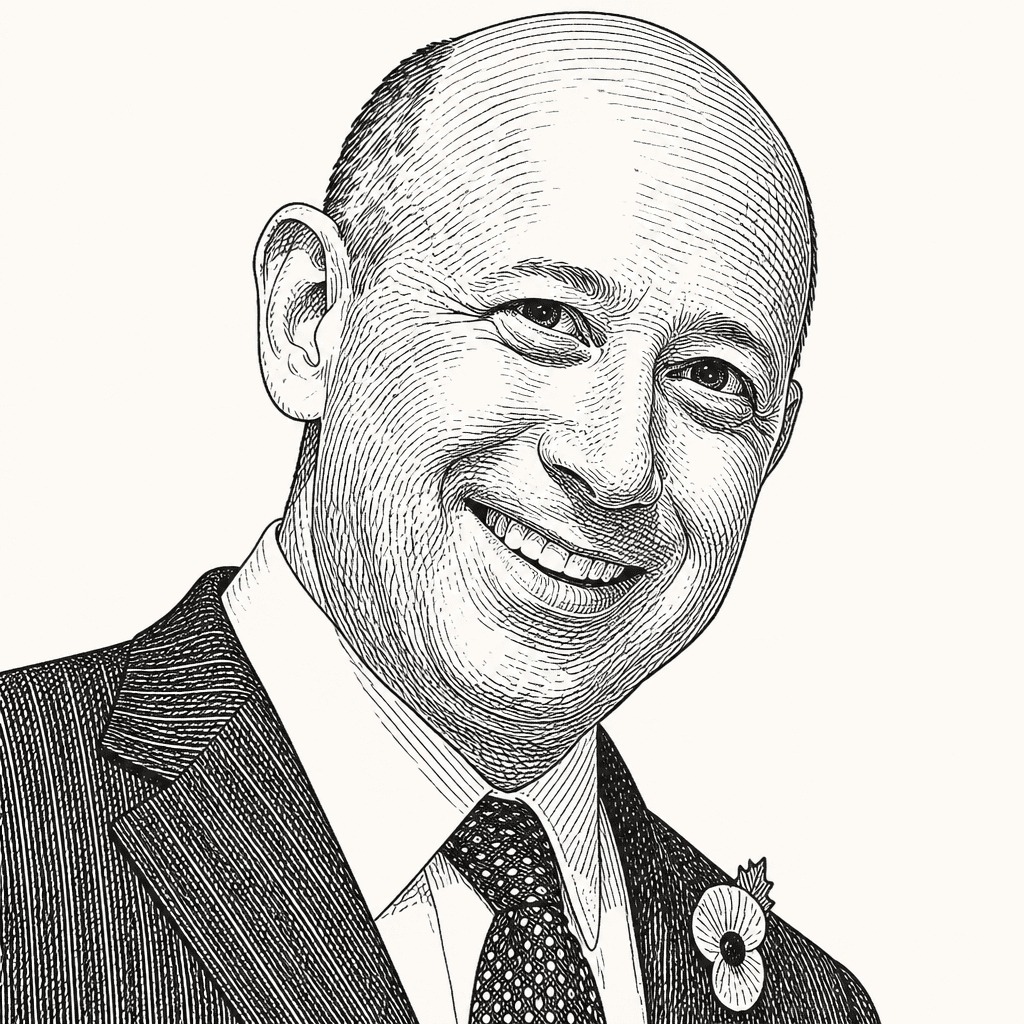
Former Goldman Sachs chief executive Lloyd Blankfein tells Sam Parr that his own money is invested in a way he would not recommend for most people: about 98% in risky assets, mostly equities, with heavy exposure to single stocks he follows and trades daily. Blankfein argues that this approach only makes sense because he spent decades in markets and is financially insulated from the outcome; for ordinary investors, he points instead to diversified equity exposure, more risk when young, and greater caution with age.
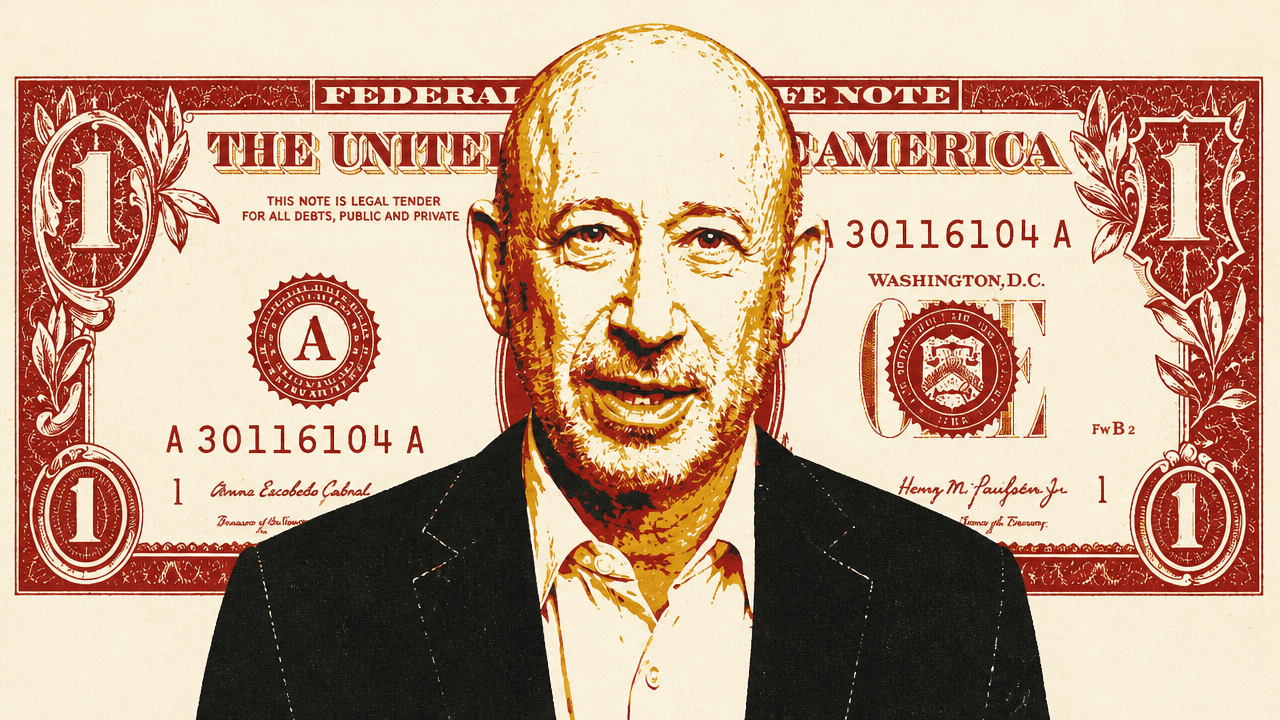
Blankfein trades like a professional because he no longer needs the outcome
Lloyd Blankfein describes his own portfolio in terms that would be inappropriate for most people and unremarkable for him: overwhelmingly risky, heavily equity-oriented, concentrated in single names, and watched constantly.
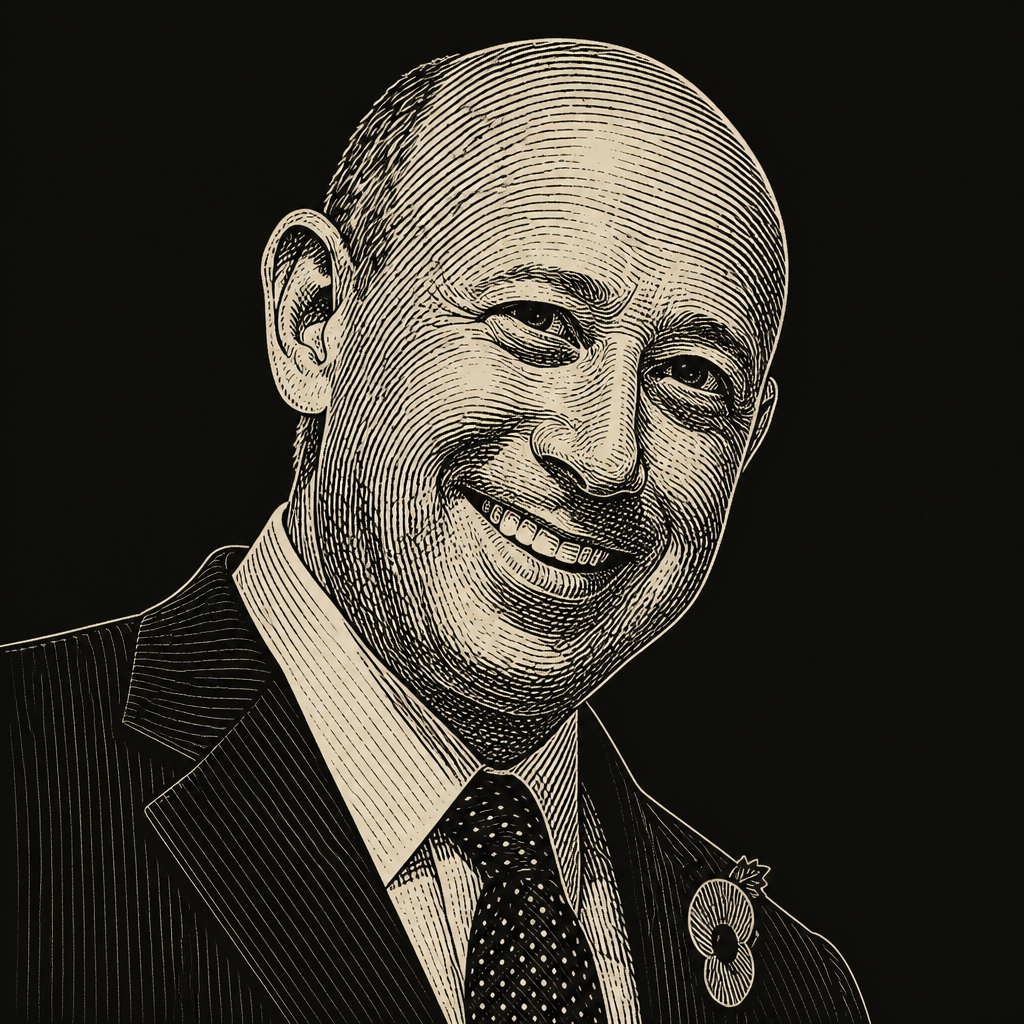
Asked what his portfolio would look like as a pie chart, Blankfein said he is “98% in risky assets,” with “95 or the 98” in equities. A quarter to a third, he estimated, is in ETFs; the rest is mostly single stocks. He immediately qualified the math: if he is wrong, it may be “10%” ETFs and “90%” single stocks, because single-stock trading is what he likes to do.
He does not offer that as a model for ordinary investors. His explanation rests on two conditions. First, he spent “the last four or five decades” professionally in markets. Second, nothing “hugely positive or hugely negative” in his portfolio will materially change his life. In that sense, he said, trading is “like a hobby.”
I’m a pro at it. I mean, this is what I did my, you know, only for the last four or five decades. And the other thing is that nothing hugely positive or hugely negative is going to affect my life. So to me it’s like a hobby.
He trades daily. When Sam Parr called that crazy, Blankfein rejected the premise. The market, for him, is background noise. He compared it to music: some people have music on all day without sitting motionless in front of a speaker; he has markets moving in the background while he does other things. During the interview, he said it took “a lot of discipline” not to look at his screen.
His tools are not elaborate. He said he does not sit at a computer. He uses an iPad and a phone. He talks to people, follows news, reads financial publications, and treats companies as “little stories,” almost like gossip. He reads newspapers broadly — the New York Post, the Journal, the Times, the Financial Times — and financial services such as Bloomberg. Asked whether he subscribes to all of them, he replied, “I don’t steal ’em.” He also said that he still watches commercials on Netflix.
His current focus is tech, energy, and financial services. Tech has been the dominant exposure “for a long time, for good reason,” he said. He named the “big hyper-scalers” and large technology names — Google, Microsoft, Nvidia — and described a second tier “slightly down the food chain,” giving Oracle as an example “with no insult intended to Larry Ellison.” He avoided offering specific current trades because listeners would hear them at different times and the calls might look smart or stupid depending on the day.
The principle behind his tech exposure is blunt rather than doctrinal: “It’s been good to be bullish on Big Tech, and I’ll stop being bullish on it when it stops going up.” When Parr asked if that meant he was bullish for the foreseeable future, Blankfein replied that his foreseeable future lasted until the end of the conversation, when he would check again.
The advice he gives is simpler than the way he invests
Blankfein repeatedly separated what he does from what he would advise someone else to do. Parr described his own portfolio as roughly 90% index funds and 10% bonds. Blankfein called that “sensible,” precisely because Parr is not investing for a living.
For younger investors, Blankfein’s broad advice is to own riskier assets such as equities rather than fixed income, because time allows recovery from mistakes. But he did not translate that into a recommendation to day trade or run a concentrated book of single stocks. He said that if he were advising someone in Parr’s position, he would use diversified equity exposure — the S&P 500 through instruments like SPY or VOO — and perhaps add technology-focused ETFs to reflect the importance of technology and the likelihood of major changes ahead.
Even then, he noted that broad index funds already carry substantial technology exposure because the largest technology companies have such large market capitalizations. In other words, a broad-market investor is not absent tech; the index itself has become meaningfully tech-weighted.
The age component matters. Blankfein framed risk as more tolerable when the investor has years ahead to absorb drawdowns and errors. “At your age,” he told Parr, equities make sense. As people get older, the priority should shift from maximizing gains toward avoiding losses.
That is also where his view of retail trading platforms is ambivalent. Blankfein sees value in tools that democratize investing and make assets easier to buy. More people can notice markets, learn what is available, and participate. But the same accessibility becomes dangerous when trading is made to feel like a video game. Confetti, “Attaboy” cues, high-fives, and casino-like reinforcement can mask the fact that people with little money may lose more than they can afford.
He did not argue that the gamified experience is always bad. Some people need investing to be made more attractive before they pay attention at all, and not everyone will go overboard. The problem is that the same interface can either open a useful door or conceal the risk on the other side.
Inside markets, nobody knows as much as outsiders imagine
A recurring claim from Lloyd Blankfein is that proximity to power and markets does not produce omniscience. When Sam Parr said he did not know anything about investing, Blankfein interrupted: “Nobody knows anything.” Because he had spent so long on the inside, he said, he knew that nobody knows; outsiders merely suspect it.
That skepticism extends to talent and success more broadly. Blankfein said there are “very, very few geniuses in the world,” and he was unsure he had ever met one. Elon Musk may be an exception, he said — someone whose way of seeing the world he cannot easily inhabit. But most highly successful people are not incomprehensible. Blankfein may not be able to do what they do, but he can usually see how they do it.
The more important lesson, in his view, is that successful people are more normal and insecure than observers imagine. People who hold high office or achieve extraordinary professional status still ask, after they speak, “How did I do?” They seek affirmation. Their children may not like them. They are driven by insecurity as often as by clean confidence.
Luck is also central. Blankfein became CEO of Goldman Sachs because his predecessor was nominated to become Treasury Secretary. If that had not happened, his predecessor might have stayed five more years, and Blankfein might have aged out of the path. He used the Olympics as an analogy: a runner can be the fastest in the world but peak in the wrong year and never medal because the contest arrives only once every four years.
The same thin margins apply to traders. Asked what separated traders who outperformed from those who did not, Blankfein argued that the difference between “really, really good” and “can’t make it” is often not great. In a golf tournament, one person wins by a stroke while several others finish one stroke behind. The margin is tiny, but the market outcome is not.
The difference between somebody who’s really, really good and somebody who can’t make it is not that great.
He extended the point beyond markets. Hollywood may fully reward the actor who gets any part, while the nearly-as-good actor waits tables. A high school’s greatest athlete may get a minor league baseball contract, but only a small fraction make a professional living. In rarefied markets, the opportunity set can reward only the tiny fraction at the very top. The distinction between abundance and no viable career can be a small difference in ability, timing, or fit.
Blankfein also resisted the idea that he was “born a great investor.” He said he ran a firm that contained great investors, great salespeople, great traders, great bankers, and many other specialists. His own path did not require him to be the best at any one of those jobs. He described himself as a pretty good manager, strategist, and partner to other people. A modern financial firm, in his telling, is too complicated for the leader to be the best practitioner in every seat.
Risk management sometimes means telling people to take risk
Lloyd Blankfein’s view of risk is not the conventional caricature of a risk manager as the person who says no. In the aftermath of the 2007–2008 financial crisis, he said, Goldman had experienced big losses and people were “gun shy.” Regulators wanted to prevent a recurrence, but Blankfein argued that a risk-taking system cannot eliminate risk without eliminating growth.
“If you try to legislate risk,” he said, you may protect against a 100-year storm, but you also give up the 99 years in between when there could have been growth. Inside Goldman, he recalled a mood in which people talked themselves out of everything. A good risk manager, in that setting, sometimes has to encourage risk-taking because the institution exists to take risk intelligently.
He put the entrepreneurial version of the same tradeoff plainly. If you take risk, there is a meaningful chance you will fail and lose money for the people who backed you. That is terrible. But the alternative — never taking risk — offers the comfort of not losing money while also preventing progress.
Blankfein linked rising conservatism to the urge to preserve. The word “conservative,” he noted, contains “conserve.” As people or institutions become more successful, they become more interested in not losing what they have than in making more. He anticipated that “making more” might sound repulsive when applied to already successful people, but reframed it as advancing and creating wealth.
This tension sits underneath much of his personal portfolio. He is not against risk. He built a career in it. But he is also not romantic about it. Risk is not a brand identity; it is an activity whose consequences cannot be fully known in advance. His willingness to remain concentrated and active is inseparable from his professional training and from the fact that his basic life no longer depends on the outcome.
Buffett’s Goldman investment was about confidence more than cash
The Warren Buffett story, as Lloyd Blankfein tells it, is less about the novelty of a handshake than about reputation, scale, and market confidence during a crisis. During the financial crisis, Buffett offered to invest in Goldman Sachs at a critical moment. Blankfein recalled the figure as $5 billion — at one point saying “$5 billion or $10 billion,” then settling on $5 billion — in preferred stock, which he described as something between a loan and a stock.
Buffett was not doing it as charity, Blankfein emphasized. The investment helped Goldman, but Buffett was acting for Berkshire Hathaway shareholders. He saw Goldman as Blankfein saw it: a good investment being beaten down by circumstances that would reverse. He wanted to invest before conditions improved.
The casualness of the execution stood out. Parr described the call as Buffett effectively saying he was willing to make the investment, did not need extensive due diligence or paperwork before committing, and had to go take a grandchild to Dairy Queen. Blankfein said that was “actually the flow of the conversation,” while adding that Buffett is rigorous and knew Goldman’s people were rigorous.
Blankfein tried to tell Buffett the things he was worried about before Buffett invested. Buffett replied, “Lloyd, I know you well enough to know that you worry enough for the both of us.” When Blankfein pushed, Buffett put the number in Berkshire’s scale: $5 billion going bad would not even be “a bad hurricane on the East Coast” for Berkshire’s insurance business. Blankfein took it as a joke, not as indifference — “nobody wants to lose $5 billion, not even him” — but the remark communicated scale.
The money itself, Blankfein said, was “irrelevant” to Goldman because the firm had money. What Goldman lacked was the confidence of the world. Other institutions similar to Goldman were failing or distressed. Goldman was not failing and was not in comparable distress, he said, but people did not know that. Merely asserting strength could make people more frightened. Buffett’s participation supplied a signal the firm could not provide for itself.
The agreement also included a reputational commitment. Buffett asked Goldman’s leaders not to sell their shares until he sold his. Parr recalled that Blankfein offered to put it in the contract and Buffett said no written provision was necessary; Blankfein said Buffett asked for the commitment, not as a favor, and trusted the word.
Blankfein framed that as normal in trading culture. Many transactions are agreed before they are documented. Bonds and other instruments may settle two days later; a person could later deny the trade, but “you’ll never eat lunch in this town again.” Documentation is useful to ensure both sides are literally on the same page, and Blankfein said all else equal it is good to document things. But much of the transactional world, especially where performance is near in time, still runs on reputation and spoken commitment.
Parr compared that culture to text messages he had seen between Elon Musk and Larry Ellison about the Twitter deal. The on-screen visual showed Musk asking whether Ellison had “Any interest in participating in the Twitter deal?” Ellison answered, “Yes...of course.” Musk asked for a rough dollar size, saying the deal was oversubscribed; Ellison replied, “A billion...or whatever you recommend.” Musk recommended “maybe $2B or more,” saying the deal had “very high potential” and that he would rather have Ellison than anyone else. Ellison answered that it had “huge potential” and “would be lots of fun.”
Blankfein said that sounded right. Big does not necessarily mean tricky or complicated. Some big things are simple; some little things are complicated.
Scarcity never entirely left him
Lloyd Blankfein’s present relationship with money is shaped by a childhood and early adulthood in which money was scarce enough to create durable anxiety. He grew up in East New York, Brooklyn, “at the end of two subway lines and a bus.” His father worked nights at the post office after earlier jobs that included driving a truck and working as a clerk in a dry goods store. His father had also been unemployed for a period. Blankfein said he grew up with rent and money as recurring sources of worry.
He resists the word “rich.” By any metric, he said, he has been rich for a long time, but he does not feel that way. He remains “trapped” in the mindset of “the kid from the projects.” He did not fly on an airplane until after he left for law school. As a child, he thought he went to Manhattan only a few times. He called himself provincial, and Parr noted that Blankfein had described himself elsewhere as an “urban hick.”
That background also informs his account of American mobility. Looking at lists of the most successful or wealthiest people in the United States, he said, one does not see many old-family names like Morgan or Rockefeller. Instead, many are middle-class or socially mobile people who created wealth for others and kept a piece of it.
The early scarcity appears most vividly in two money memories. In college, after buying books and a sweater so he could dress more like other students, Blankfein had $11 left. He was on full financial aid, but full aid did not cover ordinary life — movies, beer, small social costs. Someone told him to go to the financial aid office. He filled out a form listing what he had and what he needed, producing a $500 gap. A clerk looked at it and made out a check while he waited.
What stayed with him was not just the money. It was the way it was given. He was not “nickeled and dimed.” He did not feel bad. More than 50 years later, he still remembers the relief and the dignity of the exchange. That experience later shaped his commitment to financial aid philanthropy. It taught him, he said, that giving people what they need is not enough; how they receive it matters.
The second memory came from early partnership. Blankfein and his wife, Laura, bought a small beach place when they had a small apartment in the city and two children. Parr remembered the price as perhaps $300,000; Blankfein said the purchase consumed more than all their money. As a Goldman partner, he had paper wealth, but in the partnership structure money stayed in the firm. He had little cash. On the drive to the closing, Laura kept recalculating where the money would come from and could not make the numbers work. After 30 miles of anxiety, they realized she had forgotten to count the 10% down payment they had already made.
They were not facing survival risk — they could buy dinner that night — but they had exhausted more than all their savings. Blankfein connected that fretting to the household he grew up in, where financial anxiety was familiar.
Family money is practical, emotional, and contradictory
Lloyd Blankfein’s household division of labor is direct: he generates the money; Laura distributes it. He said he has not paid a bill in more than 40 years. Laura manages a bill-paying service. Asked if they meet to discuss finances, he did not describe a formal process. He joked that if Laura stole from him, “how much could she steal? It’s all hers anyway.”
The broader point was not a prescription for household management but the importance of a supportive spouse or partner. Sam Parr framed his own marriage as a “one plus one equals five” advantage and said he did not even know how some household bills got paid. Blankfein answered by widening the claim beyond wives supporting husbands. He noted that wives need great husbands too, and that he knows men who took less stressful jobs to support wives in demanding careers. He added that the burden is not always symmetrical because “guys don’t have babies.”
Blankfein credited Laura with making his career possible during demanding periods, including moves overseas. She found the house, got the car, handled the children’s schooling, and managed the work that allowed him to succeed professionally. He said he took victory laps for doing well at work while she handled the logistics that made it possible.
His account of giving to children is more conflicted. He likes the idea of giving “with your warm hand, not your cold hand” — a phrase someone else gave him that resonated because it means giving while alive rather than only after death. He intends to do that, but admits ambivalence when giving to his children. He gives them things, then catches himself thinking they have no idea what he lacked or how differently he lived. Then he recognizes the contradiction: they have those things because he gave them.
Parr identified the same contradiction in himself: resenting people born into wealth while intending to make his own children into people who receive wealth. Blankfein answered that children turn out as they turn out for many reasons; wealth or neediness may be only a small part of it. His own children, he said, worked hard and went to good schools.
All of his children worked at Goldman briefly, but none stayed. Goldman, he said, came from an old partnership culture and did not discourage families bringing children into the firm. But for his children, the name Blankfein was too visible. They would have had to carry the suspicion that they had not earned their roles, or that people assumed they did not work hard. That pressure would have required them to come earlier, stay later, and constantly prove their moxie. It would have been oppressive.
Anxiety was useful in the job, but not costless
Lloyd Blankfein describes himself as wired for anxiety. His father was anxious; he believes he made his children anxious. He does not treat that as a pure virtue. There are “benefits and burdens to every situation.” Anxiety can make life harder, but in his particular job it helped.
Goldman was a risk business with a large balance sheet. It invested, bought and sold, priced risk, and accepted risks other people wanted to shed for a price. To lead that kind of institution, Blankfein said, it helps to be focused on what could go wrong. He is generally upbeat and believes things tend to work out, but he also believes many things go wrong before they work out.
That combination — optimism plus vigilance — connects his investing, his leadership, and his reading of his own life. Scarcity trained him to fret. Markets rewarded the ability to imagine failure before it arrived. But he does not present anxiety as free fuel. It creates burdens at home, with children, and in the self.
He does not present himself as calm because nothing bothers him. He says the things that would feel bad to anyone feel bad to him. The difference is that he could take the punch.
He needed that capacity while leading Goldman through high-profile stress. Criticism, hostile press, and public scrutiny hurt, but he found he had a thick skin. He did not know he could take a punch until he got punched. Not everyone can, he said, and that does not make them bad; people have different wiring.
The same acceptance of tradeoffs appears in his answer on work-life balance. Did he have any? “Of course I have to say yes,” he said, but not enough to be reasonable to most people. He traveled heavily. His career required a supportive spouse and a tolerance for imbalance that he does not try to sanitize.
The obituary test was a warning about becoming only the job
When Lloyd Blankfein became a Goldman partner, a senior partner assigned to acculturate new partners gave him rules of the road. Some were practical warnings: avoid anything that would now be described as MeToo-type misconduct; be rigorous and conservative with taxes. Another concerned philanthropy: the firm set up a charitable foundation and expected partners to use it, both because giving was good personally and because serving on philanthropic boards broadened one’s world beyond business.
The last piece of advice was the most durable. Imagine living the kind of life that earns a nine-paragraph obituary. Do enough outside Goldman that no more than three of those paragraphs are about the firm.
Blankfein doubts he will meet that standard. He stayed too long, he said. His memoir is titled Streetwise: Getting to and Through Goldman Sachs; even the subtitle contains Goldman. He does not expect to be fully separated from that experience.
But he understood the advice. Since leaving the CEO role, he has served on boards, pursued other activities, tried teaching, and then decided that he would rather learn. He takes courses online and feeds curiosities outside business, including cosmology, physics, linguistics, anthropology, and history. He still likes markets and business; he still trades and reads financial material. But he also has the luxury of curiosity away from the job.
That is why the later discussion of history is not a detour. Blankfein’s post-Goldman curiosity grows out of habits that shaped his career: watching systems, judging people under pressure, and trying to understand how events can build momentum before participants fully see it.
History gives him proportion in unsettled times
For Lloyd Blankfein, history is not ornamental. It relates to commercial life because patterns recur. He invoked the line attributed to Mark Twain: history does not repeat, but it rhymes. Periods that feel unprecedented often have analogues — the late 1960s, the McCarthy era, the Civil War, the internment of Japanese American citizens during World War II. The point is not to minimize current problems but to restore proportion. Every generation minimizes past challenges because they are resolved and maximizes present challenges because they remain open.
His reading examples show how he thinks about power, difficulty, and judgment. Barbara Tuchman’s The Guns of August interests him because it shows how a vortex can form: forces mobilize and become nearly impossible to stop. Tuchman’s A Distant Mirror, which he has read twice, uses the 14th century — plague, papal schism, the Hundred Years’ War — as a mirror for a later era worried about nuclear war.
Robert Caro’s The Power Broker changed for Blankfein over time. As a young reader, he focused on Robert Moses’s flaws. After decades of trying to get things done inside large organizations, Moses’s achievements looked larger, while the flaws remained the same. The book became less a statement about Moses than evidence that Blankfein himself had changed. He had more appreciation for the degree of difficulty involved in building and forcing outcomes through institutions.
That framework carries into his view of founders, revolutionaries, and national myths. He argued against a style of revisionism that erases admirable achievements because the people who delivered them had grave flaws. He wants the flaw and the achievement held together, even when the combination is uncomfortable.
It also informs his optimism about America. He argued that one of America’s strengths is the ability to live comfortably while expressing contempt for the country; in many places, he said, one would be arrested for the same criticism. The country has gone through periods of failure and fear, then regretted and corrected them. “There’s always hope for America,” he said, “and America has always fulfilled those hopes eventually.”
The practical value of history, in his telling, is that it keeps present difficulty from looking wholly unprecedented. If earlier generations endured their periods of war, polarization, institutional panic, and national error, he said, then “we can get through ours.”