Bill Perkins Argues That Wealth Has a Peak Age, Not Just a Peak Number
Bill Perkins, the hedge fund manager and author of *Die With Zero*, argues that wealth should be measured not only by how much a person accumulates, but by whether they have the time and health to use it. In a discussion with Shaan Puri and Sam Parr, Perkins says money’s value changes over a lifetime: delaying experiences can mean reaching a point when more money cannot make them possible or enjoyable. His case is not for spending by a fixed formula, but for deciding what money is for—and when to use it.
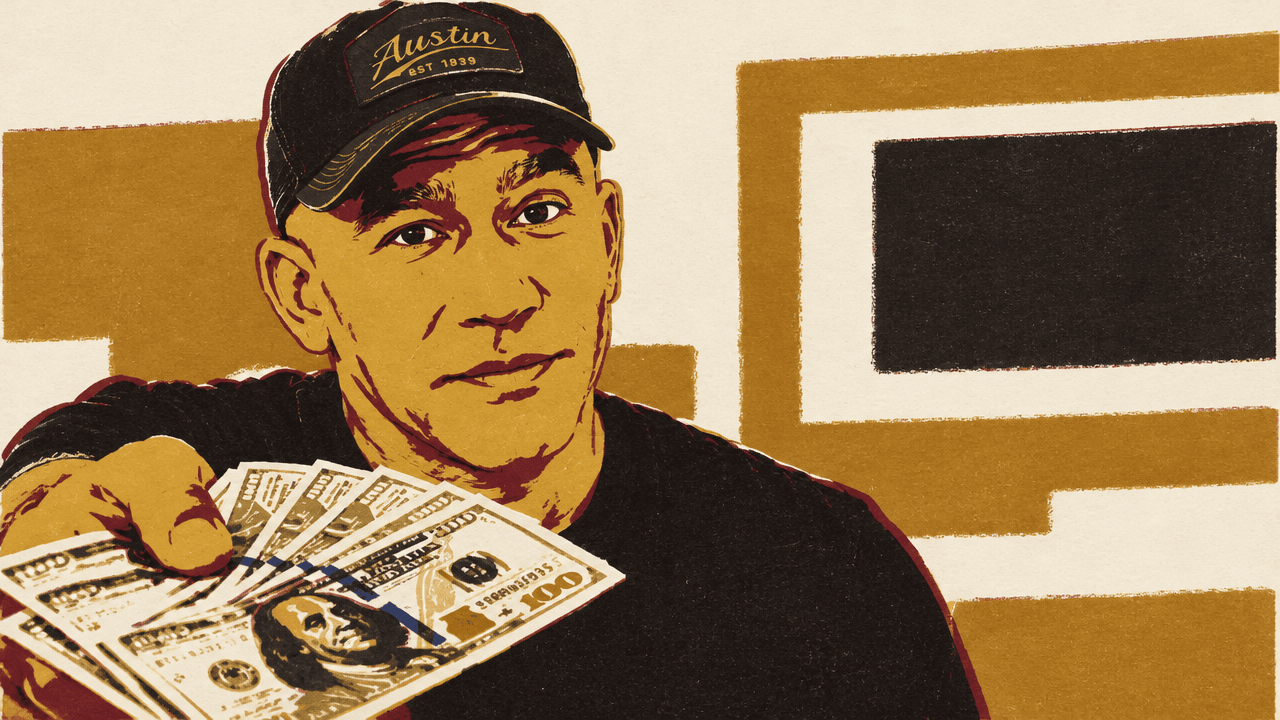
The useful target is a peak age, not a peak number
The question Bill Perkins wants people to ask about wealth is not simply how much they can accumulate. It is when they expect their net worth to peak—and whether they will still have the time, health, and desire to use it. In charts shown during the discussion, net worth rises and then falls with age, while the ability to turn money into experiences declines. Perkins calls the point at which net worth reaches its high point a date, not a target number.
His argument is not that everyone should spend down their assets according to a formula. It is that money’s usefulness changes over a life. An additional dollar may matter less when a person can no longer use it to do the things they value. Perkins called the body a “decaying asset”: its capacity to convert money into fulfillment declines with age, and that decline accelerates as death approaches. Somewhere between 30 and 65, he argued, the slope can become steep enough that more money matters less than the time spent earning it.
That leaves a trade-off, not a universal retirement age. A person might keep working because the work itself is satisfying, because more money would make an experience possible, or because they have not yet reached a level of security they need. But earning for a future that may not match the person’s present abilities can carry its own cost. Perkins’s question is what the money is for, and when it will be possible to use it.
Bill Perkins arrived at that question after making his original pool of capital trading natural-gas derivatives. He started as a clerk on the New York Mercantile Exchange, became an over-the-counter broker, then moved to Houston in 1995, when deregulation brought recruiters looking for people to run derivatives desks. Brokering paid well, he said, but he disliked it. He wanted to trade.
He described the job as pricing risk for customers who needed to hedge, rather than simply trying to outguess other traders. When customers feared natural-gas prices would rise in winter, he sold futures contracts that let them lock in a price. That left him exposed if prices rose, but he said the winter risk premium often faded and prices fell. Most of the money he made, he said, came from being short natural gas over time.
The results could swing sharply. Asked about the range, Perkins said the fund had gone from down 50 percent to up 250 percent in a year. When asked about the amounts involved, he referred to “a hundred million to 250 million.” He said he had nearly lost everything a couple of times. He described his strategy as relying on both market knowledge and temperament, not arbitrage: traders might study the factors affecting supply and demand and still lose money, so they need to withstand losses without letting fear take over.
Perkins’s account of trading joined two edges that Shaan Puri had identified: knowledge of a market and the temperament to act on that knowledge through losses. A trader might understand the supply-and-demand forces better than other participants, Perkins said, but that knowledge is not enough if a run of losses makes the trader abandon the position or stop thinking clearly. He described the problem in physical terms: when the amygdala is going “crazy,” the prefrontal cortex is not working well. Some traders also expect to need several wins for every loss, he said, though that is not how trading works. A capacity to handle losses—or to be “robotic” about trading—matters alongside the analysis.


He called his fund one “to get rich, not stay rich.” Concentration could produce large gains, but an investor could also lose everything. He said that risk was a considered choice, not just a “cowboy” attitude. His hindsight about his own early investing was that he had been too cautious: when young, he could have put more of his money into the fund, because if he lost it he could find another job. The ability to recover from a loss, in his view, depends partly on age and circumstances.
At the time, Perkins and his colleagues reasoned that it was acceptable to have a job and no money, or money and no job, but not to have neither. He did not want his personal finances exposed to the same fund risk as his employment. Looking back, he said he had failed to account for being young and likely able to find another job if trading went badly. He now thinks concentrating more of his money in the fund would have made sense then. That was a retrospective judgment about his own situation, not a claim that every young person should put everything at risk.
The other side of his trading philosophy is that the game has to continue long enough for an edge to matter. Perkins said that outside arbitrage, a trader will have a very bad year at some point. He compared the experience to insurance: an insurer can have a terrible year after hurricanes, but if it survives and keeps writing policies, later years may be profitable. For his fund, the challenge was to avoid being knocked out before its market knowledge could pay off over time.
The name of the game is sustain the game.
The phrase captures the tension in his approach. Concentration can help someone get rich, but the same exposure can end the opportunity to keep trading. Perkins said his fund could lose 100 percent or return 300 percent; whether that made sense depended on what the investor was trying to do. He also said the fund had experienced swings from a 50 percent loss to a 250 percent gain. The example gives scale to his warning that losses are not an exception to the strategy but part of it. Staying in the game does not remove the risk; it is a condition for having any chance to benefit from the strategy’s longer-run edge.
He also said he would have chosen equities if he could start his career again. He pointed to the larger amount of capital available to invest in stocks and the economics of large funds, where fees on billions of dollars can make the operation itself profitable. He invests in equities personally, but at 57 does not want to spend his current years building wealth for a distant future. The same decision runs through both his career hindsight and his current choices: what is another dollar worth, and what must he give up to earn it?
When he was younger, Perkins had wanted to be a millionaire before 30. He reached that goal, but had no clear stopping point or considered account of what the number was meant to buy. In his twenties, he said, he wanted “girls and a rockstar life.” It was not until his thirties that he began to think more carefully about what he wanted from life and what it would cost.
A book, Your Money or Your Life, introduced him to the idea that money is something exchanged for hours of a person’s life. That led him to ask what those hours were buying, what his values were, and which experiences belonged at which ages. He said his conception of wealth came to involve three resources—money, health, and time—and how to allocate them over a life.
Puri read a passage from Die With Zero that had moved him enough to retype it in an email to his mother and sister. It compares a life spent accumulating money to building a well and taking only a small sip before returning to the pump. At the end, the person has spent a lifetime gathering water but is still thirsty. The image turns on timing: people can make more money later, Puri read, but cannot make more time later.
Perkins said he wrote the book because he was afraid of wasting his life. He sees money as a tool, not the thing to protect at all costs. In his account, the more serious risk can be giving up life in order to accumulate money that will not improve it. His regrets, he said, are usually cases where he did not do his best—losing his temper, behaving badly, or letting his health slip. Unfortunate outcomes are different: if he acted as well as he could, he does not regret the result.
Ego can keep a person from choosing the life they say they want
Perkins’s account of changing his goals is not just about revising a financial target. He said much of what he thought he wanted had been absorbed from movies and society: get married, have children, buy a nice car, and climb the corporate ladder. A college football teammate once said he did not want that conventional life. Perkins remembered being unable to imagine what else the teammate could want. The conversation stayed with him, along with other experiences, and eventually pushed him to ask whether his own preferences were really his.
He described this as cultural programming. Some of it can be kept: he used liking familiar foods as an example of “copy, paste, repeat.” Other habits and desires may conflict with what a person actually values. The point, he said, is not to label one response or preference morally right and another wrong. It is to notice what choices have been inherited, then ask whether they work for the life a person wants.
That scrutiny can reach ordinary reactions as well as major life plans. Perkins used the example of somebody stepping on his sneakers in a crowded club. In Jersey City, he said, a person might respond violently. He decided not to punch people for that. More generally, he asks what response he chooses when someone insults him, cheats him, or otherwise provokes him. There are many possible responses; he wants to keep the ones that serve his goals and replace the ones that do not.
He connected that practice to maximum accountability. People, he argued, often explain away their choices as the product of difficulty or circumstance. But for someone who wants to start a business or pursue an opportunity, the obstacle may be less the financial risk than the possible loss of status: looking foolish to friends, parents, or oneself. Perkins said he has challenged friends about that, though awareness does not guarantee action. Recognizing a fear is only part of the work; the person still needs an action plan.
He said the same accountability applies to his own life. It can mean admitting he is wrong in an argument rather than protecting his ego, or trying something despite the fear of looking foolish. He said he has trained himself not to depend on praise or avoid criticism, which gives him more freedom to try things other people may fear. That does not mean he considers himself finished. He called accountability a continuing practice, not a state of perfection.
The hosts asked how this approach fits with kindness. Perkins said he supports people and gives them time, but sometimes gets too invested in being right. His wife, he said, may tell him he is being an asshole during an argument when what matters is being loved, not winning. He described himself as direct and said that, whether his assessment is accurate or not, he tries to give people a clear mirror rather than perform social niceties. The tension is part of his account: directness may be useful to someone who wants it, but can also come across badly when the other person does not.
His ideas about balance are similarly personal rather than prescriptive. Perkins has adult children and a young son, and said he and his wife try to bring their family into travel and other parts of their lives. They have discussed living in Japan while their youngest is under five, weighing whether that might mean a summer, a year, or two. He described balance not as an even division of every day or decade but as a pendulum: periods of intense work, travel, partying, rest, or spiritual practice. The challenge is to manage those swings and get the people affected on board.
He also made clear that he does not see a conventional life as a mistake. There is nothing wrong, he said, with having a nine-to-five job, joining a Rotary Club, taking two weeks of vacation a year, and living quietly. It is simply not his preference. His emphasis is on discovering which parts of a life are chosen and which are being followed by default.
Experiences have a season, and some do not transfer
Perkins argues against treating life as a single bucket list to be completed near the end. People pass through distinct versions of themselves: college-age, single, raising young children, starting a career. Experiences that fit one period may not fit the next, even if they remain physically possible.
He illustrated the point with skiing. Someone who wants to ski 500 times may be better off taking many of those trips earlier, when friends are available and the body can manage them. In the chart shown during the discussion, early trips fit within a wider span of ages; trips postponed until later are cut off by the body’s limits. A lifetime total that seems achievable on paper can fail if the timing is wrong.
Perkins calls this “time buckets”: divide life into periods, perhaps three-to-five-year stretches, and ask what experiences and decisions belong in each. The purpose is not to predict everything. He said people discover what they want as they live. But thinking in periods can reveal that an experience has been scheduled for the wrong time, or that two desired things can be rearranged so both remain possible. He likened life to Tetris: the order matters if a person wants to get the most fulfillment from what is available.
Sam Parr described taking inexpensive, rough-edged trips in his early twenties, including a six-week motorcycle ride across the country that cost about $1,800. He was grateful he had been willing to do it then, and said he would not want the same trip now. Perkins said that was a clear case of an experience belonging to one time bucket. It may remain possible later, but no longer offer the same appeal.

Perkins has his own example of getting the timing wrong. In his twenties, a friend suggested taking six weeks off to travel, quitting the job if necessary and finding another afterward. Perkins stayed at work. When his friend returned, Perkins saw how much the trip had meant to him and thought he had made the wrong choice. By the time Perkins took a similar trip in his thirties, he was a millionaire but did not enjoy sleeping on trains and staying in hostels. The missed experience could not be recreated simply by spending more.
The regret is not a claim that every young person should quit a job and travel. It is an example of how an experience can lose its appeal even when a person later has more money and more freedom. As Perkins put it, his friend had done it right; they had been “peons,” and neither had much to lose. Parr’s account of his own trip—couch-surfing and riding for six weeks—made the contrast concrete: what felt like a meaningful adventure at one age would feel grimy to him now.
Time buckets also apply to family life. Perkins and his wife have discussed living in Japan while their youngest is under five. They are considering how long such a move might last and how it would fit with the rest of their lives. The question is not only whether they can afford it, but when it fits the family’s time together.
Planning can make those choices more concrete without pretending life is fully controllable. Puri said he now sets aside three days a year to think about what he wants the coming year to look like, then puts dates on the experiences he wants to pursue. Perkins said his family’s travel schedule often responds to events, but the larger questions—where they want to live, what cultures they want to experience, and what activities matter—remain ongoing conversations.
Health protects future options, not an abstract ideal
Perkins said his current dissatisfaction is his health. Four years earlier, he said, he was at 8 percent body fat and had a VO2 max in the top 1 percent. He now estimates his body fat at 16 to 18 percent and his VO2 max around the middle for his age. He has explanations—broken sleep with a baby, travel, and eating poorly—but called them excuses.
His concern is not simply how he performs today. His doctor uses an exercise called the “Centenarian Olympics”: choose activities a person wants to be able to do in the last decade of life, such as picking up a small child, hiking, or having vigorous sex. Perkins said that on his current trajectory he would be unable to do about 80 percent of the activities he has chosen.
That makes present health part of the same calculation as money and time. Perkins was describing a specific mismatch: the activities he wants to be capable of later are unlikely to be available if he continues on his current path. He said he had hired another trainer and was considering one who could travel with him. If he could not maintain accountability on his own, he wanted to outsource it. His aim was not to “fuck over future Bill.”
Perkins did not present his estimates as general advice or as a universal measure of fitness. They were his own assessment of his current condition against activities he personally wants to do in his last decade. He said that 80 percent of those activities would be unavailable if he stayed on his current trajectory. His concern was the future capacity he wanted to preserve, not whether his current numbers met an outside standard.
His response was to spend money on support: he had hired another trainer and was considering bringing a trainer with him when he travels. He described the travel schedule as an excuse he could address by changing the arrangement. If he could not be accountable himself, he said, he could outsource accountability. The specific step followed from the problem he had named: keeping up the physical capacity he wants for later.
Perkins said he still works, runs his hedge fund, and has two startups: SkyFi, which he described as a platform for ordering satellite imagery, and an intelligence firm called Simplex. He does not believe the book requires giving up work. Solving difficult puzzles can itself be enjoyable. The question is whether the marginal dollar is worth the hours of life being exchanged for it.
He also described experiences he still values, including yachting and private travel. Private travel saves time, he said, and makes the trip enjoyable from the moment it begins. But he is continually weighing whether working for those experiences is worthwhile at his age. He expects that later he will want a simpler life: a large garden, bees, friends, grandchildren, and time to tell stories. When younger, he said, people seek adventure and make stories; when older, they have stories and seek people to share them with.
Inheritance is more useful when it can still change a life
One response Perkins said he often hears from readers concerns inheritance. People with discretionary wealth may assume that whatever remains when they die should go to their children or other relatives. He questions waiting when the recipients are already adults and the money could support shared experiences or needs now.
Parr described asking his in-laws to consider three options: give money to him and his wife now, spend it on themselves, or use it for something the family could enjoy together. He said they eventually bought a vacation house that had brought the family more time together. The point of his suggestion was not that the money should necessarily go to him. He told them that giving it to him and his wife was the least compelling of the three options, but if they did want to help them financially, giving it earlier would be more useful than waiting until after death. Otherwise, he suggested, they could spend it on themselves or on a shared experience.
Perkins said a decision like that can remove a future regret: reaching old age and realizing there was time and money to spend with family, but the opportunity went unused. Parr said the vacation house had changed how the family spent vacations: they could invite relatives for a set stretch of time and be together in a way that had made the trips more enjoyable. The benefit, as he described it, was not only the property but the time the family spent using it together.
Perkins said readers have changed retirement plans or encouraged older parents to spend more time with grandchildren. He mentioned a person with a military pension who questioned why they were saving a large lump sum when they already had a guaranteed income for life. The person, Perkins said, began to ask what the saved money was doing if the pension already supplied income. He also described people making time decisions without spending much: driving children to school without complaining, reading to them more, visiting a parent, or playing cards with friends.
For people with less money, the point may have little to do with inheritance. Visiting a parent, reading to a child, or playing cards with friends can be choices about time rather than spending. Perkins said people who do not have much money can still make different decisions about how they allocate their time and whom they spend it with. He also said some readers had responded to the health part of the book by getting in better shape because they had begun to consider what they might not be able to do later.
The distinction matters because “spend more” is not the whole prescription. A person with limited means may have little money to redirect, but still has decisions to make about whom to see and what to do with available time. A person with substantial savings may need to decide whether to keep accumulating, use money for shared experiences, or preserve it for a future they cannot confidently predict. Perkins’s framework does not make those choices identical. It asks what each person wants from life and which resource—money, health, or time—is most constraining.
There is a real fear on the other side of the decision. Parr noted that people, especially retirees, may worry whether they will have enough to take care of themselves. Perkins did not dismiss the fear; he asked which fear should weigh more heavily: having less money and eating beans, or wasting a life by missing experiences. His own answer is that wasting the life is the greater risk. The family examples do not remove the need to consider future needs. They show the question he wants people to ask before assuming that whatever remains should be passed on later.
The painting was both a personal prize and a preservation bet
Perkins’s purchase of Ernie Barnes’s The Sugar Shack brought those ideas about money into a different register. He said he had known the painting since childhood and had been looking for it. The work depicts a crowded dance hall, a party house in the segregated South that Barnes had passed while growing up. Perkins described it as a culturally specific American subject, painted by an artist he regarded as one of the early African-American masters.
He said the painting had appeared on Marvin Gaye’s I Want You album cover and in the closing credits of Good Times. Perkins explained that Barnes made another version after Gaye saw the first painting and wanted to use it for the album. The album version was altered; Perkins said the second copy was closer to what the painting was about. He had tried to buy the version owned by Eddie Murphy, but got no response. When his friend John Arnold told him the other version was available, Perkins said he nearly cried.
He went to the auction expecting to pay roughly $3 million to $5 million. The painting’s estimate, he said, was in the hundreds of thousands, with the upper end around a million. He thought he could bid $3 million, discourage other bidders, and leave with it. Instead, the bidding became a contest. Perkins recalled the first minutes as resembling a trading pit, with bids climbing from hundreds of thousands into the millions. By about $7 million, he said, only he and another bidder remained. That bidder was an art consultant acting for an undisclosed buyer and seated a couple of seats ahead of him. At one point, the other bidder turned around and said he was not going to stop. Perkins replied, “Well then I’m going to make you pay.”
The final price was $15 million. Perkins said he was ecstatic, with tears in his eyes. The purchase was personal: he had wanted to own a painting he remembered from childhood. But he also framed it as a decision about what gets preserved. In his view, collectors signal to future generations what is worth keeping. What ends up in museums is shaped by what wealthy people commissioned or collected; other works may be lost, remain in private homes, or go unseen.
That history, Perkins argued, affected the market for Barnes’s work. He said museums had not collected or displayed African-American art in the past, and that the resulting perceptions had created a gap between the significance of some works and what the market was willing to pay. He described his purchase as an arbitrage on that gap—not because he expected to close it within his lifetime, but because he believed The Sugar Shack was culturally important and worth preserving.
Perkins also said his bid sent a signal about Barnes’s best work. He recalled another Barnes painting selling for around $2 million at a daytime auction after he bought The Sugar Shack. He said he had expected that other work to cost a couple hundred thousand if he had bought it first. He connected the change in attention to the auction and to his later interviews about why he valued Barnes’s work. The painting is now on loan to museums and exhibitions; Perkins said the institutions cover insurance and transport, rather than paying him to show it.
The purchase was not presented as a general case for expensive collecting. Perkins had a strong personal attachment to this particular painting, believed it had historical significance, and was willing to pay far beyond the estimate to own it. He described the result as both a source of joy and a way to support what he thought deserved attention.
He contrasted that kind of attachment with fame. Perkins said he had once considered pursuing fame because it could help attract attention and romantic partners. He changed his mind after seeing how recognition could restrict ordinary movement and turn a person into a servant of a public persona. Fame, in his account, can shrink the freedom to travel, explore, or behave differently from the role people expect. He wants to be able to live outside the identity attached to him.
That preference also explains why he does not want to become the permanent public representative of Die With Zero. He said he wanted to write the book and let others build tools, programs, or further work from its ideas. He does not want a book to become a course, a podcast, and a persona that takes over his life. The aim, he said, was to have a fulfilling life, not to become famous for describing one.