Match Group Measures Dating-App Success by How Quickly Users Connect


Match Group CEO Spencer Rascoff argues that the company’s dating apps should succeed by helping users meet in person and eventually stop using them. In a conversation with cognitive scientist Maya Shankar, he describes how Match is measuring progress through conversations that move beyond an initial match, building lower-pressure ways for young singles to connect, and limiting AI to tools that assist rather than impersonate users.
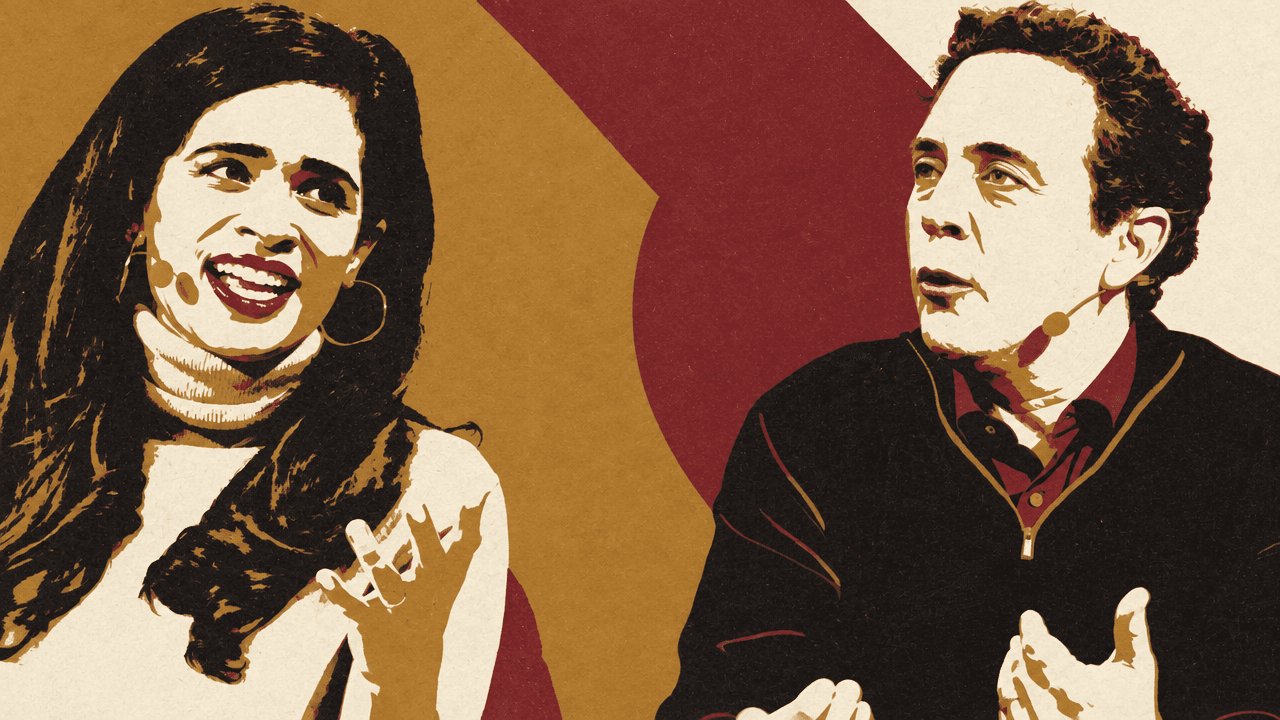
The product succeeds when users stop needing it
Spencer Rascoff says Match Group’s dating apps should be judged by whether they help people leave them. “For us, we’re successful if you delete our apps,” he said. The goal is to get people off the apps, put down their phones and meet in person.


That aim distinguishes dating apps, in Rascoff’s account, from social media platforms that depend on users spending time in the service, and from AI tools designed to help people solve problems or improve productivity. Match Group’s products—Tinder, Hinge, Match.com, OkCupid, Plenty of Fish and others—are meant to facilitate a connection that eventually happens elsewhere.
Rascoff said he has made real-world meetings a company priority during his two years at Match Group. Hinge already expresses the idea in its tagline, “Designed to be deleted”; he has sought to make it a strategy across the company. The challenge is translating that goal into product decisions and measures of success. Match Group’s answer is a metric it calls a Spark.
A Spark is a chat that goes back and forth at least six times after two people have matched. Rascoff said the company used AI to read millions of conversations and found that once people exchanged six or more messages, “that’s when the good stuff starts”: they move beyond small talk, ask each other out or begin to feel a connection. The company now tracks what share of users get a Spark, time to first Spark and Sparks per user. Rascoff said the metric has shaped recommendation algorithms, notifications, email and other business goals.
The measure also points product work toward specific interventions. Match Group is building chat features such as emojis, inline replies and conversation starters. One example Rascoff gave was a prompt that notices two people like hiking and suggests that they talk about it. Shankar joked that “Sup” and “hey” are poor openers; Rascoff agreed that they are. He described the Spark as a company-wide target that can focus product work on conversations moving beyond an initial match.
Lower-pressure ways in are built for reluctant daters
The people Match Group is trying to connect do not always want to describe themselves as looking for a relationship. Spencer Rascoff said Gen Z daters, whom he identified as ages 18 to 28, are lonely and want connection, but often postpone dating while trying to get other parts of life in order.
He cited a gap between intention and readiness: 80% say they think they will find love, but only 50% say they are ready. In his description, many young singles want their job, health, relationship with their parents and even their apartment settled before putting themselves out there. That delay, he said, is a business challenge for Match Group as well as a feature of how this generation approaches dating.
The company’s response has been to offer less direct, more social ways to meet. Tinder has introduced Double Date, in which two friends connect with pairs of other users and can chat as a group, and a Groups feature for gatherings of three to 15 people. Tinder also offers events in 50 cities, where users can find activities such as run clubs, mahjong classes, ceramics classes and yoga in the park, see who is going and message them before or after.
Rascoff described these features as ways to accommodate “alibi dating”: joining an activity or group hang without having to say that the aim is to find a romantic partner. He offered his 21-year-old daughter as an example. She might say she is not ready to date or looking for “the one,” but still use Tinder with her roommate to meet another pair of people, or go to events because they sound fun. Romance remains possible, but need not be the stated purpose.
Maya Shankar described the appeal as releasing pressure, and Rascoff agreed that low-pressure ways to connect are what the company needs to build. The examples he gave let someone join through friendship, an activity or a group plan rather than beginning with the expectation of a one-to-one date.


AI can prompt a conversation, but should not speak for the user
That boundary also governs Match Group’s use of AI. Maya Shankar asked whether product assistance could compromise authenticity by doing too much of the work: in person, no one has an earpiece suggesting a conversational hook, and awkwardness or missteps can be part of how people connect.
Spencer Rascoff said the company has drawn lines around what its tools should do. It may suggest a topic—“Why don’t you talk about hiking?”—but it will not write the message for the user. If someone can simply send an AI-written message, Rascoff argued, the recipient may recognize that it is artificial rather than genuine. Shankar joked that a polished line like “Do you like hiking? So do I” would give the game away.
The same principle applies to profile photos. With a user’s permission, Match Group may scan the camera roll and suggest photos that represent the person. But it will not alter the background to make someone appear to have visited a place they have not been. Rascoff compared that to a video-call background that places someone in front of the Golden Gate Bridge. He summarized the approach this way: AI should bring people closer, not stand between them.
The company has drawn a sharper boundary around AI agents. Rascoff said Match Group recently had to consider whether to let outside agents use its apps—for example, to swipe on someone’s behalf or reply to messages in a clever, charismatic voice. That would reduce friction for the user, he said, but would “pervert our community, our ecosystem.” For now, Match Group has decided its apps will be a human-only zone, with no bots.
Rascoff presented that as a current line rather than a settled answer to AI’s broader social effects. Technology leaders, he said, are working through those questions in real time. For Match Group, the distinction is between AI that helps a person begin an exchange and AI that impersonates the person or acts in their place.
A dating marketplace still depends on trust
Spencer Rascoff sees parallels between Match Group and the companies he helped build before it, including Zillow and Hotwire. Both real estate and dating are two-sided marketplaces organized around consequential, emotional searches. In both, he said, trust and safety matter to whether the marketplace can work.
He also pointed to a shared business structure: multiple brands serving different customer groups, with common services integrated behind the scenes. Match Group keeps Tinder, Hinge, Match.com and its other apps distinct while sharing infrastructure. Rascoff said Zillow Group used a similar approach across Zillow, Trulia, StreetEasy, HotPads and RealEstate.com.
The comparison is not that the businesses have the same measure of success. Rascoff described Match Group’s goal as helping people stop using its apps, while the marketplace still has to earn enough trust for people to take the risk of meeting. His examples of AI boundaries also reflect that concern: messages should remain in the user’s own voice, photos should not misrepresent where someone has been, and bots should not act as users.
Loneliness gives the product strategy a personal stake
When Maya Shankar asked about human connection beyond product use, Spencer Rascoff first spoke about his wife, a pediatric rheumatologist. Letters from her patients or their parents, he said, make him feel awe at the relationships she forms and the comfort she provides.
He also described how closely the products are tied to employees’ lives. Many have met a spouse on a Match Group app or know someone whose life changed through one. His brother and sister both found partners on Hinge. After their father died, Rascoff’s mother mourned for several years, then joined Match.com and OurTime, which serves older daters. He said the services alleviated her loneliness and brought her companionship and happiness in the last years of her life.
Rascoff himself has been married to his high-school sweetheart since he was 17, but said he uses all of Match Group’s apps for research and messages users. He called himself a “questionable CEO” of a dating company before explaining the irony; Shankar made sure the audience knew he was on the apps.
Rascoff called loneliness a public-health crisis and a threat to societal continuity. Shankar compared its effects to smoking a pack of cigarettes a day. Rascoff urged people to introduce themselves to a barista, a new colleague or someone on the subway. He acknowledged that reaching out does not come naturally when people are looking at their phones, himself included, but argued that doing so would be better for individuals and society.