Hospitality Is the Difference Between Good Service and Becoming a Favorite
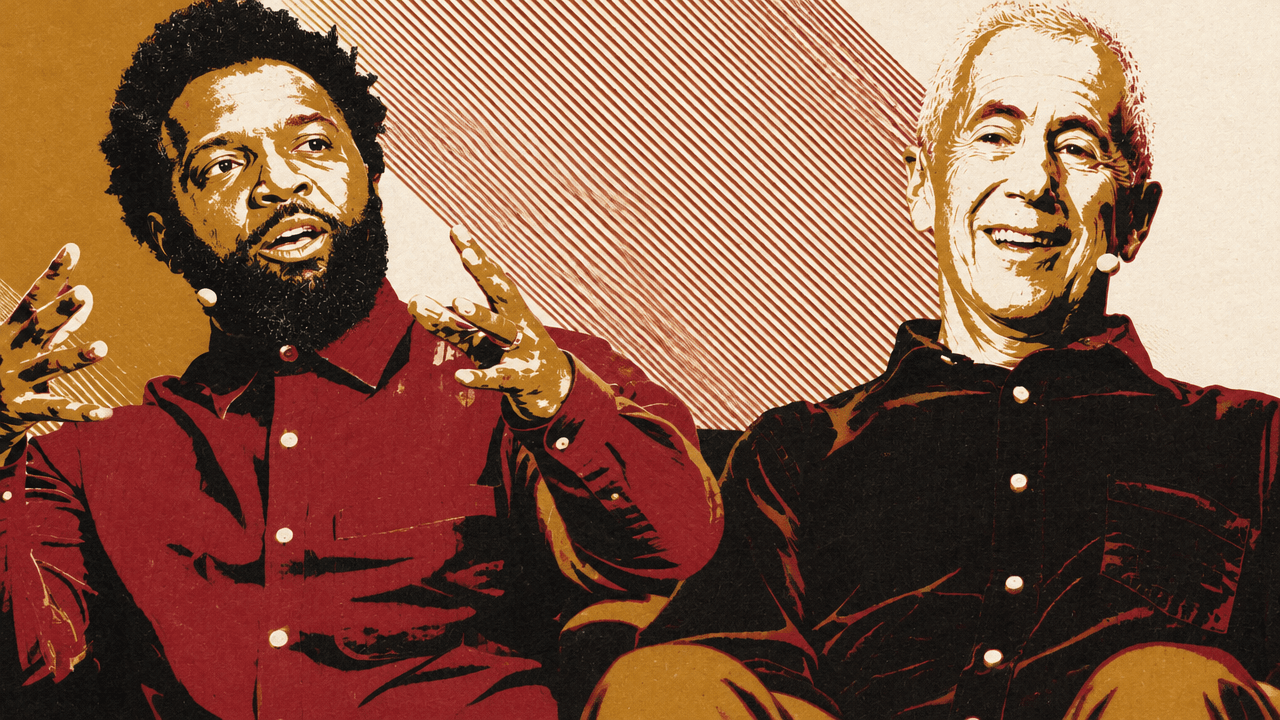
Restaurateur Danny Meyer argues that hospitality is more than delivering the service a customer expects: it is customizing that service so people feel welcome and that the business is on their side. In a conversation with Baratunde Thurston at Masters of Scale Summit, Meyer says this distinction helps explain why diners may make a restaurant a favorite even when its food, decor and service ratings do not rank as highly. He also connects hospitality to broader lessons about caring for stakeholders and defining workplace culture through the behaviors leaders reward and tolerate.
Hospitality means making people feel they belong
Danny Meyer defines hospitality as more than what happens in restaurants or hotels. In any walk of life, he says, people have an opportunity to make others feel welcome and as if they belong. A business can deliver what it promised without making the person receiving it feel that the business is on their side.
Meyer gave that idea a civic dimension in response to a talk by Nazanin Ash of Welcome.US. He recalled that a hotel where his company operated restaurants had been converted overnight into a residence for asylum seekers, primarily from Venezuela. The restaurants could no longer operate, he said, because Department of Homeland Security personnel were acting as hosts for the hotel’s guests.
Meyer wanted to turn the disruption into an opportunity. He and his colleagues asked the governor and mayor to accelerate job training for the asylum seekers, reasoning that people wanted to work and the restaurant industry needed workers. The national government declined to accelerate the job training, Meyer said, and the people were left on the streets. The experience brought Ash’s remarks back to him: hospitality, in his view, is not confined to serving customers inside a business. It also concerns whether people are made welcome and given a chance to belong.
Meyer says he learned to distinguish hospitality from service by looking at the gap between his restaurants’ ratings and their popularity. In the annual Zagat survey, diners rated food, decor and service, then separately named their favorite restaurants in New York. Union Square Cafe and Gramercy Tavern improved their scores over time, but their standing as favorites rose more sharply than those three categories could explain.
When Union Square Cafe was ranked the city’s favorite restaurant and Gramercy Tavern was second, their food scores were 10th and 12th, and their service scores 12th and 15th. Their decor scores were roughly 30th and 65th. Meyer called the survey’s publisher, Tim Zagat, to suggest a fourth category: hospitality.
For Meyer, service is the technical delivery of the product: did the business do what the customer expected? Hospitality is whether it customized that service so the customer felt someone was on their side. Service is necessary, he says, but it cannot by itself account for why people choose a place as a favorite. He has spent about 20 years working on the related challenge of scaling not only a system for delivering a product, but the feeling of hospitality.
Service is, did they do what you expected them to do? And that's hard, that's hard in any business, did it deliver. Hospitality is, did they customize the service experience in a way that you truly felt like they were on your side?
A business becomes a community through dialogue
? baratunde-thurston asks how a business can create community rather than simply put customers in the same room. In his view, hosting and technology can help a business listen and respond to people, but a deeper kind of community forms when those people connect with one another. The business becomes the reason they met, not the sole focus of their attention.
Meyer describes a restaurant as a place that brings people together. The place is the “hardware,” he says; the people are the “software,” the operating system that activates it. A business can begin with a clear point of view about who it wants to be, but it should also develop through dialogue with the people who choose to use it.
His analogy is a new baseball glove. As a child, Meyer wanted the most expensive glove, but a new one was stiff and did not yet fit his hand. It took playing catch to break it in. That process was not just between hand and glove: it was a dialogue with the person throwing the ball. Over time, the glove became shaped by both.
Meyer uses the analogy to describe how a business’s point of view meets the people who use it. The business begins with an idea of who it wants to be; the people who choose it take part in the dialogue that shapes what it becomes. For him, that exchange is how a community forms around a business.
Care for stakeholders is both an ethic and a business logic
Danny Meyer’s idea of “enlightened hospitality” extends care outward from a business. Thurston describes it as concentric circles: employees, customers, vendors, the surrounding community, and then investors. The sequence matters. The premise is that taking care of one group can enable the next part of the chain: employees who are better cared for can take better care of customers; that can support revenue, investment in the community, and better ingredients.
Meyer traces the “Meyer Hospitality Index” to an appearance on Jim Cramer’s Mad Money in 2009. He says he arrived without doing homework and was asked which public company he would invest in based on a tray of food. He chose the burrito, identifying Chipotle. He said he did not need to taste the food to make his choice: his reasoning was that Chipotle practiced what he called enlightened hospitality, investing in employees who could then serve customers better and contribute to a virtuous cycle.
Meyer says Chipotle’s stock rose sharply about a week and a half later. He says Cramer credited him with the call and asked him to create an index. Meyer reports that the resulting index outperformed the S&P by 350%, while joking that he was too foolish to invest in the companies himself.
Asked whether companies he had named in 2009, including Amazon, Google and Apple, would still qualify in 2026, Meyer is unsure. He says he is willing to redo the index, but the principle remains: organizations that prioritize stakeholders in this way can start a reciprocal chain of care. If a business wants its stakeholders on its side, he argues, it should begin by acting on their behalf. He compares the logic to giving someone a hug as a way of inviting one in return.
AI could help personalize service, but human connection remains central
Danny Meyer sees AI as uncertain in its ultimate effects, with both dangers and benefits. The opportunity he emphasizes is that it could help a business know more about the people it serves and customize their experiences more effectively. For him, that would make it possible to offer more hospitality.
The larger opportunity, Meyer says, is to provide real human connection at a time when people feel increasingly lonely despite having more ways to connect. He describes a server looking a guest in the eye, smiling when the guest smiles, and taking pleasure in the guest’s pleasure. Restaurants can create moments and memories whose full significance the business may never know.
He extends the point beyond restaurants to workplaces, which can also bring people together. Meyer says phones are used as telephones only five percent of the time, and argues that people can mistake other forms of phone use for connection. He welcomes more people returning to work in person with other people.
When the law blocks a principle, look for a workable next step
Danny Meyer’s effort to change tip-based pay shows the limits a business can face when its preferred culture meets law and labor-market pressure. He believes tipping creates a large disparity between people who cook food and those who bring it to the table or host the table. In most states, he says, tips cannot legally be shared between front- and back-of-house workers; he notes that California is different.
Because tips are linked to menu prices, Meyer says, tipped employees can earn more as prices rise, while workers who cannot receive tips may see wages remain stagnant. His company tried to address that disparity through a five-year experiment called Hospitality Included. Meyer says the question is not simply whether the experiment failed or succeeded: it did not last, but he believes it created a wider discussion about what the industry and its laws should be.
The immediate constraint became especially acute during the pandemic. When restaurants reopened and tried to rehire staff at the same time, Meyer says, the labor pool was depleted. He describes the situation as all the “ponds” being dry: every restaurant was hiring at once after staff had been laid off. He could not hire people back under the conditions created by the experiment, so the company returned to tipping.
Rather than treat that as the end of the effort, Meyer says he asked what could go right under the system that was legally available. The company introduced a revenue-sharing program for cooks, paying them a share every night. On a busy night, he says, cooks can therefore make more money too. He still thinks the government should make it legal to share tips, but describes the revenue share as a better arrangement within the existing rules.
Culture depends on the behaviors leaders reward and tolerate
Danny Meyer says he used to talk about family values at work, then came to see that a business is not a family. Values such as excellence, hospitality, entrepreneurial spirit and integrity could belong to almost any organization. His shift was from broad values to expected behaviors: specific actions connected to the company’s own history.
He defines culture as the expected behaviors a company celebrates, minus the unwanted behaviors it tolerates. Celebrating people for doing things right is only half the work. Meyer says he was better early in his career at recognizing positive behavior than at holding people accountable when they failed to meet expectations. He compares that imbalance to a hockey team that scores more goals than its competitors but gives up even more. A team—or organization—has to do both: reinforce what it wants and address what it does not.
Thurston describes a “caught doing right” practice in which employees could write a colleague’s action on a Post-it note, connect it to company values, and put it on a public board. He recalls a Shake Shack employee who went out of their way to ensure a customer could eat when the ramp the customer needed was not working, delivering the food outside instead.
Clear expected behaviors also give people a shared language: a shorthand for what the organization means and what it asks of its members. Meyer says language fuels culture, and that shared shorthand helps people understand what is expected and feel they belong. Belonging, he says, is a fundamental human longing.