Ukraine’s Battlefield Gains Compete With Russia’s Expanding Strike Campaign
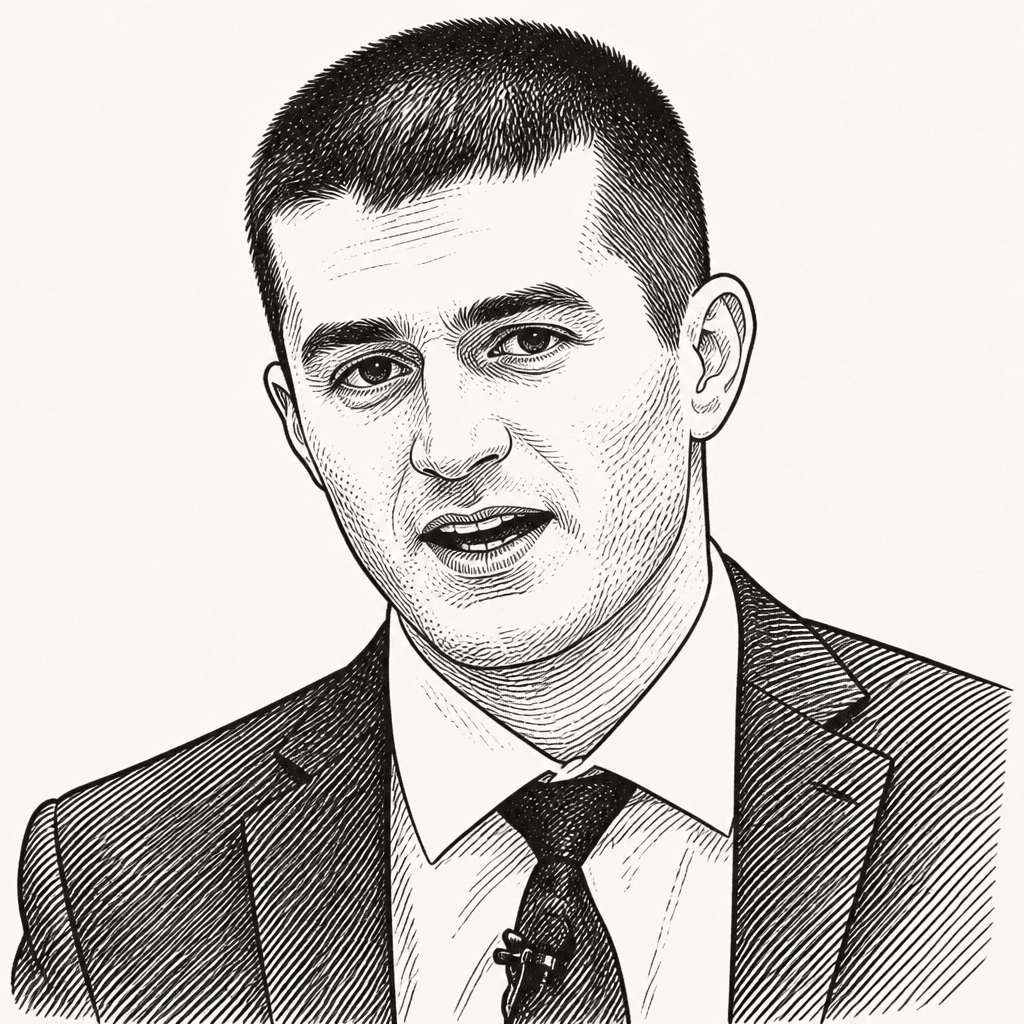

Military analyst Michael Kofman argues that Ukraine has the initiative in parts of the front, but that advantage does not establish who will win the war. In a discussion with combat veteran and war commentator Preston Stewart on Lex Fridman’s podcast, he describes a more fluid battlefield shaped by drones and infiltration, alongside Russia’s sustained attacks on Ukrainian cities and infrastructure. Neither side appears close to collapse, and the outcome depends on whether current military advantages can be sustained and on political aims that remain far apart.
Ukraine has the initiative on the ground, but Russia is widening the damage elsewhere
Michael Kofman describes a split picture. Ukraine’s ground performance in 2026 is its strongest since the summer 2023 offensive: Ukrainian forces have run localized counteroffensives near Kupiansk, in the south and around Lyman, recovering ground Russia gained the previous year. In some recent operations, Kofman says, Ukraine has gained more territory than it did during the much larger summer 2023 offensive. The battlefield is more fluid than the familiar image of a fixed positional stalemate suggests.
That improvement does not remove Ukraine’s other major vulnerability. Russia has sustained and expanded a campaign against infrastructure and civilian targets, adding to damage accumulated over several years. The strikes against critical infrastructure began in fall 2022, when Russia attacked power plants, substations and heating facilities. By 2026, Kofman says, targets also included warehouses, data centers, schools, medical facilities, shopping malls and trains. The campaign shifted from combinations of cruise and ballistic missiles toward saturation attacks using large numbers of one-way drones, alongside ballistic missiles and increasingly capable jet-powered drones. Repeated alerts and attacks disrupt daily life and force Ukraine to spend air-defence resources as well as repair damaged infrastructure.
Kofman calls this strategic bombardment: attacks on a country’s industry, energy system and cities intended to wear down its means and will to fight, rather than defeat its forces directly at the front. He argues that the historical record gives little reason to assume bombardment alone can achieve maximal political aims, particularly when the ground campaign is faltering. Yet political leaders often believe it may work. Russia’s turn toward bombardment, in his reading, reflects both its capacity to inflict serious harm and the limits of its current ground effort.
The winter’s uncertainty is therefore about more than fighting conditions. Kofman says winter is hardest on civilians, not soldiers at the front. A country is also its cities, people and economy; the cumulative damage to those systems, and the consequences for Ukraine’s economic viability, remain unclear. Ukraine has proved resilient, he says, but that does not settle how much damage the economy can absorb or how the coming winter will affect life in its population centres.
The front is a broad engagement zone, not a continuous line
The heaviest fighting remains in eastern and southeastern Ukraine. Preston Stewart describes Russian incursions in the northern border regions of Sumy and Kharkiv, fighting around Kupiansk, and the main Russian effort to seize the remainder of the Donbas. Ukraine’s “Fortress Belt”—the cities and defensive positions around Sloviansk, Kramatorsk, Druzhkivka and Kostiantynivka—has made Russian advances costly. South of it, the Zaporizhzhia front is active on both sides: Russian forces have pushed west of Huliaipole, while Ukrainian units have advanced northeast of it. Ukraine’s operation near Lyman, called Vivaldi, is another example Kofman gives of Ukrainian forces recovering ground.
The territorial picture is captured in a map and accompanying chart shown during the discussion: Ukraine’s gains near Kupiansk and Lyman sit alongside a comparison of Russian gains and losses across recent years. The chart records about 135 square miles retaken by Ukraine and still held from January to October 2026, compared with about 120 square miles lost by Russia between June and November 2023. Kofman’s point is not that the front has stopped moving, but that recent Ukrainian operations have made the battlefield more dynamic than a simple map of a fixed line suggests.
The lines on a map can imply more physical control than either army has. Kofman says the front often consists of separated infantry posts, with substantial space between them, rather than an unbroken defensive line. Behind and between those positions is a gray zone: contested ground neither side can use freely. A rough description of the drone engagement area is about 15 kilometres on either side of the front, although its extent varies by location. Movement within it is watched and attacked; presence in a place does not necessarily amount to control of it.
The zonal-defense diagram shown during this explanation depicts small Ukrainian infantry posts, a gray zone with infiltrating infantry and light vehicles, and layered Ukrainian defences behind them: prepared positions, minefields, drones and artillery. Its central point is that neither side necessarily holds every part of the ground between the lines, and that the defences work in combination.
That geometry shapes how both armies fight. Russian forces try to infiltrate through gaps using individual infantry or small groups on motorcycles, ATVs and other light vehicles. Ukraine combines prepared positions and minefields with drones and artillery, trying to slow and expose those movements before they reach the forward posts. If Russian troops get through, Ukrainian drone teams farther back may have to hunt them down; those teams and the logistical support behind the front are themselves potential targets.
Kofman cautions against calling this simply a “drone war.” Drones account for a large share of casualties, he says, but their effectiveness depends on other capabilities. Mines and prepared defences make mechanized assaults harder. Artillery forces troops to disperse and slows an attack, making soldiers easier for drones to engage. Artillery also becomes an important backup when rain and high winds reduce drone effectiveness. Without artillery and minefields, Kofman doubts Ukraine could hold the terrain as effectively with the relatively low density of troops it can deploy.
The zonal defence is a combination, not a single technology: infantry posts mark positions, minefields and prepared defences complicate movement, artillery shapes an attack, and drones engage forces trying to cross the zone. The contested area has no fixed boundary, and neither side necessarily holds everything inside it. A map may show a front line where the physical situation is a patchwork of posts, infiltration routes and positions under observation.
Russian infiltration can be dangerous even when most individuals sent forward do not make it. Kofman’s example is a group of ten soldiers: seven may be stopped, but three find a route through a gap. Their movement can reveal a path for the next group. If enough troops accumulate behind the forward posts, they threaten Ukrainian supply lines and the reconnaissance-drone teams operating several kilometres back. Those teams may be occupied flying drones rather than prepared to receive an assault. Kofman calls the method costly for Russia, but says the pressure can still force Ukrainian units and drone operators to reposition.
Light motorized attacks can sometimes be harder to stop than a small mechanized column, he explains. A lead vehicle in a mechanized assault may be carrying a mine-clearing trawl; if drones strike it, the rest of the column can become isolated. A large group of motorcycles or ATVs can try to use speed and numbers to cross the engagement zone. Most such attacks are not successful, Kofman stresses. But Ukrainian forward posts can be sparse, with small groups of soldiers separated by several hundred metres. Some units lack the manpower to launch an immediate counterattack if attackers get through.
Ukraine cannot afford to copy Russia’s approach to losses, Kofman says. Its successful offensive operations have instead depended on setting conditions: suppressing Russian drone units, disrupting their logistics, channelling the enemy into an area where its response can be anticipated, and coordinating strikes during the assault. Some Ukrainian units combine drones with adapted mechanized formations to regain mobility and advance faster. Others use small infantry teams with drone support to clear tree lines methodically while keeping casualties down. Kofman sees no single Ukrainian method; units are experimenting with different approaches.
Drones dominate the footage, but the fight remains human-intensive
Stewart describes a layered system of surveillance and attack. Fixed-wing reconnaissance drones can stay aloft for hours, spot targets and pass information to units able to strike them. Small first-person-view drones, or FPVs, are usually piloted by a person watching a live feed. They can carry different munitions for attacking people, vehicles or fortifications. Kofman estimates that one side may use 8,000 to 10,000 FPV drones a day, not counting other tactical drones.
That scale can make the battlefield appear automated. Kofman says most systems are remotely operated by people, and running them takes manpower: a typical drone team may need a pilot, a copilot or navigator, and someone to maintain or arm the system. Operators must watch screens for long periods; equipment needs troubleshooting and repair. Some drones use terminal guidance at the final stage, such as locking onto a target when a pilot marks it on screen. Kofman says those use cases make up a small fraction of the overall fight. The war is testing autonomy and AI, he argues, but the share of combat being conducted that way has been overestimated. It remains, in his account, a human-centred war with people needed to operate, supply and maintain the systems.
Public drone footage creates another distortion. Stewart says the videos that circulate are overwhelmingly successful strikes; failed flights, misses, jamming and drones that fail to detonate generally do not appear. A single inexpensive drone destroying a tank is possible in favourable circumstances, but it is not a fair picture of typical results. Stewart says it can take 10, 20 or even 30 small drones to destroy a tank. Kofman estimates that striking a person may take about five drones, and more for vehicles: roughly 15 to 20 for an infantry fighting vehicle and 30 to 40 for a tank in many cases. He recounts an extreme report of 79 drones used against a heavily protected tank. These estimates are not a universal ratio; they depend on the target, its protection and the proportion of drones that are jammed or fail to detonate.
A mechanized company attacking with drone support, Kofman adds, may expect close to 300 hits during an assault, with many vehicles surviving them. That expectation helps explain why mobility is difficult to restore. A conventional mechanized column is conspicuous, and drones can concentrate on its lead vehicle, isolate the rest and attack. Russia has therefore leaned heavily on infiltration: small groups moving through gaps and trying to accumulate behind Ukrainian positions. Most such attacks fail, Kofman stresses, but even a few soldiers who get through can threaten drone crews, logistics and supply routes. Stewart describes the method as exceptionally costly: an American volunteer told him it could work if a force accepted losing 90 to 95 percent of the men sent forward.
The number of visible videos also changes how audiences judge whether an attack occurred. Stewart says people increasingly expect footage before accepting that a strike happened. That expectation creates propaganda value for the footage that does get released, but it also gives the public a highly selective view of battlefield performance. The video typically shows the successful strike, not the many attempts that ended with a dead battery, a jammed signal or a failed detonation. Kofman says that without knowing how many drones were launched, and how many missed, viewers can easily mistake selected successes for a one-to-one relationship between drone and target.
Fiber-optic drones show how quickly the countermeasure changes
Fiber-optic drones illustrate the cycle of adaptation. Most ordinary FPV drones communicate by radio, making them vulnerable to electronic jamming. A fiber-optic drone trails a thin cable back to its operator, carrying the control signal and video feed through the cable instead. Jamming cannot interrupt that link.
The workaround has costs. The spool adds weight, limiting payload or range; the cable can snag on trees or other obstacles, and the pilot must fly with its path in mind. Stewart says the cable makes the drone slower and more difficult to operate than a conventional FPV. The technology nonetheless offers a way to attack through electronic-warfare systems that would disrupt radio-controlled drones. He says examples had reached distances of about 50 kilometres.
Kofman says Russian units began using fiber-optic drones heavily after employing them during the Kursk fighting, and Ukrainian forces adopted them in turn. He estimates that they remain a relatively small portion of tactical strike drones—perhaps 15 percent or less—but says they matter because they are difficult to jam and harder to detect with systems that intercept radio signals. He describes devices used by Ukrainian units to detect analog drone signals: when a drone is closer to the detector than to its operator, the device may pick up the drone’s video feed. A fiber-optic drone provides no such radio signal to intercept.
Kofman describes a roughly three- to four-month cycle in which one side fields a tactic or technology, the other copies it, and the first side adjusts again. Ukraine has often innovated faster through decentralized experimentation: individual units may have their own research and development capacity or relationships with drone makers. Russia, he says, has often been slower to identify a solution but better able to scale and standardize it once it does. In his account, Ukraine’s faster experimentation and Russia’s ability to expand a proven approach have both mattered. The result is not a settled technological advantage but an ongoing contest.
That speed makes the war relevant to other militaries, but not a template they can simply copy. Stewart calls it a transition point, shaped by the particular conditions in Ukraine, especially the absence of Russian air superiority. Neither side can routinely send aircraft into enemy territory; the result is air denial, not the kind of air control the United States had in Afghanistan and Iraq. A military built around air power and long-range precision strikes might face a different battlefield. Stewart says the US military is still working out who owns small-drone capabilities and how training should adapt; the technology is changing faster than military institutions can create courses and establish a settled structure.
Kofman adds another reason for caution: lessons depend on which part of a war is being observed. Russia’s invasion began with a rapid clash of forces; later, the war became positional and attritional, with dense troop deployments, mines and difficult breakthroughs. Drones matured in those later phases. Assuming the next war will begin in the same way the middle of this one looks could be a mistake.
He also argues that Ukraine is a particular context: a land war with air and sea components. A military must ask not only whether a technology worked in Ukraine, but whether the circumstances that made it useful would exist in another conflict. The early phase of a war may differ from the later phase, and the geographical and political context can alter how forces are used.
The first invasion plan failed because its assumptions failed
Kofman says he was among the analysts who judged in 2021 that Russia was preparing a full-scale invasion, though he did not predict how it would be conducted. Several governments and Ukraine’s own political leadership viewed the buildup differently, expecting coercive diplomacy or a narrower attack focused on the Donbas. Some observers thought Russia might seize parts of eastern Ukraine; others expected an attempt to take most of the country. Kofman says that even when the pieces seemed to point toward a full invasion, people often preferred an interpretation that was less consequential.
The larger analytical failure was not seeing how Russian political assumptions would shape the military plan. Kofman says Moscow expected a rapid takeover: Ukrainian forces would surrender or be isolated, Russian troops would encircle Kyiv and capture or neutralize the leadership, and a short combat phase would be followed by occupation. Those assumptions rested on Putin’s refusal to treat Ukraine as a genuinely independent country with a distinct national identity. The operation had no effective fallback once the rapid takeover failed.
Analysts also overestimated how well the Russian military would perform and underestimated Ukraine’s initial defence. Kofman points to gaps in knowledge: military analysis tends to focus more on adversary forces than on allies and partners, and there was more information about Russian plans than about Ukraine’s plans to defend. The interaction between the two forces was also contingent. Ukrainian units improvised, volunteers joined, and early decisions and battles shaped what followed. Kofman says he learned as much from the judgments that proved wrong as from those that proved right.
Stewart identifies a difference in command culture as one reason Ukraine responded differently. In the Western model he describes, commanders convey the mission and its purpose, then push authority down so junior leaders can act when circumstances change. His experience in Afghanistan included young officers and non-commissioned officers making consequential decisions at dispersed bases. They could do so because they had been briefed on the task and purpose, rather than being expected to wait for an order for every development.
Russian units in the opening weeks often stopped when their advance was blocked; senior officers went forward to resolve jams, with some killed. Ukrainian units, by contrast, could make decisions locally when they understood the mission. Stewart says Ukraine’s military had received Western training, though he does not claim that every unit had adopted the same approach. Kofman says military culture and leadership style deserved more attention in prewar analysis, alongside doctrine and operational concepts. He also cautions that the Ukrainian defence was improvised and chaotic in the early period; its success reflected decisions by units and commanders, volunteerism and the way particular early battles unfolded.
The invasion also demonstrated why military power cannot be ranked in the abstract. Kofman argues that force is expressed in a particular scenario: geography, political objectives and operational plans shape how forces are used. A comparison of troop numbers or aircraft does not tell an analyst how two militaries will interact in a specific conflict. Political and military choices, the plans each side adopts, and chance all matter. A force may look formidable in the abstract and perform poorly when its assumptions meet the actual terrain and the other side’s decisions.
A winner cannot be read directly from the map
“Who is winning?” is a difficult question because Russia and Ukraine are fighting for different outcomes, Stewart says. Russia’s broad objective has been to take Ukraine; Ukraine’s is to preserve its sovereignty. Ukraine’s survival as an independent state is a significant achievement, but it has lost territory it may not recover. A snapshot of the map cannot settle the question. Stewart points to historical wars in which one side appeared to be winning for a long period before the balance changed, and says that an apparent advantage at a given moment does not guarantee the outcome.
Kofman’s answer is more bounded: Ukraine has been advantaged on the ground this year, but Russia’s strikes remain a serious threat, and it is unclear whether Ukraine’s advantage will last. Neither side appears close to a collapse. He distinguishes a temporary window of opportunity from a lasting trend. Russia held the initiative for a long period; now Ukraine has the initiative in parts of the front and is imposing challenges on Russian forces. Whether that advantage can endure depends on a changing interaction between the two militaries, their ability to adapt, and factors outside the battlefield.
Kofman cautions that saying one side is “winning” can lead an audience to assume that side will eventually win. In conventional war, he says, it is difficult to forecast even a few months ahead. Ukraine’s current battlefield performance has to be considered alongside the damage from Russia’s strike campaign, the coming winter, the supply of outside support and events elsewhere. Neither speaker treats a claim about the present balance as a prediction of the final outcome.
The map itself can be misleading. Stewart says Russian forces sometimes place a soldier and a flag forward, record it by drone, and report the surrounding area as captured. Kofman says Russian maps have repeatedly placed their forces 10 to 15 kilometres ahead of where they actually are. A flag or a small infiltrating group establishes presence, not control. In a drone-saturated zone, troops may be unable to move freely, resupply or deny the enemy meaningful fire control. Kofman’s practical test is whether a force can use the terrain for its own purposes.
A chart shown during this discussion compares Russian claims with assessments of territory actually taken. It lists 6,300 square kilometres claimed against 4,700 taken from January to mid-December 2025, and 1,700 claimed against 382 taken from January to April 2026. The gap matters not only for public statements: inaccurate maps can shape the orders and fire support sent to units.
| Period | Claimed by Russia | Assessed as taken |
|---|---|---|
| Jan–mid-Dec 2025 | 6,300 km² | 4,700 km² |
| Jan–Apr 2026 | 1,700 km² | 382 km² |
False reporting can then shape operations. Kofman says Russian units have planned fires and assigned fresh troops based on territory they do not hold. Units rotating into an area may receive inaccurate maps and suffer casualties as a result. He believes such reports have also reached Putin, potentially reinforcing the view that Russian forces are advancing toward their objectives. Stewart worries that command structures may be acting on false claims even when someone in the chain knows they are false.
Kofman attributes the more severe Russian problem to mistrust, punishment and centralized authority. If a mistake is likely to bring punishment, units have an incentive to conceal it; if junior officers cannot adapt, inaccurate information at the front can become bad plans and orders higher up. Ukraine has also had cases of falsified reports and commanders removed, Kofman says. Ukrainian officers can face difficult choices when ordered to retake positions without sufficient forces: report a loss and risk punishment, or sacrifice more people trying to recover ground they may not be able to hold. Kofman sees the consequences as worse in the Russian system because local units have less freedom to respond.
A city can become politically more important than its military value
Bakhmut shows how a battle can acquire its own political momentum. The fight lasted from around August 2022 to May 2023 and had two parts: the street fighting inside the city and the struggle for the roads that supplied it. The city sat in low ground, with higher terrain to the east and west. Russian forces advanced from the east while trying to cut the roads Ukraine needed to reinforce the defence. The threat of encirclement, Kofman says, was at least as important as the fight for individual streets.
The battle was not simply Wagner against Ukraine. Wagner supplied assault groups, including convicts recruited from Russian prisons; Russian artillery provided extensive fire support, and airborne forces helped secure the flanks. Tanks and infantry fighting vehicles fired directly into buildings, while infantry fought from building to building. Drones were present, though FPVs were only beginning to be tested. The city was systematically destroyed.
Kofman calls “Bakhmut syndrome” the decision to keep holding ground after its military value has been overtaken by its political weight. After Ukraine’s successful offensives in Kharkiv and Kherson in fall 2022, Bakhmut became a test of momentum and endurance. Ukraine feared that losing it would weaken Western confidence and future support; Russia made taking it a public demonstration of progress. Kofman says the loss was not decisive in military terms: Russian forces took another year to reach much of nearby Chasiv Yar, only about seven miles away.
That does not settle whether Ukraine should have withdrawn earlier. Kofman says the judgment turns on whether a defence is inflicting favourable losses or exposing troops to encirclement, interdicted supply lines and costly counterattacks. A position becomes more difficult to sustain when its defenders must repeatedly attack to keep it, rather than simply defend it. Stewart says these decisions are emotional as well as military: leaders are being asked to give up ground in their own country, often after a battle has become a symbol.
Kofman says political leaders ultimately determine which objectives are essential, but commanders still face the consequences of holding them. A city’s value can change as the battle continues; it may become politically difficult to abandon even when its military purpose has diminished. “Fortress” language can add pressure by making a withdrawal seem like a defeat in itself. The question is not whether a city matters, but whether the cost of holding it still serves the broader purpose of the war.
Wagner’s autonomy ended, but its methods spread
Wagner grew from an auxiliary force into a major assault formation. After early operations and fighting at Popasna, it recruited convicts and became central to the Bakhmut campaign. Prigozhin built a public profile by presenting Wagner as more effective than the regular military, and he accused Defence Minister Sergei Shoigu and Chief of the General Staff Valery Gerasimov of withholding ammunition and support. Kofman describes an increasingly bitter competition between elite groups and between Wagner and the regular armed forces. Wagner saw the regular military as ineffective; the regular military looked down on Wagner as mercenaries and convicts.
The immediate trigger for the June 2023 mutiny was the Ministry of Defense’s demand that Wagner personnel sign contracts with the military. Wagner had operated with substantial autonomy while relying on the regular forces for logistical support. After withdrawing from Bakhmut, Prigozhin faced a choice between surrendering that autonomy and attempting what Kofman calls a reckless adventure. He took Wagner forces to Rostov-on-Don, where they occupied the military headquarters, then advanced north toward Moscow.
The column was a mechanized formation, Kofman emphasizes, not merely a group of trucks and pickups; it included tanks, air defence and armoured vehicles. Wagner forces shot down Russian aircraft, killing aircrew. The march created uncertainty inside Russia because many regular forces were deployed in or around Ukraine and were not positioned to stop Wagner. But Kofman does not think it had a real chance of overthrowing Putin.
Once Prigozhin could not reach Shoigu and Gerasimov, the advance on Moscow became bargaining leverage. Kofman says Prigozhin used it to negotiate a stand-down and a transfer of Wagner assets and operations, rather than pursuing a clearly established plan for regime change. Prigozhin also lacked the support of the Russian elite, which did not regard him as an alternative to Putin. Kofman says Prigozhin’s death two months later, when his plane exploded in midair, was unsurprising to those who had followed Russian politics. He describes the killing as demonstrative.
Wagner as an organization was dismantled, but its tactics were adopted by the Russian military. Kofman calls this the “Wagnerization” of the force: the Ministry of Defense created assault companies, including Shtorm-Z and Shtorm-V, and used convicts and other contract troops in assault groups. For a period, many such formations were convict-staffed; others were filled by people who accepted higher pay for the risk of assault duty. The approach gave Russian forces a replenishable source of assault troops, but Kofman says it also encouraged an overreliance on small-scale assaults. Over time, the military struggled to recover the ability to conduct larger, more complex operations.
Political aims and military means remain far apart
Kofman sees a persistent mismatch between Putin’s political demands and the military means Russia has shown. He distinguishes the first month of the invasion—which he describes as an attempt to replace Ukraine’s government and end its independence—from the prolonged war that followed. Russia failed in that initial objective. The continuing conflict is now about territory, economic viability and Ukraine’s strategic orientation, not whether Ukraine will remain an independent state.
Russia’s demands include the rest of the Donbas, limits on Ukraine’s armed forces and capabilities, no NATO membership, restrictions on Western forces in Ukraine, and recognition of annexed territory. Kofman also lists demands concerning the status of the Russian language and Orthodox Church. Ukraine’s stated position is narrower: a ceasefire along the current line, the return of prisoners and deported children, and negotiations after that. Kofman argues that Ukraine’s military strategy is more closely tied to what its forces can plausibly achieve: hold the front, protect cities from strikes, and weaken Russia’s war effort by hitting economically important targets such as oil refining and energy exports.
The gap between Russian claims and Russian performance is central to Kofman’s assessment. Russia is not clearly on a path to taking the rest of the Donbas, let alone the other territory it claims. Its political demands, he argues, reflect what it wishes it could achieve rather than what its forces are currently achieving. If those aims remain unchanged while the military effort continues to fall short, he expects the war to be judged a strategic failure for Russia, regardless of the territory it ultimately holds. This is an assessment of the direction of the war, not a claim that its final outcome is already settled.
For Kofman, the practical question is when both sides conclude that negotiation offers a better prospect than continued fighting. Stewart agrees that political demands and military capabilities have to come into some relation, but says that Russia’s stated demands have remained far-reaching. In the source discussion, he points to Putin’s insistence that four Ukrainian regions are historic Russian lands, including territory Russia does not hold. Stewart says Russia is far from controlling the remaining areas and would have to cross the Dnipro to take Kherson City.
Kofman sees limited possibilities for partial agreements, such as halting strikes against energy infrastructure or shipping in the Black Sea. But he says Russia has not shown a willingness to accept a ceasefire as the starting point for broader negotiations. Its position has been to settle difficult political issues first and discuss a ceasefire only afterward. In Kofman’s reading, that means the Russian leadership does not yet regard a ceasefire and negotiations as preferable to continued fighting.
A ceasefire is not a settlement unless it changes the incentives to fight
A ceasefire without credible security guarantees could create the conditions for another war. Ukraine would eventually need to demobilize troops who want to return to their families and civilian lives; Russia might keep its forces contracted and ready. Kofman warns that Ukraine could be vulnerable six to eight months after a ceasefire if it has demobilized while Russia has used the pause to rearm. The concern is not that every ceasefire must fail, but that an agreement that merely stops firing may leave the balance worse for Ukraine when fighting resumes.
Kofman points to the two Minsk agreements after the conflict began in 2014 as a warning: the ceasefires paused fighting but did not produce a political settlement. He worries that the current war could become another iteration of a conflict rather than its conclusion. He cites other long-running conflicts in which successive wars and clashes followed an earlier pause. A deal that creates time to rearm without resolving the underlying contest may defer the next round rather than prevent it.
When Fridman asks what a more promising path might look like, Kofman describes a sequence rather than a single grand bargain: a partial ceasefire on strikes against critical infrastructure, perhaps followed by an agreement to stop attacks on shipping in the Black Sea, then a limited period of ceasefire to demonstrate that both sides are prepared to engage in a political process. He says such an arrangement would be a beginning, not a complete settlement. He also says Russia has shown little interest in the available proposals for a temporary ceasefire.
The terms of a durable settlement remain difficult because the parties’ stated positions differ sharply. Ukraine calls for a ceasefire on the current front line followed by talks; Russia demands the territories it claims, limits on Ukraine’s military and a final agreement on Ukraine’s strategic orientation. The source’s “Paths to Peace” graphic sets out a range of outcomes—from armistice and frozen conflict to exhaustion, peace with guarantees and partial ceasefires—and makes security guarantees a separate part of the problem. Kofman’s concern is that the label “ceasefire” could be mistaken for a solution even if there is no mechanism to deter renewed attacks.
Winter, manpower and outside support shape how long each side can continue
The winter campaign is directed at more than the military front. Kofman says its greatest immediate burden falls on civilians and the infrastructure that sustains daily life. The strikes can damage heating and electricity, disrupt economic activity and put pressure on the population without producing a decisive result on the battlefield. Putin may be waiting to see whether the winter strike campaign leaves Ukraine in a weaker bargaining position, Kofman suggests, as well as watching political developments in Europe.
Stewart says he expected sanctions to do more damage to Russia and expected Russian public frustration to become more evident. Neither expectation, in his view, has yet been borne out. He does see pressure on the Russian economy and a growing manpower challenge. Russia has a larger population than Ukraine, but recruitment is not simply a matter of how many people exist. Stewart points to reports of coercive recruitment practices and asks how the public will respond as the state reaches further into groups that did not volunteer at the beginning of the war. He is not confident that casualties alone will force a major change in public opinion.
Kofman likewise says the economic effects are difficult to predict. Russia has resources to continue fighting into 2027, but he cites public warnings from Russian economic elites that the level of spending is not sustainable. He puts military spending at about 44 percent of the government budget and roughly 9 to 10 percent of GDP, and says the economy has structural problems as money flows into military production. Ukraine faces a different exposure: the war is damaging its economy and driving people from the country. The campaign against infrastructure, Kofman says, is also an attempt to make life in Ukrainian cities and the economy less sustainable.
Both sides depend on external support. Ukraine has shown considerable resolve, Kofman says, but would not have been able to sustain the war this long without Western money, military capabilities, ammunition and intelligence. Russia has benefited from Chinese access to machine tools and components, from North Korean ammunition and, to a lesser extent, from Iran. Kofman says North Korea at one point supplied 40 percent of Russian artillery ammunition and that North Korean troops fought on Russia’s side in Kursk.
Kofman says the United States continues to provide equipment and ammunition, with European countries paying for some of it through purchases and sales arrangements. He also says intelligence support remains important, though he cannot discuss its details. Ukraine may be less dependent on the United States than earlier in the war, when Washington supplied substantial funding and equipment, but Kofman says the United States still has the ability to help or hinder Ukraine’s military effort. The support also has to be renewed; it is not a fixed resource that can be assumed indefinitely.
The guests criticize US policy, while disagreeing about what preceded it
Stewart says he does not see much that has gone well in the Trump administration’s handling of the war. In his view, the United States stepped back from a leading role in the peace process, reducing its leverage over Ukraine and failing to apply the additional pressure on Russia that he believes was available. He also says uncertainty about NATO’s cohesion may encourage Putin to test whether there is an opening. Stewart’s criticism is not only about the consequences for Ukraine: he argues that joint production and technological cooperation could benefit the United States as well, and that opportunities to work with Ukrainian drone makers have been left unused.
Kofman also judges the administration’s approach poorly handled. He describes it as fitful, with engagement returning every few months, and says the administration first appeared to treat Ukraine as the problem before recognizing that Russia was not changing its negotiating position. In his view, Washington moved from leading a coalition supporting Ukraine to presenting itself as a neutral broker. That shift gave up influence with both Ukraine and European allies, without convincing Russia that the United States was actually neutral.
Kofman identifies one positive element: the administration put ending the war on the agenda and pressed the parties to state what they required to end it. But he rejects the idea that a deal is valuable simply because it is called a deal. Any agreement needs to make sense as a lasting arrangement, rather than a ceasefire on paper that the parties have no reason to respect.
He also directs criticism at Europe. European governments, he says, had years to develop a peace plan or negotiating process but did not do so. Their common position was to support Ukraine and sustain its ability to fight. Kofman says that was not the same as taking the lead on a plan to end the war. He argues that the best approach would align US and European policy, while noting that European governments did not enter the Trump administration’s term with a settled alternative that Washington simply discarded.
War optimism can keep a conflict going after its original assumptions fail
The discussion of prolonged wars turns on more than inaccurate reporting from the battlefield. Stewart says military leaders can be reluctant to tell superiors that an assigned task cannot be accomplished. In his account, pride and the desire to make a mission work can lead people to accept responsibilities that exceed the resources or expertise available. He points to Afghanistan, where combat units were spread across the country, and argues that military forces could not by themselves accomplish the broader work of connecting people in a district such as Zhari to a distant government in Kabul. That required civilian institutions and expertise too.
Kofman adds that political leaders can also resist information that conflicts with their assumptions. Leaders may expect a war to be short and decisive, or may want a level of force that allows them to postpone defeat rather than achieve a clearly defined victory. Military officials who warn that a plan is risky may be replaced by someone more willing to promise success. In a prolonged war, he says, political decisions determine the constraints under which the military operates, and domestic or international considerations may matter more to leaders than operational advice.
Kofman says military leaders do sometimes describe the likely cost and risk of a war, even if they do not simply say “do not do this.” Stewart adds an important distinction: in the US system, the military’s role is to advise on capabilities and options, while the decision to go to war belongs to political leadership. Kofman agrees that war is a political act, and notes that the chairman of the Joint Chiefs of Staff advises the president but does not command forces.
The war leaves damage on both countries, but not the same political question
Kofman expects lasting damage in both Ukraine and Russia. He believes Ukraine can remain viable as a state and a nation, but says that depends in part on the form the war’s end takes and on continuing European support. If key European countries see Ukraine as part of the European community and essential to European security, he says, they can work with Ukraine to sustain its future.
Russia, in Kofman’s account, cannot be understood as a problem that begins and ends with Putin. He says Putin has cared more about Ukraine than other Russian elites, some of whom he believes are mystified by the war. At the same time, many Russians have supported or acquiesced in it, and hundreds of thousands signed contracts to fight. Kofman describes the conflict as part of a failed imperial transition: Russia has not become a post-imperial nation-state and remains a revisionist imperial power in Europe. He does not describe that as permanent or inevitable. His comparison is to other European imperial powers, which also did not surrender their empires easily.
The distinction matters to his view of the war’s long-term meaning. The first month established that Russia could not impose a new government and end Ukrainian independence through a rapid operation. The years of fighting that followed continue to shape the borders, economy and security orientation of the Ukrainian state. Kofman calls the war tragic in part because it is being fought across places that have endured previous wars. Even if Ukraine succeeds in preserving its independence, the cost will be substantial.
The clearest hope in the account is the effort to bring people home alive
Stewart and Kofman resist turning the war into an abstraction. Stewart describes a Ukrainian unit using a heavy drone to evacuate a wounded soldier who could not be carried out and could not be reached by a ground robot. Comrades placed one wounded man in the evacuation capsule; another crawled into it himself. The crew spoke to them during the flight. One of the men was in hospital the next day with his child beside him.
Stewart emphasizes that this was not a matter of one drone taking off after a button was pressed. The evacuation required coordination and a set of operations to get the wounded man to the aircraft and bring him back. The technology mattered, but so did the people and planning that made the rescue possible.
Kofman offers another rescue by the same unit. Two wounded soldiers were stranded in a disabled ground vehicle after it was hit by a Russian drone. Their company commander saw what had happened on video, drove to them in a pickup, and, without putting on body armour, lifted both men into the truck and drove them out. Kofman says all three made it back.
The examples do not redeem the destruction around them. They show, as Kofman puts it, the best and worst of humanity in the same place. Stewart calls war a sickness humanity has not managed to escape: people continue to resolve disputes by killing one another. Yet the rescue operations, the solidarity between soldiers and the dark humour that helps them endure remain visible within that grim reality.