A Former Jewel Thief Turns Prison Experience Into Youth Rehabilitation

Former jewel thief Larry Lawton argues that rehabilitation is a matter of public safety: people leaving prison need a reason and a chance to build a life that does not lead back to crime. His case draws on his own record—more than 25 jewelry-store robberies and over a decade in prison—and the years he says he lost with his children. Through the Reality Check Program, he tries to show at-risk young people where criminal choices can lead before they face those consequences themselves.

The game is convincing only if it understands preparation
For Larry Lawton the interesting question about Grand Theft Auto 6 is not whether its fictional Florida looks like Miami. It is whether the game understands that a robbery is made or broken before anyone enters a store. Lawton says he spent weeks casing targets, learning the rhythms of employees, deliveries, neighboring businesses and police patrols. The point, he told Lex Fridman, is not simply to find a way inside. It is to know whether there is a way out.
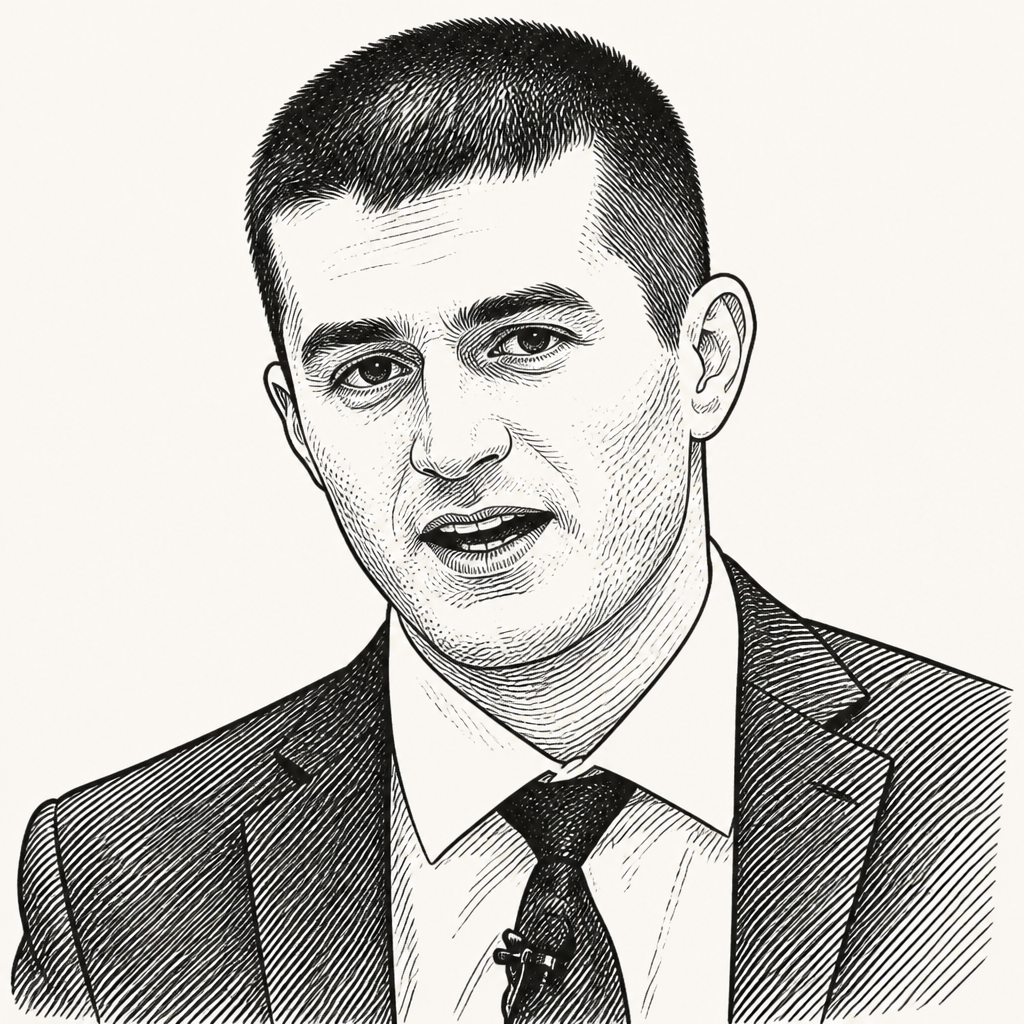
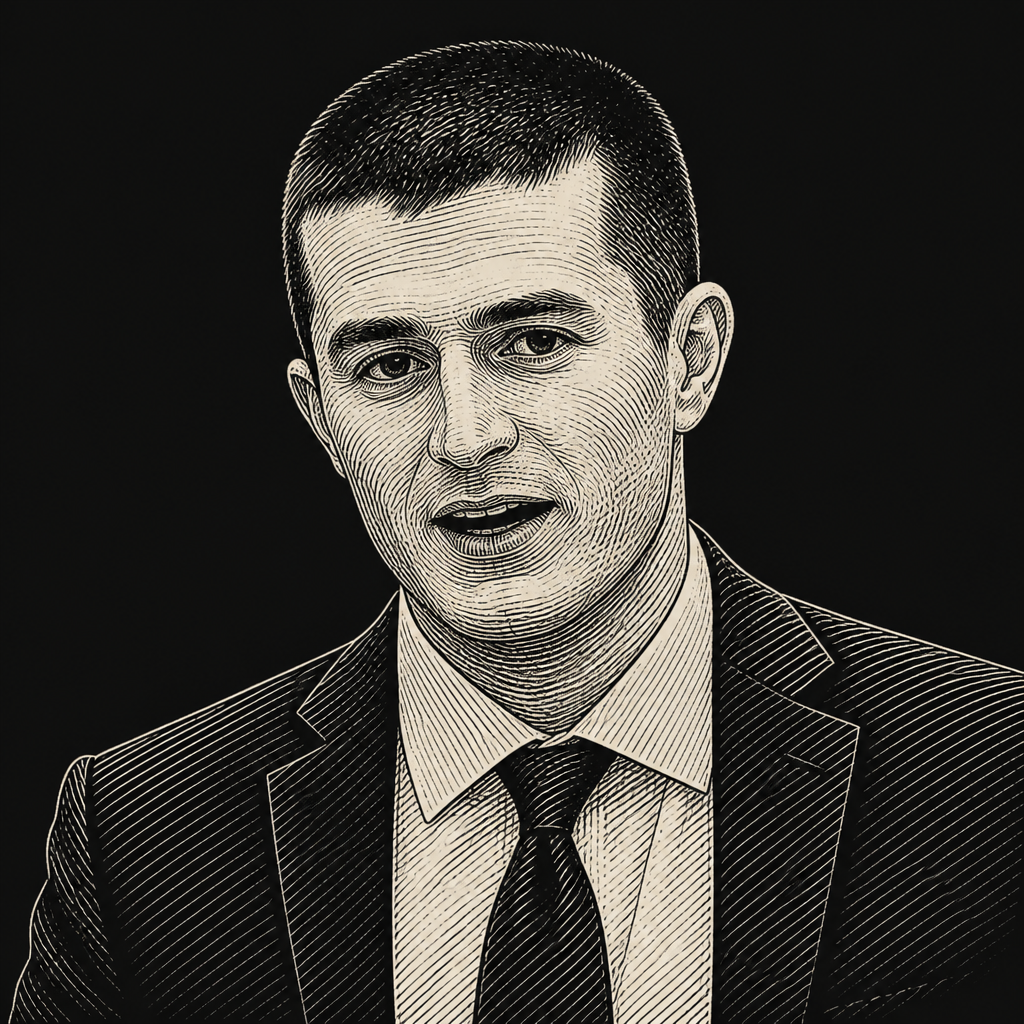
That emphasis comes from experience. Lawton says his first jewelry-store robbery, in South Florida in the late 1980s, was arranged as an insurance setup: a jeweler wanted the store’s stock taken, and Lawton was given information about the place. He says he still did some advance observation, then entered when he expected few people to be there. The job took roughly a minute and a half. He came away with $150,000.
That first robbery changed his sense of what was possible. He took the money to New York and was told not to rob there: in his account, many jewelry businesses were protected by organized crime, and robbing one could bring consequences beyond a police investigation. He says the Gambino family connection gave him access to buyers and fences—the intermediaries who take stolen goods and turn them into cash. The arrangement depended on trust and compartmentalization. People in his crew might know one another, he said, but they did not know who handled the stolen jewelry or who paid him.
Lawton is unusually specific about what he means by preparation, but his larger point is simple: a criminal is dealing with people, not just security equipment. In his account, employees repeat routines, deliveries arrive at familiar times and a store’s neighbors can become part of what an observer learns. Cameras matter, he says, but habits and human reactions matter too. Under pressure, people make mistakes.
He also rejects the idea that a game can make a jewelry robbery plausible by letting a character simply walk into a store and begin. If GTA 6 makes its characters’ choices interactive, he wonders whether it will show what those choices demand. A character who walks in without knowing the situation, he says, is not an impressive criminal; he is likely to be arrested.
That is why Lawton scrutinized the game’s extended look at a drug house. He thought the location looked more like a place where drugs were being sold to users than a secure operation storing large quantities. He questioned why unfamiliar people carrying guns would be allowed to enter, why so many people would be present, and why someone would put a phone call on speaker in front of others. A dog greeting a visitor might suggest the character was known there; the people inside should know him too, he reasoned. Trust, he said, is supposed to be central to criminal operations, and information is not shared indiscriminately.
He found a different kind of implausibility in the trailer’s violence. When a generated game trailer made for the interview opened with gunfire during a robbery, Lawton immediately objected: “You don’t ever come into a robbery like that. You get caught.” He enjoyed the trailer, and called its likeness of him convincing, but watched it as someone attuned to the small choices that make a scene ring false. He even noticed that one of its police officers wore a New York shoulder patch.
The distinction between the game and reality mattered to him. Near the end of their discussion of GTA, Lawton endorsed the reminder he uses in his own videos: “Remember, it’s just a game.” His interest in the game’s mechanics did not amount to presenting robbery as a model to follow. He repeatedly said he does not want people to imitate what he did.
The money was not the reason he kept going
Lawton says he robbed more than 25 jewelry stores, moving up the East Coast after New York was off limits. He describes diamonds as useful to thieves in part because they store enormous value in a small package. In his account, a fence might pay him 25 to 30 percent of the value, depending on what the goods were; standard Rolex watches, he said, had a set price. A painting could be worth far more on paper and still be difficult to sell. He recalls being offered a chance to steal valuable paintings from an art show, then calling contacts in New York and learning that he could not get even a small fraction of their supposed value.
The proceeds brought money, property, clubs and boats. But when an FBI agent asked why he had not stopped after acquiring what he wanted, Lawton says his answer was that the act of leaving a jewelry store after a robbery gave him a high that money could not replace. Looking back, he believes he would not have stopped on his own. He thought he would die before turning 50; in his telling, being caught was what ended the robberies.
His career also came with a family cost. Lawton says his son had just turned seven and his daughter was 15 months old when he was arrested. He went to prison at 34 and got out at 46. He describes those years as lost time for relationships, work and ordinary life, and stresses that he does not blame anyone else for the choices that put him there.
He says he tried to distinguish between people he considered part of his criminal world and civilians. In a robbery, he says, he aimed not to injure customers or store employees; he describes telling people to close their eyes or sit quietly rather than gagging them. He also recounts physically punishing people involved in his own criminal business. The distinction was his, not an absence of violence: he says he could compartmentalize and become someone his acquaintances would not recognize when he was “on game.”
That self-description sits uneasily beside his account of intimidation, assault and robbery. Lawton does not resolve the contradiction by claiming his crimes were harmless. He describes them as crimes, says they cost him years with his children, and says he knew he was doing wrong. At the same time, he argues that a person’s capacity for violence or wrongdoing does not erase every other part of that person. He had long conversations in prison with men convicted of serious crimes, including mob figures. Some, he says, could be kind; others were psychopaths he believed should never be released.
“I don’t judge anybody in life,” he says, because he does not know what someone else has lived through. That is not the same as saying that all conduct is equivalent. Lawton draws his own limits—especially around harm to children and people outside the criminal world—but says he cannot assume he understands another person’s path simply from the worst thing they have done.
The high did not mean the danger was invisible to him. Lawton says he always expected that he might die in the life, and that he never thought he would live to 50. He describes the money, cars, homes, clubs and boats as things he acquired, but says the rush of a successful robbery mattered more. “The only thing that got out of the game was getting caught,” he tells Fridman. In retrospect, he thinks he would have continued if the FBI had not arrested him.
Miami’s crime stories were tied to real migrations and real losses
Lawton places his memories of South Florida in the Miami of the late 1980s and early 1990s: a city he describes as shaped by drug money, corruption and nightlife. He says he kept $50,000 in his car in case he needed to buy something or pay off a police officer. In his telling, Scarface captured real elements of that period: large amounts of cash, corrupt officials and a South Beach that was less corporate and more defined by its Art Deco buildings and clubs.
His familiarity with the film’s setting is not limited to crime. Before his robberies, he served in the Coast Guard. He says he was among the first Coast Guard crews sent to the Florida Keys during the 1980 Mariel boatlift, when Cubans crossed to the United States by sea. He recalls seeing an overloaded boat catch fire and racing toward it, then finding people dead or injured in the water. The crew loaded bodies aboard. He describes the experience as traumatic, particularly for young service members who had little means to process what they were seeing.
That memory helps explain why he speaks of Cuban people with affection and why he connects the boatlift to Scarface. The film’s Tony Montana arrives from Cuba as part of the Mariel migration, but Lawton points to the real emergency surrounding the crossings and to the temporary encampments built for refugees in Miami. The backdrop was not only a story of criminal ambition. It included people fleeing, deaths at sea and communities improvising places to put arrivals.
Lawton’s Coast Guard stories also complicate his later account of criminal life. He remembers serving in Alaska during the Cold War, boarding Russian fishing ships and spending long stretches alongside Russian crew members. The political language of an enemy state did not match the men he met on the ships, he says. They drank together. He describes the separation between people and governments as a lesson in how political narratives can shape what people expect of one another.
He also recalls a frightening encounter off Cuba, when a Cuban gunboat approached the small Coast Guard vessel he was operating. A calm voice over the radio told them to stop and wait for help. Lawton says fighter jets arrived, followed by the Coast Guard cutter Dallas and Navy vessels. The episode left him with a sense of how quickly a routine patrol could become a Cold War confrontation—and how much of a young crew’s response depended on older voices remaining calm.
The Gambino connection gave him access—and a code he would not break
Lawton says his entry into organized crime came through neighborhood connections in the Bronx and, later, work with the Gambino crime family. After returning to New York on medical leave from the Coast Guard, he says he began as muscle for an underground card game in Queens, then became a bookmaker. A bookmaker, he explains, tries to balance bets rather than gamble on which team wins. When his own book became uneven, he could pass action to a larger operator—a “layoff guy”—who could absorb it.
Lawton describes gambling, loan-sharking and warehouse robberies as parts of the same network of earners and connections. He says the people who made money for the organization could rise by finding new opportunities. His account of the first jewelry-store job illustrates that path: his bosses in New York told him a jeweler in South Florida wanted an insurance setup. Lawton says he was trusted with the job, brought the proceeds north and received $150,000. The response, he recalls, was less surprise at the robbery than concern about where it had happened. New York stores were protected, and the people who operated there could not treat them as ordinary targets.
He says he was associated with the Gambino family, had a fence connected to another family, and brought stolen goods to that intermediary in exchange for cash. He portrays the arrangement as deliberately narrow: the people who helped him carry out robberies did not know the identity of the fence, and few people could testify to seeing a direct exchange between Lawton and the buyer. The need for trust did not make the network benign; it made it harder to expose.
Lawton’s account of his arrest turns on what he says he would not do for the FBI. He says agent Matt Mullin had been looking for him for six years. After Lawton was arrested, the agent showed him photographs connecting him to people in the mob. Lawton says he denied knowing one man, then recognized himself in another image beside him. The FBI offered, he says, a sentence of about two years and the chance to keep $6.1 million if he cooperated.
He refused. Lawton says his father had taught him that the only thing a person has is his word. He believed that testifying would leave him unable to respect himself, even if other people thought he had made the practical choice. He also says he recognizes that other people might face circumstances he does not know about, and does not claim that everyone who cooperates has made the same decision he would have made.
The refusal came with a long sentence. Lawton says prosecutors used the federal RICO statute and that he was the only person he knew to be imprisoned under it alone, though he had a partner—his brother. He also describes a later federal false-statement charge arising from the name “John Rodriguez,” which he says he gave to investigators. He says he represented himself in that case, spent more than a million dollars of government resources defending it, and ultimately had the sentence run concurrently with the sentence he was already serving.
He does not present the federal government as incompetent. On the contrary, he praises the investigation that caught him. He says the FBI collected surveillance footage, interviewed jewelry stores and flooded areas with agents after robberies matching his pattern. In Fairless Hills, Pennsylvania, he says, he had visited a store several miles from the one he later robbed. Someone there recorded his license plate while trying to sell him a ring. Lawton did not realize the plate had become a lead.
When he carried out the later robbery, he says, the FBI task force collected footage from nearby convenience stores and found him buying coffee. The investigation produced boxes of evidence. Lawton says the case was strong because of sustained police work, not because the FBI stumbled onto him. He credits Mullin as a good agent and says the insurance companies, rather than the people whose stores he robbed, were the ones pressing hardest to catch him.
Prison ran on its own currencies and relationships
In prison, Lawton says, money was prohibited but exchange was not. Cigarettes had once served as currency, he says, until tobacco was removed from the yards. Postage stamps then became a medium of exchange: a book could be divided into individual stamps and used for bets, food or other transactions. He says he became a bookmaker, as he had been outside prison, and accumulated thousands of books of stamps.
The system could reach beyond the prison walls. Lawton describes “street-to-street” money as a way to arrange an outside payment in exchange for stamps held inside. A person on the outside would send money to someone associated with a stamp seller; once the payment was confirmed, the seller would hand over the stamps in prison. Inmates also traded ramen soups, he says, and made wagers in units of food. The details amount to a small economy built around available goods, informal credit and networks of people outside.
The value of the stamps changed as their retail price rose, Lawton says, giving the prison currency its own inflation. He describes hiding more stamps than the prison allowed him to possess and running a bookmaking operation with them. The point for him was not only money. The hustle kept his brain occupied and gave him a role in a society whose formal rules prohibited cash but could not eliminate trade.
The prison’s social life could be strikingly domestic. Lawton says he cooked pasta for groups of 10 to 12 men, secretly keeping supplies and using improvised equipment to boil water. He describes the meal as a Friday routine, a way to feed people and maintain relationships in an institution organized around restriction and surveillance. He says he also saw prison romances, including weddings and inmates making cosmetics and clothing from whatever materials they could find.
Such accounts coexist with his descriptions of extreme danger. Lawton says he was held in federal penitentiaries with men serving life sentences, some of whom he believed were psychopathic. He describes killings, attacks and assaults that he says he witnessed or learned about from other inmates. These experiences help explain why he says survival required constantly reading a room, watching for tension and understanding who had power.
He recalls that his first period in prison was marked by shock and vigilance. He says it could take about two years to feel settled in a serious prison, particularly when facing a long sentence. He watched for signs that someone was prepared for a fight, including a magazine tucked under clothing as makeshift protection. In his account, fear was not abstract: a person might misread an encounter, take offense or decide that someone else posed a threat.
His own conduct could be volatile. He says he attacked a prison staff member after an argument over a cellmate being held in the hole for contraband that Lawton claimed was his. He acknowledges that he acted wrongly, though he believed the staff member’s response was unjust. The incident, he says, contributed to his return to a higher-security prison and to his being treated as a high-risk inmate.
The prison gangs organize danger, protection and alliances
Lawton describes prison gangs as organizations with rules, identities and relationships that can reach beyond the yard. He names groups he encountered or knew about across white, Puerto Rican, Mexican and Black prison populations, including the Aryan Brotherhood, Latin Kings, Mexican Mafia, Black Guerrilla Family, Bloods and Crips. He says groups formed partly because people sought protection among those they considered their own, especially where one racial group was a minority.
He cautions against treating every mention of a notorious gang as evidence that someone has been in the same kind of prison. In his account, the Aryan Brotherhood is associated with high-security prisons and men serving long or life sentences. He describes its members as dangerous and says the group has an outside network as well. Lawton also recalls seeing alliances across racial lines. Prisoners might keep to their own groups in some settings, he says, but they could also work together when circumstances required it.
One route into those relationships, Lawton says, was legal work. He spent time in the law library and had connections outside prison who could help him obtain paperwork. That made him useful to gang leaders, or “shot callers,” who asked him to work on cases. He says he sometimes helped people understand what their records showed and what legal options they might have. He did not want to tell people to attack someone based on a file, he says, and describes weighing what he read against his own judgment.
The role brought him into contact with people he considered dangerous and with people he believed had been treated unjustly. Lawton describes a sharp divide in access to legal representation: people who could afford good lawyers, he says, had different prospects from those relying on appointed counsel. He argues that two people accused of the same crime can face very different outcomes depending on their representation, and that prison populations include people who are not simply “scumbags” because they are incarcerated. In the same breath, he says some people have committed acts that deserve severe punishment.
His examples of violence are grim. He describes one prisoner killing a cellmate after being annoyed by his snoring, and recounts other attacks involving improvised weapons. Those stories support his claim that prison is not a neutral container for people serving time: it is an environment where violence and group affiliations shape daily decisions. They also explain why he was wary of people who believed they could move through prison without understanding its informal rules.
In the hole, uncertainty was the punishment
Lawton spent 11 months in solitary confinement after being placed in the Special Housing Unit during an investigation. He distinguishes that experience from a fixed disciplinary sentence. When a hearing officer assigns a set number of days, he says, a prisoner can at least count toward an end date. An investigation without a known end can make a person feel that he may never leave.
He describes the physical conditions as only part of the ordeal. He read as much as he could—sometimes a book a day—and exercised. He and other inmates talked through vents. He found ways to boil water and keep his mind occupied. But the psychological strain came from repetition, isolation and the inability to know what would happen next. “The torture wasn’t being there,” he says of one period; it was not knowing whether he would ever get out.
Lawton says he came close to killing himself during that confinement. He had torn a sheet and put it around his neck, he recalls, before stopping. He links the episode to the death of a friend, Jack, who had told him he intended to take his own life. Lawton says he tried to delay him until after the prison’s afternoon count, thinking they could talk or exercise afterward. Jack died. Lawton remembers lying on his bunk afterward and hearing the words, “I have plans for you.” He says he is not religious and does not know what the experience meant, but it stayed with him.
Another friend, he says, helped him endure the hole through conversations at night. The guard would speak to him through the cell door, talking about God and life. Lawton says those exchanges helped keep him from losing his grip. Only after leaving prison did he understand why the guard might not have intervened more directly against abuse: he had a family to support and could put himself at risk by challenging colleagues without backing.
Lawton also describes prison staff using restraints and force against him. He says he was repeatedly taken from his cell, stripped and strapped to a bed, and that he was abused over a period of months. He says he responded by filing grievances and suing prison officials, including senior figures in the Bureau of Prisons. In one case, he says, the dispute began after he was sent to the hole for masturbating alone in his cell. He pursued the complaint not only to contest his own punishment, but because he wanted a change in policy.
He does not present his response as calm or detached. He says he spent years thinking about retaliating against staff who had abused him. A relative told him that his hatred was consuming him. He came to understand that letting go did not mean approving of what had happened or forgiving those responsible. It meant refusing to let them occupy his mind every day.
The distinction between a fixed sentence and indefinite confinement runs through his account. So does the distinction between physical and mental endurance. He says exercise, reading and conversation helped him keep functioning, but none made the uncertainty disappear.
Lawton sees rehabilitation as public safety, not leniency
Lawton’s experience underlies his argument for rehabilitation. He does not claim that every prisoner can safely return to society. Some people, he says, pose a continuing danger. But he argues that releasing people with no hope of rebuilding a life is a poor way to reduce future harm. A person who believes there is nothing to return to, he says, may have little reason to avoid another crime.
His account of the Reality Check Program follows that logic. Lawton says a judge first directed people to his program before he had formalized it. He built a course for young people that confronts them with where criminal choices can lead. He says the program has reported a 90 percent success rate in keeping participating young people out of jail, alongside improvements in parent attitudes, school performance and attendance. He attributes the evaluation to Eastern Florida State College, which collected the data. The program has since been adapted into video lessons that young people can complete and report back to a court.
Lawton says his credibility with young people comes partly from not being a former addict or a former police officer. He speaks as someone who committed crimes, went to prison and lost years of his life. He wants the consequences to be legible before a young person has to experience them firsthand. He also says the program can help police officers respond to young people without turning every encounter into an arrest. Officers, in his account, can give families a video card and an opportunity to intervene before a crisis deepens.
The same principle shapes his criticism of routine policing. Lawton says he supports good police officers and has trained police, but believes officers lose public trust when they treat the community as an adversary. He favors discretion in situations where a warning or help might be more useful than a ticket or arrest. He describes an officer who arrested a young person after finding drug paraphernalia, despite the parent’s request that Lawton speak with the child. To him, the arrest imposed a lasting record where intervention might have been possible.
He does not argue that officers should never enforce the law. He says dangerous behavior—such as driving at extreme speed—requires intervention. His complaint is about a style of policing that treats every encounter as a chance to issue a citation. He gives the example of an older man who told people about being stopped for rolling through a stop sign and receiving a ticket. A more human approach, he argues, might have begun by asking whether the driver was all right. Stories of respectful treatment travel too, he says, and can change how a community sees its police.
His proposed prison oversight system is similarly built around access and accountability. He argues that an inspection announced weeks ahead of time can be staged: prison staff can clean up, repair visible problems and move especially distressed prisoners out of view. He proposes a small outside team—including people with experience as inmates, guards, wardens and medical staff—with authority to enter prisons without advance notice. The team, he says, would know where to look and how to speak with prisoners who might not trust a guard.
Lawton argues that the team should document problems, give wardens a chance to fix them and return without announcing when. He says the goal would not be to punish a warden automatically, since administrators might not know everything happening inside their facilities, but to make someone responsible for correcting failures. His proposal reflects a larger conviction: people who have lived inside a system may notice things that formal inspectors miss.
He also criticizes the conditions that make oversight and reform difficult. In his account, prisons can depend on local jobs, food suppliers and other businesses, so a town may have a financial interest in keeping a facility open. He says the private-prison model creates a similar conflict when a company’s revenue depends on people remaining incarcerated. He questions a system in which wardens can be rewarded for cutting food or programs, and argues that institutions serving people with little political power are easy to neglect.
Lawton connects that neglect to the scale of incarceration and to the types of offenses that lead people to prison. He argues that the public discussion often treats “violent” and “nonviolent” as self-evident categories, when legal definitions can include conduct that he believes does not make someone dangerous. He gives the example of a person who steals a bicycle from a garage attached to a home being treated as having robbed an occupied dwelling. He is not defending theft, he says; he is asking whether the punishment fits the conduct.
He also argues that prison populations are sustained by economic and institutional arrangements that are hard to unwind. A rural prison may bring jobs and contracts, he says, while the people who work there and local businesses become dependent on it. Closing a prison without creating another path for those workers, in his view, makes reform harder. But retaining an institution because a community depends on it does not address the harm of poor conditions or the consequences of unnecessary incarceration.
For Lawton, rehabilitation is not only a way to reduce the public cost of imprisonment. A person who returns to society and buys groceries, rents a home, buys a car and works is contributing to it. He recalls a conversation with former Florida lieutenant governor Jeff Kottkamp, who told him not to think only about the money saved by avoiding incarceration; consider the economic effect of a productive person as well. The point changed how Lawton framed the case for his program.
His own advice to young people is more personal than programmatic: keep your word, admit mistakes and do not give up. He says he was 46 when he left prison, with a record and the task of starting again. That, for him, is the point of a second chance—not that the past disappears, but that a person can still build a future after it.