Financial Gravity Corrupts Companies Unless Founders Encode Mission Early


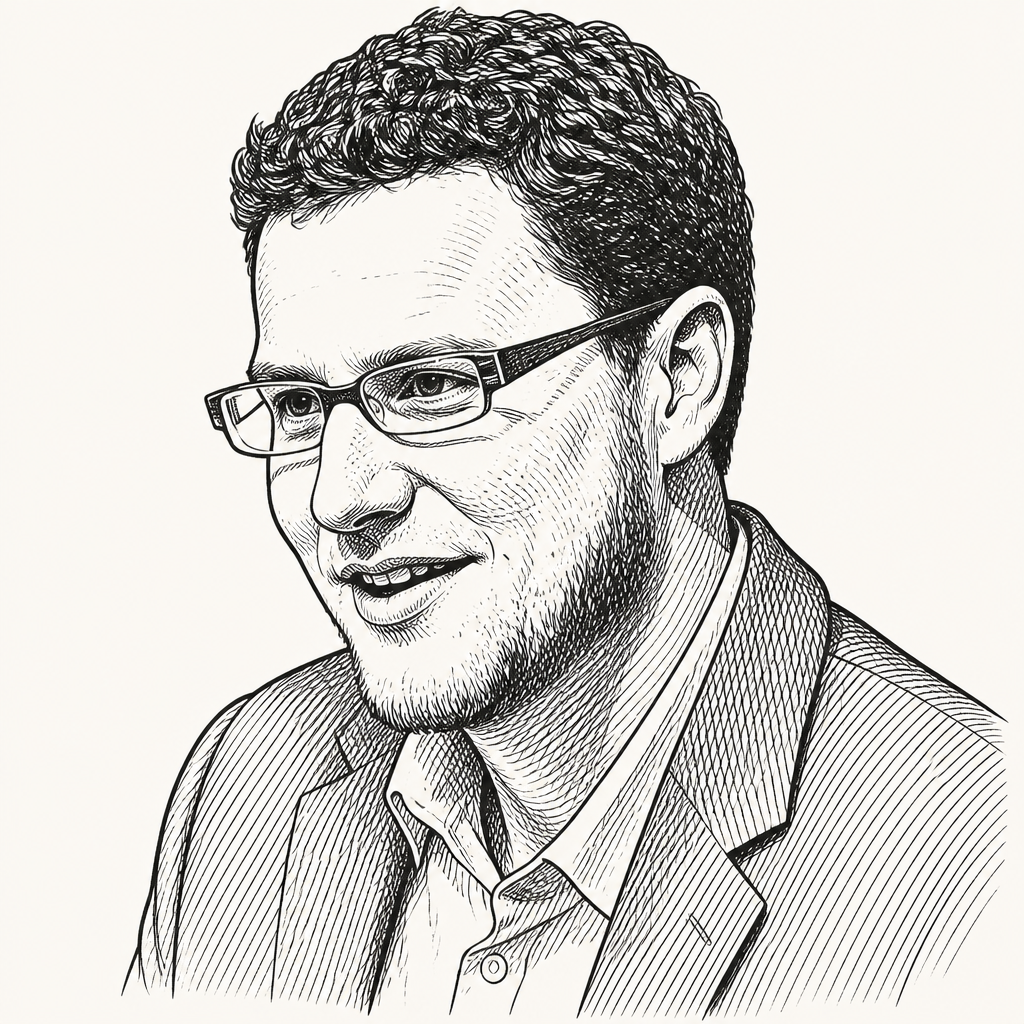
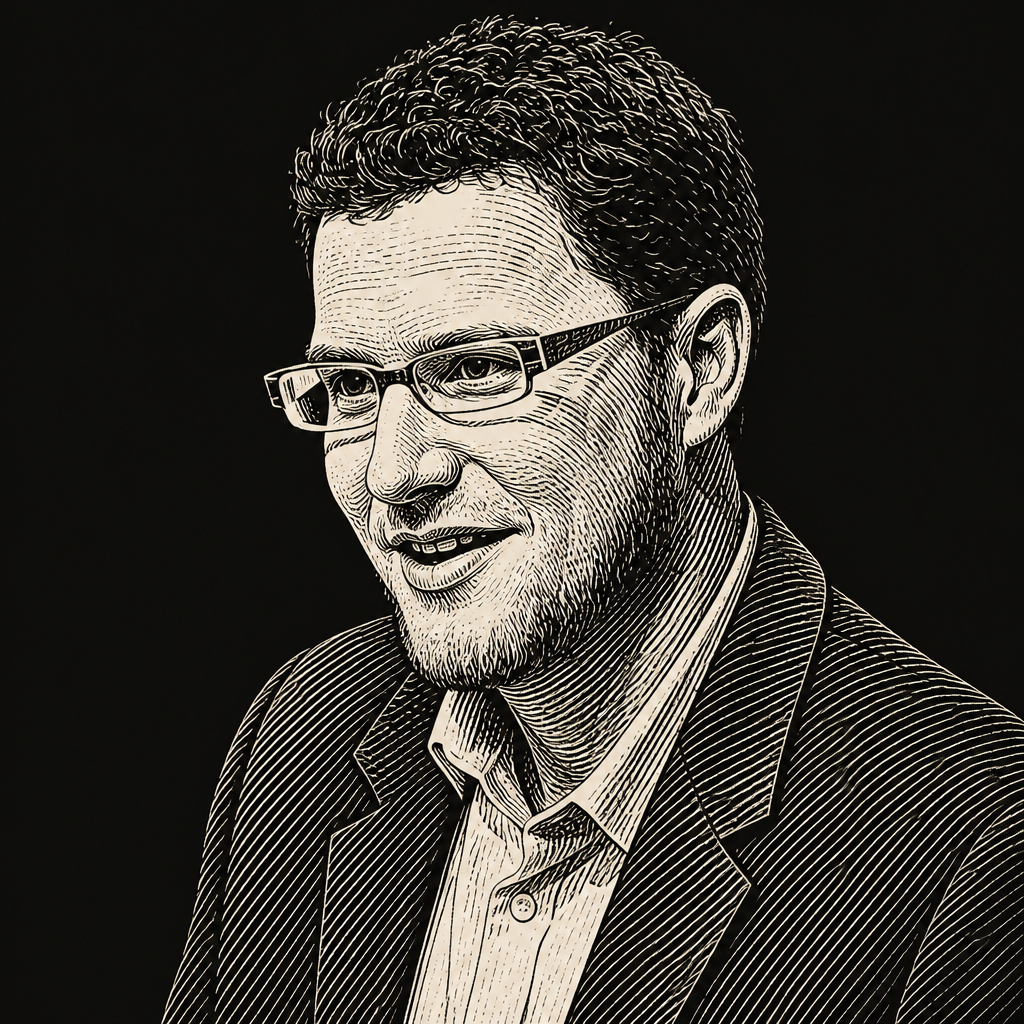
Eric Ries, author of The Lean Startup, argues in Incorruptible that successful companies often fail not because competitors beat them, but because investors, boards, executives, and incentives eventually extract the qualities that made them valuable. In a conversation with Lenny Rachitsky, Ries says founders should treat mission protection as a governance problem, not a branding exercise: put the company’s purpose into its charter, create structures such as public benefit corporation status or mission guardians, and make betrayal difficult before success makes it profitable.

Success creates the conditions for betrayal
Eric Ries frames the central problem in Incorruptible as what happens after a company has become valuable enough to extract from. The failure mode is not simply competition, bad strategy, or founders with weak ethics. It is a structural force that, in his words, “no one controls, but everyone obeys,” and it drags organizations toward mediocrity until the people who built them no longer control them.
Sometimes that means the founder is fired. Sometimes the company remains alive but becomes unrecognizable: more bureaucratic, more extractive, lower quality, or, in Ries’s blunt language, “frankly evil.” The pattern he wants founders to take seriously is that many companies are not destroyed because someone else builds a better product. They are destroyed because the company becomes successful enough that every party around it has an incentive to harvest what made it special.
Ries’s restaurant example is deliberately ordinary. A friend takes one bite of food at a restaurant he once liked, pulls out his phone, and confirms what he says he could taste: the restaurant had been taken over by private equity. Ries says that when he repeats the story, people immediately name other restaurants. The specific restaurant matters less than the recognition. People know what it feels like when a brand they trusted has been financially optimized until the trust leaks out of the product.
Lenny Rachitsky offers Vital Farms eggs as a possible consumer example, while explicitly cautioning that he had not deeply checked the viral claims he had seen about toxins and ownership. Ries had not seen that case, but uses the exchange to reinforce the broader pattern he sees: a founder or original ethos gets displaced, pressure for higher growth and margins takes over, quality falls, customers and employees become angry, and the company’s market position starts to erode.


Ries calls that pattern corruption, but not in the narrow sense of bribery or embezzlement. He compares it to a bridge collapse. It is true, in a uselessly general way, to say gravity caused the collapse. But the engineering question is more specific: which bolts corroded, what loads were misjudged, what material would have prevented the failure? Ries wants founders to ask the same question about companies. If “financial gravity” is always present, the practical question is why some organizations collapse under it and others do not.
This book is about what are the organizational equivalents of stainless steel.
For Ries, the important point is that these failures are not inevitable, even if the pressure is. He argues that there are organizational materials, legal structures, cultural practices, and governance mechanisms that make betrayal harder. The mistake is assuming that success itself will provide protection. Ries’s answer is almost the reverse: success makes the company a target.
The founder usually does not keep control
Ries’s most jarring claim is statistical: citing Harvard Law School, he says that among venture-backed companies with standard “best practices” governance, only 20% of founders are still CEO three years after going public. He uses that number to attack the common reassurance founders hear from lawyers, bankers, investors, and board members: that the risk is real for other people, but not for them.
Ries describes advising a high-profile company a year or two before its IPO. The founder wanted the company to think long-term and protect its mission. Ries reviewed the governance documents and told him, in effect, that the documents were standard—and therefore dangerous. The founder initially seemed concerned, but returned after talking to bankers, lawyers, the CFO, the general counsel, venture investors, and growth investors. The collective response, Ries says, was that he was being too negative. If he really believed in the founder’s vision, they implied, he would recognize that this company was the exception.
The company went public successfully. Five months later, after a competitor was acquired and the category sold off, the stock price collapsed and the founder was ousted. Ries does not claim the founder made no mistakes or that the business had no problems. His objection is proportionality. The same investors and advisers who had endorsed the company at IPO judged, five months later, that the founder deserved no grace.
Ries’s deeper accusation is that the transaction ecosystem profits either way. Bankers, lawyers, executives, and investors can make money on the way up and on the way down. The people most exposed to the permanent damage are customers, employees, and the people who cared about the company’s original purpose.
This is why Ries rejects “do it later” as a governance strategy. He says it is “always too early until it’s too late.” At incorporation, the lawyer says to focus on product-market fit and worry about mission protections later. At the seed or Series A stage, investors say they believe in the founder and there is no need to complicate the documents. At the growth stage, the new investors worry about being too different. During IPO preparation, bankers say governance changes can be bundled with the IPO. During the final filing process, the CFO says the window has closed.
The problem, in Ries’s account, is not a single malicious actor. It is a sequence of reasonable-sounding deferrals that ends with the founder having lost leverage. By the time the company is visibly valuable enough for these provisions to matter, too many parties can block them.
Ries’s warning is not just about protecting a founder’s job. It is about whether the company can keep any promise at all. If a company can be “decapitated at any time,” he argues, every promise made by the old leadership becomes suspect. A new CEO may be perfectly competent and decent, but customers and employees can reasonably ask why they should trust promises from someone who might also be removed under pressure from a small activist stake.
The Vectura case makes the hostile-buyer hypothetical real
Ries uses a deliberately provocative exercise with founders and executives: name the company you would never work for, no matter how much money it offered. For Ries, raised by a pulmonologist father, the example is Philip Morris. He then asks people to imagine that company offering to buy their company for $1 more per share than it is currently worth, explicitly to use it for something morally abhorrent. Most founders say they would never sell.
Ries’s point is that many have already signed documents that, in his account, push them toward saying yes. He argues that conventional charters and fiduciary duties, as founders often receive them, can make the board treat the highest financial bid as decisive. Founders often do not believe this, he says, until they call their lawyers.
The real-world example Ries uses is Vectura, a UK company spun out from the University of Bath that made inhaler therapeutics for asthma and COPD. Vectura was successful, raised money, and went public on the London Stock Exchange. Then Philip Morris made an offer to buy it.
Ries lays out the board’s choices as he understands them: Philip Morris at 165 pence per share, an American private equity firm at 155 pence per share, or remaining independent. The public reaction in the UK was hostile. Ries says the British Thoracic Society urged Vectura not to sell. To critics, big tobacco owning an inhaler therapeutics company was an obvious violation of the company’s health mission.
The Vectura board, as Ries describes it, concluded that its hands were tied and that it had a fiduciary duty to accept the highest bid. Philip Morris bought Vectura for £1.1 billion. Within three years, Ries says, Philip Morris had taken a $900 million write-down and disposed of the company for parts. In his telling, “it doesn’t exist anymore today.”
The story is doing several kinds of work in Ries’s argument. First, it shows that the hostile-buyer hypothetical is not just a seminar exercise. Second, it shows how small the premium can be: he jokes that he exaggerated in his hypothetical by saying $1 per share, because in Vectura’s case the difference was closer to 15 cents. Third, it shows why good intentions are insufficient. The relevant question is not what the founder or employees would prefer in the abstract. It is what the charter, board duties, and governance structure require when the pressure arrives.
Ries says Delaware charters are public record and urges founders to read their own. His claim is not that every company will face a Philip Morris-style bidder. It is that standard documents often encode obligations founders do not understand, and those obligations become decisive when the company’s purpose collides with a financial offer.
Ethos without apparatus becomes a slogan
Ries’s proposed blueprint is “ethos plus integrity.” Ethos is the internal alignment: purpose, character, values, habits, and the living commitments of the organization. Integrity is the structure that helps the organization keep those commitments under pressure.
He is skeptical of mission statements when they are treated as the thing itself. A statement can document a mission, but it cannot create one. He points to Cloudflare as an example of mission emerging from repeated choices before it became formal language.
Cloudflare’s founders, Ries says, were initially allergic to “consulting BS” about mission statements and values. They were building a firewall in the cloud and did not want abstraction layered on top. But the company repeatedly made decisions that revealed what it was becoming. Ries describes an early case in which pro-democracy protesters were facing state-sponsored attempts to take down their websites. Large technology companies declined to help. Cloudflare, then a small startup, agreed to defend them, even though they were free-tier customers.
Later, over lunch, an engineer said he liked working there because it felt like they were trying to “make a better internet.” The phrase spread internally before the founders accepted it as the mission statement. Cloudflare’s later formal values, Ries notes, include “be principled.”
The mission became costly when a junior engineer challenged the company’s pricing model. Cloudflare’s biggest driver of upgrades from free to paid plans was SSL encryption. The company charged for it because encryption imposed real costs: certificates, cryptography, compute, and operational work. But the engineer asked a simple question: if Cloudflare’s mission was to make a better internet, and a better internet was an encrypted internet, why was encryption not free?
Ries says Matthew Prince’s key response was not a spreadsheet argument but “let’s figure it out.” Cloudflare still had to make it economically sustainable; bankrupting the company would not advance the mission. The team reduced costs, including by building low-level software and striking certificate-authority deals. When the product shipped, conversion to paid plans went down. Cloudflare could have retreated. It did not.
In Ries’s telling, the long-term result was trust and scale: top-of-funnel demand grew by an order of magnitude, and Cloudflare became associated with making encryption normal on the internet. He attributes Cloudflare’s eventual scale in part to that earned trust, while emphasizing that the trust could not have been earned by pretending to be principled only when it was profitable.
Groupon is his contrast case. Andrew Mason, Groupon’s founder, told Ries that the company’s original product was a daily email with one deal. After going public, executives and employees argued for more emails to make the quarter. They framed the request in data-driven language: run an experiment, check the ROI. Two emails made more money than one. Later, three emails looked better than two. Eventually, Ries says, Groupon was sending eight emails. The short-term numbers justified each step. The cumulative effect destroyed what made the product work.
Ries sees email frequency as a recurring “tip of the spear” because the betrayal is measurable in the short term and costly only later. Trust is vulnerable precisely because it can be spent before the victim notices.
A real mission is one you cannot profit by betraying
When Rachitsky asks whether the practical answer begins with writing values or a mission statement, Ries says no—at least not if writing is treated as sufficient. The first real question is purpose: “Who would you rather die than betray?”
That question is intentionally severe. Ries wants founders and product leaders to define what the product exists to protect. For some companies, the answer may be product quality. He invokes Steve Jobs fighting over the layout of internal wires customers would never see and Yvon Chouinard’s belief that every product has an objective quality level it deserves. For others, the commitment may be safety, customer welfare, scientific integrity, or some other obligation.
The important test is whether the company’s operating system makes it possible to profit by betraying that commitment. Ries calls this “mission drive.” A company is not mission-driven because it says so. It is mission-driven, in his definition, only if it cannot make money except by advancing the mission.
He proposes a practical audit. Identify the company’s fiduciary commitments: who it is trying to serve or protect, what metrics or targets correspond to those commitments, and what accountability system makes them as important as financial results. Rachitsky paraphrases this as something like OKRs for the people the company claims to serve; Ries agrees, while resisting the usual stakeholder jargon.
The reason this apparatus matters is that slogans lose to machinery. Ries uses Google’s “Don’t Be Evil” ethos as an example of a real aspiration that, in his account, was not given sufficient institutional support. He says he studied departing Google employees’ blog posts and found a recurring sadness: longtime employees believed management had good intentions, but the ethos still eroded.
His diagnostic question to one ex-Googler was probability-based. What is the probability Google files its next quarterly report on time? The answer: effectively 100%. What is the probability Google never accidentally kills someone and covers it up? The answer could not be made equally certain. Ries’s conclusion is not that people care more about quarterly reporting than human life. It is that quarterly reporting has a massive apparatus to make sure it happens every time. “Don’t Be Evil” was, by comparison, a slogan.
The five things most vulnerable to cutting, Ries says, are safety, performance, quality, design, and innovation. They are vulnerable because cutting them often creates no immediate penalty. A company can betray the customer’s trust and enjoy the financial benefit before the customer understands what changed.
That is why Ries insists that leaders look for incentive paths. Is anyone’s bonus, OKR, promotion case, or team target improved by violating a stated principle? Could an efficiency consultant save a few cents by degrading the product in a way that matters morally or practically? If so, the mission has not been encoded deeply enough.
Ries gives deliberately simple examples of purpose because, in his view, abstraction is often the enemy. Cloudflare’s “make a better internet” works because employees can apply it to concrete tradeoffs. Devoted Health’s instruction to treat every customer the way an employee would treat their own parents works for the same reason. A purpose does not need to be ornate. It needs to be usable at the point of decision.
Public benefit corporation status is the minimum viable protection
On the integrity side, Ries starts with the corporate charter. Many founders have never read their own. If they do, they may find language saying the company exists to pursue “any lawful act or activity.” Ries argues that this sounds broad but is not, because he says the current theory of shareholder primacy treats the corporation as a financial instrument designed to enrich shareholders.
He emphasizes that shareholder primacy is not timeless capitalism. In his account, corporations historically existed to pursue a specific beneficial purpose. In the 19th century, he says, forming a company required articulating the public benefit of the activity—building a railroad, a canal, or another specific purpose. Changing the corporation’s purpose to mere shareholder value would have exceeded the authority of the charter.
Ries argues that the last roughly 40 years made shareholder primacy feel like natural law, but that it is a comparatively recent legal and cultural regime. If founders do not want that regime to control the company at moments of conflict, he says they can change the charter.
His simplest recommendation is to incorporate as a Public Benefit Corporation, or PBC. He distinguishes this from the consumer-facing B Corp certification that people may recognize from product packaging. A PBC is a legal form. In Ries’s description, it is a two-page Delaware filing that states the company’s purpose. Instead of “any lawful act or purpose,” the charter says what the company exists to advance.
The examples can be broad or specific: creating safe and responsible AI systems, advancing human flourishing through high-quality products, or whatever the company genuinely exists to do. Ries is careful that PBC status does not prove the company is good. It does, however, solve a specific problem: if investors later sue claiming the company breached its duty by not maximizing financial return in a particular way, the company can point to the purpose investors agreed to.
Ries calls this the minimum. A company that has not done it, in his view, is at risk of eventual betrayal. He also says the downside is essentially nonexistent. An investor may object, but Ries says the only situation in which the provision becomes relevant is one in which the investor is trying to force a sale against the founder’s judgment. That objection reveals something important about the investor.
The main practical downside, he says, is that people will waste time trying to talk the founder out of it. Lawyers may say the company should keep its options open and avoid prematurely committing to a purpose. Ries mocks that logic by asking whether a company needs to preserve the option to convert its customers into Soylent Green. His point is that refusing to rule out betrayal is one reason customers and employees do not trust companies.
For employees and candidates, Ries offers a low-courage tactic: ask whether the company is mission-driven, and then ask how it knows. If the answer is cultural or philanthropic, ask whether the mission is also legal—whether it is in the charter. The interviewer may not know, but the question can travel upward through the organization. Ries sees that as a legitimate pressure mechanism, especially because companies already care deeply about employee perception.
Novo Nordisk is the old proof that mission protection can create value
Ries’s favorite counter to the idea that mission protection is soft or anti-capitalist is Novo Nordisk. The origin story begins, in his telling, in 1920 Denmark with Marie Krogh, one of Denmark’s early credentialed women doctors and an advocate for women’s medical education. She was diagnosed with diabetes when it was still considered fatal. Her husband, August Krogh, had just won the Nobel Prize and was traveling in North America for a lecture tour.
At a dinner, Marie heard about Canadian researchers who had isolated insulin. She and August went to see the work, understood its implications, and discussed commercializing it. The ethical danger was immediate: a life-saving medicine could be priced exploitatively because patients had no alternative. Ries notes that the Kroghs and Canadian scientists were worried about this decades before Martin Shkreli became a symbol of drug-price exploitation.
When the Kroghs returned to Denmark and founded Nordisk Insulinlaboratorium, Ries says they used a two-tier structure. The operating company was for-profit and could have outside investors, but it was owned and governed by a nonprofit foundation. Ries identifies this as an industrial foundation structure. Nordisk Insulinlaboratorium became a predecessor to Novo Nordisk.
Ries argues that the structure protected an ethos of scientific integrity for more than a century. He contrasts that durability with modern “best practices” that are younger than trees in a local park. His challenge to founders is pointed: before accepting the advice of a credentialed lawyer, banker, or investor who insists standard governance is the only serious option, ask whether that person is smarter than August and Marie Krogh.
The strongest part of the example, for Ries, is not moral symbolism but value creation. He says the trustees of the nonprofit foundation once intervened to prevent the for-profit company from selling itself out, and that the intervention ultimately created more than $500 billion of shareholder value. He also cites Zeiss, the German optics company, as another long-running example of this kind of structure dating to 1885.
Ries says academic research on companies with structures like Novo and Zeiss shows that they are six times more likely to survive to year 50 than conventional counterparts, with superior return on invested capital. His conclusion is that mission-protective governance is not merely an ethical wrapper around the real business. It can be, in his view, a powerful engine of value creation.
Anthropic paired safety ethos with structural integrity
Ries treats Anthropic as the contemporary example many founders can no longer dismiss. Rachitsky describes Anthropic as the fastest-growing company of all time and notes that it is a public benefit corporation. Ries adds that Anthropic uses several interlocking protections, including the Long-Term Benefit Trust.
Ries says he played only a small advisory role. When Dario Amodei and others left OpenAI to start Anthropic, the company was not yet the obvious juggernaut it would later become. Amodei was a first-time founder. The generative AI boom had not happened. ChatGPT did not yet exist. Top venture firms were not all trying to get into the round. The early backers, as Ries describes them, included effective altruism true believers who cared deeply about AI safety.
One investor suggested the Anthropic team speak with Ries because he had collected alternative governance ideas. Ries says he walked them through the same failure modes: if they did not get governance right, financial pressure would eventually overwhelm the safety mission. Anthropic incorporated as a PBC from the beginning and wrote into its charter the right to enact additional reforms. Ries says it defended that right for roughly two years before implementing what became the Long-Term Benefit Trust around its Series C.
The structure, as Ries describes it, gives Anthropic directors on its for-profit board who are appointed by and accountable to an outside group of trustees. Those trustees are AI safety experts and do not hold equity in Anthropic, so they do not have a financial incentive in the company’s growth. Their incentive is to see the mission carried out properly.
That matters, Ries says, when Anthropic refuses to release a model it believes is too dangerous. The source shows an Axios screenshot headlined “Anthropic holds Mythos model due to hacking risks,” attributed on screen to Axios and Sam Sabin. Ries’s point is that such restraint is expensive. Publicity may be useful, but owning the top model and charging customers for it would also be useful. A company needs structural support to leave that money on the table.
He also refers to an Anthropic dispute involving the Pentagon, calling it an impossible situation and saying Anthropic was not necessarily the primary actor. Ries says that even people who think Anthropic made the wrong tactical choice often admire the willingness, as he characterizes it, to turn down a $200 million contract and accept pressure from the U.S. government and military. His claim is that courage is easier when investors cannot simply remove the mission-oriented leadership.
Rachitsky connects this to a prior discussion with Cat Wu, Anthropic’s head of product for Claude Code, who attributed Anthropic’s product velocity partly to mission alignment. Ries says that is exactly the organizational advantage. A mission-aligned company can avoid many meetings because the answer to some proposals is already known. If a proposed action is unsafe or violates the mission, the company does not need a spreadsheet debate about whether the extra dollar is worth it.
For Ries, the surface advantages people cite about Anthropic—lower inference costs, faster product velocity, focus, ability to recruit talent—trace back to mission alignment protected by governance. People want to work there because they believe in the mission; the mission persists because ethos is paired with integrity.
Mission guardians are better than founder-as-Atlas
Ries’s broader governance category is the “mission guardian”: some person or entity whose job is to ensure that the company remains mission-aligned. Founder control can serve this role temporarily. Google and Facebook, in Ries’s framing, used founder control as a mission-protection mechanism, with founders as guardians. But he sees serious drawbacks.
Founder control can make the founder into Atlas, holding back the abyss alone. The more powerful the company, the heavier that burden becomes. Ries says many founders with such control end up miserable, visible in public breakdowns and the psychological pressure of being the sole backstop.
He prefers institutional structures in which the mission itself has sovereignty. He calls the desired end state a “mission-controlled company,” distinct from both investor-controlled and founder-controlled companies. The mission guardian can take several forms.
One option is a nonprofit foundation, as with Novo Nordisk. Another is a perpetual purpose trust, or PPT, which Ries describes as a non-economic entity that exists to enforce a purpose. He says Patagonia uses a purpose trust. A PPT can include trustees and a “purpose protector,” a person whose job is to sue the trustees if they deviate from the mission. Ries likes the analogy to constitutional checks and balances.
Anthropic’s Long-Term Benefit Trust is also non-economic in Ries’s description, but he presents it as its own mission-guardian structure rather than as a generic template that every company can copy without adaptation. OpenAI, in his telling, “very famously had the nonprofit foundation,” and he says it had converted to a public benefit corporation structure. Google and Facebook are different again, relying on founder control. The common thread is not one legal instrument. It is that standard governance was not treated as enough.
There are also employee-oriented approaches. Employee ownership trusts can make employees mission guardians. Cooperatives can do this at scale; Ries cites Mondragon in Spain, with roughly 80,000 employees. Employee voting trusts can also work; he cites Alibaba as a company where employees vote for board members rather than the reverse. ESOPs and other structures also belong in the broader universe.
Ries’s umbrella term for these arrangements is “spiritual holding company.” A financial holding company, like Berkshire Hathaway, holds businesses economically. A spiritual holding company holds the animating purpose of the organization. It may not own all the economics, or any of them, but it exists to protect what the company is for.
| Mission guardian | How Ries describes it | Example or reference from the source |
|---|---|---|
| Founder control | A person acts as the mission backstop, often through voting control or board control. | Google and Facebook are discussed as founder-control examples. |
| Nonprofit foundation | A foundation owns or governs the for-profit operating company to preserve a purpose over time. | Novo Nordisk’s industrial foundation structure; OpenAI’s nonprofit foundation is also discussed. |
| Perpetual purpose trust | A non-economic trust exists to enforce the company’s purpose, sometimes with a purpose protector. | Patagonia is discussed as using a purpose trust. |
| Long-Term Benefit Trust | An outside group of trustees appoints and holds accountable certain Anthropic board directors, according to Ries. | Anthropic’s LTBT. |
| Employee ownership or voting trust | Employees become part of the mission-guarding mechanism. | John Lewis Partnership, Mondragon, and Alibaba are cited. |
| Single-entity governance fortress | Protective rules are written into the company’s structure itself. | Costco is described as protected by a governance fortress. |
He acknowledges that advocates for each structure often believe their version is best. His point is not that every company needs the identical vehicle. It is that standard governance leaves the mission unguarded, while durable companies often create some body, oath, trust, foundation, ownership mechanism, or charter provision that can renew and defend the purpose when pressure arrives.
The culture bank explains why small betrayals compound
Ries uses “trustworthiness” as the central intangible asset. The problem is that trustworthiness does not rank well in a narrow ROI analysis. Doing the right thing usually has tangible costs and intangible rewards. This is why he calls “harder is easier” a leadership principle: committing to quality, safety, ethics, design, or customer welfare may make a decision harder now, but it reduces organizational friction later because people trust the company.
He describes “torchbearers” as the people inside an organization who simply insist on doing the right thing: the designer who will not ship slop, the engineer who will not sacrifice performance or quality, the product manager who keeps prioritizing what matters despite pressure. In weak organizations, torchbearers spend their days defending themselves against ROI spreadsheets. In mission-aligned organizations, the spreadsheets often never get made because everyone already understands the boundary.
Ries invokes Clay Christensen’s line that it is easier to do the right thing 100% of the time than 98% of the time. The cost of 98% is that every exception requires a debate. The value of 100% is not moral purity alone; it is decision velocity.
The “culture bank” is Ries’s way of accounting for the cumulative effect. A deposit is a sacrifice made in defense of the company’s values. A withdrawal is a greedy or self-interested action that spends trust. He says Todd Park, founder of Devoted Health, learned a related rule from Howard Schultz: only make deposits, never withdrawals. Withdrawals will happen accidentally because people make mistakes. The discipline is never to make one intentionally.
Ries illustrates a deposit with H-E-B, the Texas grocery chain. During an ice storm and power outage, he says, a store manager let customers take groceries home without charging them because the point-of-sale system was down. Ries rejects the idea that the story is mainly about an unusually courageous manager. In his telling, that action reflected how H-E-B trains people: doing the right thing at a cost is a deposit in the culture bank.
That framework helps explain why mission has to be more than management communication. Mary Parker Follett’s “invisible leader,” which Ries returns to near the end, is the shared purpose that people follow when no manager is in the room. Most consequential product decisions are made in those moments: in code, design, support, prioritization, policy enforcement, and tradeoffs too small to escalate. If the invisible leader is quarterly optimization, that will shape the product. If it is quality, safety, or customer welfare, that will shape the product differently.
Early founders have the cheapest window to act
Ries’s tactical advice for early-stage founders is aimed especially at those who have not raised money or have only raised on SAFEs. At that stage, he says, founders can do almost anything. They should not waste the moment. Later-stage founders can still change structures, but they must secure investor and board agreement. Early founders can set the defaults before the cap table and governance become harder to move.
The first recommendation is to become a Public Benefit Corporation and write a mission into the charter that the founders would be proud to defend. Ries suggests a simple adversarial test with co-founders: spend an hour asking whether there is any way to make money while violating the proposed mission statement. If such a path exists, and the founders would be miserable if the company took it, the charter should be tightened.
The second recommendation is a Director’s Oath. Ries argues that directors make decisions with consequences at least as significant as professions that have formal oaths, yet board members often do not have a comparable obligation to do no harm or protect the company’s mission. Founders can write an oath into the charter as a precondition for board service.
The Director’s Oath, in Ries’s framing, responds to a practical board problem rather than an abstract moral one. He refers to current disputes involving AI companies and board service, including a fight involving Anthropic and Figma, as examples of how tangled conflicts can become. Companies may worry that having an AI person on the board is dangerous, while Ries says not having AI expertise on the board is also dangerous. His answer is not to pretend conflicts disappear, but to define board obligations explicitly.
The third recommendation concerns founder preferred shares and mission-protective provisions. Ries assumes founders should already understand founder preferred shares for economic reasons, and says that is the logical place to encode extra votes, board votes, board control, or similar protections. But he warns founders not to stop at becoming “emperor for life.” If they are accumulating power to protect the mission, they should also consider how that power transitions into a more institutional mission guardian.
That is where a structure like Anthropic’s Long-Term Benefit Trust or a future nonprofit foundation can be written into the charter early, even if it is not yet fully operational. Ries says a founder can pledge future equity or revenue to a nonprofit foundation, define a future board seat, or reserve the right to create the structure later. The key is to preserve the legal right and intention from the beginning.
| Action | What Ries says to do | Why timing matters |
|---|---|---|
| Become a PBC | File as a Public Benefit Corporation and put the company’s real purpose in the charter. | Before investors and later-stage governance make changes harder. |
| Stress-test the mission | Ask whether the company could make money while violating the mission, and tighten the statement if that outcome would be unacceptable. | The mission should block the betrayal path before incentives form around it. |
| Add board obligations | Use a Director’s Oath and mission-protective provisions as conditions of governance. | Board duties become decisive when financial pressure arrives. |
| Reserve future mission guardianship | Write in the right or obligation to create a trust, foundation, or similar guardian later. | The full institution can be built later only if the charter preserves the option now. |
For non-founders, the advice is humbler but not meaningless: ask the mission questions. Is the company a PBC? Is the mission in the charter? Who is the mission guardian? What apparatus ensures that stated commitments happen as reliably as quarterly reporting? Ries’s view is that even simple questions can create internal demand for answers.
AI governance exposes the human alignment problem
Rachitsky observes that company alignment sounds related to AI alignment. Ries says the connection is not accidental. His simplest formulation is: “Who aligns the aligners?” Technical AI alignment may progress, but the human alignment problem remains. If the organization building the system cannot agree on the values to align toward, the technical work is already compromised.
Ries invokes Conway’s law: software systems reflect the communication structures of the organizations that build them. He extends the point into governance. Human values flow from parent to child; the organizational imprint appears in technical architecture. A company’s internal alignment or misalignment can therefore become embedded in the products it creates.
This is why he believes AI companies have largely rejected standard governance. He describes attending a Vatican conference on AI governance, where he found himself on a panel with representatives from Anthropic, OpenAI, Google, Cohere, Palantir, and others. Looking down the row, he realized that none had standard governance. In his view, the technology is too powerful and valuable for serious AI companies to accept the default rule that whoever can borrow the most money should control it.
He treats OpenAI as a complicated case because of its unusual history and major personalities, including Elon Musk and Sam Altman. The lesson he draws is not a simple verdict on OpenAI, but the broader fact that major AI labs have felt the need for some alternative to ordinary shareholder governance.
Ries also connects organizations to emergent intelligence. He calls corporations and organizations the oldest form of artificial intelligence on the planet: superorganisms whose behavior emerges from many interacting agents. He describes a demonstration in which researchers created a “piano movers puzzle” for ants. One ant cannot solve it. A thousand ants can. The group appears to try, pause, reorient, and solve in a way that looks intelligent.
The crucial contrast, in Ries’s account, is that adding more ants improves performance, while adding more humans often worsens performance unless they are carefully aligned. That, for him, is the organizational design lesson. Companies are emergent intelligences. If leaders do not tend their purpose, incentives, and governance, those organizations will develop characteristics the founders did not intend.
The invisible leader is what remains when management is absent
Ries closes the argument by returning to Mary Parker Follett, an early management thinker he believes was far ahead of her time and later erased from much of management history. He contrasts her with Frederick Winslow Taylor, whose scientific management became a major early-20th-century management movement. Follett, writing in the same era, emphasized “power with” rather than “power over,” and argued that superiors and subordinates should together obey “the law of the situation.”
Ries highlights her idea that the hallmark of a leader is the ability to create more leaders. Peter Drucker later called her “the prophet of management.” But the concept Ries finds most useful is the “invisible leader.”
Follett’s example, as Ries recounts it, was the Rowntree chocolate factory. Mr. Rowntree was not the real leader merely because his name was on the door and his family owned the factory. He was an effective leader because he instilled a common purpose. That purpose, not the person, became the invisible leader.
The idea is central to Ries’s warning about promises. Leaders may believe they have made decisions by declaring a vision, setting a quality bar, or publishing values. But the consequential decisions are made later, by people choosing between rounded and straight corners, deciding whether to double-check before deleting data, choosing whether to send one more email, ship the dangerous model, cut a safety test, or lower a material standard. No manager is present for most of those decisions. The invisible leader is.
If the invisible leader is shareholder primacy, short-term ROI, or growth at any cost, then that is what the organization will obey. If the invisible leader is a real purpose backed by apparatus, oath, charter, trust, governance, incentives, and culture-bank deposits, the company has a chance of remaining itself after success makes it valuable enough to corrupt.