Cheap Autonomous Drones Are Rewriting the Economics of Land War
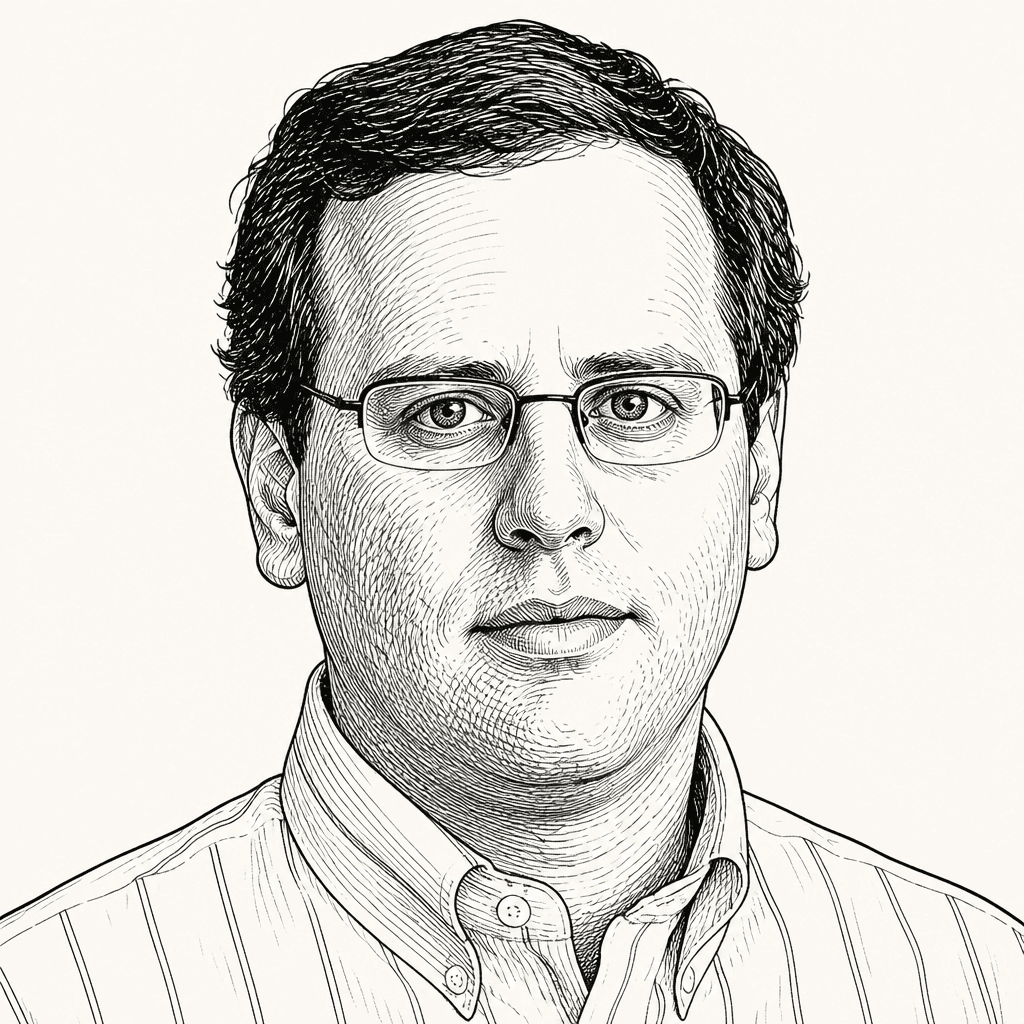
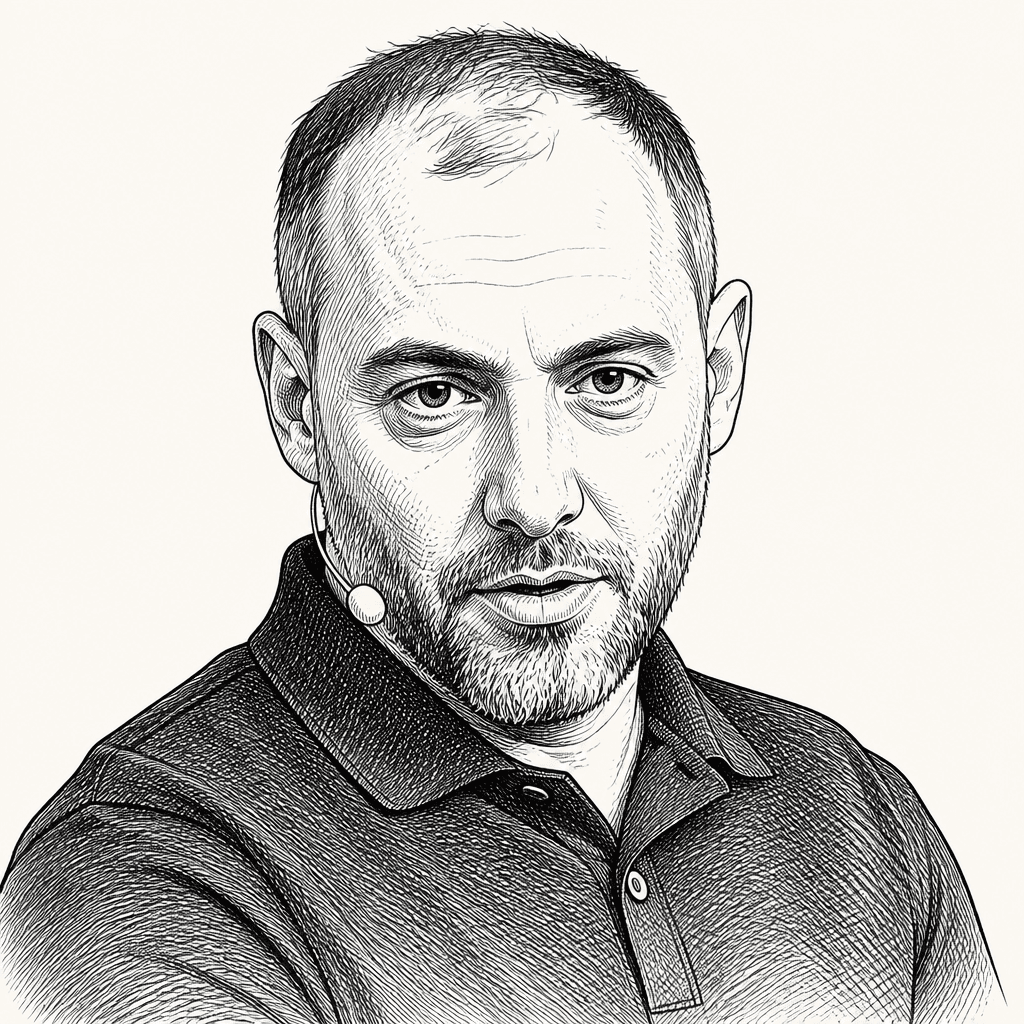
Yaroslav Azhnyuk, the Ukrainian tech founder behind The Fourth Law, argues in a long interview with Noah Smith and Brandon Anderson that Ukraine has already revealed a new form of war built around cheap, mass-produced, increasingly autonomous drones. FPV drones, he says, have displaced artillery as the main killer on the front, while China’s manufacturing capacity and Western procurement habits point to a widening strategic gap. His case is not that tanks, artillery, infantry or aircraft have disappeared, but that militaries planning around scarce, expensive platforms are misreading the economics of the modern battlefield.
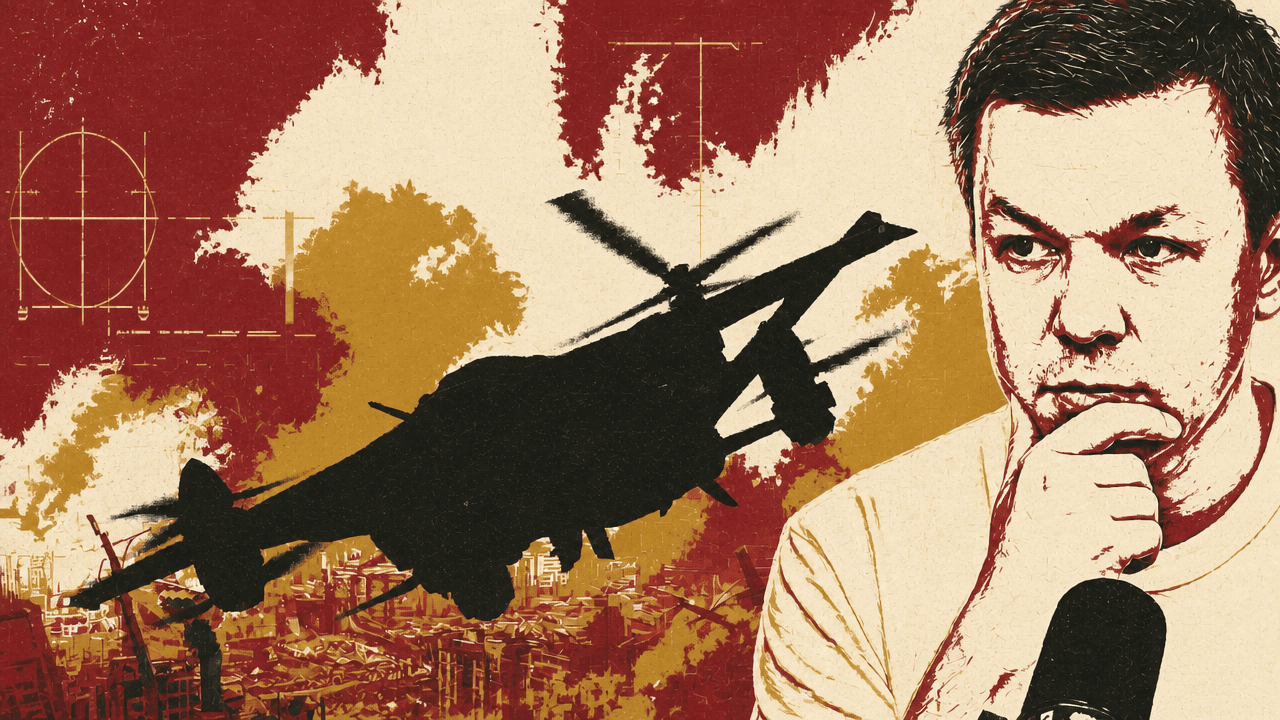
FPV drones have displaced artillery as the main killer on the Ukrainian front
Yaroslav Azhnyuk’s central claim is not that drones have become another useful battlefield tool. It is that first-person-view strike drones have changed the arithmetic of land war.
On the Ukrainian front, Azhnyuk said, between 70% and 80% of frontline casualties are now caused by FPV drones. Artillery used to hold that role. “They used to say that artillery is a god of war,” he said, because artillery caused roughly 80% of casualties. In his account, FPV drones have “dethroned artillery.”
That claim sits behind almost every other technical and geopolitical point he made. A low-cost drone that can be mass-produced, guided, upgraded in software, and assigned to many missions is not a one-for-one substitute for an artillery shell, a tank, or an aircraft. But it changes the battlefield because it is cheap, precise, abundant, and increasingly autonomous.
Azhnyuk compared the FPV drone to the smartphone: inexpensive, mass-producible, versatile, and capable of absorbing functions that previously required separate tools. An artillery shell, he said, costs about $4,000 for a standard NATO 155mm round. An FPV drone might cost around $400. Once the drone’s tactical usefulness, reprogrammability, and the vulnerability and amortized cost of artillery systems are considered, he argued that an FPV drone can be “maybe three orders of magnitude” more versatile, useful, and capable than many classic artillery systems, while acknowledging that it does not carry equivalent firepower and is not a direct replacement in every mission.
The cost comparison was not presented as a clean equation. Azhnyuk repeatedly warned that war resists simple abstractions. Artillery, tanks, aviation, logistics, reconnaissance, psychological operations, and human infantry still matter. But his claim is that the most consequential marginal change on the current battlefield is the mass deployment of cheap guided aerial systems.
Ukraine manufactured about 4 million FPV drones last year, he said. The publicly voiced target for this year was 7 million. Russia, he estimated, produced about 20% fewer than Ukraine last year. Those figures imply a battlefield saturated not only with strike drones, but also with reconnaissance drones, repeaters, bombers, interceptors, and other specialized unmanned systems.
| Claim | Figure |
|---|---|
| Ukraine FPV drone production last year | 4 million |
| Ukraine publicly voiced FPV drone target for this year | 7 million |
| Russia’s estimated FPV production relative to Ukraine last year | About 20% less |
| Frontline casualties Azhnyuk attributed to FPV drones | 70–80% |
The consequence is a new tactical environment in which humans, vehicles, and fixed positions are constantly exposed to guided munitions. If a person is walking in the open and a drone is specifically sent after him, Azhnyuk said, a shotgun may help, but the average non-exceptional soldier is likely to die. He described one Russian soldier who shot down seven FPV drones before eventually being killed as an outlier — “Rambo,” in his telling, not the baseline case.
For tanks, his assessment was similarly blunt. Their usefulness is “diminishing,” though not gone. Armor and firepower still matter, and he allowed that technologies may revive the tank’s battlefield role. But current armor is poorly protected against incoming drones. A tank may survive one FPV drone, he said, but a dozen can take it out. He cited a Ukrainian drone manufacturer’s retort to criticism from Rheinmetall’s CEO: the drones the Ukrainian company manufactures in one day would be more than enough to destroy all the tanks Rheinmetall manufactures in a year. Azhnyuk framed the contrast as a $500 drone against a tank costing millions.
This is the recurring logic: the battlefield is becoming an economics problem as much as a weapons problem. Systems that are too expensive, too slow to build, too rare, or too hard to operate lose against cheap mass unless they can defeat that mass at comparable cost.
Autonomy changes the drone from a piloted munition into a scalable weapon system
Azhnyuk’s company, The Fourth Law, is built around “massively scalable on-drone autonomy.” In parallel, he and his Petcube co-founders started Odd Systems, focused on thermal cameras. He described the combined group as operating across three business units: cameras, drone autonomy, and drones.
The cameras and autonomy modules are sold to more than 200 Ukrainian drone manufacturers. The drone unit sells directly to the Ukrainian armed forces and government. Its products include FPV strike drones and bombers, Shahed interceptors, and ISR interceptors — drones meant to hunt intelligence, surveillance, and reconnaissance drones used to observe positions and cue strikes. The company does not do deep strike, and the systems he described are battery-powered.
One interceptor, called Zyrov, reaches up to 326 kilometers per hour, Azhnyuk said. That is enough to catch Shahed-type drones, which he said may travel around 220 kilometers per hour in cruise and up to around 280 kilometers per hour in the terminal phase.
The more important technical shift is not speed. It is what the drone can do when the communication link fails, the operator is jammed, the target moves, or the operator is no longer needed.
Azhnyuk uses a five-level taxonomy for drone autonomy, which he said he defined and which has been picked up by parts of the industry.
| Level | Capability |
|---|---|
| Level 1 | Terminal guidance |
| Level 2 | Autonomous bombing |
| Level 3 | Autonomous target detection and engagement decision |
| Level 4 | Autonomous navigation |
| Level 5 | Autonomous takeoff and landing |
Level 1 is terminal guidance: the human pilot flies the drone most of the way, then locks onto a target from roughly 200 to 500 meters away, after which the drone guides itself into the target even if the operator loses the video link or control link. Azhnyuk said this was the first autonomy product his team fielded.
Even that first level, he said, can be decisive. One brigade using his company’s first-level autonomy reported that a pilot with the call sign Grom increased mission success from 20% to 71%. The same capability expanded the unit’s kill zone from 3 kilometers to 10 kilometers. Azhnyuk defined the kill zone as the area around the frontline where enemy movement is likely to be destroyed by drones; he clarified that drones are often launched from behind the “zero line,” the line of contact between opposing forces.
The failure modes that autonomy is meant to reduce are numerous. A drone may be jammed on control frequencies, jammed on video, lose link because it dips behind terrain or the curvature of the earth, suffer mechanical failure, fail to navigate to the target, hit but fail to detonate, damage rather than destroy, or strike the wrong type of target. Different targets — a single infantryman, a dugout, a vehicle, a radio dish — create different definitions of success.
Full autonomy, in Azhnyuk’s description, is a different kind of weapon. A human would still make the initial decision, as with firing artillery. But the operator would not fly the drone for 30 minutes with a specialized controller. Instead, the operator could indicate: we are here, the enemy is there, go get them. The drone would take off, navigate, localize itself on a map, find the designated area, detect the target, bomb it, assess damage, return, land, and allow the operator to review video afterward if there had been no live link.
Brandon Anderson pressed Azhnyuk on whether that meant “no human decisions” during the process. Azhnyuk rejected that framing. A human decision is made at the beginning, he said, just as a human decision is made when firing artillery. An artillery shell is not stopped 500 meters from the target to ask for another confirmation.
Azhnyuk then made the strongest version of his autonomy claim: adding full autonomy to an already transformative FPV drone increases capability by “four orders of magnitude.” He decomposed that into three effects: 100 times as many people can use the system because they no longer need months of pilot training; mission success can improve by 10 times; and each drone can have 10 times the utility because a reusable bomber can replace a one-way kamikaze mission. Noah Smith immediately highlighted the mission-success claim: if fully autonomous bomber drones succeed 10 times more often than human-piloted bomber drones, then they are “superhuman.”
Azhnyuk’s explanation was practical, not mystical. Autonomous drones are not vulnerable to the same electronic warfare constraints if they do not rely on a link. They do not care about radio horizon. They do not lose track during navigation in the same way. They do not panic when artillery or another drone explodes nearby. They do not make certain human errors under battlefield stress.
That does not make autonomy easy. Azhnyuk emphasized the distance between a prototype, a system ready to scale to millions of units, and a system actually scaled to millions of units. Each higher level of autonomy introduces more edge cases. He used a robotics frame — perception, planning, and control — to explain the engineering choices. Older systems might implement all three with classical logic. Modern systems can use neural networks for perception and logic for planning and control; neural networks for each separately; or one large model that maps sensor inputs to control outputs. Those inputs may include pixels, sound, accelerometer data, and more.
The design choice changes the degrees of freedom and failure modes. A drone can use classical control with Kalman filters and PID controllers, or neural control trained in a reinforcement-learning environment. It can be built from subsystems — navigation, target detection, approach — or from larger world models that understand the physical environment and accept higher-level goals.
Azhnyuk did not suggest that one architecture obviously wins. His point was that all of these systems will exist, and both “good guys” and “bad guys” will develop them.
Fiber optics solve one problem while creating others
The move to fiber-optic drones is often explained as a response to electronic warfare. Azhnyuk said that is correct from the standpoint of public awareness, but incomplete.
Fiber optics are a communication module. AI replaces or augments the human operator. Those are separate goals. A drone can use analog video and radio control, digital links, fiber optics, or autonomy. A fiber-optic drone can also use AI. In principle, AI could control hundreds of fiber-optic drones instead of requiring one operator per drone.
The reason fiber matters is not only jamming. FPV drones run into a radio horizon problem. If a drone flies high, it may maintain line-of-sight communication with the ground station. But targets — infantry, vehicles, equipment — are on or near the ground. As the drone descends, it may go behind a hill, a forest, or eventually behind the curvature of the earth. For the last 20 to 60 meters, the operator may not see anything.
This becomes more severe at Ukrainian battlefield distances. In the United States, Azhnyuk said, the Drone Dominance program’s furthest distance was about 10 kilometers. In Ukraine, a drone that cannot fly at least 20 to 25 kilometers is not interesting, and many hits occur at 30 to 40 kilometers. A regular 10-inch FPV drone is expected to operate at those distances.
Terminal guidance was fielded partly to address this: once the operator sees and locks the target from a few hundred meters away, the drone continues toward the target even if the connection is lost.
Fiber solves the link problem more directly, but it adds mass and constrains flight. Azhnyuk said a 20-kilometer fiber-optic setup can add about three kilograms of useful weight burden to the drone. A spool weighs roughly 800 grams, and 10 kilometers of fiber is roughly another kilogram. That takes away from payload. To fly 20 kilometers over fiber, a larger 15-inch drone may carry only one or two kilograms of explosives. Thirty kilometers is near the maximum, and forty is “very problematic” for fiber.
The cable also changes flight dynamics. It adds weight, reduces range, and limits how fast and sharply the drone can turn and maneuver.
Then there is price. Azhnyuk said fiber-optic cable used in drones is the same kind of fiber being consumed by AI data centers. When Ukrainians and Russians approach Chinese factories to buy it, they are sometimes told it has already been sold to Americans. He said the price rose from about $4 per kilometer to about $32 per kilometer in a few months at the beginning of the year.
Russia scaled fiber-optic drones first, Azhnyuk said. Ukraine had mostly caught up within the last few months. When Smith asked what share of FPV damage is now fiber-optic versus autonomous, Azhnyuk said he knew but would not disclose it.
That refusal itself points to the broader reality of the drone war: the public can see the broad direction, but not the decisive operational details.
The autonomous battlefield has more dimensions than the drone itself
Azhnyuk argued that autonomy is best understood not only as a ladder of drone capabilities, but as a multidimensional battlefield architecture. He listed eight dimensions, each of which interacts with the others.
The first is level of autonomy: terminal guidance, bombing, target detection, navigation, takeoff and landing. The second is platform: quadcopter, fixed-wing drone, missile, artillery shell, ground vehicle, sea vehicle, or undersea vehicle. The third is domain: ground-to-ground, ground-to-air interception, ground-to-sea, sea-to-air, and other combinations. The fourth is higher-order autonomy: swarming, drone carriers, drone nests, and related systems.
The fifth is environment: day or night, summer or winter, humid or dry, forested or open, behind hills or inside buildings, and the type of target being pursued. The sixth is command and control: how tens of thousands or millions of assets are coordinated across the battlefield, how data is collected, and how decisions are made at higher levels of command. The seventh is infrastructure: simulation, data collection tools, security, deployment mechanisms, and supporting systems. The eighth is distribution: whether a system has been deployed in hundreds of units or hundreds of thousands.
The practical reason for this taxonomy is that progress in one box does not mean dominance everywhere. A Level 3 fixed-wing drone in a land-to-air role, operating from a drone nest at night, is a different problem from Level 1 terminal guidance on a quadcopter during the day. Scale changes everything again.
This is also why Azhnyuk resisted simple claims about “the drone race.” There are at least 30 categories of drones, he said. Aerial systems include reconnaissance, front strike, mid strike, deep strike, mining, demining, radio repeating, kamikaze, bombing, tactical ISR, operational ISR, and possibly strategic ISR. Ground vehicles include logistics, evacuation, mining, and demining. Sea and undersea systems have their own mission sets.
Ukraine’s side is a “zoo,” in his words: many products and dozens or even more than 100 companies in a category. Russia’s side is more centralized, with one, two, or three products per category that are scaled in a more top-down fashion.
When Smith asked whether Ukraine was now ahead of Russia in the drone race, Azhnyuk first cautioned that he was not sure that was broadly true, then broke it down by category. In front strike, he argued Ukraine had recently pulled ahead after scaling fiber optics; Russia had previously been slightly ahead. In mid-strike, roughly 40 to 200 kilometers, he said Russia had been ahead at some point but Ukraine may be getting ahead. In deep strike, he said Ukraine had recently gotten ahead and was doing more damage to Russia with deep-strike drones than Russia was doing to Ukraine. In sea drones, Ukraine had consistently been ahead. In ground drones, he also thought Ukraine was ahead.
Russia still has advantages in some components and capabilities. Azhnyuk mentioned GPS-free navigation and CRPA antennas, and also Russia’s glide bombs, which can be difficult to defend against and may reach up to around 80 kilometers depending on launch conditions.
The broad conclusion was not that one side has permanently solved drone warfare. It was that advantages are temporary, category-specific, and tied to manufacturing, components, doctrine, deployment, and countermeasures.
The end of the rifleman is not here, but the rifleman’s world has changed
Smith brought a long-running argument of his own into the discussion: in 2013, he wrote that small autonomous suicide drones would “cleanse the battlefield” of human infantry. Human infantry, in that view, would not be able to stand against swarms of AI-powered suicide drones. Smith said people mocked the idea at the time, arguing that electronic warfare would knock drones down or that humans would always be needed to hold ground. He now believes the prediction has become steadily more correct.
Azhnyuk agreed only partly. Human infantry still matter because a person in a dugout with bullets and an automatic weapon prevents the other side from simply taking the dugout. Infantry still establish control over territory. He expects that to last “for a while.”
He illustrated the point with a Ukrainian punk song set in 2030, where war continues amid AI and cyborgs, but simple infantry are still cold in dugouts doing the job. That, he said, seems likely.
Smith pushed on whether ground robots would replace humans in dugouts soon. Azhnyuk would not rule out humanoid robots in combat over a 10-year horizon, and possibly sooner if AI progress accelerates. The world is designed around humanoids, which gives humanoid robots real utility. He also noted that large language models are becoming cheap enough to run locally on inexpensive devices, including open-source models available to China, Russia, North Korea, and others.
But he returned to the long tail of edge cases. Self-driving cars were promised for years and remain limited. Waymo operates in some places, but not perfectly and not everywhere. Drones and battlefield robots face a similar gap between impressive demos and reliable mass deployment in messy environments.
Smith’s “end of the rifleman” framing met Azhnyuk’s battlefield humility. Azhnyuk acknowledged that drones now cause most casualties, but said actual military operations still involve a much more complex combination of assets. Brigade and corps commanders think in terms of operations involving thousands of people, dozens of drone types, land operations, reconnaissance, psychological operations, aviation, tanks, logistics, and other elements. Drones and AI may be the newest and most important technologies, but they do not reduce war to pressing a button.
This complexity also shaped Azhnyuk’s answer to Brandon Anderson’s concerns about distribution shift in autonomous weapons. Anderson, drawing on machine-learning experience, asked how systems avoid going wrong when fog appears, environments change, or computer vision misidentifies targets. Azhnyuk responded by comparing drones to mortars: how does one assure mortar fire hits the right thing when it may land hundreds of meters off? In his view, drones are often more precise than existing weapons, not less.
He then made a sharper moral claim: within 5 to 10 years, it may be immoral to use weapons without AI, because non-AI weapons will be more likely to cause collateral or unwanted damage. He analogized this to a future in which manual driving on public roads becomes immoral because autonomous cars are safer.
That claim did not erase the risks of autonomy. When Smith asked about a hypothetical “AI general” — a system integrating battlefield data, selecting targets, and commanding operations — Azhnyuk said the technology could, in some form, be built now. The harder problem is deployment. He described current systems as closer to AI presenting a large set of targets for human confirmation: “to confirm, please press OK.” The system may analyze all available data and produce 1,027 targets; the human looks and approves.
The danger, he said, is not only friendly fire or science-fiction “Skynet.” Such systems may make wrong decisions, including decisions about what humans on one’s own side should do. They may have to choose risks and sacrifices. The responsibility varies by environment. A frontline dead zone with virtually no civilians is different from a counterterrorist operation with civilians near targets.
Azhnyuk’s position was that safety matters, but safety work must not slow development so much that adversaries gain a decisive speed advantage. If the enemy deploys a battlefield command system that is a thousand times faster, the side that refuses to build one is in trouble. “One person who doesn’t get to think about the ethics of the war is a dead person,” he said.
China’s manufacturing capacity is the strategic warning
The most consequential geopolitical claim concerned China. Smith asked whether, given China’s ability to manufacture and deploy drones in quantity and quality, China might now be the supreme conventional military power on Earth. Azhnyuk would not go that far. The public does not have enough information, he said; Chinese drones and forces have not been seen in action at scale. But he said the possibility cannot be ruled out, and that alone should be a warning.
The scale comparison was stark. Ukraine produced 4 million FPV drones last year. Azhnyuk said China can produce 4 billion. Not just quadcopters, but fixed-wing battery-powered drones capable of 200 or 300 kilometers of range. They could be fully autonomous, GPS-free, and massed in ways the West is not prepared to counter.
He sketched a scenario: millions of long-range autonomous impact drones packed into shipping containers, barges, freight ships, or perhaps autonomous underwater systems; then moved toward coastlines such as Taiwan or California. If launched in mass, the problem would not be intercepting a few drones but generating a comparable defensive mass at comparable cost. There would not be enough hunter submarines, anti-ship missiles, or anti-ship aircraft to solve the problem if the attacking systems are produced in tens of thousands of factories.
To counter such a scenario, Azhnyuk said, the West would need similar mass: drones or other interceptors at similar cost, operating at sea or in the air. “Currently, we in the West, and we in the United States, we don’t have the technology to do that,” he said. When Anderson asked what technology was missing, Azhnyuk named autonomy and mass drone manufacturing. He then expanded the gap into four layers: technology, mass manufacturing capacity, components, and rare earth materials.
He was careful to say Ukraine is not in conflict with China and does not want to be. China does not sell directly to Ukraine, he said, and does sell directly to Russia, but many Ukrainian supply chains still begin in China. He hoped China would remain neutral between Ukraine, Russia, and the United States.
That diplomatic caution did not soften the strategic assessment. Azhnyuk argued that China is not analogous to the declining Soviet Union of the late Cold War. In electric vehicles, he said, China is ahead of the United States and the world, and definitely ahead of Europe. In AI, China is almost where the United States is, perhaps slightly behind. In humanoid robotics, he argued China is ahead. In consumer technology, he described Chinese products such as WeChat as more advanced than Western equivalents. His broader warning was against American arrogance.
Smith raised a counterpoint from conventional-war history: the United States had little defense production capability before World War II and then outproduced everyone else. In a prolonged emergency, development restrictions fall away, urgency rises, and allies such as Japan and European countries could scale production. Azhnyuk agreed with the general sentiment and said he was not ultimately fatalistic. But he noted that the United States benefited in World War II from not being attacked on its own territory.
The more immediate problem, Smith said, is identifying the choke points the West must free from Chinese supply chains to build even one drone without China. Azhnyuk named thermal cameras as a major one, then motors and the magnets that go into them. Rare earths, he emphasized, are not rare because they exist only in China; the issue is refining capacity and investment.
There is also a human-capital problem. China is populous. The “united West” has comparable population, but the United States alone does not. That led Azhnyuk to a political claim: free nations need to “get their act together,” because victory requires agreement.
Europe and the United States are adapting too slowly
Azhnyuk described Ukraine as “Defense Valley”: the place where the future of defense has already arrived, the way Silicon Valley became the place where the future of software and technology arrived first. His policy advice to the United States began there. Learn from Ukraine in a much tighter way: from hundreds of companies in specific fields, from battlefield commanders at every level, from special forces and intelligence, and from how the government creates the conditions for defense companies to flourish.
He also called for procurement reform and praised the U.S. Drone Dominance effort as a powerful and correct direction that should be scaled much more aggressively. He accepted the standard American military objection that Ukraine’s theater is not the same as a potential U.S. war in the Pacific or elsewhere. But his answer was that there is still a great deal to learn, including from Ukraine’s sea warfare and from long-range Shahed-type drones that can fly up to 2,000 kilometers — a range that matters in the Pacific, across islands, bases, and aircraft-carrier operating areas.
Azhnyuk’s criticism of Europe was sharper. The Trump administration’s pressure on Europe, including JD Vance’s confrontational tone at the Munich forum, may have been necessary, he argued, because European voters and leaders would not have understood a polite request. He said Europe is beginning to wake up, but too slowly. He often returns from European capitals depressed after speaking with military officials and entrepreneurs. By contrast, after a month in the United States, he felt excited, though he still thought the U.S. effort should be increased tenfold.
His formulation of the widening gap was severe: last year, Ukraine and Russia moved from 2025 drone technology to 2026 drone technology, while Europe moved “from winter of 2022 to spring of 2022.” The United States, he argued, made less than a year of progress as well. The technological gap is therefore widening.
Poland was his example of misallocated preparation. He said he looks at Polish procurement — tanks and submarines — and sees a country without even a thousand people trained to operate FPV drones. Smith asked directly whether Poland is preparing for war correctly. Azhnyuk answered that, from what he can see, it is not. His analogy was a country proud of winged hussars and cavalry while the enemy attacks with airplanes and tanks.
The issue is not that all traditional systems are useless. Azhnyuk repeatedly rejected that simplification. It is that procurement and doctrine still appear organized around the last war rather than the battlefield being demonstrated now.
The same logic appeared in his discussion of countermeasures. Roads within roughly 50 kilometers of the Ukrainian frontline are often covered by fishnets, he said, creating corridors that physically block drones. Tanks and other vehicles are fitted with poles, cages, and nets so drones detonate half a meter or a meter away from the armor. Shotguns are widely used against drones and can work, but only within limits. Electronic countermeasures are used everywhere, but they depend on jamming the frequency the drone actually uses, and they fail against fiber optics or autonomy.
More advanced countermeasures must meet the drone’s economics. Azhnyuk discussed systems such as Rheinmetall’s Skynex, truck-mounted automated guns, and Raytheon laser products. At a defense expo, he said, he asked about a 10 kW laser that could take down an FPV drone in perhaps three seconds. A dozen drones might take roughly 30 seconds. The system cost about $3 million. Azhnyuk translated that into 6,000 FPV drones and doubted the laser could handle 6,000 — or even 600 — drones arriving simultaneously.
His point was not that lasers are useless. A laser may make sense defending a stadium in peacetime against a few drones. It may not make sense on an active battlefield against mass. A more powerful laser is not automatically better, because it becomes heavier, costlier, harder to transport, harder to mass-produce, and more painful to lose. The countermeasure must be cheap and numerous enough to match the threat.
That is the mental shift he wants defense establishments to make. The decisive systems are no longer only aircraft carriers that cost tens of billions and take years to build. The decisive systems are mass-produced, rapidly iterated, widely operable, software-upgradable, and able to combine across domains.
The moral argument is survival first, governance second
Azhnyuk’s own path into weapons began with the invasion of Ukraine. On February 23, 2022, he and his fiancée landed in Kyiv after visiting a church in Lviv where they planned to hold their wedding. A taxi driver told them they were crazy to come back while others were leaving. Hours later, bombs fell on the city.
He described the first day as apocalyptic: smoke over Kyiv, empty streets, gas stations without fuel, improvised diesel storage in emptied windshield-washer canisters, friends and family evacuating west, no clear information about whether Kyiv or Ukraine would hold.
Azhnyuk had been a technology entrepreneur, not a military figure. He studied applied mathematics at Kyiv Polytechnic, lived in San Francisco from 2014 to 2020 building Petcube, and had not taken the usual Ukrainian route through military training while in university. He initially helped through advocacy and institution-building: reaching out to American members of Congress and senators, advocating support for Ukraine and Lend-Lease, helping start Brave1, and helping start the D3 fund associated with Eric Schmidt.
By 2023, he concluded the war would last much longer, that the world was shifting, and that warfare was being redefined by drones as software-defined platforms. For the first time in history, he argued, battlefield capabilities could change through software updates. He likened it to pushing an update that gives every Roman legionary a new helmet overnight.
The moral hesitation was real but, in his telling, resolved by the facts of invasion. He asked whether he was prepared to build things others would use to kill people. His answer was that when a nation faces occupied cities, Bucha, abducted children, raped women, economic destruction, and an attempt to destroy Ukraine as a nation, fighting back becomes the only morally right choice. Not fighting back becomes immoral. His company’s role, he said, is support: “We’re just passing the ammunition.” The actual fighters are the armed forces.
When Smith raised the issue of dual-use technology spreading beyond Ukraine, Azhnyuk broadened the frame. The same question applies to knives, fire, and large language models. A knife can perform surgery, cut tomatoes, or kill. LLMs are powerful and available in hostile states. Makers have some responsibility for how tools are used, he said, but in a mythical world with a single governing authority one might calculate all consequences before acting. In the real world, when standing in a forest before a wolf, one deals with the wolf before consulting Greenpeace.
That survival-first logic carried into his view of nuclear deterrence and Western credibility. Ukraine gave up what he described as the second- or third-largest nuclear arsenal after receiving security assurances under the Budapest Memorandum. When Russia attacked, he said, the distinction between “guarantees” and “assurances” became painfully important. The lesson many countries may draw, in his prediction, is that they should pursue nuclear programs. Smith agreed in the specific cases of Japan, South Korea, and Poland.
Azhnyuk’s conclusion was therefore not only technical. Weakness invites conflict. Being armed and ready lowers the probability of war. Europe’s danger, as he sees it, is not only underinvestment but lack of social readiness: many people say they would leave rather than fight if attacked. He wondered how wealthy American coastal cities would respond if war came to U.S. territory, while hoping the American spirit would resemble the World War II mobilization.
At the end, when Anderson asked for the one point he wanted the audience to take away, Azhnyuk answered in one sentence: “Be prepared for war.”