Elite Performance Requires Systems That Counter Comfort, Fear, and Ego
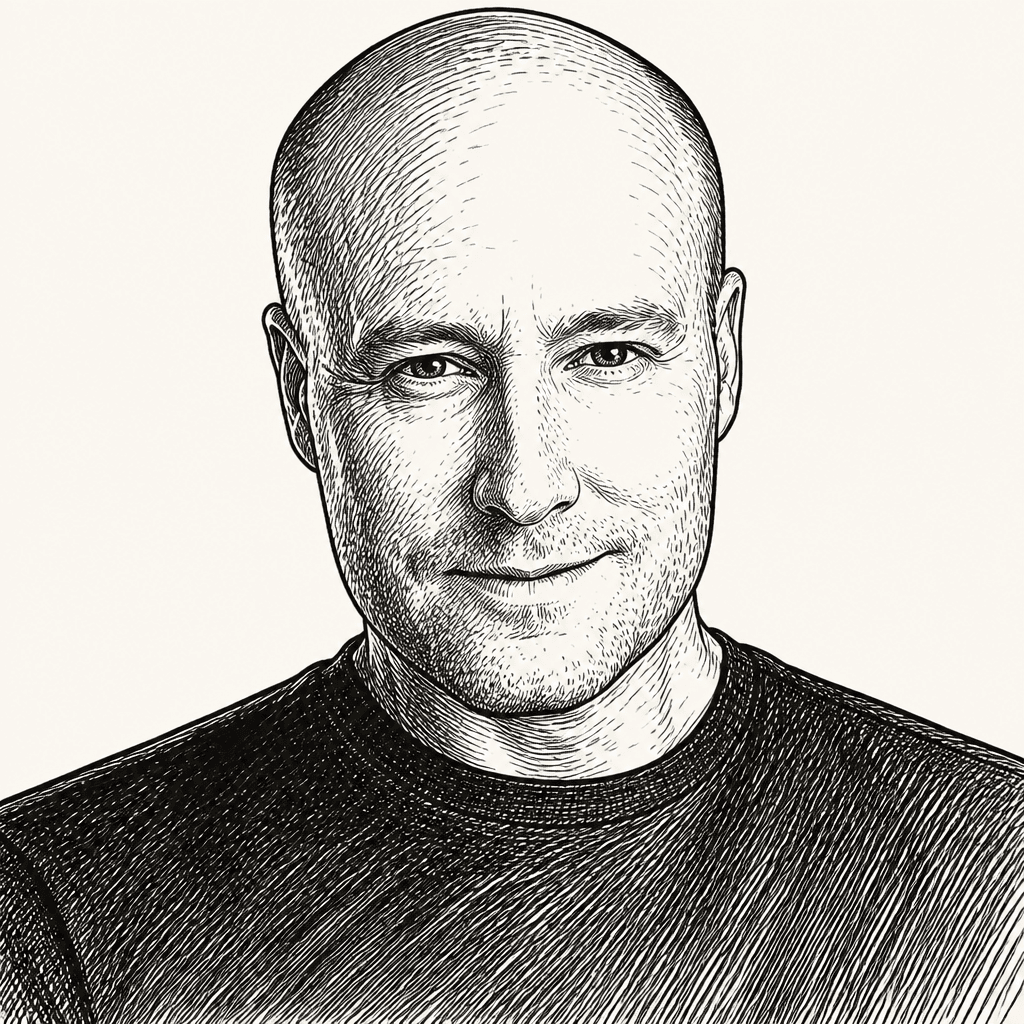

Performance psychologist Gio Valiante argues that elite performance is less a natural extension of talent than a deliberate effort to work against the brain’s defaults: comfort, fear, social belonging, old self-talk and unresolved identity patterns. In a conversation with Shane Parrish, Valiante says durable improvement begins with behavior, environment and systems rather than intentions, and that confidence is built by interpreting small wins, failure and feedback in ways that keep people capable of taking risk.

Elite performance has to be engineered against the default
The account of elite performance from Gio Valiante starts with a constraint rather than an aspiration: most people underperform relative to their ability because the brain is not built to maximize potential. It is built to preserve life, conserve energy, seek comfort, and avoid social exclusion.


He frames that through the “central governor hypothesis,” which he describes as the idea that the brain has mechanisms that shut people down before they do self-harm. Shane Parrish puts the biological premise plainly: the brain’s basic job is to keep a person alive long enough to reproduce. Valiante accepts the premise and draws the performance implication: “We’re not designed to overperform. We’re designed to survive.”
That distinction gives the rest of the argument its shape. High performance is not the natural continuation of talent. It requires deliberate work against several default suppressors: comfort-seeking, fear, attachment, ego, inherited self-talk, overconcern with what others think, and unresolved identity patterns from childhood. Against those suppressors, Valiante emphasizes a handful of levers: behavior before thought, systems before goals, mastery motivation over ego motivation, presence, confidence protected through interpretation, and identity work that separates chosen striving from compensation.
His endurance-sport example is deliberately blunt. Marathoners, triathletes, and ultramarathoners organize their lives around testing limits. Yet even among people trying to push themselves, very few push so far that they die. Valiante estimates that among roughly 5 million marathoners, perhaps five or ten die in a year, and often for reasons other than pushing too hard, such as being hit by a car or having another condition. His point is not marathon mortality as such. It is that even people who pursue physical limits remain bounded by systems designed to prevent catastrophic overreach.
He sees the same pattern at a more basic biological level. In studies with single-cell organisms, he says, when conditions in a Petri dish are made too hot or too cold, the organisms gravitate toward comfort. Valiante reads that as a deep pattern: organisms seek comfort and safety. But comfort and safety, in his formulation, are “the exact opposite of overperformance or realizing one’s potential.”
If you want to be great at something, you know the old adage is you have to get comfortable being uncomfortable. But that's something you have to train yourself to do.
This is why his version of agency is narrow but consequential. Valiante invokes William James, who concluded, “My first act of free will is to choose to believe in free will.” His reading is that people have less conscious control than they suppose. They often believe they are thinking when, in his phrase, they are “generally rearranging their prejudices.” The few acts of agency people have therefore matter because they are scarce: choose a path, then cultivate habits that make the path automatic enough to pull behavior toward the tail end of the distribution.
Change starts with repeated behavior, not better intentions
The immediate practical question is what a person can actually change after deciding to become good at something. Gio Valiante answers behaviorally before he answers cognitively. He points to New Year’s resolutions as evidence that intention alone does not carry people far: he says 95% are over by the end of February, and the remaining 4% are over by the end of March. Choice begins the process; it does not complete it.
The reason is habit. Valiante quotes Albert Bandura: “Behavior is a cause of behavior.” The more someone does something, the more likely they are to do it again. A person who wants to change therefore needs to identify the comfortable habit keeping them where they are. It might be a phone, food, an excuse, or some other pattern. The intervention is not to think better thoughts about it, but to change the behavior and hold oneself accountable repeatedly.
He puts the point through John Dewey: “We don’t think our way into a pattern of living, we live our way into a pattern of thought.” Valiante’s interpretation is that people overestimate the power of changing their mind first. Behavior supplies the evidence and experience that later reshape thought.
That is why he treats “everydayness” as central to excellence. People ask how to write a book; his answer is to sit down and write. Not when inspired. Every day. On days when the writing is poor, stay in the seat and write badly. “You have to write through the bad days to get to the good days.” Writers write every day. Excellence has the same structure across domains: repeated conduct, especially when the conduct is uncomfortable, boring, or unrewarded in the moment.
The behavioral standard is sharp: it does not matter what someone says, feels, or believes as much as what they do. The claim is not that thought and feeling are irrelevant to human life. It is that they are unreliable levers for change unless behavior is doing the work.
Environment is the other major lever. Valiante explicitly revises a self-improvement slogan from a Sister Hazel lyric: “If you want to be somebody else, change your mind.” He says the line is wrong. If you want to be somebody else, change your environment.
The reason is situated cognition: the brain is constantly interacting with its environment, mostly unconsciously. When people are hot, they sweat; when cold, they get goosebumps. They do not choose these responses. Much of conduct, in his account, works similarly. The environment shapes the person beneath conscious awareness.
This is why he cites the line from Atomic Habits: “We don’t rise to the level of our goals, we shrink to the level of our systems.” A person can aspire to greatness, but if the surrounding system punishes risk, blocks initiative, or refuses to support excellence, the system becomes the ceiling. He gives the example of a hedge fund portfolio manager inside a risk-averse firm. If every request for more capital or a move outside existing risk limits becomes an automatic no, the environment limits what that person can become.
Organizations often ask the wrong comparative question. They compare candidate A with candidate B: who is smarter, better educated, more suitable? But after hiring, they often neglect what Valiante considers the more important variance: the difference between a person at their best and that same person at their worst. He says the differences within individuals are typically greater than the differences between individuals. In his phrase, there is “more psychological alpha within individuals than between individuals.”
That changes the work of leadership and coaching. The question becomes: what are the mechanisms of suppression preventing this person from performing closer to their best? Remove them, and people begin to “blossom.”
Mastery motivation keeps the work from becoming a vehicle for ego
Early sports-psychology research gave Gio Valiante a way to distinguish people who keep improving from those who stall or burn out. He interviewed 200 golfers, including PGA Tour and LPGA Tour players, strong amateurs, and ordinary amateurs, and asked a simple question: why do you play golf?
The answers, he says, revealed a broader structure of human motivation. Some people play for love of the game. Some play because they are competitive and want to beat another person. Some play for money. More generally, people use their craft either as an end in itself or as a vehicle to solve something else.
The first orientation is mastery motivation. A person with mastery motivation engages in the craft for intrinsic reasons. The act is satisfying in itself. The second orientation is ego orientation. The craft becomes a means of enhancing the self: money, status, importance, validation.
The distinction matters because ego-driven motivation is fragile. If someone enters medicine for money but does not care about medicine, Valiante says, burnout is likely. The same applies to law, sports, and other domains. At the far end of the distribution—the “top 1% of 1%,” the all-timers—he sees a pattern: the origin of greatness is often a calling, and the performer protects the purity of that calling.
Rewards complicate that purity. Valiante describes a developmental arc: someone begins with mastery, gets rewarded, starts caring more about the rewards than the thing itself, loses the original relationship to the work, and may later recover by returning to mastery. He names Kelly Slater, Brooks Koepka, and late-career musicians as examples of people who describe a renaissance as falling back in love with the craft.
Shane Parrish presses the harder case: what about an executive or office worker who does not fully love the job but wants to get better? The answer is not to fake passion. It is to build the conditions under which attention, challenge, and detail become rewarding. That leads Valiante to flow.
Flow, as he describes it through Mihaly Csikszentmihalyi’s work, is one of the highest forms of human experience. People can enter it while gardening, cooking, reading, playing sports, having a great conversation, or being in love. Its hallmarks include time distortion, the paradox of effort in which hard things feel easy, and a paradox of perception in which the person becomes so present that audience and outcome disappear.
For someone stuck in the middle of the distribution who wants to become better, Valiante offers three overlapping instructions: be mindful of habits, get comfortable being uncomfortable, and become good at being fully present. He returns to Dewey again: “There’s no greater enemy to effective thinking than a divided interest.” A fragmented mind is physically in one place while cognitively elsewhere. In Valiante’s account, the best performers are present “for everything, all the time.”
Presence, however, is not an instruction that can be obeyed on command. It is a habit, and like other habits it has to be practiced. Distraction and attachment pull people out of the present. Valiante’s own practice is a weekly review. Every Friday, he takes 10 or 15 minutes and asks what attachments have attached themselves to him, interrupting thoughts he did not consciously choose. What is he thinking that he did not choose to think? What is he feeling that he did not choose to feel?
He connects this to Nietzsche and Carl Jung: “We don’t have ideas, ideas have us.” The practice is detachment. By identifying what has taken hold of attention without consent, he creates space. What fills the space, he says, is psychological freedom and presence.
High-performing systems make hard problem-solving safer than self-protection
For Gio Valiante, the highest-functioning environments are organized around a simple job description: learn how to be great at solving hard problems together. He presents that as the underlying work of companies, schools, teams, and other organizations. It is easy to say and hard to do because hard problems activate ego. Smart people who are used to being right disagree, become defensive, close off, and shift from truth-seeking to self-protection.
The alternative is a system in which capable people are open, truthful, challenged, and accountable, and where the mission outranks the self. Valiante connects this kind of collective problem-solving to flow and excellence. In his telling, Einstein was stuck on a problem for a long time and had an epiphany while walking with a younger colleague and trying to explain his thinking. In the act of deconstructing and articulating the problem, Valiante says, Einstein found the insight and then wrote two papers over the next three months that led to the Nobel Prize. He also presents Crick and Watson’s discovery of DNA’s structure as an example of insight emerging through interactive problem-solving among researchers.
The environment also determines what mistakes mean. Valiante refers to Daniel Coyle’s notion of “talent hotbeds”—places that produce disproportionate excellence. He mentions singers from a school around Dallas, tennis players from Russia, baseball players from the Dominican Republic, female golfers from South Korea, and historically strong golfers from Texas and California. One hallmark of such environments, he says, is how they handle mistakes.
The primary mechanism of suppression, in Valiante’s view, is how people are conditioned to deal with mistakes and failure. Great environments are not lax. They contain challenge, accountability, rigor, and detail. But they are not overpunitive of mistakes. They allow the freedom required for learning.
This same logic informs how Valiante evaluates talent. When Shane Parrish asks how he identifies talent quickly, Valiante gives two variables priority: confidence and motivation. He does not deny intelligence exists, but he criticizes the way intelligence is commonly reduced to IQ. As Valiante recounts it, Alfred Binet’s early work in France was meant to identify struggling students for intervention; when the research made its way to America, he says, it was commercialized into a broader claim that higher IQ meant greater intelligence. Valiante calls that claim “undeniably false.”
He contrasts that with Howard Gardner’s theory of multiple intelligences, including verbal, mathematical, interpersonal, intrapersonal, bodily-kinesthetic, and spatial intelligence. The point for hiring is not to select for one abstract measure. It is to understand the person’s full profile: where they come from, the source of their motivation, how they handle failure, and how truthfully they speak.
Interviews are distorted because candidates present the version of themselves they want the interviewer to see. Valiante is trying to see the person who will appear under pressure.
One question he finds revealing is: tell me about a time you had to work with someone you did not like—someone you disagreed with or viscerally disliked, but still had to work with. It could be from childhood, school, college, a prior company, or any setting. Then sit back and listen. The answer reveals how the person handles conflict, how much they blame others, whether they shut down or stay engaged, and whether they can subordinate self-protection to the work.
That matters especially in organizations trying to solve hard problems. Valiante says companies that put brand management or image management ahead of problem-solving tend to deteriorate quickly. The culture has to empower smart people to solve hard problems while caring more about the mission than the self.
Another question: what is the biggest obstacle you have ever had to overcome, and what resources did you use to overcome it? Many people stop at the obstacle. The psychologically interesting part is the method. Did the person enlist other people? Did they have a network? What beliefs did they draw on? Could they rely on themselves?
Valiante gives Tiger Woods’s self-talk as an example of a certain kind of self-reliance: “You got yourself into this mess, now get yourself out of it.” He qualifies this as “the best version of Tiger,” distinguishing it from other versions people have seen. The point is the internal method of recovery: ownership, resourcefulness, and action under stress.
Confidence is built from interpreted evidence, not from feeling good
Shane Parrish introduces the idea of shrinking the gap between present state and ultimate goal. A marathoner at mile 11 with hurting legs may stop thinking about the finish line and instead focus on the next stop sign or red light. The immediate target makes action possible.
Gio Valiante sees the same pattern in slumps, drawdowns, and crises. People do not call him when things are going well. They call when, for the first time, they are in a slump, a drawdown, or unable to make money. He gives the case of a portfolio manager running $500 million who might be fired if down 20%, and is already down 15%. The person needs to take risk because “scared money don’t make money,” but another mistake could end the job.
The error is trying to make the whole drawdown back in one swing. Panic narrows rationality. The person sees threat rather than opportunity. Valiante’s first move is much smaller: get in the habit of making money again. Make $100 this week. Lower the risk. Create a small success. Then make $1,000. The size is not the point; the confidence loop is.
He invokes Vince Lombardi: winning is a habit, and so is losing. Valiante extends the idea to making money and playing well in golf. A confident investor sees the market as abundant: opportunities everywhere, not enough time or capital to pursue them all. A fearful investor sees landmines everywhere. Fear distorts the world. It makes danger feel omnipresent.
That perceptual shift affects decisions. If a confident investor has done the work, likes the thesis, and a position moves against them, they may add. When scared, the same movement looks like danger. They cut at the wrong time or overtrade. Confidence therefore becomes something to protect “at all costs.” The first step in crisis is to find small wins that the person knows they can achieve, then celebrate them because doing so changes the emotional profile. Stack incremental wins, and the person becomes capable of taking better risk again.
When Parrish asks whether there are different kinds of confidence—arrogance on one side, perhaps humility-based confidence on another—Valiante separates three constructs of the self: self-esteem, self-concept, and self-efficacy.
Self-esteem is how a person feels about themselves. Healthy self-esteem can matter, but Valiante says it is not empirically related to excellence. Some top performers do not feel good about their performance; some underachievers feel great about themselves. Self-concept is identity: how someone views themselves. It is somewhat related to performance. The construct he cares most about is self-efficacy, which he calls operationalized confidence. It can be measured. Its sources are known.
| Source | What it means | How it can distort confidence |
|---|---|---|
| Mastery experience | Prior success and failure | Failure hurts more than success feels good, so people index toward past losses. |
| Verbal and social persuasion | Feedback from other people | Criticism hurts more than praise feels good, so old criticism becomes an anchor. |
| Vicarious experience | Comparison with others | Seeing someone else do easily what you work hard to do can lower belief. |
| Physiological state | The bodily feeling of performance | The same butterflies can be interpreted as excitement or choking. |
Valiante distinguishes self-efficacy from confidence as a personality trait. Some people are born with a swashbuckling confidence. That trait appears among successful people, failures, and everyone between. Operationalized confidence is different. It is domain-specific and built from interpreted experience.
The first source, mastery experience, is not a simple tally of wins and losses. Confidence depends on interpretation. Michelle Kwan’s Olympic silver medal is the example. The media framed it as losing gold to Tara Lipinski. Kwan framed it as winning silver. Both statements were objectively true, but her interpretation protected confidence; later that year, Valiante says, she won the World Championships.
The danger is that failure hurts more than success feels good. People index toward past failures. Golfers want to talk about bad shots. Portfolio managers want to talk about lost money and missed opportunities. Those memories become an anchor and then a ceiling.
The same asymmetry holds socially. Praise and criticism do not weigh equally. Criticism hurts more than praise feels good. Across a life, the combined asymmetry of failure and criticism can make people live in anticipation of old pain. Comparison can also constrain belief, and physiological discomfort can be misread as incapacity even when the bodily sensation is the same as excitement.
Valiante’s prescription is calibrated overconfidence. If objective skill is at one level, a little confidence above that level can elevate performance. It helps a person see opportunity, take risks, and enter challenging situations. Too much overconfidence becomes sloppiness, arrogance, laziness, self-delusion, and deception. Too little confidence forces skill downward toward belief. A person’s abilities “find a way to that belief.”
If you go through life over-indexing and caring too much what people think about you, that's your ceiling.
This is why mistakes and failure require a playbook. The four sources of confidence are all vulnerable. Prior experience overweights failure. Social feedback overweights criticism. Comparison can become a ceiling. Physiological discomfort can be misread. Without agency, the default is underconfidence.
He applies the pattern to risk-taking among financial professionals. He says data on investment professionals show risk appetite tends to diminish over time. The simple explanation is that investors have already made money and do not want to put it at risk. Valiante rejects that as incomplete. He argues that people accumulate enough failure that they do not want to feel the pain again. Even as skills improve, willingness to risk declines. The performer becomes more capable and more constrained at the same time.
Self-talk is inherited language that can become trained belief
The account of self-talk from Gio Valiante begins with language development. People often assume words merely express thoughts: first a thought, then a word that describes it. He says the relationship is more complicated. Early in life, language and thought are separate. Infants have cognition before they have language. Then words begin to reflect thoughts. Over time, language and cognition blend.
That is why certain words carry emotion. It is why lyrics can matter, and why therapy and coaching often try to give people better language. When people are young, the language others use with them becomes internal dialogue. Parents, teachers, and coaches supply the words that later become self-talk. If the language is dysfunctional, unhealthy, or directionally hostile to success, it becomes a person’s inherited inner voice. Then they may pass it to their children. Valiante describes this as a path to generational trauma or generational excellence.
Positive affirmations, in his view, can work, but not when they are delusional and not instantly. They work through repetition and belief formation. His most prominent example is prayer. Religious traditions, whether or not one believes their claims, have had thousands of years of trial and error and have retained prayer as a central practice. If children say grace every night—“I am thankful for the food before me”—they are practicing gratitude. They do not have to fully feel it at first. Saying the words repeatedly can cultivate the belief and disposition.
Self-talk therefore matters because articulation shapes cognition over time. Words, carefully chosen and repeated, can galvanize beliefs that lead toward success, failure, happiness, or misery. They are not magic. They are training.
Belonging turns imagined futures into present fear
Shane Parrish returns to a point Valiante made about caring too much what other people think. Many people live to avoid being disliked, and that fear governs their choices. Parrish offers the evolutionary explanation: in tribal life, being excommunicated could mean death. Belonging meant survival.
Gio Valiante agrees. Evolutionary psychology, he says, shows that community and belonging are safety. But natural selection does not keep pace with society. The human brain did not evolve for someone to be a PGA Tour golfer or a professional investor. People are trying to do modern, difficult things with an imperfect instrument.
Metacognition—the ability to think about thinking—is the distinctively human capacity that changes the problem. In Valiante’s account, it permits forethought: a person can imagine being comfortable in 10 years and save money today. He says no other creature does that in the same way. But the same capacity creates anxiety. People over-index to the future, ask “what if” questions, and often answer them with worst-case scenarios.
The examples range from ordinary anxiety to professional collapse: fear of a plane crash, a portfolio manager imagining losing all their money or getting fired, a golfer imagining losing a card. Valiante remembers a college friend calling him the morning of her wedding, asking what if she was making a mistake, what if he cheated, what if he stopped loving her. He treats this as a tell. Ask people what “what if” questions they ask themselves, and they usually go to worst case. Then they bring that imagined future into the present and react as if it is real.
This is one of the ways the need to belong becomes a performance constraint. The person is no longer responding to the task in front of them. They are responding to an imagined future of rejection, embarrassment, loss, or exclusion.
Identity requires choosing a self rather than inheriting one
The same developmental window that produces hypothetical reasoning also produces the central identity question. Around adolescence, Gio Valiante says, people begin asking, “Who am I?” He calls it the most important question in human existence.
Young children’s identity is largely fused with family. Adolescence introduces individuation, a term Valiante attributes to Freud: separating from family identity. Rebellion, conformity, and the need to belong all intensify here. Middle schools and high schools show the pattern plainly: the right clothes, the right group, the right team, the right face to try on.
One of the most important psychological insights he has encountered is: “We try on different faces until we find a face of our own.” Middle school, high school, college, and even extended adolescence into the 20s and 30s can be a period of trying identities. He sees older cultural forms—travel, the open road, moratorium—as healthier versions of this search.
College, in his account, was originally meant to support that exploration. He links “university” to “universe”: a repository of the known universe, a place where civics, mathematics, theater, astronomy, language, critical thought, and the pursuit of truth could coexist. The point was not only credentialing. It was exploration under the discipline of learning.
A healthy outcome is achieved identity: after exploration and risk, a person knows who they are and what is not them. Valiante invokes Erik Erikson on intimacy: “You can’t give yourself to someone if you don’t have a self to give.” Without a developed self, partnership is compromised because there is no stable self to offer.
Unchosen striving often begins as compensation
The second psychological observation Gio Valiante says has never left him is a line he attributes to Freud: “We spend our adult lives undoing the debris of childhood.” He sees it constantly in his work. Ask someone why they do what they do and they may give a surface answer. In deeper conversation, the fuel often traces to youth.
He points to Lance Armstrong and Tiger Woods as examples of elite performance fueled by early pain. Armstrong’s drive while riding with cancer, Valiante says, connects to trauma in youth. Tiger’s fuel included the experience that people did not want Black kids playing golf and made fun of him. The broader point is that formative wounds can become performance fuel.
But fuel can become a trap. Valiante tells the story of a Wall Street client in his late 40s who had made $500 million, $600 million, or $700 million but was miserable. He was married with two children, working relentlessly from 4 a.m., with a family and relationships falling apart and deep insecurity underneath the success.
The client eventually described a high-school girlfriend. He had grown up poor, with dysfunctional parents and a brother who was a drug addict. The girlfriend came from a country-club world that seemed to validate him by association. When she broke up with him, the implied message was that they came from different worlds and he did not fit. Valiante says the breakup confirmed what the young man already feared about himself: that he was a loser who would never get out.
His response was to decide no one would ever hurt him again because he was too poor. He went to Wall Street and worked with relentless intensity. The money did not solve the original wound. Valiante says they traced the drive back to that story, producing catharsis. He told the client he did not get a do-over; the girl was not coming back. He also told him to look at his actual life. Years later, the client texted that his family was intact and his wife loved him again. Valiante’s interpretation is that he had stopped trying to solve the pain of his 18-year-old self.
The warning is general: if people do not enter their “psychological cellars” and understand the formative experiences that put them on their path, they may spend life compensating for childhood insecurity, making themselves and others miserable while never becoming the fullest version of themselves.
Dysfunction does not come only from poverty or trauma. It can come from extreme wealth. Valiante has seen heirs and trust-fund children who never learn self-reliance and inherit an identity they did not choose. He calls this identity foreclosure: “This is who you are, you’re a Thurston.” Later they may wake up in crisis and realize they never chose their life.
The poverty path and the wealth path can therefore converge in the same dysfunction: no self-discovery. The healthier path requires doing one’s own work, trying on different faces, and choosing who to become.
Success is knowing which rewards actually improve life
When Shane Parrish asks what success means to him, Gio Valiante answers with a story about external success that did not feel like success from the inside. He had graduated from Emory at the top of his class, become a young professor at Rollins College, received tenure young, written a bestselling book, been celebrated in the sports world and Sports Illustrated, and acquired the visible goods of achievement: two jet skis, a house, and an apartment. From the outside, he says, he had “won life.”
Then, while catching up with friends at an Irish pub, a friend’s girlfriend told him he was “killing it” and must be so happy. Valiante describes the moment as a record scratch. He realized he was not that happy. His life did not feel the way it looked.
He took a sabbatical from Rollins and moved to Austin, Texas, into an unfurnished one-bedroom apartment. He bought hundreds of dollars of books deliberately outside his expertise, got privileges at the University of Texas as an academic, and spent four months reading, exploring, and immersing himself in Austin’s older “keep Austin weird” culture of artists, creatives, poets, musicians, and comedians.
What came out of that moratorium was a simple account of what actually made him happy: working out, books, conversations with smart people, and hitting golf balls. The golf-ball part is indulgent but therapeutic; the repetition clears his brain. None of these depends heavily on money. Working out can be free. Books can be available through a library. Good conversation is not a luxury product.
His conclusion is not anti-money. He wants comfort, and he wants people who care about money to make as much as they can. But for him, once basic comfort is met—hot water when he turns on the shower—incrementally more stuff does not produce incrementally more happiness.
That makes his definition of success a final version of the broader argument: performance and achievement have to be chosen rather than inherited from other people’s scoreboards. He later added a fifth element: raising children who are resilient, not fragile; who want to be global citizens and lifelong learners; who express their talents fully; and who, in his words, can be “a light in the world” rather than darkness, elevating others and easing suffering where they can.