Winning Products Copy Proven Behavior and Isolate What Is Actually New


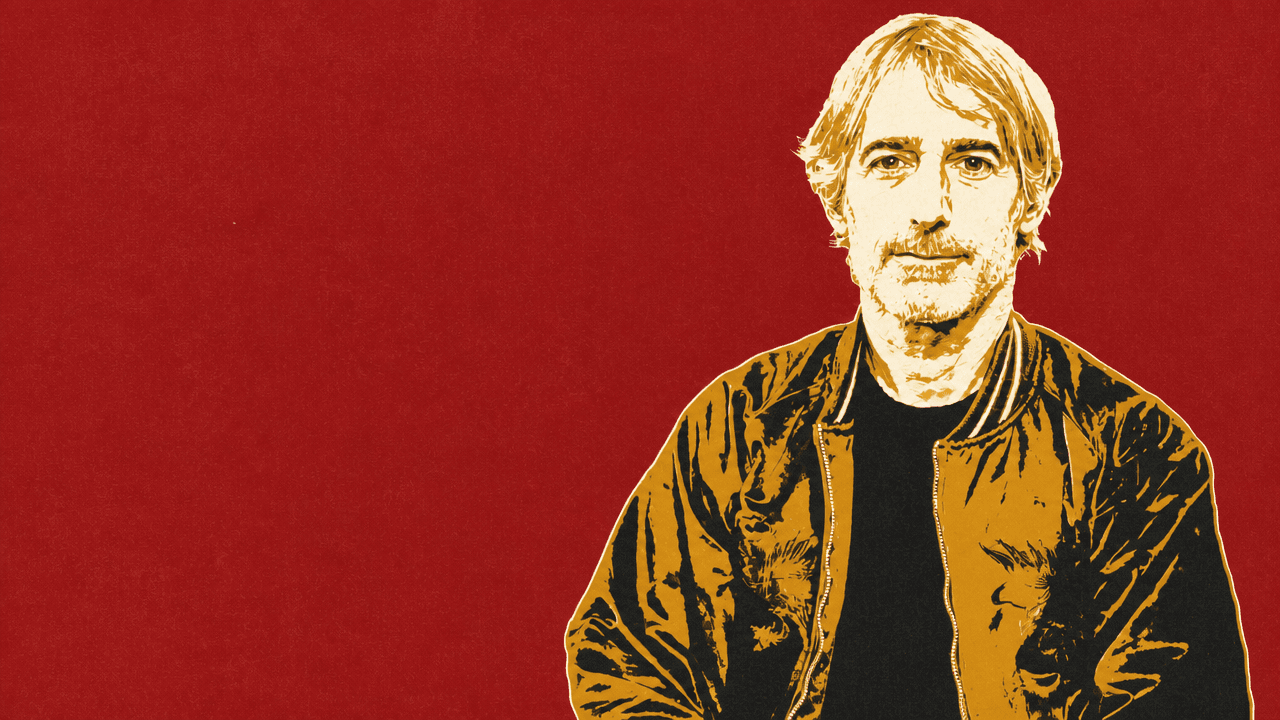
Mark Pincus, the Zynga founder behind FarmVille and Words With Friends, argues that founders are usually right about the human need they sense and wrong about the first product they build around it. In a conversation with Shane Parrish, Pincus lays out a product doctrine built around copying what is already proven, isolating the genuinely new risk, and testing for “heat” before teams spend months building respectable products nobody wants.
Trust the instinct, distrust the idea
Mark Pincus’s product doctrine starts with a tension: founders should take their instincts seriously, but treat their first ideas as suspect. The instinct may point toward a real human need, a behavioral shift, or an opening in the market. The idea is the first product shape the founder gives that instinct, and Pincus says that shape is usually wrong.


That is why he looks for systems that expose weak ideas quickly. Great consumer products, in his view, do not begin as well-defended arguments. They create “heat.” They speak to “some human instinct or need” that people have felt but not fully expressed. When a product works, the first experience can feel like an unlock.
His personal test is deliberately concrete: if an app earns a place on the front screen of his iPhone, he believes it has major “stick value,” because so few digital consumer products become things he returns to more than once. The front screen is not a market study. It is a signal that the product crossed from novelty into habit.
Pincus distinguishes that kind of signal from the weaker evidence teams often use to talk themselves into belief. A click-through rate may be encouraging. A growth curve may be interesting. But heat is not one metric. It is the condition in which the whole experience lights up.
When you have heat around the product, everything says heat. And you just know it.
When there is “true signal,” Pincus says, people do not need to be persuaded by layers of secondary statistics. Weak signal creates an appetite for more evidence because nobody feels sure. Strong signal feels different. Teams can still be wrong, but he distinguishes a product that lights up from a dashboard that has to be argued into promise.
This is also why he emphasizes an offensive mental posture. After FreeLoader, his first company, was sold for $38 million, Pincus says he became acutely aware of “the fine line between success and failure,” especially for a first-time founder. He also saw how early failure can attach itself to a founder’s identity. His advice is not to deny risk, but to avoid organizing the company around fear.
If we’re starting with what if everything goes wrong, you’re playing defense and you’ve lost before you’re even out of the gates.
Playing offense, in his account, means staying capable of asking what it looks like if everything goes right — and being ready when real heat appears. That posture runs through his product advice: preserve the instinct, distrust the initial idea, and build a process that lets reality tell you which is which.
Tribe had the right instinct and the wrong product
Pincus’s central example of the instinct-idea split is Tribe.net. He says he had three winning instincts and one losing idea. The instincts were about the social web. The idea was Tribe’s particular model for trust and social networking, which he now says was wrong.
His social-web instinct began with Napster. Sean Parker had worked for him at FreeLoader when Parker was 16, and later emailed him after starting Napster with Shawn Fanning. Parker said they had two servers, they were full, and they needed money for more. Pincus says that in consumer internet, when someone says their servers are full and they need money for more servers, “you always just send money.” To him, Napster showed an internet “cocktail party,” where people could connect directly without an intermediary.
After the dot-com crash, Pincus says only a small group remained excited about consumer internet. He says Reid Hoffman coined the term Web 2.0 in that period, tied to the idea that anything on the internet that could be free would become free, starting with data. Pincus and Hoffman both invested early in Friendster, which Pincus viewed as an important “science experiment.” Friendster began to work quickly.
Pincus did not copy or fast-follow what Friendster proved. Tribe tried to combine Craigslist and Friendster. He says he got trust “completely wrong.” For extroverted users and Burning Man communities, Tribe’s model worked. For mainstream users, it did not. The product had strong virality and strong user growth but terrible retention.
His phrase for that pattern is a “sinking speedboat”: new users came in quickly and left quickly. The answer was not to pour in more users. The answer was to fix the hole.
Then Mark Zuckerberg and Sean Parker came through his office with Facebook. Pincus says he could see that Facebook had gotten trust right. By then, Friendster, LinkedIn, and Facebook were all demonstrating a more constrained model of social trust. But he did not change course. He attributes that partly to ego and partly to the startup culture’s moral discomfort with copying.
Tribe did not prove the social-web instinct was wrong. It proved his idea was wrong.
We learn over time, hopefully, as founders, that our instincts are almost always right and our ideas are usually wrong.
The distinction helps avoid two traps. One is abandoning the instinct because the first expression failed. The other is clinging to the idea because abandoning it feels like abandoning oneself. Pincus compares the second trap to a bad relationship: everyone around the founder can see it will not end well, while the founder keeps returning with another version of the same thing.
Copy what is proven, isolate what is actually new
Pincus’s framework at Zynga, “Proven Better New,” grew out of the Tribe failure. Most teams, in his view, try to innovate in too many places at once. They lose “for the wrong reason” because they reinvent parts of the product that did not need reinvention and leave too little time to make the truly new part work.
The framework separates a product into three categories. “Proven” is what already works for this audience, function, and platform. Pincus’s instruction is blunt: legally copy what is proven. Do not change mechanics you do not yet understand. “Better” is something users would clearly prefer if offered a choice. It is usually not glamorous: fewer clicks, no download, half price, or free. “New” is the risky innovation, the part that may unlock a new product experience but should be treated as highly likely to fail in its early forms.
Zynga Poker is his cleanest example. The proven element was poker itself. Zynga did not change the rules of poker, the table, the cards, or the dealer metaphor. It copied the recognizable structure of existing poker games and real-money gambling products without taking their art. The better element was no download. Because Zynga Poker did not involve real money, it did not need the same security model, and users could play without installing software.
Pincus says the click data made that obviously better: every extra click loses users, and asking users to download something can lose 80%, 90%, or more. “Better,” in this framework, is often mundane and measurable. It is the friction users already want removed.
The new element was not no download. Shane Parrish suggested that putting pictures around the table was part of the “better,” and Pincus corrected him: that was “new.” Seeing real people, often friends, around a poker table changed the social experience of the game.

The reason this distinction matters is that Pincus assumes new ideas fail in their early versions.
All new fails until it finally doesn’t.
He acknowledges that this can sound anti-innovation, but he presents it as the opposite. By minimizing unnecessary novelty, a team protects the scarce risk budget for the thing that actually matters. The discipline is not to avoid new ideas. It is to isolate them, try many variants, and test smaller atomic units of innovation rather than betting the whole product on one unproven expression.
Slack is his example outside games. Before Slack, he says, Zynga and other enterprises used HipChat, which already had enterprise chat and channels. In the Proven Better New framing, Slack did not need to pretend enterprise chat had no precedent. The product opportunity was in what it preserved, what it made better, and what it added.
The prerequisite is deconstruction. Before a product manager earns the right to change a product surface, Pincus says they need to be a “PhD” in what is already proven. At Zynga, when a newly minted product manager presented a new poker profile, Pincus asked for his “PhD in profiles”: the best mobile game profiles, why they worked, what had been learned. The product manager did not have it. Pincus’s response was that he had not earned the right to change the profile.
The standard he describes is severe: a war room full of profiles, attention at the pixel level, and a career-long commitment to studying why products feel good or bad. Product work is not brainstorming detached from precedent. It is an obligation to understand the accumulated evidence already present in the market.
Operationally, Proven Better New asks a team to narrow the number of things it is testing. If the rules of poker already work, do not make the user relearn poker. If the existing category has an obvious friction point, remove it. If the new idea is pictures of friends around the table, test many ways to express that novelty rather than burying it inside a full product rebuild. Pincus’s point is not that copying is virtuous by itself. It is that a team should know exactly where it is copying, exactly where it is improving, and exactly where it is risking something new.
Zynga made play acceptable for adults
Zynga began after what Pincus calls “the abyss,” the unstructured period founders enter after a company ends, dies, sells, or stops being the thing they are meant to build. At first, the abyss can feel like freedom. Then it becomes a frightening lack of structure and identity. Pincus says he has spent years in that state at times, working on projects but not on “the thing.”
He got to Zynga through small side projects, one of them a poker game. He describes himself as a dabbler until he becomes all-in. When he is all-in, he says, it is “fierce.” At Zynga, venture capitalists doubted that a 41-year-old who had already made money would work like a younger founder. Pincus says they misread him. Once Zynga took hold, he did not want to stop working or sleep.
The opportunity he saw was a market that looked mature but had not truly begun. He compares games in 2007 to search before Google. Search looked mature before Google reimagined its role in people’s lives. Games, he says, looked similarly mature and uninteresting, with the global video game industry around $23 billion. But he believed there was latent demand from people who would play if games were more accessible and did not require them to identify as gamers.
The core idea was to make games for the mass market, not for gamers. That meant asking little of the user and giving adults permission to play. The value could not be only entertainment, which Pincus calls “dead empty calories.” Social games could give players a new dimension in their relationships. The aspiration was not that every session would improve a relationship. It was enough if the game occasionally created a real social touchpoint.
That explains why Zynga Poker mattered. The game was not only poker online. It was a social space with real people. Later, FarmVille pushed Zynga into a much larger orbit. Pincus says Zynga Poker and Mafia Wars were big, but FarmVille was the first product to hit a mass-market consumer tipping point. Around 20% of Facebook users were playing, he says, which made it feel as if everyone was playing because of the density in the feed and on the social network.
Zynga’s other major innovation was virtual goods and user pay. Pincus describes pitching Zynga Poker to Steve Jobs as Apple was opening the App Store. Jobs initially objected because he thought Pincus was showing a fake demo. Pincus told him the users were real, coming from MySpace and Facebook, and invited him to type into the chat if he wanted, though Pincus warned he had no idea what they would say. Jobs’s response, according to Pincus, was: “Oh, that’s cool.”
Pincus then tried to pitch in-app purchase. At the App Store’s launch, he says, there was no in-app purchase model; apps were paid or free, and Zynga would have had to sell a version of poker with chips. Zynga was among the first Western companies to pursue virtual goods, in his telling. This made engagement monetizable inside the game rather than through advertising that pulled users away. The company was cash-flow positive quickly. Pincus says he put up $350,000 to start it.
At the time, he felt there was “no dignity” in building a Facebook app company at 41. Friends thought he should become a venture capitalist or do something more respectable. Pincus says he had a chip on his shoulder. He wanted to build what John Doerr and Bing Gordon called an “internet treasure”: a service people cannot remember life before or imagine life without.
A platform can be both your distribution and your existential risk
Zynga was both dependent on Facebook and material to Facebook. That was the tension. Pincus describes Zynga’s Facebook years as a near-death experience from beginning to end because the company’s distribution came from a platform it did not control, while Facebook also had enough exposure to Zynga that shutting it down would have created uncertainty for both sides.
Pincus calls Facebook’s app ecosystem “the least stable app ecosystem ever imagined or invented.” In his telling, many companies died in it, and only Spotify and Zynga survived out of that ecosystem.
His metaphor is a “five story high unicycle” to which he kept adding another story. Zynga was profitable, but he kept raising money because the foundation was unstable. Facebook could change distribution surfaces, deprecate app access points, move features behind a “more” button, or otherwise alter the terrain on which Zynga depended. Pincus says Facebook’s “move fast and break things” culture often broke the app ecosystem.
For a long time, he says, Facebook did not believe games and apps were a great business for its platform. Pincus would walk Facebook’s hallways weekly trying to persuade people there. Eventually Facebook came to see the business value, but the hardest moment was not merely the 30% revenue share. It was the terms Facebook proposed. Pincus says Facebook delivered them on a Friday and gave Zynga until Monday to sign or risk having its apps taken down. He says that was within Facebook’s rights.
By then, the dependency ran both ways. Pincus says that when Facebook went public a year later, it had to disclose Zynga dependency in its risk factors because Zynga represented about 20% of Facebook’s page views and 10% of its revenues. Parrish added that Zynga was also a huge portion of time spent. Pincus does not present this as a clean strategic victory. It was terrifying because neither side could be sure what would happen if Facebook shut Zynga down or if users were forced to navigate directly to Zynga.
That experience sits beside Pincus’s warning to founders: “Know your goal or suffer a death by a thousand compromises.” Founders compromise for the next engineer, CTO, investor, board member, firm name, or valuation. Eventually, he says, they may wake up inside a company they do not want to work at. His view is that if the company is no longer the right place for the founder, the founder has failed, because the founder is the most valuable player.
Pincus says the first Zynga round was “impossibly hard,” partly because he got caught between Peter Thiel and Sequoia. Thiel initially wanted Founders Fund to invest $5 million; Sequoia was also interested. Both ended up not investing, and Zynga became “damaged goods” in the market. Fred Wilson eventually funded the company on terms Pincus calls terrible: a $15 million pre-money valuation. Pincus says he loved Wilson, and that Wilson negotiated hard because he could. The irony, in Pincus’s telling, is that Zynga never used a dollar of the money raised.
Failure machines beat respectable MVPs
Pincus’s operating answer to uncertain product judgment is what he calls a “failure machine.” He got there, he says, through slow and painful failures. The point is to touch reality earlier and at the top of the funnel, before teams spend months building something users do not want.
His turnaround example is Words With Friends. When he returned to Zynga as CEO for the second time, the game was projected to fall from $120 million in revenue to $79 million over the next 12 months. The prevailing view was to pull resources off the franchise and send it to a team in India to wind it down. Pincus saw it differently: people loved Words With Friends, and if the company could make them fall in love with it again, that could become the beginning of a broader turnaround.
The first diagnostic was simple. The team read app reviews and ratings. Ratings had fallen from the high fours to the mid-threes. Pincus began and ended meetings with the question, “What will our players thank us for?” The team initially considered the question unfair. Eventually, Zynga put a neon sign in the lobby with that question.
The team had been working on a fast-play mode. Pincus thought the premise was wrong. The team was mostly men in their twenties building for an audience he describes as middle-aged women. They wanted more adrenaline. He believed the players wanted a “zen moment,” a “me moment,” an escape. The team had spent six months and hundreds of engineering days on fast play without properly testing the top of the funnel.
When Pincus asked what percentage of players clicked, the answer was around 1%, with hope of maybe reaching 5%. His interpretation was severe: if 99% of Words With Friends players say no to a concept at the first exposure, continuing to build it is “a crime to our players.”
The team shifted to daily click testing of hundreds of ideas, anchored in what the core audience would thank them for. The winning idea was weekly achievements. Players wanted to feel they were getting better every week. A large share clicked and engaged. Pincus credits V, the team leader, with shifting gears and committing to the testing machine. The result, he says, was $180 million in revenue and $100 million in contribution, more contribution than the prior projection for revenue.
This is where Pincus criticizes the way many teams use the minimum viable product concept. He says he respects Eric Ries and the Lean Startup, and he believes Ries intended MVP as a way to move fast. But too many teams now spend too much time building a minimum viable product before learning whether the idea has heat. Pincus wants a “minimum idea state” instead: a fast, rough expression of the idea, created however possible, that lets people react.
The worst reaction is not “no.” It is “meh.” Parrish called that a seven; Pincus agreed and sharpened it to the five-to-seven range. A clear no is information. A lukewarm reaction can seduce teams into polishing something without demand.
Don’t fucking build it right, build it fucking wrong. And build it fast. And don’t make it viable.
His language is intentionally abrasive because the process is meant to fight a common product reflex: building the respectable version before proving the premise. Pincus’s sequence is the reverse. Build the wrong version fast enough to see whether the idea proves right. If it does, then build it right.
The failure machine also changes what teams should measure first. Pincus is not describing a full-product A/B testing culture that only begins after launch. He is describing a top-of-funnel discipline: show people the concept, see whether they click, and kill weak ideas before they acquire organizational momentum. In the Words With Friends example, the key failure was not that fast play was imperfectly built. It was that the team spent months building a concept whose first signal was already telling them players did not want it.
Founder mode is control over the right to be wrong
Pincus defines founder mode as the reason people become founders: to move from being close to the answer but far from the decision to having real agency. He says many founders were “expert witnesses” in prior jobs, suffering under adults who had decision authority without the same proximity to the answer. The danger is that founders recreate the same structure under venture capitalists, boards, employees, or a “false democracy.”
His counsel is stark: founders owe it to themselves to bet on their instinct and “lose because of yourself.” It is “your right to be wrong.” That does not give a founder permission to be abusive; people can leave if the founder is a jerk. But it does mean preserving enough control and freedom to make the company’s defining decisions in the founder’s own style.
Pincus says he did not always live up to this. His example is Zynga’s missed opportunity to acquire Supercell. In fall 2012, after Zynga was public, the stock was around $2, the company was being sued, and its $200 million acquisition of OMGpop, maker of Draw Something, had failed. Around that time, Supercell had Hay Day and Clash of Clans. Pincus says he had a handshake with Ilkka Paananen, Supercell’s founder and CEO, to buy the company for $400 million in cash.
Zynga had the money. The board refused, telling him that until he showed he could manage what he already had, he could not buy anything else. Pincus had voting control and asked a lawyer whether he could override the board. The lawyer said “technically yes, really no,” explaining that Pincus could fire the board and replace it with people who might approve the deal, but would likely be sued personally.
Pincus backed down. Supercell made $500 million in profit the next year, he says. He calls it Zynga’s “Instagram moment,” comparing it to Facebook’s acquisition of Instagram. In retrospect, he says Elon Musk would have said, “Fine, sue me.” Pincus says he did not have that level of nerve.
The point is not simply that one acquisition was missed. For Pincus, founder mode means carrying personal risk at moments when the company’s trajectory may turn. He believes there were moments when he did not stick to his own founder mode, and he uses the concept as coaching to have more belief in himself.
That view shapes how he thinks companies should operate. Pincus rejects the idea that companies are democracies. His model is a “democratic dictatorship”: everyone’s voice should be heard, and then the CEO is the single vote. A good CEO, in his view, seeks intellectual honesty and truth from everywhere, listens broadly, and then makes the decision. The decision is not made because it is popular.
He is also skeptical of management as daily supervision. At support.com, when the company reached about 35 people and he did not know how to scale, he put everyone’s names on sticky notes and asked each person to write down what they were CEO of by the end of the week. It had to be something everyone else understood and believed was important. The lesson he took was that giving people more responsibility than they think they deserve creates fear, adrenaline, challenge, and engagement. Zynga later had the value “be a CEO, own outcomes” on the wall.
Pincus pairs that with what he calls the “moral contract” with builders, especially engineers. Engineers often work the longest hours to build the product, only to have sales fail, strategy shift, or leadership declare the work obsolete. Pincus argues that leaders owe builders a corresponding effort to unlock value from what they built. If a team takes a hill, the leader must show that he or she will work just as hard to make that hill matter.
That moral contract also implies firing weak people. Pincus emphasizes that weak employees are not bad people and may be smart, but if they are ineffective in the organization and not “taking hills,” keeping them harms the people who are. He sees unearned promotions, titles, and pay as corrosive to meritocracy. The more an organization acts like a false democracy, he says, the more it crushes the backbone contributors who make the company work.
Anti-politics systems must be explicit
Pincus’s anti-politics practices are direct. He says Bing Gordon told him Jeff Bezos did not do one-on-ones because they created politics and wasted time. Pincus adopted the rule: no one-on-ones. He argues that consistency matters more than the specific style; once people understand that Mark does not do one-on-ones, they stop taking it personally.
If someone did get his ear to complain about another person, he would call the other person in, say that the complaint was being made, and leave them to talk. People stopped bringing political complaints to him.
Pincus also adopted from Bezos the idea of a technical assistant, which he distinguishes from a chief of staff or executive assistant. The tech assistant shadows the leader in meetings, works on product questions and side investigations, and absorbs how decisions are made. Pincus calls it a non-scalable way to scale the organization, or, in Zynga’s internal joke, passing “Pincus’s vampire blood.”
He liked to choose smart misfits who did not fit neatly into the organization. One example was Ian Cinnamon, a star MIT recruit Pincus says he fought Meta to hire. Pincus put him in Zynga Poker, where the team later tried to fire him. Pincus concluded it was “organ rejection” because Cinnamon was too entrepreneurial, like Pincus at Bain. He pulled Cinnamon out to work directly for him. Pincus says Cinnamon later became an entrepreneur with a successful multi-billion-dollar satellite launch company.
The tech-assistant model appealed to Pincus because it trained future leaders through proximity to real decisions rather than abstract management process. Pincus says he believes Amazon developed major leaders through this model, including Andy Jassy.
The next obvious shift is less friction
Asked what will later seem obvious that is not fully obvious now, Pincus returns to a broad internet rule: anything that can be free will be free, and anything that can involve fewer clicks and less friction will move that way.
Voice is his candidate for a major shift. He notes that Reid Hoffman had written about being “voice-pilled,” and that voice became briefly hot before attention cooled. But Pincus thinks many new devices will rely on voice interfaces, and that people will look back and wonder why they spent so much time typing, texting, and reading instead of using ears and voices more.
That prediction is consistent with the rest of his product philosophy. “Better” is often mundane: less friction, fewer clicks, no download. The most important changes may not look like invention in the heroic sense. They may simply remove the accumulated costs users tolerate because they have not yet been offered a clearly better alternative.
For Pincus, success is not an exit, title, or point-in-time achievement. It is spending his time building products he is addicted to, that he finds meaningful, that millions of other people find meaningful, and doing that with talented people bringing their best.