AI’s Rapid Progress Is Making Corporate Dominance Harder to Predict
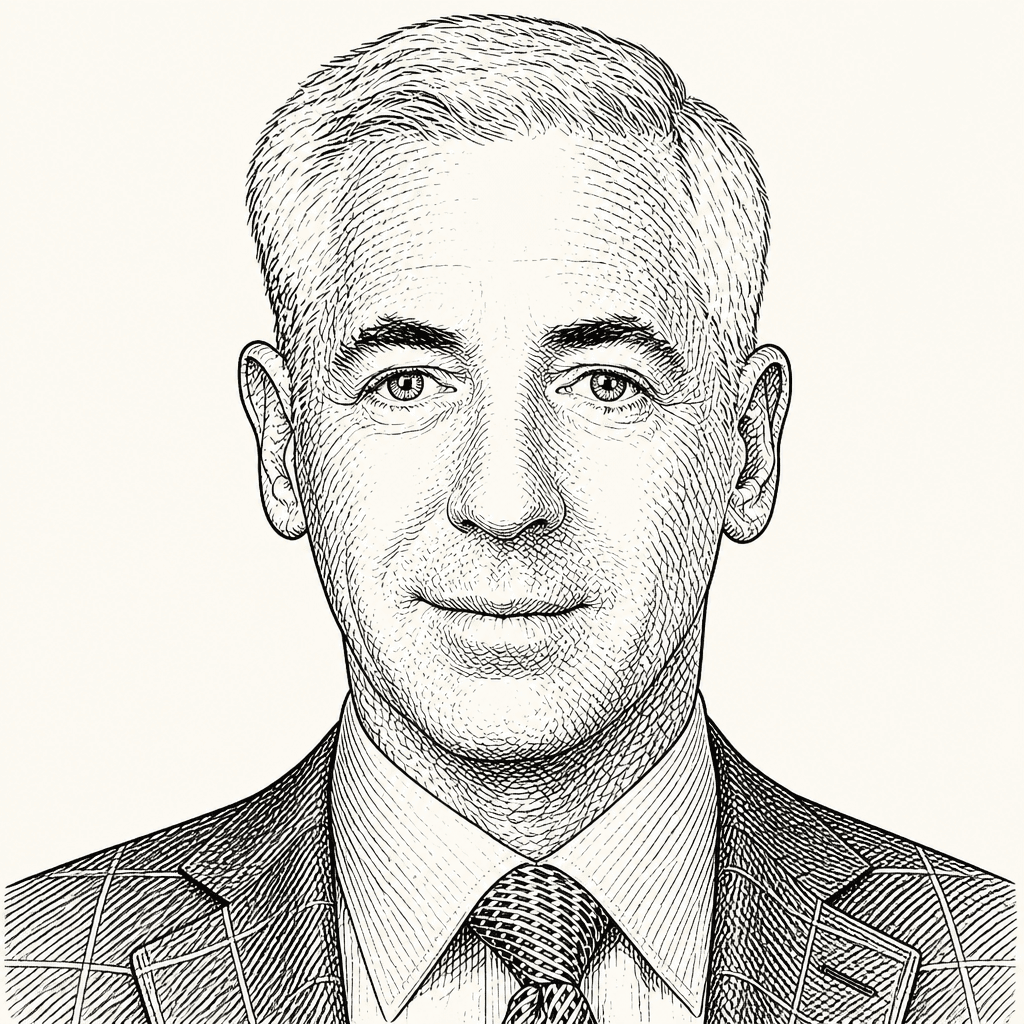
In a conversation with Shane Parrish, Pershing Square founder Bill Ackman argues that rapid advances in AI make it harder to know whether today’s dominant companies will remain durable: some, he says, may disappear. The investment case he lays out is to scrutinize a business’s long-term resilience, management and capacity to generate cash, while waiting for a price that offers an attractive return. He also describes how a change in Netflix’s plans broke Pershing Square’s investment thesis—and why evidence of stronger execution later led the firm to buy the stock again.
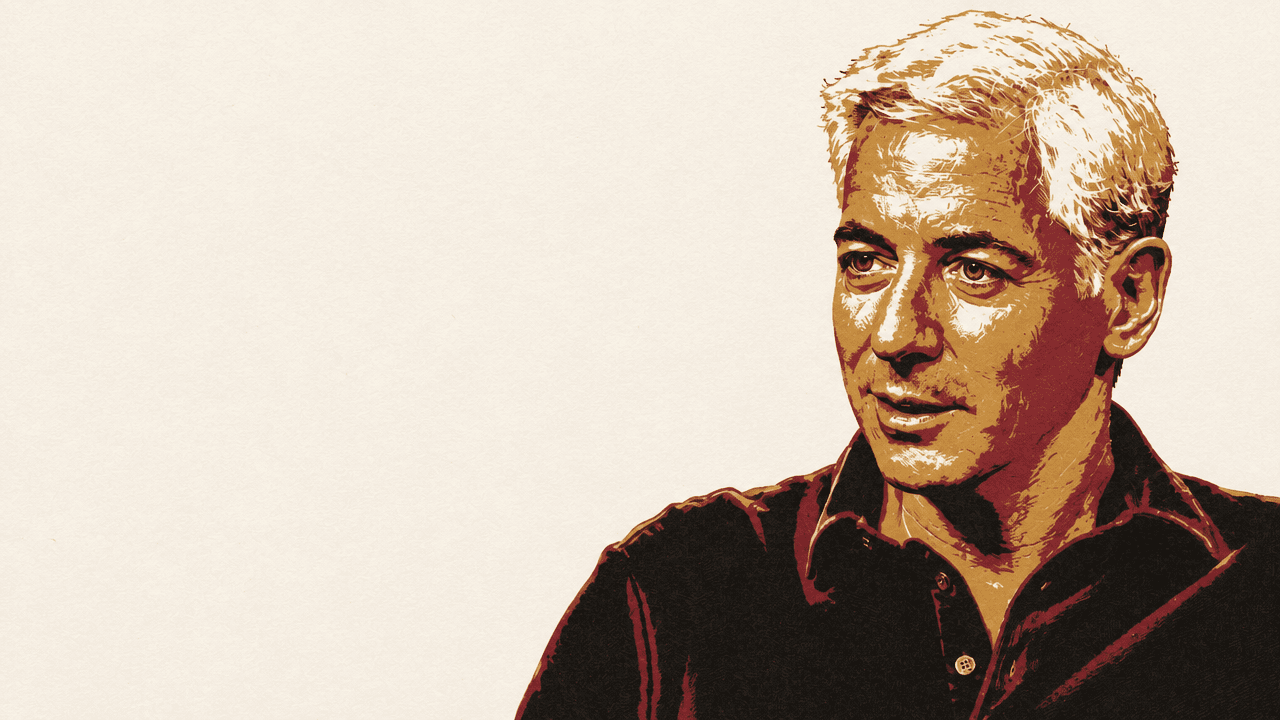
A medical emergency exposed the limits of brain recovery
Bill Ackman says his daughter Lucy was otherwise healthy before an undetected arteriovenous malformation in her brain caused a blood vessel to rupture. He described the malformation as a direct route from an artery to a vein. Unlike the usual path through capillaries, he said, that route allowed too much pressure to reach the veins. One burst, and blood filled the confined space of the skull, pressing on the brain and the midbrain, which he described as essential to breathing and heartbeat.
Ackman believes the hemorrhage began around 9 a.m. Lucy lived alone and did not answer calls. Her family became alarmed when she failed to appear to collect luggage before a trip. Ackman’s older daughter found her on the floor of her apartment, barely breathing. He said emergency responders did not know what had happened and might mistake a person with a brain hemorrhage for someone who was drunk. In his account, that distinction matters because waiting can allow pressure on the brain to cause more damage.
Lucy reached the hospital at 12:05 p.m. A CT scan revealed the hemorrhage, and doctors moved to relieve the pressure by removing part of her skull. Ackman said he learned weeks later that doctors “don’t normally do the surgery to save someone” after five hours, because the assumption is that brain death has occurred. He said Lucy had been under pressure for about 19 hours. He and his wife moved her from Elmhurst Hospital to Mount Sinai, where she was placed on a breathing tube. The extent of her eventual impairments was unknown.
When Lucy woke, Ackman said, she could not walk, speak or see. He reports that her cognition and sense of humor have returned. Her walking and vision have shown progress, and her speech is coming back slowly. He described her working through vowels and beginning to recover consonants. He hopes her speech and vision will continue to improve, but described those outcomes as hopes rather than certainties.
Ackman’s account of Lucy’s recovery also points to the limits of the care available after an acute brain injury. He said rehabilitation can be inadequate and insurance may cover only six weeks, even though people may continue to recover for years. Families can be left to provide care at home, sometimes while dealing with lost income and the demands of caregiving. A rehabilitation specialist at Mass General told him that many patients do not receive the care Lucy did; as Ackman recounted it, the specialist said some patients who undergo surgery leave for nursing homes because their families cannot care for them, and may die of pneumonia within months.
The family could pursue intensive care for Lucy, Ackman said. The challenge is making better care accessible to others. The family initially discussed a brain center on Mount Sinai’s Fifth Avenue campus, but Ackman said that project could take a decade. When a vacant biotechnology building became available, they closed on it and signed a contract to buy the rest of the 3.4-acre site. He hopes to build the Ackman Oxman Institute as a center for brain rehabilitation, recovery and longevity, focused on getting treatments to patients. He said he wants to use his financial resources to build something optimal and ultimately self-sustaining.
Ackman’s proposal is to combine clinical care with research and technology. He said brain-computer interfaces and other tools may make it possible to gather more data from the brain, while AI may help interpret it. If Lucy’s vision does not return through recovery, he said, technology may eventually offer options. As one possible future, he described glasses that capture visual information with a camera and route it to the visual cortex. He relayed an estimate he said Elon Musk gave him: that people might have bionic vision within five years. That was Ackman’s account of a forecast, not a result he said is already available.
Ackman said Lucy’s case has challenged what he sees as a pessimistic attitude among some neurologists and neurosurgeons toward substantial recovery. He believes patients can make material gains and that treatment should push further. He also sees a potential role for technology in making rehabilitation more accessible. A great speech therapist can cost $500 an hour, he said; in his view, AI could eventually help provide speech therapy at lower cost.
The family’s experience has shaped the institute’s practical priorities as well. Ackman said his real-estate experience helped him secure a building, and that his wife, Neri, an architect, is expected to play a significant role in the project. He said people affected by brain injuries have reached out because they want treatment to improve. For him, putting resources and that interest toward a practical effort has made it possible to see some good coming from a terrible event.
A wearable-data chart shown during the discussion plotted Lucy’s heart rate and stress over the day, with a sharp spike and decline in the late morning. Ackman said her Oura Ring showed a quick pulse spike around 9 a.m., followed by an unusual drop-off. He has discussed the data with Oura’s CEO. In Ackman’s view, combining an unusual heart-rate pattern with a fall alert—such as the kind available on an Apple Watch—could prompt someone to check whether the person had experienced a heart attack or another emergency. He said Oura should have similar capabilities and that he believed the company was working on them.
When Shane Parrish asked how he kept himself steady, Ackman said he plays tennis or exercises almost every morning. The game demands his attention and gives him a form of meditation. Sleep and time with family also matter. He had meditated during a difficult period involving divorce and said it helped, though he had stopped.
AI makes durability harder to judge—and the pace is the point
Ackman’s investment framework starts with a long view: a business is worth the cash it can generate over its life, and an investor should be able to imagine owning it even if the stock market closed for a decade. That requires estimating what the business may look like ten, twenty or thirty years out. In his view, AI has increased the risk of disruption and made that judgment more difficult.
He invoked Warren Buffett as an example of how even a great investor can miss a technological shift. Ackman said Buffett did not perceive the risk the internet posed to some businesses, citing Wikipedia’s effect on World Book. AI, he said, is a more complicated problem. Investors will inevitably look foolish over companies whose exposure to disruption they failed to anticipate. Some businesses that now appear dominant may disappear.
The speed of development is central to Ackman’s concern. He contrasted the years between major software updates in the past with consequential AI updates arriving within days. He compared the pace to a Tesla updating its software overnight. That speed makes it harder to judge how wide a company’s competitive moat really is. His response is to scrutinize durability more carefully, not to assume that present dominance will persist.
AI may also make some businesses more efficient. Ackman described a company called Cognition whose software can help large financial institutions modernize legacy systems, including rewriting COBOL into modern code in days rather than months. He expects major technology spenders to become more efficient. Whether they keep the resulting savings depends on their pricing power: if rivals can use the same tools, lower costs may be passed to customers. Banks, he noted, provide money, which is a commodity; the ability to retain efficiency gains therefore depends on the character of the particular business.
He also expects AI to make it possible to create businesses that previously could not exist, and to help people become entrepreneurs who otherwise would not have done so. Tools that let users create agents, he said, are becoming easier to use. At Pershing Square, however, AI is currently more of a research aid than a core part of the investment process. The firm is not using it to build financial models. If everyone has access to the same tools, Ackman argued, differentiated work remains human: creative thinking and insights drawn from the facts.
Ackman has also used AI to help him think through medical decisions for Lucy. He described it as a powerful tool for vetting options and said he thinks doctors should check their work with an AI system. He framed this as a use he has found valuable in his own situation, not as a substitute for medical care.
The implications are not limited to software businesses. Asked whether physical infrastructure might become more valuable as AI expands, Ackman pointed to Brookfield, which he called well run and skilled in infrastructure, financing and construction. He cited data centers and power, and said demand for compute was effectively infinite. In his view, Brookfield is positioned to provide some of the physical backbone AI requires.
Parrish also raised the possibility that live experiences could become more valuable as people spend more time with AI and digital tools. Ackman said he could understand the appeal: people may be lonely at home, while a sporting event offers a collective human experience. He described the feeling at a Knicks game as a kind of shared elation while the game is underway, even if many spectators leave unhappy. He was less persuaded by the financial case for sports teams. As he sees it, teams are often valued more like artworks than operating businesses, and many do not generate much cash. Owners may spend what they are allowed to spend on improving the franchise, while expecting much greater cash flow in the future.
Bubbles are driven by capital chasing the same story
Ackman defines a bubble as a cycle in which people see others making money, fear missing out and direct more capital toward the same trade. Valuations rise, excitement builds and eventually the bubble bursts. He sees AI as transformational, while also identifying bubble-like behavior in venture investing.
He described a company that was not raising capital when he met it. Within days, an investor had put in $50 million at a $400 million valuation; two weeks later, the company raised another $50 million at a $1 billion valuation. Ackman also cited a Series A round at a $5 billion pre-money valuation. In his account, investors are competing to get into businesses they believe will define the future, sometimes preempting one another with large checks.
The availability of capital can distort how founders operate. Ackman compared the current environment to the internet bubble, when companies with questionable plans could raise substantial sums. He recalled a Barron’s article that listed public internet companies and estimated how long their cash would last at their current burn rates. He said it appeared the week before the market broke.
His advice to founders is to raise capital when it is available but not to assume it will remain available. Treat every dollar as personal money and spend it carefully. Ackman expects a high-profile blow-up that will cause a reset and leave investors with substantial losses. In his assessment, companies with years of runway are more likely to survive such a reset than those that need to raise again in a few months.
Treat every dollar as if it's your own money and spend it really carefully.
Ackman’s answer to FOMO is a long time horizon. He pointed to Buffett’s refusal to participate in the internet bubble, when Berkshire’s stock fell to an all-time low as investors questioned whether Buffett had lost his touch. Buffett continued to follow his own discipline, Ackman said. The question is whether an investor is willing to accept looking wrong in the short term in order to preserve a longer-term standard.
Venture investing is a bet on the founder; public investing is a bet on durability
In public markets, Ackman says Pershing Square looks for dominant, profitable companies with strong balance sheets and the capacity to maintain or gain market share, grow and exercise pricing power. The CEO matters, but the firm has historically believed it could replace a CEO it did not trust.
Venture investing is different. The company may have little revenue and be consuming capital. The investor is betting that it can grow enough to become a cash generator, and that the founder can guide it through the change. In those cases, Ackman places more weight on the person than the original idea. A company’s initial plan may fail; the founder’s ability to find a workable business model is what matters.
He cited Coupang, his most successful venture investment. Bom Kim initially proposed building the Groupon of South Korea. Ackman thought Groupon was a bad business model, but liked Kim and his case for South Korea as a place to launch an internet business. Coupang ultimately became what Ackman called the Amazon of South Korea—a business materially different from the original plan. The investment, in his telling, depended on Kim’s ability to adapt rather than on the first idea.
The investment process is designed to expose what the team does not know
Pershing Square often begins with companies it has followed for years. The team may like a business but decide that its valuation does not offer the return it is seeking—an annual return above 20 percent is the firm’s ambition, Ackman said. It continues to study the company and waits for a market event or a sharp repricing to create an opportunity. He cited COVID and a sharp repricing of software stocks as examples of events that brought high-quality companies into range.
When a company is under consideration, two investment-team members lead the research. They begin with filings and earnings-call transcripts, identify the questions that need answering, and speak with former employees, competitors and industry experts, including through expert networks. They build a model to estimate potential returns at the current price and present their work to the wider team.
Ackman and the firm’s chief investment officer make independent assessments, in part so they can ask informed questions. The rest of the group, which did not do the initial research, joins the discussion. The meeting may end with a decision to invest or with a list of unresolved questions for the researchers to investigate. Ackman described the process as collective examination rather than a single analyst’s recommendation being accepted on presentation.
The method combines analysis with a willingness to act in situations that do not fit a conventional model. Ackman says some of Pershing Square’s strongest investments involved doing something others had not: buying credit-default swaps before the pandemic, investing in the stock of a bankrupt company, or shorting the credit of a highly rated company before the financial crisis. He does not think AI would have recommended those trades. They were not things one could have found in a model, he said.
After a large loss around 2015 or 2016, Ackman put the firm’s investment principles on a checklist—literally, he said, engraving them on a stone tablet. The checklist favors simple, predictable, free-cash-flow-generative businesses; large, liquid public companies; and strong management teams, or a credible replacement if the current team is not right. The firm spends substantial time assessing moats and has become more demanding about business quality and disruption risk. For investments where its view differs from the market, it also looks for an asymmetric way to express that view, with a potential payoff large relative to the capital at risk.
The checklist reflects lessons about short selling. Ackman has long considered shorting unattractive because the loss can be unlimited while the gain is capped. Pershing Square made money betting against bond insurers before the financial crisis, mostly through credit-default swaps. A later short against a company Ackman described as a fraudulent pyramid scheme proved different. The firm expected the facts and the public interest to support its case, but underestimated market dynamics, including Carl Icahn’s decision to buy shares and put capital behind the company. Ackman called short selling “asymmetry in reverse” and said the experience reminded him that it is a difficult business.
Shorting also carries personal and reputational costs. Ackman said it is easier to make friends by buying a stock: other investors can profit alongside you. In the pyramid-scheme case, Pershing Square held most of the short interest and became a target. He said the company had built up resources to go after critics, and the trade also became an opportunity for other investors to try to squeeze the short. That public fight included attacks on Ackman and a hostile media environment. He described the squeeze as the unpleasant part of the experience.
Ackman said the trade contributed to reputational damage, and that a short seller is often viewed as doing something evil. The Herbalife short was from 2012, he noted, and Pershing Square’s last activist investment was in 2016. He said the firm has not made an activist investment for more than a decade, distinguishing that statement from the date of its last campaign. The work of a short seller, he suggested, can leave a lasting impression even after the trade is over.
Public influence has replaced some of the need for public confrontation
Bill Ackman said he has always valued being able to state what he believes. He recalled being named “most verbose” in his high-school yearbook, with the line “a closed mouth gathers no foot.” As his audience on Twitter grew, he saw the platform as giving him more influence to advance arguments on issues he cared about. He said a tweet can affect public debate and, in some cases, the course of events. In his view, staying silent can allow wrongdoing to go unchallenged.
That willingness to speak publicly sits alongside a shift in how Pershing Square tries to change companies. Ackman said that early in the firm’s history it lacked the financial and reputational resources to secure a seat at the table. It had to persuade large institutions on the merits of an idea and sometimes run a proxy contest. Two decades of board experience and a record of long-term investment have changed those conditions, he said. Companies now sometimes contact Pershing Square after it invests, and Ackman believes management is more likely to hear its suggestions.
He does not rule out becoming more directly involved if a company is doing something the firm believes is wrong. But he thinks traditional proxy contests may no longer be necessary: when Pershing Square is a major shareholder and wants board representation, he expects a company to be receptive. He defines activism as trying to influence a company from outside the boardroom, when management will not engage.
Ackman also distinguishes long-term intervention from activism designed to lift a share price quickly. Cutting necessary expenses to improve a quarter, or borrowing heavily to return cash to shareholders, may benefit short-term holders while harming the business and those who continue to own it. He called that kind of approach inconsistent with the board’s responsibility. He expects large index-fund owners, which he described as effectively permanent shareholders, to resist proposals that impose long-term costs for short-term gains.
The firm’s edge depends on trust, delegation and aligned ownership
Pershing Square began with Ackman generating most of the ideas and leading activist campaigns. Over 22 years, he says, the firm has built a team that has remained unusually stable. Its investment team has been largely the same for nine years, with a few additions. Ackman sees that continuity as a source of trust: after years of working together, he says, he does not doubt that colleagues are giving him a candid account of risks and rewards.
He remains the final decision-maker, but no longer generates most of the ideas. A colleague is responsible for much of the business operation, leaving Ackman more room for strategic work and occasional investment ideas. He said the Ackman Oxman Institute has recently taken up some of his attention as he assembles its team. His plan is to help establish the organization and then step back from daily operations, much as he does with companies Pershing Square invests in.
Ackman says the firm’s incentives are aligned around overall performance rather than individual stocks. He owns about 45 percent of the management company, the team owns roughly 35 percent, and the remainder is held by public and strategic investors. He also described independent boards for Pershing Square’s publicly traded funds, and said the firm deliberately recruited directors who could give those entities meaningful oversight.
His approach to chief-executive hiring follows a preference for evidence and judgment. When possible, Pershing Square looks for people who have already done the job. For Chipotle, after food-safety problems, Brian Niccol’s name came up repeatedly. The firm used expert networks to speak with former colleagues and competitors, then met him. Ackman said the references were strong.
He looks for passion, capability, energy, honesty and character, and believes he can assess much of that in an hour—while acknowledging that his judgment has not been perfect. The search is not just about credentials: the firm asks what a candidate has done in practice and how people who have worked with or competed against that person describe them.
Ackman’s approach to a new CEO is also tied to how he thinks about venture and public companies. In a large public business, Pershing Square may believe it can find a different leader if necessary. At a young venture company, by contrast, the founder may be inseparable from the business; if that person leaves, Ackman said, the investment may be effectively written off. The importance of a CEO therefore depends on the company’s stage and on whether its capabilities are institutional or concentrated in the founder.
For most individuals, time in the market matters more than stock selection
Bill Ackman distinguishes investing from simply getting exposure to the market. People who want to select companies, he says, need to devote real time to studying businesses and doing the work. For someone who wants broad stock-market exposure, he considers index funds a good approach, noting that they have beaten most active investors over long periods.
He advises starting young and investing money intended for the long term. He would not hold cash just because the market looks expensive. His emphasis is on the time available for compounding, rather than on trying to choose the perfect entry point.
Ackman also described restricted stock and options as useful tools for retaining employees and aligning them with shareholders. Pershing Square’s management company, he said, has distributed ownership broadly across its team, so it does not expect to issue a meaningful amount of new equity for a long time. He said equity incentives might become useful again if, decades from now, a new generation of employees had not accumulated ownership in the business.
Netflix shows why a broken thesis can matter more than a lower price
Pershing Square had followed Netflix for a long time and bought a significant stake after a subscriber-growth miss drove down the share price. Ackman says the firm believed Netflix was an exceptional business with a dominant position. The team met management and shared its analysis. It also asked why Netflix would not offer a lower-priced advertising tier; management said it would not.
Three or four weeks later, after another subscriber miss, management discussed adapting and launching an advertising model. Ackman says the change in message made the company’s outlook less certain. Pershing Square could have bought more if it believed the new information was immaterial and the price was attractive. Instead it sold, concluding that the original investment thesis had broken: the company might succeed, but management had signaled a need to pursue a business model it had previously ruled out and did not yet know how to execute.
The firm redeployed the capital into Alphabet, accepting a tax loss rather than trying to recover it through the same investment. Netflix later built an advertising business, generated more cash, and, in Ackman’s assessment, won the streaming wars. When the stock again fell sharply, Pershing Square saw the high-certainty business it had originally wanted, now supported by evidence of execution, at a price it considered reasonable. It bought back in.
Ackman said Pershing Square invests in companies it considers among the world’s highest-certainty businesses. He described Netflix’s outlook at the time of the sale as having a wider dispersion of possible outcomes: management might succeed, but might not. The firm decided it had a better place to deploy the capital. Selling was not a judgment that Netflix could never become attractive again; the later purchase reflected a changed assessment of execution and price.
Howard Hughes is a real-estate company being reshaped around insurance
Ackman traces Howard Hughes to Pershing Square’s investment in General Growth during the financial crisis. General Growth’s stock had fallen 99.5 percent, and Pershing Square bought 25 percent of the company before its Chapter 11 filing. Ackman joined the board and helped lead a restructuring. General Growth owned not only major shopping malls but also development assets and master-planned communities—businesses investors did not want alongside the malls.
The firm separated those non-core assets into Howard Hughes. The initial portfolio was an assortment of properties the market discounted, and a rival investor mocked the new company as “Shitco.” Ackman says the team hired David Weinreb and Grant Herlitz to develop the assets, eventually focusing the company on master-planned communities.
Those communities are small cities, not simply land parcels. Howard Hughes owns residential and commercial land, sells residential lots to builders and uses the commercial land to develop what the community needs. Ackman compared the model to SimCity. The Woodlands, near Houston, has roughly 150,000 residents, along with offices, shops, schools and churches. The economics depend on a long horizon: developing a community and selling land over decades can generate substantial cash, but the business does not fit neatly into a conventional short-term valuation.
Ackman says Wall Street has continued to discount the company because land and development businesses have a poor historical reputation. He argues that Howard Hughes’s land is different because it sits in places where people are moving and is part of existing communities. He likened the potential to owning undeveloped residential and commercial land within a city and holding it over a century. That comparison describes his view of the long-term opportunity, not a present valuation or realized return.
Pershing Square now owns 47 percent of Howard Hughes and is changing its capital-allocation strategy. Rather than reinvesting all the cash into more real estate, the company plans to maintain the communities, sell land and condominiums, and direct excess capital into insurance.
The company acquired Vantage Holdings, a specialty property-and-casualty insurer and reinsurer, and has added $300 million of capital. Ackman’s ambition is to build the insurer over time, with Pershing Square managing its assets. He said the real-estate operation currently generates close to $300 million in net operating income, sells hundreds of millions of dollars’ worth of land annually, and has about $4 billion in condominiums under contract and in delivery. He expects the real-estate assets to become a smaller share of the company as insurance grows. The shift toward an insurance holding company is a plan, not a description of the business’s current mix.
The model Ackman is borrowing from Berkshire Hathaway depends on combining insurance underwriting with investment returns. An insurer collects premiums and pays claims; if underwriting is profitable, the insurer has liabilities that can be funded at low or negative cost. Buffett’s approach, Ackman said, was to keep enough assets in short-term Treasuries to meet claims while investing the balance in common stocks. Ackman’s projected outcome for Howard Hughes depends on building a profitable insurance operation and managing its assets well; he said that combination could produce returns on equity of 20 percent or more over time.
He described Berkshire’s advantages as permanent capital, the ability to take a long-term view without answering to short-term shareholder pressure, retaining rather than distributing capital, strong investing, capable managers, and limited dilution through stock issuance or options. Ackman also emphasized the value of not being forced to act by circumstances. Pershing Square has structured several of its public vehicles so that investors can trade their shares without pulling capital out of the underlying vehicle. That allowed the firm to invest during the financial crisis and the COVID crash, he said.
The structure responds to a cost Ackman associates with open-ended funds: raising and retaining capital takes time, particularly when performance fluctuates. He says fundraising distractions contributed to Pershing Square’s biggest investment mistake. The firm moved away from managing money that could leave, preferring vehicles with more permanent capital. Ackman sees Berkshire as a model not simply because of its portfolio, but because it could retain capital, invest over long periods and avoid issuing large amounts of stock.
A watch investment became a more hands-on company
Bill Ackman’s investment in Bremont began with a watch he bought during a break at a Howard Hughes board meeting. Years later, after a friend warned him about the risk of wearing an expensive, recognizable watch in London, Ackman found the Bremont in his watch collection and wore it on a trip. He visited the company’s London store, bought eight watches as gifts and wrote to the owners offering to become a partner.
He bought a minority stake from a long-time shareholder. The original growth plan—opening boutiques—did not work, Ackman said, and the company burned through capital. He initially treated the investment as a hobby and did little due diligence. His involvement increased after a disagreement between the board and CEO Davide Cerrato over the company’s direction. Ackman sided with Cerrato, whom he credited with improving the watches and design. He eventually put in more capital, acquired effective control and became non-executive chair. He said the company had made significant progress over the prior year.
Ackman described the watch as a personal interest as well as an investment. His father had introduced him to watches, and he likes wearing one whose price and brand are not immediately recognizable. He also showed a Bremont model called the Supernova, whose face glows in the dark. The investment began with a product he liked, but the decision to become more involved came after the company’s strategy and leadership became contested.
Success means building something with a lasting public benefit
Asked what success means to him, Ackman described two measures. For Pershing Square’s investors, he wants the investment to be capable of changing their lives: helping them fund their children’s education or buy the home in which they want to retire. Personally, he thinks in terms of the time left. At 60, he said, he hopes to have another 20 to 25 years, perhaps longer, and wants to use them for a significant life.
His own definition is to have a beneficent impact on the largest number of people, beginning with family and friends. He sees the brain institute as one way to do that. He hopes the resources brought to bear on Lucy’s recovery can also change what is available to other patients.