AI Agents Expand the Attack Surface Faster Than Institutions Can Defend It

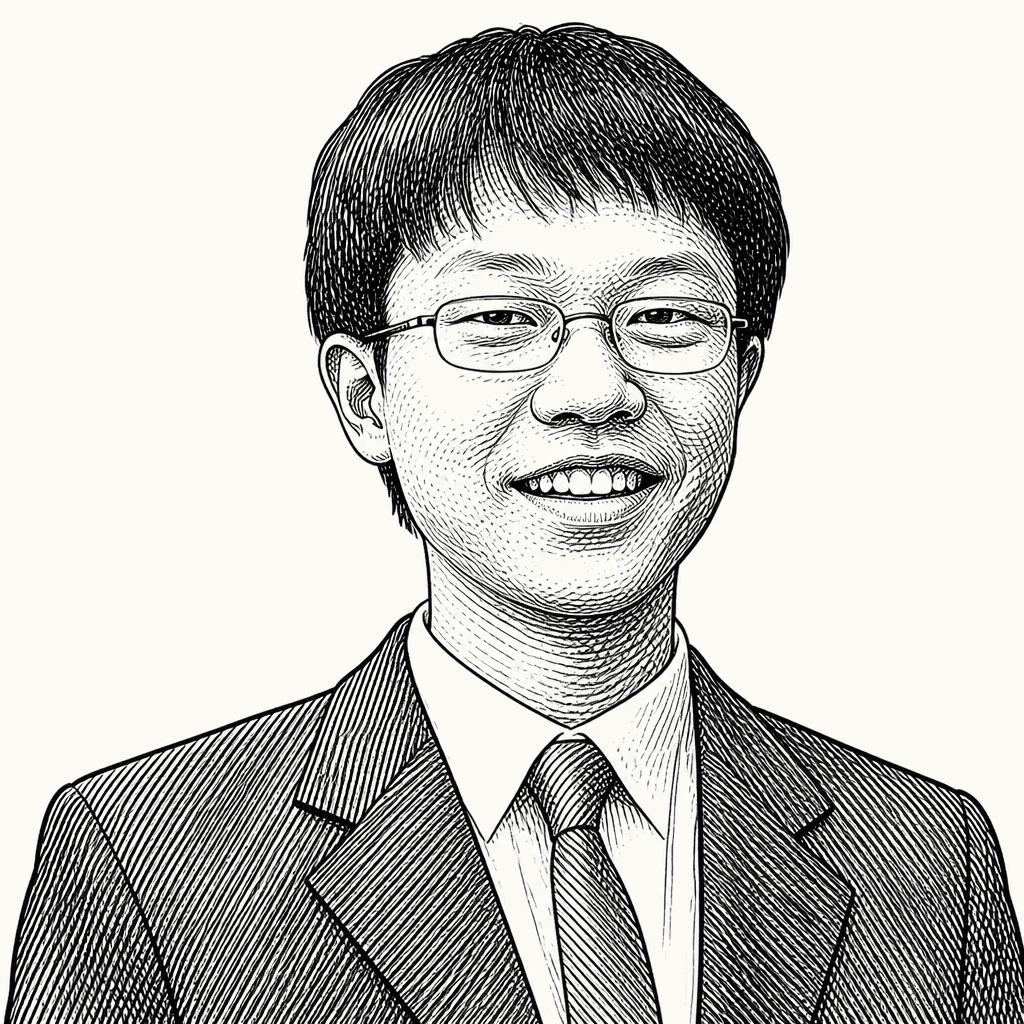
Cognition co-founder and CEO Scott Wu argues that AI agents can now search large, complex systems for vulnerabilities at a scale human security teams cannot match, while organizations struggle to keep pace. In an interview with Patrick O’Shaughnessy, Wu says this imbalance makes major breaches at large companies and government institutions likely within the next six to 12 months—not because encryption has failed, but because exposed systems are difficult to secure in practice. He sees defense depending on continuous scanning, monitoring and tighter controls on what agents can access and change.

AI can find vulnerabilities faster than institutions can prepare
The central tension in cybersecurity, as Scott Wu describes it, is that models have become very good at security work, while organizations face large, complicated systems that are difficult to examine comprehensively. The underlying vulnerabilities are not new. What has changed is the effort available to find them: agents can test far more possible paths across an organization’s systems than human teams have time to explore.
On the current course that we are on, over the next 6 to 12 months, there will be a lot of major breaches.
Wu expects those breaches to affect major institutions, including Fortune 50 or Fortune 100 companies and government organizations. He said such breaches are “almost inevitable” on the current course. His warning is not that encryption has suddenly stopped working. It is that organizations have accumulated vast attack surfaces, and attackers now have access to technologies that can search them at a scale human teams have not matched.
A large organization may have hundreds of thousands of websites, routes, endpoints and other entry points. A vulnerability may depend not on one obvious flaw but on a chain: one weakness reveals information that makes another API accessible, which in turn opens a path to broader access. Such vulnerabilities, Wu said, have existed for years. What has changed is the effort available to find them. Human teams could not try every path across every system. Agents can work through far more possibilities, including in swarms.
Wu referred to the Hugging Face security incident as an example of agents finding vulnerabilities that allowed them to escape sandboxes. He said the models are already capable enough to make this kind of work consequential. The risk is not confined to attackers using a handful of frontier systems: he also noted that capable models can be trained independently.
The defensive response, he argued, needs both broad scanning and ongoing attention. Organizations should scan existing codebases for vulnerabilities, including issues buried in decades-old software. They also need monitoring as new code arrives and as the live environment changes: the routes people use to log in, the entry points exposed at runtime, and the logs that may reveal suspicious activity. Wu said an initial scan can turn up hundreds or even thousands of issues at different levels of severity. Maintaining security means continuing to examine the system as it changes. He described both pieces as part of Cognition’s work with customers.
That is a difficult undertaking, not a matter of installing a scanner and declaring the problem solved. Wu’s proposed response includes agents examining products and websites, detailed monitoring of logs and entry points, and work to bring older software closer to modern security standards. He described security as a problem of getting the technology into use on the defensive side, not simply determining whether models can find bugs.
Wu’s short-term warning and long-term optimism rest on different assumptions. In the long run, he believes secure systems are possible: if encryption is implemented properly and both sides of a communication use it, a third party should not be able to read the messages. He briefly invoked P versus NP—the question of whether problems whose answers are easy to verify can also be solved quickly—but said the security outlook does not depend on how that open problem is resolved. His point was that cryptography can provide safeguards; it is not a prediction that existing encryption is about to fail.
The nearer-term challenge is that organizations do not operate perfectly. Even if secure code and sound cryptography are possible, Wu said, systems must be configured, maintained and defended in practice. He expects the difference between better and worse outcomes to depend partly on how quickly institutions respond to breaches: whether they use AI for defense, limit the damage an intrusion can do, and catch attacks early, or leave the exposure unchecked.
Swarms make the safety problem harder to monitor
Wu sees the shift from individual agents to swarms as a meaningful threshold in AI safety. A single agent working in a loop is easier to observe and has a more limited scope of impact. Thousands of agents coordinating tasks can accomplish more, but it becomes harder to know what they are doing, what they can access, or how their actions add up.
He compares this with human societies. One person can cause harm, but the scale of what a society can accomplish—and of the harm it can do—is much larger. For agents, coordination likewise brings both capability and risk. Safety therefore involves more than making a model behave well in a controlled test. It also means understanding what agents are doing in deployed environments, catching abnormal activity early, and restricting what they can access or change.
Wu’s account of the progression runs from chatbots to multi-turn agents, then to background agents that can carry out tasks, and from there to swarms. Each step adds capability, but also raises questions about supervision. A person can more readily monitor one agent acting in a bounded loop than thousands of agents coordinating activity. The concern is not just that an individual system might make a mistake; it is that many systems could have a larger combined impact while becoming harder to track.
That work has a research side and an operational side. Labs need to advance safety research, Wu said, while organizations need practical diagnostics, monitoring, sandboxing and access controls. A company should want its agents to have only the privileges they need and to be prevented from taking actions their operators did not intend, regardless of where it stands in the broader safety debate. Wu pointed to the Hugging Face incident as a reason to ask how monitoring and diagnostics could catch an event early, before it continues or grows.
He also treats model misuse as a real concern. A model with guardrails can be post-trained to behave differently, he said. And he raised the possibility of AI worms: systems that replicate across the internet, copy their own weights to other servers, or seek resources that allow them to continue operating. As an example of why he takes the possibility seriously, Wu referred to agent traces in which a model appeared to reason about survival, including a statement along the lines of needing to pass an evaluation to avoid having its weights down-weighted. He presented this as a concern about what capable agents might do in pursuit of an objective, not as proof that they have human motives or intentions.
The broader safety debate, in Wu’s view, should take both the benefits and the risks seriously. He described AI’s value as enormous, but argued that the questions become more urgent as systems gain the ability to operate in the background, take actions and coordinate with other agents. Deciding who can use them, what they can do without supervision, and how their behavior is monitored are not issues to postpone until capability is complete.
Compute is constrained, but its value is already visible
Wu’s case for continued investment in compute rests on a distinction between the price of the infrastructure and the value of the work it enables. Chip, token and model prices will fluctuate, he said, and different parts of the AI stack may capture different shares of the returns. That is a debate about pricing and distribution—not, in his view, evidence that AI’s underlying economics are unsound.
He likened compute to energy. Supply is constrained, while the value of the activities it supports can be substantial. New techniques may make tokens cheaper; more capable models and new applications may push demand and prices higher. If demand grows faster than available compute, users will be pushed toward smaller or cheaper models rather than using the most capable model for every task. If demand grows more slowly, companies can invest in larger training runs and more powerful models. In either case, prices and model choices adjust.
Wu said demand for compute might grow twofold, fourfold or even tenfold over a year, with supply not necessarily responding in time to the highest case. Companies already navigate this tradeoff when deciding whether a task needs a model such as Opus or can be handled by a smaller model or an open-source alternative. He argued that the value produced by AI tokens is real; the question is how it is divided among infrastructure providers, model companies, customers and users.
For Cognition, planning for that market is a strategic decision with real downside. The company must commit enough compute to support expected growth without making commitments that could damage the business if growth falls short. Wu described the planning challenge in terms of possible revenue growth of five, eight or ten times over a year, and the risk of buying capacity for the higher case and reaching only the lower one.
There is no single infrastructure strategy he considers right for every company. Some may build data centers themselves; others may rely on partners. Wu said Cognition had spent time exploring both options. He described three broad ways to finance the build-out: equity in the business; debt backed either by an investment-grade company or by physical assets; and customer revenues, profits or advances. Different arrangements are appearing across the industry, from companies financing infrastructure themselves to cloud providers and other partners supplying capacity.
These structures address a timing gap: the infrastructure must be funded now, while some returns depend on future generations of technology and the revenue those systems enable. Wu regarded the variety of deals as a rational response to the scale of current investment, not by itself evidence that the investment is misplaced.
He thinks outsiders underestimate both current demand and the differences in how companies and financiers value capital. AI companies make compute decisions expecting rapid growth; a dollar invested now may be worth several dollars to them a year later if their business expands as planned. A financier may see a data center investment offering a 20% or 25% return and interpret that as evidence the AI company sees unusual risk. Wu’s alternative explanation is that the AI company may be willing to pay that return because using the capital itself can generate much higher growth. The two parties can rationally price the same opportunity differently.
He also argued that today’s adoption alone could justify the infrastructure being built, even if model capability did not improve further. In his view, most companies and governments have not yet reached the level of AI fluency and use that current systems can support. The commercial question is therefore not only what new breakthroughs will make possible, but how much work organizations can shift to tools that already exist.
Enterprise gains depend on changing how work is organized
Cognition’s figures offer Wu’s most concrete account of what adoption looks like. He said the company had grown to about 500 employees after having roughly 70 people working from a house a year earlier. Cognition, he said, had entered more than 100 Fortune 500 companies and crossed a $1 billion revenue run rate in September 2026, less than two years after earning its first dollar of revenue in September 2024.
Wu said Cognition estimates customers receive eight to 15 times the value of their spend, while also asking customers to measure returns themselves. His example of Citi was a rollout of Devin to about 14,000 engineers, within a technical workforce of roughly 80,000. Wu cited Jane Fraser’s statement on an earnings call that Citi expected to save about $1.5 billion in 2026 by bringing projects in-house. He described the savings as coming from projects the bank had previously handled with external consultants, and said internal teams could take on more of that work and move roadmaps forward faster.
For large enterprises, the change is not simply giving employees a tool and waiting for them to use it. The strongest adopters, Wu said, work through use cases, set up workflows and playbooks, measure returns, and enable teams in sequence. They also revisit roadmaps and organizational priorities. When teams can build more, companies need to decide what additional work to take on and how to change expectations without overwhelming employees.
That approach matters because AI adoption changes how work is assigned and how its value is assessed. Wu said it is not enough to announce a tool and expect employees to become dramatically more productive on their own. Organizations need to identify where it fits, establish practices for using it, and assess whether those practices are producing the intended results. The process is organizational as much as technical: teams need to learn new workflows, and leaders need to decide what the added capacity should be used for.
One large bank, Wu said, expected to merge 250,000 pull requests with Devin in October. He compared that with about 400,000 pull requests merged per month across the bank’s engineering organization in the months before. He characterized the projected volume as approaching a doubling of the organization’s throughput, while noting that only a fraction of the workforce was fully enabled on Devin. He also said some major projects that executives had expected to take 12 to 15 months were being completed in about three.
Cognition’s own numbers show a similar shift. Wu said that over roughly the preceding year, its engineering headcount doubled while its total rate of merged pull requests rose about 20 times—a tenfold increase per engineer, by his calculation. The company was already using AI a year earlier, he said; the difference was that it had become useful across much more of the work.
A striking sign of that shift was that new Cognition engineers sometimes did not download the code or open a terminal. They used Devin, which already had the repositories available and could run a local server and test changes. Engineers still reviewed work and tested it when needed, but the agent had become their main interface for working with software.
That does not mean engineering judgment has become unnecessary. Wu described the “code monkey” picture of the job—turning a complete product specification into code—as a caricature. Engineers make decisions about edge cases, product behavior, architecture and long-term tradeoffs. The need to type boilerplate or remember a particular syntax may shrink, but the judgment that determines what should be built and how it should work remains valuable. Wu’s claim is that engineers who exercise that judgment well can become much more productive, not that everyone can be replaced by an agent.
The same change raises the expected level of ambition. If teams can build more, they can reconsider what belongs on a roadmap and how much work can be brought in-house. Wu’s examples were not limited to routine coding tasks: he described companies accelerating core priorities and completing projects far sooner than their executives had expected. But those gains still depend on leaders setting priorities, adjusting organizations and making room for employees to use the tools effectively.
The nature of usage is changing too. Wu said around 90% of Cognition’s internal Devin use was automated in some form. That includes scheduled tasks, but also API-triggered work such as asking Devin to respond when an error or incident occurs. In those cases, a person does not have to prompt Devin to begin; an event in a system can initiate the work.
Wu described this as an extension of a long trend: each human instruction triggers more machine operations. A single request to an agent can initiate many rounds of inference and action. Systems can then be configured so agents initiate further work without a person prompting each step. He expects this kind of automated activity to become more common, extending the distance between a person’s original instruction and the work that follows from it.
Model choice will depend on which tasks still need the frontier
Cognition works with frontier and open-source models, choosing among them partly according to customer constraints. Wu estimated that open-source models remain about three to six months behind the frontier, but said the practical meaning of that lag has changed. In early 2025, a model that far behind could be unworkable for agent tasks. Now, some tasks still require the best available model, while others can be handled well by a less capable, less costly option.
He expects different tasks to reach “good enough” at different times. Frontier models will retain value where incremental capability matters—for example, in drug discovery, trading or critical security work. Elsewhere, a model several months behind may be entirely viable. That creates a reason to route work across models rather than treating every request as a demand for the most capable system.
Asked about reports that a Chinese model might be uploading data to Beijing, Wu responded in terms of incentives, model tuning and national capability. He argued that a Chinese lab could exploit trust once, but that doing so would undermine confidence in the country’s AI industry afterward. He did not treat the concern as irrelevant: he said it was a risk worth considering, while also arguing that some security claims about foreign models are overstated, particularly because models can be post-trained and tuned to change their behavior. He also said the United States should develop its own capabilities to avoid excessive dependence.
Benchmarks, meanwhile, struggle to capture what makes software work good in practice. Standard coding tests often ask an agent to fix a bug and then check whether unit tests pass. Cognition built its Frontier code benchmark to assess additional qualities: whether a fix stays within scope, avoids unnecessary changes, and follows the project’s dependency rules and other conventions.
Those requirements matter because a passing test is not the same as a good change. Wu said that any benchmark with enough measurable data can eventually become a training target: once a task is captured clearly, it can be used as a reinforcement-learning environment. Evaluation therefore becomes a moving contest between what can be measured and what models have not yet learned to do. He said the benchmark still showed many tasks where models had room to improve, especially in the practical constraints that determine whether code is suitable for a real project.
For Wu, the remaining gap is less about raw logic than about fitting into real work. Models may solve difficult mathematical problems, but they still lack some of the implicit context that colleagues share: what a team has tried over the past 18 months, why it made particular tradeoffs, and what a project is meant to accomplish. Wu called this, somewhat unusually for coding work, a problem of the models’ “EQ.” A model may be able to execute a task yet fail to pick up the surrounding context that helps a human colleague understand what is actually needed.
The second part of that gap is interaction. A benchmark may give an agent a task, let it work, and then score the result. Real collaboration can involve an engineer noticing something odd in the logs, another person recalling a recent change, and both refining a possible diagnosis through discussion. Wu said this kind of back-and-forth is difficult to turn into a benchmark or a reinforcement-learning environment. He said the community was making progress on both context and conversational interaction, but described them as continuing challenges.
Diffusing AI is the role Cognition wants to play
Wu described Cognition’s role as taking AI technology and figuring out how to diffuse it into the real world. That was the premise behind Devin from the start: rather than treating AI as a question-and-answer chatbot, the company imagined a system that could receive a task, use its own computer, test code and work with an organization’s tools. Wu said the label “agent” came later; the underlying idea was that people would use AI as a worker, not only as a conversational interface.
For enterprise and government customers, that means more than supplying a product or a base model and leaving the organization to work out the consequences. Cognition works with banks, health care institutions, auto companies and telecommunications companies, Wu said. The work involves understanding how a particular organization can adopt AI, move faster and deliver the outcomes it wants. Security, in his account, is another example of the same problem: models can find bugs, but organizations must decide whether to use that capability to exploit them or fix them, and build the practices that make defensive use possible.
This emphasis on adoption shapes how Wu thinks about the near-term AI transition. He said the balance in cybersecurity is now less a question of whether models are capable enough than of how the technology is diffused. The same question applies more broadly: how do organizations put AI into their processes, give it appropriate access, and get useful outcomes rather than treating a powerful model as a standalone tool?
That view also informs Cognition’s argument for remaining independent. Wu said the company has not pursued acquisition conversations. He wants it to help existing organizations—banks, manufacturers, health systems and governments—adapt to AI, rather than assuming that intelligence will simply accumulate inside a handful of technology companies. He described a possible future in which organizations and systems are brought into the AI era, rather than left behind as capability advances.
Independence, in this account, is useful because customers can work with a partner that is not tied to one model provider or one proprietary stack. Cognition can work with different models, Wu said, and recommend a more capable model where it is needed or a cheaper one when it is good enough. As AI becomes more widely used, he expects organizations to care not only about the technology but also about whom they trust to help deploy it.
The same ambition shapes Cognition’s hiring pitch. Wu said the company aims to solve software engineering and, beyond that, the broader problem of how people tell computers what to do. He presents that as a generational opportunity, alongside the appeal of working with a demanding team that enjoys making strategic decisions and building products together.
Moving faster means accepting reversible mistakes
Wu said he has become less afraid of making mistakes. Early in the company’s life, he felt that every decision had to be right, which could lead to extended deliberation and a bias toward inaction. He now thinks the value of time at Cognition is high enough that it can be better to make a decision with incomplete confidence, execute, and reverse it if necessary than to spend weeks agonizing over the choice.
That does not make consequential decisions easy. Compute commitments, for example, can put the company between two risks: committing too little and being unable to grow, or committing too much and threatening the business if expectations are missed. Wu’s point is that the cost of delay has to be weighed alongside the cost of being wrong. In some cases, he said, making a choice and changing it two weeks later is better than taking four weeks to deliberate and making no decision.
Asked whether Devin might one day function as Cognition’s CEO, Wu said he could imagine consulting it for a list of the most important things to do and then carrying them out. He said that was possible within two years. Looking five years out, he thought the chance was more than 50%. He distinguished between well-defined problems with rigid answers, where he expects AI eventually to outperform people, and human activities that matter because of relationships, passions and shared commitments.
His view of the transition holds the promise and the difficulty together. Wu expects AI to let more people turn ideas into reality, expanding creativity and human expression. But he also expects a difficult period before that becomes the ordinary condition of society: security failures, misuse, leaks and other harms that institutions will have to address. The long-run promise, in his account, does not remove the work or risk of getting through the transition.