Permanent Capital Becomes an Edge Only With Liquidity and Transparency
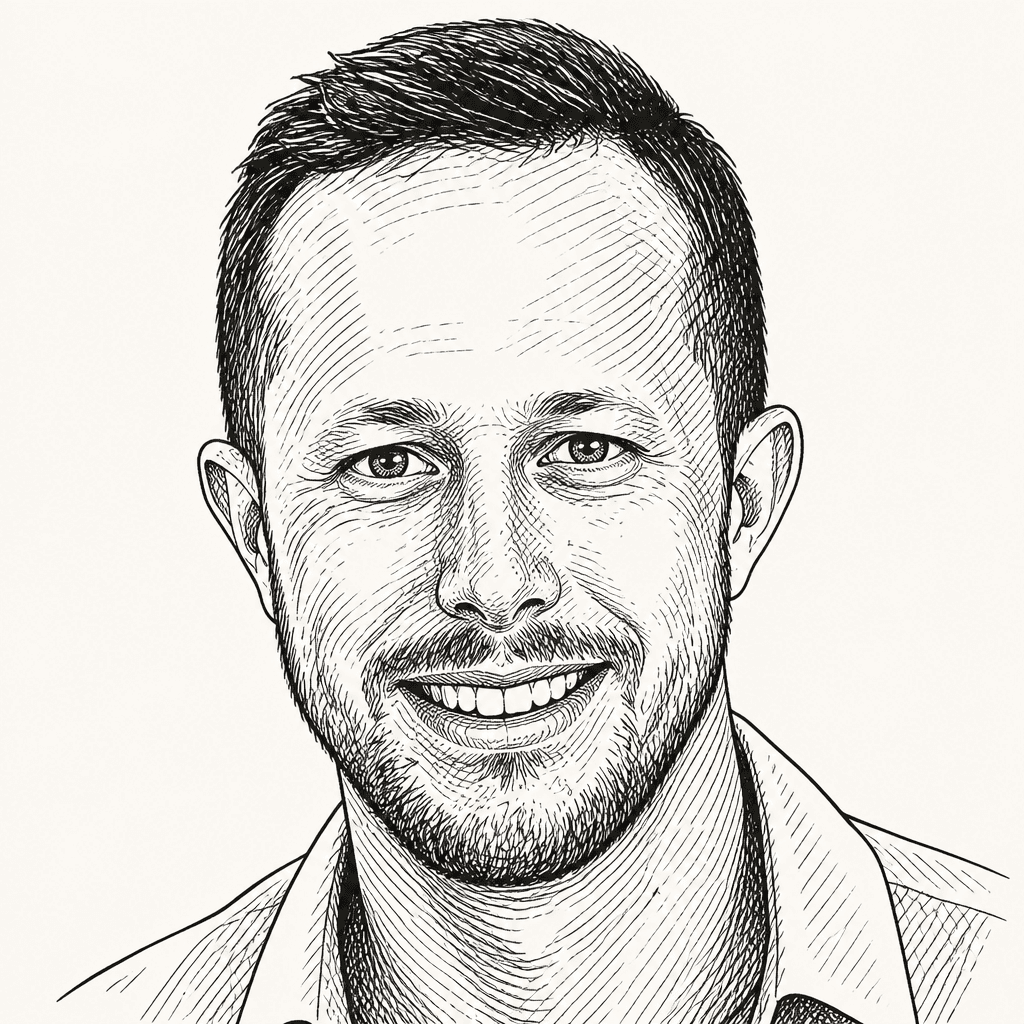
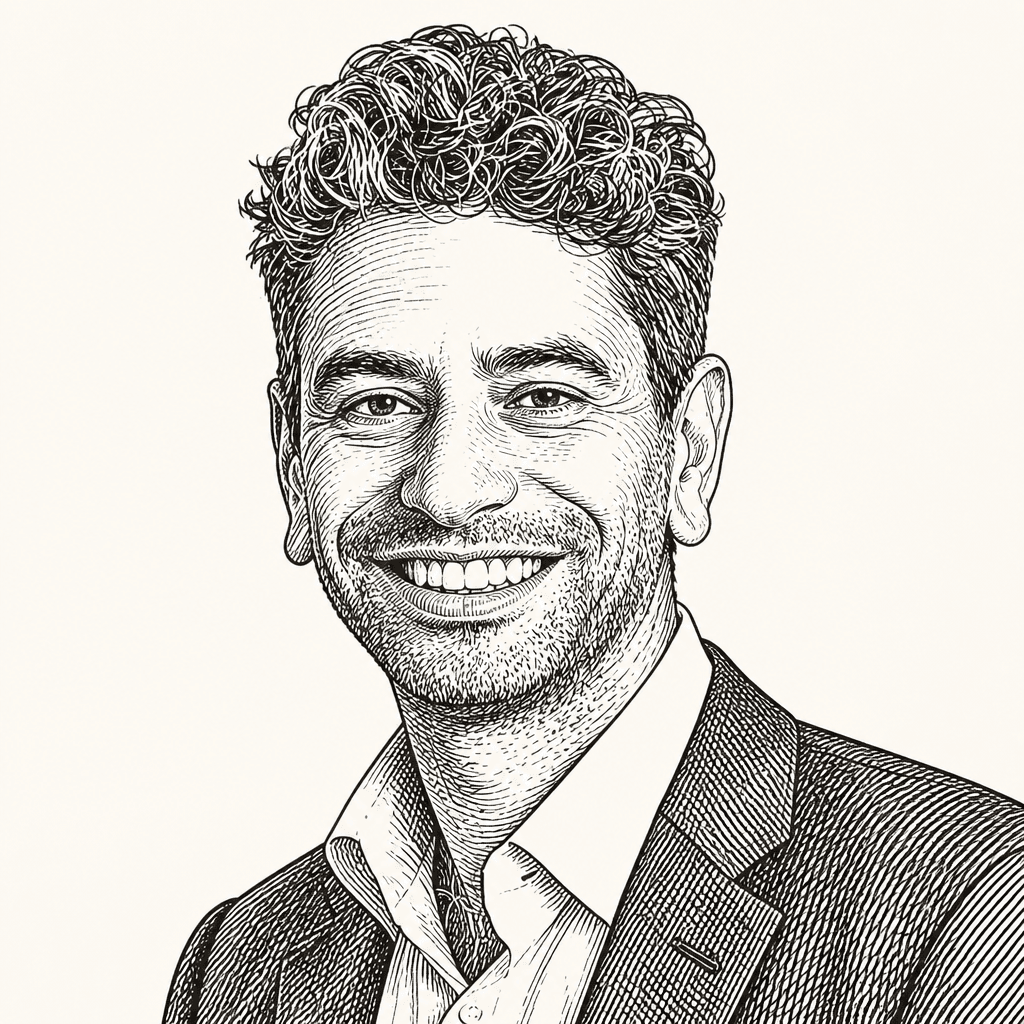
Vlad Barbalat, Liberty Mutual Insurance’s chief investment officer, argues that the company’s $120 billion balance sheet is unusual not simply because it has no outside investors, but because its permanent capital must still be managed with liquidity, discipline and transparency. In a conversation with Patrick O’Shaughnessy, Barbalat says Liberty Mutual’s mutual-insurance structure lets it invest differently from funds, pensions or public insurers, but only if the organization avoids complacency, builds expertise across credit and equity markets, and remains prepared rather than predictive.

Permanent capital only becomes an edge if the organization can stay liquid, curious, and transparent
Vlad Barbalat describes Liberty Mutual’s investment platform as a rare combination: roughly $120 billion of insurance-company balance sheet capital, no third-party investors, no public shareholders demanding buybacks or dividends, and policyholders as the ultimate constituency. That structure gives the investment team room to act differently, but it does not by itself create an advantage. The real investment problem is how to turn permanence into discipline rather than complacency: enough liquidity to meet claims and support the enterprise, enough internal risk culture to pursue unusual opportunities, and enough transparency for the organization to retain autonomy through volatility.
The capital comes from Liberty Mutual’s insurance businesses. One is the familiar personal-lines business — home and auto, including the Liberty jingle. The other is a broader global commercial and specialty business serving companies, brokers, and partners. Those insurance businesses generate reserves and surplus capital, which the investment platform deploys for the benefit of the balance sheet and, ultimately, policyholders. The objective is not to maximize reported asset-management earnings or raise the next fund. It is to ensure Liberty Mutual can meet its promises and maintain the financial strength behind them.
Insurance float is central to the model. On one side of the company, Liberty Mutual sells promises: it absorbs and syndicates risk so individuals and businesses can “embrace today and confidently pursue tomorrow.” On the other side, the premiums and reserves associated with those promises become investable capital. Barbalat frames that as more than a funding mechanism. Insurance helps create the foundation of commerce by protecting risk-taking, while the asset side supports the economy through infrastructure, entrepreneurs, jobs, and credit.
The balance sheet is not all equally flexible. Roughly $70 billion to $75 billion of the $120 billion is reserves, which must be tightly managed because the company must always be able to fulfill insurance claims. But Barbalat rejects the idea that even this portion should be run as a sleepy portfolio of investment-grade bonds held to maturity. Liberty Mutual tries to be innovative within the reserve portfolio and to act as a liquidity provider in relevant markets.
The remaining capital is organized around growth credit and growth equity, both supported by surplus. The credit side is deliberately not divided by the public-versus-private labels that dominate much market discussion. Liberty Mutual groups public credit, high yield, leveraged loans, capital solutions, direct lending, and credit partnerships into one levered corporate credit platform. The rationale is that expertise matters more than the product label.
| Capital pool | Approximate role | Examples Barbalat gave | How Liberty may access exposure |
|---|---|---|---|
| Reserves | $70B–$75B, tightly managed to support policyholder obligations | Not only investment-grade bonds held to maturity; can act as a liquidity provider | Internally managed exposures and market liquidity provision |
| Growth credit | Surplus-supported credit platform | Public credit, high yield, leveraged loans, capital solutions, direct lending, credit partnerships | Direct deals, co-investments, club formats, LP commitments, partnerships |
| Growth equity | Surplus-supported equity and adjacent strategies | Private equity, real estate, energy and infrastructure, alternative credit | Direct ownership, ownership interests, structured capital, specialized managers |
| Alternative credit | Asset-backed finance within the broader growth platform | Lending against pools of collateral rather than corporate balance sheets | Collateral-based lending, partnerships, structured solutions |
This structure differs from a pension, endowment, GP, or public insurer because Liberty Mutual is not allocating outside beneficiaries’ capital through a policy portfolio, not selling investment products, and not answering to public shareholders who can replicate investment exposure elsewhere. It is deploying its own insurance balance sheet, constrained by claims, liquidity, enterprise needs, and the requirement that the capital remain useful to policyholders over time.
The same exposure-first logic applies to growth equity, which includes private equity, real estate, energy and infrastructure, and alternative credit. Alternative credit, in this framing, means asset-backed finance: lending against pools of collateral rather than corporate balance sheets. Across these areas, Liberty Mutual asks first what exposure it wants, then how best to acquire that exposure. The answer might be a direct investment, a co-investment, a club deal, an LP commitment, or a partnership with a specialized manager whose capabilities Liberty Mutual does not want to recreate internally.
That choice set is one of the platform’s advantages. Many institutions have only one route into an exposure. They may be LPs and therefore forced to allocate through managers, or they may be direct originators and therefore biased toward what they can source themselves. Liberty Mutual’s ambition is to remain competent across many methods of access. If it can do that, Barbalat says, it naturally becomes a hub: a place where unusual transactions, off-market opportunities, and sophisticated partners can converge.
The house view is preparation, not prediction
A $120 billion balance sheet still needs a view of the world, but Barbalat rejects the version that starts with macro forecasting. The house view, as he defines it, is not an attempt to predict the future.
We’re not in the business of predicting the future, we’re in the business of being prepared for all its eventualities.
Barbalat has been a macro trader, and he says the forecasting game “hardly works” and is especially ill-suited to an institution like Liberty Mutual. The relevant question is not whether to overweight Europe or make a near-term call on the next few years. It is which long-term businesses and franchises Liberty Mutual wants to be in, and how to structure risk so the investment organization remains useful to partners while preserving its obligations to the insurance company.
Liquidity is the central constraint. Liberty Mutual must meet claims, preserve flexibility for the parent company, and remain ready if the enterprise wants to acquire businesses or add to its structure. The portfolio cannot trap the balance sheet. It has to provide liquidity to react and permanence to stay in businesses long enough to be credible.
That produces a discipline different from either a trading book or a locked-up private fund. Liberty Mutual knows credit will remain a large part of the business and wants the required expertise before entering a market. Europe is Barbalat’s example of restraint. Despite the region becoming more interesting because of geopolitical dynamics, Liberty Mutual has not expanded much there because it does not believe it has the right relationships or expertise in place. The platform is large and growing, but he says it continues to find enough opportunities in the United States where it is more comfortable.
The house view is therefore a view of businesses, exposures, liquidity, expertise, and balance-sheet obligations. It is developed and refreshed at the top of the organization for sensibility, but Barbalat resists rigid allocation targets. The point is not to declare that the portfolio must be a certain thing. The market changes; the world changes. The investment organization has to remain flexible enough to respond while remaining permanent enough to be trusted.
A fortress balance sheet expands what the insurer can underwrite
Barbalat argues that Liberty Mutual’s investment ambition is not a luxury grafted onto an insurance company. It is part of what allows the insurer to adapt to changing risks. A static bond portfolio might avoid certain kinds of career risk, but it would also limit the balance sheet’s ability to adapt to new technologies, evolving risks, and the changing scale of assets in the economy.
Data centers are his example. They represent a scale of asset and value that did not exist in the same way before. Insurance balance sheets, he says, are not large enough to absorb such risks casually, which is why the market extends into forms of third-party capital. But an insurer with a fortress balance sheet can do things others cannot.
That fortress balance sheet has two profit engines. One is underwriting, which Barbalat describes as a thin-margin business. The other is the asset side. The difference between buying a 4% or 5% investment-grade bond and earning 7%, 8%, 9%, or 10% across the total portfolio is, in his words, “all the difference in the world.” Capital size dictates opportunity set, both in what the insurer can underwrite on the liability side and what it can pursue on the asset side.
In a mutual structure, the reason for earning more on the asset side is not a shareholder-like distribution. Barbalat reverses the usual public-company logic. A public insurer, he argues, would be less likely to pursue Liberty Mutual’s approach. Public shareholders could reasonably say: deliver consistent underwriting margins and return capital through dividends or buybacks; if we want investment exposure, we can buy it ourselves. A public insurance company trying to build a world-class investment organization from scratch would face a skeptical shareholder base, in much the same way conglomerates often face skepticism when management asks investors to trust internal capital allocation across unrelated activities.
A mutual has the opposite problem. It lacks the forcing function of public shareholders, so it could become complacent. But Barbalat says that is an optional feature of mutuality, not an inherent requirement. The only unavoidable constraint is that a mutual cannot raise equity. Liberty Mutual’s answer is to choose to be an exceptional operator on both sides: underwriting and investing.
The benefit to policyholders is breadth, resilience, and capacity. A stronger balance sheet allows the company to be there “through thick and thin” and to solve risks that may not yet be visible. Barbalat contrasts Liberty Mutual’s balance-sheet needs with a company like Progressive, which he describes as highly successful but focused on a particular U.S. motor vertical with less long-tailed risk. Liberty Mutual’s mix includes risks that can reappear from 20 or 30 years ago and be fat-tailed. That requires a different kind of balance sheet.
Berkshire Hathaway is the extreme comparison. Patrick O'Shaughnessy recalls Ajit Jain describing his job as waiting for the phone to ring with unusual risks that others cannot price or underwrite. Barbalat agrees that Berkshire is in a universe of its own, but says Liberty Mutual’s commercial and specialty businesses share some of that same spirit. In those businesses, insurance underwriting looks conceptually like investing: deploying capital into uncertainty to earn a return over multi-year horizons.
The platform’s reputation depends on entrepreneurial risk inside a conservative institution
Liberty Mutual wants the phone call when a new or unusual opportunity appears. The strongest flow, in Barbalat’s description, comes through referrals rather than cold outreach. That is important because the platform’s reputation is cumulative: if Liberty Mutual is known as curious, commercial, and capable, more opportunities arrive; if it turns away calls reflexively or behaves bureaucratically, those referrals dry up.
The burden of proof depends on how far an idea sits from Liberty Mutual’s known waterfront. If an opportunity falls outside the firm’s expertise, the hurdle is higher. But truly original propositions are rare, and Liberty Mutual is willing to back people when it sees integrity, a sensible idea, and the possibility of a long-term partnership that serves both the originator and Liberty.
The internal cultural problem is more subtle. Why would a professional at a stable, large insurance asset manager take entrepreneurial risk at all? The easy answer inside such an institution is to avoid anything outside the area of comfort. Barbalat says one of his largest responsibilities is to create a culture, incentive structure, and governance framework that makes the right kind of risk-taking possible.
This matters because Liberty Mutual’s flexibility is only valuable if employees actually use it. A large balance sheet can offer direct capital, LP capital, co-investments, structured solutions, and partnerships, but the organization still needs people willing to engage with ambiguity. The firm has been purposeful about hiring and developing people who are curious, entrepreneurial, and able to operate across different forms of capital.
That culture also shows up in how the portfolio has changed. Historically, Liberty Mutual had a more limited route into many exposures, often by backing GPs. Over time, it built more options. Barbalat gives natural resources as an example of an exposure that changed materially. The prior approach was not serving the firm well, in part because Liberty Mutual did not have the capabilities to operate certain energy businesses. The exposures could also be narrow: an operating business might fail to deliver the desired energy or inflation exposure because idiosyncratic issues overwhelmed the macro thesis.
Today, the energy and infrastructure vertical is both a credit and equity business. Liberty Mutual may own assets or ownership interests without operating them, provide capital across the capital stack, lend with upside exposure through warrants, or back specialized partners where the technical expertise is hard to reproduce. The goal is not simply to have an energy view. It is to acquire the exposure in a form that actually works for the balance sheet.
Branded capital is not just a name on the roster
“Branded capital,” in Barbalat’s definition, is capital that has a recognizable meaning to the recipient. For a mega fund, branded capital might be a large state pension that reliably writes a big check. That is not Liberty Mutual’s brand.
Liberty Mutual’s brand is to help partners build businesses; to digest information quickly; to say how it wants to participate, or that it does not, without wasting time; and to operate more like a GP than a traditional LP. That also affects hiring. Barbalat says Liberty Mutual looks for people from GPs or operating backgrounds, not only traditional LP backgrounds.
The desired effect includes the endorsement value associated with elite LPs: if certain institutions back a manager, the name itself can reduce perceived risk for others and attract additional capital. Barbalat says Liberty Mutual wants to be one of those institutions, but the goal is broader than a halo effect. A respected name on the capital roster is valuable, but Liberty Mutual also wants to be known for creativity in structuring solutions and willingness to take risks that some brand-name LPs are not set up to take.
The game differs by exposure. In venture, Liberty Mutual is not going to recreate the venture ecosystem internally; there, capital may compete mainly to get onto the roster. In other areas, the relevant question is whether the capital provider is creative, quick, and able to underwrite risks others do not consider.
Barbalat also emphasizes network behavior that may not produce an immediate transaction for Liberty Mutual. If the firm can help two or three partners connect without being involved itself, it will do that. The premise is that business relationships, friendships, and trust compound. Doing useful things for partners becomes part of the long-term value proposition.
Agency became part of the investment culture
Barbalat’s view of risk, entrepreneurship, and improvement is tied to his biography, but the connection is operational. He describes an investment culture built around agency, non-entitlement, and the refusal to accept “good enough” as a final answer.
He was born in Moldova, then a republic of the Soviet Union, and came to the United States with his parents in 1990. He describes the move not as a difficult choice but as something people could only dream of, made possible by a fortunate direct path to America.
The contrast he draws is about agency. In the United States, he says, a citizen or resident has a level of agency unparalleled elsewhere: the ability to define success, decide how to contribute, and have the option to thrive. Not everyone does thrive, he stresses, but the option exists in a way unavailable to much of humanity, where family history, ethnicity, religion, oppressive government, or closed economic structures can sharply limit mobility.
His concrete image is bread. As a child in the Soviet Union, he was sent to a bread store where there might be one or two types of bread and a line outside. The implicit view was that bread is bread: calories are the point. In the United States, by contrast, someone can reinvent a croissant even though the croissant already exists in countless forms. If that person can make it special for a customer, there can be a market. For Barbalat, that is an example of human creativity, iteration, and permissionless improvement.
His childhood also included overt persecution as a Jew in the Soviet Union. He remembers being called out in school as a nine-year-old. His parents faced more severe constraints, including barred professions, hard quotas, assigned places to live, and university limits. Such persecution was normal in that society — part of the social fabric. A person born into that environment is not given permission to dream; they are born to survive and navigate constraints.
The United States represented the inverse: individualism, freedom to pursue talents and interests, and the ability to choose one’s network. Barbalat acknowledges that individualism taken to excess can create social problems, and says the United States wrestles with those. But he emphasizes its liberating force.
That background maps directly onto how he wants Liberty Mutual Investments to behave. Immigrants, he says, tend not to assume entitlement. When someone comes with nothing and is looking for a life, “no one owes you anything” becomes a basic premise. In the investment organization, that translates into a refusal to accept “good enough” as a satisfying answer.
If you’re passionate about your work, and you’re really interested in what you do, and you care about your craft, you’re going to continue to iterate because it’s what you do.
Liberty Mutual looks for partners with the traits of entrepreneurs: people eager to make the world better through whatever narrow craft they are pursuing. The best investors, in Barbalat’s view, are obsessed with their craft rather than merely financially motivated. They are passionate, competent, able to communicate what they are doing, and clear about what they are trying to accomplish. A brilliant vision that cannot be communicated, he says, stays trapped in the founder’s or investor’s head.
Geopolitics changes the opportunity set, but forecasting still fails
Geopolitics may matter more to investment outcomes than it did during the long period of postwar stability that investors often describe as Pax Americana. Barbalat, who says he loves history, starts with caution: whatever moment one is living through tends to feel uniquely acute.
He remembers walking outside after a long Zoom day in March or April 2020, wondering whether his life had coincided with a pandemic that would completely upend society and human life. He reminded himself that the odds were small, and that past pandemics had wiped out large parts of humanity without ending humanity itself. The same pattern applies, in his view, to technological progress and geopolitics. Each moment feels unprecedented from inside it, while history often reveals continuities.
Still, the current geopolitical moment does appear to be breaking parts of the order that governed economic flows and security architecture after World War II. The Berlin Wall was a major shift along the way, but alliances and norms largely held. Now those norms feel more unsettled.
For a U.S.-focused investor, Barbalat does not think this alone changes investing in a simple top-down way. What matters more is the changing economic architecture: energy, supply chains, inventories, labor sourcing, inflation, and rates. The world had become accustomed to just-in-time inventories and the ability to locate the cheapest pockets of labor or competitive advantage. Structural impediments to that model can have inflationary and rate implications.
At the same time, he sees technology as an “incredibly deflationary impulse.” The difficulty is not identifying relevant variables. Thoughtful people can list many of the forces that drive outcomes. The difficulty is assigning weights and understanding interactions. People and institutions adjust to roadblocks, systems respond in nonlinear ways, and the same variable can be overwhelmed by another.
That is why he returns to his anti-forecasting stance. The reset in Pax Americana is real in his view, but he does not see it as a reset away from American power on a relative basis. He continues to believe the United States has inherent advantages: innovation capacity, energy abundance, and other forces that support American exceptionalism. “The world continues to need America,” he says.
AI makes the future less visible, and that may change valuation itself
Barbalat sees artificial intelligence as different from prior workplace technologies because it cannot simply be installed by a technology department as another software package. It requires the user to engage with it, build a relationship with it, and exercise agency. Used well, it becomes a “superpower” for getting thoughts out of one’s brain, rationalizing them, presenting them coherently, and interacting with them.
The user’s role matters. If someone accepts the first output, Barbalat says, “that’s where slop tends to live.” The model will tend toward generalities and averages. The value comes from engaging with one’s own knowledge, experience, ideas, and creativity, and becoming an editor rather than a passive recipient. For investors, that matters because insight often comes from taking obscure or well-organized data and finding something not easily observed.
AI also changes work habits. Barbalat says he uses AI every day, increasingly, but that creates a concern: more time interacting with AI can mean less time interacting with colleagues. Human relationships are messy ways of receiving information; AI is smart, efficient, and interesting. Taken to an extreme, he says, the experience can become isolating.
The larger investment debate inside Liberty Mutual concerns valuation in a world where the future is increasingly invisible. Software is the most obvious arena, but the question extends beyond software to businesses such as Home Depot or John Deere that are not obviously in the “AI crossfire.” If investors are less certain which businesses will thrive in 10 or 15 years, should multiples be lower across the board?
Barbalat distinguishes this from the familiar argument that higher inflation or rates should lower multiples. The AI question is not simply macro. It is about whether the durability of future cash flows is harder to underwrite. A favorable macro backdrop might historically support higher multiples, but if technological disruption raises uncertainty about which businesses will matter, the multiple logic changes.
He expects that by 2030 there will likely be trillion-dollar companies that do not yet exist, while some current trillion-dollar or many-hundred-billion-dollar companies may disappear or lose that scale. That implies more volatility, not only a new set of winners and losers. Barbalat adds another possible source: if quarterly earnings requirements change, public-market volatility could rise further.
The equity question has a credit-market analog. Four-year paper in most software names may be acceptable if the companies are contracted out and near-term cash flows are money-good. Thirty-year credit issued by companies such as Salesforce or Oracle looks riskier under the same framework because the question is not whether today’s large enterprises keep using those products tomorrow. It is whether the next trillion-dollar company, not yet formed, will ever adopt them at all.
Salesforce is his example. He dismisses the simplistic version of the threat: large enterprises are not going to “vibe code their own CRM.” The sharper question is whether future dominant companies will include Salesforce in their ecosystems. If not, then even persistent Fortune 500 usage could leave Salesforce as a cash-cow business deserving a different multiple. That repricing in public markets would cascade into private markets.
Private exposure still has to start with the equity risk
Some of the largest private companies could become among the largest public companies if they listed. That makes public-versus-private exposure a more important question, but Barbalat does not treat the distinction as a substitute for underwriting the equity risk itself.
Public markets are substantially harder to hold psychologically, using the comparison between a house and a public REIT: the value of both may change daily, but only one confronts the owner with a daily quoted price. Fundamentally, though, equity exposure is equity exposure. Liberty Mutual does not move between public and private markets simply because of volatility dynamics. The question is what exposure the balance sheet wants and how best to own it.
Barbalat’s explanation for the growth of private markets is structural. Historically, companies went public for clear reasons. They needed capital unavailable in private markets; going public carried prestige; and it marked a milestone in a company’s life. The tradeoff was loss of control, shorter decision horizons, and exposure to public-market pressure from shareholders and boards.
Private markets have addressed much of the need. Companies can now raise enormous amounts of capital privately. Prestige has become less tied to listing because very large private companies are already well known. Meanwhile, the cost of being public has become high, both in literal compliance cost and in the managerial burden of operating under public-market scrutiny. Some companies need a three-to-five-year decision window that public markets rarely provide.
Some parts of the public-market burden may mean revert, especially regulatory cost. But Barbalat believes the availability of capital to private companies will persist. For Liberty Mutual’s balance sheet specifically, private equity exposure remains the primary focus. The firm has not stopped investing in private markets; nor does it avoid public opportunities when compelling. But for its equity exposure, it will largely continue to focus privately.
Long-term capital can become an excuse unless transparency creates autonomy
Barbalat is careful not to romanticize permanence. Permanent capital changes the investment process because Liberty Mutual does not have to raise the next fund, satisfy a heterogeneous LP base, or optimize the business strategy of an asset manager. But the capital is permanent; the people are not. Organizations inherit decisions made by prior teams, and the decisions most often discussed later are the difficult ones.
Compared with third-party capital, managing one’s own balance sheet produces better “investment hygiene.” A fund manager is always also running a business. Investment outcomes are the product sold to investors, and the fund cycle, future fundraising, public-market multiple, or asset-management business model inevitably influences investment process. That does not prevent excellent investing, but it dilutes the craft in one way or another.
Liberty Mutual has a simpler objective: deploy its own capital into the world at the right rate of return for the benefit of the balance sheet and policyholders. It does not have to explain itself to outside LPs whose own circumstances may differ. It does not have to react to fund-cycle pressure. That is the hygiene advantage.
But permanence has a failure mode. “Long term” can become a crutch — a way to explain away poor performance or inconsistency by insisting that the result will be fine if one waits long enough. Barbalat uses a fixed-income analogy: the 10-year rate is built from a series of shorter rates. Likewise, the long term is constructed from many short terms. A serious long-term investor has to hold both truths: the ability to make long-term decisions is valuable, but the short-term path still matters.
The calendar year is another constraint that cannot be wished away. All businesses have some annual financial plan or objectives, even if their real economic horizon is longer. Anything can happen in a single year, but annual results still matter to stakeholders. Barbalat’s preferred approach is to acknowledge the one-year constraint while establishing explicit three-to-five-year targets that matter more and putting the organization on the hook for them.
Transparency is what allows you to have autonomy. No transparency, no autonomy.
Transparency is what allows that autonomy to survive. If a business is opaque, poorly understood, and volatile, stakeholders are unlikely to support it through difficult periods. Barbalat says he reminds his leadership team that this is difficult to deliver, but essential for a business that needs to make multi-year decisions while living inside annual accountability.
The same pragmatic optimism appears in his answer to O’Shaughnessy’s closing question about kindness. Rather than naming a single person, Barbalat names the people who fought for and constructed pathways for legal immigration to the United States. His gratitude is to America and to those who allowed people like him to come, build a different life, affect others positively, and keep believing that America is essential to the world.