Universal Investment Accounts Give Children a Stake in Capitalism
 Brad Gerstner
 Patrick O'Shaughnessy
 Geoffrey CanadaInvest Like The BestTuesday, November 17, 202617 min read
Geoffrey Canada, founder of Harlem Children’s Zone, argues that education cannot level the playing field if young people have no savings to weather an emergency or seize an opportunity. Brad Gerstner, founder of Altimeter Capital and the force behind Invest America, says children’s investment accounts can address that gap at national scale by giving every child a stake in the market from birth. The two make the case for the accounts as both a financial asset and a way to help families share in economic growth.

Education can open a door; capital can keep it open
Geoffrey Canada spent decades preparing young people for college and work. The limit of that work, he says, became clear when he saw how little an education could protect someone with no savings. A car breaking down can mean losing access to a job. A promising interview can be out of reach for want of a plane ticket. Someone may be one emergency away from bankruptcy, even after doing what schools and employers told them to do.
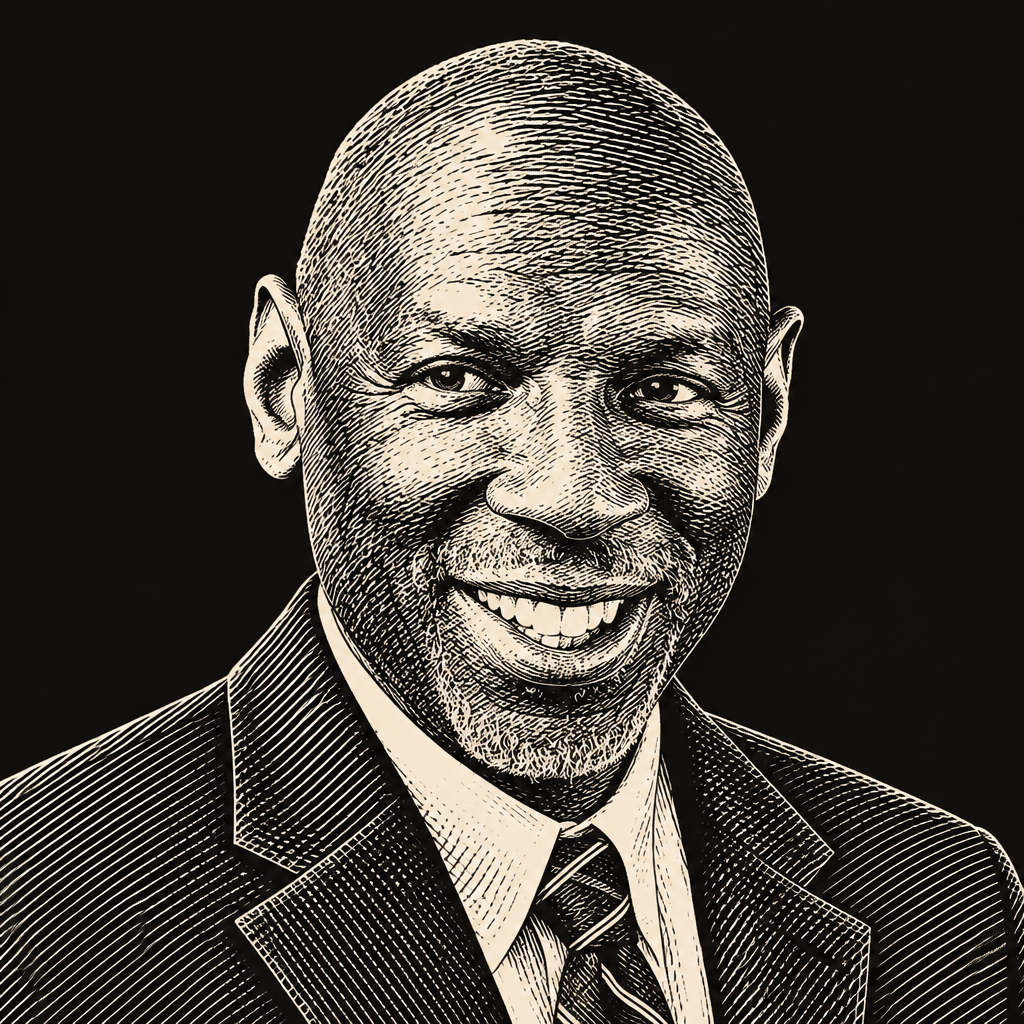
For Canada, this is not an argument against education. It is an argument that education alone cannot level the playing field when some families can draw on wealth and others have nowhere to turn. He described getting calls from his grandchildren asking for $1,500 after a car broke down. He could help. Many of the young people he works with have no family member who can provide even a few hundred dollars when an opportunity or crisis arrives.
That gap shaped Canada’s interest in children’s investment accounts well before the current national program. He took part in SEED, a philanthropic effort to fund accounts for children, and later watched Harlem Children’s Zone build its Wealth Builds program. The organization had graduated more than 2,000 students with college degrees and had about 1,000 more in college, he said. Yet a single emergency could still derail a young person’s progress. The organization raised more than $100 million to seed accounts for students, but Canada saw the central limitation: a project that reaches a small number of children cannot change the conditions facing poor families across the country.
His own experience informs the point. Canada said that even with a Bowdoin and Harvard education, he knew little about financial markets or investing. Before he learned about investing, he had children, no savings, and a life that felt one paycheck away from homelessness. Generational wealth, he said, has largely bypassed poor people. The result is that a credential may improve someone’s chances without giving them the financial room to handle a setback, start a business, buy a home, or make use of an opportunity.
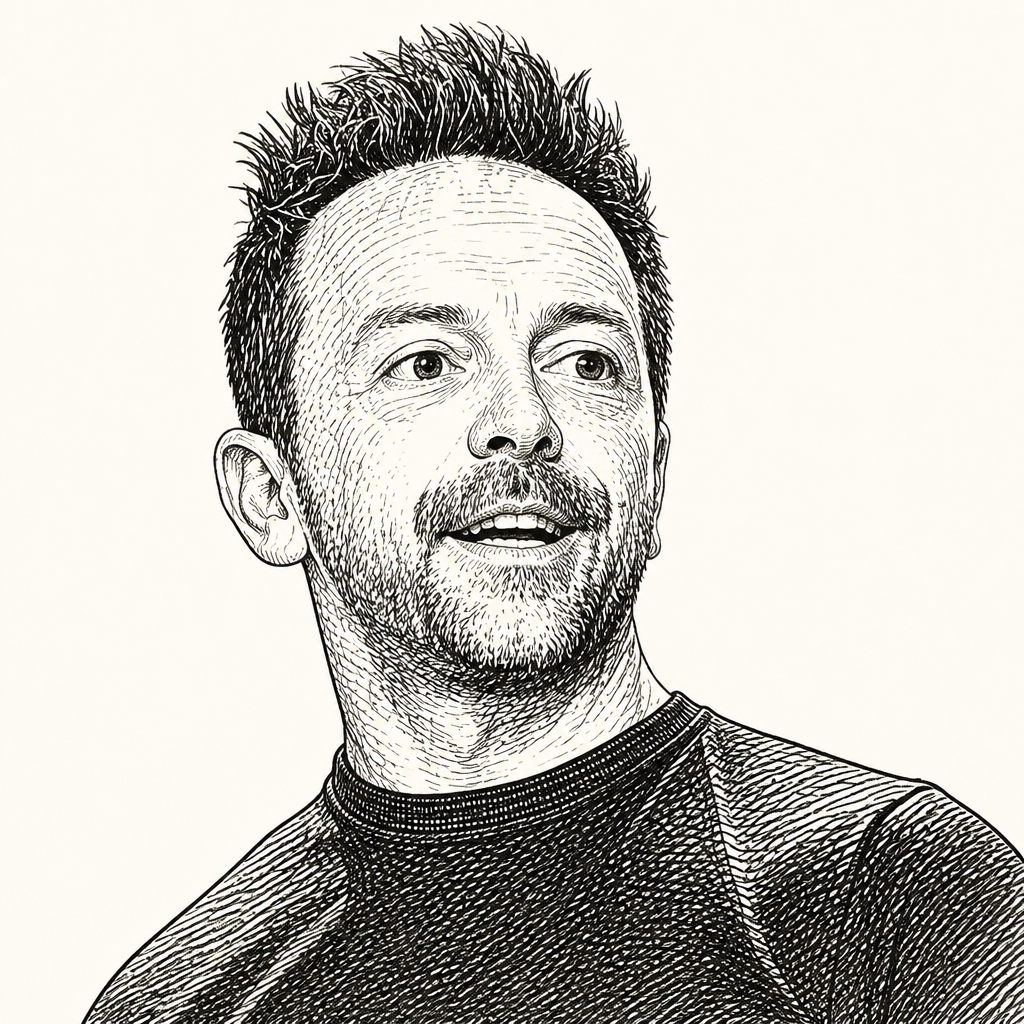
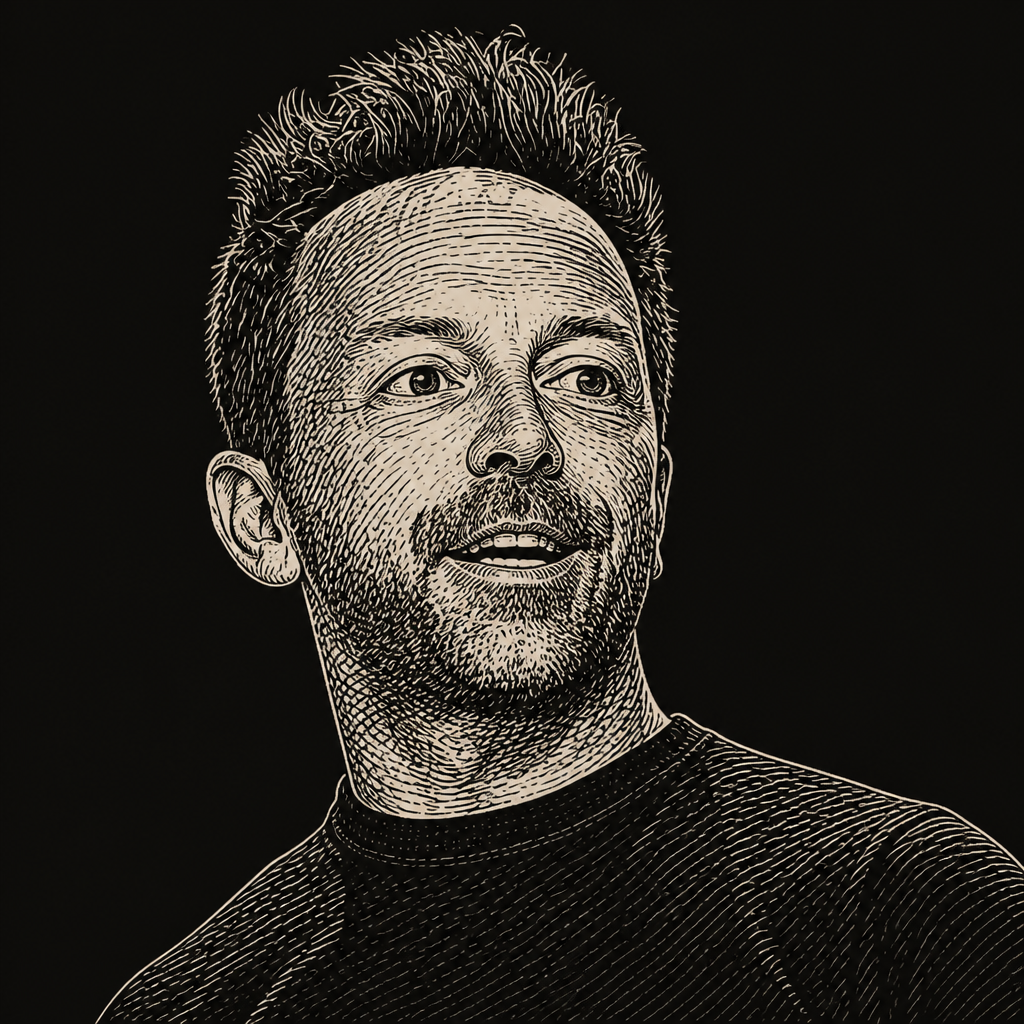
Brad Gerstner frames the accounts as a way to address that missing starting point at national scale. “There is no capitalism without capital,” he said. The proposal is not to replace education or work, but to ensure that children begin life with an asset that can grow and that families can add to.
The scale matters to both men because their earlier efforts depended on families finding, claiming, or creating accounts one program at a time. A universal account, they argue, can make ownership ordinary rather than exceptional—and give children a practical reason to learn how saving and investing work.
The argument is about who believes the system can work for them
Canada’s concern goes beyond household finances. He sees a political and social risk when people believe they have done what was asked of them, yet their children face worse prospects. Parents, he said, will endure hard work and sacrifice if they believe their children will have a better chance. When that promise breaks down, frustration can turn against the system itself.
He recalled the anger after Martin Luther King Jr. was killed in 1968, when people who had seen King as a path toward equality lost a source of hope. In Canada’s account, the destruction that followed was a sign of how deeply people can feel abandoned when they see no route to change. He now sees a broader version of the same danger: not confined to Black and brown communities, but present among poor people across the country, including many white families.
Canada pointed to the disconnect between visible wealth creation and families struggling to afford basic expenses such as milk, eggs, or prescriptions. People see extraordinary prosperity around them while feeling that their own prospects—and their children’s—are worsening. He cited economist Raj Chetty’s work as evidence that the American dream has receded, and described a public increasingly skeptical that capitalism is working for them. His worry is not partisan: it is that people who feel trapped will look for someone to blame and conclude that the system is fundamentally unfair.
Gerstner described a related divide between the growth of investment wealth and the growth of wages. A chart shown during the discussion compared cumulative growth from 1964 to 2026: the S&P 500 was labeled as up 9,739%, while hourly wages were up 1,204%. He said people see a country moving toward prosperity while their own circumstances deteriorate. That, he argued, helps explain why people may turn against capitalism when they have no capital and no ownership stake in the gains.
For Canada and Gerstner, a child’s account is therefore also a claim about belonging. If families can see their children own a piece of businesses and participate in compounding, they may have more reason to root for those businesses to succeed. Canada wants people to feel that economic growth can benefit them, rather than seeing wealth creation as something done at their expense.
The proposal is not presented as a cure for every source of economic insecurity. Canada acknowledged that the accounts do not resolve the question of what jobs will exist, especially as AI changes work. His narrower claim is that savings and market exposure offer some flexibility when a young person needs to retrain, take another course, or adapt to a changing labor market. Without that cushion, even someone who has followed the advice to study and work hard may find themselves with a degree and no job—and no resources to respond.
The account is designed to remove the first barrier
Gerstner said the program grew out of a problem he saw in 2020: earlier efforts such as SEED had inspired him, but he did not think they could reach enough people to address a national problem. Under the law he described, a new account is created automatically for every child born in the United States when the child receives a Social Security number. Each receives $1,000 invested in the S&P 500. The account is opened and funded even if a parent does not immediately claim it.
That automatic start is deliberate. A parent working two jobs might not have time to set up an investment account, Gerstner said. If the family had to complete that task first, the child could lose years of compounding. Instead, the account is already there, and the family can claim it later without missing the initial investment’s growth. Gerstner said the Treasury Department manages the accounts and that creating accounts for children born in the future does not require periodic reauthorization.
The program also extended account creation to children under 18, not only babies born after the law took effect. Gerstner said the government does not put the $1,000 into every older child’s account, because doing so would be too expensive. He said philanthropists and others can add money, with gifts directed in some cases toward children in lower-income areas. The Dells, for example, funded $250 contributions for 25 million children between ages two and ten, he said. Gerstner also described his family foundation contributing to accounts for young children in Indiana, Ray Dalio doing so in Connecticut, and Frank Slootman in Montana.
All contributions, as described in the discussion, are invested automatically in an S&P 500 index fund rather than held as cash or allocated through investment choices made by parents. The app shows the account’s value and the fund’s underlying holdings, so a child can see that the account includes pieces of companies such as Apple, Walmart, and Berkshire Hathaway. The design aims to make an index investment more tangible without asking a family to make decisions about individual stocks.
Parents and other contributors can add money through the app. Gerstner described contributions of $5 or $10 as easy to make, like paying for a cup of coffee, with contributions automatically invested. The goal is to make the first step—from having no account to having an investment account—less daunting. “When you have zero, the distance between zero and one feels impossible,” he said. “One to two is a lot easier.”
Gerstner said children cannot simply withdraw all the money at 18. He described a structure under which a young adult can use up to 25% for purposes such as buying a home, starting a business, college, or a trade, while the rest rolls into an IRA. The account, in his framing, is intended to encourage uses that build assets rather than treating the balance as spending money.
Universal infrastructure only works if families trust it
An account can be opened automatically and still go unclaimed. Canada said that, in earlier programs, families often hesitated even when the money was free. To people who have seen scams or been promised things that did not materialize, the offer itself can sound suspicious: What is the catch? Is someone going to sell ads? Is the account real?
That distrust is not a sign, in Gerstner’s view, that poor people do not save. “Poor people don’t save” is the wrong diagnosis, he said; many people lack an accessible account in which to save. He called the problem a “cold start”: even a sophisticated parent may not know how to open a custodial investment account for a child, and the effort can be enough to stop them. The universal account is supposed to remove that setup burden.
Gerstner offered two examples of the response he wants. A Jamaican seamstress in New York told him she mostly kept cash under her mattress for her children, then asked him a question about stocks. At a Bronx school where accounts were being funded with $250 per student, a parent asked whether she could add $5 or $10 through Apple Pay. The question, as Gerstner presented it, was not how soon she could spend the money, but whether saving could really be that straightforward.
Still, both men see explaining the program as a substantial task. Canada said Harlem Children’s Zone intends to make sure no poor child’s account goes unclaimed. Parents may have years to claim an account, but that time is not a substitute for outreach. Families need to understand that the account exists, that it is not a scam, and that even small contributions can matter.
The name complicates that work. Canada said some people hear “Trump accounts” and reject the idea because they oppose the president. He supports the accounts despite being a lifelong Democrat, and said he would advocate for them because he has been trying to establish this kind of opportunity for 25 years. Gerstner said the effort had support from Democrats as well as Republicans, including Bill Clinton, Barack Obama, Gavin Newsom, Wes Moore, and Cory Booker. He said Republicans initially worried that the accounts were an expansion of the welfare state; the case that persuaded them was that individually owned accounts could support independence rather than dependence on government.
Gerstner distinguished the accounts from Social Security on ownership. In his description, the child owns the account, unlike Social Security, which he characterized as a promise of future benefits rather than an asset the individual owns. He also said that account creation is permanent under the law, while the $1,000 contribution at birth requires reauthorization every four years. He said the funding was in place through 2029 and that he wanted the birth contribution made permanent.
For Gerstner, early distrust is not unique to this program. His mother, who was poor and working, kept a ledger of Social Security deductions for ten years because she feared she would never get the money back. He sees a parallel in the suspicion that a new benefit must conceal a catch. The answer, he argued, is time and people from different political backgrounds making the program legible. Canada’s participation matters to that effort precisely because he does not support the president but does support the accounts.
The account needs to teach ownership, not just deliver a balance
Canada’s experience with school savings programs left him skeptical that a small balance alone can teach the appeal of investing. As a child, he was encouraged to save a quarter each month in a bank account. After six months, he recalled, the interest amounted to about a penny. He wanted his $2 back to buy potato chips and soda. For many poor children, he said, that kind of experience is their introduction to capitalism: the reward is so small that saving seems pointless.
A larger account can make compounding visible. Canada said that if children see balances grow and understand what they own, investing may become meaningful rather than abstract. He wants an 18-year-old to consider converting the money to an IRA, using it toward a home or business, or preserving it for the future—not simply withdrawing it to buy a depreciating luxury item. That ambition also depends on parents saving for themselves. Otherwise, he warned, the child’s account could become the family’s emergency fund.
The education component has to reach both parents and children. Harlem Children’s Zone has explored technology-based financial education because, Canada said, in-person instruction alone cannot reach everyone at national scale. He also wants financial education in schools to connect to something students actually have. Teaching financial literacy to children with no money to manage can seem pointless; an account gives those lessons a concrete object.
Gerstner said the account could also include an AI-based financial tutor, with explanations suited to a child’s age. A child might ask what would happen if they contributed $5 a month and see a projection. He described this as an idea under development, alongside a curriculum tied to the accounts. He said Texas had put in place a financial curriculum around them for 500,000 children, and that 38 states require financial literacy.
The intent is not to teach children to pick stocks. It is to give them a reason to ask how ownership and compounding work. Canada recalled a Harlem Children’s Zone investment club whose students followed companies closely and asked him what was happening with Nabisco. He preferred using real money over simulated portfolios, because students needed to see that investing had consequences in the real world. Gerstner added that this sense of involvement could give young people hope.
The accounts could also serve as a route into other savings programs. Canada wants families to claim whatever support is available to them, including 529 accounts and state programs such as CalKIDS. He described some existing programs as geographically uneven or restricted in use. Gerstner’s argument is that one federal platform could make it easier for states and cities to add money without asking parents to manage multiple accounts. He proposed consolidating California’s CalKIDS contributions into the universal account, and described Oklahoma, California, and New York City as places that might add funds through the shared infrastructure.
The point is not that every local program has failed. It is that, in the speakers’ view, fragmented efforts have often lacked durability and scale. A national account could make contributions easier to coordinate, while letting state and philanthropic dollars build on the same base.
AI makes the question of who shares in growth harder to defer
Canada said young people hear warnings that AI could take their jobs or even threaten humanity, but do not necessarily hear a case for how the technology could improve their lives. He worries that when company leaders describe catastrophic risks while pursuing enormous returns, people may conclude that their safety is being put at stake for someone else’s profit. He also pointed to concern about layoffs and resistance to data centers as signs of public unease.
He does not claim that the effects on employment are settled. Canada said he hears different views about whether AI will eliminate large numbers of jobs. His concern is that young people should not be asked to accept the risks of technological change without sharing in its rewards. If they have a stake in the businesses and markets benefiting from AI, he argued, the relationship could feel less like “all risk” for people with few resources.
Gerstner agreed that the transition will displace jobs, even as he expects technological progress to increase prosperity overall. He invoked John Maynard Keynes’s 1930 essay “Economic Possibilities for our Grandchildren,” written amid anxiety about technological unemployment and political upheaval. The source displayed Keynes’s prediction that living standards in progressive countries could be four to eight times higher a century later. Gerstner said the U.S. economy had grown 8.2 times since then, and argued that the long-run benefits of technological change do not remove the need to help people through the transition.
He compared the accounts to Social Security as a new social contract. In 1935, Gerstner said, labor was the main asset most people had; Social Security offered support in unemployment and retirement. In the AI era, he argued, universal capital accounts could give people another reason to stay invested in the system as work changes. The analogy is his: the accounts would not replace the need for a safety net, but could help connect people to the upside of a more productive economy.
Canada’s condition is that wealth created by technological progress must be shared in a way that convinces Americans they are not being used to enrich others while bearing the risks. Gerstner’s related claim is that the country has an abundance problem only if it fails to distribute the gains. He warned against responding to concentrated wealth by attacking capitalism itself, which he sees as the source of the prosperity that could be shared.
Direct giving gives philanthropists a larger route to reach children
The accounts have also offered donors a way to give directly to children at scale. Gerstner said the Dells wanted to give away their wealth but lacked a platform capable of receiving and distributing a gift of several billion dollars. He called the accounts “Giving Pledge 2.0”: a model that narrows the distance between promising to give and actually transferring money to recipients.
He described the giving process as a one-page donor agreement with the Treasury Department, followed by a transfer of funds for distribution to children’s accounts. Donors can target contributions by geography or income. Gerstner cited Gwynne Shotwell’s gift of two million SpaceX shares for children ages 10 to 18 in the bottom half of income zip codes, and said Elon Musk had announced a gift of one SpaceX share to each of the 70 million children with accounts. He also said the Dells funded contributions for children in lower-income zip codes.
Canada’s work at Blue Meridian Partners is built around a related problem: the difficulty of scaling social programs that work. He said the group’s typical grants range from $50 million to $100 million, because small projects can fail to reach enough people and organizations may not have the infrastructure to use very large gifts well. Philanthropy, in his view, needs both the capital and the capacity to put it to work.
That is why Canada considers the universal account more than a funding mechanism. The federal infrastructure could allow donors, companies, states, and cities to contribute through one system rather than trying to build separate programs. Gerstner said donors had shown interest in the accounts because they could reach children directly, and that he expected more gifts to be announced.
The larger ambition is that families who have never owned stocks might begin to see themselves as investors, and that children who grow up with an account might use capital to start businesses or buy homes. Canada called the possibility of poor children becoming the next generation of capitalists a profound opportunity. The claim is not that an account guarantees success. It is that a starting asset, combined with education and additional contributions, could make participation in capitalism real for people who have previously experienced it as something happening elsewhere.
The promise is a new contract between generations
Canada described an earlier effort with investor Stan Druckenmiller to draw attention to what they called generational theft: the sense that public commitments to older generations were not matched by equivalent investment in the young. The effort did not become a movement, he said. He sees the universal accounts as a way to reverse that direction—older generations and donors putting capital into children’s futures at scale.
His argument returns to the parent who works long hours because they believe their children will have a better life. If those children are instead doing worse, Canada said, the sacrifice stops making sense, and people begin looking for a villain or a way to break the system. A durable commitment to children could offer a different answer: not a promise that every problem will disappear, but a concrete asset intended to give the next generation more options.
Gerstner shared his own family’s experience of financial constraint. His mother could not afford college, and he applied only to schools that could offer him a full scholarship. He remembers sitting with her as she helped with his applications. For him, the accounts are an attempt to make sure a child’s starting point is not entirely determined by whether their parents can provide the first investment.
Canada ended by returning to a gift that had changed his life. As a junior in high school, he was invited on a European trip for wealthy students after a teacher and her husband decided to seek scholarships for a few poor students. Someone gave him the $1,000 he needed. In 1969, he traveled to seven countries, including Czechoslovakia and Yugoslavia, because he wanted to see the Iron Curtain. The experience changed his sense of the world and, he said, set him on a different trajectory. He still does not know who provided the money.
The story gives the accounts’ ambition a human scale. A relatively small sum cannot determine what a child will become. But, as Canada’s own experience suggests, money offered at the right moment can open a route that a young person could not see before.