AI Has Made Technology Fluency Mandatory for Fundamental Investors


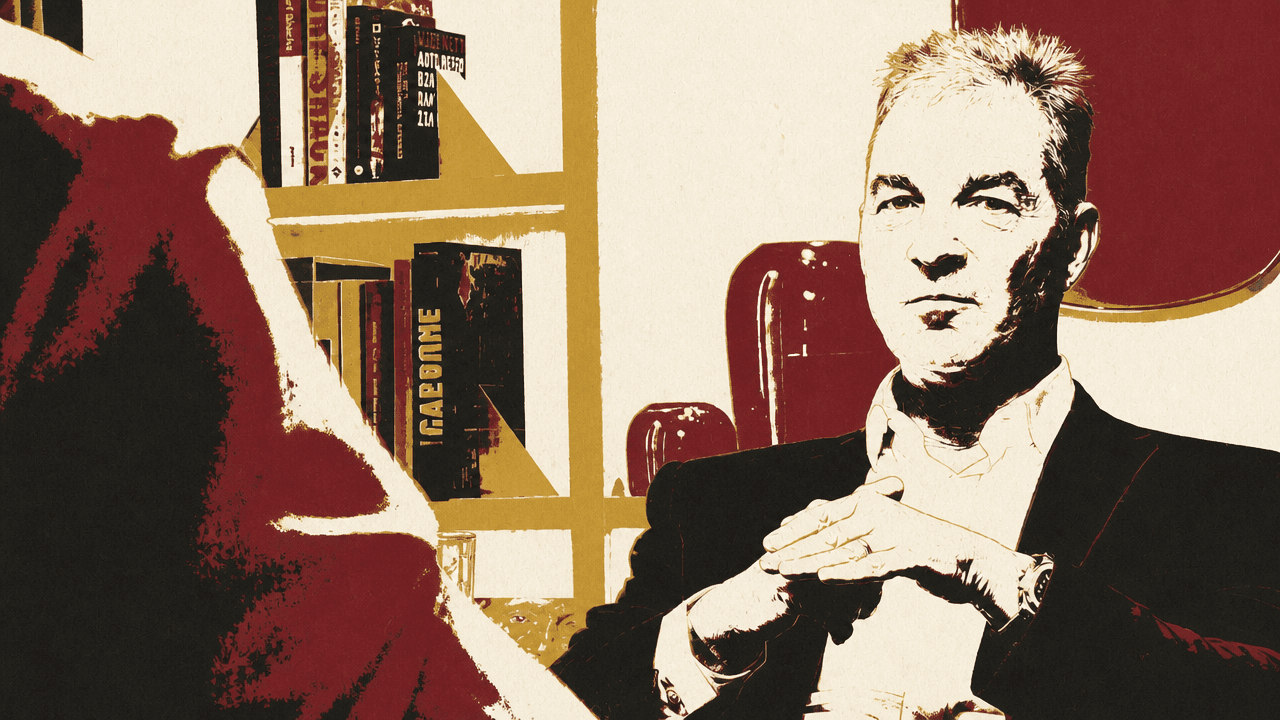
Dan Loeb, founder of Third Point, argues that investing has become inseparable from technology, with AI, semiconductors and energy now overriding much of the usual macro framework. In a conversation with Patrick O’Shaughnessy, Loeb traces Third Point’s shift from event-driven credit and deep-value situations toward quality businesses, thematic technology investing, activism and cross-capital-structure credit, while maintaining that markets still misprice companies because humans, governance failures and structural trading constraints have not gone away.
The job is no longer to avoid technology
Dan Loeb says there was a period when an investor could “punt on tech” and build a career in industrials, consumer, healthcare, or other parts of the market. He does not think that option exists now. Technology is too large, too compounding, and too entangled with the rest of the economy.


I think you have to be a tech person today. It's such a, it's a big and growing and compounding part of the economy. It affects everything else.
His current macro lens is correspondingly narrower than the usual dashboard. Growth, unemployment, inflation, rates, currencies, gold, and crypto still matter, but Loeb says two forces are “trumping” the standard macro categories: oil, because of war and geopolitics, and AI, because of the scale of infrastructure spending and its eventual impact on society and the economy.
Loeb does not present himself as a native technologist. His method is to talk regularly with people who understand the stack, then organize the opportunity from the bottom up: power and energy, chips and infrastructure, large language models, software, applications, and the effect on other industries. He credits Jensen Huang with laying out that mental model well, and says Third Point has expressed the theme through industrials, infrastructure, hyperscalers, and semiconductors.
The change in semiconductors is the most dramatic example. Loeb recalls that only a few years ago semis were “roadkill in the market.” That changed, he says, when Nvidia reported its March results three years earlier. Investors either owned the moment or had to catch up quickly. Now the analysis has shifted to how the Nvidia, Trainium, and TPU ecosystems develop; how their relative strength affects different hyperscalers; and how the foundational model companies fit into the larger structure.
He frames the current AI world through three unusually consequential centers of gravity: Nvidia, Anthropic, and “Elon World,” meaning Elon Musk’s companies collectively. That is not a complete map of the economy, but for Loeb it is a useful prism for understanding how capital, compute, infrastructure, and applications flow through the system.
Loeb rejects the comparison between the current AI complex and the dot-com bubble, at least for the leading companies he owns. His argument is not that there is no risk. It is that the central businesses are producing earnings, funding investment largely from strong balance sheets, and trading at valuations he considers far from late-1990s internet excess.
It's very different from the dot-com bubble, which we were short, you know, going into and had good numbers in those years.
Nvidia, in his view, can still be bought at attractive forward earnings multiples relative to its dominance and growth. Looking across Third Point’s semiconductor, capital equipment, and hyperscaler portfolio, Loeb says his instinct was to take profits after a large run. Instead, after reviewing valuations and growth rates, he concluded that unless one assumes the AI world “rolls over” around 2031 or 2032, the sector remains the most attractive place to invest. He says that is where the bulk of Third Point’s capital is invested.
The skeptical case is that value investors who did not evolve would see a classic bubble forming. Loeb’s answer turns on whether the AI capital expenditure earns a return. If the capex does not, the skeptics are right: the companies are flushing money down the toilet. But Loeb sees strong earnings, enormous cash generation, rapid adoption, and signs that corporations are only beginning to use the tools.
Anthropic is part of that conviction. Loeb points to its revenue growth, product usefulness, and stories about the next generation of models as reasons to believe the market may still be early. His position is not that every AI-linked company is durable. He says AI has already made some previously “super high-quality” businesses look less so. But he places himself in the optimist’s camp on the core transformation.
Third Point began in event-driven scarcity, then had to learn quality
Dan Loeb’s original investing framework came from credit, distressed debt, and event-driven investing. At Jefferies, he says he had a “laboratory” in which he could watch investors such as David Tepper before Appaloosa, Eric Mindich on Goldman’s trading desk, Angelo Gordon, and Farallon. The first lens was credit. On the equity side, the framework was not moat, return on capital, or business quality. It was event-driven value.
The canonical text for that world, in Loeb’s view, remains Joel Greenblatt’s You Can Be a Stock Market Genius. He describes the core pattern: a new security gets created through a spinoff, demutualization, privatization, post-reorganization equity, or similar transaction. The security is often cheap because existing holders either cannot own it, do not want it, or will not do the work. Liquidity is poor. The new management team often presents conservative numbers because its incentive package is being set at the time of the spinoff. The business may also have been under-managed inside a larger parent, with lower margins, weaker sales effort, and no direct incentives to optimize.
That combination created a repeatable opportunity. For roughly the period from Third Point’s 1995 founding through the early 2010s, Loeb says this was the firm’s “bread and butter.” It applied not only to spinoffs, but also to privatizations, demutualizations, newly created companies such as Visa and Mastercard, and large mergers where synergies could be analyzed.
Those opportunities still exist, Loeb says, but the better opportunity today is to combine that event-driven pattern recognition with a business-quality lens. The investors who struggled over the last decade, in his account, were often those who stayed too attached to deep value, low multiples, and a stubborn refusal to underwrite higher-multiple or growthier companies.
Third Point’s evolution involved opening itself to faster-growing businesses, better returns on capital, and higher-quality franchises. That forced a change in organization as well as philosophy: fewer generalists organized around transactions, more industry experts organized around durable themes.
Two books influenced this shift. William Thorndike’s The Outsiders helped Loeb think about managers who combine capital allocation with operating excellence, including companies such as Danaher and TransDigm. Lawrence Cunningham’s Quality Investing was, he says, even more eye-opening, because it laid out the case for owning high-quality businesses with strong moats and high returns on capital for many years.
The complication is that “quality” itself is no longer stable. Loeb says the prior year and the beginning of the current year were brutal for many companies that had appeared to be super high quality, because AI changed the durability of their advantages. The quality turn did not replace event-driven investing with a calmer doctrine. It created a broader standard: understand the transaction, understand the business, and keep revising the estimate of durability as technology changes the competitive set.
Acceleration has become a permanent condition
Dan Loeb dates one important shift in his own thinking to a 2013 Goldman Sachs dinner in Davos, where Eric Schmidt told the room that the recent acceleration in technological change was not an anomaly. Investors’ natural tendency, Schmidt warned, would be to assume disruption would return to a steadier pace. Instead, he said, they should “hold on to your seats,” because things would only accelerate.
Loeb says Schmidt was right. The same warning could have been repeated in 2017, in 2020, and again now. The pace has continued to accelerate, and AI appears to Loeb to be only at the front end.
That acceleration creates an information problem as much as an investment problem. Loeb says he does not have a perfect AI system that organizes all relevant information. He checks news relevant to the economy and to Third Point’s positions, tries not to become obsessed with minute-to-minute data, and aims to stay more strategic than tactical. But he also says humans need something like “essentialism,” borrowing from a book Brad Gerstner has discussed: the discipline to decide what matters most and ignore what does not.
If computers become vastly better than humans at ingesting data, recognizing patterns, and synthesizing analysis, Loeb is not certain what remains for the capital allocator. He says he does not know what the job will look like even six months or a year out, though he thinks capital allocators are “okay for the next couple of years.”
His baseline is that companies will still need to raise money, securities will still change hands, savers will still invest, borrowers will still borrow, and some human interface will remain. He doubts that there will be a fully AI-managed capital system. More importantly, he thinks many parts of investing involve negotiation, trust, and institutional context that are not just pattern recognition.
Restructurings are his clearest example. It is hard for him to imagine a computer sitting on a creditors’ committee, working through a capital structure, and transacting with other parties. Private equity, private credit, and restructuring sit on a continuum between liquid public securities and negotiated control or quasi-control situations. The closer one moves toward the latter, the more human interaction matters.
That does not mean AI is peripheral inside Third Point. Loeb says the firm is pushing people to use it because “the only way to get good at this is just to use it.” Third Point has brought in native computer scientists and AI experts to work on projects and coach the team. Some people run agents overnight and use large numbers of tokens. Others, including Loeb, use tools such as Claude more for queries. He sees Claude as an individual self-improvement tool: it gives back what the user puts into it and can increase autonomy for people willing to spend time with it.
Markets still create opportunity because humans and structures still misprice
Dan Loeb’s confidence that fundamental investors can still earn returns rests on two sources of inefficiency: human behavior and structural trading mechanics.
The human part is old. Loeb invokes Reminiscences of a Stock Operator and the line from Ecclesiastes that “there’s nothing new under the sun.” The recurring constants are hysterias, bubbles, panics, and the extremes of optimism and pessimism. AI could theoretically remove some emotion from markets, he says, but it might also reproduce emotion under the label of risk management or downside control.
The current semiconductor cycle illustrates his point. Semiconductors, semi-cap equipment, memory, and related businesses showed strong fundamentals. Expectations then became too high. Nvidia had a monster quarter three years earlier and investors piled in; after later strong or even shockingly good numbers, the stock fell and the sector went down. Micron, he says, had a phenomenal quarter that was far ahead of expectations, but the stock only rose a little before declining because expectations had outrun results. Meta had a similar Wile E. Coyote moment a couple of years earlier: a good quarter, a brief rise, then no incremental buyers.
For Loeb, those moments are precisely where human judgment matters. A fundamental investor has to decide what to do when fundamentals and stock prices diverge. That may require taking short-term pain and buying into weakness.
The structural part comes from market participants whose strategies are individually rational but collectively create anomalies. Loeb names quants, CTAs, and pods. Pod shops, in his description, can be excellent businesses for their managers and investors, but their risk metrics often force selling as prices fall. That is the opposite of the Warren Buffett idea that a falling stock can be an opportunity to buy more at a better price. The forced-selling behavior may be rational for a pod’s business model, but not for a long-term investor. Loeb expects such mechanics to continue producing opportunities for fundamental investors.
Corporate transactions and credit cycles add further sources of mispricing. There will be failures, bankruptcies, restructurings, financings, and situations where the right security in the capital structure is not obvious. Those are not tourist markets, in Loeb’s view. They require relationships, technical knowledge, and the ability to move across credit and equity.
Governance fails when status replaces fiduciary duty
Dan Loeb’s views on corporate governance began at home. His father was a securities lawyer, wrote books about governance, and served on the boards of Mattel and Williams-Sonoma. Loeb describes him as early on corporate responsibility: he visited factories used by those companies to make sure materials were ethically sourced and workers were treated well.
That background informs Loeb’s distinction between good and bad governance. He starts with a positive claim: the American capitalist system has a strong structure in which boards of directors are accountable to shareholders and responsible for management oversight, strategy, and key financial decisions. The board’s job is strategic, not tactical. Boards do not run companies; they hold management accountable.
Where the shortcomings within governance happen is when the board members lose sight of what their duties are as fiduciaries.
Governance breaks down, in his account, when directors lose sight of their fiduciary duties or lack the knowledge and diversity of talent needed to carry them out. It also breaks down when boards become distracted by responsibilities that are framed as separate from shareholder value. Loeb is careful not to say boards should ignore communities, products, employees, or proper conduct. His point is that those things should feed into shareholder value, not be set up as competing objectives.
He criticizes the Business Roundtable’s move away from shareholder primacy as a distraction from the board’s core duty. To Loeb, Milton Friedman’s and Warren Buffett’s views are compatible with caring about employees, communities, and conduct because those concerns can be part of creating long-term value.
The most common governance failure he has seen is personal loyalty to a CEO who is not up to the job. Directors allow their relationship with management to override their duty to shareholders. Third Point gets involved when capital allocation is poor, when management is not being held accountable, or when obvious changes are not being made. Loeb says that most of the time Third Point can work with existing boards and redirect them without taking board seats. The more public and contentious campaigns are the extreme cases.
Writing is one of the tools in those campaigns. Loeb defines good writing as clear thinking organized to produce a desired outcome. In activism, writing can attract other shareholders, shake up a board, and focus media attention. He lists the activist toolkit as financial levers, such as making a bid; legal levers, such as proxy contests, litigation, and information requests; and social pressure. Writing and public relations are, for Loeb, the best ways to create that social pressure.
Sotheby’s is his example of status overwhelming ownership logic.
Loeb says Sotheby’s was public but not really run for shareholders. It had high social status, a long history dating to the 1700s, and business practices that had not been modernized enough. It had also not fully recovered from an antitrust violation that spilled into criminal charges against the company and some individuals. The underlying business was good, but run “unbelievably unprofitably.”
Third Point pushed the board to implement basic business practices. Loeb says the CEO at the time had come up through the rug division, lacked deep art knowledge, and did not have deep relationships with collectors. Third Point gave him a year, then the board came to realize he was not the right person. Tad Smith, previously at MSG, was brought in, cleaned up operations, improved technology, and the company was eventually sold.
O’Shaughnessy identifies a pattern in Third Point’s activist targets: high-status companies or people not living up to that status. Loeb accepts that Sotheby’s fits the pattern, but broadens it. Board membership itself can become a status marker. If directors are there primarily for status or income rather than shareholder representation, activists can raise the cost of that arrangement.
Loeb is less enthusiastic about building an entire strategy around mediocre management today. There may be opportunities in sub-$2 billion market cap companies, including cases of B+ management that is not optimizing. But he describes it as a negative-selection process. Third Point would rather invest in a great company with excellent management and “cheer them on” than find a company where mismanagement is the entire thesis. If the visible problems are severe, there may be ten times more hidden problems.
The advantage is seeing the whole capital structure
Dan Loeb distinguishes the hedge fund, which began with $3 million and is now about $9 billion, from the broader collection of businesses around it. The hedge fund is roughly 30% credit, though exposures move around, and the equity book is often around 110% long and 30% to 40% short. In periods of stress, such as around the war he references, the fund has reduced risk and at one point had more credit than equity for the first time since 2009.
| Business or pool | Approximate size or role | Loeb’s description |
|---|---|---|
| Hedge fund | $9B | Loeb is the portfolio manager; roughly 30% credit, with exposure changing over time. |
| CLO business | $7B | A separate credit business with its own portfolio management. |
| Structured and corporate credit | Close to $3B within Third Point | Part of the hedge fund’s credit exposure. |
| Insurance-related credit | About $1B managed for an insurance company | Credit assets managed against insurance liabilities. |
| Asbestos liabilities | A couple billion dollars | Managed in a separate pool. |
| Private credit | Small and newly started | A newer business with its own portfolio management. |
| Venture capital | No size stated | Part of Third Point’s broader ability to evaluate businesses across stages. |
Loeb pushes back on the idea that he is the single portfolio manager across all of those assets. He is the portfolio manager of the hedge fund. The private credit, CLO, structured credit, and high-yield businesses have their own portfolio managers. He gets involved when an opportunity is especially interesting.
The unifying concept is value across the life cycle and across the capital structure. Loeb says the job is to value enterprises whether they are early-stage, mid-stage, or mature, and then invest in the “fulcrum” security—the one with the best risk-reward. In early-stage companies, that is usually equity. In a stressed or restructuring company, it may be senior debt, junior debt, preferred stock, or equity.
Credit Suisse is his example of capital-structure choice. During its troubles and sale to UBS, investors could buy preferred shares, holding-company paper, or operating-company paper. Loeb says the fulcrum was the HoldCo paper because it had the most upside. The OpCo paper, which was more senior, also did well. The preferred was wiped out.
This cross-asset view shaped Third Point’s investments in Twitter and xAI debt. The firm had enough knowledge of Twitter and xAI to estimate the equity value of both businesses without necessarily deciding to own the equity. When Morgan Stanley resold the Twitter financing debt from Elon Musk’s acquisition, much of the credit market was nervous despite the paper trading around 96 or 97 cents on the dollar and yielding roughly 12%. Third Point was comfortable enough with the business value and fundamentals to make it, at the time, its largest credit position.
xAI’s debt financing was even less natural for traditional credit investors because the business had no cash flow, $2 billion of revenue, and a $20 billion enterprise value. Loeb says Third Point underwrote it as credit investors while drawing on private-investing knowledge of the business. In his telling, the opportunity came from evaluating the enterprise across both private-company and credit-investing lenses, then choosing the security that offered the right risk-reward.
That flexibility is also why Loeb thinks credit is hard for equity-oriented firms to add casually. He grew up on a trading desk. Bonds are relationship markets, not just electronic markets. Third Point’s CLO expansion gave it deeper access to the broadly syndicated loan market, and the firm also watches structured credit. Loeb describes high yield and broadly syndicated loans as roughly trillion-and-a-half-dollar markets each, with structured credit around $6 trillion. These are not markets for “tourism.” When real dislocations arrive, the advantage belongs to firms already present, with relationships and understanding.
Japan showed both the promise and difficulty of activism outside the U.S.
Dan Loeb sees attractive hunting grounds outside the United States, especially in Korea, Taiwan, and Japan. Israel is a smaller niche market where one of Third Point’s top investments has performed well despite the war. Europe is more difficult in his view because of the regulatory environment and a different attitude toward business and capitalism. Third Point owns some European businesses, including Rolls-Royce, ASM, and ASML, but Loeb is more cautious on companies dependent on local European economies.
Sony is the central example of non-U.S. activism. At one point, Third Point owned 7% of the company. Loeb says Sony was then a conglomerate containing studios, semiconductors, life insurance, consumer electronics, and other assets. Third Point urged management to separate businesses and, at minimum, remove the insurance business.
The first Sony campaign paired a large presentation to management with a media strategy. At the end of the meeting, Third Point told Sony it had shared its investment thesis with the New York Times. Andrew Ross Sorkin had written the story and agreed to embargo it until the Japanese market closed. Loeb recalls Sony management panicking when told about the article. The company had already arranged for Third Point to tour its innovation center, and during the tour the story spread widely while Loeb and his team watched on their BlackBerrys.
Sony pushed back on Third Point’s recommendations, but Loeb says that over roughly five years the company implemented many of them one by one. It broke out the semiconductor business and partially spun out, or planned to spin out, financial services.
The broader lesson was that activism in Japan is hard, but not hopeless. On one early trip, Loeb met with the prime minister and with Yoshihide Suga, then a key political figure. Loeb offered to write a paper explaining why activism would be good for Japan. The government had released the “Three Arrows” program focused on fiscal, monetary, and restructuring policy. Loeb’s suggestion was to include corporate governance and return on invested capital as part of the reform agenda.
Back in New York, Loeb worked with Larry Lindsey and Niall Ferguson on a three-person paper for the American Enterprise Institute, which was later picked up as a Wall Street Journal editorial. Loeb says the governance emphasis was adopted. His broader read is that the government and shareholders wanted reform, while management teams were more entrenched. Since Third Point’s first trips, he says Japan has made progress: cross-shareholdings are being unwound, companies trading below book value are being penalized, and corporate governance is moving in the right direction.
Danaher taught Loeb what an operating system looks like
Of all Third Point’s investments, Dan Loeb says Danaher may have been the most instructive. It was one of his earliest experiences investing in a very high-quality business that had internalized best practices into a corporate operating system.
Loeb and his then-partner Munib arranged for Danaher to condense its five-day Danaher Business System training into a one-day version for them. The investment worked for about four years, but the more durable value was observing how the company improved its business quality: shedding lower-quality businesses, buying higher-return, higher-margin businesses, and shifting from general industrials toward healthcare.
The investment eventually stopped working. COVID produced order surges, inventory increases, and later corrections. Tailwinds became headwinds, and Loeb says Danaher still had not fully emerged from that cycle. Third Point sold, then recently bought back in on a smaller scale after a sell-off.
What stayed with him was the operating philosophy. Danaher did not merely say it believed in Kaizen or continuous improvement. It had a system for implementing improvement across the organization. Loeb says “cult” is too strong a word, but the company had a strong identity and culture.
The most striking practice was how Danaher handled underperformance. The company held people individually accountable and made underperformance visible. But because the problems were considered addressable and fixable, finding underperformance could be celebrated rather than treated as shame. The message was: these are the things going wrong, and they can be fixed. Danaher applied that logic repeatedly across operations and working capital. Loeb describes walking around a plant and seeing everyone aligned around the same improvement process.
The Danaher lesson connects back to Loeb’s own internal approach. He repeatedly emphasizes continuous improvement, both for individuals using AI and for organizations building repeatable systems. Danaher gave him a concrete example of a company where culture, accountability, capital allocation, and process were not slogans but an operating discipline.
The insurance vehicle matters as much as the investing idea
Dan Loeb’s insurance strategy began with a de novo Bermuda reinsurance company in 2010, backed by Loeb, Kelso, and Pine Brook. The original thesis was to write reinsurance, invest the float in a barbell of Third Point and Treasuries, defer taxes, and get leverage on capital. Greenlight Re was then trading at 140% of book value, and Loeb thought the model could be the future.
The underwriting business turned against them. Property and casualty reinsurance deteriorated, and even strong years at Third Point were partly consumed by offsetting insurance losses. Loeb eventually concluded that the idea of using insurance liabilities was right, but the insurance vehicle was wrong. Instead of P&C reinsurance, he says, they should have focused on plain-vanilla annuities.
The constraint is that annuity assets cannot be invested in a hedge fund. They can invest only in credit-like assets. By the time Loeb reached that conclusion, Third Point had already spent years building structured credit, corporate credit, and other rated or insurance-appropriate strategies after its reinsurer stopped investing in the hedge fund. That gave the firm a base for the pivot.
Third Point merged its reinsurance company into a UK closed-end fund, Third Point Offshore Investors, reincorporated the business from Guernsey to Cayman, and repurposed it from a closed-end investor in Loeb’s hedge fund into an insurance company. That company still has some hedge fund exposure but now owns the reinsurance company and can pursue more reinsurance deals and issue primary annuities.
Third Point then manages assets for the structure in private credit, structured credit, whole-loan mortgages, real estate direct lending, investment-grade corporate debt, and private investment-grade credit. The equity of the business can also be invested in junior tranches of structured financings and growth equity.
For Loeb, the lesson is that the liability side determines the investable universe. P&C reinsurance paired with a hedge fund sounded attractive when the float could sit partly in Third Point and partly in Treasuries, but underwriting losses overwhelmed the elegance of the structure. Annuities create a more credit-oriented asset base, which fits the firm’s later buildout in structured credit, corporate credit, mortgages, private investment grade, and direct lending.
FTX exposed a basic diligence gap
Dan Loeb calls FTX the hardest investment lesson of his career. The company looked great: fast growth, activity that investors believed they could verify on-chain, and a strong cap table. Third Point was not alone in the investment. But Loeb says “it wasn’t what we thought it was.”
I will say that now our due diligence process, we definitely like check bank balances and do like the most basic due diligence that probably would have, you know, turned stuff up on this.
The experience was painful partly because it violated his general experience with venture-backed companies. He says the capitalist system’s ability to fund interesting ideas is remarkable, and most people are good actors with good intentions. Third Point had rarely had a comparable mishap. The FTX case changed what Loeb says Third Point now checks, though he phrases the lesson probabilistically: bank-balance checks and other basic work “probably” would have turned things up.
He does not resolve whether Sam Bankman-Fried was primarily a criminal or very sloppy; he uses both descriptions. He also makes a striking concession: had Bankman-Fried not been “a crook or very sloppy,” his venture investments would have been extraordinary. Patrick O’Shaughnessy calls him “the best venture investor of this era,” and Loeb lists Cursor, Anthropic, Solana, and others as evidence that he had “a great nose for value.”

FTX was not the only recent lesson. Loeb says Third Point has made strong short investments in businesses disrupted by AI, but also made mistakes by assuming certain information-services businesses were protected by proprietary data or insulated from AI disruption. In those cases, the firm thought it knew better. He still expects a shakeout in which some survivors rise from the ashes, but says that has been one of the investment lessons of the last year or so.
The great analyst now has to find the real business
Dan Loeb contrasts today’s great analyst with the version that mattered 20 or 30 years ago. In the earlier era, a great analyst could build a model quickly and understand a complicated restructuring. He uses his own Jefferies experience as an example. After Drexel Burnham went bankrupt, a disclosure statement three or four inches thick circulated among investors. Nobody could “crack the code.” Loeb, then relatively new, spent a weekend studying it and concluded that Drexel claims were one of the great bankruptcy investments because assets were understated, claims were overstated, and different value pools were misunderstood.
That kind of complexity still matters, but it is no longer enough. The analyst Loeb values today is more like a junior version of Gavin Baker: someone who understands a company, an industry, and the nuances of a technology. And not only technology.
His example is Casey’s General Stores. The stock performed like a technology company, but the key insight was that Casey’s was not just a convenience-store chain. It was, in Loeb’s phrase, “a pizza chain kind of masquerading as convenience stores.” An analyst went to Texas, ate the pizza, and saw the business reality directly.
The lesson is that modeling and document work remain useful, but alpha increasingly comes from identifying what a business actually is before the market’s category system catches up. That may mean understanding AI infrastructure, or it may mean recognizing that a convenience store’s economics are driven by prepared food. Either way, the analyst has to see through the label.
Optimism, credit, and relationships define the next decade
Dan Loeb thinks Third Point is more optimistic than many peers about AI’s net effect. He is “less pessimistic” about an AI apocalypse and believes the technology will create opportunities and net jobs, even as some roles disappear and others emerge.
The firm’s other distinctive trait, in his view, is the ability to default into credit. Third Point has not faced a full recent credit cycle, but Loeb says he is comfortable investing in highly stressed periods. In 2020, Third Point’s good year did not come from simply piling into stocks. It came in part from buying investment-grade credit when it was dislocated.
Asked what excites him about the next decade, Loeb does not point to a single asset class. He points to the breadth of the job: studying industries, technology, consumer behavior, the U.S. economy, politics, and other regions; traveling to the Middle East; and forming relationships with people building interesting things. He describes the Middle East as perhaps the most vibrant and interesting part of the world, naming Bahrain, the Emirates, Saudi Arabia, Morocco, and Azerbaijan as countries whose growth rates and embrace of technology have surprised him. In Loeb’s own formulation, it would have been hard to imagine 20 years ago, or even three years ago, that those countries would be “better allies to the US than NATO.”
The worry is more personal than professional. Loeb says he is not especially worried about the business, because Third Point has process and invests in things with value. He worries about not having enough time for family, surfing, and reading.
The final theme is kindness, which Loeb connects to the relationship-driven parts of investing that AI is least likely to erase: trust, empathy, access, and long memory. He says kindness should be elevated alongside honesty, truthfulness, intelligence, cleverness, and innovation. It enables deeper relationships, helps people learn from one another, and, in his words, ultimately benefits business too. The real test is being kind to people when there is no obvious way they can help you.
His own example is a friend, Carter, who let him sleep on his couch when Loeb was between jobs before Jefferies. After Loeb got the Jefferies job, he suggested distressed-debt investments to Carter, who trusted him with a few hundred thousand dollars. That capital grew to well over a million dollars and was then rolled into Loeb’s fund, helping him start Third Point. Loeb closes with a line he attributes through Gavin Baker to Palmer Luckey: “The one thing money doesn’t buy you is friends that believed in you when you had nothing.”