SpaceX, Anthropic, and OpenAI Listings Could Reshape AI Governance


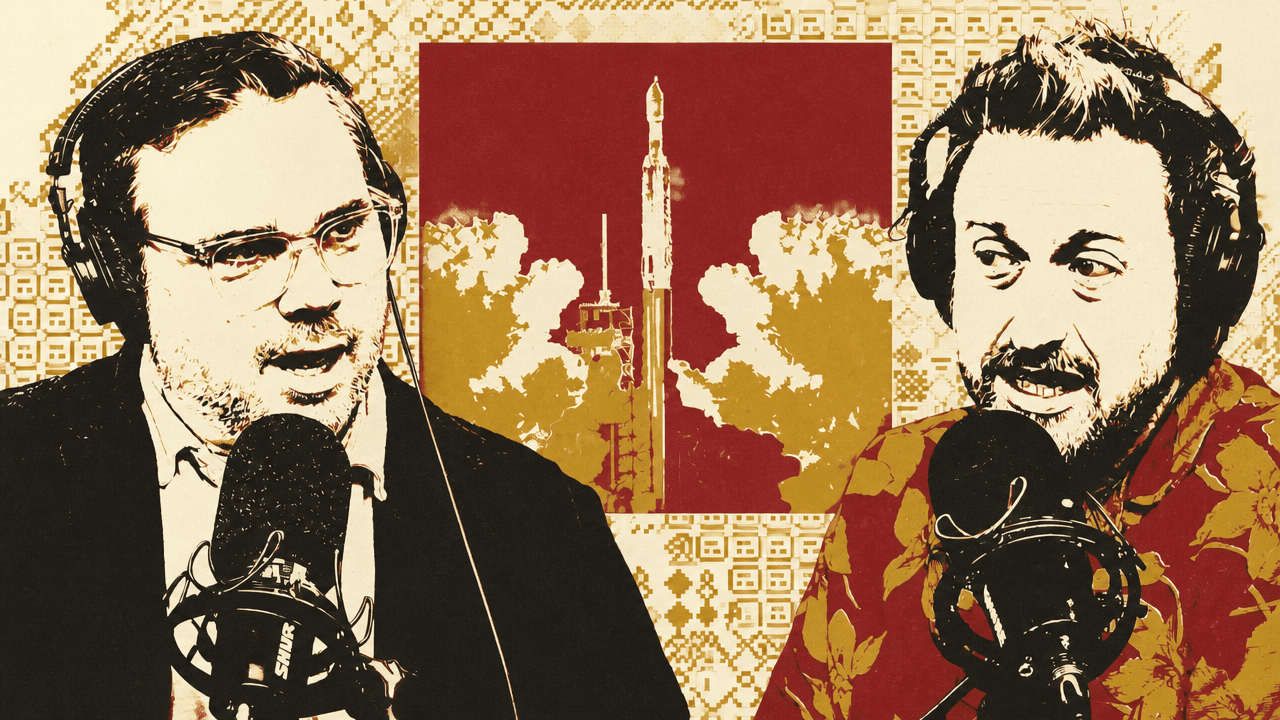
Kevin Roose and Casey Newton argue that the expected IPOs of SpaceX, Anthropic and OpenAI would turn the AI boom into a public-markets event with consequences far beyond Silicon Valley insiders. On Hard Fork, they say the listings could mint vast private fortunes, reshape San Francisco housing and philanthropy, and force ordinary index-fund investors into companies whose governance and safety choices remain unsettled. The episode then turns to Kevin Hartnett, who says recent AI advances in mathematics have moved from benchmark wins to publishable research, leaving mathematicians divided over whether the technology is a tool, a threat, or both.
The new public markets race would turn private AI fortunes into public infrastructure
Kevin Roose and Casey Newton frame the next phase of the AI boom less as a product cycle than as a capital-markets event: SpaceX, Anthropic, and OpenAI are all moving toward public listings, with the possibility that the market is about to see three of the largest IPOs in history.


SpaceX appears furthest along. Newton says the company plans to sell shares at $135 each and raise $75 billion, which would make it the largest IPO ever. He says the offering would value SpaceX between $1.75 trillion and $2 trillion, putting it immediately among the world’s largest companies.
The company being offered to public investors is not simply a rocket company. Roose describes SpaceX as an Elon Musk conglomerate that now includes rockets, Starlink, xAI, and X, the social network. That bundling matters because investors are being offered exposure not only to the mature space and satellite-internet businesses, but also to Musk’s AI and social-network ambitions.
Newton separates the bundle sharply. In his view, SpaceX contains “two great businesses” and “two terrible businesses.” The great businesses are reusable rockets and Starlink. The rocket business has a serious moat, he argues, because building a comparable launch company is exceptionally difficult. Starlink, meanwhile, benefits directly from SpaceX’s ability to launch satellites and has become a powerful global internet-access system. The weak businesses, in Newton’s telling, are xAI and X.com.
Roose adds that xAI may be repositioning itself. The compute that xAI originally built for itself is now being rented out to Anthropic, another company expected to go public. That allows SpaceX to be presented as a space company with a kind of AI “neo-cloud” business attached, plus a social network still pitched as an eventual everything app.
Anthropic’s path is more startling because of how recently it looked like the opposite of an IPO machine. Roose recalls visiting the company in 2023, when it was a small, earnest, safety-obsessed group in a Jackson Square walk-up office, not merely ambivalent about making money but seemingly resistant to the idea. Three years later, Anthropic has confidentially filed its S-1 and is expected to go public at a valuation above $1 trillion.
Newton points to the speed of the revenue change. He says that in January 2025 Anthropic had an annualized revenue run rate of about $1 billion, and that more recently the figure has been described as $50 billion. Whatever the exact number is by the time it lists, he calls the growth unprecedented in Silicon Valley.
OpenAI is less defined in the discussion because Roose says little is known beyond reports that it is preparing to file IPO paperwork soon and that the listing is expected to be enormous. But taken together, the three prospective offerings raise the same question: what happens when companies that have been private, concentrated, and culturally unusual become unavoidable public-market assets?
San Francisco may get richer and feel poorer
The immediate local effect, Roose argues, will be felt in San Francisco, where two or “two and a half” of the companies are based, depending on how one counts SpaceX’s presence across San Francisco, Texas, Southern California, and elsewhere. The listings would mint hundreds or thousands of new millionaires, deca-millionaires, and centi-millionaires, with consequences for the city’s tech scene, housing market, and social hierarchy.
Newton’s worry is not only that inequality will grow in a city already marked by it. It is that the IPOs may create a new scarcity psychology among people who, by normal measures, are already successful. He says he hears from friends with very good jobs, sometimes paying mid-six figures, who are looking at early employees at OpenAI and Anthropic and beginning to wonder whether they missed the defining opportunity of the era.
When Newton arrived in San Francisco in 2010, he says, the city had a sense of abundance: anyone could do a startup, and many tens of thousands of people could imagine building the life they wanted. The new mood he detects is different. If someone did not get into one of a handful of AI companies early, “your future is in doubt.” Newton is careful not to say that this feeling is objectively true. He says it is the anxiety he is hearing.
Roose agrees that it is hard to feel sympathy for highly paid engineers comparing themselves with slightly richer peers. But he argues that the comparison still reveals a real status-anxiety moment in Silicon Valley. People who did not feel precarious a year or two ago now do, because the wealth being created at the fastest-growing AI companies is so extreme that it resets local expectations of success.
Newton’s broader concern is social. In a healthy society, he says, opportunity should be spread broadly enough that people feel they have a chance to live the lives they want. If the economy instead produces a small set of lottery winners who are the only ones with that freedom, the result is instability.
Housing is where this anxiety becomes concrete. Roose says he predicted at the end of the previous year that 2026 would be the last year to buy a house in San Francisco, because AI IPOs would make employees wealthy and push them into the market. He says that appears to be happening: the real estate market is “going nuts,” with homes selling for many multiples of their asking price. One story cited on-screen described a San Francisco seller seeking OpenAI or Anthropic stock for a $3 million home rather than cash. Newton’s response is that the seller may be rational: there is a real chance that stock will appreciate faster than the house.
The IPOs could redirect philanthropy at a scale institutions are not built to absorb
Roose argues that one of the stranger effects of these listings will be philanthropic. Many employees at the companies, especially Anthropic and to some extent OpenAI, are connected to effective altruism or adjacent philanthropic movements. The basic idea, as Roose describes it, is to make a large amount of money and then give it away in the highest-impact way possible.
That creates a question for nonprofits, philanthropies, and donor-advised networks around San Francisco: what happens if tens or hundreds of billions of dollars in new charitable capital arrive in a short span? Roose cites a post by Nan Ransohoff calling this a “third wave of American philanthropy,” in which AI wealth could flood into charitable causes. The concern is not simply where the money goes, but whether the institutions exist to absorb and allocate it well.
Newton says Ransohoff’s post helped make clear both the scale of expected capital and the lack of infrastructure for it. He points to one Anthropic practice that amplifies the effect: from the beginning, he says, Anthropic told employees that if they pledged a percentage of their equity to philanthropy, the company would match it.
Roose specifies two Anthropic mechanisms. First, he says all eight co-founders pledged to give at least 80% of their wealth to charity, potentially earmarking hundreds of billions of dollars. Second, Anthropic’s stock-matching program matched employee stock pledges to charity share for share, and in some cases matched early employees three to one. Roose says the numbers suggest something larger than the Gates Foundation could appear every year for several years.
The money may fund causes that look strange from the outside. Roose mentions the running joke that it will be a good year for shrimp welfare, a cause associated, partly jokingly, with effective altruist circles. More straightforwardly, he says it could be a major moment for global health, pandemic prevention, AI safety, and other cause areas closely tied to effective altruism.
Newton’s reaction is more acidic: after the weakening of the social safety net and cuts to pandemic preparedness, San Francisco billionaires may now step in to rebuild pieces of it “hand by hand.” The joke carries a tension in the source: the money may fund socially valuable work, but it does so through an extraordinarily concentrated private-wealth channel.
Public companies may be more transparent, but shareholder pressure changes AI safety
Roose’s central worry about the IPOs is not that the stocks are speculative or that investors might lose money. It is that public ownership could make AI safety harder.
OpenAI and Anthropic, he notes, were founded by people concerned about AI safety and about whether a for-profit corporation could develop powerful AI safely. OpenAI has already had a governance struggle that included Sam Altman being fired and rehired. Anthropic structured itself as a public benefit corporation in part to lessen the influence of shareholder capital and fiduciary duty on safety-related decisions.
Roose says those constraints become harder once the companies are publicly traded. If a company develops a model it believes may be dangerous, the decision not to release it would no longer be weighed only against the views of founders, employees, or private investors. Public markets, activist investors, index-fund holders, and retirement accounts would also be in the room, indirectly but forcefully. Roose worries the structure around the companies will push them toward acceleration.
Newton asks whether public benefit corporation status matters. Roose says it is probably better than nothing: it gives companies more room to consider social responsibility and makes it harder for investors to sue over certain decisions that do not maximize shareholder interests. But he emphasizes that they are still corporations. When “the rubber meets the road,” a public benefit corporation still operates under shareholder pressure.
Newton offers a countervailing possibility. Shareholder pressure can also run in the other direction. If a lab released a model capable of creating a new bioweapon, shareholders could sue, arguing that they trusted the company to release only safe models. In that sense, public-market pressure might sometimes discourage reckless releases rather than encourage them.
Newton also argues that going public could introduce a limited form of democratic oversight. Public companies must report earnings, disclose financial information, and update investors as products and businesses change. Shareholders may be able to vote on some matters. Compared with the present, where the public has few levers beyond opposing data centers in their communities, he suggests public-company obligations could create new forms of visibility and influence.
Roose is less worried than some critics about index providers loosening rules to include newly public AI companies sooner. He explains that indexes such as the Nasdaq 100 and S&P have had “seasoning periods” that kept very new public companies out of major stock indexes until they proved stability over months or a year. Those rules have been relaxed or may be relaxed partly because of the coming IPOs. Some see that as exposing retail investors to volatile AI stocks too quickly. Roose’s view is that investors want exposure, and broader public participation in the AI upside may be better than keeping the gains concentrated among insiders and private investors.
Newton goes further. In a world where people can buy Bitcoin exchange-traded funds and place risky bets on prediction markets, he says ordinary investors who believe in OpenAI should be able to buy a share. More broadly, he says it is necessary that the wealth and power of the AI boom be shared more broadly than a tiny group of private shareholders. An IPO is a small step, but in his view a necessary one.
AI has moved from math contest results to publishable research
The discussion of AI and mathematics begins from a specific recent milestone. Roose says OpenAI announced on May 20 that one of its models had disproved a long-standing discrete-geometry conjecture by finding a new way to approach a famous Erdős problem that no human mathematician had considered before. Around the same time, a group of mathematicians circulated and signed the Leiden Declaration on Artificial Intelligence and Mathematics, an open letter urging caution about AI’s role in the field.
Kevin Hartnett, author of The Proof in the Code, says the International Mathematical Olympiad had long served as an AI benchmark. In 2024, Google DeepMind achieved a silver-medal score, which was treated as a small watershed. In 2025, DeepMind, OpenAI, and Harmonic all reported gold-medal-level scores. But Hartnett stresses that even the hardest high-school math in the world is still nowhere near frontier research mathematics.
For nonmathematicians, Hartnett says, that distance can be hard to appreciate. The IMO is “0% of the way to the frontier” of research math. It showed proof of concept, but it did not establish that models could do serious research.
Why did labs focus on math at all? Hartnett says the answer is both research prestige and model capability. The “IMO grand challenge,” a phrase he attributes to a Microsoft Research researcher, asked whether models could do impressive math. But labs and startups also believe that teaching a model to reason through math problems will improve its reasoning elsewhere. He compares it to the standard justification for learning math in school: not only to balance a checkbook, but “to teach you how to think.” If a model can reason logically through math, labs expect that skill to transfer to more commercially valuable tasks.
The models’ progress has been rapid. Hartnett recalls that when ChatGPT came out in November 2022, mathematicians circulated examples of the model making basic mathematical mistakes: saying there were only finitely many primes, or mishandling simple arithmetic. Since then, he says, the models have simply become better, helped by reinforcement learning on math problems and by broader general improvement in model quality.
The Erdős problems became attractive once the IMO benchmark had been reached. Paul Erdős, whom Hartnett calls “the Bob Dylan of math,” spent his life traveling among mathematicians, sleeping on couches, and compiling lists of problems he found interesting or invented himself. He left more than a thousand such problems, often with small monetary rewards attached. AI labs looking for new targets after the IMO and the Putnam exam set models to work on them.
But Hartnett says mathematicians did not treat every “solved Erdős problem” announcement as a serious advance. A problem can be unsolved, old, and associated with a famous mathematician without being important. Important problems either change how mathematicians view the field or require new methods that reshape it. Many Erdős problems, Hartnett says, were viewed more as sophisticated riddles or numerical puzzles.
The OpenAI result on the unit distance conjecture was different. Hartnett says many mathematicians regard it as one of the most important Erdős problems. People had seriously tried to solve it. The methods behind the proof were sophisticated and surprising, not just a clever assembly of standard techniques. The result was good enough, in his telling, that people broadly agreed it could be published in the Annals of Mathematics, the top journal in the field.
That changes the argument. Over the past year, Hartnett says, the goal posts have repeatedly shifted: AI can do this, but not that; then it does that, and the boundary moves again. AI has not solved a Millennium Prize problem, he notes. But the unit distance result shows that AI can do “absolutely top-tier research.”
Mathematicians do not agree on whether AI is useless, a jetpack, or a replacement
Hartnett describes three attitudes among mathematicians. Terence Tao, whom Roose calls widely considered the greatest living mathematician, sits in the middle camp. Tao has experimented publicly with AI systems, moving from a view that they were not especially useful — perhaps like a mediocre graduate student — toward a view that they may be revolutionary for frontier research. Roose describes Tao’s recent framing as reducing cognitive friction: a mathematician can try many speculative ideas, hand them to a model, and ask it to test whether anything is there.
Hartnett says Tao represents the “jetpack for your thoughts” view: AI as an Iron Man suit that lets mathematicians do more, better, and bigger work than before. Tao is especially important in this debate because he is intensely collaborative and interested in new ways of doing mathematics. Hartnett’s own book includes a chapter on Tao’s early work with AI around “equational theories.”
But Hartnett says mathematicians are far from unanimous. At the Institute for Advanced Study in Princeton, which he calls the citadel of modern math, he spoke in one afternoon with two top mathematicians around age 40 who held sharply opposed views. One had tried Gemini, watched it assert something known to be false, closed it, and returned to doing math the old way. Another said he believed that within two years AI would put mathematicians out of business because it would be strictly better at all of it.
Hartnett suspects that if mathematicians were polled, the replacement view would finish last. Tao’s middle position would likely finish first. The view that AI is good for nothing might have won a year earlier, he says, but is now falling.
That middle position is not complacent. Tao signed the Leiden Declaration, the document Roose describes as a worried statement signed by hundreds of mathematicians, with the on-screen count showing 1,475 signatories. Roose characterizes it as objecting to irresponsible or reckless AI use in mathematics, especially the production of plausible but unreliable or incorrect arguments that can be hard to distinguish from valid proofs.
Hartnett says the declaration reflects the anxiety of a community that has largely regulated itself for centuries and now faces a massive external force. Mathematicians want to defend the field, set guardrails, and assert that outsiders do not get to decide what matters or how mathematics should operate.
The declaration is trying to do two things, Hartnett says. First, it is part of the broader professional adjustment to AI: setting disclosure norms and rules of the road. If AI is used in writing a proof, mathematicians want that disclosed. The math arXiv, he says, has already issued a statement warning that if a submitted PDF contains unedited AI artifacts — for example, prompt metadata copied into the document without review — the submitter can be banned from the platform for a year.
Second, the declaration expresses a deeper fear about incentives. The types of problems large language models are good at may not be the types of problems mathematicians value. Hartnett says mathematicians worry that attention and money will flow to the problems AI can solve quickly, steamrolling the field’s own priorities.
The threat is not only slop; it is loss of human direction and status
Newton asks whether the Leiden Declaration is mainly a “slop” problem: AI can generate so much plausible work that it overwhelms the people doing careful, talented work. Hartnett’s answer is sharper. If AI can generate proofs that are genuinely good, readable, and impressive, then mathematicians may no longer have professional reason to exist, except as hobbyists, like great chess players after machines surpassed them.
The anxiety is partly economic, but Hartnett says it is also existential and cultural. Mathematicians have possessed something rare for a long time: great mathematical ability. If that ability becomes broadly available through machines, it is a strange loss of status and identity. The field also believes its norms and practices have produced basic discoveries with downstream importance for physics, engineering, technology, and the human understanding of the universe. If AI reshapes the incentives badly, the fear is that those benefits could be damaged.
Hartnett also describes math as a quintessential human endeavor, comparable to writing a sonata or a novel. If a proof has no human behind it who wrestled with it, mathematicians worry that something essentially human is lost.
Roose pushes back that writers and musicians do feel threatened by AI, too. Hartnett concedes that people may be less interested in a novel if they know it was written by AI. The difference, implied in the exchange, is that the value of a proof may be less obviously tied to its human author than the value of a novel or song. If the proof is correct and powerful, the field may have to decide how much the human struggle behind it matters.
Newton raises another possible view: if mathematics is discovered rather than invented, why would mathematicians not welcome AI as a way to accelerate the field toward its end point? Hartnett says the invented-versus-discovered debate is enduring. Tao once answered that doing math feels like creating something, though he ultimately viewed it as discovery. But Hartnett says mathematicians do not worry that AI will exhaust mathematics. We effectively know “0% of all the math there is to know,” he says, and there is vastly more out there.
Asked whether the future is principled resistance or bittersweet acceptance, Hartnett says no one knows. He frequently asks mathematicians where the field is going, and no one has a firm answer. His own speculation falls with Tao’s middle camp: human beings will continue to direct machines in important ways, including choosing which problems to pursue. Math will look very different and will have to adapt, but he finds it hard to believe that an activity so central to human life will simply disappear and be replaced by pushing a button.
The week’s smaller stories pointed to the same governance problem
The closing news roundup moves quickly, but its stories echo the larger concerns about AI, automation, and systems being deployed before norms and rules catch up.
A San Francisco robotics startup, the Bot Company, is accused in a lawsuit of secretly testing robots in Airbnbs and damaging them. Roose describes a house owner who saw black cables taped to walls, a man at a laptop beside what appeared to be a robot, and later found the house in disarray after an 11-day stay. The owner is seeking $12,383.50 in damages. Newton is unsympathetic to Airbnb landlords and jokes that empty short-term rentals might as well be used by robots, while Roose insists that bringing “robots in body bags” into someone’s rental under false pretenses should not be acceptable.
The Trump administration’s new AI executive order receives a more direct governance critique. Newton says the order asks technology companies to voluntarily give the government oversight of new AI models before public release. An earlier 90-day review window was cut to 30 days, a change he says was enough for former White House AI czar David Sacks to support it. Newton’s objection is that the review remains voluntary. In his view, frontier models should be subject to mandatory required testing before being released to the public. Roose says the state of AI regulation still feels like “the vibes universe” until something is passed into law and signed.
Prediction markets appear repeatedly as examples of incentives colliding with privileged information. Roose says federal authorities are investigating whether former Representative George Santos bet on whether he would attend President Trump’s State of the Union address after publicly suggesting he would attend, then not attending. Kalshi referred the matter to the Justice Department and the CFTC. Newton treats the alleged behavior as absurdly on-brand and jokes that everyone should get “one for free” if they trick people into losing money on a prediction market.
A separate Variety story about Survivor brings the same concern into entertainment. Jeff Probst argued that Kalshi and Polymarket are incentivizing people to “lie, cheat and steal” after markets showed Aubry Bracco with an above 80% chance of winning before the season premiered. Newton says prediction markets incentivize betrayal by friends, family, coworkers, and possibly one’s country. He notes that there is no information proving a Survivor crew member leaked the outcome, but says the existence of such markets makes everyone suspicious and contributes to a low-trust society. Roose adds that a Google engineer was also charged with using inside information to make a million dollars on Polymarket by betting on what users were searching for.
A 404 Media story adds a security version of the same theme. Newton says hackers claimed they used a Meta AI support chatbot to take over high-profile Instagram accounts by asking it to change the email address associated with the target account. The claims coincided with takeovers of accounts including the Barack Obama White House account, the Chief Master Sergeant of Space Forces account, and Sephora’s account. Roose jokes that an earlier Meta AI persona, “Nasty Nancy,” would have protected account integrity, while Newton says the story may finally identify something Meta AI is good for.
The lightest story is also about automated systems misreading signals. A United flight from Newark to Mallorca turned around after the crew repeatedly asked passengers to disable Bluetooth devices and one device, a speaker belonging to a 16-year-old, remained visible under the name “bomb.” Roose calls it a very bad name for a Bluetooth speaker. Newton says most real bombs are not discoverable Bluetooth devices advertising themselves as bombs, and argues airline security needs a sense of humor.
Across the jokes, the pattern is consistent: AI systems, robotics companies, prediction markets, and security procedures are creating new channels for leverage before institutions have agreed on enforceable rules. That is the same tension running through the IPO discussion and the mathematics debate: capability is arriving first; governance is improvising behind it.