Figma’s CEO Says AI Makes Average Work Easier to Ignore

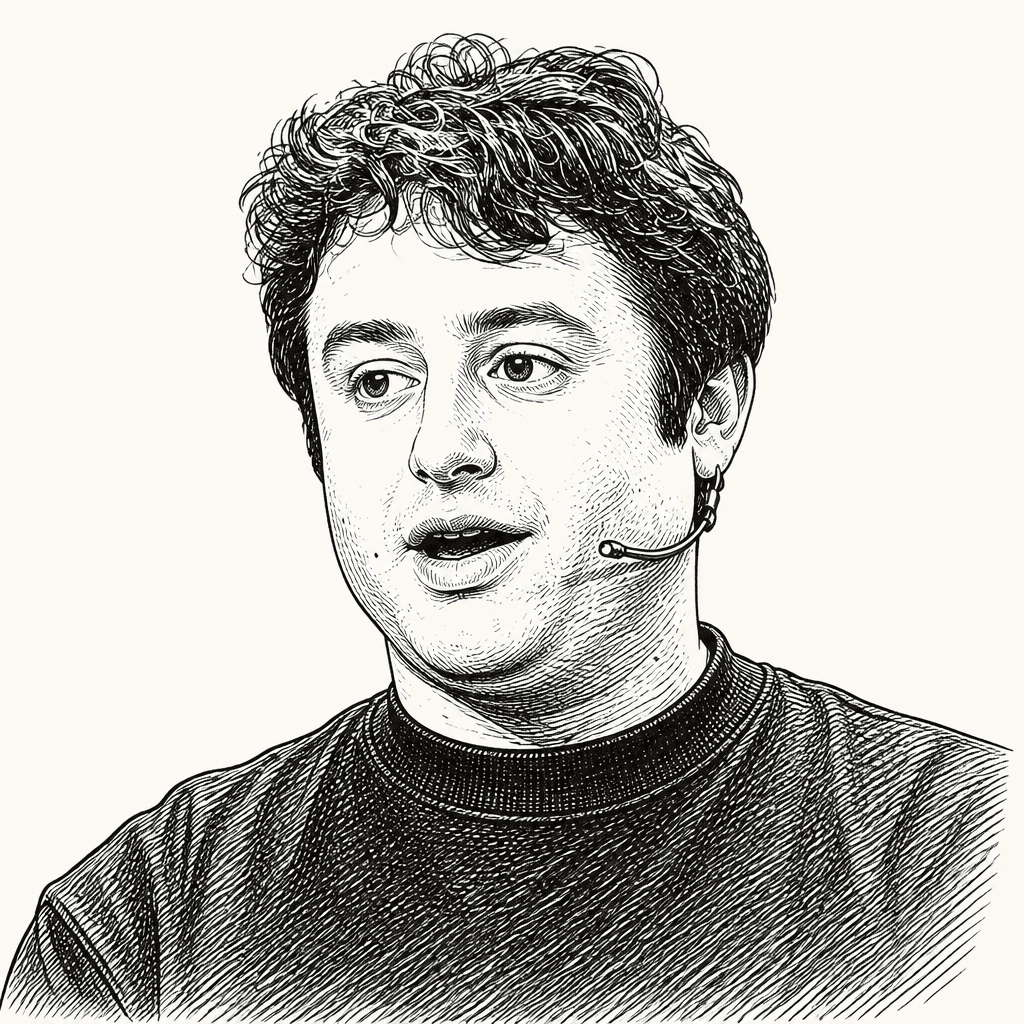

Figma co-founder and chief executive Dylan Field argues in a Hard Fork interview that AI is not killing design so much as making average work cheaper and more abundant. Field’s case is that writers, designers and software makers will be judged less on their ability to produce a first draft or prototype than on whether they can give it a distinctive voice, point of view and level of craft. He expects design work to broaden rather than disappear, even as AI labs push further into application software.
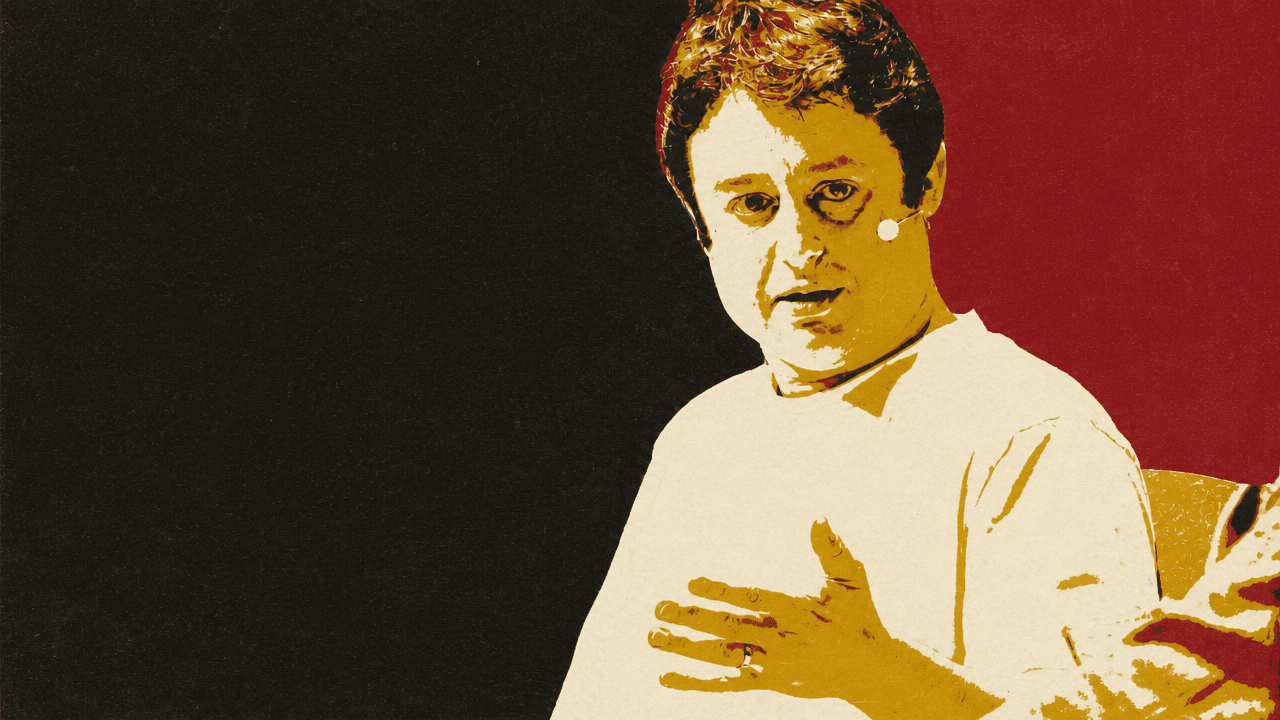
AI makes the average easier to produce, which makes differentiation harder
Dylan Field’s answer to the “design is dead” claim is not that AI cannot make designs. It is that AI can now produce a plausible average quickly, and that this changes the competitive problem rather than eliminating design.
Field described Figma’s “Design Is Dead” campaign as a response to the recurring online habit of declaring a discipline over whenever new models appear. The pattern around model releases, he said, is familiar: a model comes out, people initially think it can do everything, they discover its limits, and then “life goes on.” The adaptation is not denial. It is learning to recognize the new average that models can produce and then deciding whether to settle for it.
That applies to writing as much as design. Field said people who know how to write and engage in critical thinking around writing are in a strong position now, not a weak one. The reason is not simply that they can type better sentences. It is that voice, humor, phrasing, and point of view become more visible when a great deal of public output begins to feel model-generated. A few years ago, he said, he looked at social media and Substack and saw many people writing interesting things. Now, he often looks and thinks, “man, it’s a lot of Claude.”
Casey Newton pressed that point from the writer’s side. He described reading a Substack post that had circulated on Techmeme and feeling irritated because, in his view, it was “Claude-generated” — the output of a prompt competing for attention with reported or composed work. Newton’s concern was that his profession was starting to look more like “slop.” Field said designers may experience a similar anxiety when they see designs that appear to have been generated with a button press, but he framed that reaction partly as imposter syndrome — a quality he said writers and designers share.

The substantive distinction Field drew was between first output and crafted work. AI can produce a first draft, a first screen, a first answer. The creative and professional question is whether a person accepts that output or pushes it further.
How do you not settle for the first draft, the first thing out there, the first output, and actually mold it and craft it and push it further?
Field connected that to a change in software markets. He referred to recent data showing that the number of apps in the App Store had risen sharply, while the number of apps actually being used regularly had stayed the same. His inference was that software creation is becoming more hyper-competitive: more people can make things, but attention and usage do not expand automatically with supply. In that setting, he said, a product needs a unique voice, take, or point of view.
That is where Field placed “taste,” the San Francisco term Kevin Roose described as a current bulwark against AI replacement. Roose challenged whether taste is a real defense or merely the name people give to whatever models have not yet learned to do. Field did not define taste as a mystical human faculty. He made a narrower claim: people can detect the average. Models are trained on distributions of data, and their output often sits within that distribution. People who remain “in distribution,” as Field put it, are in worse shape than those exploring the frontier of human knowledge, creativity, and expression.

For Figma, that supports a product ambition. Field wants Figma to be one of the places where people can “unlock their creativity” and make software more expressive. His argument is that when average design becomes cheaper, the value shifts toward work that is more deliberate, more distinctive, and less obviously generated.
Design becomes broader rather than scarcer
Kevin Roose asked Field to make a more concrete labor-market prediction: two years from now, will there be more people with the job title “designer” than there are today? Field said yes, “probably significantly more.”
That answer rests on two claims he made about how AI changes roles. First, he said companies he speaks with are still prioritizing design hiring. Customers tell him they are hiring designers, sometimes even when they are not hiring as aggressively elsewhere. He described designers as being “arguably in one of the best roles” in technology and said he is “very, very bullish” on design’s role in accelerating companies.
Second, Field expects the category of designer to expand. More people in other jobs, he said, will begin calling themselves designers or creatives. Engineers, in particular, may enter design through speed: they can now make something quickly, then face the question of whether it is good enough and how to improve it. Roose gave the example of a product manager who began as nontechnical but can now create strong prototypes using AI tools, suggesting that design may become part of that person’s portfolio too.
Field’s reply was careful: not all of that will be great design. But he argued that the act of considering what one is making, being thoughtful about it, putting it into the world, and taking a risk is itself design.
I mean, not all of it'll be great design, but the act of like considering it and being thoughtful about what you're doing and then actually putting it out and, uh, taking risk, man, that's design.
This is distinct from saying the design profession is unchanged. Field also described a broader “generalist vibe” emerging, in which people feel pressure to embody multiple disciplines. AI tools may make the boundaries among product management, engineering, prototyping, and design less rigid. But in Field’s account, that does not reduce demand for design judgment. It increases the number of people participating in design and raises the bar for those whose work needs to stand out.
Casey Newton asked whether art and design are developing a reaction to AI analogous to how the camera helped give rise to Impressionism. Field said he had expected more of a turn toward sculpture or textured, nondigital art, though he warned against treating him as an art advisor. He sees clearer evidence in marketing and advertising, where companies are finding ways to prove authenticity — to show that something was not generated by AI.
In software design, Field expects the reaction to show up as more interactivity and more creativity. He said software can become more of a creative medium again. The early internet, in his memory, was “so fun”; the last 15 years, roughly the period during which Figma has existed, have been more of a rut, with a monoculture in how design expresses itself. He acknowledged the possible audience rejoinder that Figma itself may bear some blame for that sameness, but his stated hope is that tools can help people push further into dynamic interfaces, marketing, and media.
Asked whether he had seen AI-generated design or art that he considered genuinely good, Field said yes, but added that the effect wears off quickly. He compared it to any style that can feel fresh and then become familiar. His broader point remained that novelty alone is unstable; craft has to survive beyond the initial AI-generated surprise.
Experimenting with AI is a way to learn the boundaries of capability
Dylan Field described himself as deeply engaged with AI experimentation, though he resisted the suggestion that he had “AI psychosis.” He joked that it is better to “front-run the psychosis” by diving in, but then said he believes he has a reasonable view of what models are good at and where they remain weak.
His current example was “vibe mathing”: using AI to work on math problems, not because he claimed any breakthrough, but because math exposes a different side of model capability. Figma’s core problem is design, where evaluation is often subjective. Two people can look at the same output and disagree on its merits. Math and some areas of computer science are different because they are verifiable: things are correct or they are not. Field said models are now very good in some verifiable domains, and he finds that range instructive.
He emphasized that exploration does not always have an obvious immediate payoff. His habit is to go deep on new technologies, understand their capabilities, and later find unexpected ways to use them. He pointed to earlier interests as examples: crypto collectibles, before the term NFTs became standard, and WebGL, which he said led to Figma. The lesson he drew was not that every technology bet ages well. It was that early hands-on exploration can reveal capabilities before their business use is obvious.
Kevin Roose offered a theory about why startup CEOs are so drawn to vibe coding: perhaps it reminds them of when their jobs were fun, before management displaced making. Field’s answer was broader. People like to make things, design things, and put ideas into the world in tangible form. He expects more of that from everyone, not just CEOs building weekend projects and annoying their employees on Mondays.
If AI lets more people make prototypes, apps, or interfaces, then more people experience the maker’s problem: once something exists, is it any good? The tools reduce the friction of first creation, but they do not eliminate the need to decide what should be made, how it should feel, how it should differ, and when it is worth showing to others.
The AI labs’ expansion is real, but product focus still matters
The sharpest business tension concerned Mike Krieger, the former Figma board member, Instagram co-founder, and Anthropic product leader. Kevin Roose noted that Krieger resigned from Figma’s board early in the year, and that Anthropic announced Claude design days later, a product Roose characterized as “Figma adjacent.” Dylan Field did not offer a detailed account beyond saying Roose had “just told the story.” He added that Krieger is “a great dude” and someone he cares about.
Asked whether he would allow another AI lab executive onto Figma’s board, Field replied, “we saw how that went,” and said it would probably depend on the person’s ambitions.
Roose then broadened the question: are AI labs going to keep integrating vertically into adjacent industries — insurance, accounting, design, and other domains — and become amorphous companies that create havoc for smaller startups? Field answered by comparing OpenAI and Anthropic as “a tale of two AI labs.”
Field said OpenAI went through a period of launching a lot of things. He mentioned “social network even” and Sora, said he enjoyed Sora, and joked that he enjoyed watching AI-generated video of himself breakdance. He then said OpenAI “made the hard call” of shutting “that” down and focusing the company’s efforts; the source does not identify the product more precisely. His broader point was that a lab can try many application directions and still have to make difficult calls about focus.
Anthropic, by contrast, is in what Field called a more expansionary arc, launching many things and testing what works. The more interesting question, he said, is where AI labs will still be playing one or two years from now. Product is hard. Not everything works, and it is difficult to build products and get them adopted in the world.
Roose asked what AI labs would attempt and fail at. Field declined to give a serious prediction, then joked: “safety.” The joke landed as a jab, but his business argument was narrower. AI labs can attempt vertical expansion, but entering an adjacent product category is not the same as proving that the product works over time.
Enterprise software remains huge, even under AI pressure
Kevin Roose characterized Figma as a private enterprise SaaS company in a market skeptical of enterprise software and asked whether Field could convince investors there is a bright future for Figma and its peers. Dylan Field responded that he did not need to: “Elon Musk is doing it.”
Field referred to an S-1 filing and said it named “22.9 trillion” for enterprise applications, then joked, “Let’s go.” The published correction to the interview gives $22.7 trillion, not $22.9 trillion. Field used the market-size figure as shorthand for continued demand: enterprise software, he said, remains enormous, even large enough in that filing to exceed the entire space economy.
That answer sits alongside the earlier discussion of AI labs. Field did not give a long defense of enterprise SaaS. He pointed to the scale of enterprise applications and to the continued difficulty of building products that work in the market, even as model providers expand into applications.
Hyperstition treats AI narratives as inputs, not just commentary
Dylan Field closed on a more abstract idea: hyperstition. He defined it as the phenomenon by which ideas or memes “summon their own existence.” His two examples were Bitcoin and AI.
Bitcoin, in Field’s account, had many reasons not to work, yet it snowballed. The more attention it received, the stronger it became. AI shows a similar dynamic, but with higher stakes. Field described people who cared deeply about AI safety and wanted to avoid a race dynamic: forming nonprofits, gathering in one place, creating complex corporate structures, and trying to shepherd the technology toward benefits for humanity. Yet powerful things can be made with AI, people have incentives, people do not always get along, and breakaway dynamics emerge. “Hello race dynamic,” Field said. The feared dynamic becomes part of the path by which it appears.
Kevin Roose restated hyperstition in a more model-specific way: AI learns from the stories humans tell about AI, so if people want AI to go well, they should feed it stories about AI being good to humans. Field said that was part of it too. Models are aware, through their training data, of internet tropes about AI: the Google engineer who thought a system was conscious, science-fiction depictions, and other stories about how AI behaves. Those stories are in the training set.
Field said there are fewer stories in the training data about AI going well. He nevertheless said he believes in an optimistic future for humanity, adding that this has somehow become a “hot take.” His conclusion was that people should tell more stories about how AI can go well. Casey Newton turned that into a practical assignment: it may be a good time to write such stories so they enter the training data. Field agreed.
In a discussion otherwise centered on design, writing, product, and competition, hyperstition returned to the same underlying concern: in the AI era, outputs can become inputs. Attention can strengthen an idea, feared dynamics can become real, and the stories people circulate about AI can become part of the data on which AI systems are trained.