AI Is Compressing Antibiotic Resistance Research From Years to Minutes
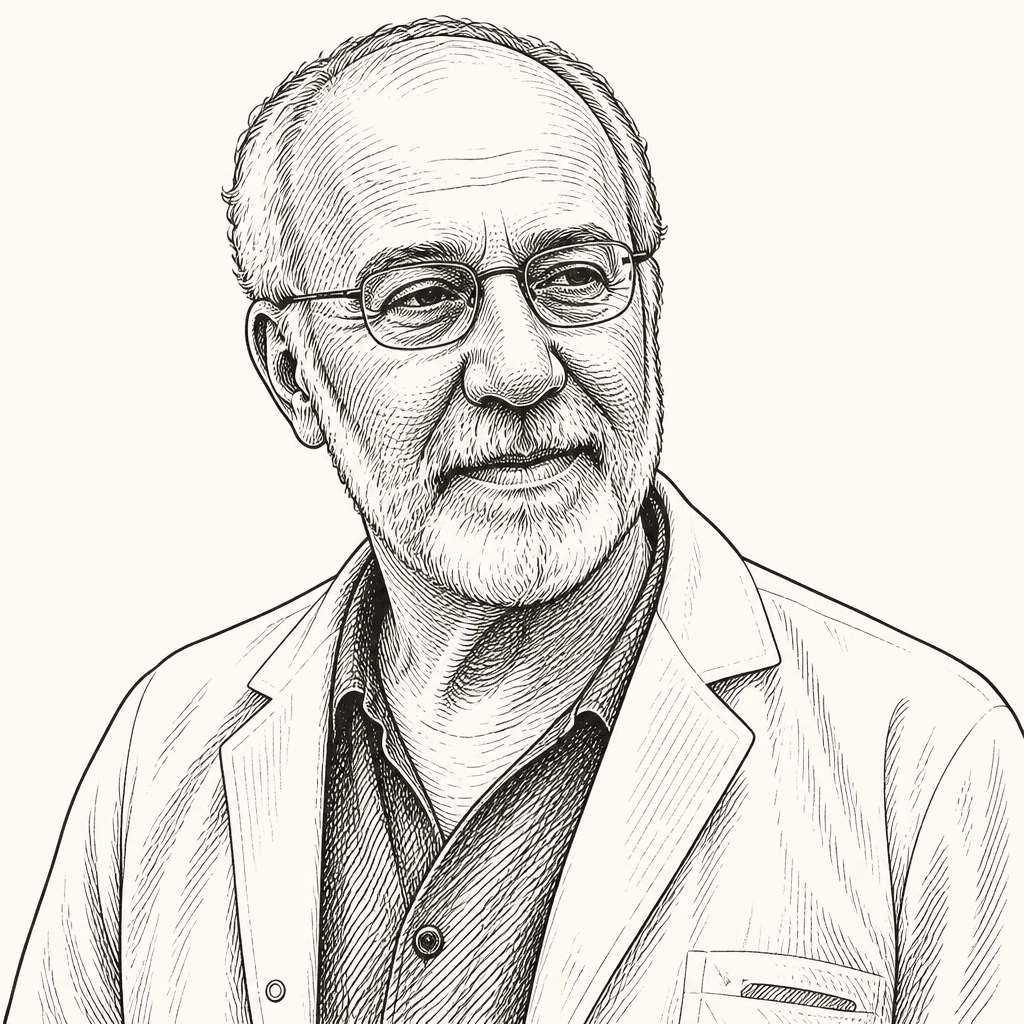

University of Cambridge structural biologist Ben Luisi argues that antimicrobial resistance is a permanent race against bacterial adaptation, not a problem that can be solved with one new drug. In a Google DeepMind source, Luisi and colleagues Martin Welch and Marta Wojnowska say tools including AlphaFold, Gemini and Co-Scientist are changing the pace and scope of that race by compressing structural analysis from years to minutes, widening hypothesis generation and surfacing biological patterns researchers might otherwise miss.

Antibiotic development is a chase against biological adaptation
Ben Luisi frames antimicrobial resistance as a “silent pandemic” because the clinical stakes rise when bacteria stop responding to antibiotics. In his account, infections can become life-threatening when patients do not respond, and the underlying problem is not a one-time shortage of drugs but an enduring property of biology: effective therapy requires a continuous search for new antibiotic variations.
If you want an effective therapy, you have to continuously find new variations of antibiotics. This will always be the problem. It's inherent to biological systems.
Martin Welch describes the same dynamic from the development side. New antimicrobial agents can be generated, but resistance appears almost immediately after those agents arrive. That leaves researchers “constantly chasing” the problem rather than solving it once and moving on.


The scientific question, then, is not simply how to make one more antimicrobial compound. It is how to understand the biology faster and differently while resistance continues to arise. Luisi’s claim is that the field needs “some new way of thinking,” because the old cycle of discovery, characterization, and resistance is too slow for the problem it is trying to contain.
Structural biology moves from years to minutes
The most concrete change Luisi describes is the compression of structural work. When he began this line of research, he says elucidating an experimental structure could take years. With tools such as AlphaFold, he says that work can now move in minutes through predicted structural models.
That shift matters because structure is one route into mechanism. The AlphaFold screens display predicted three-dimensional protein structures, confidence and error views, a predicted aligned error matrix, and a visible distance annotation between molecular positions. Those outputs give the laboratory a way to inspect biological structure at a pace Luisi says was previously unavailable.
Welch calls the DeepMind tools “absolutely transformative,” because they let the group accomplish things it could not do independently before. AI is not changing the fact that the biological problem is adaptive; it is changing the feasible pace and scope of the investigation.
The difference is especially important in Luisi and Welch’s framing because resistance keeps emerging. A research process that takes years to clarify one structure sits uneasily against a problem defined by continual variation. A process that can generate predicted structural models in minutes changes what the laboratory can attempt and how quickly it can move from structural clues to the next research question.
Generative tools are widening the search space
Marta Wojnowska describes another role for AI: not only predicting structures, but helping researchers connect questions, practical next steps, and experimental possibilities that were not explicitly requested. She says the systems often generated ideas she “didn't even necessarily ask it for,” by connecting dots across previous questions.
The on-screen interactions show this broader use of AI systems. One chat interface includes the prompt: “I am looking to commercialise the protein antibiotics that I am currently researching. Which steps would you recommend for this.” A Co-Scientist interface invites the user to “Generate hypotheses and ideas for breakthrough discoveries,” beginning with a research challenge. A third screen presents an “Academic Protein Antibiotic Commercialization Roadmap,” comparing a spin-out with licensing to big pharma across control, capital, reward, and effort.
| Path | Control | Capital | Reward | Effort |
|---|---|---|---|---|
| Spin-out startup | High; you are the founder/CEO | High; you need to raise VC or seed money | Potential for massive equity upside | All-consuming full-time job |
| Licensing to big pharma | Low; the licensee takes the reins | Low; the licensee funds the R&D | Milestone payments and 5–10% royalties | Mostly administrative |
Ben Luisi says the team has been using Gemini and Co-Scientist, and that these systems sometimes produce ideas “a bit out of the box” that change the researchers’ perspective. In this workflow, the systems can broaden the hypothesis space, pull together adjacent considerations, and suggest links that would not necessarily emerge from a narrow prompt.
Wojnowska’s example is practical as well as scientific: the systems are being used not only for molecular prediction, but also for thinking through how protein antibiotics might move beyond academic research. The displayed roadmap shows the researchers using AI around the problem as well as inside it: reasoning through what happens if protein antibiotics move toward a spin-out or a licensing path.
The advantage is pattern recognition beyond intuition
Ben Luisi makes the strongest scientific claim around patterns. He says he had not anticipated “the power of networks to pick up on patterns that are not always intuitively apparent to the human eye.” In his account, AI systems make matches and correlations that can open new ways of treating threatening infections.
That is a significant claim because it moves the role of AI beyond speed alone. Luisi is describing systems that expose relationships researchers might not immediately see, and that can change how the search for treatments is framed.
Martin Welch says the group is making rapid progress in understanding “new biology” and “new biological principles.” In the context of antimicrobial resistance, that means moving upstream from simply generating another antimicrobial agent toward the biological mechanisms and principles that shape bacterial response. No specific new target or treatment design is described. The enabling idea is narrower and clearer: faster structure prediction, generative hypothesis work, and pattern recognition may help researchers see what the biology is doing sooner.
The protein-structure screens show one layer of that workflow: three-dimensional form, confidence measures, and correlation matrices. The Co-Scientist screens show another: hypothesis generation, protocol design, and research planning.
The tension remains that resistance is not solved once. Welch’s formulation makes clear that every new antimicrobial agent can generate a new resistance problem. Luisi’s formulation makes clear that continuous variation is inherent to biological systems. AI’s role, in the researchers’ account, is to change the tempo and breadth of the chase: faster structural modeling, wider hypothesis generation, and pattern detection that can alter how researchers think about bacterial defenses.