Zelenskyy Warns U.S.-Russia Energy Deals Could Strengthen Moscow
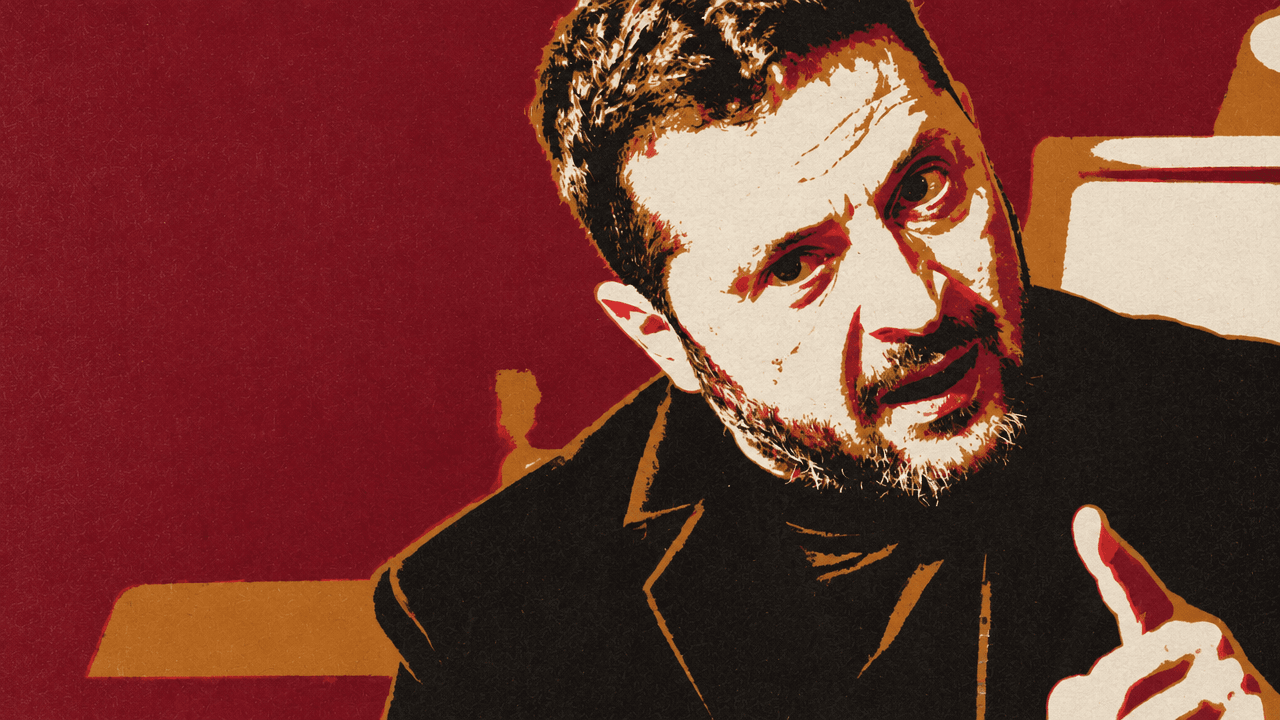
Ukrainian president Volodymyr Zelenskyy told the Financial Times that Donald Trump’s friendliness towards Vladimir Putin was a mistake, arguing that Trump appeared to admire leaders who held power for decades and the very wealthy. Zelenskyy also warned that US-Russia energy deals could give Moscow money to sustain its war, and said Ukraine could not be expected to restrain its attacks without the means to defend itself.
The intelligence warning and the Starlink disruption were separate claims
Volodymyr Zelenskyy said Ukrainian military officials had been warned that continued attacks on Russian targets could lead to intelligence being blocked. He described that warning as passing between military officials, not as a direct message from politicians to politicians. Asked whether American officials had explicitly threatened to cut intelligence sharing and arms supplies, he distinguished what he knew from what he thought: he said officials had cited technical problems at one level, while the military-level warning had been that intelligence could be blocked if Ukraine did not stop its attacks.
He connected that warning to a disruption in Starlink, but did not claim to know who made the decision. Zelenskyy said the service had been slowed across Ukraine, including on the battlefield, and that he believed this was a deliberate choice rather than a technical failure. He thought it was related to SpaceX, not military officials, but said he could not tell whether the decision belonged to SpaceX or the US government. Together, the intelligence warning and Starlink disruption, he said, created serious problems.
Starlink mattered beyond battlefield communications. Zelenskyy said Ukrainian forces used it in systems supporting military operations and in logistics for soldiers cut off in contested areas. When those soldiers needed food and water, he said, keeping them alive mattered more than other uses of the technology. Ukraine relied on drones and other robotic systems to deliver supplies quickly; if they moved too slowly, he said, they could be destroyed.
The uncertainty over the decision-maker was distinct from Zelenskyy’s certainty about what he believed had happened to the service. He said that the effects were visible across Ukraine and that, in his view, the slowdown was “not the technical problem, it was the will.” He did not say that he had personally contacted Elon Musk; he said Ukrainian military personnel had handled the issue.
Ukraine’s pause on energy attacks depended on a ceasefire
Zelenskyy said he had instructed Ukraine’s military to stop attacking Russian refineries and other facilities connected with diesel after Donald Trump called for an energy ceasefire. He said he supported the call and wanted to avoid a situation in which Ukraine could be accused of breaking the ceasefire, even though he considered its attacks justified.
I don't want to play this game.
Zelenskyy said Ukraine observed the pause for three days. In his account, Russian attacks continued during that period: the first day brought strikes on gas stations and petrol infrastructure; the second was less severe; and on the third night, Russian forces attacked major energy infrastructure, mostly in the capital and also in Kharkiv and other cities. He said further attacks in Lutsk and elsewhere killed civilians. After the attacks, he said, he told the military that the pause was over. He did not say whether Ukrainian strikes had resumed.
Asked how long Ukraine would maintain the stoppage if Russia kept attacking, Zelenskyy answered that it had ended. His position on a renewed or unilateral pause was tied to what would happen next. A country deep into a war, he said, could not consider only the immediate step. If a diesel arrangement meant Ukraine stayed silent after Russian attacks, he asked, what might the next deal involve? He suggested gas could follow and questioned who would receive the money and how it would be spent.
Zelenskyy’s concern was that revenue and contracts could strengthen Russia’s capacity to produce weapons. In his formulation, weapons were not only guns already made; money that enabled production mattered too. He said Ukraine could not support increased funding for Russia. These were risks he said he saw in possible energy deals, not outcomes he described as already settled.
For Zelenskyy, restraint requires a way to defend Ukraine
The question of reciprocal protection ran through Zelenskyy’s argument about the ceasefire. He said pressure would not make Ukraine comply, and that if Washington asked Kyiv not to attack Russian energy targets while Russia continued striking Ukrainian infrastructure, Ukraine needed the means to defend itself.
He said he had told Trump that Ukraine needed Starlink available to it and opened on Russian territory. With those capabilities, Zelenskyy said, Ukraine could destroy Russian ballistic launchers. He presented this as an alternative to attacking energy infrastructure: if Ukraine could stop the ballistic attacks at their source, he said, it would not need to target energy facilities.
Ben Hall pointed out that Ukraine needed American intelligence, Starlink and weapons, and asked how Zelenskyy would repair the relationship. Zelenskyy rejected the premise that Ukraine had destroyed it. He called Ukraine an honest and strategic partner of the United States, arguing that the relationship was necessary because Russia could fight all of them if they were not united.
Zelenskyy said he understood that Trump was dealing with other pressures, including Iran, the Middle East, oil concerns and elections. He said he believed most Americans supported Ukraine, but thought someone was moving Trump in the wrong direction. The United States and Europe could stop Putin and reach negotiations quickly, he said, while adding that Putin was comfortable with the situation as it stood.
The distinction between a military-level warning and the broader political relationship mattered to Zelenskyy. He described the warning about intelligence as something conveyed between military officials; he was less certain who had made the Starlink decision. He treated the combined effect as serious, but did not say that the same people or institution were responsible for both.
Europe’s unity matters beyond the question of aid
Zelenskyy said European sanctions hurt Russia but had not been enough to stop it. He also noted that some European countries continued to receive Russian energy and that governments differed over measures such as an oil embargo or sanctions on Russian nuclear companies. Europe needed to become stronger and more united urgently, he said, because the risks were not confined to Ukraine.
He described drone activity crossing borders near countries including Romania, Moldova, Germany, Poland and Bulgaria as part of what he called hybrid operations. He compared the pattern to entering cold water gradually: a small step, then another, until people get used to it. In his account, Russia was testing limits, even without a large-scale ground operation.
The prospect of European elections and stronger parties sceptical of support for Ukraine concerned him. Zelenskyy said such political changes would bring challenges, but that Ukraine would still need to seek dialogue with everyone. Asked about Marine Le Pen’s statement that she would stop financing Ukraine if elected president, he said he would not vote for her. He argued, however, that cooperation could benefit France as well as Ukraine.
Zelenskyy presented Ukraine’s wartime experience as a security contribution to its partners. He cited cooperation on the French-made SAMP/T air-defence system, saying Ukrainian experience had informed changes to how it worked. He also pointed to work with SCALP missiles and to Ukrainian cyber experience. His broader argument was that partners could learn from equipment and tactics tested in the war, including the challenge of defending against large numbers of drones and long-range attacks.
He said that sharing this experience could help European countries make better choices about defence spending, rather than assuming that equipment purchased before the war would remain useful under battlefield conditions. He described the exchange as mutually beneficial: Ukraine needed support to fight, while partners gained security knowledge and experience. He also argued that cooperation and coproduction could provide a basis for that exchange.
Zelenskyy sees business and affinity complicating the US role
Asked about Trump’s relationship with Putin, Zelenskyy offered an interpretation and marked it as his impression. He said Trump spoke openly about admiring people who held power for decades, and suggested that he respected the ability to maintain control. Zelenskyy also associated Trump’s interest with extreme wealth. He said he was not directly comparing Putin and Elon Musk, but described them as belonging in “one restaurant”—not “street food.”
Zelenskyy saw business as another possible factor. He said energy projects between the United States and Russia would be politically difficult to pursue while the war continued, because people were fighting, dying and trying to survive while others considered doing business with the aggressor. Such deals, he said, would bring political risks and challenges. He did not claim to know the precise terms or outcome of any proposed arrangement.
He also argued that visible divisions between Ukraine, Europe and the United States could benefit Putin. In Zelenskyy’s view, division helped Putin present himself at home as successful and as not losing the war. He said that people might turn out during elections without that meaning they supported Putin. He described the war as a technological contest in which one side could be ahead in one month and the other in the next; restrictions on intelligence and Starlink, he said, could help Russia even if that was not the intention.
Asked whether the current strain with Trump was worse than the earlier public crisis, Zelenskyy said the two had had positive meetings and had tried to make plans to end the war. He called Trump’s friendliness toward Putin a mistake, while describing that as Trump’s choice. Zelenskyy said Ukraine would not be drawn into a diesel deal, but would help partners if asked. He framed his own approach as explaining Ukraine’s position and holding to it: if Kyiv was asked to stop attacking, it would also ask for the weapons needed to defend itself.