Britain Says Stronger Deterrence Can Reduce the Risk of Wider War


UK Defence Secretary Wes Streeting argues that Britain should strengthen military readiness to deter escalation while relying on diplomacy to end conflicts. In an interview with the Financial Times, he described the US alliance as central to UK security and said European defence depends on cooperation across Nato, including with Britain, while warning that procurement and industrial policy should not weaken the alliance.
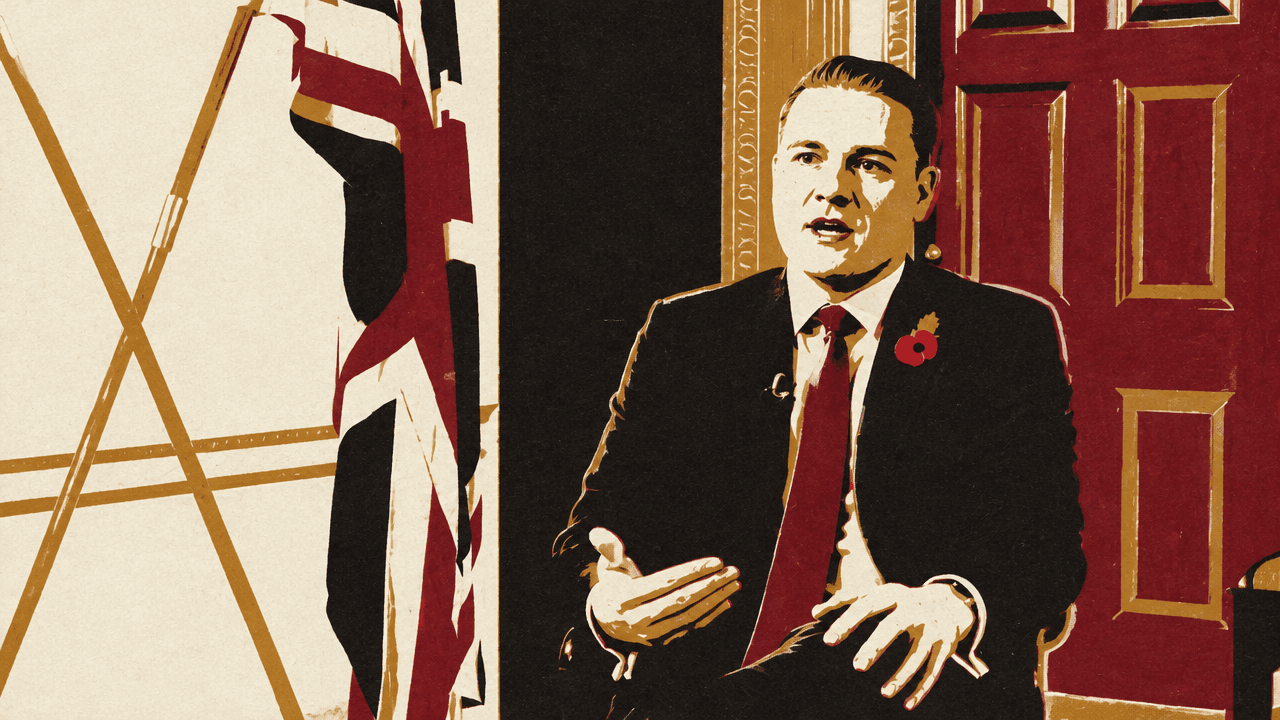
Readiness is meant to deter escalation; diplomacy is the route to ending conflict
Wes Streeting’s central distinction is between preparing to defend Britain and its allies, and seeking a military solution to the conflicts they face. He argued that stronger readiness and deterrence make a wider conflict less likely. In the Middle East, by contrast, he said the UK does not see an end to the conflicts through military means: its support should defend allies while diplomacy remains the route to a resolution.


Asked by Lucy Fisher whether Britain might increase military support to Saudi Arabia or join offensive strikes against Houthi missile launchers, Streeting said the UK did not want to become embroiled in the war. He described its support to Saudi Arabia and Yemen’s legitimate government as defensive, citing Houthi attacks on civilian targets such as airports. Britain should show up when allies need help, he said, because it expects the same in return.


When Fisher asked whether continuing discussions with Saudi Arabia left the door open to further support, Streeting said the UK had already stepped up its contribution. Ground-based air defences were in place before the latest escalation; Britain added air-to-air refuelling when that round of conflict erupted, and he said its support now also included air-to-air defences and Typhoon aircraft in the air. The government was following events and speaking regularly with Saudi partners, he said, but did not want to be drawn into the war.
Streeting applied the same distinction to Iran. He said the UK was in no doubt about what he called Iranian “malevolence,” pointing to regional instability, RAF Fairford and threats to Britain’s Jewish community from Iranian-backed plots. Britain should defend its interests, allies and people, he said, while continuing to seek diplomatic solutions where possible.
His account of Russia joined the same concerns about escalation to a case for communication and deterrence. Streeting said the UK had no quarrel with the Russian people and did not seek conflict or war with Russia. The government’s stated aim, he said, was an end to Russia’s “illegal, unprovoked” war in Ukraine. He called it a war of Putin’s making and an “utterly futile and unnecessary” folly, citing the suffering of Ukrainians and the costs to Russians, including military casualties and economic consequences.
Asked whether too few formal channels between Britain and Russia could lead to accidental escalation, Streeting pointed to the British embassy in Moscow as an important channel. Its diplomats worked in a hostile environment, he said, and the UK valued their work. He would prefer additional channels, particularly military-to-military communication, because miscalculation was always possible and direct communication mattered.
That need for communication did not, in Streeting’s view, lessen the need to prepare for Russian escalation. He objected to what he saw as a contradiction between the Kremlin’s statements that it did not want war with Europe and its conduct. He said there had been numerous examples during the year of what some call hybrid threats, a term he preferred to replace with “state-sponsored terrorism.” Political and military leaders, and the public across Europe, needed to understand the threat and why investment in defence and deterrence mattered, he said. The aim was to make a wider escalation less likely by being ready for it.
The more ready we are, the stronger our deterrence, the less likely we are to need to use the capabilities that we’re all now heavily investing in.
Streeting also described the US relationship as central to Britain’s security. He called the United States the UK’s most important alliance for defence and security, saying the two countries were unusually interconnected and interdependent. Britain had a responsibility to work with whoever held power in Washington, he said. He cited the relationships built by two Labour prime ministers with President Trump despite political differences, as well as UK ties across both the Republican and Democratic parties and close institutional links, especially between the militaries.
Streeting described himself as both a European Atlanticist and strongly pro-US. Sitting in the defence secretary’s role, he said, had made the closeness and importance of the US relationship especially clear. Asked whether a Republican rout in the US midterms might make a weakened Trump more likely to push Ukraine towards a settlement on Russian terms, he did not predict the administration’s response. He said the administration was beginning to analyse the election result, including by discussing the cost of living and the war in Iran. That was a debate for the US, he said; Britain’s task was to work with the Americans, European partners and Middle Eastern allies on the security issues at hand.
He singled out the need for de-escalation in the Middle East, stability in the region and containment of what he described as the Iranian threat. He also called for maritime freedom, naming the Strait of Hormuz and Houthi attacks affecting Red Sea shipping as immediate challenges. In his account, the US alliance sits alongside, rather than replaces, work with European and regional partners.
Procurement must build capacity without closing off cooperation
The procurement problem Streeting described is not simply a choice between buying British and saving money. Britain needs equipment and capabilities to keep the country safe, he said, but it also needs an industrial base able to sustain a fight if NATO faced war. He added a domestic economic consideration: whether defence spending could create jobs, growth and opportunity at home. The challenge is to pursue those aims without closing off the partnerships needed to build capacity.
Asked by Charles Clover about potential foreign awards for contracts such as Skynet and the light mobility vehicle, Streeting stressed that no decisions had been made. He said reports that he had decided on Skynet were wrong, and acknowledged lobbying by companies and constituency MPs seeking jobs in their regions. Those interests were part of the environment around the decisions, but he said he had not yet made them.
The first test, he said, was whether Britain could buy the equipment and capability it needed for its security. The second was whether the UK—and NATO more broadly—could maintain the industrial capacity to sustain a fight and, if necessary, move into a “war-fighting economy.” Streeting argued that the alliance’s constraint might not be a lack of money alone. If every NATO member could double its defence budget tomorrow, he said, the collective industrial base might not be strong enough to spend the additional money fast enough.
That makes industrial capacity part of readiness rather than merely an economic dividend. Streeting said Britain needed to grow and broaden its defence industrial base, as well as its wider industrial base, to meet current defence needs and be capable of switching production if required. At the same time, he saw defence investment as a potential source of domestic jobs and growth.
He cited Project Euston, announced with the Chancellor around the Labour Party conference, as an example of when a UK-only procurement could make sense. The floating dock facilities would be built in Britain, he said, keeping billions of pounds of investment and significant job potential at home. But he warned that the impulse to back domestic workers and industry could turn into self-defeating protectionism. Some contracts, he said, would be better pursued with partners in Europe, North America or elsewhere in NATO. The decision would depend on the case.
Streeting said that when Britain buys abroad, companies would be required to demonstrate the impact and positive economic benefit in the UK. Workshare—the division of industrial work among partners—was, he said, a recurring issue in discussions about shipbuilding, GCAP and other joint programmes. He saw room for a “win-win”: cooperation can bring partners together while ensuring that Britain receives economic value from its spending. In his view, military cooperation within NATO should have an economic counterpart.
His warning extended to “America First” and “Made in Europe.” Neither should become a form of protectionism that weakens the alliance, he said. The tension is not between national industry and cooperation as absolutes: Streeting argued for building domestic capacity while making case-by-case choices about partnerships and insisting on UK benefits when contracts go overseas. The test is whether procurement strengthens the ability to defend and sustain the alliance, rather than narrowing the industrial base it depends on.
Britain’s European role depends on cooperation beyond the EU
Wes Streeting’s account of European security begins with a distinction between Europe and the European Union. In discussions in Brussels with Commissioner Kubilius and Kaja Kallas, he said, he had found that when the Commission discussed defence and security, it was thinking about Europe, not only the bloc. He welcomed the EU’s work to mobilise financial support for Ukraine and to consider what its own defence cooperation should look like. He said there was recognition that a serious discussion of European security had to include the UK and other European NATO members outside the EU.
The risk, in his view, is that efforts to deepen cooperation could be designed too narrowly. Streeting said the UK needed to keep an eye on initiatives such as “Made in Europe,” and on competition rules or purchasing policies focused on the EU. If those approaches worked against economic cooperation across NATO, he argued, they could leave the alliance collectively weaker. He described this as a live conversation, while saying European partners were alert to the concern.
Streeting also used Britain’s contribution to make the case that leaving the EU does not remove the UK from Europe’s security arrangements. Britain commits its nuclear deterrent to NATO for the benefit of Europe as a whole, he said, in a way no other country does. “We are Europeans,” he said, describing Britain as a European country committed to the continent’s defence and security.
His argument for a wider European relationship extended beyond defence. Streeting welcomed Andy Burnham’s willingness to say that Brexit had not worked as well as hoped and to ask what more Britain could do with Europe. He said he did not know what an eventual deal would look like, but considered the starting point right: acknowledge that the relationship had fallen short, ask what further cooperation was possible, and examine the choices and trade-offs involved.
He proposed asking the European Commission and EU member states what more the UK and Europe could do together, then presenting the options to the public. Streeting said the government would honour its manifesto from the last general election, while describing an open conversation about further cooperation as compatible with that commitment. In a dangerous and volatile world, he argued, the case for working together was becoming more important, not less.