UBS Says Swiss Capital Plan Would Put It 50% Above Peers
UBS chief executive Sergio Ermotti told FT editor Roula Khalaf that Switzerland’s proposed capital reforms for the bank are disproportionate and misdiagnose Credit Suisse’s collapse. He argued that Credit Suisse failed because of management, business-model and supervisory failures, not because the Swiss framework was fundamentally deficient, and warned that forcing UBS to hold capital 50 per cent above peers would be neither targeted nor internationally aligned. Asked whether UBS could move its headquarters, Ermotti said the bank’s premise remains to stay in Switzerland, while acknowledging management has a duty to examine alternatives.
The capital dispute now carries a headquarters question
Sergio Ermotti does not reject a postmortem on Credit Suisse or changes to Swiss banking regulation. His objection is that the proposed reforms, as he describes them, are “not proportionate,” “not targeted,” “not internationally aligned,” and fail to account for why Credit Suisse actually failed.
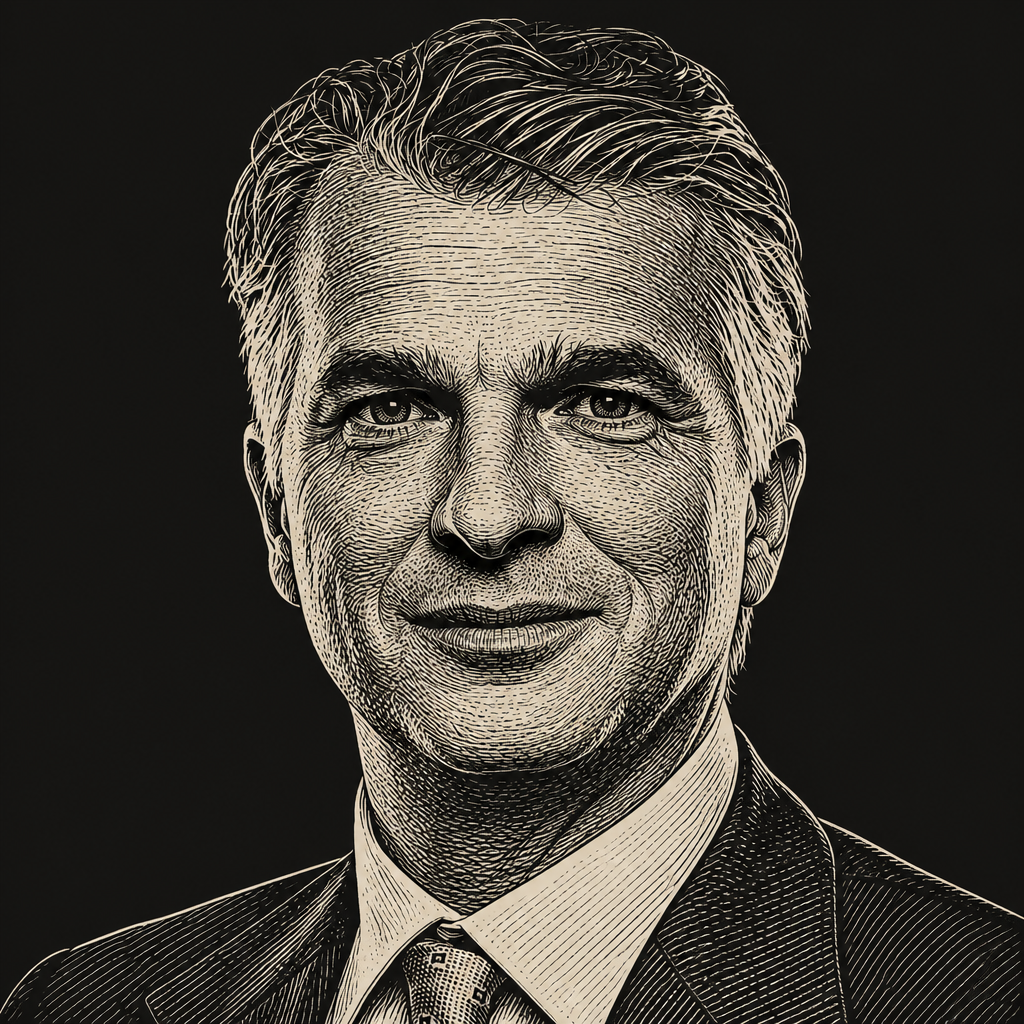
The proposed capital increase sits at the center of UBS’s standoff with Swiss authorities. Roula Khalaf put the figure to him directly: authorities are saying UBS needs $20bn in extra capital. Ermotti declined to name a number he would find acceptable, but he did set a boundary: UBS, he said, cannot be subject to a requirement “50% higher than our peers.”
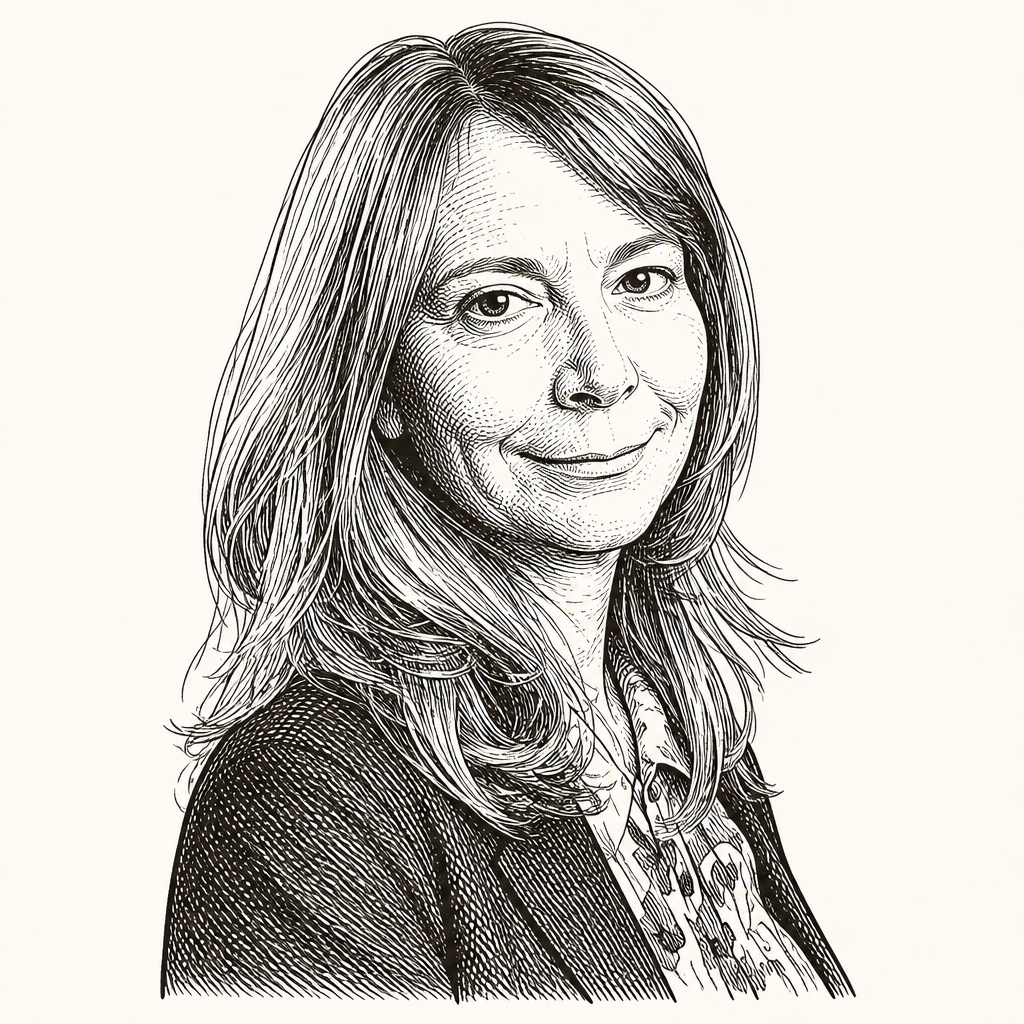

His case rests on a distinction between regulation that was insufficient and regulation that was not applied. Ermotti argued that the current Swiss framework, “when fully applied,” allowed UBS to take over Credit Suisse and stabilize a global systemically important bank within five months. He said Credit Suisse’s liquidity support and guarantees were returned within that period. Khalaf summarized the implication: UBS’s argument is that the regulatory framework actually worked.
Ermotti accepted that some changes are warranted. He said discretion for banks and authorities to use or grant concessions should be eliminated, and that a more prudent approach to valuing certain assets should be introduced. But he objected to what he sees as a broad penalty imposed because one institution had been allowed to operate outside the spirit of the rules.
“The regulatory framework is good, but you have to apply it,” Ermotti said.
His analogy was a speed limit. UBS should not face a sweeping restriction, he said, because one driver was “driving well above the speed limits” and had been authorized by the authorities to do so. The lesson, in his telling, is not that every bank should be forced into a radically different capital position; it is that concessions and supervisory laxity should be removed.
Khalaf pressed the political reality: the question is now in parliament. Ermotti said he was “hopeful” that a democratic process would examine the matter and that concern extends beyond UBS. He named banks, cantons, authorities and trade associations as parties worried about the direction of policy. UBS, he said, is not in a negotiation and will have to accept the outcome. But it wants decisions “taken based on facts.”
That does not settle the harder consequence Khalaf put to him: whether UBS could rule out moving its headquarters out of Switzerland if the regulatory outcome is severe. Ermotti’s first answer was to reassert the desired status quo. UBS is focused, he said, on continuing to operate out of Switzerland as a successful bank that creates value for clients and shareholders and contributes to the country and its financial center. “We are not even thinking about another option,” he said.
Khalaf challenged that answer, saying the FT had been told that changing headquarters had been discussed internally. Ermotti did not deny that options had been raised. He said everyone raises such options when considering consequences, and that the board and management have a fiduciary duty to examine potential alternatives.
But he tried to narrow the significance of that work. UBS is not, he said, spending time “over-engineering” the topic, because the priority is the Swiss regulatory process. When Khalaf suggested shareholders would expect contingency planning, Ermotti replied that meaningful contingency planning is difficult without knowing the exact outcome. In any case, he said, the bank is profitable, solid and meeting its requirements, so there is no urgency.
Ermotti’s position was that remaining Swiss is the operating premise, while Khalaf pressed whether UBS is preparing for a different one. His answer was that management must examine options, but the amount of time spent on them matters. UBS benefits from “Swissness,” he said, and Switzerland benefits from UBS.
Asked whether UBS has become too big for Switzerland, Ermotti rejected the premise by comparing the country’s economic weight with the bank’s global rank. Switzerland, he said, is around number 130 by country size and number 100 by population, but the 20th largest economy in the world. UBS, he said, is the 20th largest bank in the world. “What is wrong,” he asked, with the 20th largest bank being aligned with the 20th largest economy?
Credit Suisse’s collapse was not a surprise, in Ermotti’s telling
Ermotti’s diagnosis of Credit Suisse is blunt: an unsustainable business model, recurring losses and reputational damage formed a “very risky and dangerous cocktail.” He assigned the largest share of responsibility to the former management board and shareholders, arguing they should have acted more decisively.
He also criticized regulators. “Regulatory concessions were done to Credit Suisse for too long,” he said, adding that this created a further problem. The market, in his view, had been warning for years that something was wrong. Clients, regulators and stakeholders “didn’t watch the market,” he said, even though “the market was telling the story already a few years before it happened.”
Khalaf put the point plainly: no one was really surprised that the bank got into trouble. Ermotti agreed. The situation looked fragile but apparently contained until an outside shock arrived. He cited Silicon Valley Bank and the regional banking turmoil as the infection that destabilized an already vulnerable institution.
That diagnosis matters for the capital fight because it narrows the causal story. From Ermotti’s account, Credit Suisse’s failure followed from business model weakness, governance failure, market signals and supervisory judgment — with concessions granted too long to a bank already showing signs of weakness — rather than from a simple lack of systemwide capital.
The integration has moved faster than UBS expected, but the hardest part is still jobs
Ermotti said the Credit Suisse integration has surprised him less on financial metrics than on culture. UBS began with a clear view of what needed to be done, but the operating challenge was large: he said the bank migrated 110 petabytes of data, which he compared to watching a movie for 275 years in a row, while still serving clients.
Clients, he said, had “a little bit of sympathy” for the challenge for only a few weeks. After that, they expected service. What surprised him was the speed and quality with which UBS employees managed to do both: integrate and continue operating.
The strongest signal for him was cultural. At the end of 2022, he said, former Credit Suisse employees referenced Credit Suisse as an employer of choice at a rate of 55%. By the end of 2024, that had risen to 70%. By the end of 2025, it was 81%, above what he described as an industry norm of 75%.
| Measure | Figure |
|---|---|
| Credit Suisse employer-of-choice reference at end-2022 | 55% |
| Former Credit Suisse colleagues at end-2024 | 70% |
| Former Credit Suisse colleagues at end-2025 | 81% |
| Industry norm cited by Ermotti | 75% |
For Ermotti, the cultural integration “came together much quicker than anybody expected.” The numbers he chose to emphasize were not profit, cost or balance sheet measures; they were employee sentiment indicators.
The headcount story is less comfortable. Khalaf said the combined headcount was about 100,000 and that UBS was supposed to bring it down to 85,000. Ermotti declined to confirm target numbers, but gave a different baseline: the journey began with a combined headcount of 157,000, and UBS was then at 117,000. “There is still a little bit of work to be done,” he said.
The most painful part of the integration, he said, is redundancies. He hopes that work will be done by the beginning of next year. The remaining reductions are tied partly to infrastructure: until March, UBS was still operating in Switzerland with two banks behind the client-facing UBS name, meaning Credit Suisse and UBS systems, IT, real estate and workforces were still being rationalized.
Ermotti is no longer committing to a three-to-five-year exit window
Ermotti returned to UBS in 2023 with a specific integration mandate and an initial commitment, as Khalaf framed it, to stay three to five years. He is now in year three. Asked when he plans to leave, he pointed to UBS’s chairman, who said at the latest annual general meeting that Ermotti would stay “as long as is needed.”
Khalaf pressed whether the three-to-five-year frame still held. Ermotti said UBS was not putting a timeframe on it. He also did not present the role as simply a temporary clean-up job. He compared the current mandate with his first stint, saying that both involved not only rationalizing and integrating, but also preparing the bank for the future.
That future, in his description, requires catching up on technology and AI deployment. The integration forced UBS to slow down many changes, because it could not absorb a major transfer of data and clients while simultaneously making extensive infrastructure changes. UBS is already investing and, in Ermotti’s view, “quite well positioned,” but needs to move faster.
For Ermotti, the UBS dispute is one example of Europe’s wider overregulation problem
Sergio Ermotti sees the Swiss regulatory debate as part of a broader European weakness. If overregulation existed only in banking, he said, “one could probably live with it.” The problem, in his view, is overregulation “across the board”: bureaucracy, a lack of innovation and weak economic dynamism.
Khalaf asked whether he was surprised that more than a year after the Draghi report, little had changed. Ermotti said he was not surprised. His diagnosis was that Europe’s economic data show divergence from the US and Asia in productivity, with declining or no growth. But conditions are “bad, but not bad enough to take actions.” There is, he said, no real pressure yet to force governments and voters into difficult choices.
His example of reform through crisis was Greece. Greece, he said, had to go through a profound and painful crisis for the country, its citizens and its reputation, and is now “one of the best performing” economies in Europe. He suggested Europe more broadly may need conditions to worsen before they improve.
The political obstacle, as he described it, is the promise that governments can solve structural problems through higher taxes, more debt and fiscal stimulus, even with already high indebtedness. Politicians will not be elected, he said, by asking people to make sacrifices.
UBS says profitability should reassure policymakers
Khalaf asked whether an 80% jump in first-quarter profits could worsen the capital debate for UBS. Ermotti pushed back on the headline number, saying that on a normalized basis it was a very strong quarter but not as strong as the reported 80% figure suggested.
More importantly, he argued that profitability should reassure politicians rather than inflame them. UBS measures profitability by return on capital deployed, he said, and is getting closer — though not yet back — to the level UBS had in 2022. A profitable bank, in his view, is more resilient because it can pay its cost of capital while serving clients and the economy.
He also framed UBS as a taxpayer, not only a source of potential taxpayer risk. Protecting taxpayers is important, he said, but the taxpayer should be viewed on “two sides”: the risk they take and what they receive. UBS, its employees and the bank together pay two and a half billion in taxes in Switzerland every year, he said.
Ermotti’s public-policy point was that a profitable UBS changes the risk-reward balance for Switzerland: stronger earnings, more taxes, more resilience and a bank able to grow while meeting its cost of capital.
Markets look complacent, and the Middle East shock may redirect Gulf spending inward
Roula Khalaf asked whether markets and large corporates were complacent about the war in Iran and the assumption that everything would soon be fine. Ermotti said there was already “a high degree of complacency” in financial markets before the Middle East crisis, visible in valuations despite broader risks.
He said he hoped and considered it most likely that there would be a resolution in the next few months. But he warned that digesting what had happened would take time. He pointed first to inflationary consequences for energy, and agreed with Khalaf that those inflationary effects would also have political consequences. He expected consumers to begin reflecting inflation in their spending habits over the next couple of months.
On the Gulf countries, Ermotti remained confident in their long-term structural growth. He described the current period as “one pause” in that journey. But he said governments would need to rebuild infrastructure and redirect investment, including toward defense. The lesson for Gulf states, he said, is likely to be that they need to invest less abroad and more in their own infrastructure and defense.
He said domestic clients in the Middle East remain stable and convinced of the future. UBS has not seen large flows moving out of the region, though some people who had moved to the Middle East or were building businesses there had slowed short-term plans, and some, mainly families, had left because of fears.
Private credit worries Ermotti less as a balance-sheet exposure than as a transparency and suitability problem
Khalaf ended on private credit, citing concern about banks’ direct and indirect exposure and asking whether UBS could face similar problems to recent cases she referenced. Ermotti said rapid growth in any part of the financial sector should prompt concern. Private credit, he acknowledged, can help mobilize capital and serve clients and the economy efficiently. But its growth over recent years has been “very exponential,” and that kind of expansion tends to produce excesses.
UBS’s direct exposure, he said, is limited: 0.5% of its balance sheet is related to private credit, with around 50% loan-to-value and 60% investment grade. The larger question, he said, is not only first-order direct exposure but indirect exposure through the financial system and second-order effects.
He did not dismiss systemic risk entirely. When Khalaf suggested the issue sounded systemic, he said it “could be systemic but contained,” and not comparable with housing during the financial crisis or government debt default.
The central issue he expects to emerge is suitability: whether buyers of private credit assets understood they were taking on instruments that were riskier or less liquid. Khalaf called that a due diligence issue. Ermotti added transparency. Private markets are by definition less transparent in pricing and valuations, he said. The next priority for private credit, in his view, is much more transparency in how assets are assessed and valued.