Porto Santo Tests Battery-Backed Renewables on an Isolated Island Grid
The Financial Times reports on Porto Santo, a small Portuguese island being used as a test case for how isolated grids can absorb much more renewable power without becoming less reliable. Hitachi Energy Portugal’s Bruno Fonseca and Empresa de Eletricidade da Madeira’s Agostinho Figueira argue that new solar, wind and battery systems could move the island from about 10 per cent renewable electricity to roughly 70 per cent, while managing the seasonal demand swings created by tourism and fast-changing weather.
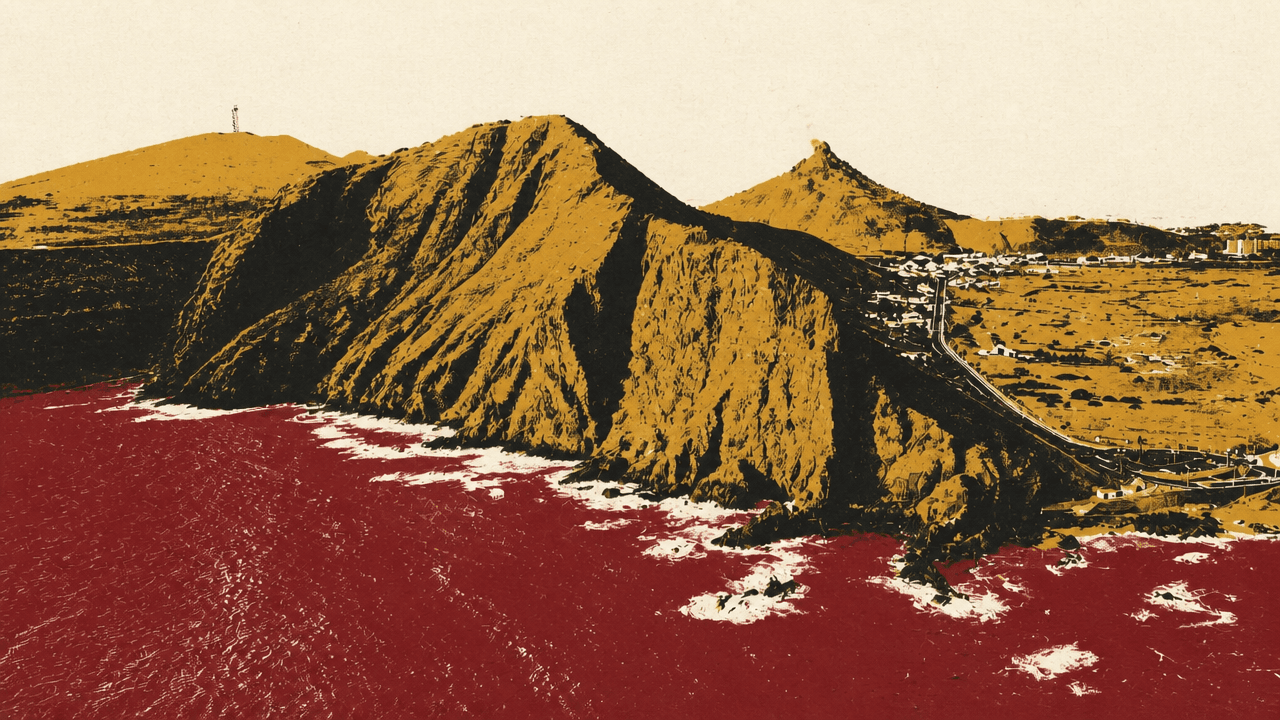
Porto Santo is trying to solve the island version of the renewables problem
Porto Santo’s energy project is being presented as more than a local infrastructure upgrade. The island has 5,000 permanent residents, receives 500,000 overnight tourist stays each year, and is isolated from Madeira. That combination makes it a compact test case for a larger problem: how to raise renewable power sharply while keeping an electricity grid stable under volatile demand and weather.
Bruno Fonseca of Hitachi Energy Portugal says the project’s main objective is “to increase the penetration of renewable energy together with the increase of grid stability.” The island cannot lean on a large surrounding grid in the way a mainland system can. It has to sustain itself.
The Portuguese government’s stated aim, according to the on-screen text, is to make Porto Santo the first island in the world powered entirely by renewable energy. The near-term step is less than 100 per cent but still substantial. Agostinho Figueira of Empresa de Eletricidade da Madeira says Porto Santo had been “practically dependent” on a single thermal power plant. A photovoltaic park and a wind park are due to be completed during the year and to contribute fully the following year. Together, he says, they should move the island from its current 10 per cent renewable electricity to about 70 per cent.

That jump is the center of the experiment. Porto Santo is not described as having already achieved full renewable power. It is shown as a system moving from fossil dependence toward a high-renewables grid, with storage and control systems treated as necessary rather than optional.
Tourism turns a small grid into a seasonal stress test
Porto Santo’s electricity challenge is not only that it is small. It is that the island’s demand profile changes sharply between winter and summer.
Rafaela Melim describes Porto Santo as a “wonderful island” with a nine-kilometer golden beach and sand that “makes magic.” The visuals reinforce that contrast: aerial shots of beach, town, harbour, cliffs and solar panels place the renewable-energy project inside a tourism economy rather than apart from it. The island’s population is small, but the annual visitor load is not.
Melim runs Restaurante Torres, a family restaurant started by her 88-year-old mother in 1975. Her sister and niece work in the kitchen; her brother-in-law prepares the meat and barbecue; her mother is “everywhere.” Summer brings many people, and with them a more demanding operating environment.
Figueira says the island is highly touristic, which means summer consumption is much higher than winter consumption. That seasonal gap, in his account, becomes a major challenge when the goal is 100 per cent renewable electricity.
Porto Santo’s demand problem sits alongside variable weather. Melim says the island can have “different seasons during a day”: strong winds, heavy rain and, “if lucky,” a lot of sun. In conventional terms, that variability is exactly what wind and solar systems must accommodate. In local terms, it is the difference between a restaurant being able to serve guests and a business stopping.
Melim says that in the past, energy on Porto Santo was not reliable. The island had many blackouts, sometimes lasting “several days and hours.” For a restaurant, she says, “when we have blackouts, everything stops”: no guests, no receiving people, no work. Her present assessment is direct: “At the moment, we don’t have those blackouts.”
Her testimony establishes the business stakes of reliability. Fonseca’s account places the battery system in that same operational frame: the project is designed to support grid stability as renewable penetration rises.
The battery system is there to make renewables usable, not just available
Fonseca describes the Porto Santo battery energy storage system as a collaboration between Hitachi Energy and EEM. Its role is grid support. If wind or sun suddenly falls short, he says, the batteries respond immediately to the lack of energy.
That point matters because storage is treated not as a showcase add-on but as a stabilizing layer that allows wind and solar to take a larger share of the island’s power. Porto Santo’s daily weather swings and seasonal demand swings both create instability risks. Fonseca says the batteries “have to deal with a very different scenario from winter to the summer,” and that the difference in consumption demands significant grid stability.
The battery system is therefore positioned between two pressures: intermittent renewable generation and highly uneven demand. On an isolated island, the tolerance for mismanaging either is lower. Fonseca does not present storage as the whole transition to 100 per cent renewable electricity. He presents it as grid support for a system trying to move from 10 per cent renewable electricity toward roughly 70 per cent, and eventually toward the government’s full-renewables ambition.
The old baseline, recalled in the opening Portuguese testimony, was an island without water, light or modern services when the speaker arrived in 1957. “When the light arrived, it was a celebration,” the speaker says. That memory gives the infrastructure story a longer arc: electricity is not an abstract metric on Porto Santo. Reliability has been experienced as a material change in daily life.
The mainland lesson is the reason the small island matters
Fonseca argues that Porto Santo’s importance lies precisely in its size. Because it is a very small island, solutions can be implemented and tested more easily. Hitachi Energy, he says, is taking lessons from these microgrids to the mainland and using them to deliver similar solutions worldwide.
Figueira makes a related point from the utility side. Renewable energy use is spreading throughout the world, he says, and if it is possible on a small island, it should be even more viable in larger electrical systems. His argument is not that larger grids are simpler in every respect, but that Porto Santo’s constraints make it a useful proof point: isolation, limited scale, weather variation, and tourism-driven demand all compress the grid-transition problem into a visible form.
The Porto Santo project is also connected to a global renewables target. On-screen text notes that at COP28, world leaders committed to tripling renewable energy capacity by 2030, and says lessons learned on Porto Santo may help achieve that target. The claim is cautious: Porto Santo is not offered as a universal template, but as a place where renewables, batteries, seasonal demand and grid stability can be tested together.
For Melim, the transition is practical rather than ideological. She is optimistic about renewable energy on Porto Santo because it could change daily life and make business more reliable. But she also frames the island’s pace as part of its character: “Everything changes very slowly. Which is also good. Because you have time to adapt and to live.”