Porto Santo Tests Battery-Backed Renewables for Isolated Island Grids

Porto Santo is trying to raise its share of renewable electricity on a small, isolated grid whose demand rises sharply with tourism and whose weather can change within a day. Hitachi Energy’s Bruno Fonseca and Empresa de Eletricidade da Madeira’s Agostinho Figueira argue that the island’s challenge is not simply adding solar and wind, but using batteries and grid-support systems to keep power reliable as renewable supply and seasonal demand fluctuate. The project aims to move Porto Santo from about 10 per cent renewable electricity to roughly 70 per cent, with backers saying the lessons could apply to larger power systems.
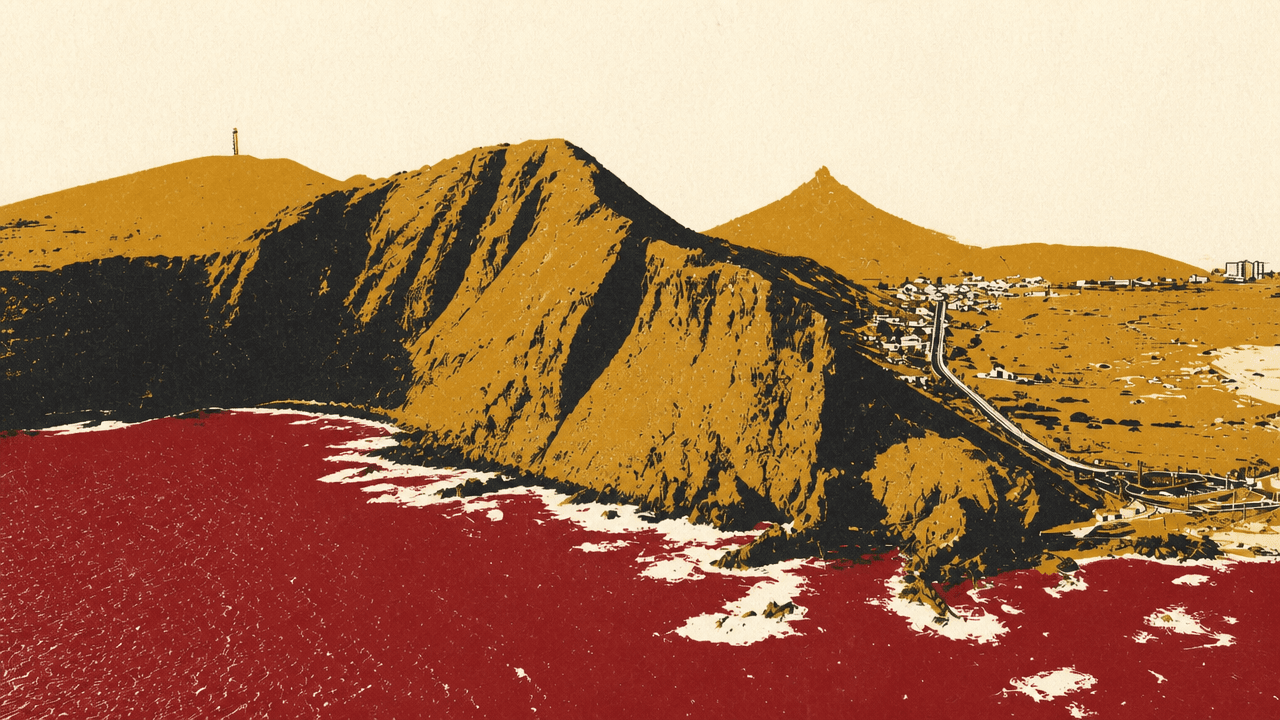
Porto Santo is trying to solve the island version of a global grid problem
Porto Santo’s renewable-energy project is built around a hard constraint: the island is small, isolated and seasonally volatile. It has about 5,000 permanent residents, but 500,000 tourist overnight stays each year. The grid is not serving a stable local population so much as a population that swells with the tourism cycle.
Bruno Fonseca of Hitachi Energy Portugal describes the core objective as increasing renewable-energy penetration while also increasing grid stability. The island, he says, is isolated from Madeira and “needs to sustain itself.” That makes Porto Santo a useful test case: limited scale, no large neighbouring system to lean on, strong seasonal demand shifts and variable weather.
Agostinho Figueira, director of Empresa de Eletricidade da Madeira, frames the same problem from the utility side. Porto Santo is “very tourism-oriented,” so electricity consumption rises sharply in the summer months compared with winter. That makes the ambition of reaching 100 per cent renewable electricity more difficult, not less. A grid designed around renewables must be able to handle supply variability and demand variability at the same time.

The Portuguese government’s stated aim is to make Porto Santo the first island in the world powered entirely by renewable energy. The immediate step is more modest but still material: Figueira says the island has so far been practically dependent on a single thermal power plant, while a photovoltaic park and wind farm are expected to be completed this year and fully operational from the following year. Together, he says, they would move Porto Santo from 10 per cent renewable electricity to around 70 per cent.
That transition is not a simple replacement of thermal generation with solar panels and turbines. The island needs a more resilient system if it is to absorb a much larger share of weather-dependent power while maintaining grid stability.
Tourism makes reliability an economic issue, not just an engineering one
For local businesses, the grid question is immediate. Rafaela Melim, host and manager of Restaurante Torres, describes Porto Santo as a beautiful island with a nine-kilometre golden beach. But the same tourism economy that makes the island attractive also creates operational pressure. “Summer, we get many people and it’s challenging,” she says.
Melim’s restaurant is a family business with deep roots: her mother, now 88, started it in 1975, and several relatives still work there. The point is not nostalgia. It is that electricity reliability determines whether such a business can function.
Melim says that in the past, energy on Porto Santo “was not reliable.” Blackouts could last “several days and hours.” When they happened, “everything stops”: the restaurant could not host guests, receive people or work. She says that, at the moment, those blackouts are no longer happening.
That claim matters because it ties grid stability to everyday commercial life. A renewable transition that only raises the percentage of clean electricity but worsens reliability would not solve the problem for residents or businesses. Porto Santo’s project is being judged against a practical standard: whether the island can run through high-demand tourism periods and variable weather without the interruptions that Melim says previously shut down local work.
The battery system is the bridge between variable weather and stable power
The weather on Porto Santo is described as changing across a single day. Melim says the island can see “different seasons during a day”: strong winds, heavy rain and, “if lucky,” a lot of sun. That variability is precisely what wind and solar generation must work with.
Fonseca identifies the battery energy storage system as a grid-support mechanism. Installed by Hitachi Energy in collaboration with EEM, the batteries respond immediately when there is a lack of wind or sun. The system is not only a store of electricity; in Fonseca’s description, it supports the grid as renewable generation varies.
If you have a lack of wind or sun, the battery systems will respond immediately to this lack of energy.
The battery system also has to manage the island’s seasonal demand difference. Fonseca says the shift between winter and summer consumption “demands a lot of grid stability.” In other words, storage is not being described as an optional add-on to solar and wind. It is part of how the island intends to reconcile intermittent supply with tourism-driven demand peaks.
Fonseca calls the relevant systems “microgrids,” and Porto Santo shows why that framing matters in this case: generation from solar and wind, battery storage for immediate response and grid support, and a system that has to remain stable on an island that, in his words, needs to sustain itself. The engineering challenge is not only producing more renewable electricity; it is keeping power available through the island’s shifts in weather and consumption.
The island is small enough to test, but the lessons are meant to travel
Fonseca argues that Porto Santo’s small size is part of its value. Because the island is compact, solutions can be implemented and tested more easily. He says Hitachi Energy is taking lessons from these microgrids “to the mainland” and using them to deliver solutions worldwide.
Figueira makes a broader version of the same claim: renewable energy sources are spreading globally, and if the model is possible on a small island, it should be “even more viable among larger electrical systems.” The argument is one of transferability. A small isolated grid exposes problems around renewable supply, storage and stability in a concentrated setting. If those problems can be handled in Porto Santo, the participants suggest, the methods may be applicable elsewhere.
The global target shown alongside that claim is the COP28 commitment by world leaders to triple renewable energy capacity by 2030. The source presents lessons from Porto Santo as potentially useful to that effort. The Porto Santo case suggests why: adding renewable generation is only part of the task; the system also has to manage variable supply and demand while preserving reliability.
Melim’s optimism is grounded in that local standard. She says renewable energy will change Porto Santo’s way of living and make business more reliable. But she also describes the island’s pace of change as slow, “which is also good because you have time to adapt and to live.”
That pace sits against a longer local memory of infrastructure arriving gradually. An unnamed resident recalls coming to Porto Santo in 1957, finding “no water, no electricity, nothing,” and seeing everyone celebrate when electricity was introduced. The renewable project is a technical transition, but it is also another stage in the island’s adjustment to systems that have arrived over time.