France Makes Furniture Sellers Pay for Disposal and Recycling
 Madeleine Speed
 Martin Capstick
 Bert VandenkendelaereFinancial TimesThursday, October 15, 20263 min read
Martin Capstick of the North London Waste Authority argues that the cost of disposing of cheap furniture should not fall solely on public authorities and taxpayers. Madeleine Speed reports on France’s fees on furniture makers and retailers, which help pay for collection and treatment, and on an industrial plant that recovers material from MDF. The examples address different parts of the problem: making producers contribute to disposal costs and finding ways to reuse material that can be recycled.
Cheap furniture leaves disposal costs with the public
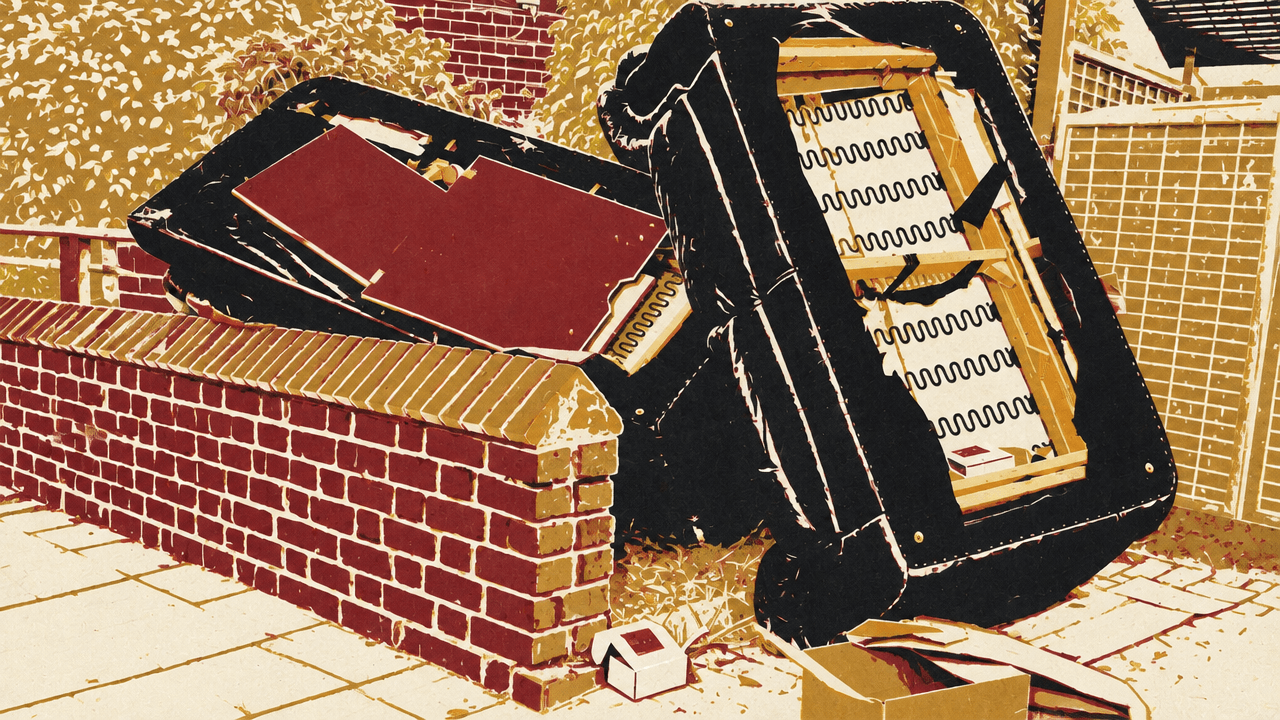
Fast furniture is inexpensive to buy, but its end-of-life costs can fall to waste authorities and taxpayers. In north London, Martin Capstick says the North London Waste Authority handles roughly 200 tonnes of discarded furniture each week across an area covering a quarter of London.


The problem is not only the volume. Sofas and other furniture can contain chemicals that make them difficult or dangerous to recycle, or combine materials in ways that make separation extremely difficult and expensive. Capstick says those costs should be reflected in the purchase decision, rather than passed on to public authorities. The scale of replacement helps explain the pressure: a quarter of UK adults surveyed in 2025 said they had replaced at least one piece of furniture in the previous year.
France makes furniture sellers contribute to its afterlife
France applies a polluter-pays approach: furniture makers and retailers are required to pay an eco-contribution toward future end-of-life disposal costs. The fee is added to retail prices—about €20 for a sofa and €15 for a mattress—and funds a nonprofit organization that manages the process.
Éric Weisman-Morel of Ecomaison said the system received €350 million in funding last year. He said the money is used to collect, sort, recycle or reuse discarded furniture, through a network of 12,000 collection points across France. Speed reports that around one and a half million tonnes are collected each year.
At treatment facilities, items that cannot be repaired or donated are broken down and separated. Weisman-Morel says Ecomaison guarantees that 50 per cent of what it collects will be recycled. Speed reports that most of the other half is burned to generate electricity, while materials such as plastic and mattress foam are reused in products including cement, insulation and car parts.
The contribution system pays for collection and treatment; the recovered materials can also serve manufacturing. Weisman-Morel says a circular economy has become a necessity for companies because they need a long-term view of their materials, and that manufacturers in France need secondary raw materials. The system therefore supports both furniture disposal and a supply of materials that can return to production.
Recovered MDF fiber has to work as an industrial input
Some furniture waste can return to manufacturing as material rather than being burned or discarded. In eastern France, Speed describes a plant that its operator claims is the world’s first able to recycle medium-density fiberboard (MDF) on an industrial scale.
Bert Vandenkendelaere says the plant takes used MDF panels, furniture-manufacturing waste and old laminate flooring. It uses a steam-explosion process: high-pressure steam separates wood fibers, which can then be used to make new panels. Speed says some of those panels contain as much as 25 per cent recycled material.


Vandenkendelaere says the plant has developed a system that produces high-quality recycled fiber at an economically viable rate. He says the factory makes roughly 500,000 tonnes of product and incorporates about 70,000 tonnes of recycled fibers.
That example concerns a particular material and process. It does not resolve the separate difficulty Capstick describes with many sofas: chemicals or combinations of materials can make them hard, dangerous or expensive to recycle. Producer contributions and industrial processing address different parts of the disposal problem, not a single route for every item.
Capstick says it is “not acceptable” for the cost of dealing with cheap products to be passed to waste authorities. He argues that consumers who know a product’s total life-cycle cost can make better-informed decisions. The French contribution puts some future disposal costs into the retail price; the MDF plant shows one way recovered material can return to production. Neither removes the need to account for furniture that remains difficult or costly to process.