Public Imagination, Not Corporate Control, Should Shape AI’s Future
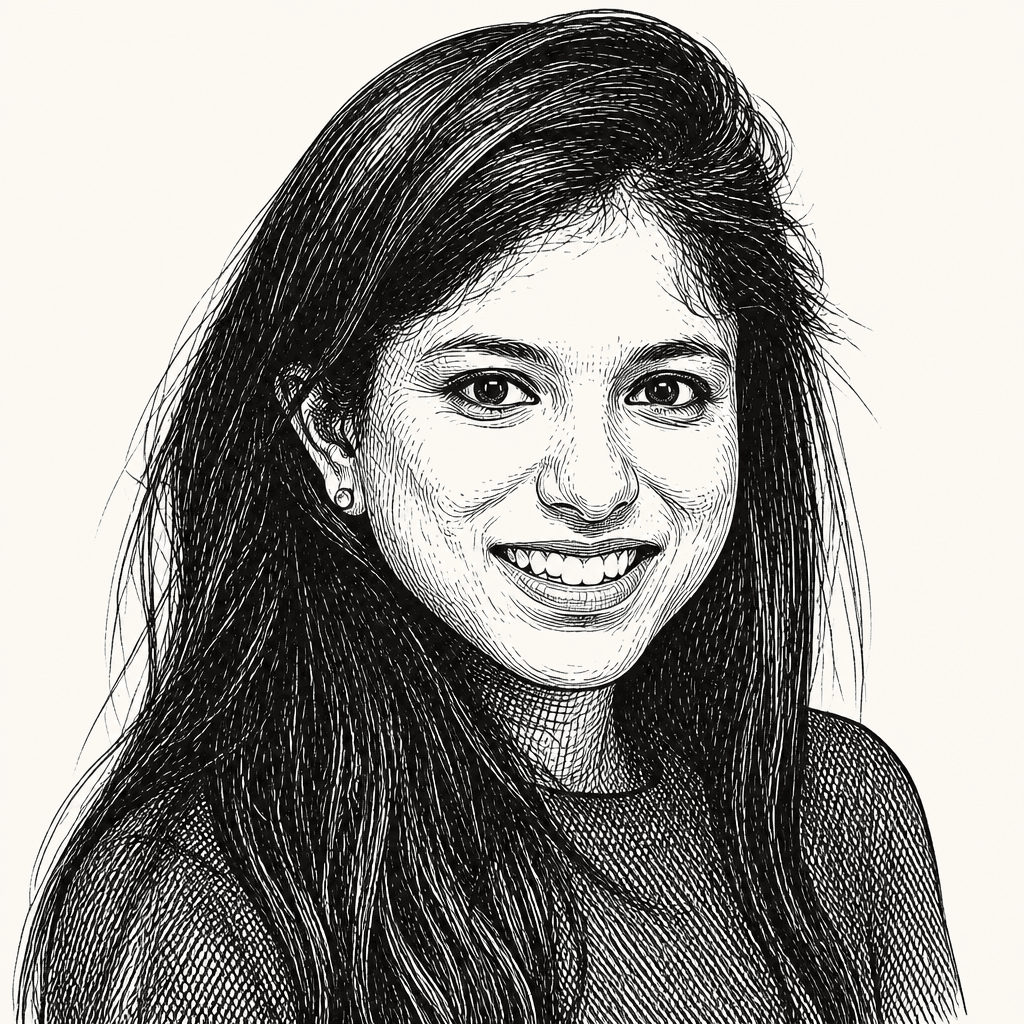
Financial Times AI editor Madhumita Murgia argues that artificial intelligence is already shaping daily life, but its future is still being imagined too narrowly by the private companies that control it. In a short FT Standpoint video, she offers three possible public-interest uses for AI — understanding fragile ecosystems, intervening earlier in disease, and recovering lost cultural history — while warning that each carries costs that should be debated beyond Silicon Valley.
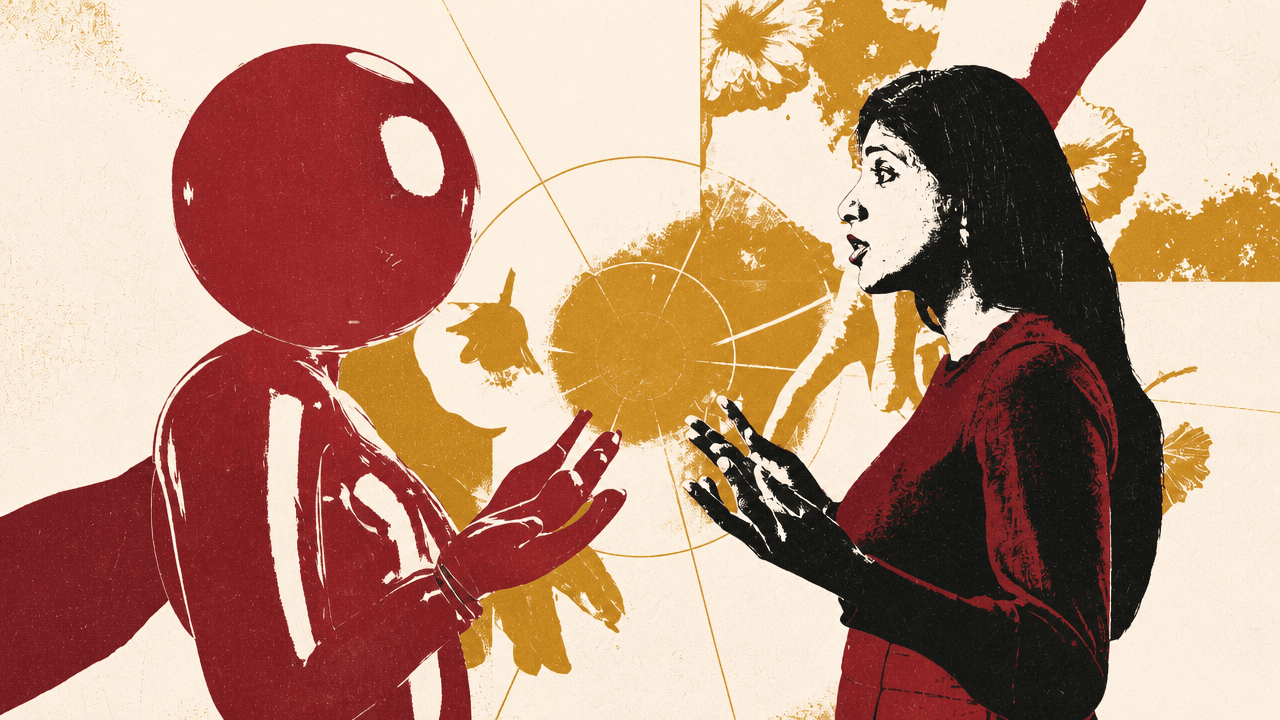
The contest is over who gets to imagine AI’s future
Madhumita Murgia treats artificial intelligence as already embedded in daily life, not as a speculative technology waiting somewhere beyond the horizon. The question is therefore not whether AI will matter, but what kind of future will be shaped around it — and who gets to decide.

Technologists, she says, envision “a golden era of humanity”: cheap, abundant intelligence producing radical upsides, economic opportunity, better health, scientific progress, and happiness. The conflict is that the technology’s current uses look narrower. So far, AI is mostly being used to increase productivity and profit.
That gap matters because control is concentrated. AI, in Murgia’s framing, is “locked away behind the doors of a few private companies” that own it, control it, and decide who can use it. The political and ethical question follows from the ownership structure: should the future of the world be shaped by a handful of technologists in California?
The right to imagine AI's role belongs to everyone.
The opening image reinforces that the future being discussed is plural rather than fixed: a point expands into concentric possible futures under the words “Now Futures.” The closing card makes the invitation explicit, asking viewers to share ideas at ft.com/aifuture. Together, those visuals frame AI not as a single inevitable path, but as a field of choices still open enough to contest.
Murgia’s alternative is not a finished programme for AI. It is a demand for a broader public imagination about what the technology should be for. She offers three possibilities — ecological knowledge, medical intervention, and cultural recovery — and attaches a warning to each. AI’s promise is not denied, but neither is it allowed to float free of cost, pressure, or consequence.
AI could make hidden ecosystems legible, but not cost-free
Some forests are too fragile for scientists to study by foot, and some creatures are too rare to observe directly. In that setting, AI is presented as an extension of scientific reach rather than a replacement for scientists. Sensors, cameras, and drones could gather data from places humans cannot easily enter; AI used with scientists could help map the resilience of ecosystems.
The promise is a more perceptive science of the living world. AI could help researchers “decode animals’ language,” glimpse “nature’s hidden worlds,” and help species adapt. The useful idea is not simply automation. It is access: to signals too faint, habitats too delicate, and patterns too complex to study through ordinary human observation alone.
The constraint arrives immediately. AI already carries a planetary cost. Murgia’s concern is not limited to the energy or material burden implied by that phrase; it is also about attention. Would the technology distract people from protecting the Earth at a moment when, as she puts it, “we have so little time to do it”?
The visuals underline the anxiety rather than resolving it: wildfires, floods, storms, and environmental destruction appear in a circular montage. AI might help humans understand and protect ecosystems, but the same future could become another way of deferring the harder work of preservation. Ecological insight is the upside; planetary cost and distraction are the trade-off.
The medical promise becomes harder when it touches lifespan itself
The second vision moves from ecosystems to the human life cycle. Madhumita Murgia describes “a cycle that defines each of us until it stops,” then asks whether AI could redraw the link between life and death.
Here the technology’s role is analytic, predictive, and inventive. Embryos can be analysed. Models can predict vulnerabilities. AI systems can help invent cures. In this future, people are nudged to avoid their “genetic fate” before illness or biological risk fully declares itself.
The promise is substantial: earlier knowledge, earlier intervention, and perhaps cures that would otherwise not exist. But Murgia does not present that prospect as unambiguously liberating. If AI can extend life or reduce inherited vulnerability, the ethical question becomes whether every possible intervention should be pursued.
The pressure point is social as much as medical. Would people feel compelled to extend their lives rather than enjoy them? The question is not framed as an argument against treatment or cure. It is a warning that prediction and optimisation can change expectations. Once AI makes certain forms of intervention possible, people may have to defend not only their health choices, but their willingness to live without maximising every variable.
AI can recover the past, even as it pulls us deeper into digital life
The third vision turns to history and culture. Madhumita Murgia asks whether there is “a richer story about ourselves” that can only now be glimpsed. AI models, in this account, could reconnect people with a past that has been lost, damaged, or rendered unreadable.
The examples are concrete. Hundreds of ancient scrolls from past civilisations could be deciphered. Paintings could be restored and recreated. Cultural works could be “rescued from oblivion,” revealing people to themselves through records and artefacts that would otherwise remain inaccessible.
This is AI as recovery rather than novelty. Its value lies in making inherited culture visible again: translating, reconstructing, and restoring what time has obscured. The imagined benefit is not more content for its own sake, but a richer human self-understanding.
The unease is that the recovered past may arrive through the same digital systems that detach people from physical experience. If people are “hooked to the digital world,” will they still value a past they can touch and feel? The paradox is sharp: AI could make cultural heritage more accessible while weakening attachment to the material objects, places, and forms of encounter that give heritage weight.
The final question — “What do you see?” — is not a rhetorical flourish. It is the public turn in the argument. The source ends by directing viewers to share ideas at ft.com/aifuture, extending the claim that AI’s future should not be treated as a closed roadmap written by companies or technologists. The point is to widen the circle of people defining the benefits they want, the limits they insist on, and the costs they will not ignore.