Nashville’s Boom Is Pricing Out the Musicians Behind Music City
 Whitney Daane
 Claire Jones
 Lauren Morales
 Tom Morales
 Freddie O'Connell
 Aftyn Behn
 Johnny Garrett
 Stephanie Coleman
 Jacob KupinFinancial TimesFriday, July 3, 20267 min read
Claire Jones reports that Nashville’s tourism and investment boom has made the city richer and more visible while threatening the affordability and local music economy behind its Music City brand. The FT film argues that rising housing costs, higher property-tax burdens, luxury development and subsidised corporate projects are pricing out musicians, small businesses and historic venues, even as visitor spending helps fund public services.
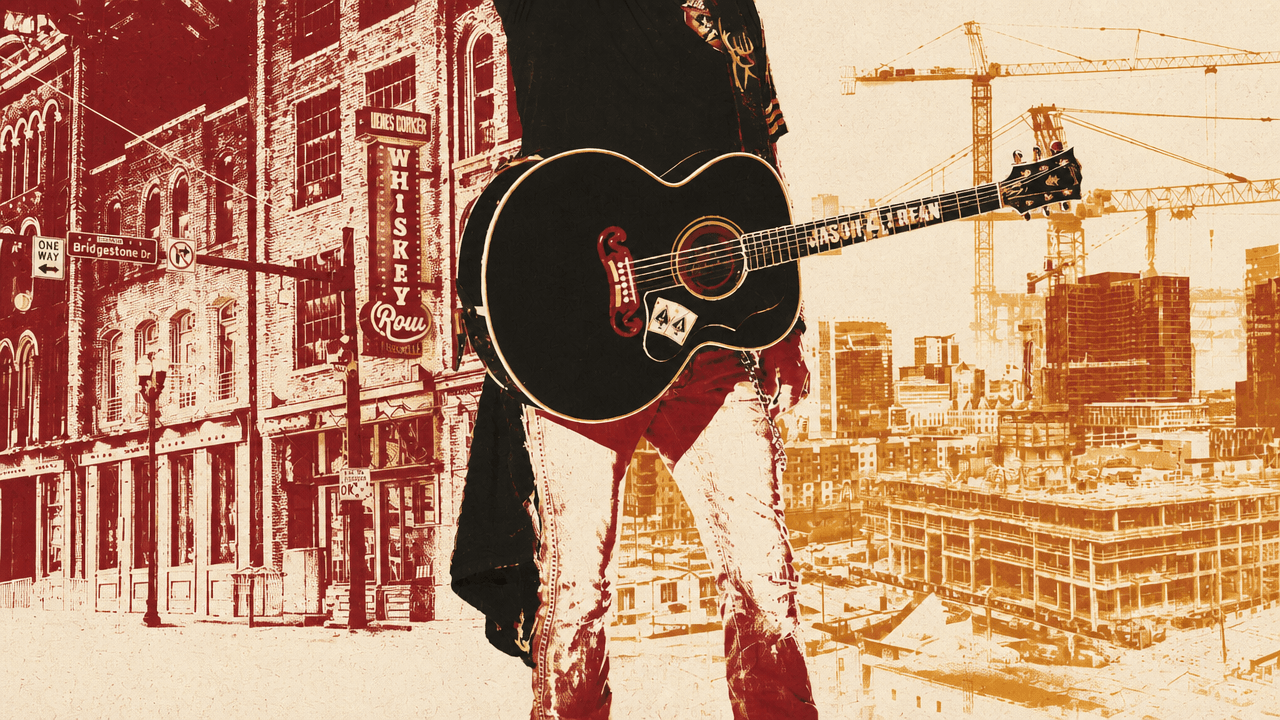
Nashville’s music economy is being priced out of its own city
Nashville’s success has created a harder question than how to attract visitors, companies, and capital. The question is whether the musicians, local businesses, and cultural workers behind “Music City” can still afford to remain there.
Jacob Kupin describes the city’s old bargain plainly: Nashville was affordable enough for musicians to arrive with little money, share space, and take a shot at building a career. That affordability, he says, is disappearing. When he first moved to Nashville, people could pay about $300 to sleep on a friend’s couch or rent a room. Now, he says, “we’re talking two, three, $4,000 a month to live.”


The consequence, in Kupin’s telling, is not just individual hardship. It is cultural loss before the public ever gets to hear what was lost. He wonders how many future artists “are not going to make it” because they cannot afford to come to Nashville in the first place.
Lauren Morales says several artists connected to her business have moved back to their hometowns in the past five years because they could no longer afford to live in Nashville. Claire Jones reports that housing costs have doubled since 2018, driven largely by luxury, high-density development that is transforming historic working-class neighborhoods.


A chart attributed to the Federal Reserve Bank of Atlanta compared median income with the income needed to qualify for a median-priced home in Nashville from 2005 to 2025. By the later years shown, the required qualifying income sat well above median income, making the affordability gap visible without reducing it to a single figure.
Tourism delivers real revenue, but locals dispute what kind of city it is buying
The tourism boom is not presented as simply bad for Nashville. Stephanie Coleman says visitor spending reached about $11bn in 2024 and equated to roughly $3,600 in revenue that Nashville residents otherwise would have had to cover through state and local taxes. Tourism, she says, helps fund services the community needs.


But the dispute is over the kind of tourism Nashville has chosen to cultivate, and what it displaces. Jones says many locals describe the city’s evolution as a “Vegasification”: a shift toward spectacle, commercialisation, and mass entertainment at the expense of authenticity.
Whitney Daane contrasts the current downtown experience with an earlier one. Lower Broadway always had tourists, she says, and Tootsie’s was already famous. But locals could still get in, buy a beer for a couple of dollars, and hear bands that record labels wanted to sign. Around a decade ago, she says, the scene “just exploded.” Major artists opened branded honky tonks and bars. Even on a Thursday morning, there can be a line.


Daane links part of that shift to the television series “Nashville,” which she says became nationally and internationally popular and drove a new wave of tourism. A promo for the series appeared with review blurbs calling it “FAVORITE NEW SHOW,” “MOST ANTICIPATED,” “MUST WATCH,” “A+,” and “PURE GOLD.”
Coleman adds that the boom came through multiple channels: corporate and convention travel tied to a new convention center, and individual travel as the city became known as the “bachelorette capital of the world.”
For Lauren Morales and Tom Morales, the issue is not whether Nashville needs tourist dollars. Lauren says it does. The question is whether those dollars are reinvested in the community. Tom puts the distinction more sharply: authenticity can sell over the long term, while “flashy lights” are temporary. He and Lauren describe a shift from music with drinking around it to visitors arriving primarily “to party and raise hell.”
A low-tax model has moved the pressure onto property and sales taxes
Nashville’s economic appeal is tied to Tennessee’s low-tax regime, but that model is politically and practically contested. Jones says Republicans argue the absence of a state income tax and the broader low-tax environment have helped attract major companies including Amazon, Oracle, and Starbucks. Democrats, she says, argue that the same structure pushes revenue raising into other places, especially sales taxes and property taxes, exposing smaller companies.
Johnny Garrett says rising assessments have become a serious problem in Nashville-Davidson County. Some constituents’ business tax bills have quadrupled, he says. One downtown business, Acme Feed & Seed, saw its tax bill rise from $129,000 to more than $600,000 in one year, according to Garrett.


| Business | Earlier tax bill | Later tax bill | Source in film |
|---|---|---|---|
| Acme Feed & Seed | $129,000 | More than $600,000 | Johnny Garrett |
Jones explains the mechanism: as property valuations rise, property taxes rise too, and some leases pass those costs to tenants rather than owners. Tom Morales says businesses need certainty — the ability to rely on workers, make a plan, and operate from it. A sudden 400 per cent tax increase, he argues, makes that impossible.
Aftyn Behn frames the problem as structural. “Our tax code discriminates against small businesses,” she says. She argues that Tennessee is a low-tax state for multinational corporations and the rich but a high-tax state for working families. Large companies such as FedEx, Amazon, and Google, in her view, can “muscle their way out of paying taxes,” while small businesses such as Acme pay a higher effective tax rate than the largest companies.


Garrett, from the other side of the political argument, also says current policies are pushing people out even as officials try to recruit people and activity downtown. The disagreement is not over whether pressure exists; it is over what caused it and who is being protected.
A chart attributed to the Metropolitan Government of Nashville and Davidson County showed property and local-option sales tax collected by the metropolitan government between 2005 and 2025. The visual showed both revenue streams as material parts of the city-county tax base, with collections rising over the period shown.
The mayor says property taxes are the city’s operating base, not an optional burden
Freddie O'Connell gives the city government’s constraint: from 2021 to 2025, Nashville saw a countywide leap in property values unlike any he recalls. That surge created political pain, but he says property taxes are the largest revenue source available to operate a city in Tennessee.


In O’Connell’s account, the money keeps parks and libraries open, funds schools, and funds police. For businesses and tenants facing sudden increases, the same revenue base that funds municipal services can become a cost shock.
The fight is sharpened by major subsidized projects. Jones notes that construction of a new football stadium has raised tensions. Tom Morales points to a covered dome stadium, saying it is subsidized by the city. He also says Oracle is building a large campus with city subsidy, while Lauren Morales says Amazon’s two towers were subsidized by the city.
Kupin argues the choice should not be framed as tourism versus locals. He wants Nashville to treat it as “both and,” not “either or”: investing in schools, teachers, and affordability while also building state-of-the-art venues and buildings that draw visitors who help pay the city’s bills.
Protecting the brand now means protecting the people who created it
Stephanie Coleman says Nashville has already tried one targeted response: subsidized housing for artists and musicians. She presents that as an example of what a city and community can do when the market no longer supports the cultural workers the city depends on.
That intervention addresses one piece of the problem: the ability of artists and musicians to keep living in the city. It does not, by itself, settle the wider conflicts over small-business taxes, tourism strategy, corporate subsidy, and housing affordability.
Coleman also warns against assuming the Music City brand will protect itself.
You can't just assume that Music City brand will be protected when it's becoming harder and harder for musicians and artists to live here.
Lauren Morales argues that the problem is larger than any single office or institution. In her view, the state, council, and city need a shared vision for where Nashville is going and how to protect what made it distinctive. The mayor cannot do it alone; neither can the state or council. What she sees instead is a lack of communication and vision.
Nashville’s unresolved trade-off is not growth versus stasis. It is whether visitor revenue, corporate investment, public subsidy, taxation, and housing policy can be aligned so that the city’s cultural workers and small businesses are not treated as expendable inputs to the brand they helped create.