Indian Mental-Health Programs Bring Treatment Into Shrines and Communities
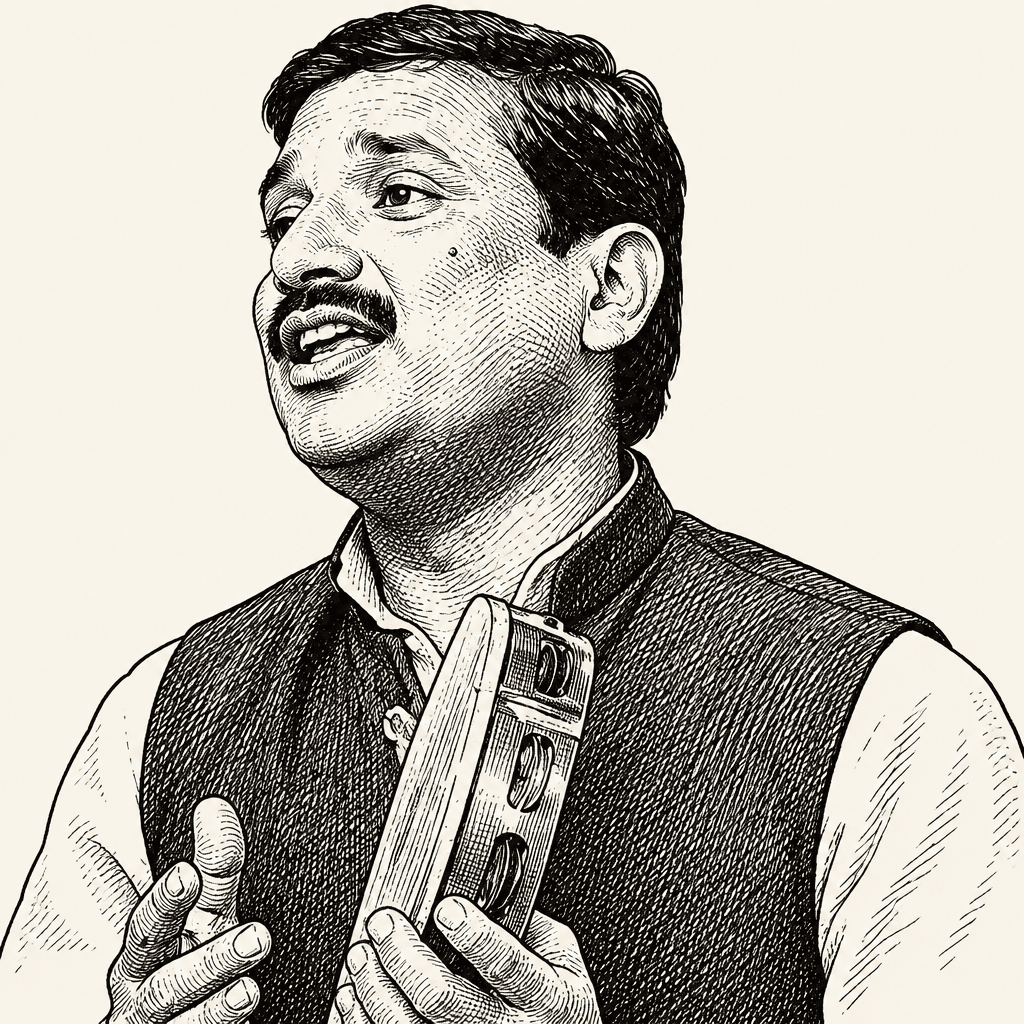 Raju InamdarBhagwan RandiveMayank PatelYatin Bhushan
 Hamid DabholkarMilesh HamlaiFinancial TimesSaturday, October 10, 20269 min read
With one psychiatrist for every 133,000 people in India, the film examines two community approaches to extending mental-health care: Dawa-Dua connects prayer at Gujarat’s Mira Datar shrine with treatment at a nearby clinic, while Parivartan trains local workers in Maharashtra to identify symptoms and connect people with care. Dawa-Dua works through a relationship families already trust without asking them to give up faith; Parivartan’s psychiatrist Hamid Dabholkar argues that community workers are essential to reaching people specialists cannot serve alone.
Care works better when it does not ask families to abandon faith
An on-screen statistic says one in seven Indian adults requires mental-health care, while India has one psychiatrist for every 133,000 people. In that gap, families often turn first to religious sites and faith healers. At Mira Datar shrine in Gujarat, a programme called Dawa-Dua is built around that reality: people can pray at the shrine and receive medical treatment at a clinic nearby.
Mayank Patel says many visitors come seeking help for what they understand as witchcraft or the evil eye. Some, he says, are living with mental illnesses that can be treated. The programme does not ask them to give up religious practice. “There is faith, and there is medicine,” Patel tells one mother, Afsana Khatoon, as he encourages her to bring her son to the clinic.
Khatoon has travelled 1,700 kilometres with her son. She describes a child who hit people, tore his clothes and could not manage basic routines. In the first days after reaching the shrine, a spiritual adviser told her that the boy was ill and urged her to give him medicine as well as seek prayer. After five days of treatment, she says, his anger had eased and he was behaving better. The change was not complete, but she could imagine returning home if he continued to improve.
At the clinic, psychiatrist Yatin Bhushan asks about the boy’s behaviour and explains the medicines. Bhushan says families may interpret severe illness and violence as possession or the effects of a spell. Because they already trust the shrine, a referral from its spiritual authorities can make it easier for them to accept medical care. The clinicians, he says, are there to provide medicine within a relationship of trust established elsewhere.
That relationship took work. Milesh Hamlai, coordinator of Dawa-Dua and founder of the Altruist NGO, says the team made clear to shrine attendants that it was not trying to close the shrine. Some attendants had relatives with mental illness themselves; they began taking medicine through the programme, and trust developed gradually. The next step was training them to recognize signs such as not sleeping or eating, confused speech or violence, and to refer people to the clinic.
An on-screen caption recalls that a fire at a shrine in Tamil Nadu in 2001 killed 28 people with mental illnesses who had been chained up. The caption says the tragedy exposed widespread abuse and led to court-ordered reforms and greater oversight of faith-healing sites. Dawa-Dua, which has operated at Mira Datar since 2008 with state support, is one response to the need for care at a place people already visit.
The collaboration does not require families to give up prayer in order to access treatment. At the shrine, spiritual preceptor Saiyad Munawar Ali offers prayer, but also tells Khatoon that if her son’s behaviour becomes dangerous, medicine is needed. The arrangement leaves religious belief in place while making treatment an available part of the visit.
A clinic can turn one patient’s recovery into a source of trust
The case for connecting access with treatment is also made by people who have themselves lived with severe illness. One man, speaking without an on-screen name, describes schizophrenia affecting four members of his family. Before the clinic opened at the shrine, his mother had searched unsuccessfully for help. He recalls episodes of injuring himself without understanding what he was doing, and says his wife cared for him and urged him to keep taking medicine.
He compares treatment for mental illness to medicine for a fever: something to continue because it is needed, not a sign of personal failure. Once treatment helped him recover, he says, he could work and support his household. When his son was young, the family had sent him to a hostel. After his recovery, the boy ran to him and said, “Papa, you’ve become so good.” The man uses his own experience to tell other patients that they, too, can move forward.
The words he repeats capture a distinction he wants others to understand: “He is not mad; he is ill.” In his account, stigma can keep families from recognizing symptoms as something for which treatment exists. People who have recovered can offer their own experience as an example of illness alongside a return to family and working life.
Khatoon’s hopes for her son remain cautious. She says his anger has lessened, and the family plans to keep giving him medicine. Her immediate goal is to bring him home when he is well enough. That kind of improvement, rather than a promise of instant recovery, is why continuity of treatment matters to the family.
The clinic’s scale is substantial. An on-screen caption says more than 10,000 patients visit each year, and another says shrines of different religions across India have replicated Dawa-Dua. The programme’s reach depends not only on clinicians but on trusted intermediaries who can help people take the next step toward care.
When specialists are scarce, community workers extend the reach of care
More than 850 kilometres away, in Satara, Maharashtra, psychiatrist Hamid Dabholkar argues that specialist services alone cannot reach everyone who needs them. He says India has around 10,000 psychiatrists and that this number cannot serve a population of 1.4 billion. “If mental-health services are to reach every home,” he says, community health workers are essential.
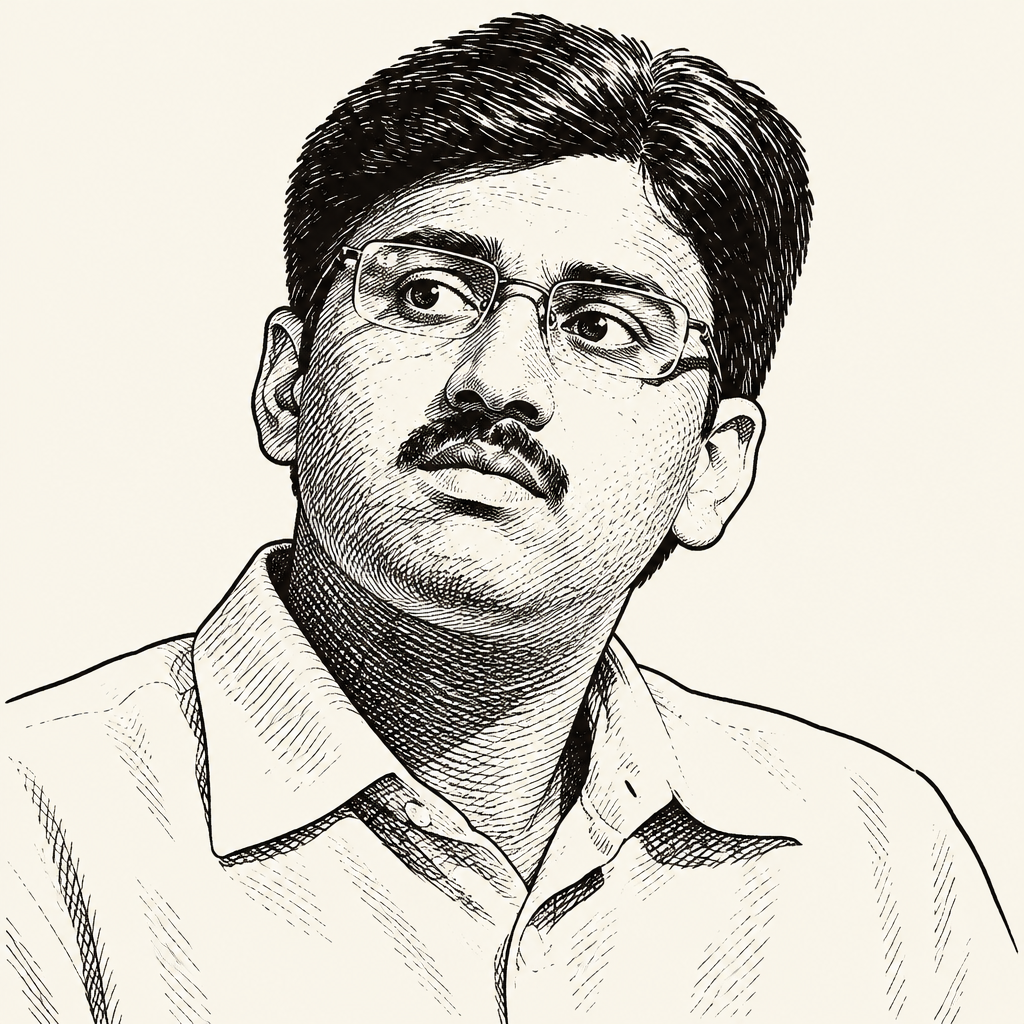
The approach developed by Parivartan sends trained local workers door to door. They take a person’s history, ask about symptoms such as hallucinations, delusions or suspicion, and consider whether family conflict may be connected to mental illness. Workers are also taught to explain that, just as the body can become ill, so can the mind. Dabholkar says many families need counselling and follow-up, not just an initial appointment.
Pratiksha Shinde is one of those workers. She comes from a village and drives an auto-rickshaw to support her family. Her training covered what mental illness is, how to ask about symptoms such as loss of sleep or appetite, and how to use a yes-or-no questionnaire to assess whether a condition appears mild, moderate or severe. For moderate difficulties, she may offer counselling on daily routines and hobbies; for severe illness, she works to connect the person with treatment.
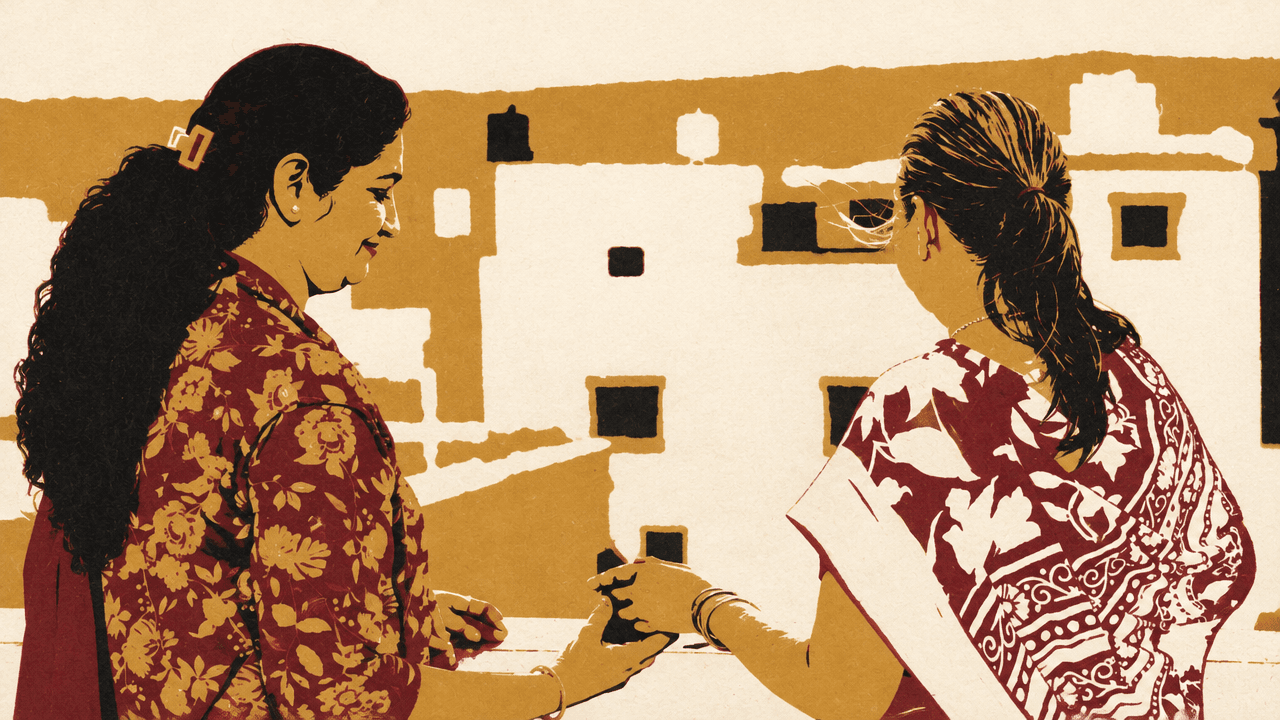
A home visit can make that system feel less like a distant service and more like someone paying attention. In Satara, Shinde checks in on Meena Hanmante, who says she no longer hears voices and is less afraid. Hanmante had once feared lighting the gas stove; now she manages household chores and has returned to living with her husband. Shinde asks whether she will continue taking her medicines. Hanmante says she will.
Their exchange is casual and familiar: they talk about tea, household life and how Hanmante has changed over two years. That familiarity is part of the work. Shinde says people may not have anyone who speaks with them openly about what they are experiencing. In a separate explanation of the community programme, workers describe taking time to listen, encouraging follow-up and helping families understand symptoms they may otherwise treat as inexplicable behaviour.
Shinde’s commitment is personal. Her husband had an addiction, withdrew from daily life and ate very little. He died by suicide. At the time, she did not know that his symptoms could be signs of depression or that a doctor might be able to help. Training later gave her a way to understand what had happened. She says she does not want another family to experience the same loss: if the work can save one family, that matters.
Hanmante, in turn, begins to imagine doing the work herself. She says she wants to help others as Shinde helped her, and that she understands the illness because she has lived through it. She asks about training and says she wants others to regain their families and find peace as she has.
Treatment also depends on changing what communities believe they are seeing
Dabholkar connects mental-health care to a broader struggle against superstition and exploitation. He says severe mental disorders and superstitious explanations often overlap in families’ understanding of distress. When someone becomes seriously ill, he says, a family’s first response may be to seek out a self-proclaimed godman or godwoman.
His father, Narendra Dabholkar, campaigned against superstition and was assassinated in Pune in 2013. On-screen text says public outrage after his killing led to the state’s first anti-superstition law. Hamid Dabholkar says the work his father began continues through both anti-superstition organizing and community mental-health programmes, which also address the ways people with mental illness can be exploited.
In one demonstration, anti-superstition activist Bhagwan Randive stages a ritual in which a skewer appears to pass through a tongue. Dabholkar explains how the trick works: the tongue sits in a U-shaped gap rather than being pierced, and camphor held briefly in the mouth goes out when the mouth closes and cuts off its oxygen supply. People may interpret the act as proof that a goddess has entered someone, he says, and bow to the person performing it. Showing the mechanics is one way to challenge the authority such performances can acquire.
Dabholkar says mental-health professionals cannot do this work alone. “All of you, all of us, must come together,” he says. His account links accessible treatment with changing how communities interpret suffering, so that illness is not automatically mistaken for possession and people experiencing it are less exposed to exploitation.
Recovery includes work, relationships and a place in the group
In Satara, Parivartan’s work extends beyond clinical appointments. Theatre artist Raju Inamdar describes Manas Rang, or “Colours of Mind,” as a festival of dialogue using songs, theatre, painting and other art forms. In a group activity, participants sing and share food. Inamdar says relationships and mental health are closely connected: sharing food with affection can strengthen relationships.
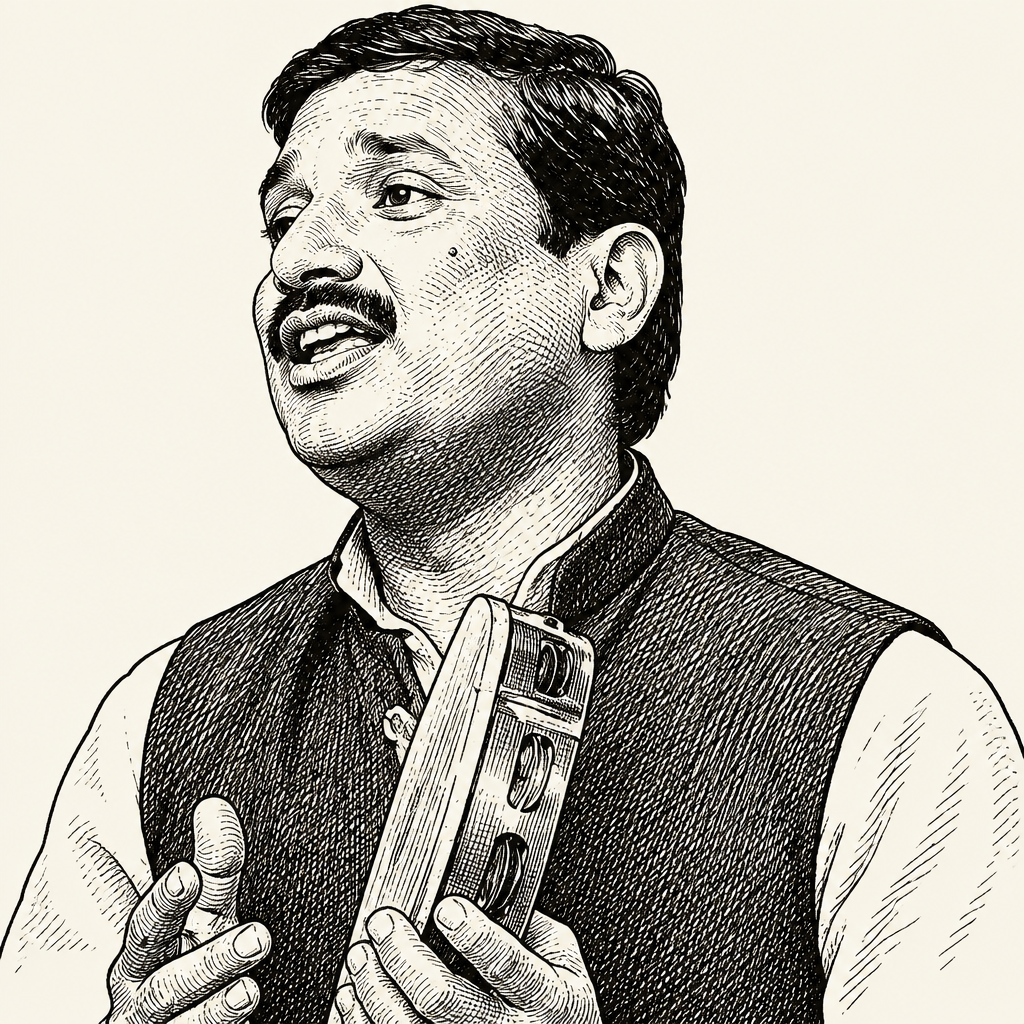
The group offers people a setting in which to talk about what has happened to them and to encounter others with different experiences. Vijaya Bhandare says financial stress left her feeling that nothing made sense and wondering whether to end her life. She later found the group and access to medicine. As her condition stabilized, she began giving tuition at home. She now says others encourage her to take on teaching more formally.
Ajit Sawant describes a period when he wandered the streets wearing only underwear and was beaten by people. His family brought him for help. He says he now works as a watchman at a fuel station, earning 15,000 rupees a month, and has held the job for six years. Suresh Bhise says he once experienced hallucinations and feared someone was coming to attack him. His family tried religious sites before he began treatment at Parivartan in 2010. He credits medicine with helping him recover and says the Colours of Mind group feels like family.
Bhise describes his recovery in explicitly medical terms: he says he got better with medicine, “not through God or religion.” At Mira Datar, the programme instead works through an existing relationship to faith to connect people with clinical care. The accounts describe different routes into treatment, alongside the importance of continued care and human connection.
The possibility that Hanmante might become a community worker gives that connection a further turn. She says she wants other people to recover as she did. Her experience is now part of what she hopes to offer others: a reason to seek help and the knowledge that treatment helped her rebuild her life.