Household Renewables Gain Appeal as Fossil-Fuel Price Shocks Hit Budgets

The FT’s Leyla Boulton argues that the latest oil and gas price surge is making household renewables look less like a climate preference and more like financial protection. Solar panels, batteries, heat pumps and electric vehicles can reduce exposure to volatile fossil-fuel costs, but Boulton says adoption depends on solving practical barriers: upfront capital, uneven subsidies, installation quality and consumer trust.
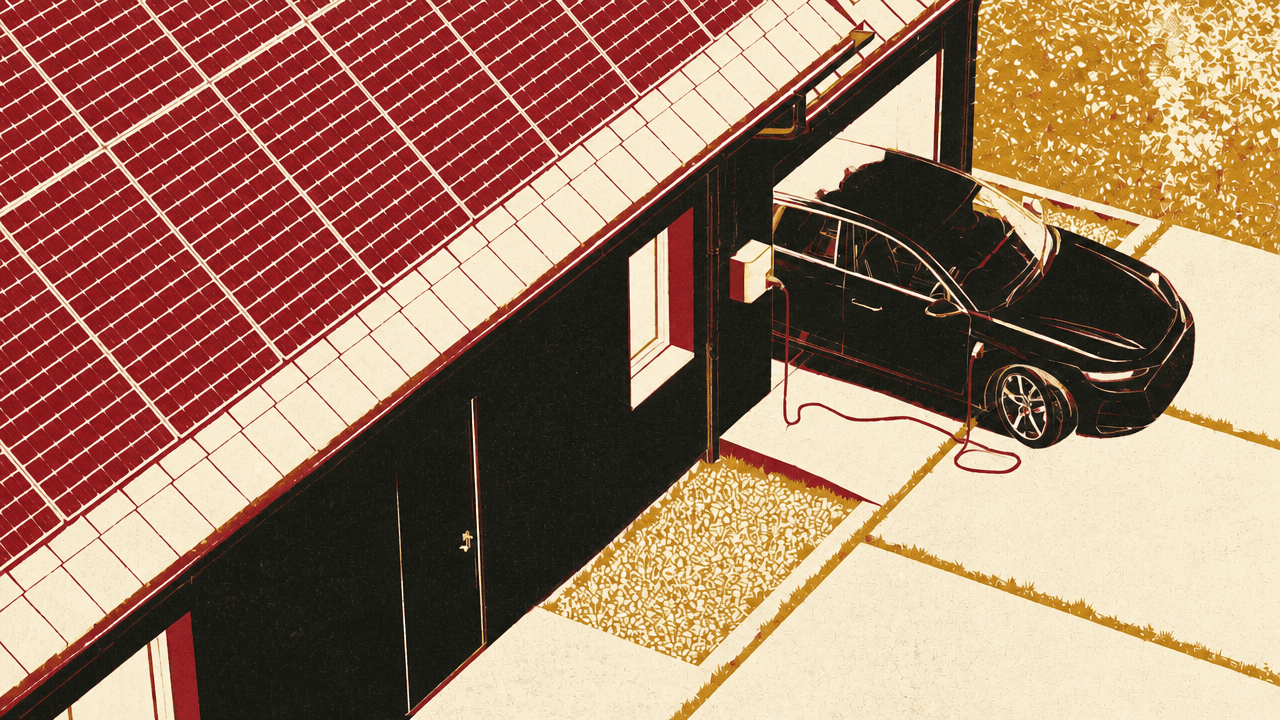
Household renewables are being pulled by energy-price fear, not just climate policy
Leyla Boulton frames the shift to household renewables as a practical response to fossil-fuel costs reaching “unaffordable levels.” Domestic solar panels, storage batteries, heat pumps and electric vehicles are presented less as abstract green technologies than as tools for household resilience when oil, gas and gasoline prices become painful or unpredictable.


The logic is straightforward. Solar panels allow a household to generate some of its own electricity, cutting bills and reducing anxiety about power supply in turbulent times. When those panels are connected to a battery system, the household gains more control over timing: electricity can be stored for later use or sold back to the grid. A heat pump can provide central heating and hot water. An electric vehicle can reduce exposure to soaring gasoline prices.
That is the core promise Boulton identifies: domestic renewables can make a household less vulnerable to fossil-fuel price shocks. Adoption is not simple, and the economics do not automatically work for every home. But the latest surge in oil and gas prices has made household-level alternatives more compelling where they reduce recurring exposure to fossil fuels.
Adopting renewables at home isn't always straightforward, but they offer a powerful safeguard against energy price shocks.
The first obstacle is the upfront cost households cannot absorb
The main barrier is capital. Most households, Boulton says, cannot afford the upfront investment required to install domestic solar, battery storage, heat pumps or related home energy systems. The technologies may reduce bills over time, but the initial cost remains beyond the reach of many consumers.
Government subsidies can narrow that gap, but Boulton treats them as uneven and fiscally constrained. Ireland is cited as a country that provides extensive financial support for domestic retrofit. The point is not that subsidy is unavailable everywhere, but that this level of support is not a universal solution. The FT overlay made the constraint explicit: “NOT ALL GOVERNMENTS CAN AFFORD THAT LEVEL OF SUBSIDY.”
That leaves a financing problem. If households cannot fund the transition themselves, and governments cannot fully subsidize it, private lenders become more important. Boulton points to green mortgages as one mechanism, while noting that most banks are only just beginning to understand and develop them.
Her description of green mortgages is specific: lending to buy a home with energy-saving hardware can reduce a household’s risk of default by lowering its exposure to high energy costs. The relevant credit argument is not only environmental. It is financial. A household with lower and more controllable energy bills may be less exposed when fossil-fuel prices rise.
Subsidies can fail if delivery quality is weak
Leyla Boulton identifies a second barrier: governments may set green ambitions but fail to take the right policy decisions quickly enough to make domestic adoption work in practice. The UK heat-pump regime is her example. She says every household in the UK is entitled to a state-subsidized heat pump, but that the regulatory system has focused more on paperwork than on checking installation quality.
That distinction matters because a subsidy does not, by itself, guarantee that a heat pump is installed well. Boulton’s criticism is aimed at administrative design: public support can exist on paper while failing at the point where households need the technology to perform.
The human factor is trust
The final obstacle Boulton names is “the human factor”: fear of the unknown. She says that fear is often justified by a lack of information about whom to trust to deliver the results households are paying for.
This is a different kind of adoption barrier from cost or regulation. Even when a household wants lower energy bills, and even when the technology is improving, the decision still requires confidence in installers, lenders, products and expected results. Boulton does not describe consumer caution as irrational resistance to green technology. She presents it as a response to uncertainty in a market where the buyer may not know who can be trusted.
The economics are improving even where policy support weakens
Leyla Boulton also argues that there are grounds for optimism. Costs are falling, and green technology is improving. That changes the household case for adoption: domestic renewables become more attractive when they are cheaper, perform better, and make economic sense to consumers.
She points to the US as evidence that household adoption can continue even when political support weakens. Even as the Trump administration was “busy dismantling support for renewables,” she says, households were still embracing them where they made sense for their wallets. The emphasis is on consumer economics. When the household case is strong enough, adoption need not depend entirely on federal enthusiasm.
Electric vehicles provide another example. Boulton notes that some carmakers have announced a retreat from EVs, but says sales of secondhand electric cars are surging as the oil crisis bites. Used EV demand is another sign that fuel prices are changing household economics: when gasoline becomes more expensive, electric alternatives become more attractive to buyers seeking lower running costs.
Taken together, the argument is that home renewables are difficult to adopt, but pressure from fossil-fuel prices is making their value more visible. The transition depends not only on technology, but on financing, subsidy design, installation quality and consumer trust.