Far-UVC Offers Building-Scale Pathogen Control, but Population Effects Remain Unproven
 Nathan Labenz
 Patrick McKenzie
 Misha Gurevich
 Vivian BelenkyThe Cognitive RevolutionSunday, August 16, 202613 min read
Aerolamp CEO Misha Gurevich and chief scientist Vivian Belenky, a Columbia University researcher, argue that 222-nanometer far-UVC fixtures can inactivate airborne pathogens at room scale for about $500 per lamp, without penetrating beyond the body’s outer protective layers. They see the main obstacle as adoption rather than basic engineering, particularly in schools, care facilities and transit settings where shared-air exposure is concentrated. But Belenky cautions that the evidence has not yet established how much ordinary disease transmission occurs slowly enough for room-scale treatment to substantially reduce infections.
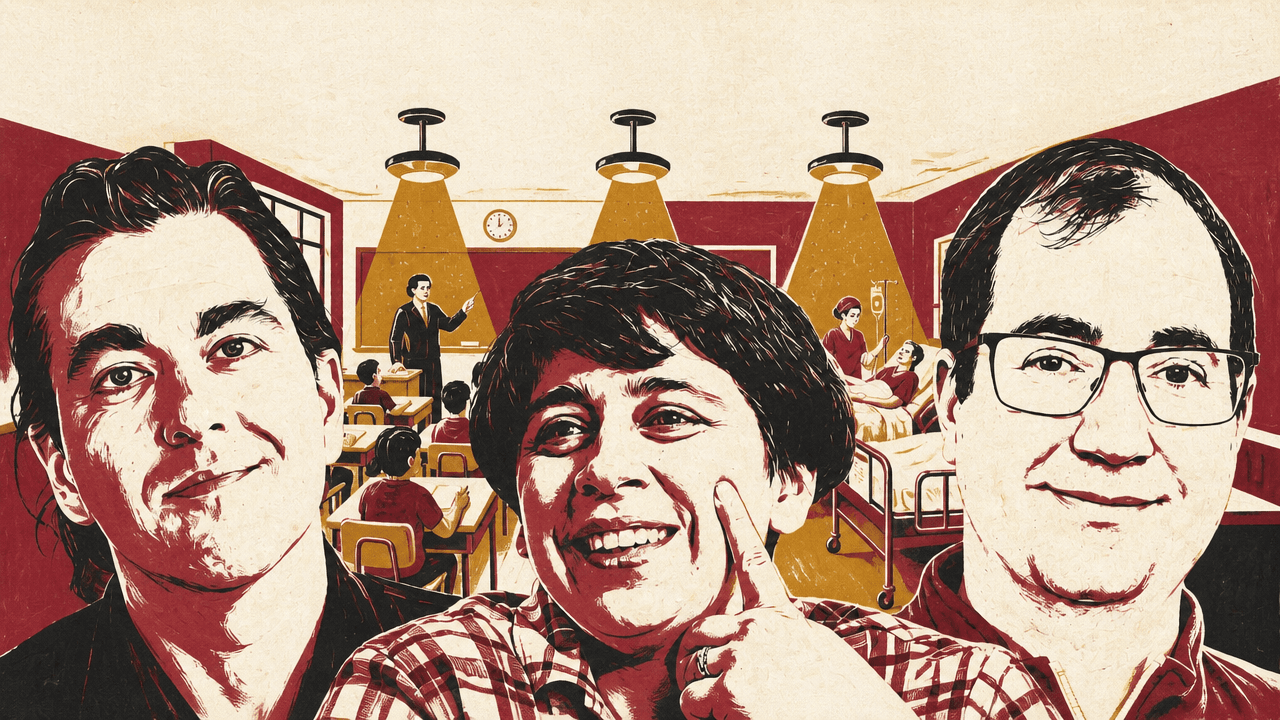
A cheap building fixture could reduce airborne infection—but its broad real-world effect is still unproven
Aerolamp’s proposition is unusually concrete: a roughly $500 far-UVC fixture can be mounted in a room now, with conventional electrical work, to inactivate airborne pathogens. Vivian Belenky compares the resulting pathogen control to an extremely strong air purifier, potentially delivering the equivalent of roughly 30 to 50 additional air changes in a space.

The central decision is therefore not whether ultraviolet light can damage pathogens in a laboratory. The harder questions are how much ordinary disease transmission takes place in a window where room-scale treatment can interrupt it; how much long-term safety evidence institutions will demand; and which buildings can justify adoption before the answer is fully settled.
The technology’s advocates see a gap between those uncertainties and the practical state of deployment. Misha Gurevich calls current products an “existence proof” that far-UVC is ready to install outside a laboratory or government facility. Belenky’s position is that more research is useful, particularly on best practices and long-term safety, but that no critical technical or regulatory barrier prevents use now.
That does not mean every office, school, or household has the same case for installing a lamp. The relevant distinction is between a plausible mechanism, encouraging but limited outcome evidence, and a population-scale payoff that depends on where and how widely fixtures are deployed.
The safety case depends on far-UVC stopping at the body’s outer layers
Far-UVC is germicidal because it is absorbed by the DNA and RNA of pathogens, Vivian Belenky explains, as well as by proteins generally. A microorganism exposed in the air may remain physically present, but it can no longer replicate. It works quickly enough, she argues, to act as a form of air treatment rather than merely a surface-disinfection tool.
The relevant wavelength is principally 222 nanometers. It is not present in ordinary sunlight: sunlight is primarily UVA and UVB, while UVC is blocked by the ozone layer. Sunlight can still kill germs, Belenky says, because there is vastly more of it, but it is less germicidal per photon than UVC.
The distinction between 222-nanometer far-UVC and longer germicidal UVC wavelengths is central to the proposed safety story. Conventional germicidal systems often use wavelengths around 254 or 265 nanometers, including in water disinfection. Those longer wavelengths do not have the same level of protein absorption. They can be used in upper-room systems, but Belenky says they require much more careful installation: a mistake can expose occupants to a wavelength capable of causing eye damage quickly.
At shorter far-UVC wavelengths, the argument is mostly mechanical. Human skin has an approximately 20-micron outer layer of dead cells—the stratum corneum—which is rich in proteins and absorbs nearly all of the radiation. Any remaining exposure is absorbed in the uppermost skin layers, which generally slough off over days. Belenky says she has not seen studies showing significant biological activity reaching the basal skin-cell layer, where DNA damage would create a more serious cancer concern.
The eyes present the harder safety case because they do not have an equivalent dead-cell layer. Eyelids, eyelashes, eyebrows, and the brow ridge reduce the effective dose, and the tear layer absorbs some far-UVC—Belenky estimates roughly 15% of the incident dose. But the rest is absorbed in the eye’s epithelium, and lower exposures can cause discomfort or pain.
Her judgment is that protein absorption limits the radiation’s penetration to the first few cell layers, making long-term harm unlikely, though not fully characterized. She cited one-year and three-year eye-safety studies underway in Japan, while acknowledging that the technology has not existed long enough for the longest possible follow-up.
It’s more like, did you accidentally climb up and stare right into it for a couple of minutes without turning it off.
The intended operating environment is not one in which a person sitting normally in a room suddenly develops eye pain. Belenky instead describes an accident involving direct, close inspection of a fixture. That matters because pain is a warning signal: unlike an infrared laser, where someone can receive a damaging dose without feeling it, far-UVC discomfort would prompt a person to look away.
Misha Gurevich adds that Aerolamp’s emitters produce about 100 milliwatts. The dose falls sharply at room-scale distances, he says, while the germicidal effect requires relatively little energy.
The fixture is deployable now, but the strongest case is in shared spaces
The current form factor is a corner-mounted lamp aimed across a room. Vivian Belenky says this geometry reflects the narrow beam angle of present fixtures: pointing a beam from one corner toward the opposite corner increases its path length and improves the average dose across the space.
The intended endpoint is more ordinary. Rather than a conspicuous corner device, Belenky expects far-UVC eventually to resemble overhead lighting or other ceiling infrastructure in offices, schools, and hospitals. Current units are designed to make a simpler point: a building owner can install one without inventing a new trade or operating model.
For a room requiring two lamps, Belenky’s rough current budget is $1,000 for hardware and another $1,000 for installation. A fixture can be mounted with a drywall anchor and plugged into an outlet; permanent work may mean ceiling wiring and an electrician. The guests’ rule of thumb is to budget professional installation at roughly the cost of the fixtures themselves, though Belenky expects that estimate could fall with scale.
| Measure | Estimate discussed |
|---|---|
| Coverage | About 250 square feet per lamp |
| Current lamp price | About $500 |
| Typical classroom | Two to three lamps; up to four for a larger room |
| Professional installation | Roughly the cost of the lamps |
| Rated lamp life | At least 10,000 hours at 70% output |
| Operating life at 8 hours/day on weekdays | About five to six years |
| Operating life at 24/7 use | About one and a half years |
Small buildings might require four- or five-figure commitments; universities and other large institutions may need hundreds of lamps and spend six figures on hardware before installation. An employer or school operator can therefore make a conventional capital decision now, but cannot yet point to a definitive general estimate of illness prevented per room.
The guests’ practical hierarchy favors settings where illness is costly, exposure is concentrated, and an operator may be able to notice a change in outcomes.
| Setting | Why it is prioritized | Constraint or adoption path |
|---|---|---|
| Long-term care and TB-related settings | Less mixing with outside networks may make changes in transmission easier to observe; illness carries high stakes | Among the likeliest settings for nearer-term measurable returns |
| Hospital waiting rooms | High aggregate occupancy, with each visitor spending only limited time in the room | Shorter individual dwell times may make safety concerns more acceptable |
| Transit hubs and other mixing points | People from otherwise separate communities meet there | Potentially important for pandemic suppression; lamps may need to run continuously |
| Schools | Often poorly ventilated, with potentially large benefit for children | Parents and institutions may be cautious about newer technology; private schools may move first |
| Homes | Can matter for infants, immunocompromised people, or frequent gatherings | Limited transmission among a small household weakens the general cost-benefit case |
Elementary and middle schools may ultimately have the largest benefit, Belenky says, because they are often poorly ventilated and serve children who have had less prior exposure to circulating pathogens. But she expects them to be more cautious adopters. Private and specialty schools may move earlier; a motivated parent could potentially fund a classroom installation if a school agrees.
Households are a genuine point of disagreement. Misha Gurevich thinks a typical home with only a few occupants often does not have enough transmission to justify a $500 fixture. The calculation can change for immunocompromised people, people especially concerned about illness, or people for whom the cost is trivial. Belenky sees more value in homes with infants or frequent gatherings. After having a baby, she says, she used lamps in her living room when visitors came to help postpartum. Both agree that the greater social payoff lies in shared, high-traffic environments.
The tuberculosis result is promising; close-range transmission is the central unknown
The most concrete outcome evidence discussed is a South African tuberculosis study. Vivian Belenky says preliminary results from TB wards found 90% suppression of transmission in guinea pigs exposed only to air from the human ward. The result concerns airborne exposure in guinea pigs rather than a measured reduction in human cases.
The result matters because Belenky describes tuberculosis as comparatively resistant to far-UVC—perhaps about ten times more resistant than a typical respiratory virus such as influenza or coronavirus. But she does not present the study as direct evidence that far-UVC will suppress influenza or coronavirus transmission by a comparable amount. Those pathogens need not move through real-world spaces in the same way. Her claim is narrower: a large effect against TB gives her reason for optimism about more susceptible respiratory viruses.
The hard part is translating pathogen inactivation into fewer infections in normal life. Randomized controlled trials of environmental disease-transmission interventions are difficult to design, Belenky says, and early deployments may show limited benefits when most of the surrounding community remains untreated. A person whose office installs far-UVC can still catch influenza at a child’s untreated school or elsewhere.
Belenky expects a nonlinear adoption curve: stronger suppression may emerge once a community crosses some threshold of treated spaces. Misha Gurevich is more optimistic that particular institutional settings can establish useful evidence before community-wide coverage exists. A long-term-care chain that observes sharply lower infections at an installed location than at comparable locations could have a practical reason to expand deployment even before a large academic literature settles every question.
The main unresolved variable is the share of transmission that is too close-range and too fast for room-scale treatment to matter. Belenky estimates that a typical far-UVC installation could provide the equivalent of one air change every two minutes. In that framework, coronavirus or influenza virus concentration would fall roughly 90% in about eight minutes and 99% in about 15 minutes.
That is highly useful if infection generally follows 30 minutes or an hour of sharing air with an infectious person. It is less useful if a large portion of transmission occurs when two people speak from two feet apart and one immediately receives a large infectious dose. Better air mixing can reduce direct streams somewhat, but environmental controls have less time to work in that scenario.
Belenky says far-UVC could still reduce viral dose and perhaps illness severity even if it does not eliminate infection. Her distinction is between a world in which the technology delivers a modest, worthwhile reduction in airborne illness and a world in which it substantially transforms disease transmission at population scale. She considers no benefit at all unlikely; the open question is the scale of the real-world benefit.
The pandemic case is about crossing a transmission threshold before an outbreak compounds
Misha Gurevich considers pandemic prevention the most consequential use case. He is less certain that far-UVC can prevent the average cold, particularly when prolonged close interaction is the dominant exposure. But he argues that a highly transmissible respiratory pathogen creates more opportunities for interventions that reduce airborne spread.
The relevant threshold is whether each infection produces, on average, more or fewer than one subsequent infection. Patrick McKenzie puts the arithmetic plainly: a reproduction number of 1.08 grows exponentially; 0.99 does not. The hope, in his formulation, is that a relatively small reduction in transmission could move an emerging outbreak from slightly above that threshold to slightly below it.

Paradoxically, the more contagious something is, the more surface area there is to keep it from getting as bad as it could get.
Gurevich points to traditional upper-room UVC, using the more hazardous 254-nanometer wavelength, as having been used to control measles outbreaks. He describes measles as having a reproduction number around 20, compared with COVID-19 at its worst being “1 point something” in his account. That history makes him optimistic that far-UVC in transport hubs and other places where otherwise separate communities mix could lower transmission enough to matter during a future respiratory outbreak. It is an argument from the mechanism, prior UVC use, and threshold dynamics—not evidence that a far-UVC deployment has yet prevented a pandemic.
The organizational appeal is as important as the epidemiological one. Vaccination, masking, and other personal measures require large numbers of people to participate. Far-UVC can be installed by a building owner, a school board, or a code authority and apply to everyone who uses the space.
The guests point to ASHRAE 241 as the present route through which infection prevention could become a building requirement. They describe it as an ambitious standard assembled quickly, still under construction, and not yet broadly adopted by authorities with jurisdiction. Its significance is less the current rulebook than the institutional mechanism it represents: an authority could require a specified level of infection prevention, while building owners choose the cheapest workable combination of measures.
That route would move deployment away from emergency responses and toward ordinary capital planning. Buildings are renovated on roughly 10-year cycles, Belenky notes. If code requirements apply during those cycles, infection control can be incorporated as infrastructure rather than requiring every occupant to change behavior during an outbreak.
Far-UVC is not presented as a replacement for ventilation or filtration. Ventilation brings in outdoor air; HVAC filtration and portable in-room cleaners can remove pathogens while also addressing particulate matter, dust, chemical pollutants, and allergens. Far-UVC has only a modest effect on allergens, Belenky says, and conventional filtration remains more useful for that problem.
The guests’ argument is that pathogen control in large, densely occupied rooms—auditoriums, lecture halls, gyms—can become difficult or cost-prohibitive through ventilation alone. In those spaces, far-UVC may make a broader clean-air strategy more achievable. Whether that strategy provides enough reduction to change outbreak dynamics remains an expectation to be tested in deployments, not a result already established by the TB study.
Diffusion depends on awareness, credible deployments, and a market that is no longer tiny
The far-UVC market remains small. Vivian Belenky estimates global sales may be only hundreds of lamps a year, while acknowledging uncertainty about the figure. Its rarity leads many people to infer that some decisive safety, regulatory, engineering, or cost obstacle must remain.
The guests reject that inference, while not claiming the remaining questions are trivial. Their account is that current prices partly reflect a tiny, high-margin market. Misha Gurevich says preferred emitters are currently made by one Japanese company, use hydrogen fluoride gas in manufacturing, and may cost $15 to $20 per emitter even without margin. He does not regard the technology as unscalable, but says it is not as straightforward to scale as mass-market LEDs.
Belenky expects substantial room below current prices even without a scientific breakthrough. She speculates that a fixture price on the order of $100 could be possible within a few years or sooner. That is a projection, not a current procurement fact, and it matters chiefly for large installations: a building needing 100 lamps faces a different decision at $3,000 per fixture, $500 per fixture, or $100 per fixture.
For institutions deciding now, the immediate question is not whether a future cost curve will arrive. It is whether the present cost is justified by the setting’s exposure pattern, the cost of illness and absenteeism, and the value of learning from an early deployment. A school operator may see a compelling child-health case but want more safety evidence and parent acceptance. An employer may focus on sick days and caregiver absences. A standards body may require stronger evidence on both safety and real-world efficacy before making clean-air performance mandatory.
Gurevich identifies awareness as the principal missing input. Most people have not heard of far-UVC, and even people familiar with ultraviolet disinfection generally do not know about 222-nanometer systems. He sees a broad information campaign as potentially more valuable than almost any single commercial action.
Belenky favors trial deployments that can generate evidence and make the fixtures familiar in ordinary venues, offices, and community spaces. Her concern is that too much attention too early could generate scrutiny before routine deployments establish a record of safety and benefit, hardening institutional resistance rather than accelerating adoption.
Formal research is especially vulnerable to what Gurevich calls a heckler’s veto: one uncomfortable participant can make an institutional review board unwilling to approve a study. A building owner that independently decides to install fixtures faces a different threshold. Belenky notes that effects can still be studied after voluntary deployment, without making the initial decision contingent on universal agreement.
The business case may also be less politically loaded than public-health messaging. Employers with highly compensated staff bear costs when employees are ill or must care for sick children. Belenky says caregiver absenteeism can be a substantial share of the economic cost of ordinary colds because children get sick more often. Finance firms, she notes, adopted ventilation and filtration measures early in COVID because they saw a business case. Far-UVC was not broadly available then, but she argues that the same calculation could support adoption at the right price.