Periodic Imposter Syndrome Can Signal Productive Career Growth


Comedian Jimmy Carr argues that imposter syndrome is not a condition to eliminate but a sign that someone has moved beyond routine competence. His rule of thumb is to seek work that feels newly uncertain every 18 months or two years, choosing challenges in which success is not automatic but there is still something practical to do. That, he suggests, gives a restless mind a problem it can work on rather than leaving it to ruminate on events beyond its control.

Growth requires returning to the edge of your competence
Jimmy Carr thinks imposter syndrome can be a useful recurring condition rather than a defect to eliminate. His rule of thumb is that every 18 months or two years, a person should have moved into work that makes them feel newly uncertain—surprised, even, that they managed to do it.
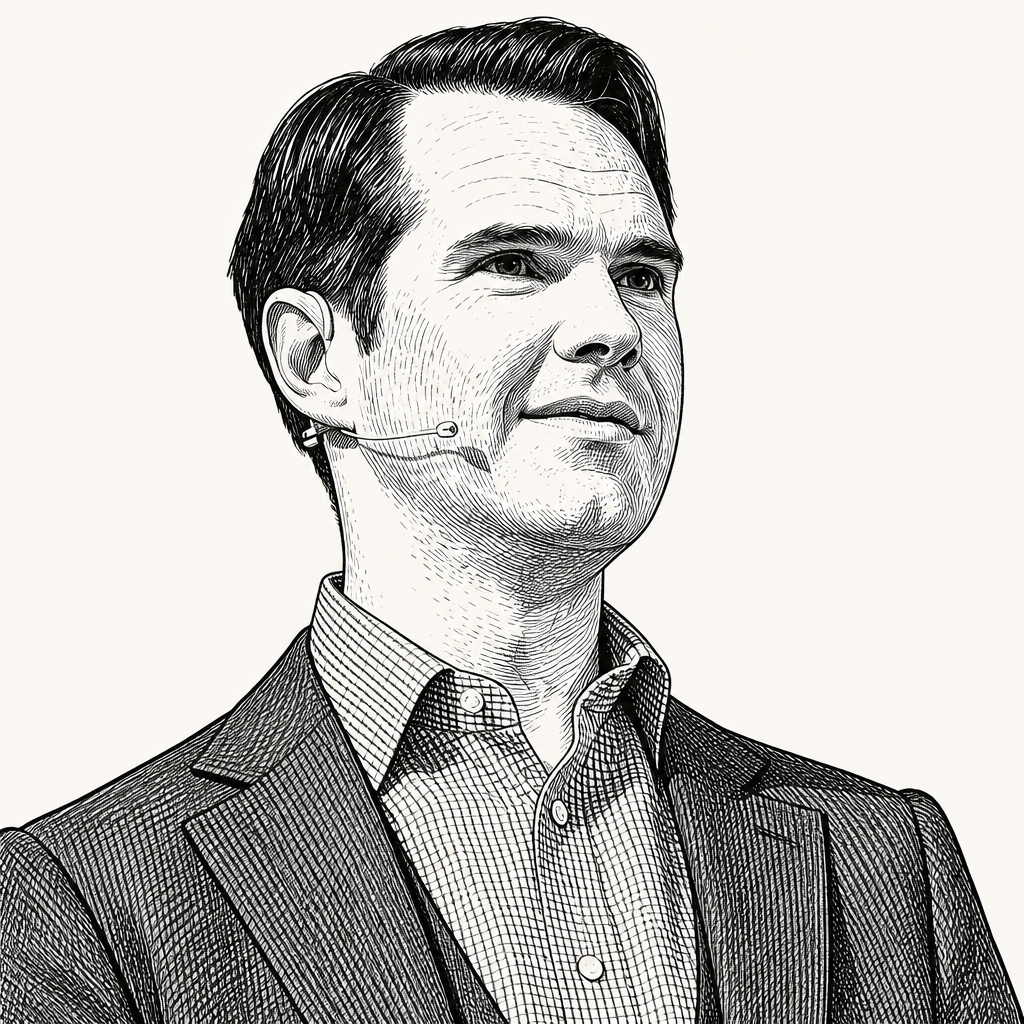

You need to be in a state of, I guess, imposter syndrome once every 18 months, two years. Need to level up constantly where you feel like you're in a space where, oh wow, this is, this, I can't believe I did that. That was good.
The point is not to remain permanently insecure. It is to avoid letting competence become a ceiling. Carr says a person can “change games” or do familiar work differently when they have reached the top of one game. The practical aim is a fresh challenge: work in which success is not automatic and accomplishment can again feel surprising.
That proposal answers a problem Chris Williamson identifies among high performers. Achievement can become difficult to enjoy when it is experienced as an obligation. As capability rises, standards rise with it; success becomes the minimum acceptable result, while anything below it is treated as failure. Williamson sees a real benefit in that mindset—it can sustain effort and improvement—but also a cost: there is little room to celebrate because a person is always measuring themselves against what they believe they should now be able to do.


Carr’s own work offers an example of changing the terms without changing professions. He describes comedy as a service business: he makes something people want and tries to make them happy. Individual jokes may not be remembered, he says, but audiences remember how a show made them feel. A performance tonight is therefore “nothing more than an advert” for the next time he returns.
Over the past few years, Carr says, his shows have also made more room for exchanges with audience members that are less purely comic and sometimes more heartfelt. He cannot identify precisely why that shift began. But it has made the interaction feel different, with laughter still there to “sweeten the pill.” Read as an example of his broader principle, the change introduces uncertainty into an established craft: not just delivering material, but responding to people in the room in a more exposed way.
Carr describes that exposure as a form of intimacy. He invokes the line that “laughter is the shortest distance between two people,” then compares social small talk with the uninhibited exchanges possible between close friends. The absence of a filter signals closeness. He says audiences respond when they feel they are being addressed without condescension.
If you treat the audience like that, you get paid back 10 times over. Like people feel that, oh okay, there's no, he's treating us like adults.
An anxious mind needs problems it can actually work on
Jimmy Carr connects this need for useful difficulty to his experience of anxiety. He describes waking at four or five in the morning with his mind already racing through counterfactuals: people getting hurt, things going wrong, and other imagined disasters. Giving that mind a concrete task—writing a joke about Keir Starmer or Andy Burnham, for example—gives it something to do.
When Chris Williamson calls this using action as an antidote to anxiety, Carr agrees. The mind is not made less active; its activity is directed toward a problem with a route to action. A joke can be written, revised, and performed. The task absorbs attention without leaving it trapped in rumination.
Williamson’s broader suggestion is that many people have problem-solving minds without good problems available to them. Their attention attaches instead to politics, pornography, former relationships, or events in distant countries. The issue is not merely that these matters are outside personal control. It is that they can invite concern and analysis while offering no practical role for the person consuming them.
Carr uses news as the clearest example. If someone were trying to produce mental-health difficulties, he says, they could make a person aware of a problem while giving them no agency over it. He names the Middle East as a situation that can be horrifying and absorbing while leaving an observer unable to affect its course.
Williamson adds a qualification. Complete helplessness may not be the most unsettling case: an asteroid approaching Earth, with nobody able to stop it, differs from a crisis that seems as though somebody could solve it—but not the person watching. That condition combines awareness, imagined possibility, and exclusion from action.
His own return from a seven-day meditation retreat made the point visceral. After a week with almost no speech, screens, or phone use, Williamson entered an airport terminal and saw coverage of wildfires raging in Europe. He felt a sudden constriction, and questioned what the display was doing besides piercing viewers’ nervous systems and making them worried about events they could not influence.
Carr does not recommend ignorance. He says he wants to be informed, enjoys knowing what is happening, and likes considering possible solutions. But he recognizes the distance between discussing large-scale problems and influencing what happens. The practical contrast is between attention that merely activates the mind and attention that gives it work it can carry forward.
Agency and empathy should not depend on whose side someone is on
Jimmy Carr extends the question of agency beyond anxiety. He argues that people often give empathy to groups they like and agency to groups they dislike.
His example contrasts a far-right march with a social-justice march. If members of the first group put a brick through a window, Carr says, the instinct may be to emphasize choice and punishment: lock them up and throw away the key. If members of the second group do the same, sympathetic observers may instead explain the act as the language of unheard people. One group is treated principally as responsible actors; the other as products of circumstance.
Carr’s position is that both agency and empathy are owed to everyone. Chris Williamson states the balance directly: people should be responsible for what they did, while also being understood as enmeshed in the circumstances and motivations that brought them to that point.
The claim is not that context removes responsibility, or that responsibility makes context irrelevant. It is that either category can be selectively withheld when allegiance determines the analysis. Carr’s formulation asks for both: belief that people can handle responsibility, and recognition that everyone has a part to play within conditions they did not wholly choose.