Anxiety Often Reflects a Life Without Agency or Community

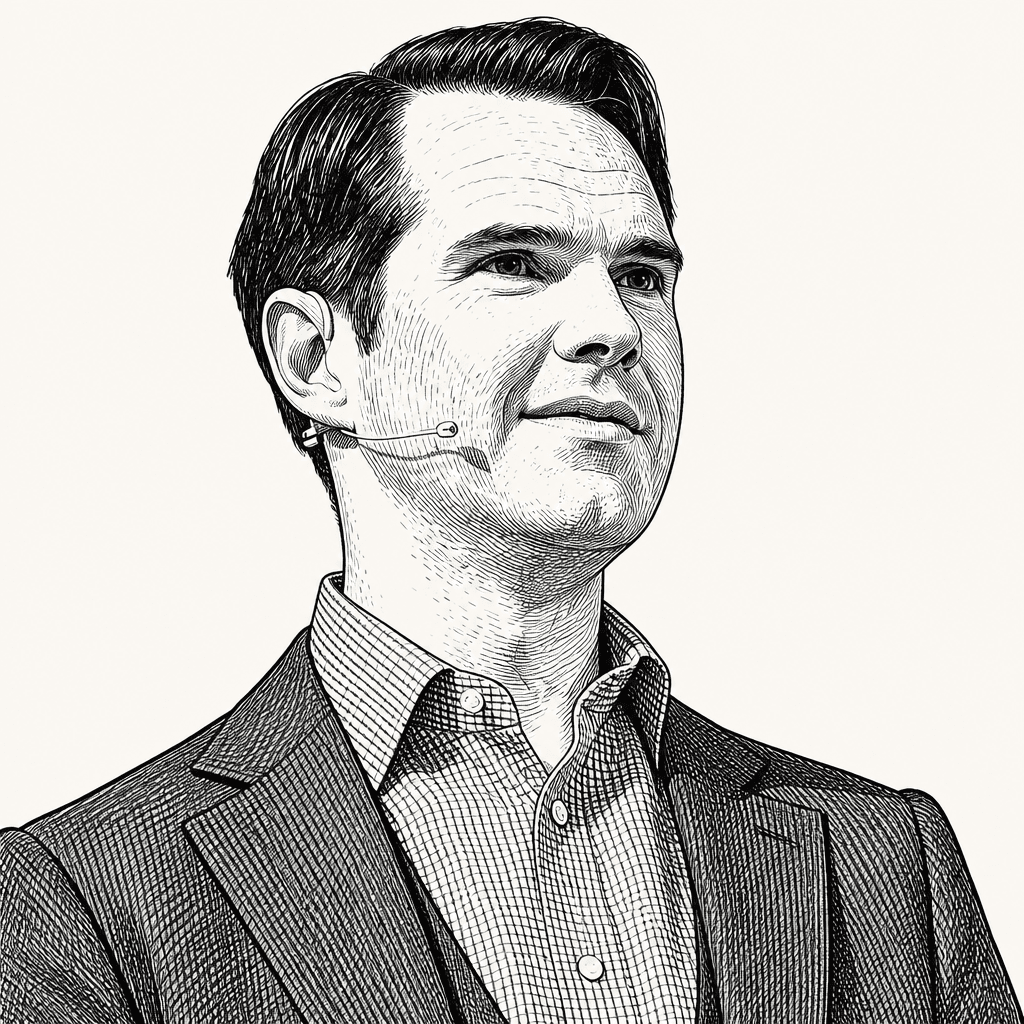
Comedian Jimmy Carr argues that much contemporary anxiety and unhappiness are not simply private disorders but responses to atomized, badly structured lives: people have more optimization, information and optionality, but less community, agency and direction. His remedy is neither ease nor self-blame, but commitment—building self-trust through action, confronting problems early, directing attention toward work that matters, and staying connected to other people.

Anxiety is not always a private failure
Jimmy Carr treats anxiety less as a character flaw than as a problem of uncontrolled attention and, often, a badly arranged environment. His compact definition is that anxiety is “thought without control,” while flow is “control without thought.” On stage, he says, accumulated performance experience lets him enter the latter state: he knows the work, responds to the room, and does not need to narrate each next move to himself.
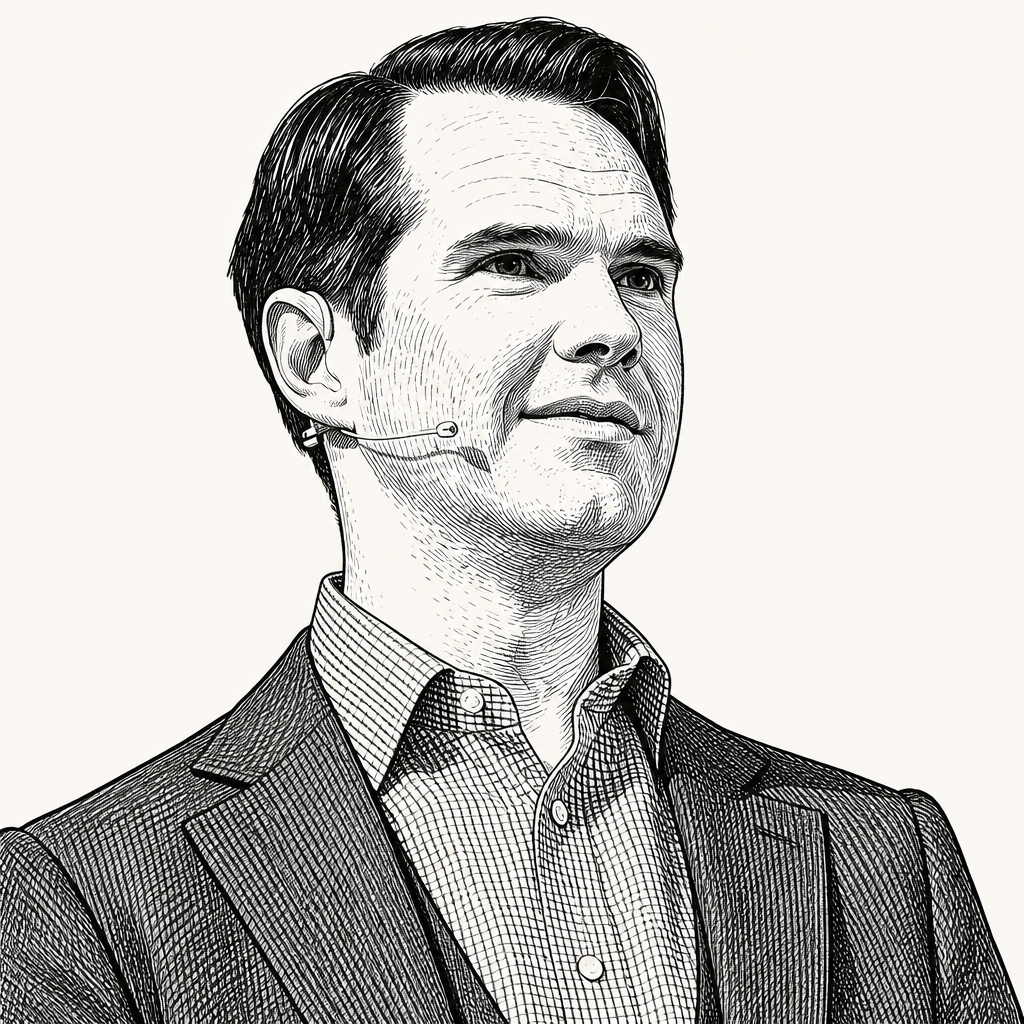
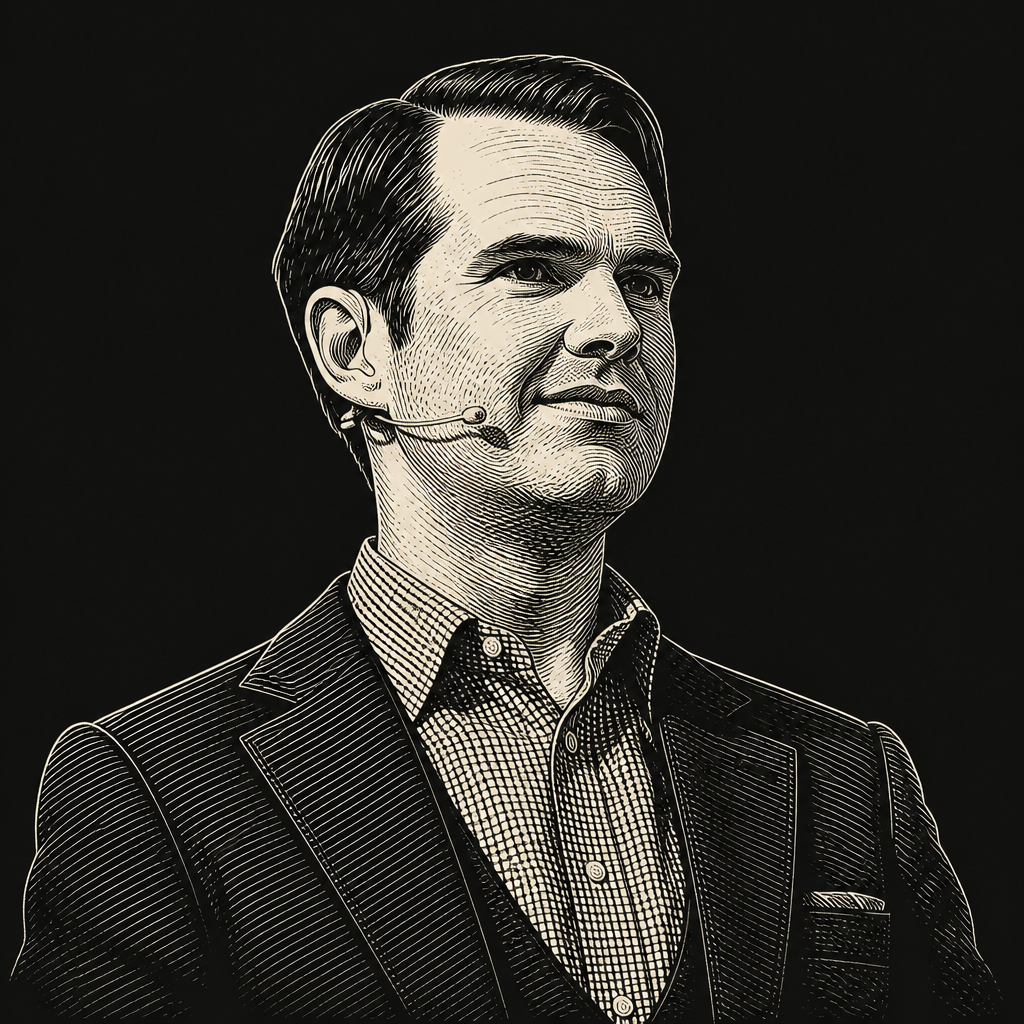
That is why an unusually demanding touring schedule does not register to him as inherently stressful. Carr estimates that he performs roughly 250 to 300 shows a year, frequently doing two in an evening. The travel is the inconvenience; the work itself is the reward. More important, the work is not rote repetition. Each show is an iteration: material changes, new jokes get tested, the audience alters the texture of the night, and recordings give him further material to examine. A job can be hard without being mentally disorganizing.
Anxiety is thought without control. Your thoughts are just wild. And a flow state is control without thought.
The distinction matters because Carr resists a wholly individual account of contemporary distress. Drawing on Mark Fisher’s idea of the “privatization” of anxiety, he argues that widespread depression and anxiety should make people ask whether the social environment itself is producing conditions that undermine mental health. A depressed young man, he says, cannot simply solve a collective-action problem alone. His relational prescription is blunt: if someone wants to be happier, they should make other people happy.
Carr’s example is the shift from shared activity to optimized solo behavior. A five-a-side football game becomes a personal best at the gym; a walk with a friend becomes daily step tracking. His point is not that exercise or tracking are inherently bad. It is that an activity can retain its discipline while losing companionship and the ordinary social contact that came with doing it alongside other people.
Chris Williamson puts the issue as a question people may ask too late: is this depression, or is this a depressing life? Is anxiety an internal disorder, or is the person living amid conditions that reliably generate anxiety? Carr adds his own distinction between depression and circumstantial sadness. Where distress is tied to circumstances and those circumstances can change, he says, it may be more accurate to call it sadness.


Neither man denies personal responsibility. Carr’s concern is that responsibility becomes distorted when people are told that distress is solely their own malfunction while housing, community, work, and social mobility deteriorate around them. His version of agency is not self-blame. It is the capacity to respond, to build a life with other people in it, and to direct attention toward problems where action is possible.
The missing infrastructure is social
Carr’s social critique begins with what he sees as an imbalance: liberal democracies have emphasized the individual while neglecting the communal dimension. People need basic security—food, shelter, health care, education, and a reliable safety net—but they also need family, friends, local institutions, and a sense that they are participating in something larger than private consumption.
His deliberately provocative shorthand is that he is “pro-gang, pro-drinking, pro-gambling,” though each term means something more specific than a defense of criminality or compulsive behavior. By “gang,” Carr means groups of men spending time together. Men are often good at “checking” other men, he says, when they are actually together. Gangs have a bad reputation because some commit crimes, but he thinks the underlying need for male friendship, scrutiny, and belonging is real.
His case for pubs follows the same logic. Rather than treating alcohol only as an individual health risk, Carr emphasizes isolation as a competing risk. He describes pubs as already-existing youth clubs: places with sport, music, pool tables, adults of different ages, and a public setting he would prefer to unsupervised drinking in a park. His proposed drinking-age change is intentionally unusual: legal drinking at 16, but only when a person arrives with three friends. Williamson objects that groups can egg one another on; Carr accepts that possibility but still prefers a mixed-age social setting to drinking in isolation.
The gambling point is also about misplaced risk. Carr sees online gambling and sports betting as an attempt to game a system when people cannot see a viable route forward. The more consequential gamble, he argues, is taking one on oneself: committing to a career, stating an ambition, or starting something that might fail. Young people need to be “dealt in,” not merely warned against risk.
That concern drives his proposals for younger adults. Carr argues for no tax on people under 30, approves of the suggestion that the first £250,000 of lifetime income should be tax-free, and praises the idea in Die With Zero of giving children inheritance while they are young enough for it to change the shape of their lives. The point is not that every young person is owed a particular outcome. It is that entry into adulthood—housing, family formation, work, and participation—should feel possible.
Carr rejects generational stereotypes as a useful explanatory tool. Donald Trump and Joe Biden are of the same generation, he notes, but that says little about either of them. His preferred distinction is between ambition and entitlement: ambition means wanting to do something about one’s circumstances; entitlement means wanting somebody else to do it. He acknowledges the tension in his own argument. Generations may be too crude a category, yet younger people are plainly facing conditions that, in his view, require attention.
His wider concern is that society has created an inverted Maslow hierarchy: people are encouraged to pursue self-actualization while lacking a house, close friends, or confidence in their future. Two centuries ago, he suggests, people might have worried about starvation while remaining proud of their name. Now many are calorifically secure but psychologically anxious.
Carr invokes Peter Turchin’s account of social breakdown to describe the danger. In his telling, two pressures matter: widening wealth inequality, intensified by social media’s ability to display other people’s lives continuously; and an “overproduction of elites.” When people work hard, acquire credentials, and expect the tacit promise of stability, status, housing, and family life to be fulfilled—but find it is not—they can become a counter-elite hostile to the institutions that disappointed them.
The objective, for Carr, is abundance rather than a narrow fixation on equality. He does not deny that unequal societies can become unstable; he says the more attractive aim is a future in which people’s needs are reliably met and the opportunity set is broad. He frames the choice as Star Wars or Star Trek: a future of scarcity and conflict, or one of abundance. Even then, he notes, people habituate. A great-great-grandparent might see contemporary life as imperial luxury, yet current expectations quickly make its comforts feel normal.
Self-trust is built from evidence, not intention
Optionality becomes a problem, Carr argues, when people refuse to exercise it. Someone can accumulate degrees, credentials, savings, plans, and possible identities indefinitely while never exchanging potential for a real commitment.
Chris Williamson frames the problem as a world in which saying things has become exceptionally easy. People can announce plans, narrate identities, optimize productivity systems, and publicly signal intention without doing the work. The danger is that productivity itself becomes the goal rather than a means to some concrete end.
Carr’s test cuts through self-description: “Don’t tell me about your priorities, show me last week’s diary.” The calendar records what someone actually gave their time to, not what they admire or hope to become.
This is also his answer to the erosion of self-trust. Williamson argues that when people repeatedly make promises to themselves and do not keep them, they may not remember the original promise but still carry a residue of distrust. Carr connects confidence to evidence rather than feeling. Having a six-pack does not itself create confidence, he says; being the person who went to the gym consistently does.
Self-confidence comes from giving the world irrefutable proof you are who you say you are.
The mechanism is compound interest. Financial compounding is easy to admire after the fact, Carr says, but people underestimate time’s role in it. The same applies to skills, routines, avoided conversations, and ignored obligations. Tiny repeated actions become consequential because they have time to accrue.
His preferred unit of action is small and testable. In comedy, the feedback loop is unusually direct: write a joke, tell it to an audience, and receive an answer. There is no value in a meeting about whether a joke might work. The audience decides. Other work offers slower and costlier feedback, but Carr’s principle remains: systems determine what actually happens tomorrow.
The inverse is also true. Problems that remain unaddressed compound. Carr agrees that the quality of a life can be tracked, at least partly, by the uncomfortable conversations a person is willing to have. Resentment is often interest accumulating on a small thing that was never said. Procrastination turns uncomfortable issues into unavoidable ones.
Carr does not treat problems as evidence that life has gone wrong. Problems are “a feature not a bug”: something needs attention. More complex problems can be evidence of having advanced to a more demanding level of life. In the same spirit, he calls boredom “unappreciated serenity.” An airport lounge with nothing happening can be a rare moment of calm—unless the phone is used to convert it into agitation.
When Carr wakes at four or five in the morning with a racing mind, he does not claim to have solved anxiety permanently. He says he can give that mind a better problem: write a joke about a politician, find an angle, make something. Action is an antidote not because it guarantees a result, but because it replaces helpless rumination with directed effort.
That distinction shapes his criticism of contemporary news consumption. If someone wanted to design a system that generated mental-health difficulties, Carr says, they would make people vividly aware of problems while offering them no agency over those problems. International crises can create precisely that condition. Williamson recalls returning from a weeklong silent retreat without screens and immediately seeing footage of wildfires in Europe; the physical constriction he felt made the point for him. Being informed can matter. But information that reliably provokes concern without providing a route to action has psychological costs.
Carr’s broader moral rule is that people deserve both agency and empathy. He argues that public discourse often gives agency to groups it dislikes—treating their conduct as fully blameworthy—and empathy to groups it favors—treating conduct as wholly a product of circumstance. His preferred standard is harder: grant both to everyone. People are responsible for their actions, and they are also enmeshed in conditions that shape what becomes likely.
Capture works best when surrender feels voluntary
Carr’s image for social media is not concealment but capture. The language of the technology itself points toward nets and webs: structures designed to catch things. He recalls hearing that some Native American peoples believed a photograph could steal a person’s soul. He once regarded that as absurd. Now, he says, perhaps not one photograph—but a thousand images and demands on attention each day—can estrange a person from themselves.
Our power will not be taken from us by some overlord. I think we’ll give it away for cheap dopamine.
The reference is Aldous Huxley’s vision of control through pleasure rather than force. Huxley’s soma was a pill; Carr says the contemporary version is another kind of tablet. The system does not need to demand every person’s attention if it can make relinquishing attention feel rewarding.
Still, Carr does not present technology as a simple villain. It is new, society is still learning how to integrate it, and he expects the long-term trajectory to be positive if people learn to use it well. His analogy for AI is a musical instrument. Anyone can sit at a piano and make noise; skill, time, and attention are required to make music. AI is a tool whose value depends on the direction supplied by its user.
His more speculative claim is that AI has acquired some of the attributes historically associated with God: all-knowing, all-powerful, miracle-producing, and living in a cloud. Carr does not say humanity was made in God’s image. He suggests instead that humanity wanted God badly enough to make one in its own image.
He also resists treating AI as the measure of human worth. AI is powerful at what he calls “left-brain” work: the complicated, procedural, analytic, and drudgery-heavy parts of life. Carr hopes human beings will retain a distinctive capacity for grasping the whole—the relational, contextual, creative, and meaningful—and that automation might make more room for connection, art, play, and fulfilling work.
Williamson raises the uncertainty Carr’s hope leaves open: AI may not stop at drudgery. Carr’s answer is historical. People can see the jobs that will disappear because those jobs already exist; they cannot see the jobs that will be created because, by definition, they do not yet exist. The Industrial Revolution made many uses of physical strength obsolete, he says, without eliminating human activity. AI may similarly alter white-collar work while producing roles that cannot yet be named.
What Carr does not think technology can make irrelevant is the need to be physically among other people. His own work is built around gathering: people put on trousers, leave home, sit with strangers, and laugh together. They need not know the people beside them for the collective experience to matter. It resembles church, he says—not in doctrine, but in the act of coming together around something shared.
Comedy is a method for interrupting automatic thought
Jimmy Carr sees comedy as an unusually concentrated demonstration of attention at work. A joke’s setup invites automatic interpretation: the audience recognizes a familiar pattern and assumes it knows where the sentence is going. The punchline reverses or recontextualizes that assumption. The listener has to think again.
The sudden revelation of a previously concealed fact.
That is Carr’s compressed account of why jokes work. The “ha-ha” and the “aha” are closely related: both arise when a previously concealed connection becomes visible. The brain prefers pattern recognition because it conserves effort; comedy borrows that machinery, then interrupts it. Carr treats the interruption as a form of waking up.
This makes stand-up worthwhile beyond its ability to produce professional comedians. Its core disciplines are ordering thoughts, writing them down, and finding a distinct voice. Carr thinks those skills belong in education because they matter in ordinary life: a presentation at work, a best man’s speech, a difficult conversation with a partner, or any situation that requires someone to say what they actually mean.
He rejects the idea that comedy is irreducibly mystical. His book with Abby Grant and Amanda Baker attempts to make joke construction more legible, not to turn performers into copies of one another. The analogy is musical notation. Notation did not create music, but it allowed people to record, study, transmit, and build on it. Comedy, Carr argues, can be reverse-engineered and taught without diminishing its pleasure.
The rules are useful partly because they can be broken. Carr cites surreal comics such as Bob Mortimer as performers whose work can feel resistant to conventional explanation while remaining unmistakably funny. The point of learning technique is not to become “the best” comedian according to a universal scale. It is to become more precisely oneself. In Carr’s formulation, comedy rewards being “the only.”
Williamson identifies a second dimension beyond controversial subject matter: an emotional Overton window. A comic can test the accepted limits of political or sexual conversation, but can also exceed the usual limits of public sincerity, depth, or vulnerability. Williamson sees an appetite for authenticity that is often paired with an aversion to earnestness. Carr’s response is that a performer who is going to do anything “even vaguely out there” must stop treating the comments section as an authority.
Comedy can alter what people are willing to say to one another. Carr borrows the political idea of the Overton window: the range of views considered acceptable in public discussion. Comics such as George Carlin, Richard Pryor, and Dave Chappelle, he argues, did more than generate laughs. They expanded the range of conversations people could have about sex, politics, race, and other difficult subjects.
Carr’s own shows are moving in that direction. He still wants dense, reliable laughter, but he increasingly makes room for crowd conversation, sincere exchanges, and occasional silence. A poignant pause, he says, need not be a failure of comedy if it gives people something worth considering together.
That creates a responsibility as well as an opportunity. Carr describes an on-stage section about suicide in which he tells audiences that suicide does not remove pain but redistributes it to people who loved the person who dies. He presents this as a difficult framing intended for the non-zero number of people in an audience who may be suffering, not as a universal clinical account or standalone intervention. His hope is narrower: that one person might hear it and pause. Anyone in immediate crisis should seek local emergency support or a crisis service; in the United States and its territories, the 988 Lifeline is available by call or text.†
Comedy therefore belongs to Carr’s larger case for collective experience. Its value is not exhausted by the time spent laughing in a theatre. The real consequence may be the conversation on the journey home, after the room has made a subject feel speakable.
Long-range politics requires more than symbolic adjustment
Carr sees Britain as entering a period of fracture: mainstream media losing authority, academia damaged by the replication crisis, established political parties weakened, and a broader replacement of elites underway. He does not consider the situation unfixable. But he thinks the response requires long-range leadership and a willingness to address underlying constraints rather than make symbolic adjustments at the margins.
His test for national competitiveness has four parts: currency, energy costs, regulation, and tax. This is Carr’s framework for distinguishing structural capacity from what he regards as cosmetic policymaking. A two-point change to income tax or a revision to stamp duty, he argues, does not settle whether Britain can make things, attract investment, and compete internationally.
Energy is his clearest example. Carr supports reducing reliance on fossil fuels, but says a credible transition needs a long runway rather than a deadline detached from construction realities. He proposes thinking in 25-year terms. His illustrative model is France’s nuclear buildout in the 1970s: in his account, France built 56 nuclear plants and secured cheaper energy and greater insulation from external shocks. Britain, he argues, needs a similarly long-range plan—one that could reduce energy costs and make the country more attractive to businesses.
The political point is about time horizons. Carr thinks the transition to low-cost, low-carbon energy requires leaders willing to begin projects whose benefits may arrive after their own electoral careers. He returns repeatedly to the figure of the statesman: someone thinking 20 years ahead rather than toward the next election.
A similar preference for durable capacity informs his account of drug policy and homelessness. Carr argues that homelessness is deeply entangled with addiction and serious mental illness, while acknowledging housing as part of the problem. Closing asylums, he says, did not mean society ceased to have people in acute need; it left an unresolved question about treatment, care, housing, and public safety.
He offers Portugal as an illustrative case, not a simple policy template. In Carr’s recollection, Portugal’s response went beyond legalizing drugs: it redirected resources previously used to fight the drugs war into rehabilitation, education, and some housing, while making support available to people who wanted to stop using drugs. For him, legalization alone was not the point. The approach depended on redirecting resources and maintaining that commitment. Once a problem becomes less visible, he argues, politics can remove the funding that made an improvement possible.
Carr’s worry about universal basic income comes from the same concern with purpose. A safety net is necessary, he says, but it can become psychologically close to the message that society does not need the people it supports. His preferred formulation, borrowed from Morgan Housel, is freedom plus purpose. Material security matters, but it does not substitute for a role, a contribution, or a reason to get up and do something.
This is why Carr’s institutional argument returns to the intimate scale. The state should make security and opportunity real; it should not leave people isolated with risks they cannot solve alone. But neither prosperity nor protection can furnish a life’s direction. In his view, that comes through family, friendship, local community, meaningful work, and the experience of being needed by other people.
Obsession becomes useful when it is directed somewhere worth going
Williamson distinguishes discipline, motivation, and obsession. Discipline is making oneself do something; motivation is wanting to do it; obsession is being unable not to do it. What looks like effortless motivation from outside, he suggests, is often the cooled-off residue of an earlier obsession that became part of a person’s identity.
Carr agrees that sustained interest compounds. The people who remain obsessed with the same pursuit long enough, he says, are often the people the public has heard of. The point is not that every fixation should be indulged. Carr links obsession to addiction and says people with addictive personalities may simply redirect compulsive behavior from one object to another. But if that compulsion can be directed toward something that builds, grows, and feeds back into a life, he sees it as an advantage rather than a pathology.
His formulation is to find the thing that feels like play to one person but looks like work to everyone else. That is where an edge can emerge, because the person can tolerate—or enjoy—the volume of effort that would exhaust someone else. It may become a career, but Carr does not insist that it must. A creative or absorbing pursuit can remain a hobby and still give life shape.
The obstacle is often not lack of ability but fear of the lonely early chapter. Carr recalls leaving his job in his twenties to become a comedian and finding that friends interpreted the decision as a breakdown. They could see the secure job he was abandoning, not the career he hoped to build. To change direction, he says, requires leaving some version of oneself behind; there is grief in that, alongside uncertainty about whether the next move will work.
Once you decide what you want to do and what you’re going to work at and who you’re going to be with, life gets very simple because you stop thinking about how to live and you start thinking about living.
Carr’s response is specialization and commitment. People cannot choose where they start, he says, but they can choose where they are going. His advice is not to wait until conditions are clean, because they never will be. Problems do not clear away before life begins. The work is to decide what is worth carrying them for.