Fast Victory Requires Brutality Modern Publics Will Not Tolerate
Former Navy SEAL Donald Shipley argues that Western militaries can win wars quickly but are politically prevented from using the level of force that would require. In a conversation with Chris Williamson, Shipley says modern conflicts are prolonged by public intolerance for brutality, legal and tactical restrictions that adversaries do not share, and financial incentives around long wars. Asked how he would end a hypothetical Iran-style nuclear threat, he says the answer would be either overwhelming force or an elite raid to remove the leader, while crediting Donald Trump’s perceived willingness to act as a deterrent.
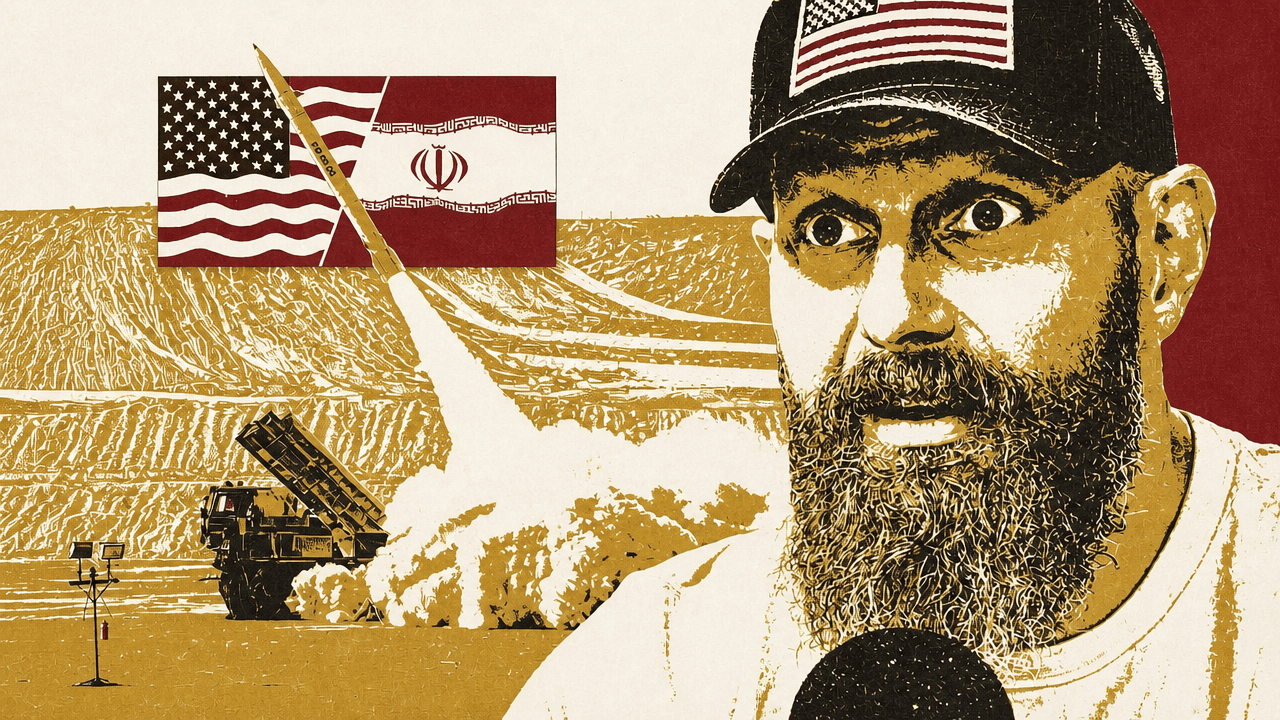
Shipley’s claim is that decisive war is politically intolerable because it is visibly brutal
Chris Williamson asks whether the modern world is incompatible with “some of the ugly things that need to happen in war.” Donald Shipley answers by separating military capability from political permission. Veterans of Afghanistan, Iraq, and similar wars, he says, know that if “we really wanted to win that war,” it could be done quickly.
Shipley frames the constraint as imposed from above, though he does not identify who is imposing it: “They don’t want us to win it fast. I don’t know who doesn’t.” His example is the Five Eyes countries — the United States, United Kingdom, Australia, Canada, and New Zealand. If those forces were dropped into Iraq and given six months to “close out the entire thing,” he says, “100%” they could.
The limiting factor, in his argument, is not tactical competence. It is that publics and political systems would not want to see what a rapid win would require. Shipley points to Fallujah as the example. When people hear that Marines “cleared Fallujah,” he says, they do not understand what “clearing” means. What follows is his characterization of that kind of operation, not a historical audit.
They went door to door and killed every single male that was still there. Everybody who's willing to fight, they killed them all. That's how you clear a village.
Shipley says civilians were told to leave by a certain date; after that, forces pushed through and killed those who remained to fight. He presents that not as an aberration but as the functional meaning of clearing a contested area. He widens the point to World War II, saying that the grandfathers who fought it “weren’t handing out Hershey kisses and handshakes” and that weapons such as flamethrowers were part of the reality.
He then argues that the modern force is more constrained than earlier generations were. He says troops would not be given flamethrowers now, that they “can’t even use Claymore mines,” and that “a whole bunch” of munitions and rounds are unavailable because they are now treated as too cruel or inconsistent with the Geneva Convention. Williamson asks whether the other side adheres to those restrictions. Shipley’s answer is simply: “No.”
The asymmetry corrodes trust before it changes strategy
Donald Shipley describes the combat problem as an asymmetry of restrictions. Western forces operate under rules. The enemy, he says, does not. He says opponents use suicide vests on children and “do whatever they want to.” That changes how soldiers experience civilians and urban space: a fighter who is also a father, husband, friend, or uncle enters an environment with children present and cannot know whether those children are carrying explosives or grenades.
That uncertainty corrodes trust. Shipley says that after one lapse in vigilance produces catastrophe, the reaction becomes, “I’ll never let that happen again.” Technology can reduce risk, he says, but it does not end the pattern. Adversaries study what defenses are trying to do and adapt; he compares the problem to attempted attacks on TSA screening.
Chris Williamson summarizes the condition as a rigged game: one side must “kick” the ball while the other side can pick it up and run with it. Shipley agrees. He calls it a “big cat and mouse game,” but the asymmetry of restrictions is central to his larger claim about why wars become prolonged.
The question he poses is whether leaders truly want a fast victory or whether they want a 20-year war. He lists what long wars generate: technological advances, armaments, ISR platforms, body armor, and life-saving medical devices. But he also says plainly that “war creates a lot of money.” Companies and contractors became rich quickly during wars such as Afghanistan and Iraq; he names Raytheon and Boeing among the firms involved and says “everybody is making just piles and piles of money.”
Williamson articulates the implication: extending an enmeshment between sides keeps that system moving, while a rapid destructive campaign would stop “the money printer.” Shipley agrees with the broad framing.
Shipley’s Iran answer turns on a blunt nuclear hypothetical
When Chris Williamson turns the argument toward what Trump is doing in Iran and asks what Shipley would do to end it quickly, Donald Shipley resists answering directly. He says “nobody’s gonna like my answer” and worries that any answer will be read as taking one side or another. Williamson then reframes the question as an imaginary Middle Eastern country that does not exist.
Shipley sets the boundary conditions. Is the imagined country building nuclear weapons? Is it threatening to use them? Do “we know they have ’em?” Williamson answers yes to each condition. Under that combined hypothetical — possession, threat, and certainty — Shipley gives the answer he had been avoiding: “Press the button.”
He does not elaborate it into a doctrine. He presents the alternative as being drawn into another 20-year campaign unless countries align around the conclusion that the nuclear threat cannot be allowed. Williamson immediately tests the boundary. What if the threat is not real? What if the country does not have the materials and cannot make the weapon?
Without what Williamson calls a “Fat Man equivalent,” he says, the operation becomes much harder and starts to look more like door-to-door war. Shipley offers another route: a special operations raid to remove the country’s president in the middle of the night.
Or you could just fly in Black Ops with some really cool dudes in MultiCam, snatch their President out of their house in the middle of the night, and call it a day.
Williamson notes that something like that has happened recently. Shipley says he cheered it and calls that kind of mission a “unicorn raid”: snatching a president from his house in the middle of the night is, in his view, something almost no one can pull off. He is not surprised by how such an operation would be done, describing it as “pretty standard procedure” executed at an elite and precise level.
Trump is described as effective because others may believe he will actually act
Donald Shipley connects the special operations discussion to Donald Trump’s command style. He says his last rotation was during Trump’s first term and describes being “spun up” for a large operation he will not discuss. According to Shipley, the force was on the ramp, ready to go, when the operation was canceled because Trump “worked it out with a phone call.”
Shipley says he does not know what Trump says on those calls, but his impression is that Trump avoids conflict despite being perceived by some as eager for war. He imagines the message as something like: “Don’t make me do it. I’ll do it. Don’t make me.” Somehow, he says, adversaries “come to their senses” and the problem resolves.
Chris Williamson develops the theory as strategic unpredictability. A leader who appears bombastic and possibly willing to “press the button” may have a more credible threat precisely because others believe he might actually follow through. Williamson compares the persona to a “WWE character” in presidential form and asks whether the apparent volatility is deliberate strategy or simply the person himself.
Shipley says it is difficult to know whether Trump is “crazy” or “just crazy enough to make you believe he’ll really do it.” Williamson condenses it to “crazy or genius.” Shipley returns to effectiveness as the metric. He says Trump avoided more conflicts than anyone he served under and that if people knew the number of conflicts he had avoided, “they’d give him more praise.”