Higher Income Can Make Debt Problems Worse, Not Better

Caleb Hammer argues that many financial crises attributed to low earnings are really failures of spending control, especially among higher earners. In a conversation with Chris Williamson, Hammer says inflation hurts broadly, but lifestyle inflation often does the personal damage: raises become larger obligations, and bigger incomes make it easier to qualify for debt, justify purchases and postpone discipline.
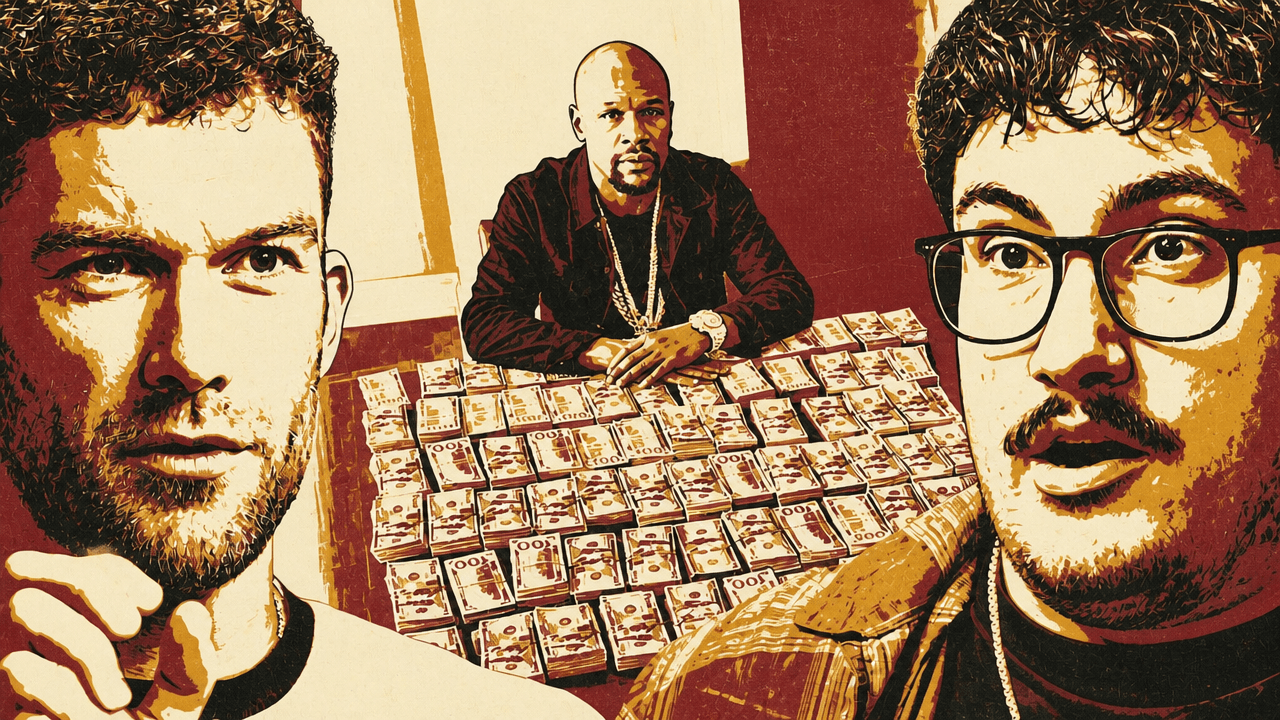
Lifestyle inflation can beat a raise before it reaches your balance sheet
Caleb Hammer distinguishes between inflation as an external force and lifestyle inflation as a self-inflicted one. Asked by Chris Williamson whether lifestyle inflation has become a bigger problem than inflation itself, Hammer says inflation is “worse overall” because it affects everyone and is not a matter of choice. But at the personal level, he says lifestyle inflation is often what ruins people: someone gets a 5% raise and increases spending by 6%.



That pattern, Hammer says, shows up repeatedly on Financial Audit. The people in the worst financial shape are often not the lowest earners but the high-income guests. He says one common criticism of his show is that he yells at and mocks poor people. His answer is that lower-income guests are usually not the ones he pushes hardest. The high earners are.
The reason is practical. A high-income earner may be able to repair the situation quickly “if they just fix a couple things.” But the same income also allows them to qualify for more debt. Hammer says that as guests move from $100,000 to $200,000 and even toward $500,000 a year, the financial mess can become worse, not better: more debt, more credit cards, more timeshares, more cars, more “bullshit.”
I swear, the closer they get from 100 to 200 to even a half a million dollars a year, the worse debt, the more credit cards, the more time shares, the more cars, the more bullshit they have.
Williamson notes that many people would find it incredible that someone earning half a million dollars a year could be in a bad financial position. Hammer says he “wouldn't be surprised if the majority in the United States” who make that much were. His explanation is cultural and simple: earn half a million, then buy the house, the car, the clothes. “You worked hard, deserve it.” In his framing, consumer culture turns income into permission.
The distinction Hammer is making is not that earning more is useless. It is that earning more does not automatically create financial control. Higher income can speed repayment because there is cash flow to redirect. It can also support bigger mistakes because lenders approve more debt and the person can sustain larger commitments for longer.
Wealth changes the purchases people can justify
Asked whether richer people waste money on different things than poorer people, Caleb Hammer says yes, and immediately offers himself as an example. He has been trying to get over a fear of flying, and because he now considers himself rich, he rented a private jet as part of that process.
Hammer describes his fear of flying as a control problem. On a private jet, he says, he cannot fly the plane, but he can say, “let's land.” He cannot do that on a commercial jet. Chris Williamson jokes that one could force a commercial plane to land by making a sufficiently large disturbance, but Hammer notes that would be bad for his career.
The private-jet flight did not solve the problem cleanly. Hammer says the first attempt was filmed, is online, and ended with him in tears. He initially frames the anxiety as “make-believe” — not because the felt experience is fake, but because no external bad event was happening. His brain was treating the threat as real. He then clarifies that the crying was not only terror. A lot of it was grief: remembering the family he had not visited and the experiences he had avoided because of his fear of travel.
The exposure was deliberately small: Austin to San Antonio, with a panic therapist on board. Hammer says he had hired the therapist the day before, but the two had planned the attempt together. He had not been on a plane in at least a decade, and even road trips still produced anxiety.
Williamson points out the absurdity without dismissing the seriousness of the problem: for some people, exposure therapy means putting a spider in the corner of a room; Hammer’s required a private jet. Hammer agrees. Williamson adds that it is “just as well” Hammer is rich, because without money he would be stuck with the fear.
The anecdote keeps the financial point concrete. Higher income expands the set of available responses to a problem. It also expands the set of purchases a person can explain to themselves as necessary, therapeutic, deserved, or rational. Hammer’s larger warning about lifestyle inflation sits there: the more money someone has, the easier it becomes to attach a plausible story to a larger expense.
Confrontation has to be paired with containment
Chris Williamson draws a line between Hammer’s own panic and the structure of his work: Hammer built a show around high-stakes live confrontation with strangers about their most shameful financial secrets. Williamson asks whether this is a coincidence or “the most elaborate exposure therapy ever.”
Caleb Hammer says people on the show “have to go through it.” But he also says his own experience with panic has made him better at handling guests who genuinely panic on set. If someone has a legitimate panic attack, he says, they pause the cameras and he helps them through it.
He describes the signs he watches for. A guest may go flat-faced, disengage, and their eyes may go blank. In that moment, Hammer says he shifts out of the “crazy voice” and into a calmer mode: “Hey, are you okay?” He reminds them they can pause, take a break, and step away if needed.
The intervention is basic and immediate. If the person is actually having an anxiety attack, Hammer uses a breathing exercise: three counts in, six counts out. Sometimes a producer takes the guest for a lap around the building. Sometimes the guest needs to go outside. Hammer says full panic attacks are rarer now.
Williamson suggests one possible reason: Hammer may be getting “soft” with age. Hammer counters that he recently threw something at someone. But his real explanation is process. He says the show’s onboarding has become unusually thorough, and claims people who have worked with other daytime-TV-style shows have told his team they have never seen a process like it.
Hammer contrasts that with shows that, in his view, do not care about guests. He avoids making a specific claim about Dr. Phil, noting its proximity to Dallas only as a reason people with that experience come up. But his broader critique is that many shows in that genre treat guests as disposable.
Hammer says his incentives are both selfish and sincere. The selfish version is that guests are members of his audience, and if they do well, it proves the show works. Williamson summarizes the mechanism as indifferent to motive: guests might improve because they love Hammer and value his advice, or because they dislike him and want to prove him wrong. Either way, the outcome matters.
Hammer attributes that figure to the show’s most recent annual report, which he says is produced every December. The number is the concrete outcome claim behind his defense of the format: the confrontation is meant to force contact with the debt, but the show also has to keep guests stable enough to act afterward.