Birth-Rate Politics Collide With Feminism as the Ideological Fertility Gap Widens
 Chris Williamson
 Lyman Stone
 Stephen Shaw
 Simone CollinsChris WilliamsonTuesday, May 12, 20266 min read
Public arguments about birth rates quickly become fights over feminism, coercion and political identity, Chris Williamson, Lyman Stone, Stephen J. Shaw and Simone Collins argue in a Modern Wisdom discussion. Stone says the backlash is rooted in a real tension between gender egalitarianism and the cultural patterns associated with higher fertility; Shaw wants the issue framed around helping people have the children they already want, without pressure. Collins is willing to let hostile subcultures opt out of the future, while Williamson argues that abandoning the left makes any effort to raise birth rates too narrow.
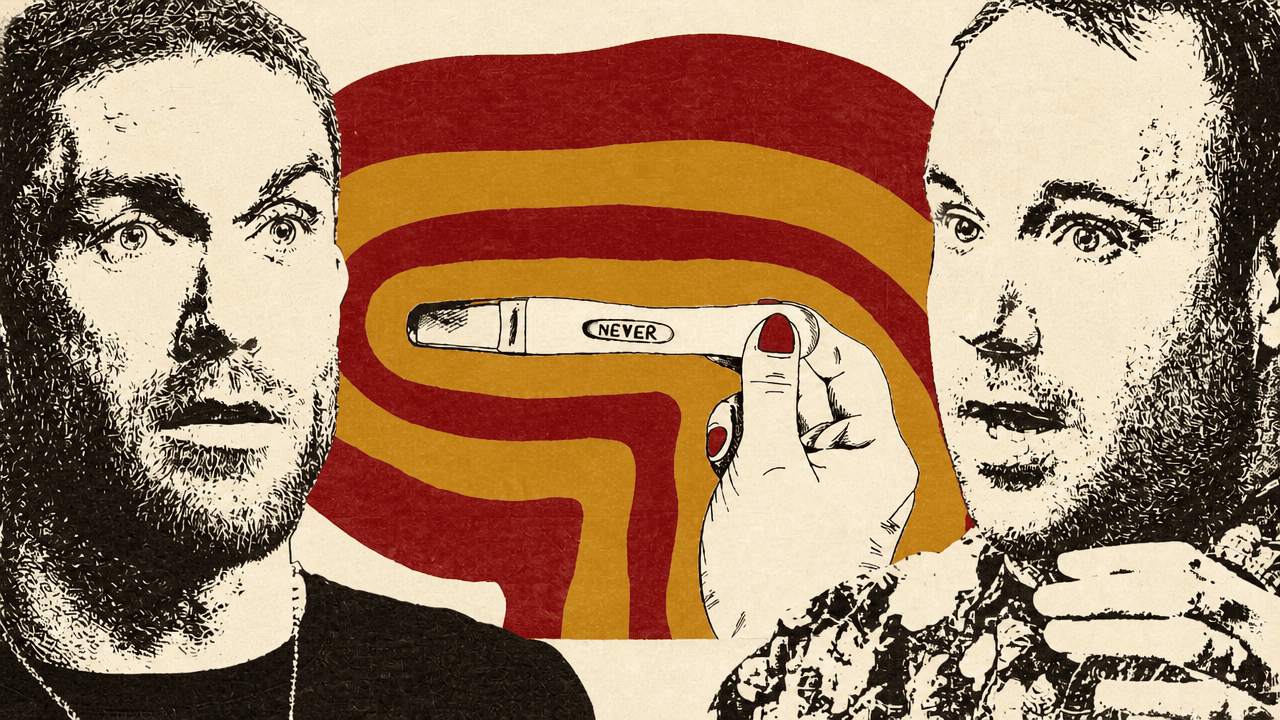
Birth-rate politics is combustible because it touches a real tension
Public discussion of birth rates is quickly coded online as right-wing, conservative, misogynist, or fascist because many people see a real conflict between sustainable fertility and gender egalitarianism. That is Lyman Stone’s explanation for the volatility: not that every accusation is fair, but that the anxiety behind it is often sincere.

Stone distinguishes the concern from a defense of sexism. He says he wants his wife to be able to vote, own property, and be taken seriously by police if she is harmed. But he also says many critics associate pronatalism with forcing women to remain “barefoot and pregnant in the kitchen,” and some versions of pronatalism have made that association easier to sustain.
The empirical and cultural pattern, as Stone describes it, is uncomfortable for egalitarians. “A lot of the most sexist countries in the world have the highest birth rates,” he says, and within societies, people with more traditional gender attitudes tend to have higher birth rates. He also says feminism, “broadly construed,” is strongly negatively correlated with fertility on almost any metric.
His point is not that feminism must always be anti-natal. It is that many people who identify as feminists have not tried to build a version of the ideology that is compatible with higher fertility.
We don't know that there's not a future version of feminism that's pronatal. We don't know that such an ideology couldn't be invented. The problem is, most of the people who self-identify as feminists won't even try.
That leaves some people, in Stone’s description, trapped between two things they want: a future with enough children and a future in which women retain rights and social equality. For them, if low fertility appears to be the price of protecting women’s freedom, fertility becomes the thing they are willing to sacrifice or ignore.
Chris Williamson adds a temporal asymmetry. The sacrifices required now are visible, while the future costs of low fertility are uncertain, delayed, and often borne by people not yet born. If someone does not plan to have children, or lives among people who do not plan to have them, the personal connection to those future costs is even weaker. He describes the problem as delayed gratification at social scale.


The fertility gap between liberals and conservatives has widened sharply
The most concrete evidence shown is a Modern Wisdom chart, attributed on screen to “charliesmirkley,” using General Social Survey data from 1980 to 2024. It compares mean children among women ages 25 to 35 by ideology. Conservatives rise from 1.44 mean children in the 1980s to 1.67 in the 2020s. Liberals fall from 1.29 to 0.87 over the same span.
| Survey decade | Conservative mean children | Liberal mean children |
|---|---|---|
| 1980s | 1.44 | 1.29 |
| 1990s | 1.58 | 1.20 |
| 2000s | 1.57 | 1.15 |
| 2010s | 1.43 | 1.00 |
| 2020s | 1.67 | 0.87 |
Chris Williamson emphasizes the widening gap: conservatives and liberals start relatively close in the 1980s, at 1.44 and 1.29 respectively, but by the 2020s the conservative figure is nearly double the liberal figure.
For Lyman Stone, that pattern connects to a fear he says he hears personally from people who value gender egalitarianism. Some imagine a future in which “all the crazy far-right people had all the babies,” eventually outvoting them and creating a world hostile to their daughters. Stone says that scenario sounds silly to his “rational brain,” but he knows people who genuinely think any child they have will be governed by zealots, and therefore decide not to have children.
Simone Collins rejects the strategic logic sharply: “If feminists stop having kids, there will be no feminists left.” Stone agrees with the implication, jokingly recasting it as “be the change” and “only you can prevent forest fires.”
The tension is between fear of a future shaped by one’s opponents and the demographic consequences of opting out of that future. Stone treats the fear as psychologically real even though he does not endorse its conclusion. Collins treats the conclusion as self-defeating.
The fight over labels is really a fight over coercion
Stephen Shaw says well-constructed surveys suggest that roughly 90% of people either have children or want them at some point in life. That, he argues, cannot be reduced to right-wing politics: “90% is pretty much everybody.”


For Shaw, the left has struggled to form a narrative around fertility because the issue creates friction with some of its traditional beliefs. He also resists calling himself pronatalist. He describes himself as a researcher and a “pan-natalist”: someone who supports people in having the children they want, while respecting those who choose not to have children.
Collins says she agrees with that position. Stone says he would simply call it pronatalism. The disagreement is partly semantic, but it shapes the politics of the issue. Shaw says “pronatalism,” rightly or wrongly, is often interpreted as encouraging others to have children. He is comfortable encouraging people to think about the question, but wants a word that clearly excludes pressure or disrespect toward those who do not want children.
Stone’s definition is broader and less coercive. Pronatalism, he says, means being in favor of births and supporting actions that help people actually have more children. It does not mean forcing unwanted children on people.
That distinction matters because the public hostility Williamson is concerned with depends heavily on the assumed meaning of pronatalism. If the term means coercion, suspicion follows naturally. If it means reducing barriers for people who already want children, Shaw’s 90% figure makes the issue less partisan and less culturally exotic. But Shaw and Stone do not fully resolve the naming problem: Shaw thinks “pronatalism” may already carry too much baggage, while Stone wants to define it back toward a non-coercive meaning.
Collins wants to stop persuading people who reject the premise
Simone Collins is far less interested in reassuring progressive critics. She argues that the fear of being forced into reproduction is fake. She mocks the trope of women imagining “Mar-a-Lago breeding pens” and asks why critics wear Handmaid’s Tale costumes. Her claim is that nobody is asking progressive women to have children.
Her most charged remarks are offered as assertions in the exchange, not as demonstrated evidence. Collins says far-right conservative men who marry women are often marrying women from Latin America or Eastern Europe rather than progressive white women. She also refers to a whites-only “return to land” colony in the Ozarks that, in her telling, has to remind men that they must actually marry white women to participate, and struggles to find far-right white nationalist men who have done so.
Her conclusion is deliberately harsh: people who do not want children should not have them. But they should also accept, in her framing, that they “can just not inherit the future.” She describes the culture she is criticizing as toxic and says it should be left behind.
If you want kids, have them. But otherwise, you can just not inherit the future.
Chris Williamson pushes back. He says he understands why Collins, after years “in the trenches” with her husband, might be exhausted by efforts to change hearts and minds. But he argues that dismissing left-of-center women and men condemns a large group to be “at the mercy of an ideology” Collins herself thinks is bad.
His alternative is persuasion rather than abandonment: to tell people that many of their beliefs may be good for the world, while still having side effects that even their advocates may not personally embody. He worries about people endorsing ideals that leave them behind in practice. If the goal is higher birth rates overall, Williamson argues, the effort should be to make the bucket as large as possible and bring more people into it.
Stone briefly widens Williamson’s concern from women to men as well. Williamson accepts the correction: fertility is not only a women’s issue, because it takes “two to tango.”