Elite Operators Must Pair Aggression With Restraint
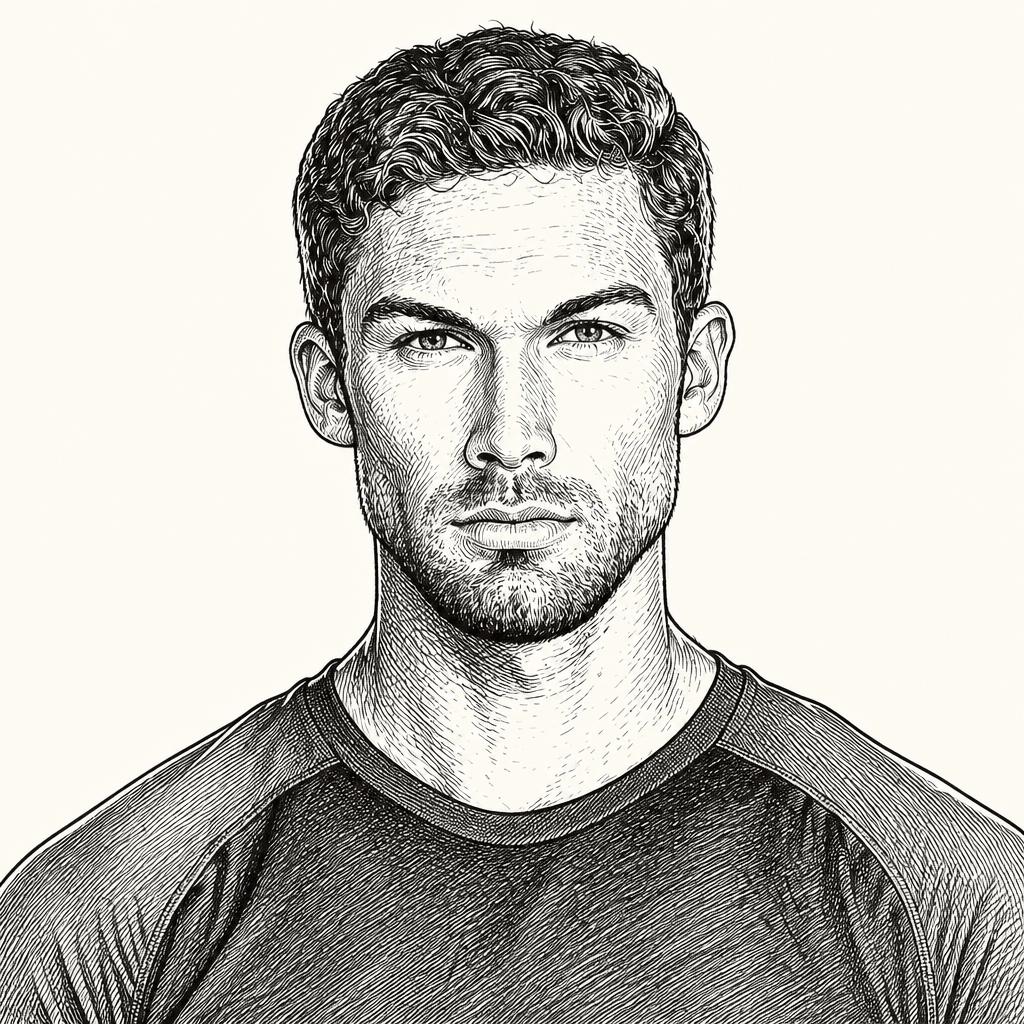
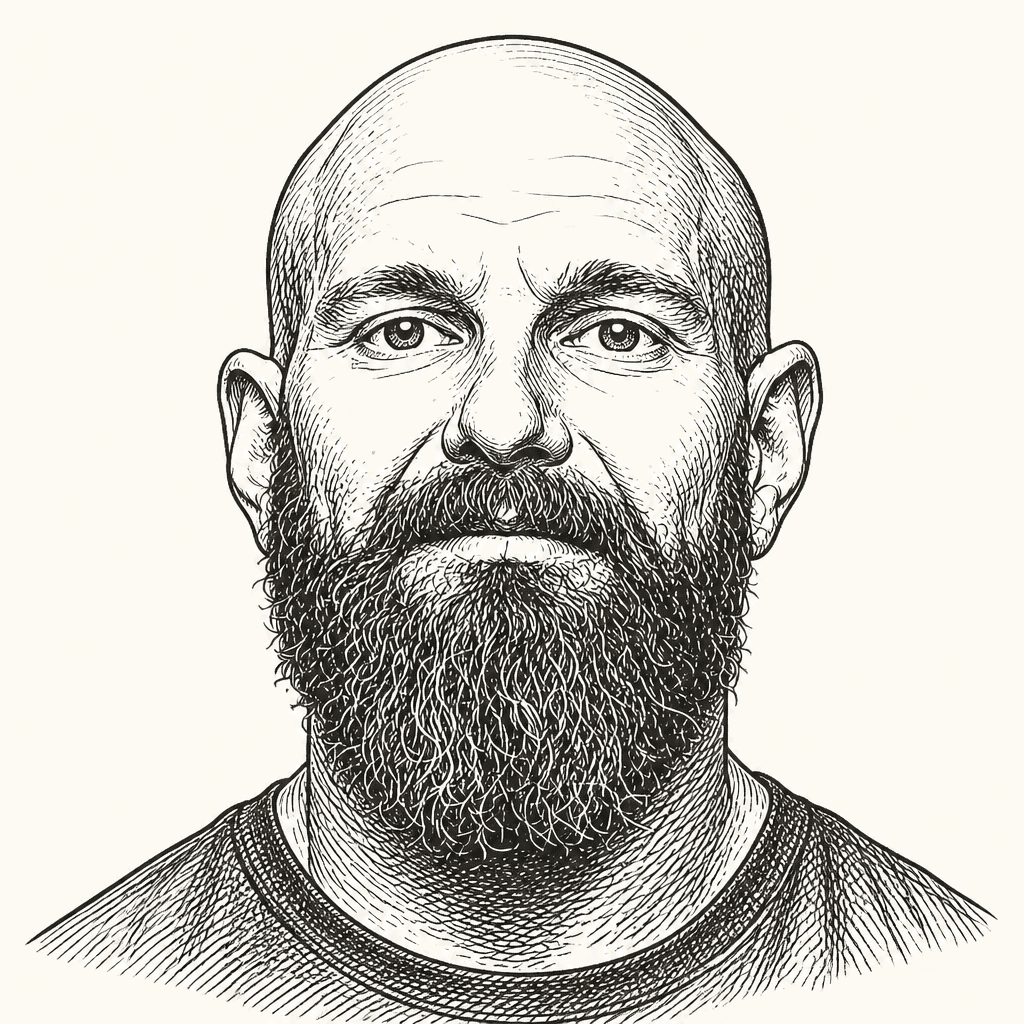
Former Navy SEAL DJ Shipley argues that elite operators are selected not simply for intelligence, aggression or physical toughness, but for an unusual ability to act in ambiguity while accepting legal and institutional limits. In his account, special operations requires people willing to bend rules for a mission and tolerate a culture of latitude, yet restrain violent impulses even when they believe an adversary deserves no such restraint. Host Chris Williamson frames the staffing challenge as the scarce overlap between high cognitive ability and a willingness to fight; Shipley says usable judgment under those competing demands is the harder qualification.
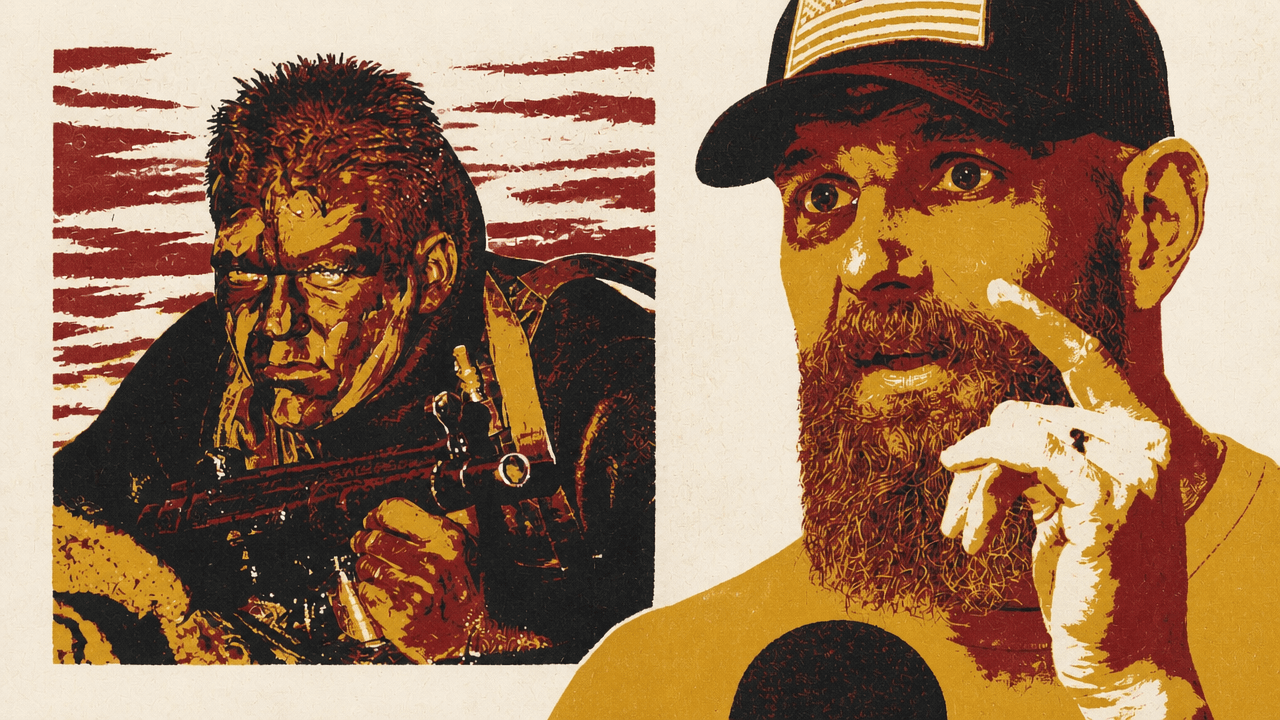
Elite operators need latitude—and the discipline to stop short
DJ Shipley describes special operations as a culture built for people who can navigate ambiguity in pursuit of an objective, but who are also bound by institutional and legal restraint when their anger points elsewhere. That combination—not simply intelligence, aggression, or physical toughness—is what makes the role unusually difficult to staff.
Shipley says conventional institutions tend to divide conduct into black and white. Special operations, by contrast, has to work through what he calls the grey area: once the team understands the “why,” or the required end state, it finds a way to get there. The path is not always neat, he says, and he would break rules if doing so put the team in a better position, even at a cost to his career, safety, or life.
Everything's black and white. Special operations find a way to live in that grey area.
That is not, in Shipley’s telling, an argument for general lawlessness. He explicitly distinguishes it from murder, rape, or broad drug use, and says there are not many former operators who move into policing. The reason, he says, is not contempt for police or the FBI—professions he says he respects—but a personal inability to live within their tighter constraints.
The culture’s casual bearing is part of that claim to latitude. Shipley says special-operations personnel can meet conventional military standards of grooming, saluting, dress, and address; those standards simply do not establish whether someone can do a difficult operational job. He does not want a “Ken doll” for work he calls filthy. Haircuts and shaving, he says, are especially resented because they are used as punishment. Beards, hands in pockets, and an indifference to parade-ground formality become symbols of being allowed room to operate rather than signs that operators cannot follow instructions.
But latitude has a limit. Shipley’s account is that the same people selected for action must repeatedly accept restrictions on what they can do, including when they believe violence is deserved.
Restraint can feel hardest when violence seems justified
Chris Williamson frames the conflict as an incompatibility between parts of war and modern scrutiny of the means used to pursue an outcome. Shipley agrees with the tension, while insisting that he never saw anything in his military career that he would consider morally questionable. By his account, the conduct he witnessed remained above board even by standards he says would apply to police officers, firefighters, or teachers.
That claim sits alongside his description of powerful impulses toward extrajudicial violence. Sometimes, he says, one wants to “hoist a black flag and start slitting throats.” He connects that feeling to what he had seen or knew adversaries were doing, particularly to children. Without the flag on his shoulder, he says, he would want to kill such a person if he could get away with it. The uniform instead imposes a duty to refrain.
Because I have this flag on my shoulder, now I can’t, and now I resent the flag because I can’t do to you what I know needs to happen to you.
Shipley says that constraint became particularly difficult after Extortion 17, a helicopter shootdown he says killed 31 people, including an entire troop. He later returned to the same deployment area and lived in the beds of those who had been killed. “If I’m being totally honest,” he says, “I just wanted to kill everybody.”
Yet, by his account, someone who was not doing anything actionable at that moment might be handcuffed, transported by helicopter to a detention center, held for 10 days, and released. Shipley says that felt unfair because he believed an opposing force would not afford him equivalent treatment if captured.
The tension is not resolved in his account. He says military conduct remained above board, but he also says he would break rules for the team’s benefit and that professional restrictions could make him resent the authority he represented. Restraint, in this view, is not evidence that the appetite for violence is absent. It is the burden of containing it while still serving the mission and the group.
The scarce overlap is cognition, aggression, and usable judgment
Williamson uses a displayed chart on violence and IQ to make a narrower selection argument. The chart reports mean violence episodes across IQ groups, falling from 0.72 among people in the 70–79 range to 0.06 among those in the 120–129 range.
| IQ group | Mean violence episodes |
|---|---|
| 70–79 | 0.72 |
| 80–89 | 0.37 |
| 90–99 | 0.28 |
| 100–109 | 0.17 |
| 110–119 | 0.15 |
| 120–129 | 0.06 |
Williamson separately describes a survey question asking whether someone had been in a physical fight or deliberately hit another person during the prior five years. He puts the rate around the middle of the IQ distribution at roughly 10%, and cites 5.2% for the 110–119 group and 2.9% for the 120–129 group.
His conclusion is that an institution seeking people with elite cognitive capacity and a willingness to fight is selecting from a very small overlap. He quotes a line about the tiny number of men with IQs above 130 who enjoy both books and bar fights. Shipley says that “tracks,” while disclaiming any claim to a 130-plus IQ; he says he likes both reading and punching people in the face.
Shipley’s own account makes the selection problem broader than that formulation. Willingness to fight is not enough, and intelligence alone is plainly not enough. The operative disposition he describes needs to act under uncertainty, prioritize the team, tolerate unusual latitude, and still submit to boundaries that may feel profoundly at odds with personal judgment.
An exceptional raid force was assembled outside the usual unit model
Shipley offers the raid that killed Osama bin Laden as an example of how unusual capability can be assembled. He says Rob, his first team leader, selected him for the troop, but that Shipley was not chosen for the raid because he was too junior. In his simplified account, personnel across teams were ranked and the higher-ranked members were taken from each; he says this was the first time the organization had done that.
Williamson raises a potential cohesion problem: a collection of the strongest individuals may not have the shared culture and operational familiarity of an intact team. He compares it to bringing elite players from rival clubs together for a national side. Shipley does not say the selection method impaired the force. He says the normal practice is to deploy a team, troop, or squadron as a unit, whereas the raid force was cherry-picked from within the same squadron.
His emphasis is on secrecy. Those who remained behind did not know where the selected men were going, he says, and were told to expect a routine training mission. Shipley says that people preparing to leave were buying watches and expensive sunglasses because they did not expect to return; those left behind thought they might be headed for Gaddafi. When President Obama announced the result, Shipley says he was at home with his wife and a friend on speakerphone, celebrating immediately.
The account does not settle Williamson’s question about cohesion. It establishes instead that the force was treated as an exceptional concentration of personnel, assembled quietly and apart from the standard unit model.