Gen Z’s Debt Habits Reflect Pessimism and Frictionless Credit


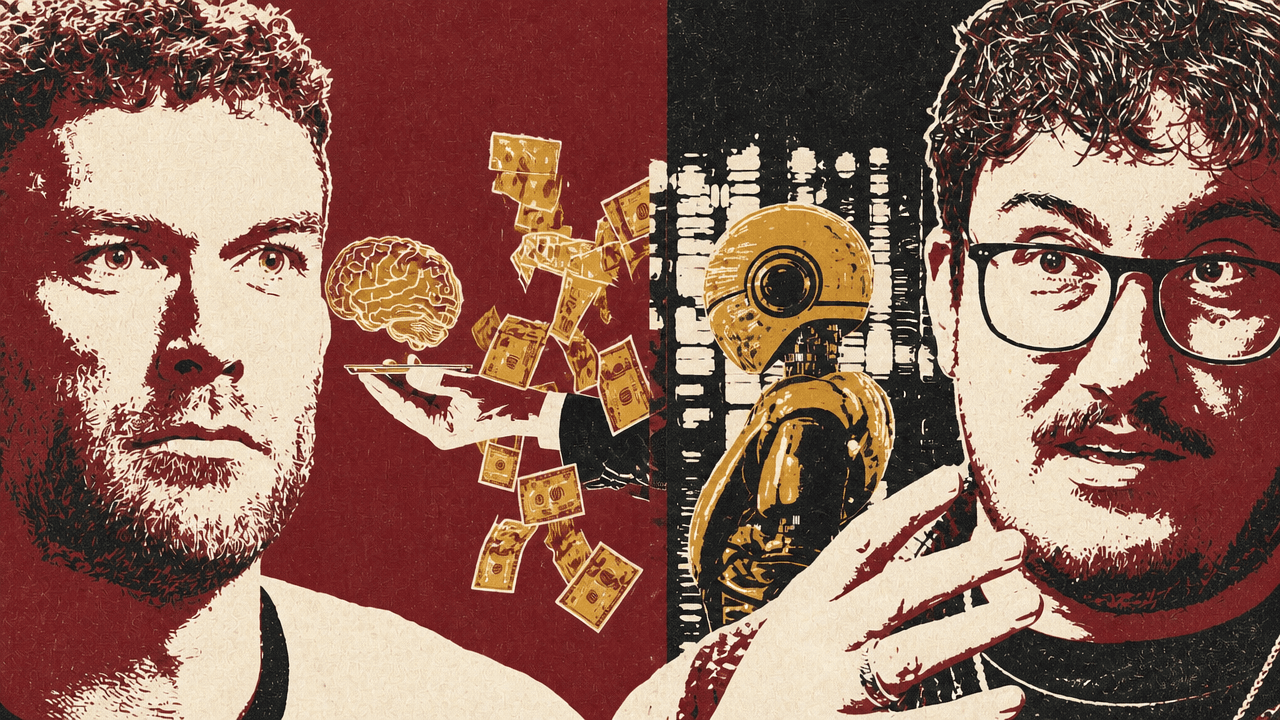
Caleb Hammer argues that Gen Z’s debt problem is not simply a failure of financial education, but a loop between pessimism, media consumption and frictionless credit. In a conversation with Chris Williamson, Hammer says bleak economic narratives can make spending now feel rational, while buy-now-pay-later tools and normalized consumer debt turn that mood into monthly obligations that make young borrowers’ futures harder.
Low sentiment can become a spending model
Chris Williamson frames the problem as a mismatch between information and behavior: Gen Z borrowers are carrying more credit-card debt than millennials did at the same age, even though they grew up with more financial information than any prior generation. He cites three figures: 98% of Gen Z say credit is important, only 53% believe they have adequate access to it, and more than half of Americans have used buy-now-pay-later services, with Gen Z making up 59% of those users.


Caleb Hammer says the buy-now-pay-later pattern “makes sense” because products such as Klarna are built into the ordinary checkout flow. Tap-to-pay and installment prompts are “at every checkout” for concerts and “pretty much anything you want to do.” The result, in Hammer’s telling, is not merely that credit is available; it is that short-term financing is normalized at the moment of desire.

The deeper explanation he offers is pessimism. Hammer says many young people are caught in what he describes as a doom loop: their feeds tell them the future will be bad, so spending now feels rational. “Why not just spend the money? Why not just put it on the credit cards?” is how he summarizes the implied logic.
Williamson pushes the same mechanism further. If young people are repeatedly told that the economy is hostile, quality of life is declining, and their position will not improve, that information can encourage behavior that makes the feared outcome more likely. He calls it a self-reinforcing system: negative information changes financial behavior, and the behavior then helps realize the negative story.
Hammer agrees, but adds that the pessimism is not imaginary. There are “real material changes,” Williamson says, and Hammer later points to concrete strains, especially for new graduates. The claim is not that anxiety is invented from nothing. It is that the scale of despair may be detached from the broader economic picture, and that the despair itself can become financially consequential.
The economic mood is worse than the economy Hammer describes
Hammer points to the University of Michigan Consumer Sentiment Survey as evidence that public mood is unusually low. He says the survey has been running since the 1980s and that current sentiment is among the three lowest readings he can remember: around the start of COVID, the Great Recession, and now.
The comparison matters because Hammer argues the present economy does not resemble those other crises on most indicators. It is not the Great Recession, and it is not the moment when COVID shutdowns made the near future unknowable. Yet, he says, “consumer sentiment is basically at an all-time low.”
His explanation is attention economics. Negative stories are more compelling, more urgent, and more algorithmically durable than positive ones. Hammer says he sees this even in his own documentary channel, Front Page: the topics that feel most interesting to cover are usually the negative ones. Williamson supplies the reason in two words: positive content “doesn’t feel urgent.”
Hammer extends the point from social media to nightly news. With the exception of a “fluff piece,” he says, the news is usually negative story after negative story. Even weather coverage can be framed as apocalypse. That constant diet of bad news, in his view, lowers consumer sentiment because it is exactly the material that holds attention.
The behavioral link is the important part. Williamson describes it as the news feed entering people’s finances: the imagined reality created by repeated negative information starts shaping actual decisions. Hammer’s caveat is that aggregate consumer spending remains “relatively healthy overall.” He does not call the present economy strong; he says it is not close to the worst year either.
The specific weak spot Hammer names is the job market for new graduates. He attributes that to several overlapping forces: anxiety about AI, overhiring during the COVID-era tech boom, subsequent cutbacks, and low voluntary quitting, which means fewer openings. In tech, he says, people leaving jobs are often the people being laid off, and companies are not necessarily refilling those positions. So there are real negative conditions — just not, in Hammer’s view, a generalized economic collapse.
The bankruptcy example turns the theory into a household balance sheet
Williamson then introduces a TikTok case: a 22-year-old woman describing her decision to file Chapter 7 bankruptcy with $91,300 in debt. The on-screen TikTok text reads: “File bankruptcy with me as a 22 year old in $91,300 worth of debt.”
The woman says she met with an attorney, did research, and concluded bankruptcy was “not as bad as it’s made out to be.” She calls Chapter 7 her best option because the debt had become too uncomfortable and she wanted a fresh start. Her explanation is not that one catastrophe caused the balance. She says she moved to Texas directly after high school, made irresponsible financial decisions, and “really dug” herself into debt.
Her breakdown is specific. She says she owes about $51,000 on a vehicle; $5,000 on a motorcycle bought in 2022; $13,400 on a camper, which she plans to keep because she lives in it; $2,200 in medical bills she did not know were in collections; $12,000 in student loans, which she says will not be forgiven in bankruptcy; and $7,700 in credit-card debt.
| Debt category | Amount described |
|---|---|
| Vehicle | $51,000 |
| Motorcycle | $5,000 |
| Camper | $13,400 |
| Medical bills in collections | $2,200 |
| Student loans | $12,000 |
| Credit-card debt | $7,700 |
| Total stated debt | $91,300 |
Hammer’s reaction is unsparing. He grants two structural points immediately: homeownership is harder now, and saving a large down payment is difficult when mortgage rates are unfavorable. But he says those facts do not explain taking on a camper, a motorcycle, and a $50,000 car after moving to a new state.
“This is so American,” Hammer says. “We are so debt brainbroken.” The phrase captures his larger point: the case is not just about one woman’s bankruptcy; it is, to him, a miniature of a culture that treats debt-financed consumption as ordinary even while citing blocked access to long-term milestones such as homeownership.
Hammer also concedes that the woman is partly right about bankruptcy. He says it is “not that hard” and “not that brutal,” though somewhat expensive, and that it damages credit for a period. His objection is that bankruptcy is “not a good learning lesson” if the underlying behavior does not change. In his experience, people often end up in the same situation again when they pass through bankruptcy without changing their habits first.
Hammer’s objection is not to hardship, but to the sequence of choices
Hammer’s central criticism is sequencing. The woman presents the camper as necessary because she cannot afford a house. Hammer counters that the prior vehicle choices themselves made saving for housing far less plausible. He estimates that the minimum payments on the motorcycle and car together are likely more than $1,000 a month. For almost anyone outside very high income brackets, he says, that kind of payment burden will “aggressively prevent” saving.
He also challenges the assumption that the camper is an economically superior substitute for renting. In his view, taking on debt for a trailer means borrowing against a depreciating asset while still facing recurring costs. She may still have to pay to park it somewhere, connect utilities, replace tires, and cover unexpected expenses. That makes it, in Hammer’s words, “almost even worse” than renting.
The homeownership point is where Hammer ties the example back to broader financial reasoning. He argues that she cannot claim surprise at being unable to buy a house while simultaneously carrying debt on a camper, motorcycle, and expensive car. He mentions that first-time buyers may be able to use an FHA loan with a low down payment, though his exact figure is uncertain in the exchange. The important claim is not the specific program detail; it is that monthly consumer-debt obligations destroy the capacity to save.
For Hammer, the TikTok case is not evidence that young people face no structural barriers. He begins by acknowledging that they do. But he treats this case as a clean example of how pessimism, easy credit, and normalized installment consumption can convert a difficult environment into a self-inflicted trap. The world may be harder, but in his reading, the debt stack made it harder still.