Consciousness Challenges Materialism Without Proving God
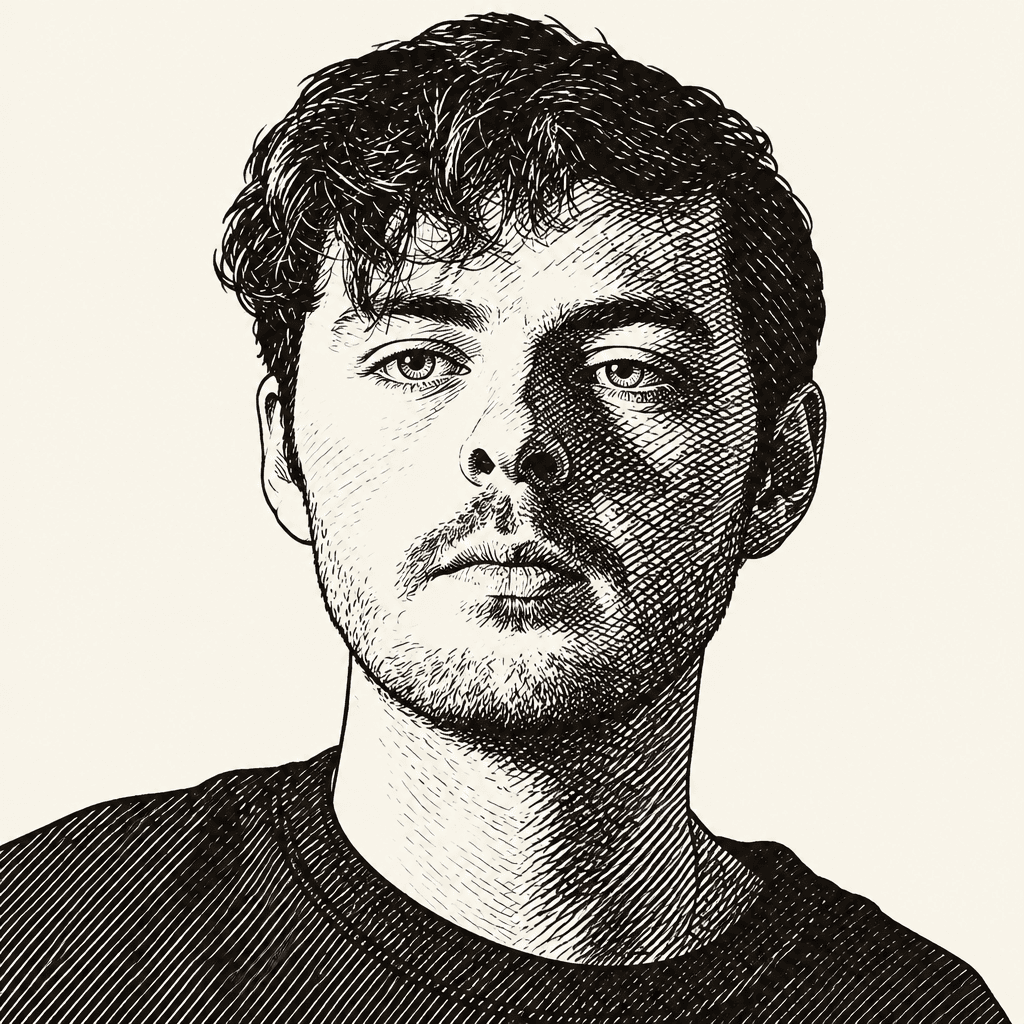
Alex O’Connor, who now prefers agnostic to atheist, argues that consciousness exposes a gap in materialist explanations of reality but does not, by itself, prove God exists. In a discussion with Chris Williamson, he says debates about religion can miss what matters to believers when they treat personal experience as though it were a failed argument—or treat criticism of an argument as a verdict on faith.
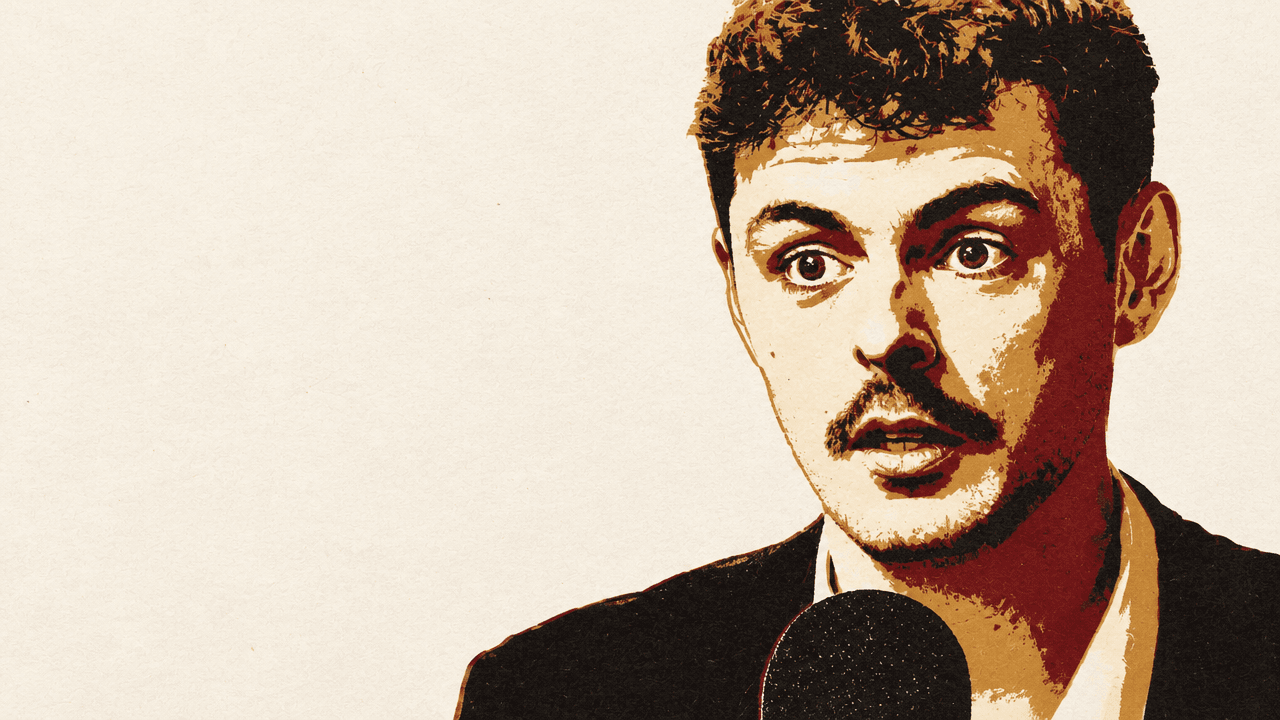
Debate can test arguments without settling what a person’s faith means
Alex O’Connor now prefers “agnostic” to “atheist.” The change reflects how difficult he finds it to make confident claims about God, consciousness and the foundations of reality—not a conversion to religious belief. He says he would like Christianity, another religious tradition, or the idea of God and eternal life to be true. He is not celebrating when someone tells him his arguments made them an atheist. What he welcomes is that people have begun questioning beliefs they might otherwise never have examined. Some religious listeners, he says, have told him that his criticism helped them think through their faith and remain religious.
O’Connor describes his role as something like a barrister: he can argue against a position without accepting every argument made for the alternative. Even if he became Christian, Muslim or Hindu tomorrow, he says, he would still object to arguments he considered unsound. A person can reach a true conclusion for poor reasons. Someone who believes the Earth is round only because a teacher or NASA said so has not, by that fact alone, established a strong basis for the belief. The conclusion may be true; the reasoning still deserves scrutiny.
That distinction matters to religious debate because neither belief nor disbelief comes with a single decisive argument. O’Connor considers the problem of evil: it may count against God’s existence without making that existence logically impossible. Its weight has to be considered alongside other arguments, such as fine-tuning, and each line of reasoning has difficulties. The result, in his account, is not a tally that settles the matter. It is a set of arguments whose force depends partly on what a person finds convincing.
He does not expect philosophical debate to advance like physics, with each generation starting from settled results and building toward consensus. People still confront questions that occupied Plato and ancient thinkers. O’Connor describes religious philosophy as partly “an experiential phenomenon”: an inquiry into the intuitions and experiences that shape belief, not simply a search for premises that no one can refute.
That helps explain why he does not treat argument as a substitute for religious experience. Anselm’s original title for the work containing his ontological argument was Faith Seeking Understanding. The argument appears in the Proslogion, which O’Connor describes as a prayer. In his reading, Anselm was not addressing atheists with a proof designed to convert them; he was reflecting on the nature of God from within an existing faith. The practice of constructing arguments from observations of the world—often called natural theology—may be important, but O’Connor suggests it is not the only purpose religious reasoning can serve.
O’Connor illustrates the difference with stories about Thomas Aquinas and Blaise Pascal. He recounts that Aquinas left the Summa Theologica unfinished after a mystical experience during the Eucharist. When his colleague urged him to finish it, Aquinas reportedly replied that he could write no more: everything he had written seemed like straw compared with what he had seen. O’Connor also recounts Pascal’s religious experience in 1654, quoting the words Pascal wrote in his diary: “Fire, fire. The God of Abraham, the God of Isaac, the God of Jacob, the God of Jesus Christ, not the God of the philosophers and the intellectuals.”
These stories do not settle what religious experience can establish. They illustrate why an argument may not reach what matters most to a believer. O’Connor says that if God exists, religious traditions have often treated experience and mysticism as more profound forms of encounter than a proposition waiting to be discovered at the bottom of a microscope.
The point of all of this intellectualizing about God is not to prove God’s existence to an atheist. It’s to fill in, to color a faith that already exists.
That distinction also shapes how O’Connor thinks criticism should work. Chris Williamson recalls the moment when Ayaan Hirsi Ali described a period of suicidal despair and her later turn toward belief. After the audience applauded, Richard Dawkins reportedly asked whether she believed Jesus was born of a virgin. O’Connor says he was present at the event in Brooklyn. He considers it legitimate to ask whether Christianity’s historical claims are true: it claims, among other things, that Jesus was born of a virgin, performed miracles and rose from the dead. It is also legitimate for someone to describe a religious experience or the meaning they find in the person of Jesus, even if they are unsure about the historical details.
The difficulty is that these responses can talk past one another. A historical argument about Jesus is not answered by someone saying they feel that Christianity is true. But a person describing a transformation through an experience they cannot fully communicate is not answered simply by pointing out later additions to the Gospel of John. The first exchange concerns historical claims; the second may concern the meaning of an experience. O’Connor’s point is that each kind of response can miss what the other is trying to address.
He does not say that questions about history are irrelevant to religious life, or that a reported experience answers them. Rather, he resists treating one kind of exchange as if it automatically settled another. An account of a transformation and a dispute about a text may both matter, but they are not necessarily competing answers to the same question. A person making a historical claim can be asked for historical reasons; a person describing an experience may be trying to explain why a religious tradition matters to them. Neither response automatically resolves the other’s concern.
O’Connor’s caution about argument does not mean that all reasons are equally good. He argues that people often hold beliefs for reasons that have not been examined, whether they believe in God because they were brought up to or disbelieve because they think evil makes God logically impossible. His invitation is to work through the reasoning, not to presume that a person’s starting point is well supported.
He also questions whether “religion” has always been a distinct part of life in the way the modern term suggests. Today, people may imagine family, work and religion as separate domains. In many ancient societies, O’Connor says, religious practice was not a separate compartment; it was woven into ordinary life. That makes broad questions such as whether early people “believed in religion” difficult to answer without specifying what is meant: ritual, stories about spirits, belief in particular gods, or an account of ultimate reality.
Consciousness challenges materialism, but does not by itself establish God
For O’Connor, consciousness is a difficulty for almost every worldview, not a hole unique to atheism. A theist who imagines an immaterial soul interacting with a material body faces an explanatory problem. An atheist can also believe in immaterial minds without believing in God. The question he treats as foundational is how conscious experience relates to everything else we claim to know.
We do not encounter a table apart from how it appears to us: through sight, touch, sound, smell or taste. If those senses were removed, there would be no way to interact with it. Consciousness is therefore not simply another object to be studied alongside tables and microphones. It is the means by which we examine them. O’Connor compares trying to inspect consciousness with pointing a flashlight at the flashlight.
This is not just a claim that perception can be mistaken. O’Connor’s point is that any description of an object is still made from within experience. We can see a table, feel it, hear a sound when we knock on it, or examine it with an instrument. Each method supplies another experience or observation; none provides a view from outside experience altogether. The “table itself,” considered apart from every way it appears, is not something we can simply inspect directly.
The same issue makes consciousness hard to define. Definitions depend on words, and people learn words through experience: a child learns “table,” “metal” or “light” by encountering things and being shown what the words apply to. A person who has never seen red can learn that a phone box is red and learn about the wavelengths associated with red, but O’Connor argues that this does not convey the experience of seeing red.
Familiar descriptions help identify the subject without settling what it is. Thomas Nagel’s formulation—if something is conscious, there is “something it is like” to be that thing—captures a difference between, say, a dog and a rock, but does not specify what the “something” is. Anil Seth’s description of consciousness as what disappears under general anaesthesia or in deep, dreamless sleep can orient a discussion, but O’Connor does not regard it as a complete definition either. Consciousness resists a clean boundary because whatever we describe as outside experience is still being conceived from within experience.
O’Connor’s concern is not that science cannot study the brain. It is that a description of brain activity does not, on its own, explain why that activity is accompanied by experience. Neuroscience may map activity in great detail and identify what happens during particular experiences. But even a complete account of the neural events, he argues, would leave the question of why there is something it is like to undergo them.
He uses a hypothetical person who learns everything science can say about colour—wavelengths, brain activity and the cultural associations of red and blue—but has never seen colour. If that person later regains sight and sees blue for the first time, O’Connor argues, they learn something new: what blue looks like. That knowledge is not another item in the scientific description. It is an experience.
The example reflects the boundary O’Connor assigns to science. He describes science as a method for identifying regularities, breaking things down into more fundamental components and expressing relations mathematically. That work can be extraordinarily successful. But, he argues, describing how something behaves is not necessarily the same as explaining what it is.
Newton’s account of gravity is his central example. People already knew that objects fell. Newton connected falling objects with the Moon’s motion: the Moon is continually falling toward Earth, but its sideways motion means it keeps missing. The International Space Station is not outside Earth’s gravity; its occupants are in near-constant free fall while moving sideways fast enough to remain in orbit. Newton described these motions mathematically. But when asked what gravity itself is, he famously wrote hypotheses non fingo—“I frame no hypothesis.” For O’Connor, the theory describes how gravity behaves without disclosing its underlying substance.
He sees consciousness as a more difficult version of that gap. Scientific inquiry aims to move from individual perspectives toward objective descriptions. Consciousness, by contrast, is the subjective experience that an objective description leaves out. The more completely an account describes the brain from the outside, O’Connor argues, the further it gets from what the experience is like from the inside.
This is also why he challenges materialism. “The universe is made of matter” sounds like a claim about what reality is, but what is matter? Describing atoms in terms of particles, and particles in terms of measurable properties, may explain how they behave without revealing what they are in themselves. O’Connor invokes Bertrand Russell’s version of the problem: saying that an electron is negatively charged tells us how it behaves in relation to other particles, not what its underlying substance is.
If materialism means that only what science can describe exists, O’Connor says, it risks reducing reality to behaviour while leaving open what is doing the behaving. Someone might accept that account, but he finds it difficult to treat as an explanation of the universe’s substance. The rules of chess describe how a piece moves; they do not tell a carpenter what the piece is made of. In the same way, he argues, scientific descriptions of matter’s behaviour do not necessarily answer what matter ultimately is.
That boundary does not mean science has failed at its own task. O’Connor says that the existence of the external world, other minds and the laws of logic cannot be established by scientific observation without already relying on assumptions about experience and the world being observed. We do not start with science and then acquire experience; we use experience to do science. His point is that every method has conditions it relies on, not that scientific inquiry is incoherent.
The gap in scientific description does not by itself establish that consciousness is fundamental, much less that God exists. O’Connor explicitly says he has not shown that the universe is made of consciousness. He is arguing that the common alternative—consciousness emerging from non-conscious matter—needs more explanation than it usually receives.
Examples of emergence often include heat arising from atoms or an image arising from the zeros and ones in a computer. O’Connor questions whether these explain the relevant problem. A physicist can describe temperature in terms of the average motion of atoms. But the familiar experience of heat—the felt warmth or the “ow” when something is hot—is an experience. A computer can produce electrical signals and light; an image of a daisy appears to someone looking at the screen. Without a viewer, O’Connor says, there are photons and electrical activity, but no experienced yellowness.
The examples show that complex patterns can arise from physical processes. O’Connor’s objection is that they do not explain why those processes are experienced from the inside. He distinguishes this from weak emergence, where the behaviour of a larger system can in principle be predicted from the behaviour of its parts. An ecosystem may have large-scale patterns produced by interactions among organisms. Consciousness, he argues, is different: even if every neural event were described, that would not tell us why experience accompanies it.
He pushes the analogy further by asking what it would mean for thought to produce matter. If someone claimed they could think hard enough to produce a chair or even a molecule of water, O’Connor says, we would suspect a category mistake: thoughts and physical objects seem to be different kinds of things. He argues that the reverse claim—that matter arranged with sufficient complexity produces thought—deserves more explanation than a bare appeal to emergence. Examples such as heat and computer images, in his view, do not answer that question because the features that make them vivid examples are themselves experienced.
Several possible accounts follow, none of them straightforward. Panpsychism holds that consciousness exists in rudimentary form in small components of matter. Idealism treats mind or experience as foundational, with the physical world as an appearance or expression of it. Traditional monotheism may instead posit a conscious creator who gives consciousness to some beings while leaving tables without it. O’Connor finds the last picture less parsimonious: it places a material world alongside a divine consciousness that selectively animates parts of it. He is more drawn to the idealist possibility that individual minds are expressions of one larger mental reality, while acknowledging that this is difficult to state precisely.
He explains the idealist view by way of a dream. A dream may contain a room, a table, another person and a sense of distance. On waking, asking how large the room was “in the substance of reality” may not make sense: the room and its dimensions existed as an appearance within a mind. Idealists, O’Connor says, treat the world in something like this way—not as unreal, but as an appearance within a foundational consciousness.
That is an analogy for how an idealist might understand space, not a demonstration that waking life is a dream. O’Connor also connects the possibility of a conscious foundation to experiences of unity with the divine. Mystics often describe a sense in which the boundary between themselves and God disappears. In traditions that understand God or ultimate reality as foundational consciousness, such an experience might be interpreted as recognizing that individual minds are expressions of that reality.
O’Connor points to Hindu accounts of Brahman as one way to frame this thought. Brahman is not simply a personal creator who makes the universe through an act of will; it is the ultimate reality in which everything exists. He uses the image of a whirlpool in an ocean: the whirlpool is distinct, but it is not separable from the water. He also discusses Spinoza’s phrase Deus sive Natura—God or nature—as a way of expressing a single underlying substance. These are possible interpretations of consciousness and divinity, not conclusions he says follow inevitably from the difficulty of explaining experience.
The distinction between ultimate reality and particular gods matters, too. O’Connor separates a thunder god or spirit in a forest—imagined as a character within the world—from God understood as the source or foundation of the world itself. He argues that these ideas are often conflated when atheists say they reject God just as they reject Zeus or Thor. The former gods may move around within a story of the world; the latter conception concerns what the world depends on at the most basic level.
That distinction complicates speculation about ancient religion. Asked whether people 150,000 years ago had religious or proto-religious experiences, O’Connor says it is highly possible, perhaps probable, because religious impulses appear across human societies. But that pattern has at least two possible explanations: an evolved disposition toward religious experience, or the possibility that people are responding to something real. If both accounts can predict the same evidence, the evidence alone may not distinguish them.
He also cautions against treating every early belief in spirits or gods as an early version of monotheism. A thunder god, a spirit in a forest, and a single ultimate reality are not necessarily the same kind of idea. O’Connor says we do not know precisely when the conception of a unified, foundational God developed. He notes that Aristotle’s first principle, for example, was an impersonal source of motion, not a personal creator concerned with human affairs.
Even the question of whether ancient Greeks literally believed in their gods is, in O’Connor’s view, less straightforward than it sounds. He offers an analogy: adults may speak to a child’s stuffed animal as if it were a dog, while everyone understands that it is a toy. Acknowledging that fact in the middle of the game would violate the shared way of treating it. O’Connor wonders whether some stories about particular gods worked as a way of animating the world, rather than as literal claims that a god could be found sitting on a mountain.
Everyday speech still does something similar, he suggests. Calling an unlikely meeting “fate” need not mean believing that a force called Fate arranged it. The expression gives events a narrative shape. That kind of personification may help explain stories about gods within the world, but it is different from the claim that reality itself rests on a foundational source.
A further complication is how modern surroundings shape intuition. O’Connor says we are usually surrounded by artifacts—objects made by people—rather than by the kinds of natural processes that might make the world seem animated. A camera, heater, plug or microphone looks inert partly because it has been manufactured into a stable tool. In a forest, he thinks, it may be easier to notice movement and change: plants grow, branches shift, and the living environment does not resemble a room full of designed objects.
He uses this point to explain why some people find the idea of consciousness in nature less strange than the idea of consciousness in artifacts. Someone who thinks consciousness is foundational would not expect it to show up in an obvious human-like way in a microphone’s pop filter. The argument, as O’Connor presents it, is that the apparently inert object is a human arrangement of material; zooming down into the physical processes that make it up returns one to activity and uncertainty. He stresses that this does not prove that electrons are conscious. It is a reason to be cautious about dismissing the possibility simply because everyday objects seem lifeless.
Meditation may change how the world is experienced, not settle what it is
Alex O’Connor says meditation may allow people to step outside their habitual concepts. Chris Williamson asks why meditators in different traditions sometimes describe non-dual awareness: a sense that the boundary between self and world has dissolved. O’Connor says psychedelic experiences can have a similar quality. Rather than seeming simply strange, the world may feel as though it has always been this vivid and the person has only now noticed.
Ordinary perception compresses detail into useful categories. We see “a table,” not a shifting field of colour, texture, reflections and perspective. O’Connor compares this with painting: a painter may notice that a surface we call brown contains blues, whites and other colours. The label helps us navigate but screens off detail. Optical illusions offer a more controlled example of how the brain interprets visual information and can make two identical colours appear different.
Meditation, O’Connor speculates, may quiet the concepts that organize perception. Repeating a mantra or returning attention to the present can reduce thoughts about what one is doing and where one is. The result might be a sense that experience is simply happening, without the familiar division between observer and observed. He says he has not personally enjoyed meditation and does not present himself as an expert.
Whether meditators are seeing reality more accurately is harder to answer. O’Connor says there is no objective perspective available for comparison. The senses do not simply deliver the world as it is; they present it in particular forms. People born blind who later gain sight, he says, may know a cube and a sphere through touch yet be unable to identify which is which by sight immediately after vision is restored. Touch and sight do not automatically translate into each other.
That example complicates a simple appeal to empiricism. O’Connor agrees that knowledge comes through observation and experience, but rejects the assumption that perception gives transparent access to reality as it is. Bats, birds and humans do not encounter the same sensory field. Nagel’s question—what is it like to be a bat?—asks for the bat’s experience from the inside, not an account of how a human might imitate its behaviour.
O’Connor makes a related point through smell. We can describe smelling in terms of particles entering the nose and interacting with receptors. But those particles and the nose are themselves understood through sight, touch and other experience. Describing one sense through another does not obviously reveal the intrinsic nature of an experience. Looking through a microscope at a table gives another appearance of it—atoms rather than a tabletop—but not, he says, access to the thing-in-itself.
He connects this to Kant’s distinction between phenomena, the world as it appears in awareness, and noumena, things as they are in themselves. Schopenhauer extended the distinction by observing that one’s own body is available in two ways: as an external object and as an internally felt body. He proposed that this inner experience might offer a clue to the otherwise hidden nature of reality. O’Connor presents that as one route toward idealism or panpsychism, not as a settled result.
Schopenhauer’s proposal, as O’Connor describes it, begins from the unusual status of one’s own body. A hand has shape, colour and measurable properties when seen from outside; it also has an inward aspect, the felt experience of having and moving it. If other people have an inner life like one’s own, perhaps animals do too. Schopenhauer then asks whether the inner nature of other things might be related to this “will” or awareness, even if it is not human-like thought. O’Connor stresses that this would not make a plant’s experience equivalent to a person’s complicated awareness of memory, colour and daily worries. It would make consciousness—or a rudimentary form of awareness—simpler than the elaborate experiences built upon it.
The proposal helps explain why meditation and mystical experience arise in a discussion of consciousness. If ordinary perception is shaped by concepts that make the world appear divided into objects and a separate observer, loosening those concepts may change how that division feels. O’Connor says meditators may be apprehending a kind of truth, but does not claim that the experience establishes what reality is. It demonstrates how perception can change; whether that change reveals a more accurate view of the world remains difficult to determine.
Prayer can align the petitioner’s will
A joke about AI agents praying for their user’s immortal soul gives O’Connor a way into a practical question: what is prayer for if God already knows what will happen? He sees two reasons the joke works: prayer can seem puzzling, and many people assume AI systems are not conscious. The joke imagines an army of bots saying hundreds of prayers per minute to help someone avoid damnation. O’Connor’s answer is that prayer may do something, but not necessarily for the person being prayed for.
A common criticism says prayer is pointless. If God is omniscient and already intends to help someone in hospital, asking God to do so adds nothing. If God does not intend to help, the petitioner may seem to be claiming to know better than God. O’Connor thinks that objection misses prayer’s role for the person praying. A prayer for someone else can direct attention toward that person and bring the petitioner’s will into line with what they believe matters.
He uses the Gospel account of Jesus in Gethsemane as an example. Jesus asks for the approaching suffering to be taken away, then says, “not my will, but yours.” O’Connor reads the scene as a prayer that does not change God’s decision but helps Jesus confront his fear and align himself with what he understands as God’s will.
A prayer before dinner can function similarly. Giving thanks does not give God anything, O’Connor says, but it can make the person praying more attentive to what they have. He likes the idea of a “secular grace”: pausing before a meal to feel grateful for one’s circumstances. Whether that gratitude is addressed to God is secondary to the act of attention.
On his account, prayer cannot be for God, who lacks nothing, and a prayer for another person may not change what God will do. It can still matter to the petitioner by reminding them of someone else’s needs and of the kind of care they think they ought to show. O’Connor’s explanation does not cover every kind of prayer; people also ask for personal outcomes. He mentions praying for a new phone while waiting in line at an Apple store, but doubts that God would answer such requests. His focus is on why prayer may have practical value even if it does not alter God’s plans.
Selection turns parenting into a question about harm and optimization
Chris Williamson asks whether parents who could genetically engineer a child to be more attractive, intelligent and emotionally stable would be wrong to refuse, as they might be wrong to refuse a good education. Alex O’Connor is unsure. One reason the cases feel different, he suggests, is that people regard education as something a person can pursue, while appearance is not usually treated as a matter of choice. If genetic design made appearance a parental choice, that intuition might change.
Williamson points to embryo selection in IVF and argues that the same logic used to select against serious inherited conditions might extend to traits such as immune function, height or IQ. If it is acceptable to try to prevent a child from inheriting a condition that would make life difficult, he asks, why not select for traits likely to make life easier? He describes existing embryo selection as a kind of ranking and argues that selecting against severe conditions can make it hard to draw a principled line before selecting for preferred traits.
O’Connor does not offer a simple line between acceptable and unacceptable selection. He is wary of an open-ended drive to improve children: preventing a severe disability could lead to choices about attractiveness or other traits, with no clear stopping point. He compares the risk to cosmetic procedures that begin with a small adjustment and continue until the result looks artificial. Perfectionism, he says, has no natural endpoint.
His strongest objection concerns the possibility of treating a child as a designed product. The thought of looking at one’s child and feeling “buyer’s remorse,” he says, is something he would resist. That concern connects to the non-identity problem, associated with Derek Parfit: what does it mean to harm a child when a different choice would have resulted in a different child?
O’Connor contrasts two cases. In the first, a woman is already pregnant and can take a pill that would prevent her child from being born without functioning legs. She refuses. In the second, a woman can wait a month before conceiving; if she conceives now, the child will be born without functioning legs, while waiting would result in a different child being born without the condition.
The first woman seems to harm the child she is carrying: that child would have had functioning legs if she had taken the pill. The second woman also seems to act wrongly if she knowingly conceives now for selfish reasons. Yet the child born cannot say that waiting would have left them better off. Had the woman waited, that child would not have existed.
The cases create a tension. The second woman appears to do something wrong, but it is unclear who has been made worse off. If the child’s life is worth living overall, the child may be better off existing than not existing. O’Connor asks whether harm is necessary for an action to be bad, and what explains the intuition that the second woman has acted wrongly if no one is worse off than they would have been otherwise.
He leaves the problem open. One possibility is that selecting which child comes to exist is morally different from altering or treating a child who already exists. But the distinction is difficult to defend if the selected child is not worse off than the child who would have existed under another choice. The thought experiment does not settle whether embryo selection is permissible; it shows why appeals to harm may not resolve the question.
The discussion leaves two concerns in tension. Williamson’s argument presses the case for selecting against harmful conditions toward selecting for advantageous traits. O’Connor’s resistance is not that every form of selection is wrong, but that the practice could make parenting an endless project of optimization—and make it harder to regard children as people rather than chosen outcomes.
Infidelity concerns what partners choose to cultivate
Alex O’Connor distinguishes noticing attraction from choosing to cultivate it. He invokes Jesus’s warning that “he who looks upon a woman with lust has committed adultery in his heart.” O’Connor does not read that as condemning an involuntary thought or simply noticing that someone is attractive. The concern, in his interpretation, is entertaining the thought—choosing to continue with it.
A dream complicates the distinction. Chris Williamson describes a man who dreamed about his wife’s friend but did not cheat in the dream, and wondered whether he deserved credit for that restraint. O’Connor says the answer depends on whether dreams reveal character. If they did, someone might be responsible for what they contain; but dreams can also be strange and disconnected from waking intentions. He does not think they provide a reliable basis for moral judgment.
The physical act is a visible boundary, but O’Connor says intention and desire matter too. He contrasts someone who wants to sleep with another person but is rejected with someone who does not want to but is forced. The second person is a victim, not an unfaithful partner. The contrast makes desire and consent relevant independently of whether sex occurred. In an ordinary relationship, he adds, a partner who has secretly longed for someone else may have withheld information the other person would have wanted when deciding whether to stay.
Williamson raises the risk of workplace retreats, where colleagues spend time together in a new setting and existing attraction may intensify. O’Connor agrees that people should be able to resist, but says it may be wiser to avoid situations likely to undermine a commitment. He treats boundaries around social media or pornography in the same way: as practical safeguards, not proof of weakness.
O’Connor argues that regular pornography use can make people more likely to objectify women and cheat. He presents this as his reading of the evidence in the discussion, rather than as a claim that every viewer will behave the same way. He also says pornography can count as a form of infidelity depending on the agreement between partners. A couple can define their relationship in different ways; what counts as cheating partly depends on what they have promised each other.
His concern extends beyond a couple’s private boundary. O’Connor argues that pornography harms women both directly and through the behaviour of people who consume it. He points to the effects he associates with objectification, including catcalling, uncomfortable attention and more aggressive behaviour being treated as normal. He gives the example of women dealing with men who introduce choking during sex without having established that it is wanted. The reason to exercise restraint, in his account, is not simply self-discipline for its own sake. It is care for the partner one has promised to love and for women who bear the effects of objectification more broadly.
That helps explain why he treats physical infidelity as an imperfect measure. It is easier for partners to identify and agree on, but the underlying concern can involve intention, desire and what each person has promised the other. This does not make every thought a betrayal. It means that repeatedly indulging a desire can matter morally even when it has not become physical.
O’Connor’s practical answer is to create safeguards before a tempting situation arises. He compares avoiding a company retreat without partners to limiting exposure to pornography or a social-media feed that repeatedly draws someone toward behaviour they do not want to cultivate. The point is not that temptation makes a person incapable of choosing; it is that commitments can be protected by shaping the conditions in which choices are made.