Achievement Cannot Deliver the Permanent Satisfaction Ambition Promises

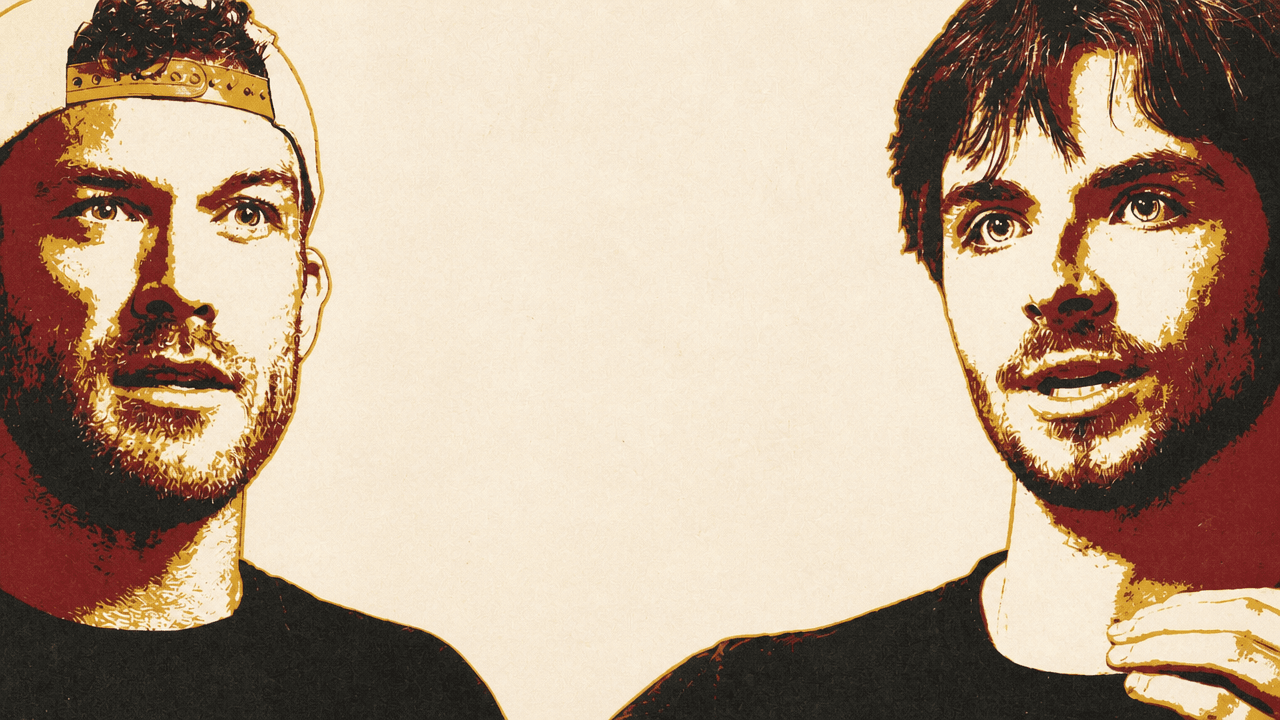
Jett Franzen and Chris Williamson argue that ambition and sustained work can build real competence, freedom and upward mobility, but cannot by themselves resolve the insecurity or dissatisfaction that often drives them. Drawing on their own experience building online audiences, they contend that people need to make evidence through repeated effort while examining whether work has become an avoidance strategy. Their alternative is not resignation, but agency tempered by acceptance: pursue difficult goals without making life or self-worth conditional on the next achievement.
The machinery of achievement can make satisfaction impossible
Chris Williamson describes a trap familiar to highly driven people: every achievement that once looked extraordinary can become the minimum acceptable standard almost immediately. He calls it the curse of competence. When someone performs well repeatedly, success stops registering as a win and becomes the baseline below which they fear failure.

Williamson gives his own work as an example. He says Modern Wisdom reached eighth in Spotify’s podcast rankings, an outcome that felt “so fucking insane” for roughly half an hour. Then the next calculation arrived: if the show failed to remain in the top ten the following year, that would feel intolerable. Eighth became merely acceptable. Seventh would be briefly satisfying, then would become the new floor.
That pattern makes trajectory psychologically potent. Someone moving from 600th to 300th can feel visibly ascendant, while someone who falls from first to third may experience decline despite remaining exceptional. Williamson cites Jimmy Carr’s formulation: trajectory matters more than position. The mind does not merely ask where it is; it asks whether it is still moving in the preferred direction.
Franzen sees the same dynamic in online audiences. He says gaining two or three followers per day when he had fewer than 1,000 felt more exciting than gaining thousands per day later. The numerical scale changed, but the nervous system adapted. What once appeared miraculous became normal.
Both men connect that adaptation to a broader problem with desire. Franzen invokes Lacan’s account of desire: an object remains compelling partly because it is absent. Once it is acquired, it can no longer be wanted in the same way. The fantasy that gave the goal its charge has to be replaced by another fantasy.
A video of golfer Scottie Scheffler serves as the conversation’s clearest counterpoint to the belief that winning resolves the question. Scheffler, identified on screen as a three-time major champion, says that becoming the best golfer in the world is fulfilling as an accomplishment but not “in the deepest places of your heart.” He asks what the point is after someone reaches the summit they thought would complete them.
Franzen’s response is characteristically severe: perhaps complete satisfaction would be dangerous. If the achievement of a goal ended wanting altogether, people would stop pursuing the next task, relationship, challenge, or source of survival. He offers an evolutionary sketch: a hunter who killed a bear could not remain permanently elated and lower his guard, because the next threat could still arrive. Whatever its origin, the practical reality is that people regress toward a baseline. Success becomes familiar. Desire reorganizes itself.
Williamson relates this to dukkha, which he treats less as a claim that life is constant misery than as a claim that experience is persistently unsatisfactory. He recounts Morgan Housel’s story of arriving at a long-planned family holiday, only to find the mind immediately noticing too much ice in a drink, sand underfoot, and imperfections in dinner—then beginning to plan the next year’s trip while still on the first night of the current one.
The problem is not that goals are fraudulent or that accomplishment is empty. Achievement can create security, freedom, mastery, money, and opportunities that genuinely matter. The problem is assigning achievement a job it cannot reliably perform: making someone permanently enough.
Goals are contracts to self-criticize until we succeed.
That contract is powerful because it makes the future conditionally livable. Once the promotion arrives, then rest. Once the business works, then intimacy. Once the body changes, then confidence. Once the audience grows, then the person can finally stop feeling behind. But if the underlying pattern is self-criticism, success does not terminate it; it simply raises the standard it must meet.
Williamson distinguishes between instrumental and ultimate goods. Instrumental goods are pursued for another end: someone trains to get a better body, wants a better body to feel fit, wants to feel fit to be confident, and wants confidence to feel loved, safe, peaceful, or enough. Those later states are closer to ultimate goods—the experiences sought for themselves rather than as steps toward something else.
His concern is that many people live entirely instrumentally. They pursue the promotion for the pay rise, the pay rise for status, the status for security, then discover they have traded sleep, health, relationships, time with children, and the ability to feel anything for the next rung of the ladder.
If as a guy you pray at the altar of “fuck your feelings, just work harder,” how can you be surprised when you achieve but you don't feel?
The same fuel that produces achievement can leave someone unable to receive it. Franzen’s greatest fear is a life spent waiting: all day for 5 p.m., all week for Friday, through school for adulthood, through adulthood for the moment when real life can finally begin. Every milestone produces another condition that must be cleared before permission to live arrives.
Williamson uses Marie-Louise von Franz’s idea of the “provisional life” for this condition: the persistent sense that present life is only preparation for a more authentic future. The imagined future keeps receding. What looked like a prelude turns out to have been the life itself.
Work builds evidence, but it can also conceal the wound
Jett Franzen treats self-belief as necessary for difficult pursuits, whether the goal is a career, a creative project, friendship, romance, or a larger life change. But he does not regard confidence as something a beginner should expect to possess before beginning. The person trying to convince themselves they can do something is usually the person most aware of their weaknesses, failed attempts, and lack of proof.


His practical answer is to make evidence. Franzen says he posted 1,162 videos before reaching 1,000 followers. The following month, he gained 100,000 followers. Before that shift, he was repeatedly making work without knowing whether he had a viable future as a creator. Afterward, he had evidence that a person recording in a parents’ basement could reach hundreds of thousands or millions of viewers.
The change was not simply external growth. It altered his identity. Success did not give him a generic dose of confidence; it made a specific claim harder to deny: he might be the kind of person who could make videos people watched.
Williamson offers a parallel account of delayed compounding. He says Modern Wisdom took about 400 episodes and more than three years to reach 100,000 subscribers. The next 400 episodes produced roughly 3 million subscribers. The apparent overnight acceleration followed years of work that was hard to see from outside.
The opportunity—you don't want the opportunity before you're ready for it. And you're ready for it far later than you think you are.
Williamson calls the accumulated preparation “latent leverage.” He says he wanted access to larger platforms before he first appeared on Joe Rogan’s show in late 2022, but by that point he had made around 600 episodes and had roughly 1.5 million subscribers. He had felt ready earlier. In retrospect, he believes earlier exposure would have arrived before he could use it properly.
This is why he prefers “make it until you believe it” to a simplistic version of “fake it until you make it.” The point is not to wait until self-doubt disappears. It is to build a stack of proof so substantial that doubt has to contend with reality.
Franzen thinks the two formulations can coexist. Beginners necessarily act before they understand what they are doing. They take shots, fail, get embarrassed, learn, and repeat. “Faking it” means operating before an identity is secure. “Making it” means generating the evidence that eventually makes that identity credible.
The source of the work matters, however. Williamson’s opening concern is that admirable habits can become sophisticated avoidance. After a silent meditation retreat, he noticed that meditation’s releasing techniques could become a way of pushing difficult emotion away rather than allowing it to be felt. A person can use meditation to sit with grief, fear, joy, anger, or discomfort—or use it to preserve distance from all of them.
The same ambiguity applies to work, training, business-building, and self-improvement. None is inherently evasive. But a productive habit can still function as a coping strategy. The person may be building a body, company, career, network, or audience while also avoiding loneliness, shame, helplessness, or the fear of being unlovable.
Franzen connects this to Carl Jung’s idea of the shadow. He uses “evil” broadly, not only to mean cruelty but also the denied habits, motives, and impulses that shape a person from outside awareness. The danger, in his account, is not possessing undesirable traits. It is refusing to see them.
He describes real self-confrontation as “psychological suicide”: exposing oneself to oneself. It means asking not only, “What is my problem?” but also, “How have I arranged my life to avoid facing it?” If someone cannot confront and integrate that shadow, he argues, it continues to control them subconsciously.
Williamson applies the same skepticism to the standard question of why someone works so hard. People generally have a public answer that sounds respectable: they want to build something useful, help their family, create security, overcome an underdog past, or contribute to the world. Those answers may be true. But he thinks the deeper answer is often less flattering.
Someone may have learned as a child that love arrived only with performance. Someone who felt terrified by loneliness may have found that being useful was a close enough substitute for being loved: other people may not need them, but at least they want them. Wealth, beauty, competence, influence, or intellectual mastery can then become protection from an internal condition rather than merely a chosen goal.
Williamson speculates that people who become extreme in one dimension often feel the opposite internally. The visibly beautiful person may feel ugly. The highly competent person may feel powerless. The wealthy person may feel chronically insufficient. The person with skill and social connections may still feel alone. Their achievement can be real and socially valuable while the wound that powered it remains active.
The inspection is difficult because achievement earns praise. Someone who has turned pain into a strong body, a business, a career, money, or mastery can reasonably resist being told that the mechanism may also be a defense. They survived something painful and made something admired. Why dismantle it?
Neither Franzen nor Williamson argues for abandoning ambition. Franzen instead values a rhythm he associates with a lion: vicious effort during the hunt, then real rest. Williamson makes a similar distinction between periods that require force and periods that require release. The issue is whether effort is chosen or compulsive.
That distinction also explains why ease at a high level is easy to misread. Franzen describes recording eight videos outside in winter after a day spent doomscrolling. He imposed a simple constraint: he would make short videos in the cold because he could not stand outside indefinitely. Those videos received hundreds of thousands, and often millions, of views despite requiring little apparent effort.
Williamson warns against extracting the wrong lesson. The videos worked after Franzen had already made hundreds of attempts, learned cadence, removed filler, studied what held attention, and developed the ability to speak fluidly. He invokes wu wei: spontaneous action is the endpoint of rigorous practice, not a substitute for it.
You can only break the rules of the game once you've learned them.
A relaxed athlete is not necessarily an untrained athlete. Franzen describes the same principle through choking in sport: nervousness can make a player consciously micromanage a skill that training was meant to automate. The point of repetition is not permanent strain. It is to develop the capacity to act well without gripping the task to death.
Agency is necessary, even when the world is not fair
Franzen’s strongest claim about agency is deliberately broad: in America, he believes most people can move upward from difficult circumstances through sustained effort, even if they cannot all reach the top. He does not claim that disadvantage is imaginary or that outcomes are distributed fairly. He says rather that many people can move from a bad position toward a more stable middle if they act consistently over time.
Chris Williamson agrees that gender, race, disability, language, country of birth, poverty, abuse, and other conditions can make success harder. His point is not that those conditions are morally irrelevant. It is that the person living with them still faces a practical question: what will they do next?
Williamson frames the alternatives starkly. Someone can take action and become proof to people with similar disadvantages that progress is possible, or they can blame and complain. Hardship may not be a person’s fault, he says, but only one response gives them greater power over the future. His proposed reframing is to treat “blame” as “give power to.” Under that definition, the only person worth giving more power to is oneself.
Franzen recognizes that his own history did not begin in the worst possible conditions. He says he grew up in a working-class family and did not have to worry about whether bills would be paid. He regards that as a meaningful advantage. He later slept on a carpet while trying to make online work succeed, but he does not use that period to erase more severe forms of hardship.
His argument is that progress did not arrive “out of thin air.” He experimented with streaming, clipping, and other forms of content; he worked continuously in obscurity; and he kept going after posts failed or embarrassed him. In his formulation, wanting something is not merely saying one wants it. It is being willing to pay the price required to pursue it.
Franzen calls ambitious but lazy people especially dangerous because they confuse planning with operating. They talk eagerly about starting a business, knocking on doors, building a project, or changing their life. They may even make detailed plans. But they do not do the work.
Williamson agrees that talking and doing draw from the same resources. Talking about an intended project can provide a small reward signal similar to accomplishing it, reducing the urgency to act. He says that a small number of people are “operators”: not necessarily people with extraordinary talent, but people who can identify what must be done and then repeatedly do it.
Before you win, everyone will ask you why you're working so hard, and once you win, everyone will tell you how lucky you are.
He remembers days in 2018 when Modern Wisdom received no plays at all. After rupturing his Achilles in 2020, he built a recording setup that allowed him to keep his foot elevated while continuing interviews. Before the show had dynamic ad insertion, he says he recorded fresh sponsor reads three times per episode for around 600 episodes—roughly 2,000 finished reads, plus failed takes—often late at night while others were inviting him out.
The examples are not offered as a universal prescription for overwork. They support a narrower claim: visible results conceal the volume of unglamorous repetition that made them possible.
Franzen uses the Dartmouth Scar Experiment as an example of how belief can shape social experience. As he recounts it, participants were shown makeup that appeared to create facial scars before an interview. The makeup was removed without their knowledge, but participants later reported discrimination and often identified comments they believed referred to the scar. Franzen does not take this to mean oppression does not exist. His conclusion is that a belief in one’s exclusion can become self-reinforcing.
Williamson worries that empathy can become restrictive when it tells people that a disadvantage determines their future. Sympathy meant as care can become what he calls a speed governor: a socially acceptable explanation for why someone should not expect themselves to move.
The concern is strongest when people without extreme disadvantages identify with the most disadvantaged cases and inherit a narrative of incapacity. Williamson argues that recognition of genuine suffering can expand outward until people near the middle of the distribution begin to see themselves as equally constrained. In that form, empathy becomes a self-fulfilling restriction.
Franzen calls the more permissive version “suicidal empathy”: validating self-destructive habits because criticism feels harsh. He compares it to parenting. A parent who loves a child does not endorse every behavior merely because correction is uncomfortable. They offer standards and criticism because they care about what the child may become.
His own experience with grievance was concrete. In high school, he took multiple jobs to save for college, including graveyard shifts lifting heavy boxes in an unheated trailer outside Chicago. He resented peers whose families could pay for college and who appeared to be enjoying more freedom than he could afford. He says that outlook persisted for years and was reinforced by coworkers who shared it.
Reading Marcus Aurelius did not produce an instant conversion. The change came from recognizing that resentment was making his life worse regardless of whether the original imbalance was fair. He had few friends, little direction outside school, and a habit of complaint that was becoming its own constraint.
Social media intensifies the comparison problem, he argues. People once compared themselves primarily with a limited local group. Now a feed can deliver the most attractive, wealthy, articulate, funny, and visibly successful people to everyone’s pocket. Someone encounters the top slice of multiple status hierarchies at once, reads it as evidence of personal failure, and becomes less likely to act.
Agency, in this account, is not faith in a fair world. It is a refusal to allow unfairness to become the final explanation for inaction.
Acceptance is not surrender; it is an account of enough
Franzen frames suffering as the gap between expectation and reality. If someone expects steak and receives chicken, the outcome can register as disappointment—or as a pleasant surprise. If someone expects quiet outdoors and encounters construction, the noise is real, but the distress is amplified by the collision between the world as it is and the world they expected.
Jett Franzen says this is why his high-school history teacher’s repeated instruction—“roll with the punches”—became more meaningful with time. The skill is not eliminating preference or standards. It is meeting the actual situation without turning every deviation from the plan into evidence that life has gone wrong.
Williamson makes the same point through complaint. Traffic is frustrating, but a person who is perpetually shocked by traffic has built a model of reality that does not include a common feature of reality. The problem is not that the person wants less traffic; it is that their expectations repeatedly fail to match the world.
Reality is undefeated.
For Williamson, satisfaction is treated suspiciously in a culture that equates rest with surrender. Saying “I’m good” or “that is enough for me” can sound like a failure of ambition. Yet he regards the ability to be satisfied as a radical alternative to an instrumental life in which every gain must finance the next gain.
That does not mean lowering effort. Williamson distinguishes agency from what he calls resonance. Agency says, “I happen to life”: it emphasizes choice, sovereignty, and action. Resonance says, “Life happens through me”: it describes moments when someone must stop gripping so tightly, notice where life is flowing, and allow accumulated competence to work.
The two modes are not opposites. Early development may require intensity, repetition, and obsession. Later development may demand more ease. Williamson points to elite athletes who appear playful or loose in public but remain disciplined where it counts. The capacity to relax is different from distraction.
Franzen describes Alysa Liu, the Olympic figure skater, as a compelling example of someone who seemed detached from outcome while still fully engaged in performance. He also compares Erling Haaland’s relaxed public persona with his ability to turn on intensity when needed. Their apparent ease is not passivity; it is an absence of visible suffocation.
That distinction matters because rigid wanting can undermine the thing someone wants. Franzen calls it “suffocating the experience to death.” The more desperately someone insists that a particular outcome must happen, the more pressure they introduce and the less capable they may become of operating fluidly.
Acceptance is therefore not a retreat from ambition. It is an attempt to stop making well-being conditional on a future event. A person can train, build, create, compete, and take responsibility while refusing to postpone life until the next milestone certifies that they are allowed to enjoy it.
Solitude and authenticity protect the work that cannot be copied
Franzen credits time alone with giving him an advantage he did not initially experience as an advantage. He says he struggled to fit in through late high school and college. The isolation pushed him toward reading, researching, confronting himself, and deciding what he wanted without much external validation.
Chris Williamson tells him that solitude can offer a person the chance to develop in ways that are harder when too many people want access to them. But success reverses the problem. Once momentum is visible, a creator can be surrounded by invitations: investment conversations, sponsors, business opportunities, staff demands, travel, dinners, events, new friends, and flattering offers that once would have felt impossible to refuse.
Williamson’s warning is not to preserve every early habit or romanticize the grind. A person should not remain trapped in the operating mode required at the beginning. The task is to identify the few activities that generate the principal output and protect them as everything else expands.
For Franzen, Williamson identifies the engine as reading, researching, scrutinizing ideas, and communicating them. For himself, it is protecting the first part of the day for reading, thinking, and writing. A growing operation can become what he calls an unwieldy “spaghetti monster”: an app needs management, staff need attention, an editor needs coordination, sponsors create calls, and the day fills with tasks that feel like growth while diluting the work that made growth possible.
Your capacity to say no needs to scale more quickly than your ability to be successful.
Williamson says he traveled 100,000 miles the previous year and had already traveled around 70,000 miles by roughly the midpoint of the current year. More opportunity means more compelling reasons to abandon protected time. The successful person may need to decline precisely the invitations they once would have begged to receive.
Franzen recognizes the temptation. People he admired began inviting him into circles that would have been inaccessible when he felt socially excluded. He says that attention is difficult to refuse, especially after years of loneliness. But he also understands that the solitary habits that helped him build momentum could disappear once attention itself becomes the reward.
This is connected to their account of healthy ego. Franzen argues that people need enough self-belief to bet on themselves before proof arrives. He does not mean believing oneself more valuable than others or treating confidence as a license to harm people. He means refusing to let self-doubt become a backpack full of rocks on the climb toward a difficult goal. In his metaphor, confidence can function as a jetpack.
That kind of self-belief is socially uncomfortable. Williamson says ego is often treated as antisocial because someone’s declared ambition confronts observers with their own unrealized capacity. If Jett believes he can build something and then begins to do it, people near him may have to consider whether they could have acted too. Humility, including performative humility, is easier to accept because it minimizes those contrasts.
Franzen says he encountered this after an audience that identified with loneliness and social exclusion began to reject him as his public life became more visibly successful. In his account, viewers accused him of “LARPing”—pretending to have been isolated—because they could not reconcile his current access to influencers, women, and public attention with his description of earlier exclusion.
Williamson relates this to the narcissism of small differences. A distant celebrity can be dismissed as exceptional. A person from the same school, town, or approximate starting point is harder to dismiss. Their success can feel like a mirror held up to someone who believes they had similar raw materials.
Content creation sharpens the effect because its skill gap can look deceptively small. Most people can sit in front of a camera, record a video, or speak into two microphones. Far fewer can repeatedly make work that attracts attention. When the expertise is not obvious, viewers may believe they could do the same work—and resent the person who does it better.
Franzen’s answer is differentiation rather than imitation. He argues that creators who copy the same formats, personalities, and strategies as everyone else have no product distinction. Williamson puts the point bluntly: the best someone can hope for when trying to be another person is to become the second-best version of them. They are already “the zeroth in the world” at being themselves.
Franzen cites Naval Ravikant’s line that people escape competition through authenticity. For him, authenticity is not total disclosure. It is developing the particular interests, voice, and combination of traits that no competitor can reproduce.
Williamson adds that the internet’s appetite for authenticity is limited. People say they want directness, emotional honesty, and sincerity, but their tolerance narrows when someone appears genuinely earnest or visibly out of control.
The internet is desperate for authenticity but it’s allergic to sincerity.
Franzen’s own account of radical honesty illustrates the limit. In high school, a girl at a football game asked whether he thought she was pretty. He said no, then confirmed that he thought she was ugly. He now regards the incident not as courageous truth-telling but as social immaturity. Authenticity does not require saying every thought in its rawest form. It does not make cruelty wise.
The useful version of authenticity is not confession for its own sake. It is the refusal to become a copy of someone else merely to avoid the risk of standing out—and the discipline to protect the interests and work that made a person distinctive before success made them busy.