Repeated Nicotine Use Can Turn Cognitive Lift Into Withdrawal Relief


Andrew Huberman argues that nicotine’s appeal as a cognitive aid is easily confused with relief from the withdrawal it creates: infrequent use may produce an alert, calm state, but repeated pouch use can merely restore a dependent user to baseline. He warns that convenient delivery formats—from vapes to oral pouches—can increase total exposure by making nicotine easier to use throughout the day, while portable canisters and repeated handling may reinforce the ritual alongside the drug.
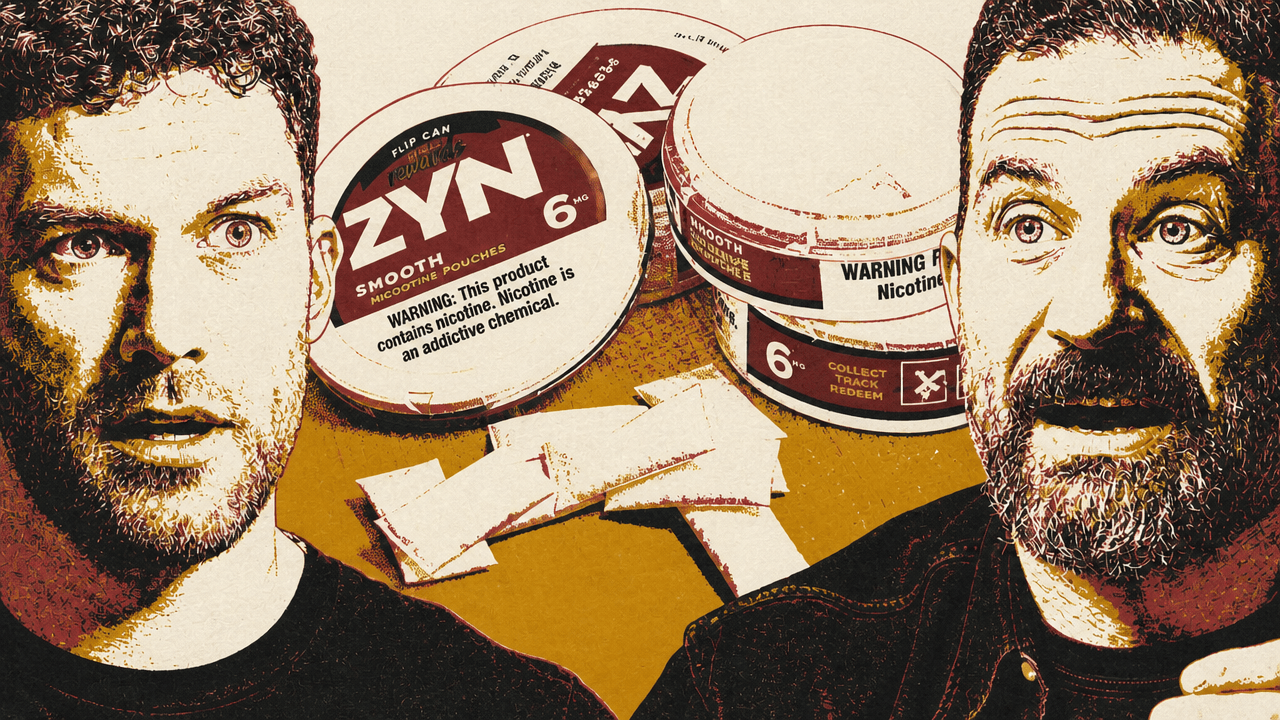
Nicotine’s performance appeal can become a way to escape its own withdrawal
Andrew Huberman describes nicotine’s acute effect as unusually attractive: it can make someone feel both alert and calm, a state he says can set a person up for learning. But he distinguishes sharply between creating the conditions for learning and causing learning itself. Nicotine, in his formulation, “doesn’t make you learn, but it lets you learn.”


The more consequential distinction is between an occasional effect and a habitual user’s return to baseline. Nicotine is highly addictive and raises blood pressure, Huberman says. Once a person uses pouches repeatedly throughout the day, the apparent cognitive lift may no longer be a lift at all.
If you take three to six milligram pouches multiple times per day, it’s not going to have a cognitive enhancing effect. It’s just rescuing the deficit from nicotine withdrawal.
He compares the pattern to caffeine. Someone who abstains from caffeine for two days may feel bad, then feel better after drinking it—not necessarily because caffeine has delivered an exceptional performance advantage, but because it has relieved the effects of abstinence. Huberman says regular nicotine use can follow the same trajectory: the substance becomes less a tool for a particular demanding moment than a means of normalizing a deficit it has created.
For people who nonetheless want to use nicotine as a performance aid, Huberman’s suggested limit is three to six milligrams once or twice on an occasion, at most twice weekly. Chris Williamson frames that as a way not to develop dependency; Huberman broadens the point. Using it infrequently is what, in his view, preserves an effect beyond withdrawal relief.


Convenience can turn a lower-friction product into higher total exposure
Huberman’s concern is not only what nicotine does in a single use, but what a delivery system permits over the course of a day. Smoking causes cancer, he says, while dipping and snuffing also carry cancer risks. Vaping may be safer than smoking in some respects, in his account, but Huberman argues that its convenience changes users’ behavior.
Because vaping can be done nearly anywhere, he says, people may use it more often and take in more nicotine overall. He associates that pattern with lung issues and nicotine-withdrawal problems. Williamson draws out the practical implication: even if a method is less harmful per puff, ease of use, palatability, and reduced fatigue can increase total exposure enough to offset that narrower advantage. Huberman agrees.
The behavioral data say because you can do it anywhere, pretty much, people are doing far more of it.
His analogy is low-friction cannabis ingestion. With smoking, he says, a person can take an inhalation and assess its effects before taking more. An edible, by contrast, can make it easier to consume a large dose before meaningful feedback arrives. The relevant parallel is not that nicotine and cannabis are alike; it is that a delivery method can alter how easily people regulate dose in real time.
Oral nicotine products are likely “here to stay,” Huberman says, because people have repeatedly found ways to consume nicotine, just as they have found ways to consume caffeine. His warning is directed particularly at younger users: nicotine is addictive, it raises blood pressure, and an easy-to-use format can make frequent use routine.
Huberman also points to nicotine’s vasoconstrictive effects and possible sexual side effects. He is wary of answering those effects with more drugs. He mentions tadalafil as a vasodilator that could, in theory, counter nicotine-induced vasoconstriction, but characterizes that combination as a pharmacological “push-pull,” not a clean solution. Framed explicitly as an observation, his preference for people from their teens through early forties is to use as little pharmacology as necessary.
The container can reinforce the ritual alongside the drug
Chris Williamson says demand for his company’s pouches could make them larger in volume and revenue than its canned drinks by the end of the following year. The demand, he says, comes from people who want to dial back nicotine but feel they are no longer in control of their use or have become attached to its delivery mechanism.
Andrew Huberman argues that the physical object may be part of that appeal. He describes pouch canisters as tactile, easy to carry, and “really reinforcing.” His point is not that packaging alone creates dependence, but that a portable object and repeatable gesture can add a ritual layer to nicotine’s direct effects.
Huberman’s childhood recollection of “Jerky Stuff” illustrates the appeal of mimicking a tobacco ritual. The shredded beef jerky came in a small tobacco-style tin; he recalls children placing it in their lips or cheeks, effectively imitating chewing tobacco before eating it. A Reddit nostalgia post shown on screen depicts a tin labeled “King B Jerky Stuff Shredded Beef Jerky” and asks whether viewers remember “chewing” it like teenagers used Skoal.
The relevance to pouches is direct: the canister, the back-pocket portability, and the physical act of taking something from a tin can be rewarding features of the behavior in their own right. Williamson’s description of customers trying to move away from nicotine suggests that, for some users, changing the drug habit may also mean changing an attached delivery ritual.