Prison Forced Ashley Walters to Drop the Persona That Protected Him
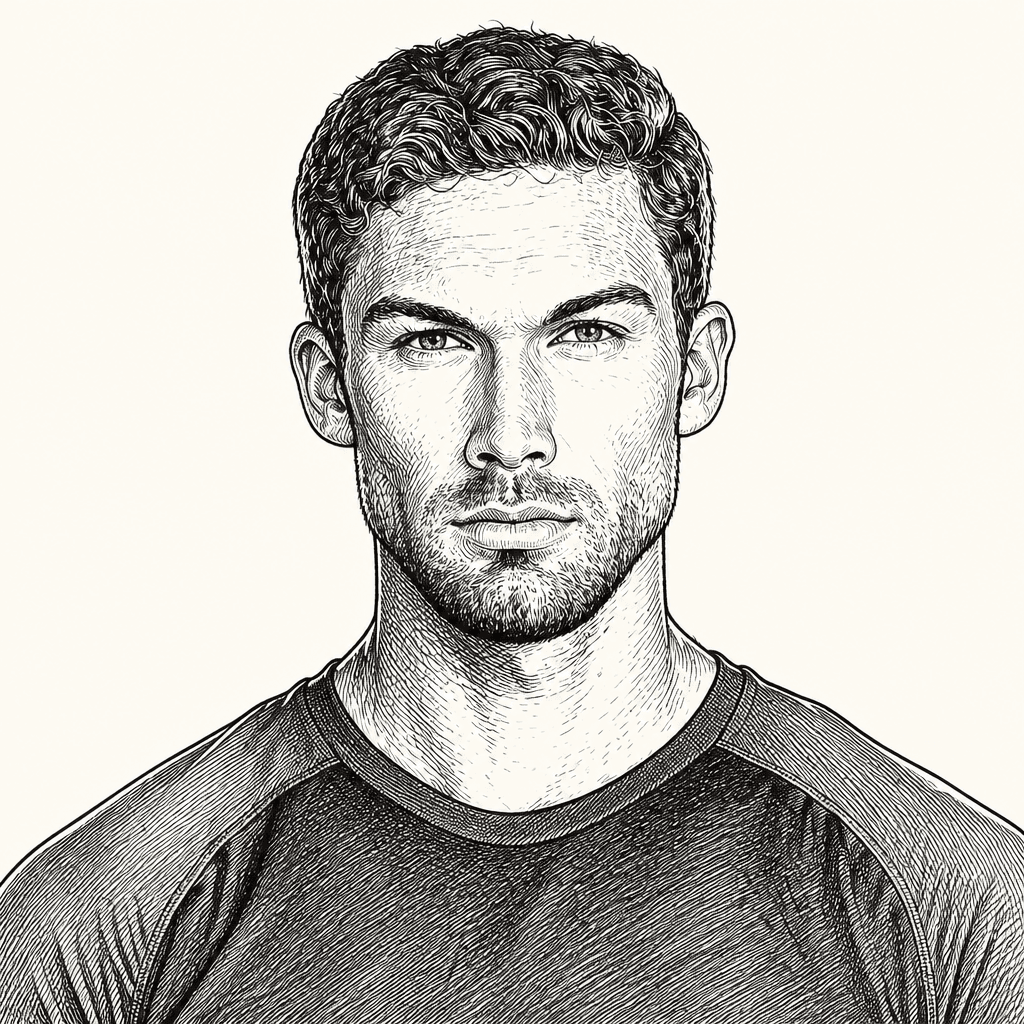
Actor, rapper and director Ashley Walters argues that anger among young men often masks fear, shame and a lack of ways to talk about what they feel. Drawing on his upbringing, years of addiction and time in prison, he says understanding the experiences behind harmful behavior can change how people see it without excusing the harm. His account also traces how he came to leave behind a tough persona and what that shift has taught him about fatherhood, work and change.
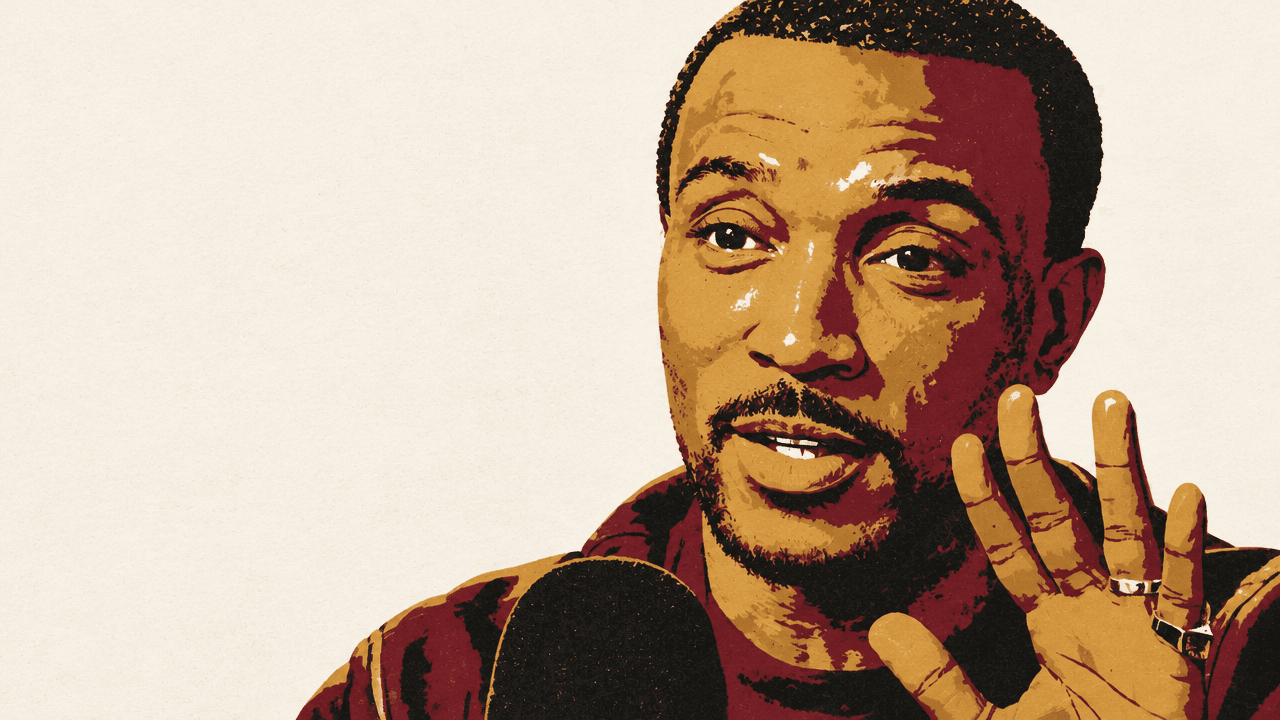
Anger often protects fear, not confidence
Ashley Walters says he was drawn to stories about men without deliberately choosing them. He grew up in an environment he describes as toxicly masculine, but at home he was raised by his mother, aunt and grandmother, who let him be emotional and cry. Outside the home, that openness did not feel like protection. He was shy, was bullied, and learned that showing hurt could make him feel further outside the group. He began to think other boys had received a manual for being a man that he had missed.
That mismatch helps explain why Walters wants to tell stories about male tenderness, brotherhood and fatherhood. In his account, many young men struggle not because they lack feelings, but because they do not know how to speak about them. He connects that difficulty to the loss of what he calls the “art of spoken word,” and to the high rates of suicide among young men, particularly those from environments like the one he grew up in.
His upbringing also taught him how to relate to women, he says: he was charming, knew how to speak to them, and learned to be nice and chivalrous. But it did not prepare him for every kind of relationship. He became a people pleaser, loyal to a fault, and eager to prove himself. His attention moved towards what other people thought of him and away from what he thought of himself.
Walters does not describe the women who raised him as having failed him. He loved his upbringing and his family. He does, however, say there were gaps his mother could not fill. She worried that he would go off the rails or get lost in the streets, so education and close supervision became central. He remembers having to explain every lateness and dissecting events with his mother in long conversations. That taught him to talk and to examine what was happening, skills he says serve him in his work. But it did not answer his desire for his father.
His father was intermittently present, sometimes appearing and then leaving Walters with people he barely knew. A stepfather was around for years and remains in his life, but Walters did not accept him as a replacement for his dad. The distinction is not simply about missing a person he had known well. Walters says he still feels there are questions and parts of himself his father did not fill, even though his father died in 2004 or 2005.
The question “What does shame feel like?” became important to Walters while making Animal, a film in which Stephen Graham asks the boys that question repeatedly. Walters says shame can mean feeling bad about what is happening to someone else, or about what is happening to you. It can also mean going through something without being brave enough to tell another person. His answer is not that people should settle on a single definition, but that they need to become more authentic: to be who they are, discover that a way of being does not fit, and then move towards something else.
Williamson suggests that shame can sit on top of a more basic feeling, obscuring it. He offers a question he has heard from his coach: if you could not feel shame, what emotion would you be feeling right now? The point is that a judgment about oneself can make it harder to name the emotion underneath.
For the boys Walters visited in Young Offenders Institutes, he found fear beneath much of the anger and violence. They might fear being hurt, or fear the consequences of revealing their sexuality. In Animal, one character tells the lead that everyone inside is scared, but nobody shows it because they are trying to survive. Walters recognizes the same protective performance in himself: as a young Black man entering elite spaces, he could feel that others did not expect him to be there. A confident surface could cover fear and a lack of belief in his own place.
That performance can be useful in the moment and costly over time. Walters says he has sometimes felt pressure to act as if he belongs, rather than admit how extraordinary or intimidating a room feels. He also describes a fear of succeeding: after he began filming Life and Lyrics, director Richard Laxton wrote “fear to succeed” above his trailer. Walters initially did not understand the phrase. Laxton explained that people can be afraid of what success will bring—the responsibility and pressure, and the expectation that they must keep succeeding. Walters recognized himself in that account. Even after praise for Animal, part of him still assumes people are only being kind.
Walters says the masks people wear can be about survival and getting through. His account does not make anger harmless or treat every outward display as having the same cause. It locates some of that behavior in fear, and in the effort to conceal it.
The journey behind a person changes what their actions mean
Walters argues that audiences can mistake an outcome for an explanation. Viewers may see a young man’s violence or criminality without understanding the experiences and pressures that made that behavior seem possible to him. If someone is far removed from a world such as the one depicted in Top Boy, he says, they may understand it mainly through the show. That makes the work of writers, directors and producers important: they need to humanize the people they depict and give audiences some sense of what motivates them.
His relationship with his father is one example. Walters hated his father’s absence, but also wanted him in his life. His father appeared intermittently, had been in prison, and sometimes left Walters in the care of people he barely knew. As an adult, Walters tried to establish a relationship between his father and his own children. After his father disappeared with two of them for a day, Walters was furious and told him he would never see them again.
A year later, his father turned up and said he had lung cancer and was dying. Walters did not believe him at first, but eventually let him see the children under strict conditions. Later, while Walters was in Canada filming Get Rich or Die Tryin’, his father called to say he had three weeks left and wanted to reconcile. Walters told him not to come. His father came anyway. During the two weeks they spent together, Walters filmed him and asked about the years of absence. His father described prison, foster care and being moved between homes.
By the end of those conversations, Walters says, he could see why his father had become the man he was. That understanding did not mean excusing the harm or denying that his father should have tried to break the cycle. Walters says his father should have had the strength to change, but did not. Hearing about his father’s childhood and circumstances changed how Walters understood the absence; it did not undo what the absence had meant to him. He had once experienced it as personal, as if his father had chosen to hurt him. The history he heard gave him another way to understand it without making it right.
Walters’s concern is not only that people misunderstand his past. It is that a visible result can erase the work and cost that preceded it. He does not want people to see only the house or the car, without knowing that he went without those things for years, or that his life was difficult. He says the most important measure of his wealth is his family: his wife’s trust, and children who hug him because they want their father close, not because they fear him. He spent years isolating himself through drink and drugs; restoring those relationships took time. He considers that history essential context, even when people around him would rather he speak less about the difficult parts.
His own experience with his father also shapes what Walters wants audiences to see in characters. The behavior is real, and its consequences matter, but a person’s path to that behavior is part of the story. His account does not offer background as a substitute for judgment. It asks viewers not to confuse seeing the outcome with understanding the person.
Getting sober meant learning to live with himself
Walters says he spent about 15 years self-medicating with alcohol and drugs. He does not describe the substances as the original problem. The deeper problem, he says, was how he felt about himself and his sense that he did not know how to belong among other men and boys. When someone offered him a cannabis joint and he felt, for a moment, “I’m in the room,” he wanted to keep that feeling. The drugs became a way to change his relationship with himself.
I was always trying to find something to change the way I felt about me.
In Walters’s account, stopping the substances was not the end of recovery. He says he knew within the first week or two of rehab that he no longer needed to drink or take drugs. What followed was more difficult: his thoughts and feelings returned, along with the people and responsibilities he had been avoiding. He had to talk with his wife, spend time with his children and handle ordinary life without substances to change how he felt. He describes the hardest part as staying stopped—meeting those demands and feelings rather than escaping them.
Walters connects that experience to a wider problem of feeling stuck. Chris Williamson proposes that people may turn distress outward, as anger, or inward, as sadness, anxiety, depression or self-harm. He is offering a framework for interpreting these responses. In Williamson’s account, either direction can be an attempt to manage a discordance: the feeling that life is not working and that you do not know how to respond. What makes a situation especially painful, he suggests, is uncertainty about whether it will ever end.

He compares that uncertainty to waiting for a taxi without knowing when it will arrive. Knowing an estimated arrival time makes the wait more predictable, even if it does not make it shorter. Williamson suggests that people may seek a similar sense of control by acting on their surroundings or imagining possible disasters in advance. Some of those actions can have damaging consequences, but they offer the temporary reassurance of doing something rather than remaining in uncertainty. A person may prefer even an imagined nightmare to a stretch of uncertainty that feels impossible to measure.
Walters recognizes that drive for control in himself. Before a live appearance or a conversation like theirs, he can worry that he will say something he should not, then tell himself not to speak, then remind himself that he needs to speak. By the time the camera is on, he may be sweating from the attempt to manage every possibility. He describes anxiety as a loop in which trying to control what he might say can itself make the situation harder.
At other times, looking at the stars and thinking about how little people know about the universe gives him a different kind of perspective. He thinks about people moving through life as if they have the answers, then reminds himself that “we know this much” and that anything could happen. It does not solve the problem; it can loosen the sense that every anxious thought deserves to be treated as decisive. Williamson adds that the scale of existence can make a passing comment feel less consequential.
Prison stripped away the protection of a persona
Before prison, Walters says, he had acquired status and protection through So Solid. He had been a shy child, outside the local gangs, and the group gave him a sense of belonging and the feeling of having older brothers around him. Being associated with people who were already notorious gave him respect he had not previously experienced. The status worked, but it also changed how he behaved. He took on a persona and, over time, started to treat it as himself. He said and did things that he would not otherwise have imagined doing.
Walters was one of the youngest members of the group. Its size and the reputation of some of its members meant that being beside them could change how other people treated him. He says he had power and status he had never had before. What began as protection and belonging became a way of seeing himself. By the time he went to prison, he says, the persona had become difficult to distinguish from the person underneath it.
Prison removed the group’s protection. Walters had threatened a traffic warden with a gun and was sent to prison for it. There, the governor warned him that other prisoners were being paid to stab him. He was placed in segregation for 48 to 72 hours, with only an hour out of his cell each day. The conditions included having his mattress and pillow taken in the morning, leaving him to sit on a hard frame. Eventually he told the governor he would rather take the risk of being with the other prisoners.
Walters decided that if people confronted him, he would say plainly that he did not want to fight and was not the person they thought he was. He says he made friends and was protected by people who came to see that he was different from his reputation. Williamson captures the shift: Walters was not only different from what others expected, but from the person he had believed himself to be.
For Walters, that was an early lesson that being himself could be acceptable—even in an environment where he had reason to fear the consequences. The lesson was not that prison was safe or that the danger had been imaginary. He had been warned about a real threat and had spent days isolated for his own protection. What changed was his decision about how he would meet that threat. Rather than reinforce the image that had helped create it, he told people he did not want to fight. The response surprised him: people liked him, he made friends, and some protected him.
He describes the experience as humbling. In prison, he had to face people he had antagonized and the danger attached to the persona he had adopted. The group identity that had once supplied protection and respect could not follow him into that situation. He had to meet other people as an individual, without relying on the status that had helped create the danger.
That shift also changed his understanding of how much of the persona was required. Outside prison, he had felt that respect depended on being associated with the group and acting in line with the image. In prison, he expected that showing himself plainly would make him more vulnerable. Instead, he found that people could respond to him as the person he was when he stopped performing the role. He calls it one of the first times he learned that being himself was okay. He also wonders whether he needed an experience as extreme as prison to learn it.
The prison experience made him look back at the life he had been living. He says that before going in, he carried a gun every day. From a distance, he could see how dangerous that life looked and think of people around him who might have been killed. He wonders where he might have ended up without the interruption. Prison did not erase the risks or consequences of his earlier choices; it gave him a situation in which he had to reconsider the person he was presenting to other people.
He has also spoken about the unglamorous reason for his sentence. Williamson points out that threatening a traffic warden is not the kind of story that matches the romantic image of a rapper or street figure with a gun. Walters says he was never proud of it. At first, he even wondered whether he should have fired the gun, as though that might have made the story carry more status. The thought illustrates how much the persona had shaped what he considered impressive. It sits beside the later realization that he did not want to fight and could be accepted without playing that role.
Change can mean losing your old map before you have a new one
Williamson describes personal change as a period in which a familiar but imperfect way of living stops working before a new one feels secure. People may have a kind of mastery over their existing habits: thoughts, words and actions fit together, even if they form what he calls a “kingdom of shit.” Moving towards something better can make a person feel less capable, because the old rules and sources of confidence have fallen away. Major losses and major successes can both disrupt someone’s sense of who they are.
Walters says that description fits his life. During his years in So Solid, he felt he had mastered his role. He could enter a studio with anyone, even someone like Jay-Z, without feeling intimidated; in his own mind, he believed he deserved to be there and might even be better. After prison, he lost his will to create and became afraid of the world around him. From a distance, he could see how dangerous the life he had been living was, and how easily he might have ended up like people around him.
Reading in prison, including Nelson Mandela’s Long Walk to Freedom, led him to think about the people around him. He came to see his circle as negative—not because everyone in it had bad intentions, but because they did not want more than what they already had. He wanted to be around people who inspired him or represented a future he wanted. That shift was not a judgment that every person in his old circle was bad; it was a recognition that their shared expectations did not match what he wanted for himself.
The change was not immediate. Walters says he spent many years in addiction and lost confidence, then went to rehab. In the last six years, he has felt more open to work and less pressured by it. Turning 40, he says, helped him care less about other people’s opinions. He has also become less likely to treat work as something so precious that he must control every outcome. In his account, reducing that pressure has helped him work better. Projects he had wanted for years—including Animal, Adolescence, directing A Thousand Blows and working on an M. Night Shyamalan film—have come during this period.
Walters says he had previously wondered why other people were getting the roles and projects he wanted. He now thinks he may have been blocking some possibilities by not being ready for them. He describes the recent period as a game changer: he is more open to doing things he would not have done before and less caught in the pressure of whether each opportunity will arrive.
Williamson frames the transition as disorienting because the old way of being can feel coherent even when it is not serving someone well. A person may know how to operate inside a familiar set of habits, then lose confidence while trying to change them. Walters’s account gives that idea a concrete shape: the confidence he had in the studio before prison, the loss of creative will afterwards, and the longer process of finding a different relationship with his work and with himself.
That does not mean he has fully arrived at a new, settled version of himself. He says people have praised Animal, but part of him still assumes they are being nice rather than believing the praise. The awkwardness of change may mean someone is no longer at home in the old version of their life, without yet feeling at home in the next. Walters describes his own progress as ongoing rather than complete.
Mastery earns the ease that pretending does not
Walters grew up in a household where his mother expected his schoolwork to be perfect. She would send him back to redo assignments, mark them up and arrange extra tutoring. He remembers watching friends live what he thought of as more normal lives while he spent hours trying to get things right. He says he no longer believes in perfection in the same way. He finds something beautiful in visible imperfections and human “cracks.”
As a father, he does not ask his children to be perfect. He asks them to give something their best effort if they choose to do it. They may win, lose or turn out not to be the best person in the room; what matters to him is that they tried fully. That standard, he says, reflects the pressure he felt when he was young.
Williamson distinguishes between being relaxed because you are indifferent and being relaxed because you have become good at something. Repetition can make a person more comfortable, but casualness alone is not mastery. The ease he values comes after taking the work seriously long enough to build capacity: then a person can care deeply without being consumed by pressure.
He uses his own experience to make the distinction. After years of sitting across from guests, he is comfortable doing the podcast, but he felt nervous filming a self-tape for an acting role. He describes being self-conscious about what to do with his hands, even though he had just performed for thousands of people at the Apollo in London. Familiarity in one arena did not automatically make him fluent in another. The contrast helped him see how repetitions create ease in the specific activity they train.
Walters agrees that mastery has to be earned. He associates that with humility, but also notes that humility does not always serve him well in negotiations. In some professional settings, he has to argue for his value rather than assume others will recognize it. Williamson jokes that humility would not help if Walters were negotiating for more money or rights to a script. The exchange makes a distinction between being grounded in one’s craft and failing to advocate for one’s interests.
On a film set, Walters has learned to think about boundaries and positioning. There is always something that can go wrong or be overlooked, he says, so he and his collaborators make lists to check before the next job. The point is not only to have a process; it is also to make clear what a production will and will not accept. He has found that people on a set may be insecure and looking for someone they can control. Making boundaries visible helps him navigate that dynamic.
At the same time, Walters can ruminate over whether he has offended someone even when he believes he did nothing wrong. He describes telling a barber, “I don’t know why you’re here,” then worrying afterwards that he sounded rude and apologizing repeatedly. He wants to become more comfortable saying what he thinks without being trapped by anxiety about how it will be received. The goal, as the two describe it, is neither aggression nor a plastic display of friendliness, but honest speech that leaves room for disagreement.
For Walters, the value of honesty is partly that it makes another person’s position legible. He says he is drawn to people who can say what they mean without trying to hurt someone. Williamson describes that as a form of trust: even if you disagree, you have a better basis for knowing that the other person believes what they are saying. Walters contrasts that with a smile that conceals what someone thinks. The emphasis is on speaking plainly and sincerely rather than performing agreement.
Powerlessness narrows the routes young men can imagine
Asked how much of what people call toxic masculinity comes from fear, Walters answers: “the majority of it.” A young man who fears he cannot have the relationship he wants, for example, may reject women instead. Williamson extends the idea to crime: someone who believes there is no legitimate path to financial security may abandon legitimate work and treat the whole system as something to reject.
Walters agrees that fear can be part of that response, but says it is compounded by material conditions, government policy and limited opportunities. He has seen Black children pushed towards music or sport as if those were their natural or only routes. The problem, he says, is not simply the ambition of an individual boy; it is the feeling that other options are not being offered.
Williamson questions the odds implicit in directing young people towards careers where very few reach a level that can support them. Walters does not deny that schools may be responding to what students are already doing. He locates the pressure earlier as well: in the expectations children inherit from parents and the beliefs they carry into school. His mother told him he would have to work harder than the other boys, especially white boys, because otherwise people would not see him.
Walters says the school itself was mixed and that he did not experience being surrounded by white pupils as a problem. The burden came from entering education with the belief that he was already at a disadvantage and had to fight to overcome it. He describes feeling as though he was at war from the first day of school. He tries not to put that same weight on his children, while recognizing that it helped shape the person he became.
The question of what to pass on becomes more complicated when hardship has helped produce the abilities a parent values. Williamson describes the dilemma of wanting to give children a better life while wondering whether removing all difficulty also removes chances to develop resilience or work habits. His concern is not that parents should deliberately recreate deprivation, but that the skills developed under pressure can be hard to separate from the pressure itself.
Walters has eight children, ranging in age up to 27. He says his youngest two, aged 12 and 10, attend private school, while his older children did not grow up with the same money or lifestyle. He says the differences have created distance between them. His younger son can be doing mathematics that Walters does not know how to help with, and sometimes he feels he does not understand the world the boy is growing up in.
The contrast is not abstract. At nine or ten, Walters walked home from primary school by himself, made dinner and cleaned the house before his mother returned. He cannot imagine leaving his own children to do the same. He worries they might burn the house down or not know how to use the stove. Yet he notices that his children are not as motivated or work-focused as he was, and recognizes that they have not had the same need to manage on their own. He worries about whether they have the skills he gained through having to cope, while also not wanting to put them through what he experienced.
He does not resent his upbringing; he loves his mother for what she gave him and sees his life as inseparable from that experience. The challenge is to value what hardship taught him without recreating the hardship for his children. His children’s circumstances are not uniform, either: the older ones and younger ones have experienced different levels of financial comfort, and Walters says that gap has affected their relationships.
Williamson calls attention to the paradox: people may become successful through abilities built in response to deprivation, then struggle to decide whether giving their children more comfort will take away the conditions that produced those abilities. Walters calls it a real balance. He also recognizes that relentless work can itself become addictive. During a six-week family holiday, he found himself wanting to return home after only a few days, worrying that work would pass him by if he stayed away.
Williamson describes that feeling as having to run as fast as possible just to remain in the same place. The pressure to keep running has helped drive Walters’s career, but it can also keep him from being present in the life that career was meant to support. Walters says he is a workaholic and describes the holiday as a rare pause after two years of work. His account leaves the tension unresolved: drive has been part of how he built his life, but it can make rest feel like a threat to the life he has built.