Boys Told to “Man Up” Learn to Express Distress as Anger

Chris Williamson argues that men’s vulnerability is often accepted only when status, success or physical strength has already established them as masculine; men who appear isolated or unstable are more likely to be ridiculed than supported. Psychiatrist Dr Sasha Hamdani says boys taught to suppress sadness and sensitivity can come to rely on anger as one of the few permitted expressions of distress. Both distinguish genuine composure from emotional concealment, and argue that sensitivity can become either emotional intelligence or self-directed shame depending on how it is handled.
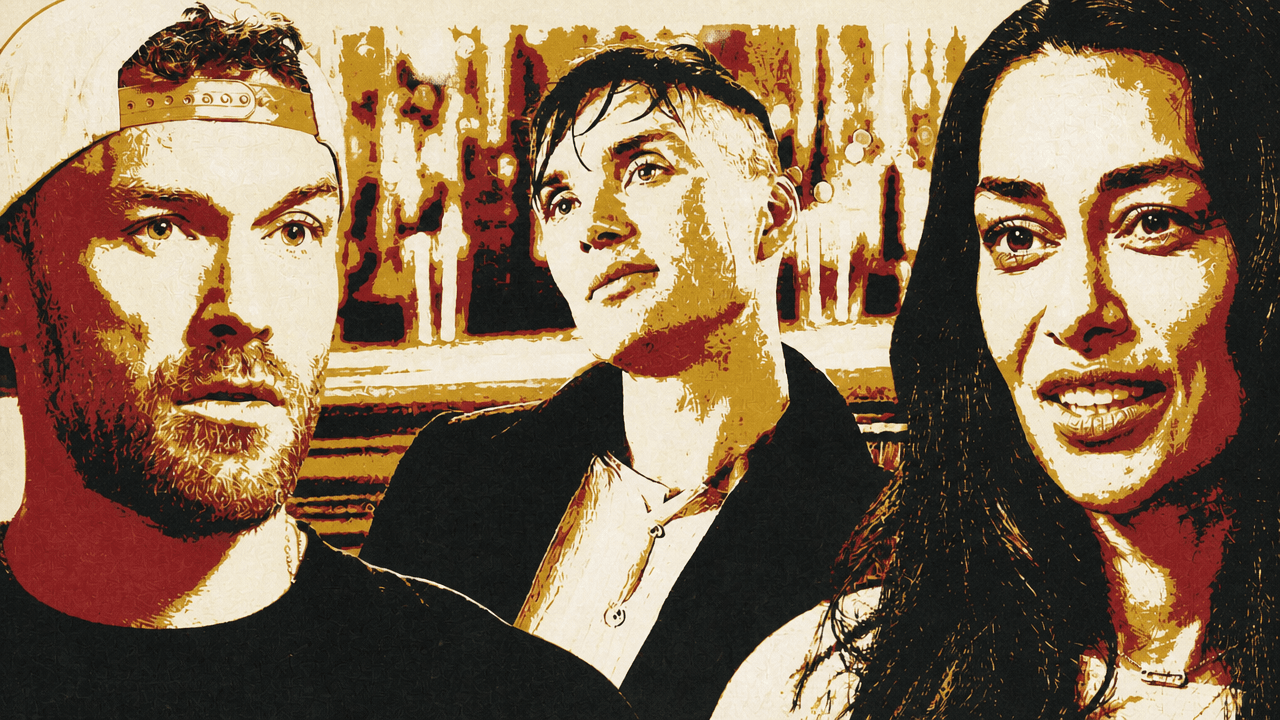
Vulnerability is more acceptable when status makes it look like strength
Chris Williamson argues that men are not simply discouraged from emotional disclosure; they are judged according to who is disclosing, and from what apparent social position. A man can admit that life is hard if he also signals recovery, discipline, or continued control—he is back in the gym, building himself up, moving forward. The much harder disclosure to receive, Williamson says, is from someone who is visibly lost, alone, crying, or unable to say what comes next.
His argument has two linked parts. One concerns the hierarchy that decides which men can be vulnerable without penalty. The other concerns the earlier emotional conditioning that can leave boys with anger as one of the few permissible outlets for distress.
That produces what he calls a narrow emotional “Overton window” for men. Society may say it wants men to open up, but the acceptable version of opening up often arrives with reassurance that the speaker remains recognizably strong. Williamson’s objection is directed especially at the response to men who show distress publicly. People cannot, he says, insist that male suicide requires greater social concern while ridiculing men who are visibly struggling online.
Williamson describes the social calculation as a system of “man points.” A man accumulates an accepted reserve of masculinity through muscularity, strength, money, professional success, status, notoriety, or success with women. Once he has enough of it, he can make a withdrawal: he can speak about difficult emotions without being read as weak. Emotional openness becomes, in his telling, less a basic permission than a privilege earned after a particular performance of manhood.
His example is Chris Bumstead, whom Williamson describes as a six-time Olympia world champion and one of the most muscular men on the planet. Bumstead can discuss breaking down in his girlfriend’s arms shortly before winning a world championship, Williamson says, and be received differently from a man with little visible stability, status, or achievement. The surrounding markers of masculinity make the disclosure appear to come from strength rather than weakness.
That distinction matters because the person whose distress is easiest for an audience to tolerate may already have a partner, community, recognition, and continuing success. Williamson’s view is that the man without those visible resources is more likely to be the person who needs support but is least likely to receive a sympathetic response.
Williamson also resists the familiar claim that the central intervention is simply getting men to talk. He says that in more than 90% of UK cases in which a man takes his own life, the man had already gone to some form of mental-health counselling. The issue, as he frames it, is not exhausted by whether a man has made contact or spoken aloud. It is whether there is room for him to feel what he feels and be met without contempt.
Boys learn early which feelings receive care
Sasha Hamdani sees male anger partly as a consequence of emotional education that begins well before adulthood. As a psychiatrist, she says she has noticed a broad pattern: men are often not taught to understand emotional sensitivity or given the language to work with it. Instead, many come to recognize and target only a small number of emotions, with anger among the most accessible.


The instruction can be direct: man up, do not cry, it is not a big deal. But Hamdani also points to less explicit patterns in the treatment of children. She describes seeing a girl fall at a birthday party and receive immediate comfort—being picked up, coddled, and told that everything is all right—while a boy who falls may be told that it is not a big deal and urged to move on. From kindergarten classes to birthday parties, she says, boys can have little room from an early age to explore and navigate emotional sensitivity.
When Williamson asks what happens to emotionally sensitive boys who are told to man up, Hamdani’s answer is blunt: “You get really angry dudes.”
For Hamdani, anger can become the socially permitted expression when other forms of distress have been suppressed. She says men have often been forced to contain emotion while anger remains one of the few emotions they are allowed to show. What appears as anger may therefore sometimes be a misdirected or confusing expression of emotional sensitivity.
Williamson emphasizes the contradiction. Anger is, in his words, antisocial: potentially dangerous, destructive, and unwanted by both the people experiencing it and the person expressing it. Yet it can be more socially acceptable for men than sadness. That inversion, he says, demonstrates how little latitude male sadness is given.
The conditioning is not exclusive to men. Hamdani says emotionally sensitive people more generally can internalize shame around their sensitivity. They learn that they are supposed to be strong, able to handle adversity, and admirable for getting through hardship without complaint. Praise for stoicism may sound like praise for resilience, but it can also teach someone to shut down the part of themselves that needs attention.
Hamdani recalls hiding as a child when embarrassment, sadness, and an interaction that felt wrong became overwhelming at once—under a table or in a closet. By about age eight, she concluded that such visible retreat was not workable for adulthood. Her solution was not necessarily to process those feelings but to conceal them. The adult version, she says, is familiar: saying “I’m fine” on a difficult day, refusing to talk, or avoiding a conversation because crying would reveal emotional sensitivity.
Looking composed is not the same as becoming composed
Chris Williamson draws a distinction between suppression and strength. A person who swallows intense feelings may successfully perform the role of someone who is composed, or someone who has not felt anything at all. That performance does not mean the feeling has disappeared, and it is not necessarily evidence that the person has developed composure.
Williamson speaks from his own experience as a sensitive child in a working-class, blue-collar environment where, he says, people around him did not notice that sensitivity or lacked the tools to respond to it. He does not portray sensitivity only as damage. It can drive a person toward achievement and can be “alchemized” into something socially valued. But he also sees a cost in that transformation. The coping mechanisms that make a person functional or successful can require them to contort a capacity for connection that they might otherwise have had with the world.
His recent retreats—one centered on emotions and another silent meditation retreat focused on the “conductivity” of emotions—are, he says, attempts to get “below the neck”: to move away from habitual calculations about scrutiny, public acceptability, and whether a more open emotional life can coexist with business and public life. Returning from retreat, he says, often leaves him feeling tender in a world that is intense, chaotic, and fast-moving.
Some protection is necessary, Williamson says. The aim is not to become “a puddle of emotions” or unable to show up for life. But walls, guards, and protective routines can also exclude parts of one’s experience—and the strengths that may be attached to those parts.
Hamdani puts the difficulty in the environment’s response to sensitivity rather than in sensitivity itself: “The real challenge lies not in feeling deeply, but in living in a world that doesn’t always know how to support that sensitivity.”
The distinction between concealment and composure also helps explain why sensitivity can move in different directions. A person who has learned to hide distress may still be intensely attentive to emotional cues; whether that attention becomes understanding or a source of threat depends, in Hamdani’s account, on how those cues are interpreted and handled.
Sensitivity can become emotional intelligence—or a hostile reading of the room
Sasha Hamdani does not regard high emotional sensitivity as inherently limiting. In her view, there can be a direct pathway between emotional sensitivity and emotional intelligence, depending on how a person learns to handle the sensitivity. Its potential strength is a deep understanding of other people’s emotional interiors.
She describes how that capacity can work in psychiatric practice. A patient may answer “I don’t know” when asked what has upset them over the past two months. For many people, Hamdani says, that answer can become a stone wall. But someone highly attuned to emotional cues may retain signals from earlier in the appointment: tension while discussing family, a shift in bodily presentation, or a particular way of answering a different question. Those cues may not have been consciously catalogued in the moment, but they can indicate where to inquire next.
Hamdani says this ability to pick up and amalgamate emotional information was part of what drew her to psychiatry and what continues to make the work rewarding. It can allow patients to feel understood, sometimes for the first time. Outside clinical work, she says, the same depth of emotional understanding can make someone a better friend, partner, or parent.
The same sensitivity can also undermine self-esteem. Hamdani distinguishes self-worth from self-confidence, but says a person who is accustomed to reading emotional data negatively may enter a room, infer that they are not wanted, and attach a narrative to signals that do not support it. Heightened attention to other people’s reactions can therefore become an engine for self-criticism rather than connection.
Where sensitivity is valued changes its effect. Hamdani says her psychiatric work validates this trait because patients experience being understood. When the same signals are read as proof of rejection or inadequacy, they can produce shame, withdrawal, and the sense that one is unwelcome. Sensitivity can guide attention and care, she suggests, but it can also be recruited into a story that turns ambiguous social information against oneself.