Elite Boxing Instinct Depends on Obsession Kept Away From Chaos
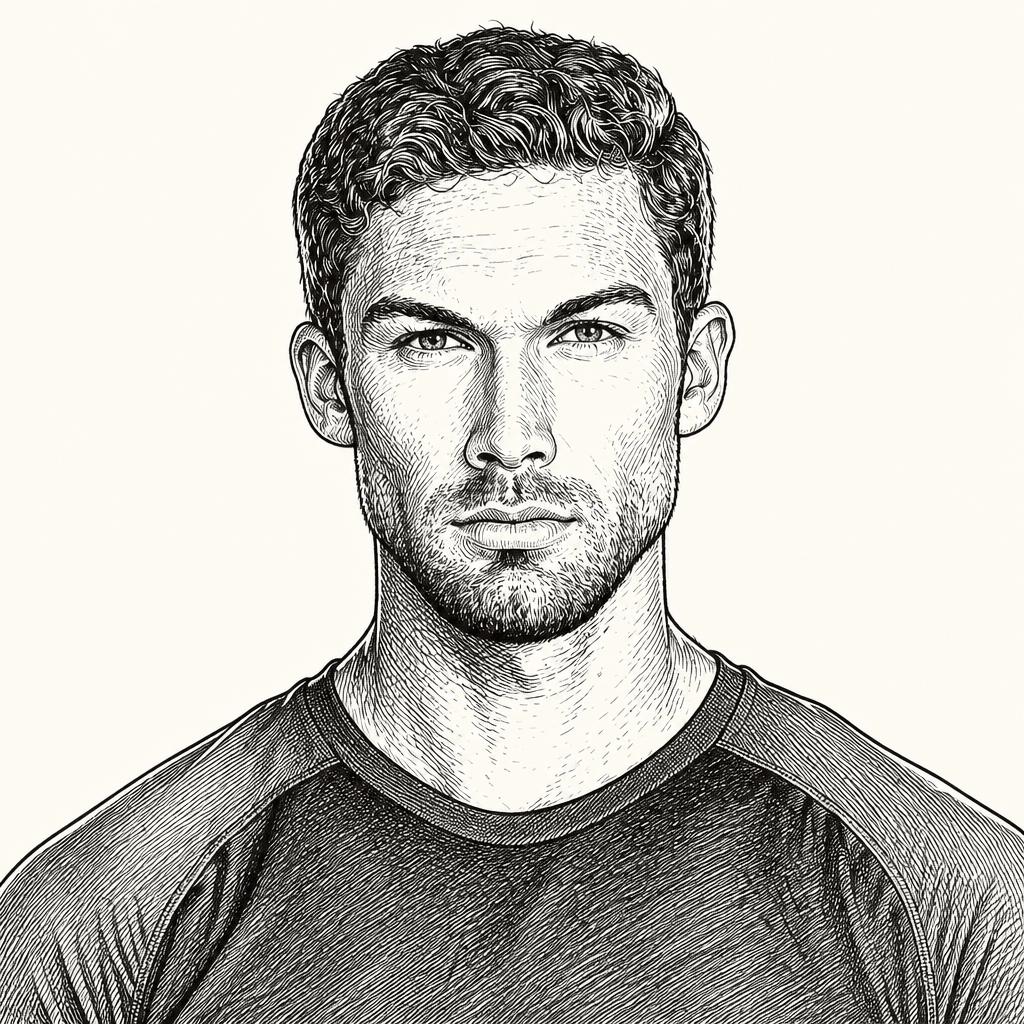

Ryan Garcia tells Chris Williamson that his public volatility was not a boxing strategy but a loss of control fed by grief, alcohol, anger and the feeling that the sport wanted him cast as a villain. The boxer argues that the same obsession that made him elite can either sharpen into instinct, discipline and faith or turn into self-destruction when it is fed by bad inputs. His account frames his current challenge less as finding intensity than keeping it directed toward boxing rather than chaos.

Garcia describes boxing as instinct sharpened by obsession, not conscious calculation
Ryan Garcia says the best moments in the ring do not feel like thinking. They feel like reading cues before they become explicit: a pressure shift, a change in momentum, a sense that it is time to move, press, or reset. He does sometimes use language internally, but more as a trained prompt than an analytical process. In his last fight, he said, the repeated phrase in his head was simple: “stay focused, stay focused, stay focused.”

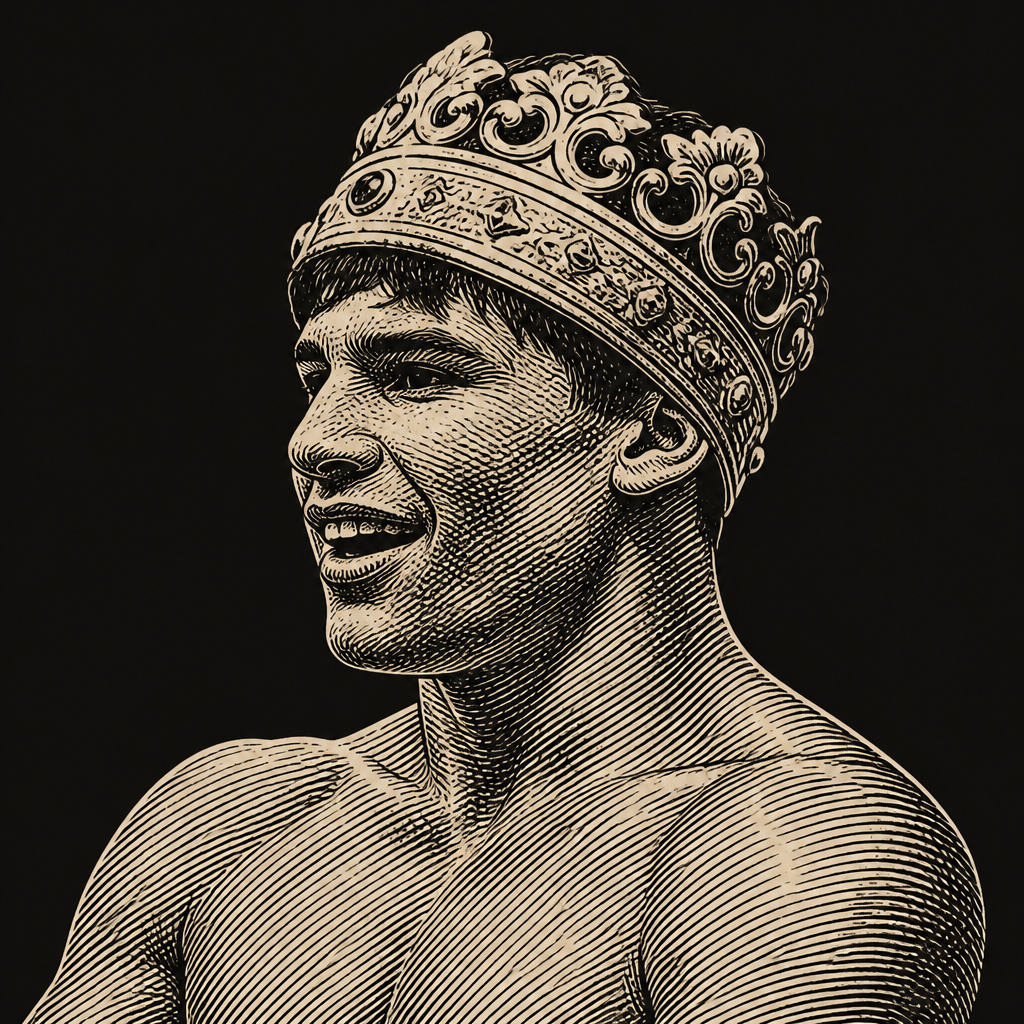
That distinction matters to him. He is “not really necessarily thinking,” he said, but he is not absent either. The work has been installed before the fight. What appears in the ring is instinct, intuition, and camp repetition surfacing under pressure.
Chris Williamson drew a parallel with musicians, comedians, and other performers entering a flow state: the same mental condition that allows fast, clean performance can also make the experience difficult to remember. Garcia agreed that he remembers pivotal fight moments, not the whole fight. He recalled getting too comfortable in the 11th round of his last fight, “messing with the guy,” lowering his hand, taking a right hand, and immediately correcting himself: “Don’t do that.” He remembers knockdowns and specific turning points, but generally has to watch the fight back to recall most of it.
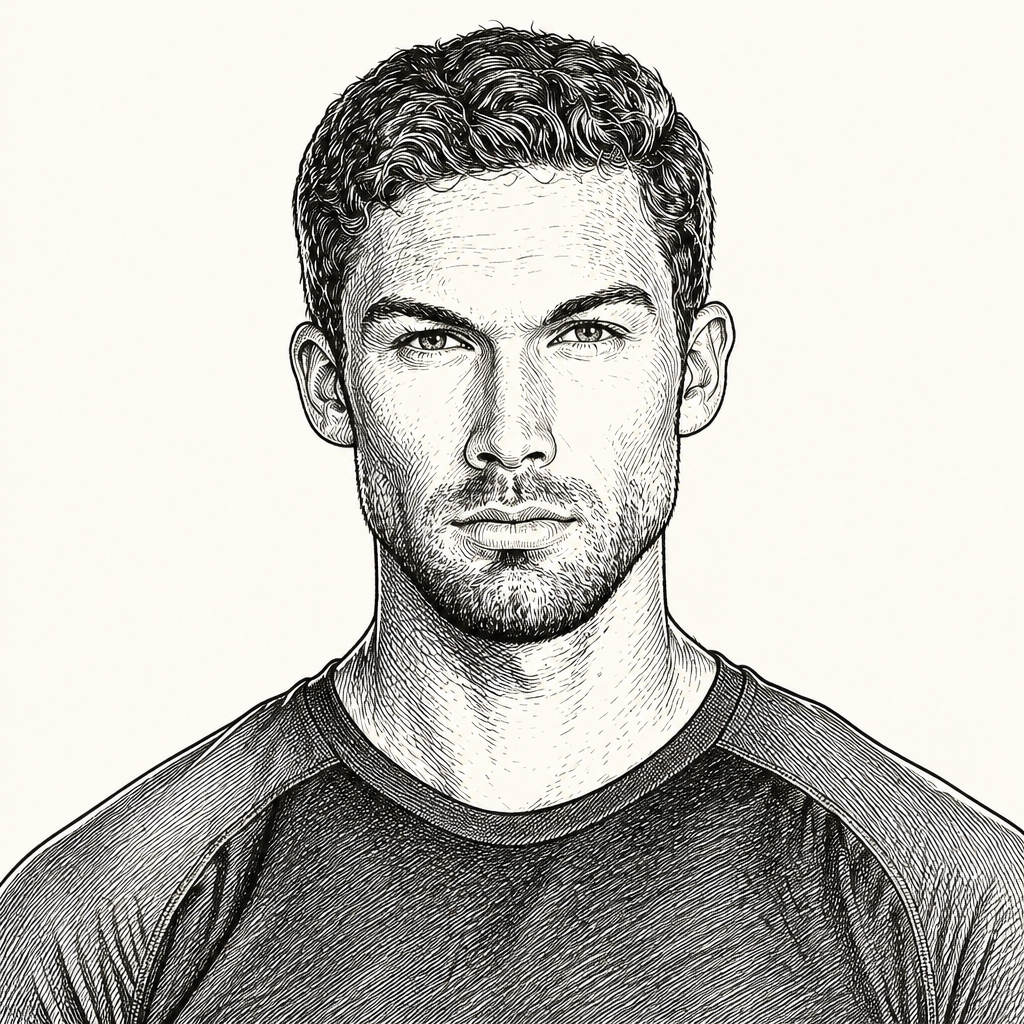

Garcia contrasted that with chess players such as Magnus Carlsen, who can reconstruct games from childhood. Williamson suggested that even in chess the memory may be specialized: the player can remember the board, but not necessarily the room, the clothes, or the emotional texture around the game. Garcia accepted that distinction. Boxing, for him, is not a record of thoughts. It is a body of knowledge expressed in motion.
The clearest description of that knowledge came when Garcia explained how he thinks between sessions. As a young fighter, he said, he once sparred a kid who kept catching him. He went home and replayed the problem for two or three hours. The next day he told his father to call the opponent back because he had found something: when the other fighter stepped forward, he showed his jab. Garcia planned to cut right and throw a right hand every time the cue appeared. It worked. His father later told him that was one of the moments he knew Garcia was different, because he could return the next day and make the fight entirely different.
Garcia now describes that kind of study almost musically. In the ring, movements have a rhythm — “boom, boom, boom, boom” — and when something feels wrong, it is because a note is off. The job is to find the wrong note: a misread movement, a missed cue, a position with an undiscovered counter. That is where his obsession goes when he is at his best.
He told Williamson that, as a professional, he is rarely surprised by technique when he is mentally right. Surprise, if it comes, is more likely to be an appreciation of the opponent’s talent — speed, sharpness, quality — than a move he has never considered. His losses, he said, have come from self-sabotage and from not being fully present in camp. He did not deny that those opponents were better on the night. But he described his best state as intentional from the moment he wakes up: not checking the phone, reading, allowing “inner wisdom” to carry him through the day, and paying attention to everything.
That same willingness to look strange, he argued, is behind defensive choices that others have mocked. People accused him of turning his back, but Garcia said he is giving opponents the side, a variant of hiding behind a shoulder-roll idea. The “silly shell,” as Williamson referenced it, may look stupid, Garcia said, but he has not been hit while doing it. His standard is not whether it looks orthodox. It is whether it works.
The childhood sacrifice built the fighter and delayed the mistakes
Garcia began boxing as a child and was homeschooled as a teenager so he could spend more time in the sport. He corrected Williamson’s timeline slightly: he was homeschooled around 16, not from age seven. But the broader point stood. His childhood was organized around training, roadwork, tournaments, and fights.
He said he does not regret missing a more normal teenage experience. But he does think it may have delayed certain lessons. If he had made “teenage mistakes” as a teenager, he suggested, he might not have made some of them later, when fame, money, and attention magnified the consequences.
His account of childhood is not bitter. He described his father training him all week and then taking him to fight on weekends. He had 225 amateur fights. There were road trips, gym sessions, roadwork, and constant tournaments. But he loved the tournaments because they were also the closest thing he had to an ordinary childhood: time with other kids, community, and the social world of boxing.
Garcia frames the sacrifice through his faith. He said that, as a Christian, he sees sacrifice as a condition for anything great. For him, the sacrifice was his childhood and the hours of training that replaced it. “My whole life was just all boxing,” he said.
The family story around boxing adds another layer. Garcia said his father boxed as an amateur, while his uncle was the more accomplished fighter in the family, having gone to the Nationals. According to Garcia, after losing there, his uncle said someone in the family would return. Garcia recounted that his uncle looked at each child born into the family as a possible one, and when Ryan was born said, “That’s the one.” Garcia laughed at how unreal the story sounds and admitted it may have been partly a motivational myth planted in his head. Williamson called it a good story. Garcia accepted both possibilities: maybe he was chosen, maybe the story helped him believe he was.
There was pressure in that family inheritance. Garcia said he still feels it, and that the title win he was discussing was partly for his father. His reason for boxing, though, has changed. It began as love for the sport, then became something he describes as spiritual: a path he feels guided along by “little nudges.” He said he does not fully understand why following those nudges has tended to lead to good things, but he trusts them. Boxing is what is in him right now; perhaps it leads somewhere else later.
Winning that championship, he said, brought his father and uncle real joy. Garcia sounded less celebratory about himself than satisfied on their behalf. His own instruction to himself was to stay focused, not get too high or too low, and remain stoic.
That stoicism is not natural permanence. Williamson noted that Garcia seemed regulated and peaceful that day, while acknowledging he has seen him with “varying levels of energy.” Garcia did not dispute it. He said he has had to learn a lot.
The crash came from grief, alcohol, anger, and the illusion that winning proved he could survive anything
Garcia’s account of his recent instability centers on a loss of self-recognition. He said he learned that the body is a temple and that what he put into it mattered as much as what he put out. When he was younger, he felt he could put anything into his body and rebound. That belief broke down.
“You’re not Superman,” he said. Or, more precisely, he is only “Superman” when he puts the right things in himself. With the wrong inputs, even a Ferrari will not run.
Williamson pressed him on a past remark that he was surprised to still be alive. Garcia said the warning sign was when he could no longer get hold of himself or see that his decisions were bad. He had been moving so fast that nothing felt wrong at the time. Looking back, he sees pride in it, even if he does not think of himself as a prideful person. He had lost track of who he was.
The pressure was not abstract. Williamson listed the simultaneous stressors: child custody problems, his mother’s cancer diagnosis, divorce. Garcia said he did not process them. He shoved them down with alcohol and acting out. His attitude became self-destructive: if everything was going badly, “let’s just sink the whole ship.”
That self-destruction was made more dangerous, in his telling, because he was still capable of winning. He had beaten a man badly while self-destructing, and that created the belief that he could do whatever he wanted. The humbling came later. He said he tries not to look back too much because he is not proud of that period, but he also believes a “crash out” was probably coming sooner or later. In that sense, he is glad it happened earlier.
The Haney period sits at the center of this contradiction in Garcia’s own account. Garcia said he does not know whether a loss that night would have made the spiral worse or saved him sooner. “I should have lost,” he said. “There’s no way that could ever be replicated.” He warned younger boxers not to imitate that preparation or emotional state. It was not a strategy.
What he remembers from that period is anger. He was angry at the world, at the boxing community, at how people saw him as a fighter and as a person. He felt harshly judged even before the public “crash out,” while others escaped similar scrutiny. He felt people wanted a villain, so he decided to give them one.
They want a bad dude, I’m gonna give you a bad dude.
Garcia said he let the outside perception change him for a time. He drank, smoked, talked aggressively, fought with his trainer and his father, and treated sparring as another outlet for rage. He cried often too, he said, from anger over being called crazy and disrespected. The boxing grievance was specific: he had been fighting since age seven, had beaten Haney three times in the amateurs, had been a 15-time national champion, and still felt dismissed as a “bum” who would be exposed.
He described the “Murder on my mind” shirt from that period as literal in intent, not just theater. “I wanted to murder that man in the ring,” he said, while adding that Haney had also used language about Garcia’s “death” before Garcia escalated his own rhetoric. The point, in Garcia’s telling, is not that rage made the period admirable. It is that rage made it feel total. “Nothing was gonna stop me,” he said. “I didn’t care.”
Garcia also tied that period to his public comments about child sex trafficking. He acknowledged that some of what he said at the time “played into conspiracy,” but insisted that concern for children was sincere. He said the issue had been on his mind for years, and that he was upset by what he saw as insufficient public focus on it. He does not regret trying to raise awareness, even though he regrets the ugly form in which it appeared. He said he later teamed up with Tim Tebow and Tebow’s foundation.
Asked what first exposed him to that subject matter, Garcia described an experience after defeating Luke Campbell in 2021. He said he was awake and had a strange vision: a beast or animal coming out of the sea, a bridge that made him think of San Francisco, then people in the woods doing strange things. He searched for “things in the woods in San Francisco” and found Bohemian Grove. He emphasized that he knew it might sound unbelievable. He also distinguished between what he understood as the existence of a gathering and the more speculative claims surrounding it, saying that people meet in the woods and that the sacrifice he referred to was, in his understanding, an effigy rather than a real sacrifice.
Williamson said some stories of conspiracism or bad behavior merely sound like people doing wrong, while others feel “cursed” or “forbidden.” Bohemian Grove, for him, falls into the latter category: a story that makes him want to “lean back” as he listens. Garcia said he feels that too, while also wondering whether attention to those stories can become a distraction. Even if people in power were doing something “crazy wrong,” he asked, how much difference could ordinary people make by focusing on it?
The more practical point both men discussed was recording technology. Williamson argued, hypothetically, that powerful people trying to conceal wrongdoing would face a different environment now because ordinary people can record, post, and connect information. Garcia linked that to the ubiquity of phones and to broader talk of disclosure, including UFOs. Williamson then referenced videos and online material he had seen around public incidents, using them to illustrate how many angles now appear around events that once might have been easier to contain. The claims remained framed as their discussion of what they had seen, wondered about, or inferred, not as established findings.
Anger gives an edge until it blinds the fighter
Ryan Garcia does not believe anger automatically makes a boxer better. Fighters need an edge, grit, or fuel, he said, but not rage. A little anger can help. Aggression is the better word. Rage, by contrast, narrows awareness until the fighter stops seeing what can come back.
Rage blinds you and then you make mistakes and just, you know, are not focused.
His analogy was blunt: if rage makes someone shove another person, they may not see the car passing behind them. They did not necessarily intend to kill the person, but the narrowed state made them miss the consequence. In the ring, the same thing happens with punches. A fighter gets mad, rushes, and gets cracked because he stopped reading.
The ideal state, in Garcia’s view, is neither rage nor complete peace. Chris Williamson brought up Nicky Rodriguez sitting in lotus posture between rounds at the Craig Jones Invitational, appearing calm before winning the event. Garcia saw the appeal but said that if he becomes too peaceful he risks losing the “killer instinct.” He does want to hurt the person in front of him, because the person is trying to hurt him. The point is to hold that intent without becoming blind.
That distinction also shaped Garcia’s view of Conor McGregor. Garcia said he wants McGregor to return and wants whatever path he is on — including a possible path with God and faith — to be real. But he wondered whether McGregor learned certain lessons too late. At roughly mid-30s, Garcia said, the rebound is harder.
Garcia wants to see McGregor win “one more good fight.” That, he said, would save the legacy in his eyes. But he also believes McGregor missed an evolution that should have happened as he aged. A young fighter can be full of bravado and trash talk; a legend should become more like an OG — calmer, more stoic, still capable of talking but less dependent on it. He cited Floyd Mayweather as an example of that evolution. Mayweather, Garcia said, eventually became harder to faze because he knew the game too well. He was simply there to do a job.
The mature fighter’s menace comes from professionalism, not frenzy. Williamson described the fear of facing someone who treats an opponent like a task on a workday list. Garcia agreed with the underlying point: when the other man is not emotionally consumed by you, but simply there to dispatch you, the threat can feel colder.
Garcia wants boxing modernized without making it look like the UFC
On the business of boxing, Ryan Garcia sounded both frustrated and protective. A possible Conor Benn fight, he said, was being worked on, and he wanted it badly. Rolly Romero and others were alternatives if the deal did not happen. Garcia called Benn a good fighter, entertaining and tenacious, but too aggressive and reckless. He also said Benn was his mandatory challenger, which made the surrounding politics more frustrating: in principle, the number one contender and the world champion should fight.
Garcia accepted Chris Williamson’s description of boxing as politically complex. He called it the “Wild Wild West”: established, rich in history, and full of major players, but ultimately a free-for-all where everyone is out for themselves and fights happen only when the business makes sense for multiple entities. That openness can be fun, because many people can make something big happen. The cost is that promoters, fighters, and deal structures often prevent obvious fights.
The main reasons fights do not happen, Garcia said, are splits, money, fighters overvaluing themselves, and fighters who pretend to want the fight while hiding behind the promoter. The public explanation becomes “we couldn’t make the deal work,” while the private reality may be that the fighter did not want to step in the ring.
Garcia agrees boxing could become slicker. He thinks the sport could cut out a lot of “bullshit” in promotion and presentation, and that there are newer ways to promote fights than the standard rituals. But he pushed back against the idea that boxing is dead. Financially, he said, it is doing fine, and boxers are getting paid well.
The Zuffa question made him cautious. He said he did not know exactly what changes were being proposed to the Ali Act or whether they would benefit Zuffa. He was not against Zuffa, but wanted to see whether the changes would make fighters less paid or the sport better. He understood Oscar De La Hoya’s position as opposing changes on the grounds that the Ali Act protects fighters and creates transparency. Garcia said he did not want to overstate his knowledge, but his concern was whether changes might reduce disclosure around numbers.
The deeper distinction for him is between removing fat and erasing identity. Garcia does not want boxing to become the UFC. He likes fighters wearing their own shorts, maintaining sponsor opportunities, creating walkouts, and staging grand entrances. The spectacle is part of boxing. Williamson framed the difference as cutting the bullshit while keeping the heritage. Garcia agreed: “Don’t lose what makes boxing boxing.”
Attention can sell boxing, but it cannot replace mastery
Garcia once said Jake Paul was not a real boxer. His view has changed. After the Anthony Joshua fight discussed in the interview, Garcia said Paul is “definitely a real boxer.” He called the Joshua fight “pretty fucking insane,” especially because Paul is not a heavyweight, and said Paul had earned respect. A broken jaw, he joked, probably humbled him.
Garcia also credited Paul’s awareness as a performer. Williamson described Paul’s response after being hurt as an “elite response” to a terrible moment: even on the ground, Paul seemed aware that it was a clip. Garcia agreed that Paul “doesn’t miss a moment” and is hyper-aware of spectacle.
That, however, is not the same as accepting every claim around Paul’s boxing level. Williamson described boxing as a sport where gatekeeping has some legitimacy because it cannot be speedrun merely with clout. Garcia agreed. He said casual viewers often cannot tell whether Paul is world-champion level; they see him beat Anderson Silva or Nate Diaz and register the names, not the boxing context. Paul was good at riding that ambiguity and making himself appear bigger in the sport than his actual level warranted.
Garcia said that was frustrating because boxers know the sacrifice required to reach the highest levels. He also pointed to Paul’s loss to Tommy Fury, whom Garcia called “not high level,” as a fact many fans ignored. What upset people, in Garcia’s view, was not simply that Paul was getting attention, but that he was generating huge events and paydays while others had spent their whole lives in the sport.
At the same time, Garcia admitted the attention worked. He watched all of Paul’s fights. People like to watch him. If Paul brought new viewers to boxing, Garcia said, he is “all for it” because he loves the sport.
He was less charitable about the Mayweather-Pacquiao fight Williamson raised. Garcia called it ridiculous and said he did not want to see it. The first fight was boring, he said, and the second would likely be worse because neither fighter is near his prime. He wondered aloud why they would do it and whether money could be a reason, though he did not claim to know. Williamson also referred to a claim that Pacquiao had bought Mayweather’s gym or franchise; Garcia said he thought it was the franchise, but did not dwell on the point.
The cost structure of fame made the money question less abstract. Garcia said he once had 24/7 security for three months and the bill ran into six figures. That experience made him decide he did not want to live that way unless necessary. Williamson noted that the worst position is to have the problems of fame without enough money to pay for protection. Garcia agreed.
Garcia said he learned early how fast money can disappear. He made his first million around 19 or 20, then learned about taxes, cars, and gambling. He bought every car he wanted, realized it was stupid, then went through a gambling phase and realized that was even more stupid. The lesson was that much of it was materialistic and empty. The right team now matters because he does not want to become another story of a fighter who ran through enormous earnings. He cited Mike Tyson running through $100 million as the cautionary example.
Garcia said he feels blessed to have learned the lesson early, on a smaller scale than he might have later. But he also knows the risk remains. Vices, ego, and pride can reopen the same road.
The team is not a luxury; it is part of staying intact
Some high-exposure people, Chris Williamson noted, function better with near-constant “lifestyle watchers” — part sponsor, coach, assistant, driver, and guardrail — to keep from going off the rails. Ryan Garcia immediately called that smart. For fighters, camp already creates something similar: a whole team around the athlete, with little unstructured solitude.
Garcia said his whole squad pretty much lives with him, and that this makes life bearable. Companionship is not a weakness to him. He rejected the idea that being alone should be treated as a flex. He can be by himself, but he does not see why he should prefer it. He likes conversation, companionship, brothers around him, video games, and picking people’s brains.
Williamson’s comparison was to people who perform on the road. Bands, in his view, may have uncomfortable logistics but often seem to handle touring better because they travel with a group, share the experience, and have people around them after good or bad nights. DJs, by contrast, can move alone from late-night booking to late-night booking with alcohol, drugs, and afterparties surrounding the work. Garcia recognized the logic: being with your boys changes the experience.
For Garcia, one of the most immediate threats of being alone is the phone. He said if he wakes up and starts scrolling, the day is ruined. He tries to play meditation-like sounds before getting close to the phone because otherwise he gets pulled in and finds himself wondering what the device is doing to him. Williamson agreed: the day can be lost before it starts.
This connects back to Garcia’s description of intentionality. His best camps and best mental states begin with deliberate inputs. The wrong first input — scrolling, alcohol, chaos, resentment — can push the day off track. The right structure — team, routine, study, faith, bodily discipline — helps keep the obsessive energy directed toward boxing rather than self-destruction.
Garcia has accepted the health risks, but not stopped trying to minimize them
Asked about CTE, traumatic brain injury, and long-term brain health, Ryan Garcia said the public conversation became harder to ignore when football’s concussion issues grew prominent. That was when many athletes began asking whether they should think more seriously about their health.
His own posture is acceptance. He said he has already accepted whatever happens to him. He tries not to look too far into that future. If serious consequences come, he hopes the people who love him take care of him.
Chris Williamson asked whether he was simply happy for that to be a side effect of his chosen career. Garcia answered through faith: he tries to put his decisions in God’s hands and be guided. If the nature of what he chose carries those risks, then “boxing’s boxing.” He also said he tries to avoid getting hit, has never broken his nose, and feels clean. He hopes the worst outcomes do not happen.
When Williamson asked whether Garcia had noticed memory loss, Garcia said no. He did describe anxiety and “a little bit of bipolar-ness,” while saying he has always been that way and does not know whether boxing has anything to do with it.
Williamson suggested that the level of obsession required to become elite probably comes with “something in there.” Garcia identified his own edge as obsessive thinking about situations and positions. He can study one position for a long time because he senses there is more inside it. He does not want to obsess over too many things, but boxing and God occupy that part of his mind.
Obsession, in Williamson’s framing, can ruin a person when directed toward politics, pornography, an ex, drugs, gambling, partying, status, money, or other people’s opinions. But when aimed properly, it becomes free discipline. Garcia did not need someone to force him to think for hours about why a sparring partner hit him. He could not not think about it.
My biggest fear in life was... it’s just not reaching my potential. And just wasting it.
Garcia agreed. His greatest fear, he said, is not death. It is failing to reach his potential and wasting what he knows he has.