January 2027 Could Determine Whether the Iran War Becomes Entrenched

Unnamed speakers argue that the Iran and Ukraine wars could merge into a wider conflict if U.S. domestic politics fails to create an off-ramp after the midterms and regional escalation continues. They identify January 2027 as the key test: a Democratic Congress might seek to end the Iran war, but neither its willingness to curb presidential war powers nor the ability of a U.S.–Iran settlement to restrain Israel, Hezbollah, the Houthis and other actors is assured.
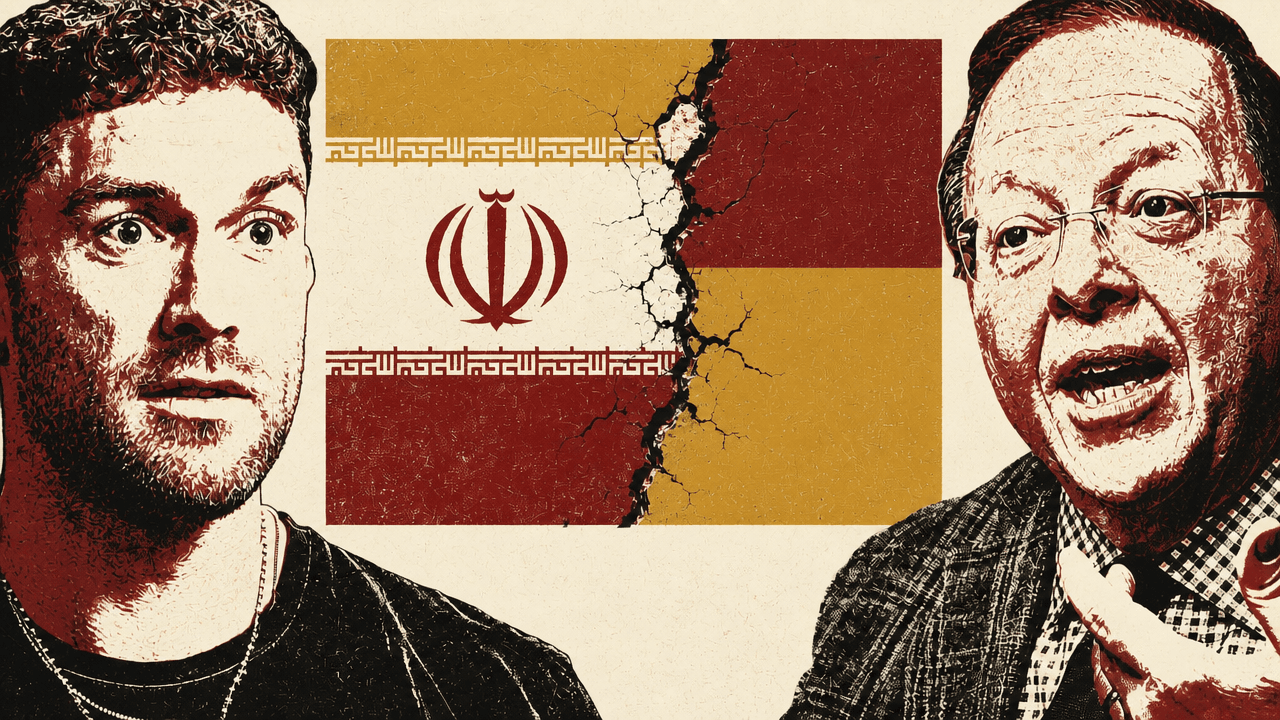
January 2027 is presented as the test of whether the war hardens
The decisive question is not simply whether fighting escalates in the near term, one unnamed speaker argued, but whether U.S. politics after the midterms locks the Iran war into a durable bipartisan posture. January 2027, they said, would be the “focal point moment” when the United States, Iran, China, and other actors could reassess their positions.
The speaker’s premise was that Iran sees a period of maximum pressure around declining oil inventories and the midterms. Its opportunity, in this account, is not to remove Trump from office but to damage him politically enough to make him “the lamest of lame ducks.” By the first week of January, the election result should reveal much more about Trump’s governing position and whether other governments should plan for a post-Trump world or a future Trump administration.
Whether Democrats control Congress is central to that calculation. The speaker expected a Democratic Congress to face substantial pressure to end the Iran war, comparing the potential clash with the executive to Congress’s 1974 effort to constrain the Vietnam War. They also expected pressure to cut, potentially to zero, U.S. budgets for Israel, pointing to what they described as a growing anti-Israel movement within the Democratic Party and electoral losses by pro-Israel Democrats.
The mechanism offered is political entrenchment. If Democrats win control and act to stop the war, the speaker said, that could prevent it becoming permanent. But opposition while out of power does not establish what a party will do once it must bear the consequences. If Democrats ended the conflict and Iran subsequently acquired a nuclear weapon, the speaker argued, Republicans could turn that outcome into a decisive issue in 2028. A forever war results when neither party believes it can afford to stop it.
An unnamed interlocutor pressed that distinction. The speaker could cite anti-war statements, including a recent CNN appearance by Hakeem Jeffries and remarks by a progressive Florida Senate-primary winner, but could not identify a major Democratic leader who had committed to immediately restrict Trump’s war powers if Democrats took the House. “I haven't said anybody has gone that far,” the speaker replied. That, they said, was the next step—and the one that could not be known until Democrats were in power.
Another participant saw more room for a bipartisan exit. Republicans, they argued, had won support partly by opposing foreign entanglements and now felt betrayed; the war was described as enormously unpopular in polling. If Congress follows popular sentiment, ending the conflict could appeal to both parties. That participant suggested Iran may be trying to wait out U.S. internal divisions and seek a deal in September or October before the election.
The prediction of merger begins with a more speculative escalation scenario
A different unnamed speaker predicted that the Iran and Ukraine wars would not end as separate conflicts. They would eventually merge, the speaker said, bringing China, Russia, and other major powers into the fighting. As an early sign, they cited what they described as Zelensky bombing an Iranian cargo ship in the Caspian Sea and taking public pride in showing the United States what he could do for it.
It sounds a lot like the World War III that we said wasn't gonna happen at the top of this episode.


The response was not a denial that the broader trends existed. Another speaker said they saw the same trends but did not want to project a settled outcome beyond the January political threshold. The larger-war forecast therefore rests on two linked propositions: that military and regional escalation continues, and that U.S. politics fails to create an off-ramp once the midterms clarify the balance of power.
A U.S.–Iran settlement would not settle the regional conflict on its own
A settlement between Washington and Tehran would, on this account, be insufficient because the war involves commitments and actors beyond either government. One speaker located the immediate obstacle in the collapse of an MOU between the United States and Iran. According to that speaker, its peace terms would have applied not only to Iran but to Iranian allies, especially Hezbollah in Lebanon, and would have required Israel to withdraw forces from southern Lebanon.
Israel, the speaker said, refused that requirement and had instead accelerated attacks on Hezbollah. The implication was that the conflict cannot be understood solely as an economic contest or a bilateral confrontation between the United States and Iran. Israel retains choices of its own, and the speaker characterized its present choices as escalatory.
The Houthis were presented as a further obstacle to containment. The speaker described them as poor mountain-dwellers, religious fanatics, and people unafraid to die; they said the Houthis were fighting Saudi Arabia, striking Saudi Aramco facilities, and had closed the Bab el-Mandeb Strait. Alongside the actions of Israel and Iran’s Islamic Revolutionary Guard Corps, these developments made the conflict “almost like a religious war,” the speaker said: a crusade, or an eschatological war, rather than one driven principally by economic incentives.
A separate speaker argued that an alignment among Saudi Arabia, Turkey, and Pakistan had created a new structure around Iran. Their account of each country’s motives was broad: Saudi Arabia had “no use” for Iran; Turkey sought a larger role; and Pakistan was becoming a more sophisticated participant in the war. They referred to a report that Iran might be asked to join the coalition—or “submit”—while explicitly saying they did not know whether the report was true or whether a real offer had been made.
Turkey is cast as the limit of Israel’s military model
The same speaker made Israel’s position toward Turkey the central regional constraint. They referred to what they described as an Israeli bombing of Turkish officials in Syria and said Israel was frightened of Turkey because it faced, for the first time, an opponent it could not defeat through geography and military capability. They claimed the Turkish army was three times as large as Israel’s.
This was not offered as a prediction that Turkey wanted a war with Israel. Rather, the speaker argued that Turkey disrupts Israel’s historical approach to threats along its borders—threats it had been able to contain since Israel’s founding. Israeli society, they said, is built around a conviction that enemies will seek to destroy it, producing a persistent paranoia about identifying its greatest enemy.
Facing Turkey turns that anxiety into an internal strategic crisis, in the speaker’s telling, because Israel’s military capability is no longer enough to resolve the problem. Invoking the attributed Rundstedt line after the Battle of the Bulge—“Make peace, you fools”—the speaker argued that Israel had reached a point at which military power could not deliver a satisfactory outcome.