Dating-App Attention Does Not Prove a Winner-Take-All Sex Market

Rob Henderson argues that the “Chad” narrative confuses concentrated attention on dating apps with evidence that a small group of attractive men are having sex with nearly all women. Citing reported annual partner counts, he says sexual activity is not evenly distributed, but the more visible casual-sex activity is concentrated among a minority of men and women open to short-term mating—not a winner-take-all market that excludes most men.
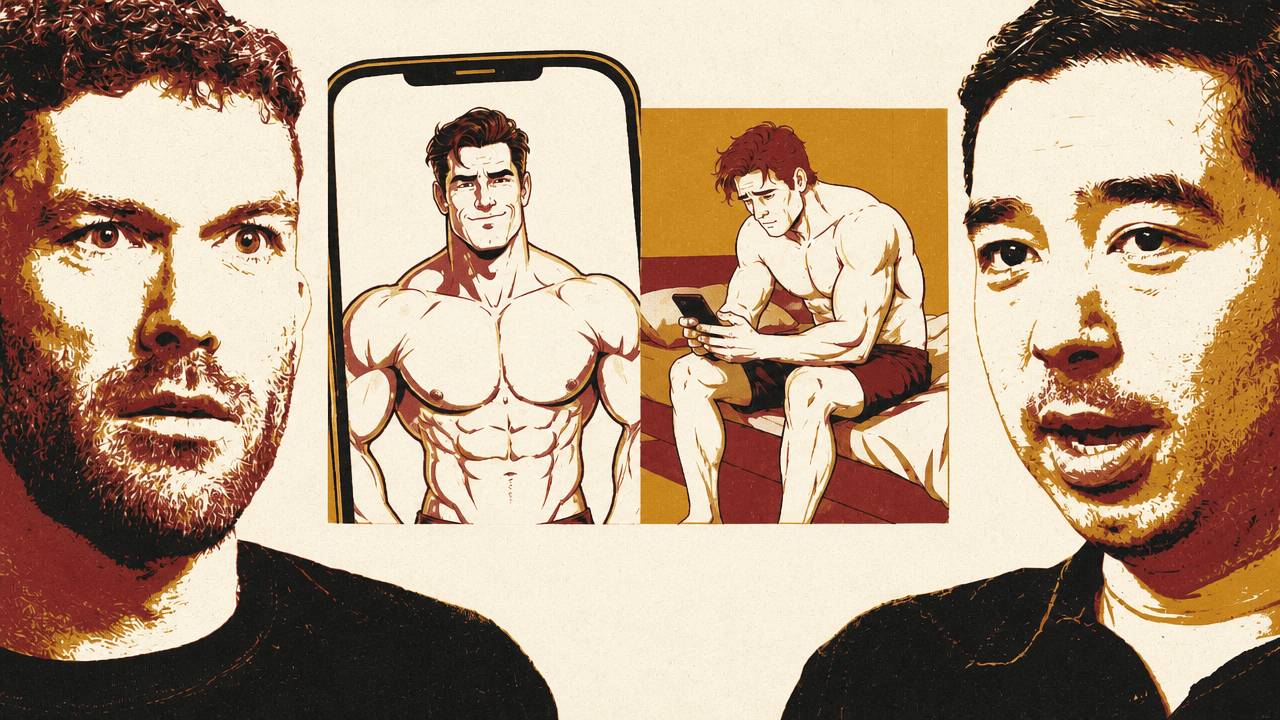
Concentrated app attention does not prove a winner-take-all sex market
Rob Henderson accepts the premise that attention on dating apps is concentrated. But he argues that this does not establish the larger claim behind the “Chad” story: that a small share of highly attractive men are having sex with nearly all women while most men are excluded.


The distinction matters because app data can make that story look obvious. Henderson cites figures suggesting that roughly 4% of men on Tinder receive the vast majority of swipes, while the top 10% of male Hinge users receive 60% of likes. Older OKCupid findings about women’s ratings of male attractiveness have similarly encouraged the view that women are interested in only a narrow slice of men.
Those measures capture activity on particular platforms, Henderson says. A swipe or like is easy to count, but it does not show who ultimately meets, enters a relationship, has sex, or opts out of dating altogether.
His counterpoint comes from reported partner counts over the previous year. He says that about 18% to 20% of men report having had three or more sexual partners in that period, and that the proportion has not materially changed since about 2000—the earliest data he says he could find. Women show a broadly similar pattern: roughly 12% to 18% report three or more partners in the previous year.
| Group | Reported three or more sexual partners in the past year |
|---|---|
| Men | About 18–20% |
| Women | About 12–18% |
The figures do not imply that sexual activity is evenly distributed, Henderson says. Attractive men have always had greater opportunity to have multiple partners. He also says men’s average number of partners is somewhat higher, excluding sex workers and similar cases. But the broader pattern, in his account, is not a small group of men cycling through the entire female population. It is a smaller group of men and women who are both more open to casual sex and short-term mating having disproportionate amounts of sex with one another.
Chris Williamson calls them “the sociosexual few.” Henderson uses sociosexual orientation to describe the people most open to promiscuity. Their behavior is conspicuous, but it is not representative of everyone else’s.
For most people, Henderson says, the most common answer to the question of how many sexual partners they had in the previous 12 months is one, followed by zero. He reads that as a straightforward picture: most sex occurs within relationships, and many people are not having sex at all.
Swipes and viral dating stories turn a visible minority into a general theory
Dating apps create a particularly clean route from a narrow metric to a sweeping conclusion. If the top 10% of men receive 60% of Hinge likes, as Henderson cites, it is easy to conclude that 10% of men receive 60% of women’s interest everywhere. But a like records attention within an app; it does not reveal how many people form relationships, how sexual behavior is distributed, or how many women are unavailable because they are partnered, uninterested in dating, or simply absent from the platform.
Henderson also points to the online culture built around those measurements. Pickup artists and red-pill figures publicize stories of sexual abundance. Incels publicize sexual deprivation. Taken together, the two poles can make it seem as if one category of men has all the sex while another has none, with women appearing only as the objects being won, deceived, or withheld.
Chris Williamson presses on why the idea remains compelling even to people who accept the statistical argument against it. The belief is not merely a conclusion from Tinder data, he says; some men have a “profound felt sense” that they have been shut out of the mating market while more attractive men have unrestricted options.
Henderson’s explanation is partly that the stories people see are unusual enough to spread. Someone posting that they met a partner, liked each other, and became engaged may receive little attention. A story about being ghosted, led on, rejected after a date, or declaring that “it’s over” for ordinary men is more likely to circulate. The visibility of those experiences can make them feel normal.
The same distortion applies to the women whom men see in online sexual discourse. Henderson says a relatively small share of women are more interested in casual sex, and that highly attractive men may have greater access to that group. Men who want access to those women but do not have it may mistake that specific exclusion for exclusion from women as a whole.
The very attractive men have access to that group. And the unattractive men who see this, they get jealous, and they want access to that small group of women as well. But they mistakenly think that that's all women.
That leaves out what Williamson describes as the large cohort of women who have had zero or one partner in the past 12 months. It also leaves out women in relationships and women who are not interested in dating. Henderson calls this population the “dark matter” of the discussion: people who are not posting about sex, not producing app drama, and not participating in the visible online argument.
The “Chad” archetype therefore combines two different claims. Henderson grants that app attention can be heavily concentrated and that some attractive men have more casual-sex opportunities. What he rejects is the leap from those facts to the claim that these men are having sex with all women. In his account, the conspicuous activity comes largely from a mutually promiscuous minority, while most men and women have more ordinary sexual lives—or none at all.