James Blunt Says Backlash Made Him Write for Critics Before Himself


James Blunt argues that the openness behind his songs helped build an audience but also made him a target when his debut *Back to Bedlam* became a hit. In a conversation with Chris Williamson, the British singer describes how the backlash led him to anticipate critics and listeners while writing, diluting the conviction he had brought to his early work. He says he has returned to writing from more vulnerable places on his new album, *Airplane Mode*, while keeping the meaning of the songs private.
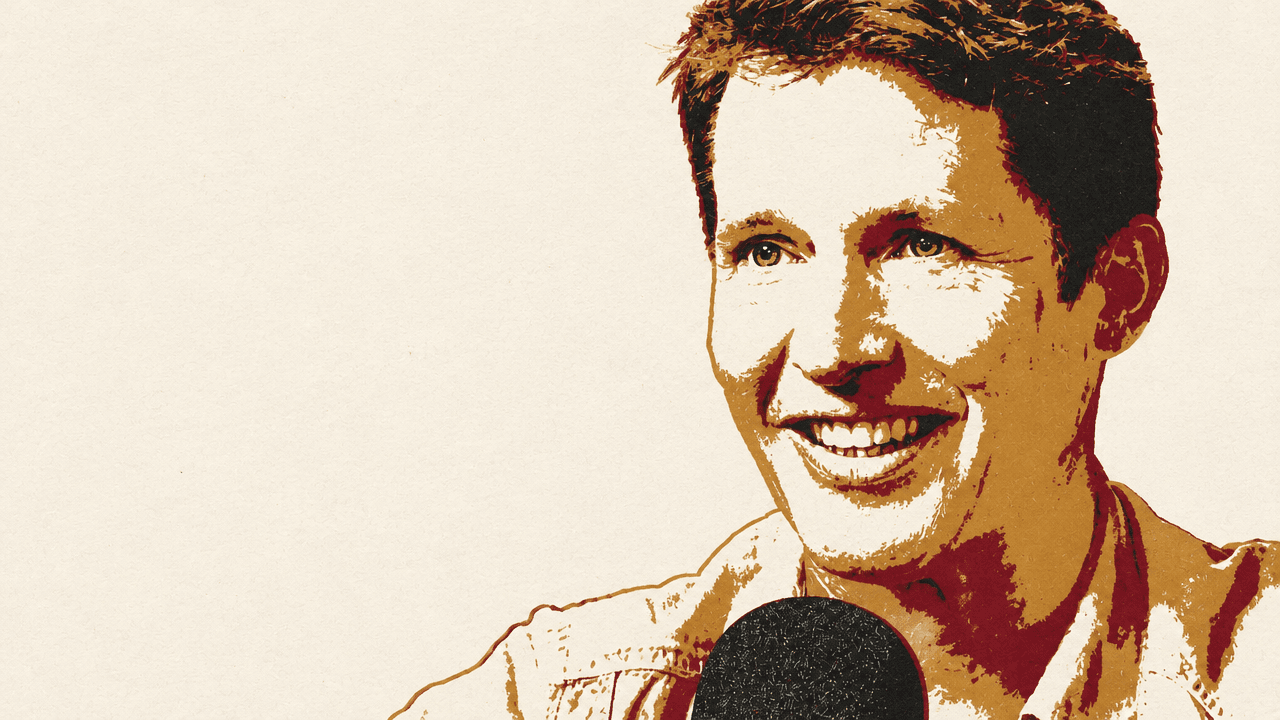
The same openness that built Blunt’s audience made him a target
James Blunt says the vulnerable songwriter and the sarcastic public persona are both real. He writes songs as a way to examine what is happening inside him; outside the music, he is “an idiot.” The two coexist, but they have not always been equally easy to inhabit. Early in his career, he wanted interviewers to take the songs seriously. After journalists repeatedly stripped his jokes of their context, he began using social media to speak directly and show a less solemn side.


The separation between the earnest music and the self-mocking public figure has become a form of protection. Blunt still writes from what he calls the darkest and most fragile parts of himself, but he is more guarded about explaining those songs in public. He will promote them with humour rather than spelling out their meaning. The honesty, he says, is in the songs.
That guardedness has a history. Blunt’s debut, Back to Bedlam, brought enormous commercial success and a hit that was difficult to avoid. He had been telling people since he was 14 that he would become a professional musician, but he did not reach that point until he was 30. The success was not an unprepared-for accident: it followed years of wanting it. The shock was how quickly the achievement was paired with hostility.
Blunt describes a media-led backlash that turned him into a national punchline. The songs were everywhere, and their directness—his high voice, guitar and emotionally exposed lyrics—made him an easy target in a music culture he felt prized being cool. He was surprised by the intensity of the reaction. If someone disliked a song, he thought, they could listen to something else. “I hate James Blunt,” however, sounded more personal than an attack on a band name: “the name of my band is James Blunt.”
He remembers living two realities at once. On tour, he was playing to tens of thousands of people and having what he calls the time of his life. In interviews and online, he was told that he was unpopular. A negative comment could feel more immediate than the thousands of people who had paid, travelled and made the effort to attend a show.
Blunt still notices hostile comments, he says, but tries to put them beside the many positive responses he has just passed over. He reminds himself that a concert audience has invested time and money, while an anonymous account has invested nothing. That perspective did not erase the hurt. It helped him stop treating every anonymous judgment as a measure of his worth.
The backlash also changed how Blunt understood success in Britain. He argues that the country often resents visible achievement, particularly when someone does not appear embarrassed by it. He contrasts that with what he sees as a more openly encouraging American attitude: Americans form a club by asking who wants to join, while Britons can use a club to mark who is excluded. He was not sure that ordinary people at street level share the same class resentments that appear in the media. In the army, he says, people from across the country worked together when they respected one another’s expertise and treated each other as equals.
His own background, he allows, may have contributed to how he was received. But he sees the bigger obstacle as the suspicion of earnestness. For him, music is supposed to contain emotion; it should not be “just paint on a wall.” The songs were an attempt to be honest with himself about what frightened him: whether he would find someone to share life with, where he would end up, and the mistakes that come with discovering you are not the hero of your own story. Listeners, he thinks, responded because they recognized something of themselves in that exposure. The same openness also left him vulnerable to ridicule.
Blunt’s account of the British “stiff upper lip” is not simply a case for abandoning resilience. He suggests that resilience and toughness can be valuable, and that some people need to “get a grip.” But those habits can also make direct emotional expression seem excessive. In his case, sincerity helped build an audience while making him easy to dismiss.
The backlash did not only alter how Blunt presented himself; it began to alter what he made. Chris Williamson names two pressures that can shape work before it reaches an audience. “Audience capture” is making what a creator thinks listeners want. “Criticism capture” is pre-emptively protecting the work from what critics might say. Blunt recognizes both. By the third album, he says, he was writing with the audience, the record label and the imagined negative review already in the room.


He describes the result as a compromise between competing expectations. If one side wants the work to be one thing and another wants it to be the opposite, “you just create grey in the middle.” He began to critique himself before anyone else could, a habit that also appeared in his online humour. Self-deprecation offered a way to control the joke, but it could become another layer between him and the work.
The mechanism was not simply that criticism made him sad. It taught him to anticipate criticism, then build that anticipation into the songs and the way he talked about them. Blunt says he was protecting himself: there seemed little point in being as open if he knew he would be judged harshly. A song could be beautifully made and still carry those protective layers. The work might be technically accomplished, but he could no longer sing or write it with the conviction he had at the beginning.
The backlash left the success intact but changed his experience of it
The first album’s scale brought its own pressure. Blunt does not describe breakout success as an uncomplicated mistake: the first idea may be the best one, he says, especially after years of imagining it. But a debut as large as Back to Bedlam set up a commercial peak that was difficult to repeat. He knew he might spend the rest of his career chasing the dream and the numbers attached to it.
The greater cost was emotional. Within six months of his breakthrough, he says, the backlash had spoiled what should have felt like the fulfilment of a long-held ambition. He went to Ibiza, toured, partied and visited extraordinary places, and says he had enormous fun. Still, he could see sadness in footage from that period. The positive experience of performing and travelling did not cancel out the thought that he was disliked at home.
That split between public achievement and private response was disorienting. Blunt was not simply sitting at home reading criticism: he was performing to large crowds and enjoying his life on the road. Yet interviewers kept telling him he was unpopular, and looking online made it easy to find evidence that seemed to confirm that story. The measurable success did not supply the affirmation he wanted. “You just want to be liked,” he says, and not feeling liked in his home country stayed with him.
The second album, All the Lost Souls, came out of that loneliness. Blunt wrote it in Ibiza, in a house bought with the money from the first album, sometimes wearing fingerless gloves because someone had stolen the boiler. He felt that the dream had been damaged and that his music might no longer be wanted in Britain. He was contractually expected to keep making records, but he did not know where he stood or what the future of his career would be.
He considers the second album his strongest musically, in part because it was shaped by that experience. He is proud of it, even though it was made in a period when he felt lost. It was not a clean conversion of pain into artistic achievement. He describes himself as lonely and unsure where he belonged, writing while the prospect of continuing in music felt uncertain. But the album carried an emotional reality that he could not have written from the same place before the backlash.
The third album, by contrast, felt less coherent to him. He could still identify individual songs he liked, but thought they lacked belief and heart. By then he was no longer writing from conviction. He was anticipating audience response and negative reviews, trying to make work that could survive both. It might have been competently written and recorded, but it did not feel like him.
That difference helps explain why the second album’s difficult origins mattered to him. Blunt says that at the beginning of his career, he believed the music would work. He describes that belief as naive rather than arrogant: he could sing the songs with conviction because he had not yet learned to second-guess how they would be received. By the third album, the imagined audience and critics had entered the writing process. He could not simply return to the earlier belief by deciding to.
The shift left him with a particular kind of regret: the achievement was real, but his experience of it was compromised. Williamson describes the wistfulness of looking back at a career’s apparent high points while remembering that, from the inside, the moment was “a bit tainted.” Blunt agrees. A person can be onstage in front of thousands and still carry the sting of a hostile reaction from home.
The damage was not permanent, though he does not present it as a neat recovery. He says it took a long time to find himself again, and that he may only have fully done so recently. Using Twitter helped because it let him make jokes without relying on an interviewer to preserve their tone. The online presence showed people that he took the music seriously but not himself, giving the public a way to encounter him beyond the caricature of the earnest singer.
He remembers a specific reason for wanting that direct channel. On a red carpet, he was asked how it felt to have people hate his song and find it annoying. He answered, “Pity me, you know. I’m the poor bastard who has to sing the song every bloody day.” The newspaper story, he says, turned that into “James Blunt calls all his critics bastards.” The joke had been recast as an insult. Once he could publish his own comments, he no longer had to trust an interviewer to carry the tone for him.
That directness helped people see that the solemnity of the songs did not describe all of him. Blunt’s self-deprecation was not invented after the backlash; he says he had learned to take the mickey out of himself in the army, where humour helped people get through hard times. But in interviews he remained earnest because he wanted the music taken seriously. Social media let him show the amused side without having it filtered into another hostile headline.
The later return of the music to younger listeners also changed the frame. Some young fans, Blunt says, first knew him through social media and then discovered the songs on streaming services. Others had heard the album because their parents played it. They did not inherit the original wave of mockery; when they told him they loved it, he could see the work without the old judgment attached. He sometimes warns them that liking it is “really uncool,” but they have moved on from that verdict.
Time, in this account, does not reverse the original experience. It makes room for other audiences and interpretations. Blunt’s advice to someone facing success and scrutiny together reflects both sides: enjoy the success while it is happening, and do not let outsiders decide what it means. Elton John once called him and said, “Fuck ’em. It doesn’t matter.” Blunt wishes he had taken that advice sooner. He was the one riding the wave; the critics were watching from the beach.
Initiative put him in the path of luck
Blunt’s route into music was not a straight professional plan. His childhood was shaped by constant moves: his father was in the army, and the family relocated every couple of years. He remembers living in Cyprus, Germany, Hong Kong and Yorkshire. To make friends, his mother sent him around the army housing area to knock on doors and ask whether anyone had children his age. The friendships lasted until the next move.
He describes that pattern—arrive somewhere, make a connection, then move on—as one thread through his life. He joined the army himself, later toured as a musician, and still divides his time among Switzerland, Ibiza and the UK. He says he gets “itchy feet” and does not want to stay in one place. Movement was not just a series of changes imposed on him; it became a way of life he liked.
Boarding school added another kind of early independence. His parents left him at a school in Berkshire when he was seven without explaining that he would be living there. Three days later, he asked a matron when they would return and learned they were coming back at Christmas. Blunt jokes that this made him emotionally stunted, and says the school taught independence partly through its own hierarchy: he served an older pupil, whom he called “God,” bringing tea, doing laundry and making the bed. The older boy, in return, got him cigarettes and alcohol and sometimes helped him out of trouble. Blunt says he would not necessarily send a seven-year-old child away in the same way now; as a parent, he thinks it means missing part of the child’s childhood.
He went on to university, where he studied aerospace manufacturing engineering and sociology. He remembers being idle, watching television and not doing much work. The army changed his habits. He says he now works long hours, walks fast and keeps both his tour bus and home organized. His rule of thumb for the bus is simple: a tidy bus is a happy bus.
His deployment was in Kosovo in 1999. Blunt describes the conflict as one in which Serbs were killing Kosovar Albanians and the Kosovo Liberation Army was fighting back. He saw his NATO role as peace enforcement and believed intervention was justified: “two people are killing each other and we’re getting in the middle and saying, ‘enough.’” He says soldiers are ultimately at the behest of politicians and can only hope they are sent into the right wars.
There was downtime in military life, and he brought a guitar on operations. “Rush to wait,” he says, was a familiar rhythm: prepare for action, then wait. He says the experiences of war inspired him to write, and compares that with the poetry that has come out of wars. Military service did not replace his musical ambition; it gave him time with a guitar and experiences he would later draw on.
After Kosovo, he moved to London and took a ceremonial role as a Queen’s bodyguard. By day he rode in formation, protecting the monarch with his horse and body while police handled threats; by night he played small venues and began building a band. He spent four months learning to ride, on horses he describes as army rejects that could buck, kick, bite and throw him. He rode down the Mall beside the Queen, in armour, with a sword he was not supposed to use and a police radio microphone.
The role involved exercises to protect the monarch from different kinds of attack. Blunt says the guard would use bodies and horses as protection, while police were in communication with them and would probably deal with a problem at their end. He recalls training in Norfolk with many horses surrounding someone playing the Queen. The work combined ceremonial tradition with practical protection, though Blunt did not describe the guard as responsible for handling every threat.
Blunt was also part of the guard at the Queen Mother’s lying-in-state, standing at a corner of the coffin while the public filed past. He remembers it as a remarkable encounter with British tradition.
At night, he would return to the barracks in the early hours, change out of the ceremonial uniform and go to play in bars and clubs. The band he began forming then still includes some of the same musicians. Blunt describes them as his equivalent of soldiers in a troop: people with expertise in their own fields whose advice and judgment he relies on. The transition was not simply from one identity to another. He was learning to work with a team in both settings, while testing whether music could become his next life.
Blunt says he knew he could sing and convey emotion, but he did not know how the music business worked. He believed that the conviction he had used to lead soldiers could help him carry feeling into a song. He describes the specific task of convincing soldiers to get up and follow him toward a machine gun firing in their direction; if he could convey that kind of conviction in music, he thought, he had something to build on. But while still in the army, he played gigs and approached record labels directly. Someone told him he needed a manager. He invited managers to shows, and one of them, Todd Interland, heard a CD and got in touch. Interland remains his manager. Blunt credits him with steering him through the industry and helping him focus on making music.
A publishing deal gave Blunt a small advance, time to write, introductions to collaborators and the chance to make stronger demos. It also helped signal to record labels that he had a team behind him. The publisher was not simply a source of money: the advance gave him breathing room to write, while the introductions and better recordings made it easier to present the songs to people who could help make a record.
Even then, the British music scene was difficult to place him in. He says he stood out as a “naive posh boy,” with long hair and baggy jeans, and a speaking voice that made the mismatch more obvious. He felt that there were songs there, but could not see where he fit in the scene.
Virgin Records eventually offered him a deal. At the meeting, after telling him he was going to be a star, a marketing manager asked whether he could do another accent. Blunt joked that he could try Pakistani; his manager stood up and ended the meeting. The label was not the right fit.
The break came in Austin, Texas, at a small show on the fringes of South by Southwest. Blunt thought he was playing the festival, but the audience was only about 20 people. He says he had not been told that the performance might be his last chance, and the musicians with him may have understood the stakes more clearly. After he finished, Linda Perry—then forming Custard Records—pushed through the crowd and offered to sign him as her first act, with money to make the album. Blunt says he owes his record deal to her.
Perry, he believes, saw past the small prejudices he had encountered in Britain. He describes her as un-British in the sense that she did not share the same narrow judgments he had felt from the music scene. She responded to the fact that he sang from the heart and did not hide much. Most of the songs for Back to Bedlam were already written, including “You’re Beautiful,” “Goodbye My Lover,” “Cry” and “No Bravery,” which he says was about the war. The remaining task was to find the right producer.
Tom Rothrock had independently come across an online video of Blunt performing at South by Southwest, and Blunt’s manager contacted him that same day. Blunt had been interested in Rothrock’s work, especially his production with Elliott Smith; he also mentions Badly Drawn Boy, Foo Fighters and Beck. Rothrock appealed to him because he seemed to draw out what an artist wanted to put on a record rather than impose a sound of his own. The coincidence of Rothrock finding the video and the manager calling made them think they should meet.
The sequence looks unusually fortunate in retrospect: a small gig, Perry in the crowd, and a producer discovering a video just as Blunt’s manager called. Blunt calls this kind of career-making coincidence serendipity, but not something that simply lands in a person’s lap. He had been playing gigs, approaching managers, travelling for shows and putting songs in front of people. The lucky encounter mattered because he was already in motion.
Naivety gave him conviction that experience later complicated
Blunt sees his early lack of knowledge as an advantage. He did not understand the risks well enough to be discouraged by them. Leaving the army to pursue a record deal felt possible; when a record company collapsed and cut most of its acts, he assumed he would be among the few retained. His manager noted that things had not gone smoothly. Blunt’s answer was essentially: he had made an album, so of course it would work.
He distinguishes that attitude from confidence or arrogance. It was “naive blind conviction”: the assumption that the plan would succeed, without a detailed understanding of all the ways it might fail. He doubts he could return to that state now. Experience had taught him what could go wrong, but it also made it harder to believe in success without qualification.
Williamson raises the contrast with younger people who feel pressure to build a side hustle or demonstrate achievement early. In his view, a period in which a person’s work is not instantly available for public judgment can be valuable. Blunt had played early gigs that are not now preserved online for anyone to criticize. He agrees that knock-backs can teach, but says constant exposure to negativity must wear a person down.
That tension matters especially for artists whose sensitivity is both the source of their work and a liability under scrutiny. Williamson brings up Lewis Capaldi as someone whose talent and temperament can pull in opposite directions. Blunt sees a familiar form of self-protection in Capaldi’s self-deprecating humour: make the joke before anyone else does.
For Blunt, performance is still a deliberate act of exposure. He describes going onstage as removing the protections people normally keep around themselves: standing alone and showing something fragile. The reward is not only applause. It is the audience sharing the emotional journey—sometimes crying with the performer. He can hear the fear in recordings of himself singing “Goodbye My Lover” and remembers feeling the electricity in the room. A concert needs highs as well as lows, he says; the contrast is what lets a crowd be drawn into the quieter moments.
He does not suggest that every song or performance must aim at emotional revelation. Comedy and music made for comfort have their place. But vulnerability carries a distinctive risk and reward: the more exposed the performer is, the more available the work is to judgment, and the more deeply it can reach an audience.
His own way of dealing with that exposure is not to become immune to nerves. He still finds it nerve-racking to sing a new song onstage or appear on television, where he might humiliate himself in a few minutes. He has not solved that anxiety. He expects it to be over quickly, then plans to deal with the fallout.
The confidence problem is connected to the scale of the debut. Blunt can say plainly that he is unlikely to have a bigger commercial success than Back to Bedlam and “You’re Beautiful.” He knows he could instead adopt an American-style declaration that the new album will surpass them, but the certainty is no longer available to him. He finds that loss sad, even while believing the experience of the hit was a blessing.
He is not arguing that later work must beat the first in sales to matter. “If you’ve caught that lightning once, then you caught it.” He says he has enjoyed the career that followed, including its highs and lows, and would not trade it for a smaller debut followed by years of struggle. He describes himself as lucky, alive and still enjoying the work. The commercial peak is not a target he expects to surpass, but neither does he regard the work since then as an unsuccessful sequel.
Airplane Mode returns to the material he once protected
Blunt says the new album, Airplane Mode, is the result of 20 years in the making. He told his family and the people around him that he would stop chasing radio hits. Trying to imitate what is current means arriving months late and sounding like an imitation, he says. Instead, he wanted to write about the darkest corners of his heart and mind.
He warned his wife not to be alarmed by what she heard: he was happy, but needed to go into those places to write. The songs became a kind of conversation with himself, as the early music had been. After the label released a greatest-hits collection, Blunt says, he felt as if he had been written off. That made the new work feel like “a new life”: he no longer had to think about the business or prove himself in the same way, and could make music for its own sake.
The freedom has not removed the difficulty of writing. Blunt says he still enters studios with collaborators and exposes parts of himself he would normally protect, sometimes in front of people he barely knows. He is also conscious of not betraying the trust of his family by making their private lives into public material. He finds ways to approach the underlying feeling without simply disclosing everything.
One Nashville writing session with Mikky Ekko illustrates the method. Blunt admired Ekko’s work, including “Stay,” and wanted to write something emotionally direct with him. On his way to the studio, Blunt had walked for about an hour and a half through the heat and crossed a freeway. He began describing a hypothetical: if he were to jump, which side would be more dangerous? He then followed the thought through to the possibility of landing on a car, his family finding him, and the idea of calling his brother-in-law.
Ekko became worried and stepped out to call his manager. Blunt says he was not looking for a bridge to jump from; he was trying to find the emotional starting point for a song. When Ekko returned, Blunt told him: “I’m not looking for a bridge to jump from. I’m just looking for a hand to hold.” They wrote a song about pressure, responsibilities, family and the burden of trying to keep going.
Blunt says he is a happy human being. He describes the session as a way of finding a trigger for the song: he took Ekko on an emotional journey, found the feeling he needed and put it on paper. After they finished, Ekko brought out tequila and asked whether Blunt was okay. Blunt replied that he was trying to write a song.
The anecdote shows the difficulty of making vulnerable work with another person in the room. Blunt says he has to enter the most fragile parts of himself while protecting the relationships and trust he has at home. He may be writing with a friend or with someone he has just met; either way, the material can feel exposed. In this case, Ekko’s concern led him to check whether Blunt was okay, and Blunt explained that he was trying to write a song.
The method also puts a limit on what Blunt is willing to explain afterward. He says that when he talks about the new songs, he will brush over their meanings rather than spell them out, even when the lyrics make the meaning apparent. The songs can contain the truth without requiring him to disclose every private detail around them. In that sense, the distance he keeps in interviews is not a claim that the songs are less personal. It is a way to protect the people and feelings involved while still making the work.
That process leaves open a question about whether healing weakens the creative impulse. Williamson suggests that ambition can grow out of pain, conflict, a need for recognition or a chip on the shoulder—and that as those wounds heal, the energy behind the work can change. Blunt thinks pain and struggle can be inspiring for creative work, just as confidence can help someone persist in other fields. He does not say that suffering is necessary for artists. He says hardship can be a source of inspiration, and that people may learn and grow when they are uncomfortable.
Family changed what he chooses to spend time away from
Blunt is protective of his family and avoids speaking about them at length. He says the questions he had as a young man—who he would meet, where he would live, who would give him peace—were the questions he was trying to answer. He says sharing life with his family has meant much more to him.
That became especially present after filming Celebrity Traitors. Blunt describes the show as a social experiment in which an uninformed majority tries to identify an informed minority, but says it is also a guessing game, shaped by television editing. He found himself a poor fit for deception: whether innocent or guilty, he goes red when accused and wants to lash out. Even when he was not a traitor, the game could make him feel personally attacked.
Filming lasted just over three weeks. Blunt says he walked away slightly affected, having recognized that he had volunteered to be away from his family again, presumably for self-promotion. In the castle, participants were kept from seeing much of what was happening outside, and the days could run from 10:30 in the morning until four in the morning. He describes it as being a voluntary captive, with time to question why he had chosen to be there.
He tried to get eliminated. He wandered around accusing people rather than quietly waiting, and says he would have been happy as long as he was not murdered. When he was called into a room and found no envelope, he became unexpectedly emotional: “Where’s my envelope?” He calls the experience a miserable marathon, but says it was great to have done. When asked what he learned from the game itself, he said he was not sure he had learned much.
The time away did, however, prompt him to reflect on his decision to volunteer for it. He contrasted that experience with touring, where being away from home comes with work he loves and a crowded schedule. On the show, he felt like a voluntary captive, with little control over what was happening outside. He said the experience made him ask why he had chosen to be there and reminded him that time with his family was precious.
Persistence does not require a thick skin
Blunt’s account resists a simple lesson about becoming impervious to criticism. The backlash hurt. He still has doubts, and new performances still make him nervous. What changed was not that he stopped feeling those things, but that he learned to live with a career that includes them.
He credits his manager and record label with staying alongside him through both successful and difficult periods. He has remained with Atlantic Records through highs and lows; sometimes he thought the company had mishandled things, but they kept working together. That continuity matters in his description of a sustainable career. You learn from setbacks, he says, but you also need to avoid being so damaged by them that you cannot pick yourself up and try again.
Williamson observes that not everyone has the reflex to turn criticism into anger. Some people get sad rather than defiant, and there are fewer models for those who are naturally nervous about the work they care about. Blunt agrees. His example is not the person who never doubts himself or responds to every critic with a triumphant retort. It is the person who feels exposed, keeps performing, and accepts that the fallout can be handled afterward.
Blunt is proud of the second album that came out of a lonely period, but he also describes the cost: he felt lost, and the success around him did not make that feeling disappear. The third album shows the other side of the same pressure, when the effort to avoid another backlash began to dilute his conviction. Blunt’s account leaves both things in view: difficult periods informed some of his writing, while anticipating criticism could make it harder to write with the honesty he wanted.
The career that followed Back to Bedlam has not repeated its peak, and Blunt does not pretend otherwise. He also does not treat that fact as evidence that the rest of the work has failed. He has played to large audiences, made albums he values and continued to find the work exciting. He describes himself as lucky to still be doing it. His confidence has not returned to the uncomplicated certainty he had as a young man, and he still questions himself before a new performance. He goes on anyway, knowing that the nerves will pass and that he can deal with the fallout afterward.
I write songs for me to put that down and explain that to myself.