The Man of Zero Begins When Old Motivations Stop Working
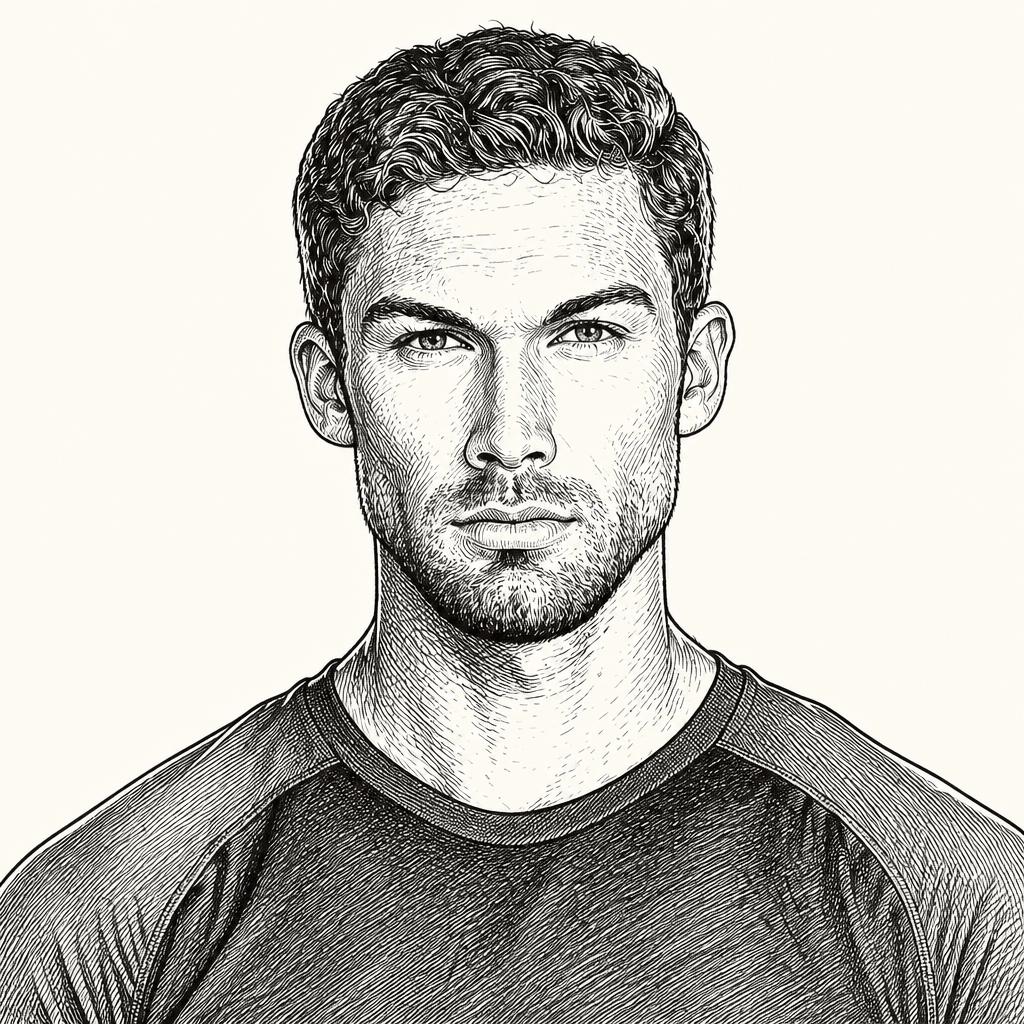
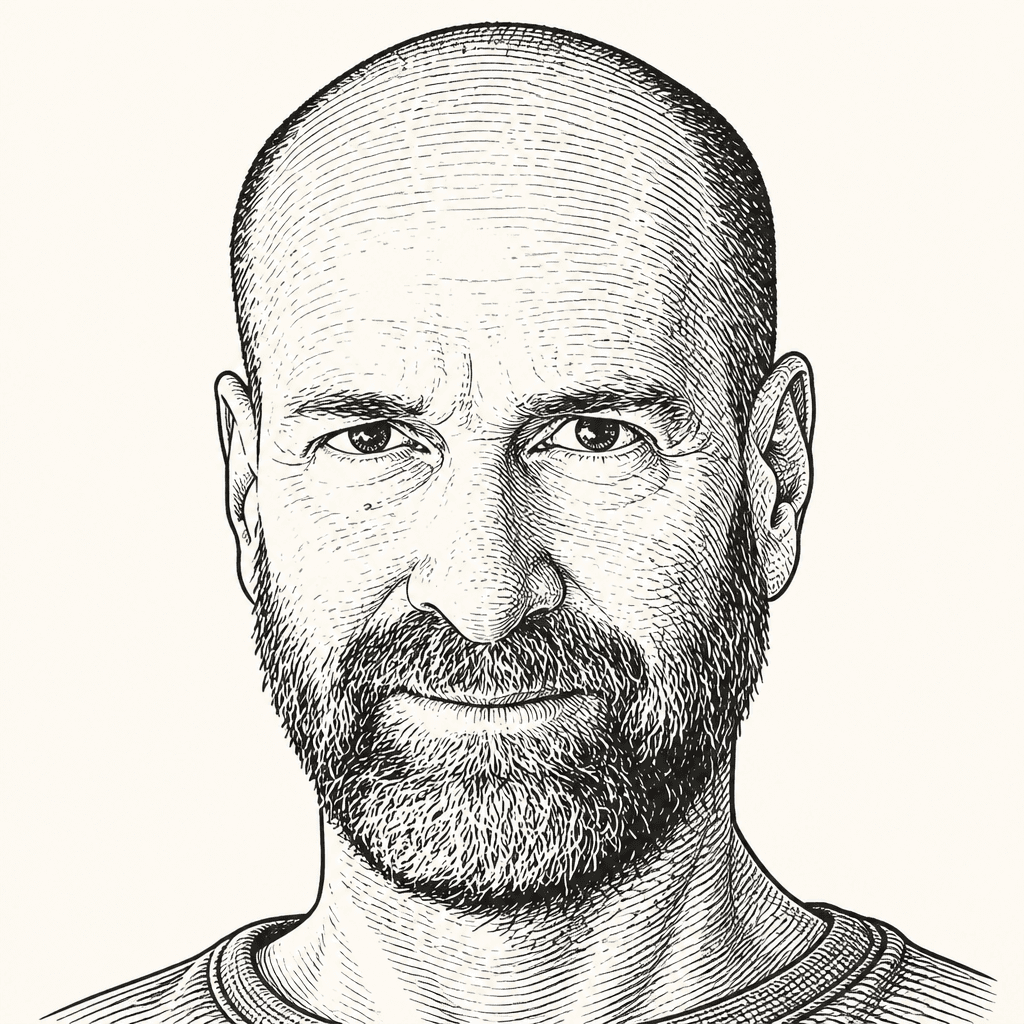
David Deida, the spiritual teacher and author of The Way of the Superior Man, argues that many men eventually reach what he calls “zero”: a phase in which ambition, sexual drive, self-improvement and inherited ideas of purpose no longer generate meaning. In a conversation with Chris Williamson, Deida says this state is often mistaken for apathy or depression, but can instead be a form of clarity in which old motivations fall away. The question, he argues, is what remains to move a man when stress, proving and avoidance stop working.

The problem is not apathy but the end of borrowed motivation
David Deida defines the “man of zero” as a man who reaches a point where the motivations that used to organize his life have evaporated. He may still be married, raising children, running businesses, making things, and functioning in the world. But underneath the activity is a question: “Why am I doing this?” Part of him would rather do nothing.
That is why the idea matters beyond one spiritual vocabulary: it asks what remains when achievement, sex, discipline, and masculine identity are no longer powered by stress.
Deida is careful not to make this a simple sequel-stage to The Way of the Superior Man. He describes it as a phase rather than a fixed progression. A man may enter zero for a month, a year, a decade, and then return to something like the “superior man” phase, which Deida defines as being moved by a deep sense of purpose: to serve, to give one’s gift, to make things right, or even to discover one’s purpose. When that felt purpose disappears, zero begins.
The distinction matters because Deida does not treat zero as collapse. When Chris Williamson suggests that a man might “degenerate into total apathy,” Deida corrects him. Zero is not apathy. It is “clarity,” “pure presence,” “pure awareness,” a state of being deeply content with what is, without the familiar internal pressure to push and change things.

Most men, he says, carry “a kind of kernel of stress” in the gut, heart, or solar plexus that moves them to act. The man of zero is what remains when that stress is not there. The question becomes: if a man is no longer moved by personal lack, anxiety, proving, fear, or purpose as he previously understood it, what moves through him? Deida frames the shift as moving from personal purpose toward being “used by something much larger,” though he immediately qualifies that even size may be the wrong metaphor.
Williamson reads a troubling implication in this. If the disappearance of validation-seeking and inherited drives causes ambition to fall away, then much of what men call striving may have been driven by old wounds, comparison, recognition hunger, and unresolved past patterns. Deida agrees, but does not moralize it. Some of his favorite music, he says, was probably created by artists trying to get laid. People may create beauty because they want money, sex, status, or relief from low self-worth. That does not make the work false or worthless. It means those motivations can create real art and real beauty until, at some point, they are no longer sufficient.
It’s healthy and appropriate for the motivations of your body and mind that have moved you in the past to come to stillness and then to discover the truth of what’s left.
For Williamson, this makes zero a difficult threshold for a culture built around progress. Many men have taken meaning from difficulty, hard charging, ambition, and “making shit happen.” When that game stops rewarding them, they may not interpret it as completion. They may try to reignite the “dead star” by changing conditions: more caffeine, more testosterone, enemies real or imagined, a divorce, or some other attempt to recover the old urgency.
Deida’s counsel is not to force the old drive back. The deceleration is the sign. The seeking dissolves. A man is left with being. Many interpret that as a problem: they need their “mojo” back. Deida’s counterclaim is that the stillness is the mojo. It is the body and mind being led to relax enough to become transparent to a deeper being.
Success feels empty because the successful one is unchanged
David Deida explains the eventual emptiness of success not by saying success is bad, but by saying it never alters the fundamental sense of being that people expected it to transform. The achievement felt full because it was charged by lack, goals, imagination, and the promise of becoming someone else. But after the money, the partner, the house, the status, or the conquest, the person discovers: “There they are. They’re the same one.”
Chris Williamson compresses the discovery into the question: “Was that it?”
Deida says the achievement was not pointless. If someone is moved to make money, find a partner, have sex, or pursue any other human possibility, they can explore it. “That’s what human birth is for,” he says: to explore the possibilities of being human. But if a person matures, there may come a point at any age when the tone of life becomes emptiness or meaninglessness. The external conditions may have changed, but essentially the same one remains.
That threshold may be more common among men who have achieved enough to test their fantasies against reality. Deida says a large percentage of the men he is describing have reached “a modicum of success” and then encountered meaninglessness. But he also says younger men increasingly arrive at the same question before conventional achievement, sometimes through meditation or psychedelics. They may get what he calls an “unearned glimpse of infinity” and conclude, prematurely or not, “Why do anything?”
Williamson names a familiar version of this as spiritual bypass: someone travels, takes psychedelics, has a transcendent experience, touches the divine, then returns “the same prick” they were before. There is no integration; the person has visited a peak state like a tourist and returned unchanged.
Deida’s response is not to dismiss the experience, but to emphasize the deeper continuity. The point, in his view, is precisely that the same one remains before, during, and after the trip. Visions, healing, and altered states may matter, but the one having them is the same one who eats lunch and takes a shit. Psychedelics may show parallel worlds or heal body and mind, but they do not replace the practice of resting as the being that is present through every state.
This is also why Deida resists making “arrival” the key event. Williamson describes the difficulty of warning people about the hollowness of arriving: those who have not reached the top often hear such warnings as a luxury complaint or as someone “sucking the oxygen” out of their ambition. Deida’s reply is that emptiness is not waiting at the top. In the present moment, the listener is already aware. They hear sounds, see perceptions, have thoughts. None of that changes the one who is aware. The successful, striving, dissatisfied, or ambitious person is already in the condition Deida is pointing to. Some people find that sufficient. Others add stress and seeking.
That does not lead Deida to condemn self-improvement. If someone wants to improve themselves or the world, he says they should. He does not consider it a block. People moved by self-improvement should follow that movement. His claim is simply that sooner or later most men encounter the emptiness of activity, however improved or active they become.
Zero is not depression unless being collapses into contraction
The psychological experience of hitting zero can easily be confused with depression. David Deida acknowledges that some depression is real clinical depression, including biochemical imbalance addressable through pharmacology. Other forms may follow bereavement or failure after years of effort. He is not collapsing all suffering into spirituality.
But in the condition he is describing, the man discovers that his actual life has lost meaning. “What do I do now?” becomes the dominant question. Depression enters when the man adds collapse to that meaninglessness. Deida describes it physically: contracting in the solar plexus, hunching over, darkly mulling, circling thoughts. Being without collapse is the man of zero. Being plus contraction, slouching, and ruminative thought is what he is calling depression here.
The practical distinction he offers is whether the man is free in relation to thoughts as they arise. Deida asks the listener to notice thoughts passing: friends are succeeding, I have lost my drive, I do not know what I am supposed to do, maybe this is depression. Each thought has a beginning, a duration, and an end. The thoughts change; the one aware of them does not. If a man can rest as that awareness, the thoughts may continue, but he is not lost in them. If he buys into them, he contracts.
The mark of being on track, for Deida, is effortlessness. If effort arises in the attempt to rest as awareness, the person is “missing the mark.” Being is what one already is; trying to be it turns it into another project.
Chris Williamson adds that many men use busyness to avoid precisely the thoughts that appear in stillness. When drive fades, busyness falls away, and the fears and old patterns that activity kept submerged rise to the surface. This makes zero threatening. The man is not only without his old ambition; he is now face to face with what the ambition helped him avoid.
Deida says it is “worse than that.” The resurfacing is not limited to fleeting thoughts. If a man has lied to a business partner, his wife, himself, or anyone else for personal gain, that moment leaves a contraction in body and mind. When he comes to zero, those tensions return to awareness. Deida expands this beyond personal history: mammalian urges to fight, fuck, and run; inherited aggression; ancestral and epigenetic pasts; memories of harm and dishonesty. These arise, in his view, not as proof that zero is failure, but as material being released. It is purification, but not a gentle one.
This is one reason he wrote The Man of Zero: to help men tolerate what surfaces when the mechanisms of suppression stop working. The practice is not getting on the phone, watching pornography, numbing out with movies, or turning “doing nothing” into another distraction. It is learning to do nothing impeccably: crystal clear, present, not pushing away, not pulling away.
Effectiveness may remain even when interest disappears
A man at zero may become less interested in the game he previously played, but David Deida does not assume he becomes less capable. If someone has developed real skill, the skill remains. The drive to deploy it may be reduced, but the capacity is not necessarily diminished. In some cases, he suggests, the person may even be more skillful because he is less entangled in his own issues.
Chris Williamson presses a different point: if effectiveness includes not only skill but the drive to produce, outputs may fall. Much of the world’s art and analysis seems to arise from friction: resentment, heartbreak, misalignment, bitterness, a life “swimming into the stream.” He cites the line that if you marry well you become happy, but if you marry wrong you become a philosopher. The implication is that suffering often sharpens perception, obsession, and creative output.
Deida agrees. Suffering is a trigger for a lot of depth and a lot of art, and “good art comes from depth.” This is one of his reasons for not encouraging people to rush through phases. The very lack of integration that causes trouble can generate art. A highly integrated human may not create what a less integrated, more tormented person creates.
This leads to an important distinction in Deida’s vocabulary: depth is not integration. Some people are highly integrated but not especially deep. Others are very deep but not integrated. A spiritual teacher may recognize the nature of being and still behave badly. A musician may create “divine music” while being personally chaotic. Deida says this is not the exception but the usual pattern.
Integration means social skill, morality, trustworthiness, being “a mensch.” It means a person you could trust with your wife, your bank account, or ordinary human responsibilities. Depth means access to being, insight, or the source from which art and teaching may come. The two can overlap, but they are not the same. Listeners should discriminate accordingly.
For Deida, scandals among spiritual teachers do not necessarily prove that they had no real depth. They may indicate that their body-mind patterns had not yet unfolded and integrated. That does not excuse harm. Structure may be needed so patterns do not hurt people, and amends may be needed when they do. But the presence of insight should not be mistaken for reliable character.
Sex at zero shifts from arousal to presence
A large part of David Deida’s account concerns sex, because he believes sexual motivation is deeply tied to the past: mammalian inheritance, parental treatment, first sexual experiences, psychological wounds, and fantasies pushed below awareness. As a man rests more stably at zero, Deida says those old drivers may no longer move him. He may experience less actual desire for sex while also noticing more sexual fantasy rising from the depths he has suppressed.
The man may conclude he is losing his sex drive and needs to recover it. Deida’s alternate interpretation is that the old cues are becoming obsolete. Pornography, lingerie, novelty, or the familiar physical triggers may not animate him the same way. What begins to matter, he says, is a partner’s actual love, devotion, surrender, and openness of body to love. From zero, sexual polarity can still arise, but not as a push from lack.
Chris Williamson wonders whether stillness would kill polarity. Deida says stillness is one side of polarity. The other side is fullness, energy, life force, movement. He uses “masculine” and “feminine” while acknowledging that the terms are problematic for some people. In his usage, masculine names unchanging stillness, emptiness, timelessness, presence. Feminine names movement, radiance, fullness, flowering, change.
In heterosexual polarity, Deida says, a man resting in emptiness may attract women who are more socially active, energetic, verbal, and expressive. The point is not need meeting need, but stillness meeting radiance: a man stable in awareness with a woman full in devotion and power, each loving without clinging.
Deida extends this to changing gender roles in broad and speculative terms. He says women are increasingly taking over functions once held by men, and he expects more women to become leaders and visible successes. He is not worried by this. In his view, it means men will need a deeper reason for being than provision, money, status, or conventional dominance. A woman powerful in the world may come home and find a man “completely present, rooted in the deepest sense of being, absolutely attentive to her without being clinging.” Deida presents that as a different kind of masculine gift.
Williamson describes this as a form of “holding frame,” but Deida grounds it in awareness itself. Awareness is “where everything happens.” In that sense, he says, the man is the ultimate frame.
His sexual example is intentionally concrete. A man at zero may lie in bed with a lover and feel no desire to initiate in the old way: no urge to kiss, touch, build tension, or perform. Deida’s advice is not to force action. Hold her. Feel her body. Notice the tensions moving through her. Feel her emotions and the yearning in her heart. Let her feel you feeling her and knowing her. That presence, he says, may feel more penetrating than physical motion.
You’re still penetrating her, but you’re penetrating her with your love, with your feeling awareness. And so sexually, the less you do, the more she feels fucked by you.
Intimacy asks men to move attention beyond themselves
David Deida says men often struggle to speak about intimate sex because talking about sex, conquest, or what happened last night is easier than talking about emotional contact. Chris Williamson notes that women have familiar language for the transcendent or deeply desired — “making love,” not just having sex — while men often seem uncomfortable speaking about true physical intimacy.
Deida’s explanation is partly evolutionary. Male bodies, he says, need only ejaculate to reproduce, while female bodies bear pregnancy, birth, nursing, and childrearing. That difference helps explain why men are easily drawn into arousal: erection, ejaculation, breasts, ass, sensation. Intimacy asks them to move attention beyond that churn.
He also says many men are deeply identified with “nothingness.” When asked what they feel, they may answer “nothing” and not be lying. They may not be withholding an emotional report; they may actually be resting in a kind of aware emptiness. This creates conflict when a partner experiences the absence of expressed feeling as non-disclosure or lack of care.
For Deida, the movement from sex to intimacy begins with recognizing shared being. A man can feel awareness in a lover, an animal, even a plant: not as an idea, but as a recognition that at depth, “I am you.” Bodies and minds differ at the surface; the deeper awareness is shared. In a human relationship where sexual polarity is present, that unity of heart can coexist with reciprocity in body and mind: one partner still, the other radiant; one silent, the other expressive; one watching, the other dancing.
Deida’s practices for men who want sex to become a vehicle for deeper intimacy are simple but demanding: move attention off oneself and onto the partner; feel her body more than your own; notice tensions, relaxations, breath, and emotions; create resonance by breathing with her; and learn to “go deeper,” which he treats not merely as a physical impulse but as an expression of the masculine urge to go deep into the other, into the self, and into being.
He does not recommend forcing a later stage. If a man is genuinely in a phase of wanting only physical sex, “wham, bam,” Deida says he should live it until it becomes obsolete. The best way to grow out of a phase is to grow through it.
Integration takes years because the body changes last
The movement from recognition to integration is slow. David Deida says the stability of being has to “infiltrate through the patterns” of body and mind. A man may recognize himself as awareness while still carrying trauma, aggression, dishonesty, mammalian impulses, inherited contractions, and old relational habits.
As awareness becomes stable, those patterns can uncoil because the man is no longer adding tension to them. But some knots are too tight to release without help. Deida explicitly leaves room for somatic therapy, cognitive therapy, trauma therapy, or other work to loosen body and mind. These are not opposed to presence; they help the relaxation of the body-mind into it.
The body, he says, is last to change. The mind may see something clearly before the body stops acting out the old pattern. A man may find himself lying even though he does not want to lie, or hurting someone even though he does not want to hurt them. The instruction is patience and compassion, not complacency: allow past contractions stored in the body and mind to open in the spaciousness of present being. This takes years.
Discipline remains relevant after purpose, but it changes its function. The body and mind still require training. If a man wants to become stronger, he lifts weights regularly. If he wants to think clearly, he reads. Golf, painting, business, parenting, and practical life require repetition and action.
What ends is the discipline of trying to become what one already is. Being, in Deida’s account, is effortless. If a person is trying to be being, he is already off. Within effortless being, however, he may still decide to build, train, create, or pick up his child from school. The difference Chris Williamson identifies is that action is no longer driven from the bottom up by recognition hunger or past patterns. It may simply be: I do this because I want to, not because I need it to prove I am enough. Deida agrees.
The body gives earlier signals than the life story
One of the most practical threads in the exchange concerns misalignment as bodily contraction. Chris Williamson describes returning from a seven-day retreat focused on anger, grief, sadness, apology, and communication with a heightened sensitivity to small lies and incongruence. He noticed the ways he avoided telling staff, friends, or acquaintances what felt true because he did not want discomfort. The sensation was not abstract guilt. It felt like a “wet rag” being twisted from the back of the mouth to the middle of the stomach.
David Deida recognizes the metaphor. He says he has been trying to keep that rag untwisted. The contraction in the front of the body — throat, chest, solar plexus, belly — is, for many men, a signal that they are out of line. It is a meter, like flying an airplane by instruments. The man may not yet know why it is happening, but the tightening tells him he is “off the mark” or “not living on point.”
Williamson calls this the lead indicator. The lagging indicator is ending up in a life one is not supposed to be in. To get to that point, a person usually has ignored the twist for a long time.
Deida broadens the point. Some men feel the contraction physically, often in the front body near the solar plexus. Others feel it emotionally, becoming emotionally “twisted.” Others feel it mentally or intellectually, developing strange or tangled thought patterns. The dimension in which the contraction appears is the dimension where the work should focus.
The same sensitivity to contraction is how Deida explains the apparent discontinuities in his own life. Williamson lists the range: artificial intelligence, neuroscience, yoga techniques for intimate relationships, academic papers, spirituality, books. Deida does not frame it as a career strategy. From early childhood, he says, he was driven by the question of reality: what is this, who am I, who are we, what is being? Mathematics, indicational calculus, biology, immunology, sleep and dream research, artificial intelligence, yoga, meditation, and writing were different expressions of the same inquiry.
He describes leaving an early medical-school path not as a calculated pivot but as a bodily and existential impossibility. One day the work was alive; the next, it was obsolete. He did not quit recklessly, but the phase had ended. Later he spent a year living under a tarp on a deserted part of Hawaii with no money, not knowing the next phase. His first book emerged from that year.
Williamson interprets this as a sensitivity most people lack: for Deida, the pain of living out of alignment was greater than the fear of change, sunk cost, social judgment, or failure to match a previous life. Deida accepts the formulation.
The pain of living an untrue life for me exceeded the fear of what might happen if I do.
That sensitivity is not only a gift. It hurts. But it prevented him, by his account, from continuing lives that had become false.
Masculinity loses old measures and returns to depth
After more than forty years writing about men and women, David Deida sees the cultural transition for men as a loss of old functions. As women take over roles men once used to define themselves, he says, men must find “the deeper reason for being.” That reason, in his frame, is presence: to hold, deepen, and frame activity rather than derive worth from activity alone.
This changes the measure of self-worth. The question becomes less how much money a man makes, how much weight he lifts, or how successfully he performs old masculine functions. It becomes how stable he is in being what he is, rather than being lost in thoughts or activity.
Chris Williamson asks for the core of masculine essence. Deida answers in his established polarity language: masculinity is identification with the emptiness aspect of being rather than the fullness aspect. The feminine is growth, change, flowering, fullness, dying. The masculine is timelessness, peace, being. Presence and radiance are orientations, not merely social roles.
At the end of the exchange, Williamson asks which modalities contributed most to Deida’s development. Deida refuses to offer himself as a model for every man. Different men need different paths. But for him, the most important were not techniques. They were intimate relationship and long-term teachers.
An intimate partner reflects contraction in ways that are hard to bypass. A partner’s complaints, love, wisdom, and embodied response can show a man where he is off. A long-term teacher can reflect blind spots lovingly and repeatedly until the student sees them. Deida also names practices such as hatha yoga, tai chi, qigong, and energy work, especially for feeling and opening contractions in the front body. But the central modalities, for him, were the love of a partner and the love of a teacher.
His final advice to Williamson is consistent with the whole account: trust the heart in the middle of all the learning, ambition, interviews, and inquiry. The point is not to manufacture a final self, but to keep returning to the signal beneath thought and performance.